




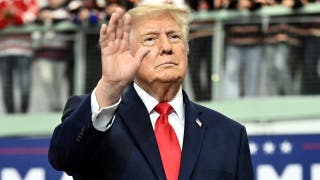


















Lt Gen Keith Kellogg: Iran’s regime looks at negotiations as a way of delaying
Ret. Lt. Gen Keith Kellogg says that the Trump administration should use a combination of diplomacy, military strength, and economic power to defeat Iran’s regime on ‘The Will Cain Show.’
Five months into the Iran war, America is winning almost every battle. The harder question is whether we are winning the war.
No one should minimize what the U.S. military has accomplished. American air and naval power have inflicted extraordinary damage on Iran's military infrastructure. The Islamic Revolutionary Guard Corps has lost command centers, missile launchers, drone facilities, air defenses, coastal installations, logistics hubs and key personnel. Our servicemen and women have once again demonstrated unmatched professionalism, precision and courage.
Those are genuine tactical successes.
I'VE STUDIED MILITARY STRATEGY. TRUMP NOW FACES IRAN'S OLDEST BATTLEFIELD TRICK
But military history teaches a hard lesson: tactical success does not necessarily produce strategic success.
President Trump now has an opportunity to restore strategic momentum by matching military power with a more clearly defined political strategy.
That distinction matters because the strategic center of gravity in this conflict is shifting. In the opening weeks, the focus was rightly on degrading Iran's military and nuclear capabilities. Today, the consequences increasingly extend beyond the battlefield to American credibility at home and abroad.

Iran has shown greater resilience than many anticipated, dispersing forces, hardening underground facilities, shifting to mobile launchers and continuing to launch missiles and drones despite sustained bombing. Determined adversaries often adapt faster than expected when fighting for regime survival.
IRAN REGIME CHANGE TALK RESURFACES AS TRUMP SAYS TEHRAN 'WANTS TO MEET' AMID US STRIKES
Washington’s campaign appears to assume that destroying Iran’s senior leadership could cause the system to collapse. But the regime’s real source of endurance may run deeper, rooted in a revolutionary Islamist ideology reinforced by the clerical establishment, the IRGC, security organs, patronage networks, and a culture of martyrdom. Leaders can be killed, and command posts destroyed, but bombs cannot extinguish an ideology that treats suffering as validation. This doesn't mean American intelligence failed. It may mean Washington's theory of victory placed too much faith in decapitation and physical destruction, when ideologically committed regimes often absorb punishment that planners assume will compel surrender. The real question is whether repeated battlefield success is producing the political outcomes Washington seeks.
That answer is becoming less clear.

Each day brings another successful strike, another destroyed missile site, another IRGC facility reduced to rubble. Yet Iran keeps fighting. The danger isn't that America cannot destroy targets. It is appearing trapped in a cycle of retaliation without a defined political end state.
TRUMP REVEALS THE LINE IRAN HAS TO CROSS FOR US TO RESTART OFFENSIVE MILITARY CAMPAIGN
For President Trump, converting military success into political results is now the central challenge.
Like it or not, President Trump's credibility, and increasingly America's credibility, is becoming the strategic center of gravity. Every warning, every red line, every promise of retaliation is now evaluated not only by Tehran but also by Beijing, Moscow, Pyongyang, Jerusalem, Riyadh, Brussels and voters here at home.
Public opinion should never dictate military strategy, but neither can elected leaders indefinitely sustain a costly conflict if Americans lose confidence in its objectives.
Credibility is one of America's most valuable strategic assets. It is earned when military action consistently advances defined political objectives. It is weakened when adversaries conclude they can absorb punishment while waiting for Washington's patience, or its public support, to erode.
That domestic support deserves careful attention.

An AP-NORC survey found that roughly two-thirds of Americans believe the war has not been worth fighting, while only about one-third believe it has. Support has softened even among Republicans. Americans increasingly doubt the campaign has a clear destination and worry about its duration, cost, and expansion.
In a democracy, that matters.
Public opinion should never dictate military strategy, but neither can elected leaders indefinitely sustain a costly conflict if Americans lose confidence in its objectives. If these trends continue, Iran could become a consequential midterm issue, especially if voters link it to rising energy costs, strained resources, or distraction from border security, inflation and China.
America's allies are watching just as closely.

Israel focuses on immediate security. Gulf Arab partners want energy infrastructure and Hormuz navigation protected. NATO allies want assurance that Washington can manage multiple crises without weakening deterrence elsewhere. Indo-Pacific allies are asking whether a war consuming American attention and resources changes Washington's long-term commitment to Asia.
That same question is being studied most carefully in Beijing.
China is analyzing American logistics, missile defense, intelligence, precision strike capability, naval operations, industrial capacity, public opinion and political endurance, watching how quickly the United States replenishes munitions and how democratic governments sustain support during prolonged conflict.
China is learning about America's strengths.
It is also searching for America's limits.

Beijing may conclude that America can destroy fixed targets but cannot easily convert firepower into political submission and that dispersed missiles, hardened facilities and prolonged conflict can strain American inventories and erode domestic consensus. China could apply those lessons in a confrontation over Taiwan.
Russia and North Korea are conducting similar assessments, but China has the greatest stake. Every month that Washington remains heavily engaged in the Middle East is another month when Beijing gains time to strengthen its own position in the Indo-Pacific. That should concern every American because China, not Iran, poses the greatest long-term challenge to American security and prosperity.
None of this argues for American retreat.
Quite the opposite.
President Trump now has an opportunity to restore strategic momentum by matching military power with a more clearly defined political strategy.
First, define a limited, achievable end state: deny Iran a nuclear-weapons capability, stop attacks on American forces and regional shipping, and make clear that renewed nuclear-weapons activity or attacks on U.S. interests trigger predictable consequences. Regime change should not be the unstated standard for victory.
Second, replace open-ended retaliation with clear deterrence. Washington should state plainly what triggers U.S. strikes, what would produce a pause and what could open the door to negotiations.

Third, continue denying Iran access to its hardened nuclear infrastructure without committing large American ground forces. Rather than attempt an extraordinarily risky seizure of sites such as Pickaxe Mountain or Fordow, repeatedly deny access by collapsing entrances, cratering routes, maintaining surveillance and striking renewed excavation.
Fourth, broaden the coalition. Keeping the Strait of Hormuz open should not remain primarily an American responsibility. Gulf partners, NATO allies and other maritime nations share a vital interest in protecting Hormuz and should contribute more visibly. The burden, and the credibility, should be shared.
CLICK HERE FOR MORE FOX NEWS OPINION
Finally, restore strategic focus. Iran is a dangerous regional power, but China remains America's principal long-term competitor. Washington must contain Tehran without letting the Middle East consume the resources and attention the Indo-Pacific requires.
American military power remains second to none. But bombs can destroy launchers, command centers and tunnel entrances; they cannot alone compel a revolutionary regime to abandon its purpose.
CLICK HERE TO DOWNLOAD THE FOX NEWS APP
President Trump’s task is not to bomb Iran until it becomes something it is not. It is to define an achievable objective, deny Tehran its most dangerous capabilities, share the burden with allies and restore America’s strategic focus.
Military victories are remembered. History judges presidents by whether those victories produce political results, strengthen American credibility, and leave the nation safer.
