











Democrats being suddenly in favor of low gas prices is a ‘joke,’ GOP lawmaker says
Sen. Bernie Moreno, R-Ohio, discusses the benefits of President Donald Trump’s economic policies for American families and criticizes Democrats’ opposition to pro-worker initiatives on 'The Ingraham Angle.'
The midterms are quickly approaching, and while political pundits are focused on the battle for the U.S. House and Senate, a handful of governors’ races could have a significant impact on 2028.
Governors serve as the chief executive of their state, with broad authority to enforce laws, oversee state agencies and manage the executive branch. Those agencies shape everything from education to healthcare, business regulation, public safety, infrastructure and public health. This November, Americans in 36 states will head to the ballot box to decide who holds that power — and they should choose carefully.
Although state politics is often overshadowed by Washington, D.C., nothing quite shapes American daily life like what happens at the state level — and the governor sits at the center of it all.
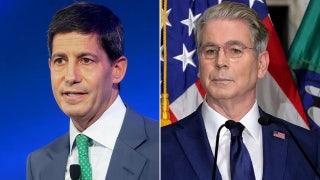
Voters should pay close attention to the gubernatorial races in Illinois, Maryland and Pennsylvania. Democratic Govs. JB Pritzker, Wes Moore and Josh Shapiro are all seeking re-election while quietly auditioning for 2028. The Democrat Party’s bench of possible contenders consists primarily of current or former governors — a notable shift from recent years of nominating candidates from Capitol Hill.
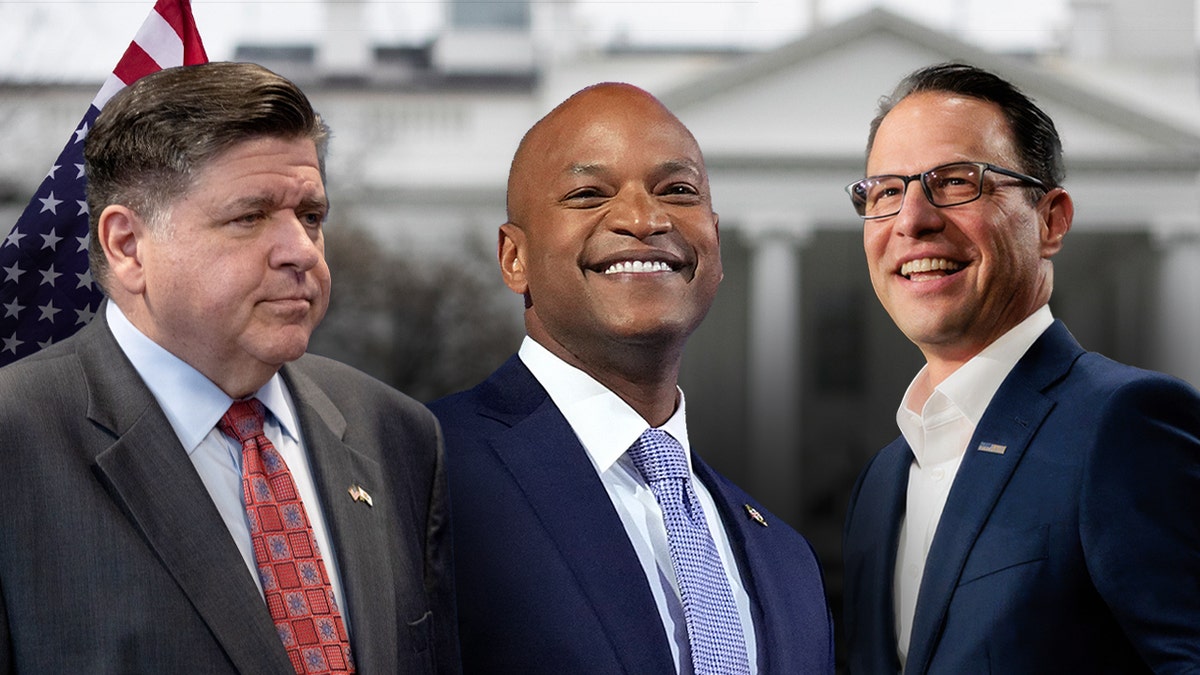
Democratic Govs. JB Pritzker, Wes Moore and Josh Shapiro are all seeking re-election while quietly auditioning for 2028. (Fox News)
With California Gov. Gavin Newsom widely seen as the early Democratic frontrunner for 2028, he’s not facing voters this cycle, so the races in Illinois, Maryland and Pennsylvania may be the most important referendum voters get on the Democratic governing model for the next two years. Their records in office offer a preview of how they might actually govern should they win the nomination.
On the economic front, high taxes and a complex regulatory environment have defined these states — and delivered poor results for the people who live there. With nearly 280,000 regulatory restrictions on the books, Illinois has the fourth most burdensome regulatory code in the nation.
Maryland, as the state with the fourth most burdensome income tax system, ranks among the bottom five worst states for tax competitiveness. Pennsylvania ranks third-worst for childcare freedom, behind only New York and Vermont, raising costs for working families.
THE DEMOCRAT JAMES CARVILLE THINKS IS WORTH WATCHING IN 2028 WILL SURPRISE YOU
Across all three states, the overall tax and regulatory burdens have made it increasingly expensive just to stay put, and residents are starting to vote with their feet. IRS data shows taxpayers in all three states are fleeing to lower-tax havens, taking billions in income with them.
The candidates’ records on education fare no better. All three governors have shunned the growing support for school choice and alternative education options — choosing instead to bow to politically connected teachers’ unions over the best interests of students and their families.
Pritzker's first budget proposed gutting Illinois’ only school choice program, and in 2023 lawmakers let it expire entirely — stripping nearly 10,000 low-income children, most of them Black or Hispanic, of their scholarships. In Pennsylvania, Shapiro campaigned on supporting school choice but eventually caved to union pressure and vetoed a $100 million scholarship program he had personally backed — abandoning the low-income families he had promised to help. Moore acted similarly. In 2023, he attempted to cut funding for Maryland’s BOOST Scholarship program, which helps low-income kids attend private schools.
CLICK HERE FOR MORE FOX NEWS OPINION
On energy, all three governors have pursued regressive green energy agendas that have come at a steep cost for consumers. Illinois electricity prices rose roughly 15% in a single year — more than double the national average — while Maryland residents have seen rates climb significantly since 2020.
Democratic Govs. JB Pritzker, Wes Moore and Josh Shapiro are all seeking re-election while quietly auditioning for 2028.
Pennsylvania tells a similar story: despite being a state blessed with abundant natural gas and coal resources, electricity rates have increased 46% since 2018, driven by green energy mandates, complex permitting and the shutdown of baseload plants — leaving the average Pennsylvanian paying $210 more annually than the national average. And Shapiro shows no signs of reversing course. If his energy agenda advances, Pennsylvania families could see their annual electricity costs nearly double from $1,717 in 2023 to $3,471 in 2035.
CLICK HERE TO DOWNLOAD THE FOX NEWS APP
These records matter beyond the borders of Illinois, Maryland and Pennsylvania. Governors’ races rarely get the national attention they deserve, but this cycle is different. Names like California’s Gavin Newsom, Michigan’s Gretchen Whitmer and Kentucky’s Andy Beshear are all part of the 2028 conversation, alongside Pritzker, Shapiro and Moore. For the first time in years, governors’ races offer a window into what we could see in 2028.
Pritzker, Shapiro and Moore will spend the coming months making the case that their states are better off under their leadership. Their constituents — and a country sizing up the next generation of Democratic contenders — should take a close look to see whether that case holds up.
