Landmark Supreme Court case hearings Tuesday could shape rules for transgender athletes nationwide
The Supreme Court will hear oral arguments Tuesday beginning at 10 a.m. ET in two cases, Little v. Hecox and West Virginia v. B.P.J., that could decide the fate of state bans on transgender athletes in women’s sports nationwide. Arguments in West Virginia v. B.P.J. are scheduled from 11 a.m. to 12 p.m. and center on whether laws limiting women’s sports participation based on biological sex violate the Equal Protection Clause.
Coverage for this event has ended.
Riley Gaines says favorable Supreme Court ruling is ‘not enough”
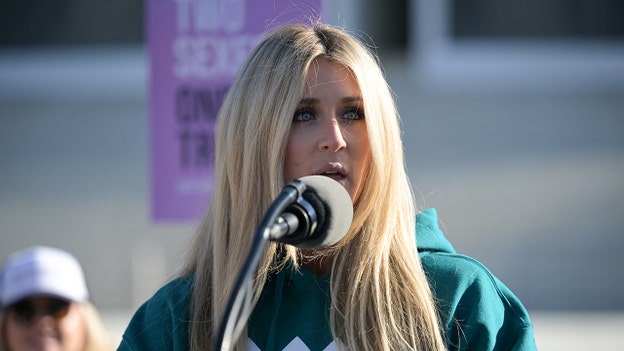
Riley Gaines spoke outside the Supreme Court on Tuesday as the justices heard oral arguments in two landmark cases at the center of the fight to preserve women’s sports.
Gaines, a mother of a three-month-old daughter, said she was "irritated" that she had to travel to Washington, D.C. to fight for "the truth."
The former NCAA swimmer urged for women to keep fighting, even if the Supreme Court ruling goes in the favor of "common sense."
“Even with a favorable ruling, I will tell you that it’s not enough. We must fight for the states to continue to act…" Gaines said.
"We must call on our members of Congress to introduce legislation to codify President [Donald] Trump’s executive order that the signed last year. All of those things are crucial in the fight. When an institution such as the NCAA, such as the Democratic Party, the former administration, when they harm women, when they harm children and when accountability is due to be had, again, it’s not enough. We need these institutions to pay for what they’ve done. They’ve harmed people, real people, they’ve betrayed people, the very women, the very children they were entrusted to protect, they put in direct harm’s way to face potential threats and potential danger.”
Gaines competed against Lia Thomas, a trans swimmer who won a Division I national championship in 2022.
The decision is expected to come in the early summer.
Conservative justice swipes at DOJ in trans sports case: 'I don't think you're a PhD in this stuff'
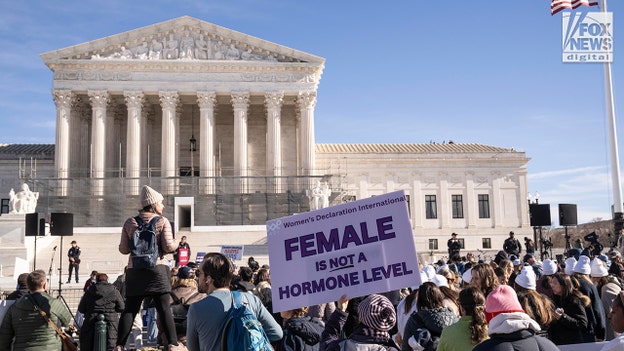
Justice Neil Gorsuch pressed the Department of Justice on Tuesday about the potential nationwide consequences of a Supreme Court ruling allowing states to ban transgender athletes who identify as women from competing in women’s and girls’ sports.
Gorsuch grilled Principal Deputy Solicitor General Hashim Mooppan, who appeared on behalf of the government, during oral arguments about a case examining West Virginia's Save Women's Sports Act. Gorsuch asked Mooppan how a decision in favor of West Virginia's law, which blocked biological boys from participating in girls' sports, would jibe with Title IX and the Constitution's equal protection clause.
Gorsuch used a hypothetical involving other academic programs to test how far sex-based distinctions could extend under Title IX, which bans sex-based discrimination in education.
"What about the hypothetical I posed earlier that, when it comes to high school performance, girls sure are a lot better than boys, and so we're only going to have remedial classes for boys, and girls aren't free to attend. … Let's say I've got really good science," Gorsuch said. "I mean, it's all about the science, right? I got the science."
Mooppan said that while men and women are typically equal under laws and the Constitution, "real, enduring obvious differences" mattered in sports. Mooppan sought to dismiss any "pseudoscience" Gorsuch was suggesting.
"With all respect, I don't think there's any science anywhere that is suggesting that these sort of intellectual differences are traceable to biological differences," he said.
Gorsuch shot back: "With respect, I don't think you're a PhD in this stuff, and neither — I know I'm not, but I'm asking to deal with a hypothetical."
This is an excerpt from an article written by Fox News' Ashley Oliver.
Trans athlete's attorney suggests sex should not be defined during SCOTUS Title IX case
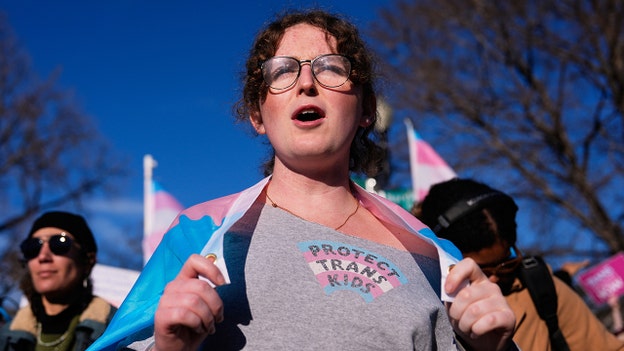
During Supreme Court oral arguments for the West Virginia v B.P.J. case on trans athletes in women's sports, American Civil Liberties Attorney Joshua Block suggested that "sex" should not be defined legally.
Block then fled questioning when asked to elaborate why after the hearing. Block represents West Virginia trans teen Becky Pepper-Jackson, who in 2021 sued the state to block its law that prohibits biological males from competing in girls' sports. Pepper-Jackson and her mother were in the courtroom on Tuesday to watch the attorney argue the definition of sex should not be used in the court's ruling.
Block's statement came while arguing why West Virginia's law that prohibits biological males from competing in girls' sports violates Title IX, and then claimed the purpose of Title X is not to have an accurate definition of sex.
"However the court resolves this case, I really urge the court not to do it on the definition of sex argument," Block said, later adding. "I don't think the purpose of Title IX is to have an accurate definition of sex. I think the purpose is to make sure that sex isn't being used to discriminate by denying opportunities… I wouldn't look to whether or not to classify B.P.J. as male or female, I think the question is, ‘is she being denied an opportunity because of that classification?'"
This is an excerpt from an article written by Fox News' Jackson Thompson.
Republican lawmakers say girls’ and women’s sports protections must be ‘affirmed’ by Supreme Court
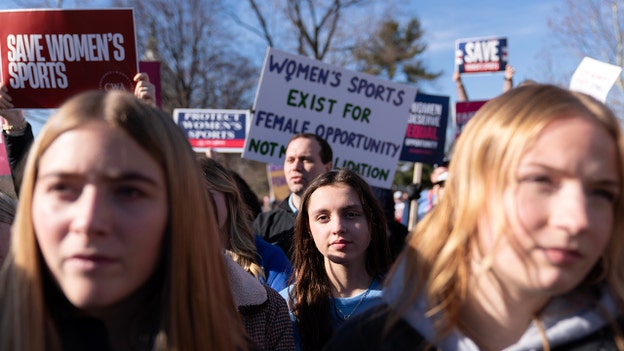
Republican lawmakers are hopeful that after more than three hours of oral arguments, the Supreme Court will rule to uphold states’ laws ensuring the safeguards for girls’ and women’s sports.
Speaking outside Tuesday’s hearings in Washington D.C., Rep. Kat Cammack, R-Fla., said she hopes the cases will “affirm” the protections of women and girls and uphold Title IX.
“The Supreme Court hearing these two arguments today is going to really reaffirm what we know, the truth: there are two sexes, and boys and men do not belong in women's locker rooms and in women's sports.
“And so it's very simple to me. It's about truth. And that has to be affirmed at the Supreme Court level. It's a sad day in America that it's reached this point, but I think it's more important than ever that we stand up for Title IX and for women and girls.”
Sen. Steve Daines, R-Mont., added that the landmark cases and the Supreme Court’s ruling come down to “common sense” and “fairness.”
“I’m a father of two daughters, a grandfather to three granddaughters. This is about science. I'm a chemical engineer by degree – this is about science. It's about biological truth. It's about common sense. It's about fairness, and It's about safety. How do we make sure that young girls and young women are safe on the court? But also safe in the locker room, in the restroom?
“This is an issue that overwhelming the American people support our view on this, and we pray and hope the Supreme Court comes down on our side on behalf of our women across America.”
A decision on the Little v. Hecox and West Virginia v. BPJ cases could be expected around June.
Former Bush official urges Supreme Court to let states decide on trans athlete issue
Former Deputy Assistant Attorney General John Yoo appeared on Fox News Channel ahead of the Supreme Court hearing two cases to save women's sports on Tuesday.
Yoo urged the Court to "let democracy work," citing the Skrmetti case last year.
“I think another issue that’s important to the Court is they let democracy work, that they let the states decide how to handle this tough issue of whether to allow transgender athletes to allow in women’s sports," Yoo said.
"That was a message the court announced loud and clear last year in [the Skrmetti case], which is about whether states could prohibit transgender medical treatments for minors. It’s very similar issue to the one today.”
The Court heard two cases Tuesday from Idaho and West Virginia, stemming from transgender athletes participating in girls' sports.
Thirty states have restrictions on trans athletes competing in girls’ and women’s sports, including West Virginia and Idaho.
Kerri Urbahn says 'common sense' is part of SCOTUS' decision on trans athlete cases
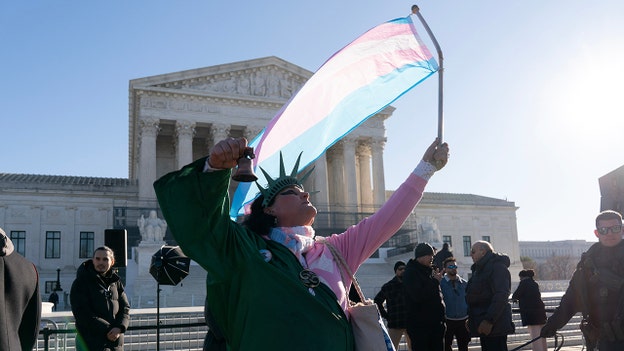
The Supreme Court heard two cases Tuesday regarding the fight to save women's sports, and Fox News Legal Editor Kerri Urbahn said "common sense" is a part of the Court's ultimate decision.
"I think in a case like this, it is. I think anyone watching the landscape in this country have watched sports just be taken away from girls piece by piece," Urbahn said on Fox News Channel just before the Supreme Court heard the cases.
The Court heard two cases Tuesday from Idaho and West Virginia, stemming from transgender athletes participating in girls' sports.
The first case was heard at 10 a.m. ET, and the final remarks were made roughly three-and-a-half hours later.
Former NFL player praises Trump for standing ‘by women for women’ outside SCOTUS hearings
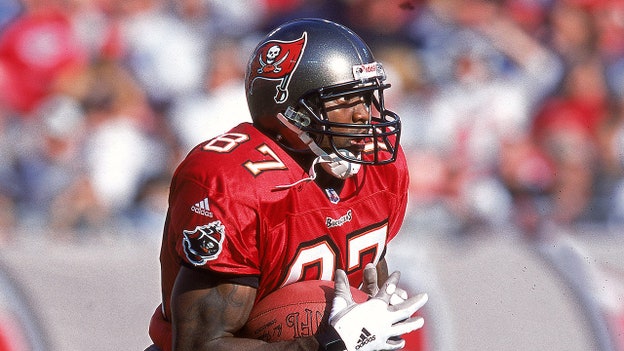
Former Tampa Bay Buccaneers wide receiver Frank Murphy appeared in Washington, D.C., on Tuesday to voice his support for fairness in girls’ and women’s sports as the Supreme Court heard oral arguments for two landmark cases in West Virginia and Idaho regarding transgender athlete participation.
Murphy, who was drafted by the Chicago Bears in the sixth round of the 2000 NFL Draft, spoke outside the court as protesters from both sides gathered in the nation’s capital.
“I want you to know me as a father. I stand here as a father today because I feel like at the end of the day, if we don't lead, if we don't protect, if we're not here to secure our women, who will,” Murphy said. “We have some brave, outstanding women. And I just want to say thank you for your courage. You are so courageous. The things that you do and the things you have [done] up to this point have just made me feel like an NFL player don't have nothing on you.”
The former NFL pro went on to praise President Donald Trump and his administration’s push to ensure the safeguarding of women’s sports.
“Now we have a leader in the White House, President Trump, that stands by women for women. That encouraged me. As a leader, that ought to be some of the first things we look at. We're leaders over here, and every woman ought to be proud, proud to say that you're standing up for something that you believe.”
Oral arguments wrapped Tuesday afternoon after the Supreme Court Justices heard from both sides in the Little v. Hecox and West Virginia v. BPJ cases.
Alito presses trans female athlete's lawyer on definition of woman during SCOTUS hearing
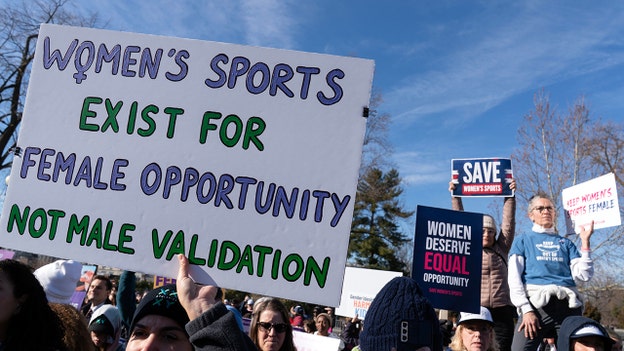
Supreme Court Justice Samuel Alito grilled an attorney representing a biological male athlete in the case of Little v. Hecox on Tuesday about the definitions of a woman and girl.
Alito asked Kathleen R. Hartnett, who is arguing on behalf of the Idaho student in the Supreme Court case, what it meant to be a "boy or a girl or a man or a woman" when it came to equal protection purposes. Hartnett agreed that a school may have separate teams for students "classified as boys and a category of students classified as girls."
"Sorry, I misunderstood your question. I think the underlying enactment, whatever it was, the policy, the law, we’d have to have an understanding of how the state or the government was understanding that term to figure out whether someone was excluded," Hartnett said. "We do not have a definition for the court. We’re not disputing the definition here.
"What we’re saying is the way it implies in practice is to exclude birth-sex males categorically from women’s teams and there is a subset of those birth-sex males where it doesn’t make sense to do so according to the state’s own interest."
Alito then asked, "How can a court determine whether there’s discrimination on the basis of sex without knowing what sex means for equal protection purposes?"
"I think here we just know, we basically know that they’ve identified pursuant to their own statute, Lindsay qualifies as a birth-sex male and she is being excluded categorically from the women’s teams as the statute," Hartnett responded. "So, we’re taking the statute’s definitions as we find them and we don’t dispute them. We’re just trying to figure out, do they create an equal protection problem?"
Alito then posed a hypothetical question to Hartnett about a boy who has never taken any kind of puberty blockers or other medication but believed they were a girl and whether a school can say the boy cannot participate on a girls’ sports team.
Hartnett suggested the hypothetical wasn’t necessarily what her side was arguing.
This is an excerpt from an article written by Fox News' Ryan Gaydos
ACLU attorney in West Virginia case urges SCOTUS to avoid relying on 'cherry-picked studies'
ACLU Attorney Josh Block, the attorney representing a transgender athlete who played on a girls team in West Virginia, emphasized that facts should determine the Supreme Court's decision on saving women's sports, not "cherry-picked studies."
Block said the case is "an important issue" that "affects the whole country."
"Look, if they're right about the facts, then we should lose," Block said of the state. "And the irony is that in order to win summary judgment in this posture, when there's a disputed question of fact below is they can only win in this posture if we're right about the facts and there aren't any advantages. I don't think there's any need at this juncture for this court to issue that broad a holding when, according to them, once the evidence comes in below, we're not going to get past summary judgment...
"It's an important issue, it may affect the whole country, and the court wants to get it right. And I don't think the best way to get it right is to rely on cherry-picked studies or assertions in amicus briefs. I think the way to get it right is to let all the facts they're trying to put in the record actually be put in the record, and then we'll have the facts in front of us, and maybe they'll make the issue go away. But I think that's unnecessary to intervene at this instance with a sweeping legal conclusion to something that might actually be a narrow factual dispute.
Block graduated from Amherst College and Yale Law School, previously serving as a clerk for Judge Robert D. Sack on the U.S. Court of Appeals for the Second Circuit. He has won cases protecting the rights of transgender people, including Grimm v. Gloucester County, the first federal court of appeals decision that ruled Title IX protects the rights of transgender students to use restrooms consistent with their gender identity.
Gorsuch challenges DOJ attorney on limits of sex-based distinctions under Title IX
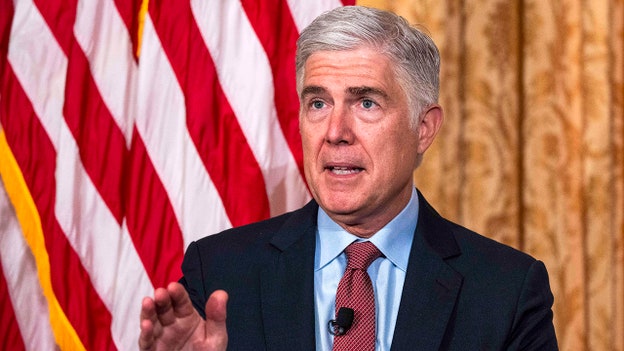
U.S. Supreme Court Justice Neil Gorsuch challenged Justice Department attorney Hashim Mooppan on the state’s Title IX discrimination argument in West Virginia v. BPJ, questioning why certain biological differences, such as intelligence, would not be treated the same as physical differences between girls and boys under the statute’s protections.
Gorsuch raised the issue of academic performance, specifically mentioning high school girls that “are sure if a lot better than boys” and how under West Virginia’s argument, there could be a case made to separate classes based on sex.
Mooppan disagreed with the claim, stating, “I don't think those differences are based on inherent biological differences.” He went to say that the argument was based on "pseudoscience,” prompting a fiery rebuttal from Gorsuch.
“With respect, I don’t think you’re a PHD in this stuff, and I know I’m not… The statute says no discrimination on the basis of sex. And you're saying, ‘Yeah, it's okay when they're not similarly situated.’ And you're worried about locker rooms. Great. I appreciate that, but I'm worried about that math remedial class or the chess club or whatever.”
West Virginia is among about 30 states with laws preventing biological males who identify as female from competing on girls' sports teams sponsored by public schools and colleges.
Kagan points to lack of female chess grandmasters during West Virginia v BPJ oral arguments
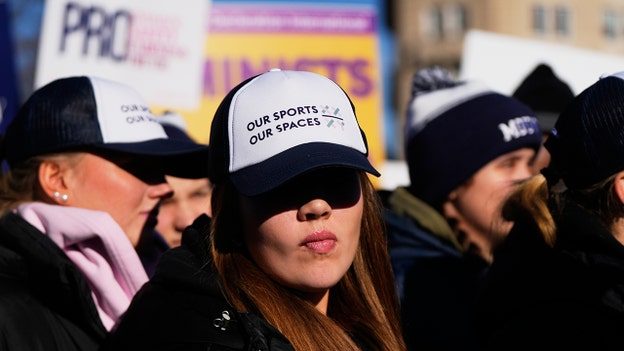
After West Virginia Solicitor General Michael Williams was asked by Justice Amy Coney Barrett what his "limitations" were on Title IX regarding discriminating between boys and girls, Justice Elena Kagan drew comparisons to "chess club" and mentioned that a high majority of grandmasters are male.
"If a state produced some studies saying, listen, you know, women's presence and, you know, calculus is holding men back because they're so much more capable, and they can just move so much more quickly. Seems to me like there would be some risk on your understanding that that would be okay," Barrett said.
As Williams tried to answer, Kagan butted in, "How about chess club?"
"A chess distinction, I think, again, might fail because there's an actual lack of evidence of meaningful physiological differences that are reflected in the existence of the express regulations in the athletics court," Williams responded.
"I think there are a lot of chess grandmasters who would tell you that women, for whatever reason, they're not very they're not as good as this," Kagan answered back.
Williams then admitted chess is "an interestingly closer question."
"I've come to understand just recently, in fact, that there are sex distinctions," Williams said.
Alito challenges Hecox attorney on the definition of sex: ‘What does it mean to be a boy or a girl’
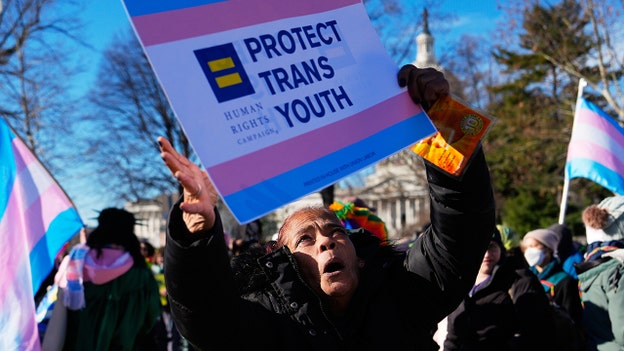
U.S. Supreme Court Justice Samuel Alito pressed Kathleen Hartnett, the attorney for the plaintiff in Little v. Hecox, during Tuesday’s oral arguments, questioning how Idaho state law defines “boy,” “girl,” “man,” and “woman” as part of determining whether discrimination occurred.
“We do not have a definition for the court, and we don't take issue with the – we're not disputing the definition here. What we're saying is that the way it applies in practice is to exclude birth sex males categorically from women's teams, and that there's a subset of those birth sex males where it doesn't make sense to do so, according to the state's own interest,” Hartnett responded.
But Alito quipped that the Court could not rule on discrimination without clear definitions.
“How can a court determine whether there's discrimination on the basis of sex without knowing what sex means for equal protection purposes?”
Hartnett stated that they do not dispute the state’s definitions, but argued that their case is attempting to examine if the law creates an “equal protection problem.”
Idaho Gov. Little preaches 'common sense' after attorney makes argument in trans athlete SCOTUS case
Idaho Governor Brad Little posted a statement to X, saying his state "has always led with common sense" after the state's Solicitor General gave his oral argument in Little v. Hecox on Tuesday.
The case is one of two that is being heard in the Supreme Court regarding the fight to protect women's and girls' sports.
"Idaho has always led with common sense -- it’s why we were the first state in the nation to ban men from competing in women’s sports," Little posted to X. "I’m confident that same common sense will prevail as the Supreme Court reviews our law that set the precedent in defending girls and women."
The Solicitor General, Alan Hurst, spoke for over an hour on Wednesday morning - he was originally slated to answer questions for 30 minutes. The delay, as well as the court speaking with the athlete's attorney overtime, has led to a delay in the second case of the day.
Justice Thomas poses Title IX question to Hecox attorney regarding boys' and girls' teams
Kathleen Hartnett, the attorney for Lindsay Hecox in Wednesday's case, said she was not aware of an example of a boy aiming to play on a girls team for a sport that has a boys squad.
Judge Clarence Thomas asked Hartnett if there could be an argument regarding Title IX and having male and female sports.
"You could have individuals who, for example, don't present the problem of physically outmatching women in a particular sport, or a group of people who don't."
"The broader goal here, of course, is not sex separation for its own sake. The idea is to have equality in sports, and that's the ultimate objective that I think we're all talking about. Not separation."
Thomas then responded that Hartnett's argument could be made with respect to sex separation in Title IX generally.
Hartnett said that there have been boys who have attempted to play on girls' sports teams for sports that are not made available to boys. But, "to be clear, we are not aware of an example of a boy challenging the sex separation so that they could be on the girls team where there's a boys team that exist."
Bondi calls protection of girls’ and women’s sports ‘common sense’ amid SCOTUS oral arguments
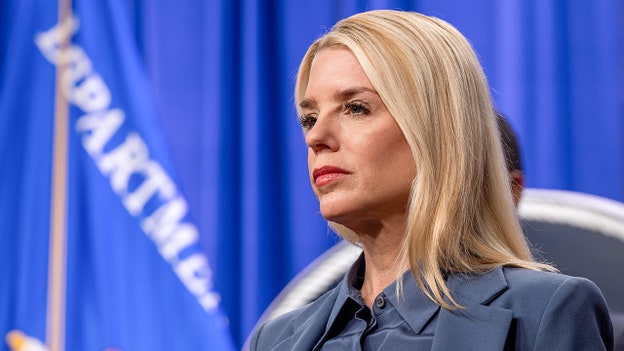
Attorney General Pam Bondi said the fight to ensure the safety and fairness of girls’ and women’s sports in the U.S. is “common sense” as the Supreme Court is in the midst of oral arguments for two landmark cases involving transgender athletes.
“Today, my attorneys are arguing a crucial Supreme Court case pushing back against the trans agenda. Our position: states have the authority to ban men from participating in women’s sports,” her post on X read.
“This is common sense. We are fighting to protect girls and women in the locker room and on the playing field — and we will be successful.”
Sotomayor pushes DOJ attorney on 'numbers' of trans athletes impacted by Idaho law
Justice Department lawyer Hashim Mooppan was grilled by Justice Sonia Sotomayor about the percentage of people that are transgender athletes aiming to participate in girls' and women's sports.
"What's percentage enough?" Sotomayor asked Mooppan, noting that there are nearly 3 million trans-identifying people in the United States. "That's an awfully big figure," she added, saying "numbers don't talk about the human beings."
"If the distinction between intermediate scrutiny and strict scrutiny is the difference between a perfect fit and a reasonable fit, 1% surely has to be on the side that's reasonable," Mooppan responded.
Mooppan then reference "Michael M.'s" case against the Superior Court in 1981, when the law stated that boys could be punished for having sex with girls under 18, but not vice versa, because girls can get pregnant.
"But if you don't want to just take the 1% on its own face, if you want to focus on majority opinions or opinions for the court, Michael M. rejected a challenge even though that law wouldn't, for infertile couples, infertile either infertile rapists or infertile victims, the justification didn't apply...
"There are certainly more infertile people than there are trans identifying individuals who take these drugs and eliminate all their physical advantages. So if we just focus on holdings of this court, we know that this percentage is too small."
Justice Jackson grills Hurst over Idaho law banning athletes on the basis of ‘transgender status’
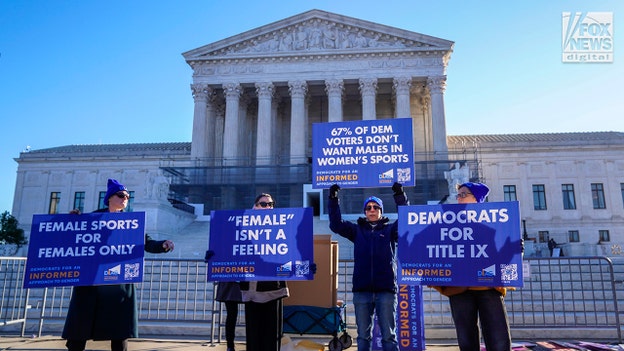
Idaho Solicitor General Alan Hurst engaged in a back-and-forth with Justice Ketanji Brown Jackson during Tuesday’s oral arguments in the landmark case of Little v. Hecox over the classification of the state’s law.
Justice Jackson took aim at the clarification of the state law regarding the classification “on the basis of transgender status” when seeking to ban biological males from girls’ and women’s sports, while Hurst argued that the law does not seek to “exclude transgender people from sports.”
“I guess I'm struggling to understand how you can say that this law doesn't classify on the basis of transgender status. The law expressly aims to ensure that transgender women can't play on women's sports teams. So, why is that not a classification on the basis of transgender status,” Justice Jackson questioned.
“It doesn't. It turns on sex,” Hurst responded. “The legislature did not want to exclude transgender people from sports. It wanted to keep women's sports women only and exclude males from women's sports.”
Idaho is among about 30 states with laws preventing biological males who identify as female from competing on girls' sports teams sponsored by public schools and colleges.
Idaho argues Little v. Hecox ‘isn’t moot’ as Justice Sotomayor pushes back
Idaho Solicitor General Alan Hurst argued that Idaho's case for keeping transgender athletes out of girls' and women's sports "isn't moot."
Justice Sotomayor mentioned the Acheson Hotels case from 2023, and "we've been directed the case be considered moot."
"There's no reason to question the sincerity of that belief, given that dropping out of sports puts you at a disadvantage, where you lose your competitive edge and she's going to graduate soon," Sotomayor said.
"This case isn't moot," Hurst said.
Idaho and West Virginia appeals could affect LGBTQ+ rights in bathrooms, documents, and beyond
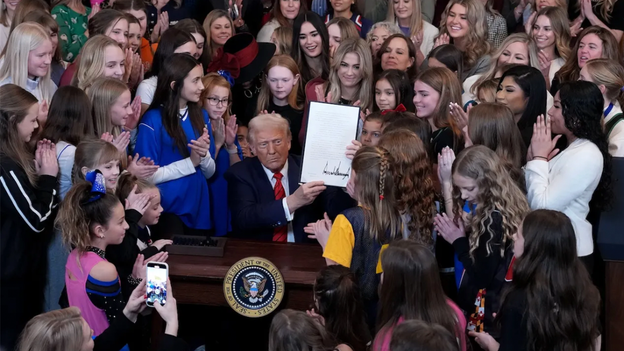
Sex "discrimination" or gender "fairness" in scholastic activities? The Supreme Court will decide the divisive social question when it holds oral arguments Tuesday in a pair of cases reviewing separate state bans on transgender and non-binary athletes participating in female-only public school sports teams.
The justices are hearing appeals from Idaho and West Virginia, after lower courts struck down state laws, affecting those students from the elementary to college level.
The Trump Justice Department is supporting the state laws and will have time at oral argument to talk about the federal implications.
What the court does here could affect other legal fights over LGBTQ+ rights, including transgender people having access to bathrooms, or sex designation on documents like passports and driver's licenses.
The justices could decide to rule narrowly on the rights of athletic competitors or offer a more sweeping precedent over discrimination claims in the workplace, public spaces, military service, government benefits, housing, health care and education.
This is an excerpt written by Fox News' Shannon Bream and Bill Mears
About Little v. Hecox: SCOTUS to hear oral arguments in Idaho case today
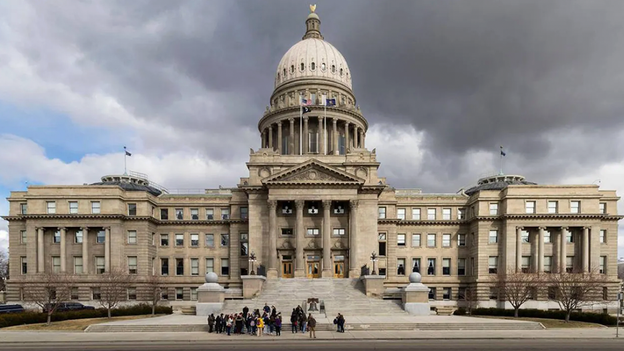
The Supreme Court will hear oral arguments today in two cases, Little v. Hecox and West Virginia v. B.P.J., that could determine whether states can ban transgender athletes who identify as women from competing on girls’ and women’s sports teams, a legal fight that could have far-reaching implications on transgender policies across the country.
In Little v. Hecox, Lindsay Hecox, a biological man who sought to compete on the women’s track and cross-country teams at Boise State University, contended that Idaho’s law, the Fairness in Women’s Sports Act, violated the equal protection clause by excluding transgender women.
The Trump administration is supporting the states in the cases, asserting that Title IX and equal protection permit sex-based distinctions in athletics and criticizing lower courts for undermining states' authority. The solicitor general’s office will be able to present the administration’s case on behalf of the U.S. during Tuesday’s arguments.
This is an excerpt from an article written by Fox News' Ashley Oliver
GOP govs urge justices to defend women's sports as Supreme Court hears key case
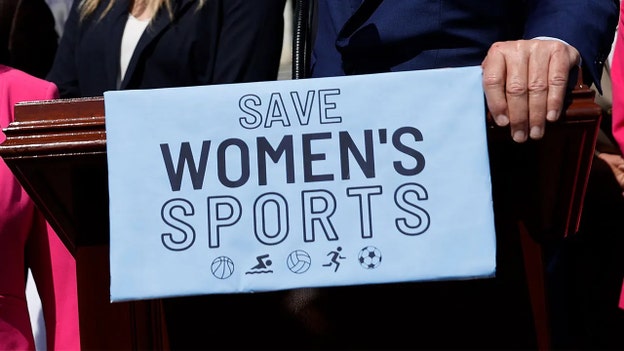
FIRST ON FOX: The nation's Republican governors are warning that women's sports are at risk as the Supreme Court hears a high-profile case over whether transgender athletes should be allowed to participate in girl's and women's sports.
The statement from the GOP governors comes as the nation's highest court on Tuesday hears oral arguments from Idaho and West Virginia in defense of their laws to protect women's sports.
"Recognizing the unique and inherent biological differences between men and women is not radical, it is commonsense," the Republican governors emphasized in a statement shared first with Fox News Digital.
And the GOP governors argued, "Those trying to erase our unique differences and ignore biological reality are doing so in the name of ‘inclusivity.' Forcing women and girls to compete against men, with greater strength and speed, is the opposite of inclusive. It’s unfair. For generations, women fought for equal opportunity on the playing field and won over 50 years ago with the passage of Title IX, and now that right is at risk again."
This is an excerpt from an article written by Fox News' Paul Steinhauser
Former college athletes in Fox News op-ed: 'Supreme Court must listen to our case'
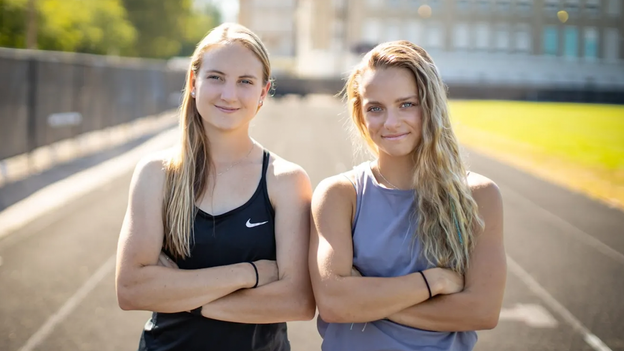
Imagine if the U.S. Supreme Court was asked to rule on whether the law of gravity still applies, even in these early years of the 21st century.
After all, some people are uncomfortable with their size. They feel sluggish and weighed down by that pull from the Earth. Why shouldn’t they just be able to ignore gravity and float along as easily as they please? Why should any law of nature be allowed to constrain how light and thin someone feels inside?
If that sounds ridiculous to you, imagine how female athletes have felt in recent years, having to compete against males just because they’ve been told that feeling like a woman can make them so.
Their make-believe is our hard reality. And some of us have empty spaces on our trophy shelves to prove it.
Each of us spent a lot of our growing-up years training our minds, straining our bodies and gaining the skills to compete against other girls and women on the athletic field. We worked hard — forfeited a lot of fun and family time — and steadily disciplined ourselves to become better, faster and stronger to win those trophies, stand on winners’ platforms and earn scholarships that could pay for our higher education.
Then something happened that we had no way to predict or prepare for. American sports culture went off the deep end.
This is an excerpt from an Opinion article written for Fox News by former college athletes Madison Kenyon and Mary Kate Marshall
WV AG addresses allegations against trans athlete plaintiff in women's sports SCOTUS battle
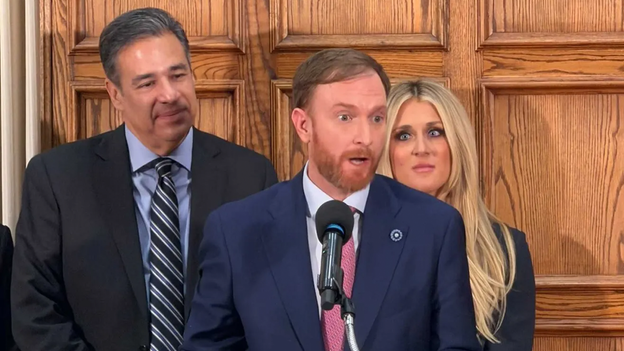
West Virginia Attorney General John McCuskey spoke out in response to allegations of sexual harassment against a transgender athlete who has sued his state to block its law that keeps biological males out of girls' sports.
McCuskey, who is leading his state's legal defense against the trans athlete the U.S. Supreme Court set to review the case Tuesday, addressed the allegations at a press conference Monday.
"Any time you think of a child being harassed, it gives you pause as a parent. And it isn't really part of our case, but harassment of any child of any kind in this country is inappropriate. And it’s wrong, and we all need to stand up to ensure that children aren’t being harassed in any of their venues, particularly athletics," McCuskey said.
The allegations were leveled against the trans athlete by Bridgeport High School student Adaleia Cross, who is a former track and field teammate of the trans athlete when the two were at Bridgeport Middle School.
Cross' mother, Abby, told Fox News Digital what the trans athlete allegedly said to her daughter when they shared the girls' locker room during the 2022-23 school year. Adaleia was in eighth grade, and the trans athlete was in seventh. Abby Cross alleges the trans athlete made extremely graphic and vulgar sexual threats to her daughter and other girls on the team.
This is an excerpt from an article written by Fox News' Jackson Thompson
More than 352 athletes, coaches, lawmakers and officials have taken a side in SCOTUS review
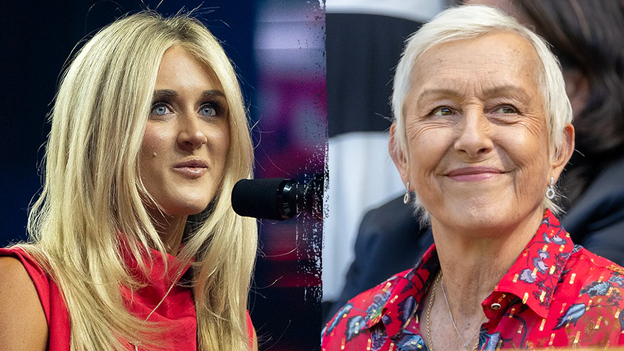
With the U.S. Supreme Court set to rule on two cases focused on the issue of biological males in women's sports, hundreds of prominent figures in sports and politics have publicly taken a side.
At least 77 amicus briefs have been filed for the upcoming court review, some in support of the trans athlete plaintiffs and some in support of the "save women's sports" defendants.
Famed athletes, coaches, U.S. lawmakers and other state and federal government officials have signed onto those briefs, declaring their allegiance in the historic legal battle.
Some athletes, coaches and sports officials supporting the "save women's sports" defendants:
Martina Navratilova, 59-time Grand Slam Champion tennis player, Donna de Varona, Olympic gold medalist swimmer and world record holder, Summer Sanders, Olympic gold medalist swimmer, Riley Gaines, 12-time NCAA All-American swimmer and SEC record holder, Reka Gyorgy, Olympic swimmer and 2× ACC champion, Lauren Miller, professional women’s golfer, Hannah Arensman, professional cyclocross cyclist and national champion, Laura Wilkinson, Olympic gold medalist and world champion diver, Pamela Behrens Golding, Olympic athlete and Jill Sterkel, Olympic swimmer and former University of Texas head swim coach.
Some athletes, coaches and sports officials supporting the trans athlete plaintiffs:
Megan Rapinoe, two-time FIFA Women’s World Cup champion and former co-captain of the U.S. Women’s National Soccer Team, Layshia Clarendon, former WNBA All-Star point guard and first openly trans and nonbinary player in WNBA history, Lori Lindsey, former U.S. Women’s National Soccer Team midfielder and World Cup veteran, Aimee Mullins, Paralympic track and field world-record holder and former Chef de Mission for Team USA, Breanna Stewart, two-time Olympic gold medalist and two-time WNBA MVP, Sue Bird, Olympic gold medalist, WNBA champion, and Basketball Hall of Famer, Grete Eliassen, six-time X Games medalist in freestyle skiing, Serena Gray, former USA Volleyball national team member and NCAA tournament semifinalist, Molly McCage, Olympic-level volleyball player and League One Volleyball champion and Cassidy Lichtman, former U.S. Women’s National Volleyball Team member and Stanford All-American.
This is an excerpt from an article written by Fox News' Jackson Thompson.
SCOTUS to hear oral arguments today on state limits for transgender athletes in women's sports
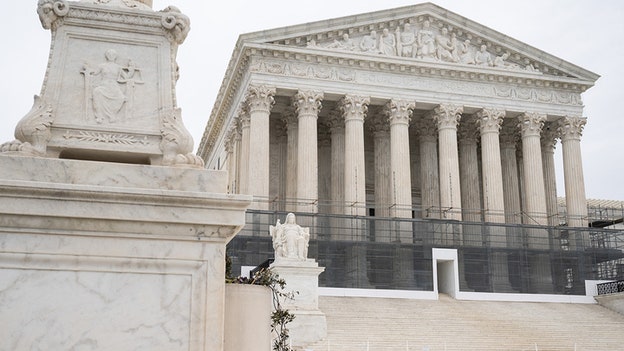
The Supreme Court will hear oral arguments Tuesday in two cases that could determine whether states can ban transgender athletes who identify as women from competing on girls’ and women’s sports teams, a legal fight that could have far-reaching implications on transgender policies across the country.
The arguments in the two cases, Little v. Hecox and West Virginia v. B.P.J., will examine state bans on transgender athletes participating in school sports under Title IX and the Constitution’s equal protection clause.
At issue is whether laws in Idaho and West Virginia that prohibit transgender athletes who identify as women from playing on teams that match their gender identity discriminate based on sex.
Lower courts struck down the bans as unconstitutional violations of Title IX and equal protection, and the two Republican-led states appealed to the Supreme Court.
"It’s about Title IX. It‘s about equal protection, and it’s also about common sense, but mostly it’s about protecting women in both academia and on the athletic field," West Virginia Attorney General JB McCuskey told Fox News Digital in a phone interview.
The justices will hear each of the cases Tuesday morning beginning at 10 a.m.
This is an excerpt from an article written by Fox News' Ashley Oliver.
Live Coverage begins here