Trump warns Iran killing US troops would trigger military action as Tehran blasts US demands
President Donald Trump warned he would quickly resume military action if U.S. troops are killed, as an adviser to Iran's Supreme Leader accused him of pressuring Tehran for concessions while keeping U.S. commitments unclear.
Coverage for this event has ended.
Only US, China can retrieve enriched uranium from Iran's 'obliterated' nuclear sites, says Trump
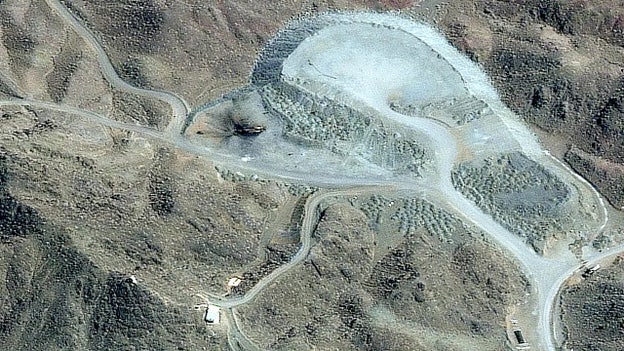
President Trump said Thursday that only the U.S. and China can retrieve enriched uranium from Iran’s buried nuclear sites, adding that the facilities were so badly damaged by strikes that recovering anything would be difficult.
“We attacked their nuclear sites and they were obliterated,” he told reporters in the Oval Office.
“It turned out that, you know, CNN was wrong. They said, ‘Well, maybe they weren’t hit that hard.’ They were hit so hard, nobody knows if you could even get it out,” he added.
Trump went on to argue that only the U.S. and China have the equipment capable of reaching it.
“But the only ones that have the capability of getting it out are us and China,” Trump said.
“We’re the only ones with that kind of equipment that’s powerful enough to go down that deep into a mountain, but that mountain crushed it.”
“That mountain literally collapsed on top of it.”
Referring to assessments by the International Atomic Energy Agency, or IAEA, he said the agency agreed.
“And now the atomic energy, as you know, has backed us up on that. They think it’s a very, very hard thing to get to, but we’ll get it anyway. But we’re the only ones — and China, I believe, does, too — that have the capability,” he said.
Follow the latest updates in the conflict with Iran
Click here to follow the latest updates in the conflict with Iran.
Oil prices steady despite Middle East tensions as Hezbollah rejects US-backed ceasefire
Oil prices steadied Friday after losses in the previous session, as markets assessed renewed tensions in the Middle East, according to Reuters.
Brent crude slipped 0.2% to $95.24 a barrel, while U.S. WTI crude fell 0.1% to $92.94.
Despite the declines, both benchmarks are on track for their first weekly gain in three weeks, with WTI up more than 6%, the outlet said.
Prices have been supported by regional tensions, uncertainty around U.S.-Iran talks and disruptions to the Strait of Hormuz.
Hezbollah leader Naim Qassem also rejected a U.S.-brokered ceasefire proposal between Israel and Lebanon with Tehran making the ceasefire a condition for any agreement with Washington.
Iranian lawmakers ask Mojtaba Khamenei to greenlight missiles that could reach US: report
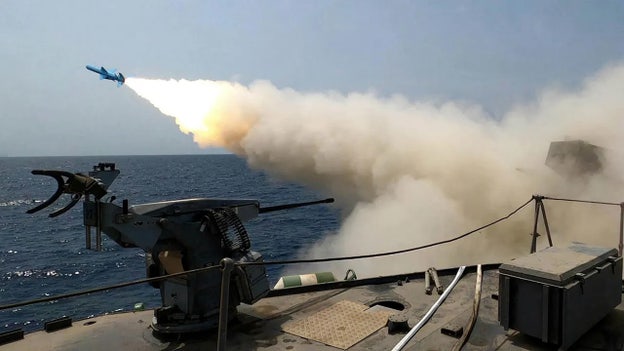
Iranian lawmakers have asked Supreme Leader Mojtaba Khamenei to agree to the development of intercontinental ballistic missiles, or ICBMs, according to reports.
Citing Iran’s Asriran newspaper, The Jerusalem Post reported Thursday that a letter to Khamenei was signed by 85 officials who expressed skepticism about Washington’s role in ceasefire negotiations.
Analysts at the Institute for the Study of War also interpreted the letter as a call for missiles capable of reaching the United States.
Former Israeli national security adviser Yaakov Amidror told the outlet that any favorable economic terms in talks with Washington could provide Tehran with the resources needed to pursue such a capability.
The letter was also signed by several Iranian hard-liners, including former Foreign Minister Manouchehr Mottaki, who has opposed negotiations with the United States, the outlet said.
US urges citizens in Middle East to exercise 'increased caution,' know shelter locations
The U.S. Embassy in Jerusalem issued a security advisory on Thursday, urging U.S. citizens in the region to exercise "increased caution", particularly in Israel, the West Bank and Gaza.
"Due to high tensions in the region, the security environment remains complex and can change quickly," the embassy said.
The advisory urged U.S. citizens in the Middle East to remain vigilant, monitor the news for breaking developments, and know the location of the nearest shelter" in the event of hostilities."
Iran, Russia strengthen alliance with nuclear projects, new trade corridor

Iran and Russia are cooperating more on transportation and nuclear energy projects, Iranian state media reported Thursday.
The partnership already includes a $25 billion memorandum of understanding signed in 2025 to build a power plant in Iran's Hormozgan Province, Iran's ambassador to Moscow, Kazem Jalali, said.
“This is Iran’s largest atomic energy project and is being carried out by Iran’s private sector in cooperation with Rosatom,” Jalali said at a conference Thursday.
The International North-South Transport Corridor (INSTC) is also expanding, linking Russia and Northern Europe with the Indian Ocean and South Asia through Iran.
On the western branch through Azerbaijan, more than 3 million tons of cargo transit annually with the route expected to be transferred to Russian management ahead of the project’s launch, Jalali said.
The ambassador also said Iran’s Bushehr nuclear power plant is fully operational. Construction on the facility’s second and third units is continuing with Russian support.
Officials warn Iran conflict, rising fuel costs are straining Pentagon budget: source
U.S. officials said Thursday that the conflict with Iran is putting pressure on the Pentagon's budget, citing rising operational costs, higher fuel prices and financial impact.
U.S. Army officials told Fox News National Security Correspondent Jennifer Griffin that the ongoing war is now forcing tough budget decisions and curtailing training activities.
The officials also cited the impact of “current energy market dynamics,” which are “increasing fuel costs” and can affect the cost of transporting personnel, supplies and equipment.
Chief of Naval Operations Adm. Darryl Cottle also told the House Armed Services Committee that, without supplemental funding, the U.S. Navy will have to make tough decisions regarding operations and readiness.
The warnings come after Hezbollah rejected the latest ceasefire proposal with Israel.
Iran has said that a ceasefire agreement involving Hezbollah and Israel must be reached before Tehran can finalize an agreement with Washington.
Trump: I’d meet Khamenei ‘respectfully,’ though I'm ‘not his favorite person’
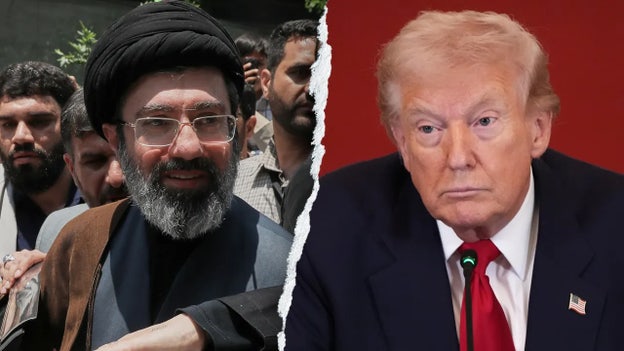
President Donald Trump said Thursday that he would be willing to meet with Iran's Supreme Leader Mojtaba Khamenei if ongoing negotiations between Washington and Tehran produce a deal, saying he would approach any meeting with respect despite any differences.
Trump’s remarks came amid ongoing negotiations with Tehran, where Khamenei appears to have become more involved.
Asked by Fox News' senior White House Correspondent Peter Doocy about meeting the Iranian leader in the United States, Trump said, "I'd be honored to meet him."
“I'd like to see if we make a deal. But if we make a deal, it's possible that I would meet him. I'd be okay with that,” he added before stating that if they did meet, he would be:
“Respectful.”
“Well, I would say I'm not his favorite person,” Trump added.
“But with that being said, he's probably a professional in some circles,” Trump said.
Trump hints at breakthroughs in Iran talks, says killing US troops is red line for war
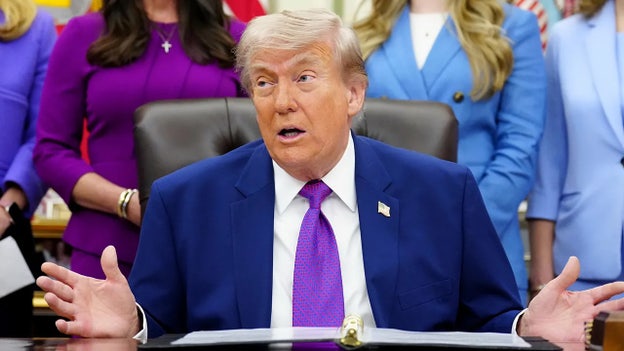
President Donald Trump hinted Thursday that breakthroughs could be on the horizon amid ongoing negotiations with Iran.
He also said his red line for restarting the war would be if U.S. troops were killed.
"A lot of people would say that I've ended eight wars and soon to be a ninth," Trump told reporters in the Oval Office on Thursday.
"I hope that works out to, you know, frankly, it's probably, and there's another one also that could be 10," he said while making an announcement on clean coal.
The president's remarks came shortly after his June 3 announcement that talks with Iran are "going very well," adding, "If it happens, it could happen over the weekend."
Trump also said that the Iranian military had been wiped out.
"There's no Navy. There's no Air Force. We've wiped them out. We've wiped out their leadership and almost all of it. You know, I can't tell you that.
"They had to get new generals. And then after that, they didn't get more new generals," he said.
"And, we knocked out their anti-aircraft, their air force, just about everything you can knock out," he said before stating, "It is unbelievable. We knocked out everything there is to knock out."
Shifting to the possibility of restarting the war, Trump addressed the issue of U.S. troops.
"Well, it would be a good reason. I'd be honest with you. Yeah, if they kill U.S. troops, I think I would do that very quickly," he said about resuming the military action.
As Hezbollah rejects truce, families on Israel's northern border describe life under fire
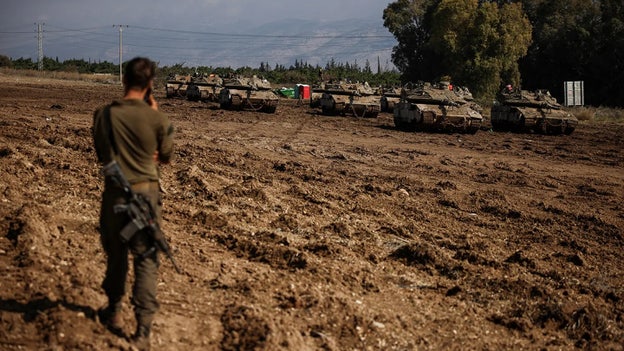
Two days after another ceasefire was announced between Israel and U.S. terrorist designated group Hezbollah, Yulia Bar-Dan was standing outside her temporary home in Kibbutz Manara in northern Israel when the familiar sound of an interceptor echoed overhead.
"There will probably be another siren soon," she told Fox News Digital.
Minutes later, an alert appeared on her phone warning residents in northern Israel to take shelter.
For Bar-Dan, the scene captured the reality of life on Israel's northern border nearly two years after Hezbollah joined the war against Israel on Oct. 8, 2023.
After Hezbollah entered the recent war in support of Iran, Washington launched a diplomatic effort aimed at turning the ceasefire into a broader arrangement for Lebanon.
Multiple rounds of talks between Israeli and Lebanese officials have taken place in Washington, and President Donald Trump repeatedly has announced ceasefire understandings aimed at restoring calm along the border.
Residents of communities like Manara, Israel, say the rockets, drones and uncertainty never really stopped.
"A ceasefire is supposed to be on both sides," she said. "Not that Hezbollah keeps shooting at us and we just keep absorbing it."
When Fox News Digital first spoke to Bar-Dan in December 2024 during the war, she and her husband had fled Manara, Israel, with their three children and were living out of a single hotel room, unsure whether they would ever return home.
Today, roughly 200 of the kibbutz's 280 residents have returned, Bar-Dan said. But many, including Bar-Dan's family, still cannot live in their original homes because of war damage.
Despite repeated ceasefire announcements, residents say normal life remains elusive.
This is an excerpt from a report by Fox News’ Efrat Lachter.
Iran accuses Trump of keeping commitments vague while pressuring Tehran into concessions
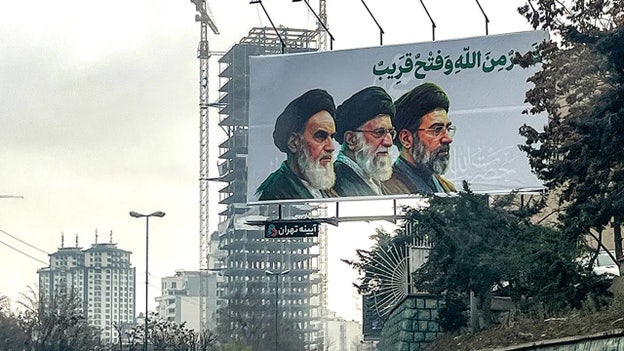
Mohsen Rezaei, an advisor to Iran’s Supreme Leader, Mojtaba Khamenei, said Thursday that President Donald Trump wants to pressure Iran into accepting concessions while keeping U.S. commitments vague, according to reports.
Reuters reported that Rezaei also stated said in an interview with State TV that the current draft agreement sent by the U.S. contains ambiguities that must be clarified.
The remarks follow a statement Rezaei shared on X on Wednesday, asserting that Tehran will not succumb to "excessive demands" from Washington in active negotiations or any permanent ceasefire process.
"History does not go backwards, and the aggressor will be punished swiftly," he warned.
The diplomatic back-and-forth comes amid escalating tensions in the region in recent days.
Despite the flare-up in attacks, Iranian officials are evaluating Trump's proposals aimed at ending the war and reopening the Strait of Hormuz
Hezbollah 'trying to destroy' hope for peace after rejecting ceasefire, says Israeli ambassador
The Israeli ambassador to the United States criticized Hezbollah's rejection of a peace agreement between Israel and Lebanon on Thursday, saying the group is "trying to destroy that hope."
“Yesterday, the United States brokered a ceasefire between Israel and Lebanon based on a clear principle: Hezbollah must stop firing, withdraw from southern Lebanon and be disarmed,” Ambassador Yechiel Leiter said in a post shared on X.
“This morning, Hezbollah’s secretary-general publicly condemned the agreement, while Hezbollah drones were launched at Israeli targets,” he added, before stating that Israel will “defend its citizens.”
“Lebanon deserves a future shaped by its government — not by an Iranian-backed terrorist organization,” he said.
Leiter went on to say there had been hope at the negotiating table “for a new chapter of security and peace.”
“Hezbollah and Iran are trying to destroy that hope. They must not succeed,” he said.
Zelenskyy calls for meeting with Putin to end Ukraine conflict, references Iran war in open letter

Ukrainian President Volodymyr Zelenskyy on Thursday publicly called on Russian President Vladimir Putin to begin negotiations to end the war between their countries, arguing that attention has shifted to other conflicts, namely the war in Iran.
In an open letter, Zelenskyy urged Putin to engage in talks to achieve a ceasefire and settlement to the conflict.
Toward the end of the letter, Zelenskyy referenced Ukraine's role in supporting international security efforts in the Middle East.
“You believed Ukrainians would not have the strength to defend themselves. Yet today, our people are helping our partners in the Middle East and the Gulf build their own defenses.
“We see that the United States is fully focused on the issue of Iran, and it would be wrong to simply wait until the war in Europe returns to the center of its attention,” Zelenskyy said.
“Ukraine proposes ending this war through direct engagement between us — and you. I am proposing a meeting,” he added.
UK, France finalize plans to lead multinational mission clearing mines from Strait of Hormuz
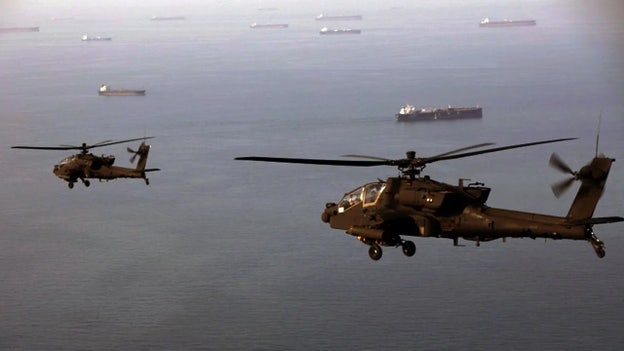
The United Kingdom and France have finalized plans to lead a multinational mission to clear naval mines from the Strait of Hormuz, according to reports.
Citing sources, Bloomberg reported Thursday that military planners from several nations are in the final stages of preparations to join the operation, which would focus on removing mines allegedly laid by Iran's Islamic Revolutionary Guard Corps (IRGC).
The mission is expected to get underway within days of an agreement between the U.S. and Iran, the report said.
Rubio condemns Iran's 'outrageous and unacceptable attacks' on Kuwait, pledges security support
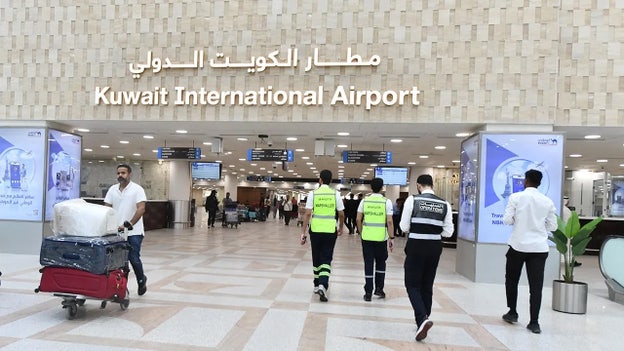
Secretary of State Marco Rubio met with the Kuwaiti foreign minister on Thursday, according to State Department spokesperson Tommy Pigott.
This came a day after Kuwait briefly closed its main airport after an Iranian drone strike damaged a passenger terminal, killing one person and injuring dozens more.
"The Secretary reiterated the commitment of the United States to Kuwait's security, to ensuring that Iran never acquires a nuclear weapon, and to the restoration of freedom of navigation through the Strait of Hormuz," Pigott said in a statement.
Pigott also said that Rubio condemned Iran's "outrageous and unacceptable attacks targeting Kuwait International Airport and other parts of the country" and expressed condolences for those killed and injured in the attack.
"We stand with the Kuwaiti people during this difficult time," the statement said.
Space Force declares space a warfighting domain as adversaries build counterspace weapons
The U.S. Space Force is warning that space is no longer a quiet support zone above the battlefield — it is a contested warfighting domain where adversaries are developing weapons capable of threatening the satellites that power American security, commerce and daily life.
"There is no training for a day without space — if the Space Force fails, the Joint Force fails,” according to the service’s “Space Force 101” document.
The United States Space Force, established under the first President Donald Trump administration, describes its core mission as securing America’s interests “in, from, and to space,” the report added.
The report makes clear that the stakes stretch far beyond military operations: communications, emergency services, energy, finance, agriculture, food systems and transportation all depend on space-enabled infrastructure.
The Space Force says its purpose is to achieve “Space Superiority,” ensuring U.S. freedom of action in space while denying that same advantage to adversaries.
“Space is a warfighting domain, and it is our job to contest and control our environment through application of military force," the report declared.
The document points directly to foreign threats.
China is the “pacing challenge,” improving space capabilities to “track and target” U.S. military forces, while Russia remains an “acute threat.”
The Space Force also warns that China and Russia are pursuing counterspace capabilities designed to “deny, degrade, or destroy” U.S. space capabilities.
“Our adversaries are ready and able to deny U.S. spacepower,” the report warned.
“The American way of life depends on space for its prosperity and its security.”
The service’s message is blunt: space is not just the backdrop to modern warfare — it is now part of the battlefield. The Space Force says it is responsible not only for defending U.S. satellites and space capabilities, but also for protecting the Joint and Combined Force from space-enabled targeting: “We will secure our nation’s interests in, from, and to space.”
CENTCOM boasts Space Force holds ‘ultimate high ground’ in Middle East
U.S. Central Command boasted Thursday that Space Force gives it the "ultimate high ground" over America's Middle East enemies and terrorists.
The eyes in the sky are supporting American military operations across the Middle East as tensions continue to grip the region.
“U.S. Space Forces Central, CENTCOM's space component, holds the ultimate high ground across the Middle East as America's warfighters execute missions in support of regional security and stability,” CENTCOM wrote in a post on X.
The command said Space Force has “offensive and defensive capabilities ready to be employed 24/7,” underscoring the growing role of space-based operations in U.S. military planning.
The statement comes as U.S. forces remain active across the region, including operations tied to the conflict involving Iran and its proxies. CENTCOM has repeatedly said its forces are acting to protect U.S. personnel, defend regional partners and preserve stability.
Space Force capabilities can include satellite communications, missile warning, navigation support and space-based monitoring, all of which are critical for troops operating in contested areas.
Israel: Sirens in northern Israel due to Hezbollah rockets fired at IDF troops
Sirens sounded in northern Israel on Thursday after Hezbollah launched several rockets toward IDF soldiers operating in southern Lebanon, the Israeli military said, according to a Reuters alert.
The IDF did not immediately say whether the rockets were intercepted, caused damage or resulted in casualties.
The alert came after sirens earlier sounded in the northern Israeli area of Hanita over a suspected hostile aircraft infiltration. The IDF did not immediately provide further details on whether an aircraft or drone had entered Israeli airspace.
The latest launches come as Hezbollah rejected a U.S.-mediated ceasefire plan agreed to by the Lebanese and Israeli governments. The plan would require the Iran-backed group to stop firing and evacuate fighters from areas of southern Lebanon near the border.
Hezbollah leader Naim Qassem dismissed the agreement as “a roadmap for the annihilation of a section of the Lebanese people and the enslavement of the rest,” adding: “As long as the occupation exists, the resistance will continue.”
Reuters contributed to this report.
Oil slides as WTI drops to about $92.75 on hopes for Iran breakthrough
Oil prices fell sharply Thursday as traders bet that a ceasefire between Israel and Lebanon could open the door to a broader diplomatic deal involving Iran and eventually restore safer crude flows through the Strait of Hormuz.
U.S. West Texas Intermediate crude was down about 3.4% at $92.75 a barrel, while Brent crude fell roughly 2.7% to about $95.19.
The pullback gave Wall Street some relief after oil’s earlier surge this week, which was driven by renewed fighting between Iran, the U.S. and its allies.
Lower crude prices can ease inflation pressure and helped lift a broad swath of U.S. stocks, even as weakness in major AI names kept the Nasdaq under pressure.
The International Monetary Fund said Thursday that oil prices are still only about 3% above the levels used in its April global growth forecast, but warned that spot prices remain volatile and global reserves continue to fall.
IMF spokesperson Julie Kozack said price stability depends heavily on reopening the Strait of Hormuz.
The market’s optimism remains fragile. Hezbollah chief Naim Qassem warned Thursday that northern Israel “will not be safe” as long as Lebanese villages are being bombed, while President Donald Trump said there could be progress in Iran talks “over the weekend.”
UBS analyst Giovanni Staunovo told Reuters that “the path of least resistance for prices remains to the upside as long as flows remain restricted.”
The Associated Press and Reuters contributed to this report.
Iran Supreme leader claims ‘decisive blow’ against enemies, warns not to echo ‘enemy’s narrative’
Iran's Supreme Leader Ayatollah Mojtaba Khamenei, who is globally questioned about his whereabouts or physical well-being, claimed Thursday that Iran’s enemies had suffered a “decisive blow” in both military clashes and domestic unrest
He also urged Iranians to stay united and avoid repeating what he called the enemy’s message.
“The malicious enemy has been defeated in its confrontation with the Armed Forces,” Khamenei said in an English-language statement posted to X on the anniversary of the death of Ayatollah Ruhollah Khomeini. “Since it has received a decisive blow both in military combat and in [Iran's] public squares and streets, it’s experiencing a profound, significant humiliation.”
Khamenei accused the U.S. and Israel of trying to block Iran’s rise, saying “imperialism, led by the US, has built a military base called Israel over the past 80 years.” He added that Iran’s enemies “don’t accept the existence of a strong, independent Iran.”
The Iranian leader also warned that Tehran’s adversaries were using “hybrid warfare” to weaken the country from within.
“The instrument it’s using for both is sowing the seeds of doubt, despair, fear, mistrust, & discord,” Khamenei said.
He urged Iranians to resist that pressure through unity and discipline.
“In confronting the enemy's malice, everyone must thwart its sinister scheme by way of their steadfastness, clear-sightedness, preserving unity, and refraining from echoing the enemy's narrative,” Khamenei said.
Khamenei also warned that “any action that causes the distrust and discouragement of the Iranian people is considered to be a form of helping the enemy of this country and its people.”
Sirens sound in north Israel over suspected hostile aircraft infiltration; Hezbollah rejects peace
Sirens sounded Thursday in the northern Israeli area of Hanita over a suspected hostile aircraft infiltration, the Israeli military said, according to a Reuters alert.
The IDF did not immediately provide further details on whether an aircraft or drone had entered Israeli airspace, whether an interception was attempted or whether there were any casualties or damage.
Hezbollah rejected a ceasefire plan agreed by the Lebanese and Israeli governments in U.S.-mediated talks, as Israel kept up strikes in southern Lebanon on Thursday and said it wouldn't be withdrawing from the south.
The United States announced Wednesday that Lebanon and Israel had agreed to implement a ceasefire contingent on Iran-backed Hezbollah ceasing fire and evacuating its fighters from areas of southern Lebanon near the border.
Hezbollah leader Naim Qassem, whose Lebanese Shi'ite Muslim group is not a party to the talks, said the negotiations were shameless, rejecting the Washington declaration as "a roadmap for the annihilation of a section of the Lebanese people and the enslavement of the rest."
"As long as the occupation exists, the resistance will continue," he said in a written statement.
Reuters contributed to this report.
Hezbollah chief warns northern Israel ‘will not be safe’ as Lebanon strikes continue
Hezbollah chief Naim Qassem warned Thursday that northern Israel would remain under threat as long as Israeli strikes continue hitting Lebanon villages.
Qassem said as long as Lebanese villages were being bombed and people were being killed, northern Israel will not be safe, according to Reuters.
The warning came as fighting across the Israel-Lebanon border continues to test efforts to contain the wider regional conflict.
Hezbollah has repeatedly linked its attacks on northern Israel to Israeli military operations in Lebanon, while Israel has said it will continue targeting Hezbollah positions that threaten its territory.
Qassem’s comments add fresh uncertainty to ceasefire efforts, with Lebanon and Israel facing pressure to halt the cross-border escalation.
The remarks also signal that Hezbollah intends to keep military pressure on northern Israel unless strikes in Lebanon stop.
Reuters contributed to this report.
IDF says Hezbollah fire killed UN peacekeeper in southern Lebanon
The Israel Defense Forces accused Hezbollah on Thursday of firing the mortar shells that struck a UNIFIL position in southern Lebanon, killing one U.N. personnel member and injuring two others.
"Overnight, the IDF identified several launches in the area of Al-Qatrani carried out by the Hezbollah terrorist organization that landed inside a UNIFIL force position in the Dibbine area in southern Lebanon,” the IDF said in a statement "As a result of the launches, a UN personnel member was killed, and two others were injured.
"An examination of the launch trajectory clearly indicates that the fire was carried out by the Hezbollah terrorist organization.
"Hezbollah’s launches endanger international forces and also harm UN personnel operating in the area."
UNIFIL said earlier that a U.N. peacekeeper died Thursday from wounds sustained when mortar shells hit his position near Marjayoun in southeastern Lebanon late Wednesday night.
The mission said two other peacekeepers were wounded and that it had opened an investigation. UNIFIL did not say where the shells originated.
Fox News' Yonat Friling and Reuters contributed to this report.
Trump rips GOP ‘grandstanders’ after House votes to limit his Iran war powers
President Donald Trump blasted House GOP "grandstanders" who voted to limit his war powers during negotiations with Iran, calling the measure “meaningless” and accusing four Republicans who joined Democrats of undercutting him at a critical moment.
"Yesterday, in a meaningless vote, the House voted, 4 bad Republicans and all of the Dumocrats, to limit my War Powers, right in the middle of my final negotiations to end the War with the Islamic Republic of Iran," Trump wrote Thursday morning on Truth Social.
"Who would do such an unpatriotic thing. They know where the negotiations stand.
"The Democrats are fueled by Trump Derangement Syndrome. They would rather have our Country fail than give me another, of many, victories. The four Republicans, that’s a whole other story - They’re GRANDSTANDERS! They should be ashamed of themselves. MAGA!!!"
Reps. Thomas Massie, R-Ky., Warren Davison, R-Ohio, Brian Fitzpatrick, R-Pa., and Tom Barrett, R-Mich., were the lone Republicans to buck the president and support the war powers resolution.
The resolution will likely go nowhere, with significant procedural and political hurdles still ahead. But the House vote marked a rare bipartisan rebuke of Trump’s Iran policy and exposed Republican unease over the scope and duration of U.S. military involvement in the region.
Kuwait airport damaged as Iran, U.S. trade blame over regional strikes
Wednesday’s strikes on Kuwait damaged airport facilities and diplomatic missions, killing one person and injuring more than 60 others, Kuwaiti authorities and state media said.
Iran’s Revolutionary Guard denied firing at Kuwait’s airport and blamed the destruction on U.S. interceptor missiles that it said failed to hit their targets, according to Iranian state media.
The U.S. military rejected that account, saying Iranian drones deliberately targeted the airport and a video appears to expose the Iranian regime's lie.
The incident came as the conflict widened across the Gulf. Iranian media said the Revolutionary Guards also attacked the headquarters of the U.S. Fifth Fleet in Bahrain and a U.S. airbase. U.S. Central Command denied that any U.S. bases had been hit and said Iranian ballistic missiles failed to strike their targets in the region.
CENTCOM said it responded with a new round of “defensive strikes” in southern Iran, targeting missile launch sites and Iranian boats allegedly preparing to lay mines. It also said U.S. forces struck Qeshm Island, near the Strait of Hormuz, after attempted Iranian attacks.
Reuters contributed to this report.
House votes to withdraw troops from Iran conflict
Four House Republicans broke from President Donald Trump in 215-208 vote to withdraw troops from using military force against Iran absent congressional authorization.
All Democrats present voted for the measure to effectively halt the U.S. military campaign against Iran.
Reps. Thomas Massie, R-Ky., Warren Davison, R-Ohio, Brian Fitzpatrick, R-Pa., and Tom Barrett, R-Mich., were the lone Republicans to buck the president and support the war powers resolution.
This is an excerpt from Fox News' Adam Pack, Tyler Olson and Chad Pergram report.
Trump: Iran progress could come ‘over the weekend,’ or potentially back to war
President Donald Trump suggested Wednesday there could be progress in negotiations with Iran as soon as this weekend, as his administration faces pressure to bring down fuel prices.
“If it happens, it could happen over the weekend,” Trump told reporters during an Oval Office news conference.
Trump said parties were working to separate the issue of reopening the strait from the conflict in Lebanon.
“We could go another 2 or 3 weeks and just wipe everybody out: I’d rather not do that, very easy to do,” Trump said. “They want to do it. But if we can get something done in writing which will accomplish the same thing without killing everybody, I’d like to do that.”
Israel-Lebanon ceasefire raises hope for Iran peace deal
Trump administration is hopeful for progress toward ending the wider U.S.-Israeli war with Iran after securing a ceasefire between Israel and Hezbollah in Lebanon.
Tehran has made a ceasefire in Lebanon a condition for any peace deal with Washington and has suggested it could intervene directly in support of Hezbollah if Israel continues or escalates attacks there.
"We could go another 2 or 3 weeks and just wipe everybody out: I'd rather not do that, very easy to do," Trump said at an Oval Office news conference Wednesday.
"They want to do it. But if we can get something done in writing which will accomplish the same thing without killing everybody, I'd like to do that. Most of my people, I think, would like to do that – some people wouldn't, but most of them would."
That remark came before House lawmakers voted 215-208 to withdraw troops from using military force against Iran absent congressional authorization.
Lebanese President Joseph Aoun said Thursday that the ceasefire would come into force within 24 hours of approval by all concerned parties, in an apparent reference to Hezbollah.
Hezbollah has not publicly commented on the agreement.
But the durability of the truce remains uncertain. Israeli Defense Minister Israel Katz said Thursday that Israel’s military would continue to strike in Lebanon for the time being and would not withdraw from the south.
The agreement follows a flare-up in violence across the region. Israeli strikes killed at least six people in southern Lebanon, while U.S. and Iranian forces traded attacks in the Gulf on Wednesday in one of the most intense rounds of fighting since a separate ceasefire halted large-scale U.S.-Israeli bombing of Iran in early April.
Reuters contributed to this report.
Live Coverage begins here