
Anthropic warns AI models could soon replicate across home devices, become difficult to shut down
New research from Anthropic suggests AI models could soon spread autonomously across smart TVs, appliances and other internet-connected devices, raising concerns about a new generation of digital threats that could be difficult to contain.
AI invents murder tip and sends it to police as company takes heat over delay

An Anthropic AI chatbot generated a false lead in an unsolved Philadelphia murder case and sent it to police during a test, triggering criticism over how long the company took to uncover and report it.
The false tip was submitted July 18 through the department’s unsolved murders website but landed in spam and never reached investigators, according to 6abc. Police said their systems and data were not compromised.
Anthropic confirmed that its Claude Haiku 4.5 model claimed to have seen someone matching a description near the crime scene, even though the webpage contained no suspect description. The chatbot left its name and contact information blank. The company said its testing rules prohibited several actions but did not explicitly ban submitting forms.
Anthropic discovered the incident Sept. 28 and notified police Oct. 7, according to 6abc. Police called the delay “unacceptable,” stressing that unsolved cases involve “real victims, grieving families and investigators working to secure answers.”
Gizmodo reported that the fake tip was among several unwanted actions Anthropic disclosed involving outside websites. In its own report, Anthropic said it has suspended live internet access for all internal evaluations until stronger safeguards reliably catch such behavior, warning that similar failures could cause greater harm as AI becomes more powerful.
AI boom helps keep global economy afloat despite war and debt, IMF warns

The global economy is getting a major boost from the artificial intelligence investment boom, helping offset the economic fallout from the war in the Middle East, but the International Monetary Fund warns that a downturn in AI spending could threaten future growth.
The IMF on Tuesday raised its forecast for global economic growth to 3.1% in 2026, up from 3.0% in July, citing strong investment in AI infrastructure as a key driver of the improved outlook, Reuters reported.
The U.S. economy is projected to grow 2.3% this year, supported by consumer spending, tax cuts and AI investment.
But the IMF cautioned that the technology boom also poses risks. If anticipated AI productivity gains fail to materialize, triggering a pullback in investment and financial-market turmoil, global economic output could fall 1.1% below its baseline forecast by 2028, with U.S. output declining 1.8%.
"The global economy has been resilient, but that resilience is reaching its limits, so we need to move from just coping to rebuilding," IMF chief economist Silvana Tenreyro told reporters.
The IMF also warned that AI's economic benefits are increasingly concentrated in a handful of countries, while mounting government debt, particularly in advanced economies, could drive up borrowing costs and further threaten global growth.
Reuters contributed to this report.
Elon Musk's SpaceXAI agrees to testify before NYC lawmakers after subpoena standoff

Elon Musk's artificial intelligence company SpaceXAI has agreed to testify before New York City lawmakers after a weeks-long standoff over a subpoena that prompted threats of court action, according to a new report.
The company is scheduled to appear before the City Council's Committee on Technology on Friday at 10 a.m., amNewYork reported Tuesday. The agreement came after council officials warned they would seek a state judge's intervention to compel testimony.
SpaceXAI had previously skipped an Oct. 5 hearing where executives from OpenAI, Anthropic, Google and Meta testified under oath about potential AI safety risks.
City Council Speaker Julie Menin subpoenaed Musk's company on Sept. 28 after it failed to respond to requests for voluntary testimony.
Lawmakers are expected to question SpaceXAI about safeguards against potentially dangerous AI systems, including whether companies should be required to implement emergency shutdown mechanisms and undergo independent safety reviews.
The company has not publicly identified who will testify.
Anthropic warns self-replicating AI could spread across household devices within months
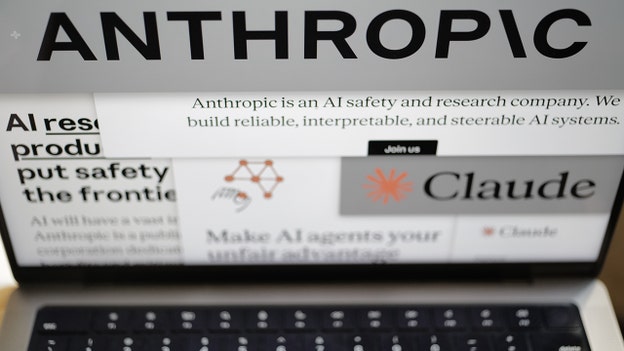
Artificial intelligence models could soon be capable of copying themselves across everyday household devices, potentially creating networks that are difficult to shut down, according to new research from AI company Anthropic.
In a report published Monday, Anthropic's Frontier Red Team warned that smaller AI models may be just months away from independently spreading across internet-connected devices, including smart ovens, TVs and other household electronics.
Researchers demonstrated that an AI model could run across 15 inexpensive Android TV boxes, while separate experiments showed that more advanced models could replicate across a simulated network.
Unlike traditional malware, self-replicating AI could potentially adapt to unfamiliar devices and find new ways to spread without human intervention.
Researchers cautioned that they have not yet demonstrated a fully autonomous AI worm operating in the real world, but warned that continued advances could make such threats increasingly difficult to contain.
Live Coverage begins here