
Costly AI boom rattles Wall Street, sends Google shares to historic one-day loss
Investors are increasingly wary of tech giants pouring hundreds of billions of dollars into AI infrastructure, worried the massive investments may not ultimately pay off. Those concerns fueled a historic selloff in Google shares on Thursday.
Chinese hackers used DeepSeek, other AI models to hack over 200 organizations: Report
Hackers linked to the Chinese government used DeepSeek and other AI models to target more than 200 organizations worldwide over an 11-day period, according to CrowdStrike.
The hacking campaign began Oct. 17 and targeted foreign ministries across Latin America, Europe, Asia and the Middle East, as well as U.S. semiconductor companies, defense organizations and think tanks, and telecommunications providers in multiple regions, CrowdStrike said in a report.
CrowdStrike recovered transcripts that showed a human operator was issuing instructions to the AI agents in Chinese. The instructions were timestamped in China Standard Time.
“This is the first time we’ve seen them using an AI or agentic capability at scale,” Adam Meyers, CrowdStrike’s vice president of threat intelligence, told NBC News in a statement. “This is a trend that’s going to continue, I think, and one where other threat actors will likely get in on the action.”
Waymo taps Toyota to build self-driving taxis for Japan, UK

Waymo is expanding its robotaxi ambitions overseas through a new partnership with Toyota, which will manufacture self-driving electric vehicles for testing in Japan beginning in 2027.
The companies plan to use Toyota's bZ4X SUV, outfitted with Waymo's autonomous driving technology, before expanding to the United Kingdom and potentially other markets, according to TechCrunch.
The vehicles will be designed to operate without a human driver in designated areas, although commercial deployment will depend on regulatory approval.
Waymo is already testing its driverless technology in London as it prepares to launch a commercial robotaxi service there.
OpenAI to launch safety report and restrict firearms content for teens

OpenAI announced Friday that it is tightening restrictions on how ChatGPT responds to questions about past mass shootings and other mass attacks, while also introducing additional protections for minors.
The company said ChatGPT will limit detailed reconstructions of past attacks, including information about firearms and other weapons, equipment and how they were obtained. The restrictions will apply to all users, regardless of age.
OpenAI also announced tighter restrictions on firearms-related content for minors.
Users will still be able to ask about past attacks, their impact on victims and ways to prevent future violence.
OpenAI also plans to publish its first Community Safety Report in early 2027, detailing how it detects and responds to potential threats, along with data on the effectiveness of its safeguards. The report will be updated every six months.
OpenAI unveils new privacy protections for businesses using powerful AI models
OpenAI on Friday introduced a new set of privacy and security protections aimed at helping businesses use its most advanced artificial intelligence models while maintaining greater control over sensitive company data.
The initiative, called OpenAI Private Intelligence, gives businesses more control over what information AI agents can access, what actions they can take and when human approval is required.
The company said businesses retain ownership of their data, including inputs and outputs, while encryption, access restrictions and threat detection help protect sensitive information.
OpenAI is also offering zero data retention for eligible API workflows, meaning prompts and responses are not stored after processing. A separate feature called Private Inference, currently in preview, uses confidential computing and additional safeguards designed to protect information while AI models process it.
The announcement comes as businesses increasingly deploy AI agents to handle complex tasks, raising questions about how companies can protect proprietary information while adopting the technology.
Comcast to lay off 634 employees at Philadelphia HQ as it invests in artificial intelligence

Comcast is set to lay off 634 employees working at its headquarters in Philadelphia as the media giant invests heavily in artificial intelligence.
The layoffs will begin on Dec. 31 of this year and continue throughout 2027, according to a notice filed with Pennsylvania labor regulators. It is by the far the largest reduction in force throughout the state announced in October.
The layoffs come after Comcast executives said on an earnings call last week that they plan to introduce cost-cutting measures to make the organization more efficient.
Part of that process, they said, was deploying AI agents in the customer service segment of the business.
Box CEO says he's 'never seen' a technology improve as rapidly as AI
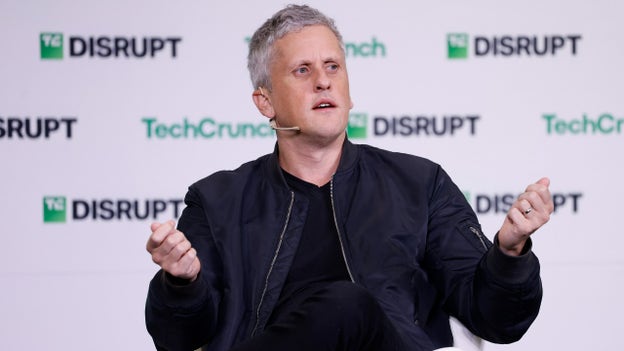
Aaron Levie, the CEO of cloud-sharing company Box, said he has "never seen" a technology advance as rapidly as artificial intelligence has.
Levie has had a front-row seat to advances in frontier AI over the last several years. Box has been integrating AI agents into its enterprise software, allowing clients to quickly analyze lengthy contracts, extract key information from them and turn documents into structured data.
"The curve of AI progress is basically going vertical right now, which means if you had codified your processes 3-6 months ago you’re likely already behind again," Levie wrote Friday on X. "With any form of recursive self improvement, things just get wilder. It’s a time when you will need to be constantly reevaluating the things that didn’t work just a couple months ago to see if they now can be solved."
Levie suggested that smaller, AI native companies have the advantage over larger firms that haven't adopted it into their workflows.
Pope says humans must reject negative applications of artificial intelligence

Pope Leo XIV said Friday that because humans created artificial intelligence, we have a responsibility to prevent the technology from spiraling out of our control.
The future of AI is not predetermined, the pope wrote in a lengthy thread on X, adding that "its future depends on the choices we make."
"Machines are tools, not persons. Today, some propose granting these systems rights, or even legal personhood. Such an approach risks obscuring human responsibility and leaving those who suffer harm to confront a faceless entity," the pope said.
The idea of granting advanced AI systems some form of legal personhood has already been debated among legal scholars, with proposals that could allow AI-controlled entities to own assets, enter contracts or be held liable for their actions.
Robert J. Rhee, a University of Florida law professor, argued in a 2025 article that AI agents should be granted limited personhood rights so they can manage private and noncorporate firms.
Letting AI run full-fledged corporations, however, "could impose greater social and economic externalities," Rhee wrote at the time.
Meanwhile, a group of law professors from the United States and Hong Kong wrote a paper in March that proposed a way to hold AI agents legally accountable for their actions without treating them as human beings.
The paper, titled "How to Count AIs: Individuation and Liability for AI Agents," argued that as AI agents proliferate and act more independently, the law will need a way to identify and hold them accountable. The authors proposed creating "algorithmic corporations," or A-corps.
A-corps would be owned by humans but run by AI agents. These entities could own property, enter into contracts, sue others and be sued themselves, according to the paper.
Intel stock plunges 28% as AI boom fuels pain for PC market

Intel stock continued to plummet Friday after its earnings report showed a slowdown in personal computer demand is expected to weigh on the chipmaker into next year.
This less-than-rosy forecast, shared with investors Thursday after the market closed, has triggered a 28% dip in Intel shares, even as the company's artificial intelligence-related business booms.
"The pace of this PC correction has accelerated over the last two months as our [original equipment manufacturing] partners are aggressively managing inventory to match the softer sell-through," Intel CEO Lip-Bu Tan said. "We expect the current environment to persist until memory availability and prices begin to normalize."
As AI companies buy up as many chips as possible to build out their data centers, it has driven up component costs and made PCs more expensive for average consumers.
Worldwide PC shipments plunged 22.4% from a year earlier in the third quarter, according to Gartner, which said soaring memory costs have forced computer manufacturers to raise prices.
Elon Musk warns AI agents could launch similar attacks on financial systems after Binance hack

Elon Musk warned late Thursday that while humans were behind the hack of Binance, the world's largest cryptocurrency exchange, similar attacks could one day be carried out by artificial intelligence agents.
"Super intelligence agents will at some point do this to gain currency for themselves, not a human," Musk wrote on X, using President Donald Trump's preferred term for AI.
Earlier this month, AI researcher Jeffrey Ladish told Fox News Digital that autonomous AI agents could eventually become major players in financial markets—and potentially dominate them—if the companies developing the technology are not sufficiently reined in.
It's not yet clear if the hackers who made off with $6.3 billion of crypto stored on the Binance exchange used AI. Binance has halted all withdrawals and deposits and has pledged to make its customers whole.
Intel and Amazon stock see double-digit declines in premarket trading, reflecting AI fears

Intel and Amazon shares each plunged by double digits in Friday morning premarket trading after the companies reported disappointing earnings results following Thursday’s closing bell.
This comes after Google lost more than $500 billion in market value Thursday as revenue fell short of analysts’ expectations and investor concerns over the returns on massive AI spending boiled over.
Intel shares plunged more than 25% ahead of Friday’s opening bell, one of the company's worst ever days in the stock market. Amazon fell a more modest 7% in the premarket.
Intel executives told investors the company experienced a massive disruption to its supply chain, while also forecasting a slowdown in demand for personal computers.
Like Google, Amazon’s stock decline came as the company rapidly ramped up spending on AI infrastructure.
Google parent Alphabet suffers nearly $500B Wall Street wipeout amid AI spending fears
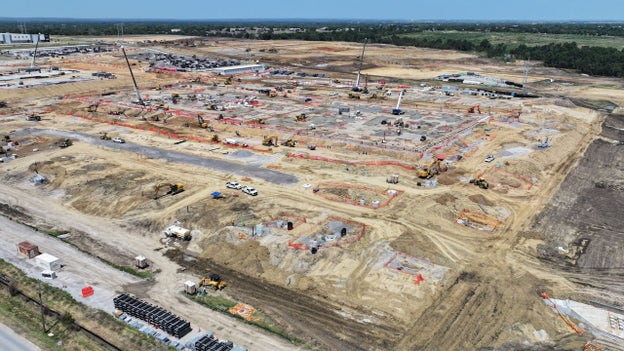
Google parent Alphabet lost approximately $500 billion in market value Thursday after its shares plunged nearly 13% following disappointing quarterly earnings, marking the second-largest single-day market value loss in stock market history.
Alphabet's Class A shares closed at $283.82, down 12.64%, wiping approximately $499.8 billion from the company's market capitalization, according to The Wall Street Journal.
The sell-off followed Alphabet's third-quarter earnings report Wednesday, which showed revenue of $127.6 billion, up 25% from a year earlier but below Wall Street's expectations.
The results heightened investor concerns about the company's massive spending on artificial intelligence (AI) and slowing growth in its core search advertising business, which remains a major source of revenue.
Google Search revenue grew 12% from a year earlier, down from 17% growth in the previous quarter, adding to concerns about the company's ability to sustain growth as AI-powered search tools reshape the industry.
Alphabet spent approximately $51.4 billion on capital expenditures during the quarter, much of it directed toward data centers and computing infrastructure needed to support its expanding AI operations.
AI data center backlash grows as issue gains ground in US elections
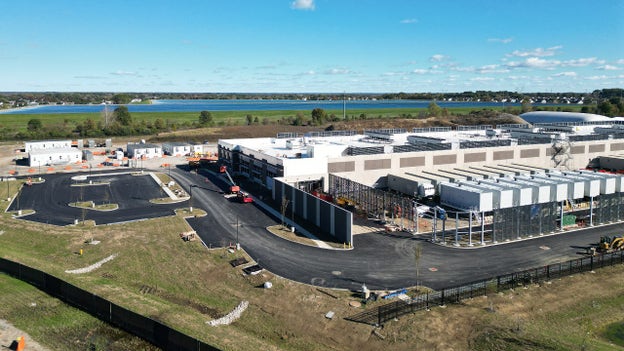
Voters in at least 13 states are weighing local measures related to data center development in 2026 as artificial intelligence projects surge to the forefront of the tech industry.
The states are Arkansas, California, Florida, Illinois, Kansas, Maine, Michigan, Nevada, New Hampshire, New Jersey, North Dakota, Ohio and Wisconsin, according to Ballotpedia.
Ohio leads the nation with 21 measures targeting data center development across 18 jurisdictions, as the state has become one of the fastest-growing data center markets, the organization said.
The measures could support or restrict data center development, including by imposing new requirements that must be met before certain projects can move forward.
As of Wednesday, voters had decided six of the measures across the affected states in special and primary elections held earlier in the year. In each case, voters favored greater limits on data center development, according to Ballotpedia.
Live Coverage begins here