














CAIRO – In the relatively short time since Hosni Mubarak's ouster in February, Egypt has introduced major foreign policy changes that already are redrawing the region's diplomatic map, signaling Cairo's growing independence from Washington and raising tension with Israel and Gulf Arab states.
In some ways, the shift is linked to changes inside post-Mubarak Egypt, such as allowing long-oppressed Islamic groups to operate freely, as well as sustained popular pressure on the country's military rulers to dismantle the legacy of the longtime ruler.
The foreign policy shift is part of the change sweeping Egypt since an 18-day uprising led by youth groups forced out Mubarak on Feb. 11 after 29 years in power and unleashed diverse and clashing political forces in this mainly Muslim nation of more than 80 million people.
Egypt has traditionally been at the heart of regional diplomacy, with a big say in key issues such as the Arab-Israeli peace process and relations with Iran. But the country has lost much of its regional clout under Mubarak because of its perceived close ties with Israel, longtime alliance with the United States, woeful economy and lack of freedom.
Many in Egypt, for example, believe Mubarak's approach to relations with the United States was dictated in large part by his wish to ensure Washington's support for his son, Gamal, a banker-turned-politician, to succeed him over the opposition of the country's powerful military and large segments of the population.
"The key to understanding Egypt's new foreign policy is that it aims to end traditional hostilities and dilute traditional friendships with a view to adopting a more balanced approach," said Abdel-Halim Kandeel, a longtime Mubarak critic and a founding member of Kifayah, or "Enough," an opposition movement whose supporters were the first to call for Mubarak's ouster earlier this decade.
The magnitude of the foreign policy changes put forth by the generals who took over from Mubarak have turned upside down several constants of his approach to regional and international issues.
A surprise deal brokered by Egypt to end the rift between the two rival Palestinian factions — the moderate, Western-backed Fatah and the militant Hamas — showcases Egypt's new approach toward Islamist groups. The deal, announced Wednesday in Cairo following secret negotiations, provides for a unity government bringing together Fatah and Hamas, and holding parliamentary and presidential elections within a year.
Egypt, which has eased its blockade of Gaza since Mubarak's ouster, had distrusted Hamas under the former Egyptian president, viewing the group as an extension of the threat posed by opposition Islamic groups at home such as the Muslim Brotherhood, the largest and best-organized opposition group to Mubarak's rule.
Both the United States, Israel and the European Union view Hamas as a terrorist organization because of its role in sending dozens of suicide bombers and thousands of rockets into the Jewish state and its commitment to the destruction of Israel.
Reflecting its frustration with years of fruitless, U.S.-sponsored negotiations between Israel and the Palestinians, Egyptian Foreign Minister Nabil el-Arabi has declared Cairo's support to Palestinian President Mahmoud Abbas' plan to secure recognition for an independent Palestinian state in the U.N. General Assembly in September, a course of action vehemently opposed by Israel and the United States.
"Egypt is not deliberately trying to be hostile to Israel," said Hassan Nafaa, a prominent analyst and political science professor. "Egypt's hostility toward Hamas was meant to please Israel and the United States. This is a realignment of policy that places Egypt's interests as the top priority."
Mubarak has long been suspected of paying too much heed to what Israel has to say about regional issues, an approach designed in large part to appease Washington, Israel's main backer. That ran against the deeply entrenched anti-Israeli sentiments many Egyptians harbor despite the two nations' 1979 peace treaty.
A poll conducted by the U.S.-based Pew Research Center and released Monday showed that more half of all Egyptians would like to see the 1979 treaty with Israel annulled and that only 36 percent of Egyptians are in favor of maintaining the treaty. The poll was based on interviews with 1,000 Egyptians around the country between March 24 and April 7.
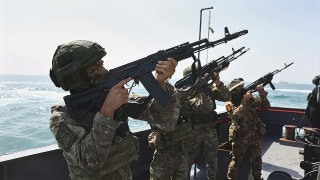
Egypt has put out cautious diplomatic feelers to non-Arab Iran since Mubarak's ouster, something that has upset U.S.-backed, Sunni-ruled Gulf Arab states that have long depended on Cairo's support in their longtime rivalry with Shiite Iran. In late February, Egypt allowed two Iranian navy vessels to transit the Suez Canal en route to Syria in the first such trip in at least three decades. Israel viewed the move as a provocation.
El-Arabi said this month it was important for Egypt to have normal relations with Iran, but there has been no concrete steps so far to upgrade diplomatic representation between the two to ambassadorial level.
However, Prime Minister Essam Sharaf has had to assure the leaders of Saudi Arabia and Kuwait repeatedly during a Gulf tour this week that any improvement in Egypt's relations with Iran would not be at the expense of the security of Gulf Arab states, which have long accused Tehran of meddling in their affairs.
But Sharaf also has publicly recognized Iran as a regional and Islamic powerhouse and warned that legal proceedings against Mubarak were a purely domestic affair, an allusion to the widely reported dismay among some Gulf Arab leaders over Mubarak's arrest and his likely trial and possible imprisonment.
Egypt has had rocky relations with Iran since the 1979 Islamic revolution, sharing Israel's view that Tehran's clerical regime posed the most serious threat to regional stability.
Egypt's unpopular gas export agreement with Israel, a key component of the two countries' relations, has come under increasing scrutiny since Mubarak's departure and could even be annulled, dealing a serious blow to the country's already cool ties with the Jewish state.
Several Egyptian officials, including Mubarak's oil minister, have been detained over allegations that Israel was buying the gas at levels much lower than market prices. Mubarak himself was questioned for his part in the gas deal.
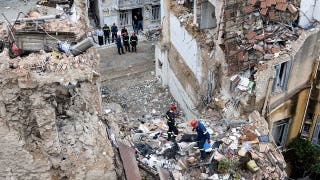
A gas export terminal in Egypt's Sinai Peninsula near the Israeli border was blown up Wednesday by masked gunmen, disrupting supplies to the Jewish state and Jordan. Suspicion immediately fell on Sinai Bedouins frustrated by years of perceived government neglect or Muslim militants opposed to ties with Israel.
___
Hendawi is chief of bureau in Cairo for The Associated Press.
