










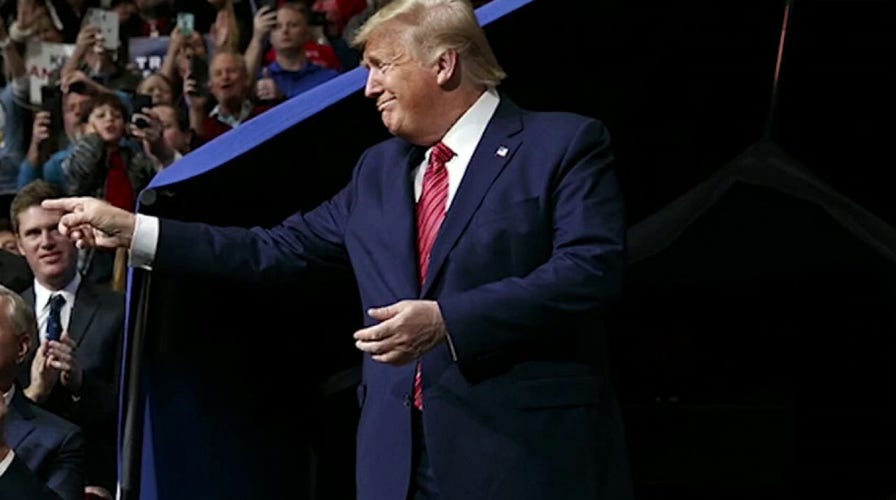
Trump takes on the media during July 4th speech
Fox News media analyst Howard Kurtz on the media's attacks on President Trump.
There is no question that President Trump knew what audience he was aiming at with a pair of Fourth of July speeches denouncing “angry mobs” and “far-left fascism.”
And of course he knew that this would spark a nuclear explosion in the media, which would blast out his message long after the fireworks had faded.
But I have to say that the media’s reaction to these speeches has been so harshly negative, so shocked and horrified, so utterly vitriolic that there is no longer any pretense in the way Trump is portrayed.
There is little effort to examine the other side, meaning the portion of the country that found the addresses uplifting. There was even a debate on “Media Buzz” about whether the Mount Rushmore speech could be considered controversial at all.
MEADOWS SAYS THERE WILL NOT BE A NATIONAL MANDATE TO WEAR MASKS AMID COVID-19
In the culmination of nearly four years of critical coverage, most news organizations are now just painting Trump as an out-and-out racist. And they are emboldened, I believe, by the growing conviction that he’s going to lose.
CNN’s Ron Brownstein described the Mount Rushmore speech as an “unadulterated call to arms for Red America against Blue America” MSNBC’s Ali Velshi called it “dark,” "divisive,” “disconnected,” filled with “apocalyptic rhetoric.”
A Washington Post news headline flatly declared: “Trump’s Push to Amplify Racism Unnerves Republicans Who Have Long Enabled Him.”
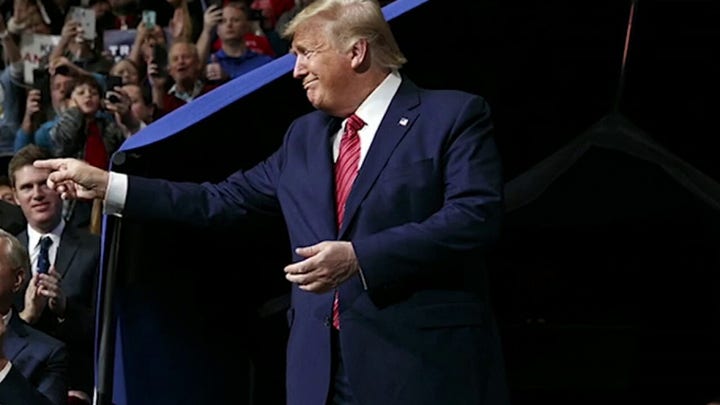
A Post news story described Trump as saying “the enemy is closer to home — other Americans whose racial identity and cultural beliefs are toppling the nation’s heritage and founding ideals...
“In making the case that a radical and violent ideology underpins much of the social justice movement that propelled the nationwide demonstrations, Trump has dropped virtually all pretense that he supports millions of peaceful protesters who have called for broad reforms to address what they see as systemic racism and a culture of brutality in police departments.”
TRUMP EXPLORING NEW ATTACKS AS BIDEN FINALLY TAKES REPORTERS’ QUESTIONS
A New York Times news story said the “dark and divisive” speech mounted “a full-on culture war against a straw-man version of the left...the latest sign of how Mr. Trump appears, by design or default, increasingly disconnected from the intense concern among Americans about the health crisis gripping the country.”
I think the pundits have always believed that the president had racist tendencies or racist beliefs, but they are emboldened now because they’ve surveyed the polls and the tea leaves and decided that Trump going to lose.
Now I don’t want to minimize the starkness of the president’s rhetoric:
“Angry mobs are trying to tear down statues of our founders, deface our most sacred memorials, and unleash a wave of violent crime in our cities...
“One of their political weapons is cancel culture, driving people from their jobs... This is the very definition of totalitarianism…
“In our schools, our newsrooms, even our corporate boardrooms. There is a new far left fascism that demands absolute allegiance…Make no mistake, this leftwing cultural revolution is designed to overthrow the American Revolution.”
Sorry, but that is not a unifying Independence Day address, suggesting that extremists are going to topple the form of government created by the Founders.
SUBSCRIBE TO HOWIE'S MEDIA BUZZMETER PODCAST, A RIFF OF THE DAY'S HOTTEST STORIES
Yet the press all but ignored other passages in the speeches. Trump said that Americans “believe in equal opportunity, equal justice, and equal treatment for citizens of every race, background, religion, and creed. Every child, of every color — born and unborn — is made in the holy image of God.” He called slavery “an evil institution” and invoked Martin Luther King.
What the media barely acknowledge is that millions and millions of Americans agree with Trump on riots, toppling statues, cancel culture and a police-free zone in Seattle. They are worried about the radical movement spinning out of control. In short, there is another side to this political debate.
Rich Lowry, National Review’s editor and hardly an unabashed Trump fan, says the press “piled on with one of its most unhinged and dishonest performances of his presidency.”
Lowry adds: “You can say that the speech was insincere, or that Trump’s tweets matter more than anything he reads from a Teleprompter, or that he doesn’t have the credibility to make this sort of speech, but you can’t say it was racially divisive.”
Of course, Trump doesn’t help his argument when he sends signals, such as yesterday’s tweet linking NASCAR’s decision to ban Confederate flags to lower ratings and asking why Bubba Walace--its only fulltime black driver--doesn’t apologize for the bogus “noose” incident. That dominated the press briefing, where Kayleigh McEnany insisted that Trump has no position on the flag ban.)
The same thing happens when he retweets (and deletes) video of a supporter shouting “white power!” without criticizing the phrase.
Dan Balz, the fair-minded Post columnist, may have captured the essence of the holiday weekend when he wrote: “A portion of the country hears Trump's rhetoric as an uplifting message extolling the rich history of American success and greatness. The rest of the country recoils at a message seen as racist and divisive. As with all things Trump-related, there can be no middle ground.”
That is true. But increasingly, there is no middle ground for the media either.
