


























Fox News Flash top headlines for April 6
Fox News Flash top headlines are here. Check out what's clicking on FoxNews.com.
The Artemis II crew officially entered a nerve-wracking communications blackout Monday evening as the spacecraft slipped behind the Moon’s far side.
NASA said the signal loss should last roughly 40 minutes, which began at roughly 6:44 p.m. ET.
During this unprecedented moment, the crew — Reid Wiseman, Victor Glover, Christina Koch, and Canadian astronaut Jeremy Hansen — became the most isolated humans in deep space history.
The blackout occurred after the spacecraft lost line of sight to Earth, with the Moon blocking satellite communications entirely.
ARTEMIS II VS. APOLLO: WHY THIS MISSION LOOPS THE MOON BUT DOESN'T LAND

The Artemis II crew, from left, Canadian astronaut and mission specialist Jeremy Hansen, Commander Reid Wiseman, mission specialist Christina Koch and pilot Victor Glover as they appear on a video conference from the moon's orbit Thursday, April 2, 2026. (NASA via AP)
Contact is expected to return around 7:25 p.m. ET, when Earth reemerges on the other side of the Moon’s horizon in a moment known as "Earthrise."
Ground control has emphasized that NASA does not anticipate any specific dangers during the mission but is prepared for potential contingencies.
For example, the astronauts recently practiced performing essential tasks, such as drinking protein shakes or administering medication, while wearing their bulky orange launch and entry suits in case they must remain in the gear for an extended period.
NASA CHIEF VOWS FOUR MOON MISSIONS BEFORE TRUMP'S TERM ENDS IN AMBITIOUS 2028 TIMELINE
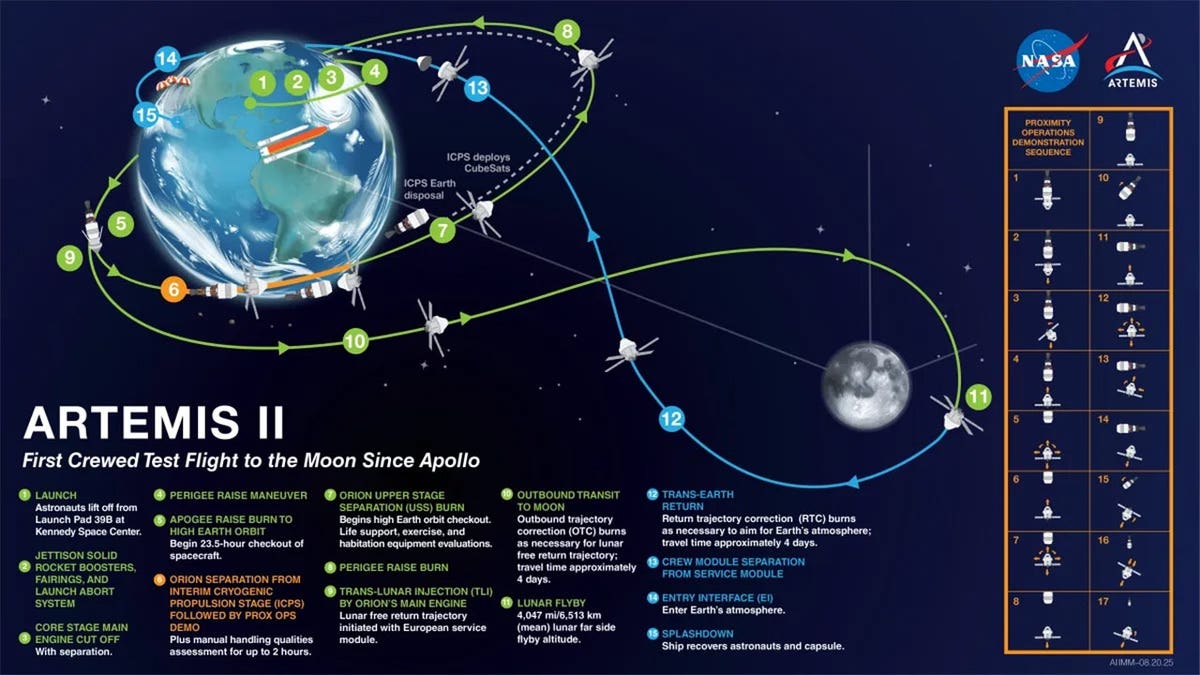
The Artemis II crew was launched toward the moon on Thursday after a nearly 5-minute burn set the Orion spacecraft on a trajectory out of Earth's orbit for the nearly 8-day flight to the lunar object and back. (NASA)
NASA also noted that if the spacecraft were punctured, Orion is equipped to continuously pump oxygen to maintain cabin pressure, giving the crew ample time to safely put on their pressurized suits.
The Artemis II crew will also reach several major milestones during the blackout, including becoming the first humans to witness never-before-seen views of the Moon’s far side.
At 7:05 p.m. ET, the spacecraft is expected to reach its farthest point from Earth at 252,760 miles, marking another key milestone and surpassing the Apollo 13 record by roughly 4,105 miles.
ASTRONAUT VICTOR GLOVER PRAISED FOR SAYING MOON MISSION IS 'HUMAN HISTORY,' NOT 'BLACK HISTORY'
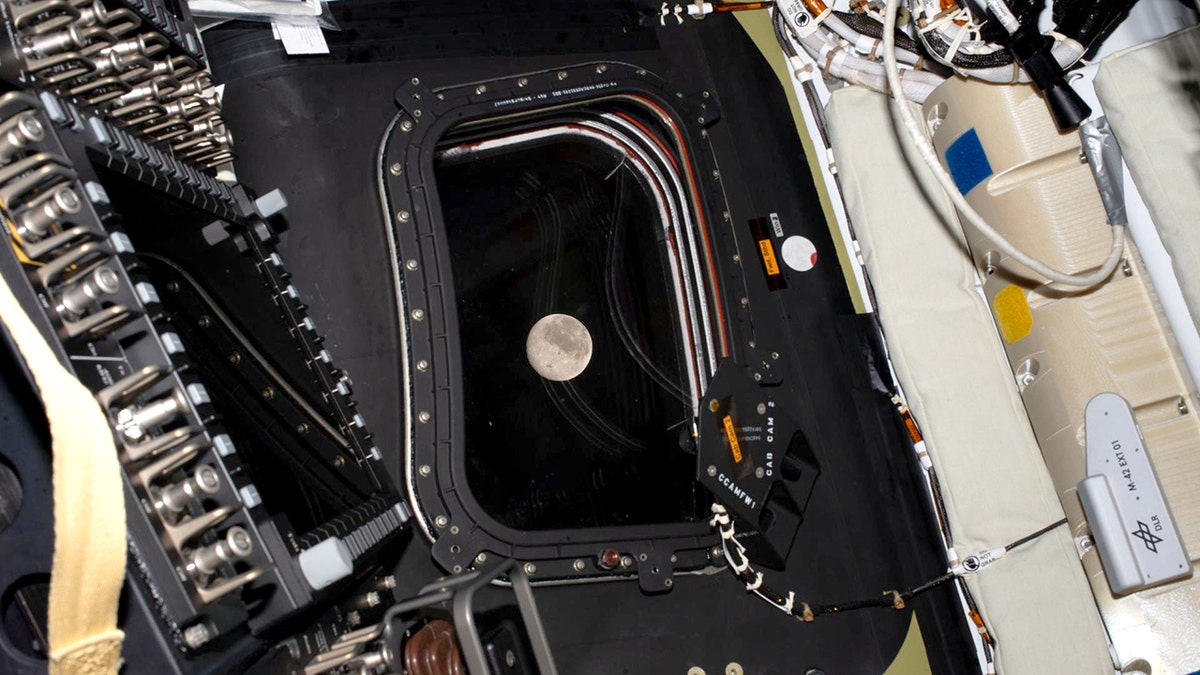
Before going to sleep on flight day 5, the Artemis II crew snapped one more photo of the Moon, as it drew close in the window of the Orion spacecraft. (NASA)
At their nearest point, roughly 4,070 miles from the lunar surface, the Moon is expected to appear about the size of a basketball held at arm’s length, according to NASA.
While ground control and the science evaluation room will not be able to interact with the astronauts during this specific period, the crew will continue to execute their lunar targeting plan and conduct science observations throughout the blackout.
CLICK HERE TO DOWNLOAD THE FOX NEWS APP
The astronauts are expected to track historic Apollo sites, scout future landing zones and photograph rare views of nearby planets, including Mercury, Venus, Mars and Saturn, while also observing a solar eclipse from Orion’s unique vantage point.
Earlier in the afternoon, the crew broke a record for distance traveled from Earth set by Apollo 13 in 1970, NASA announced.
