






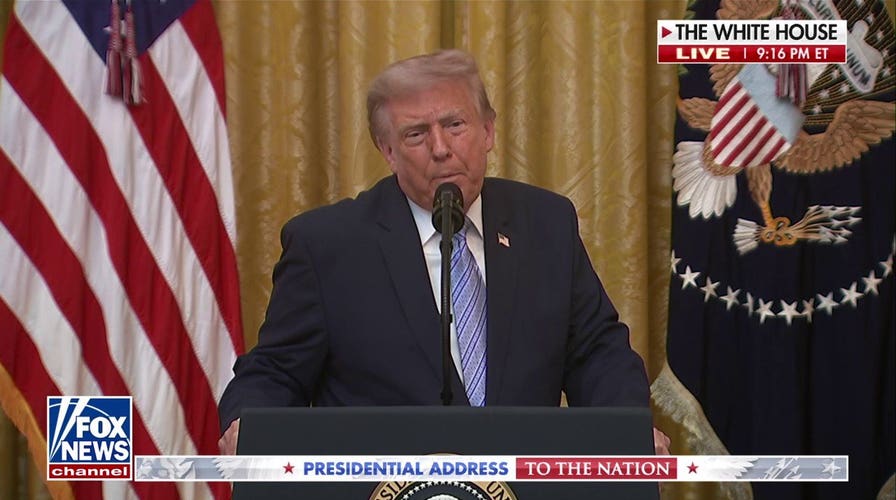
Trump points fingers at US adversaries in election integrity speech
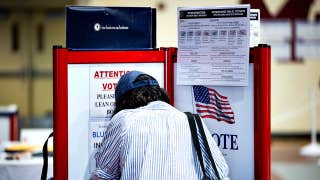
President Donald Trump claims Russia, China, Iran, and North Korea have the capability to compromise U.S. election infrastructure.
Less than two weeks after accusing China of carrying out an "unprecedented election security nightmare," President Donald Trump has not changed his posture toward Beijing and is moving ahead with plans to host Chinese President Xi Jinping in September.
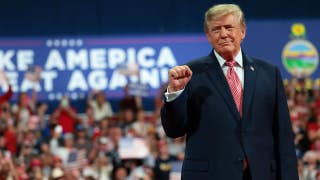
"This data loss presents an unprecedented election security nightmare," Trump said in a July 16 address. "The intelligence even shows that China assigned a data exploitation unit specifically to this new project."
Intelligence officials, he said, "worked to actively suppress and downplay information about the extent of China’s sinister election meddling."
TRUMP’S UPBEAT CHINA MESSAGE COLLIDES WITH DEEPENING BEIJING RIVALRY
Trump did not claim China changed votes or altered election results. Instead, he argued Beijing engaged in an influence campaign aimed at shaping U.S. public perceptions.
But within days of the address, Trump undercut the urgency of his own warning. Asked whether China would face consequences, he said the alleged activity "took place a long time ago" and suggested it reflected the broader intelligence rivalry between the two countries.
"They do things, and we do things to them," Trump said July 21 in remarks to reporters. "I’ll be honest, we do things to them, too. It’s not a one-way street."
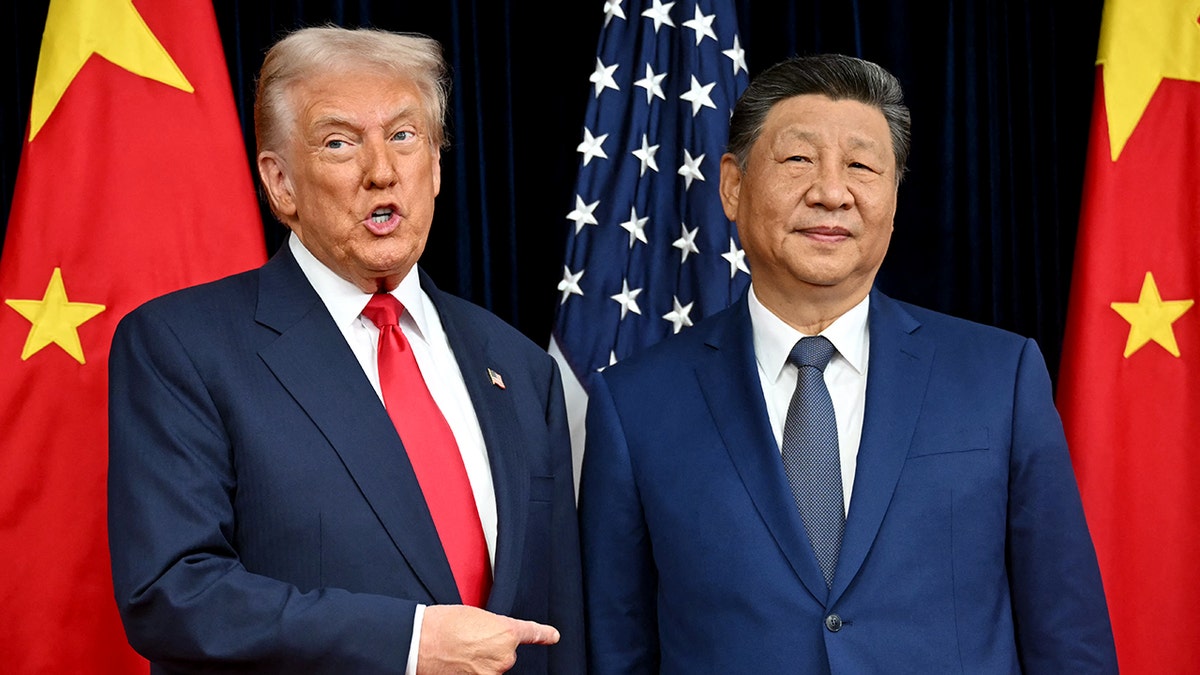
President Donald Trump and President Xi Jinping prepare for a key summit in May. (Andrew Caballero-Reynolds/Getty Images)
So far, the fallout has been directed almost entirely inward. Trump ordered investigations into U.S. officials who handled the intelligence, while his trade and diplomatic engagement with Beijing has continued largely unchanged.
Trump’s posture toward TikTok has undergone a similar shift. He sought to ban the platform during his first term over national-security concerns tied to its Chinese ownership but joined it during the 2024 campaign. Five days after Trump’s address, most Cabinet members launched official accounts after the Justice Department cleared federal employees to use TikTok under its new U.S.-controlled ownership.
It also remains unclear when Trump first learned of the intelligence or whether he knew about it before traveling to Beijing in May. A White House official confirmed Xi's Sept. 24 visit will proceed but did not answer questions about when Trump was briefed or whether anyone accused of withholding the intelligence remains in government.
The Chinese embassy could not immediately be reached for comment on the planned visit.
Newly declassified records released by the administration provide fresh details about China’s alleged collection and analysis of American voter information and reveal an internal intelligence debate over whether Beijing’s broader activities amounted to election interference. But the documents also establish less than some of Trump’s rhetoric appeared to suggest.
During the July 16 address, Trump said China had acquired 220 million U.S. voter files containing names, addresses, phone numbers and political affiliations. He said Beijing assigned a unit to exploit the information which had the potential to use it to register voters or engage in other "nefarious activities."
Trump called the findings "stunning" and the broader vulnerabilities "a cyber threat aimed at the very heart of our democracy."
The president accused intelligence officials of working to "actively suppress and downplay" China’s "sinister election meddling." He cited an internal message saying officials had "deliberately massaged" a pending President’s Daily Brief and another in which an FBI official described "running a shadow government."
'SHADOW GOVERNMENT': TRUMP CLAIMS INTEL COMMUNITY BRAGGED ABOUT HIDING CHINESE MEDDLING
Trump directed the Justice Department, FBI, CIA and Office of the Director of National Intelligence to investigate. He said those responsible should be fired and potentially prosecuted.
The roughly 270 pages of released records show that Chinese entities amassed and analyzed large quantities of American voter information.
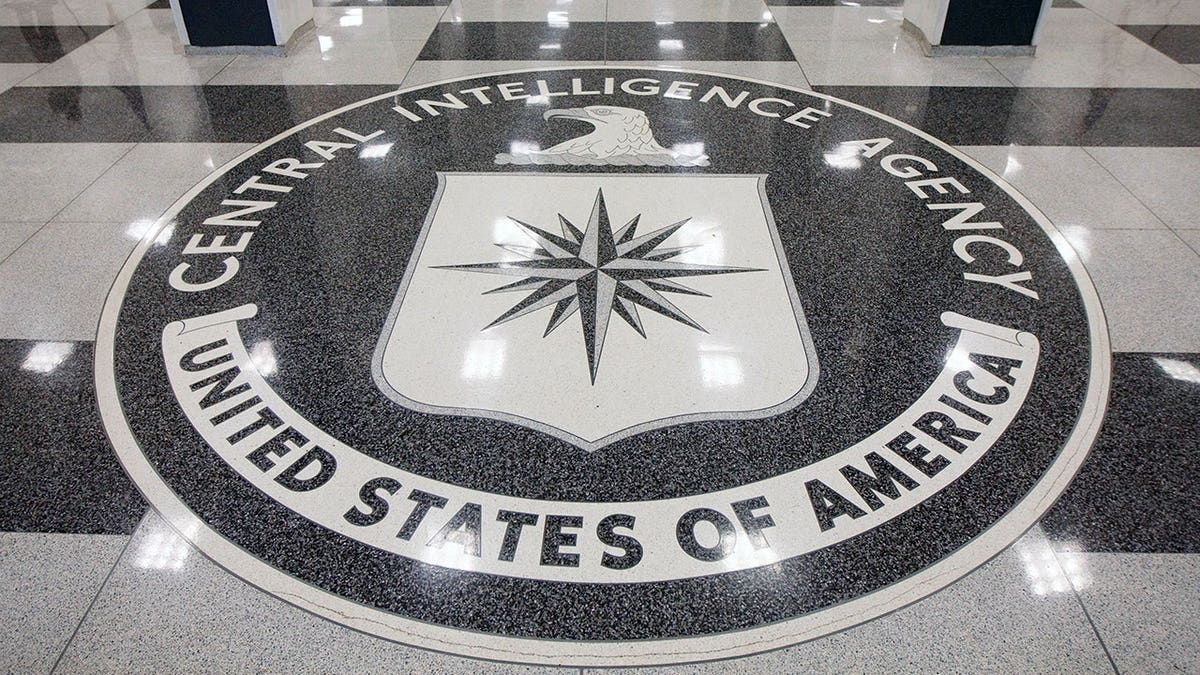
The seal of the Central Intelligence Agency is displayed in the foyer of the original headquarters building in Langley, Virginia, Sept. 18, 2009. (Andrew Harrer/Bloomberg via Getty Images)
The figure at the center of Trump’s announcement appears to come from a record showing that a Chinese entity possessed an unspecified dataset containing approximately 204.8 million American voter records. The document does not identify its source or explain how it was obtained.
Other records describe China analyzing registration information from 18 states and a Chinese actor downloading publicly available historical voter information from six states. The documents do not show that China altered voter rolls, changed ballots or penetrated vote-counting systems.
The documents also include a raw FBI report alleging that China planned to manufacture fraudulent U.S. driver’s licenses that could be used to cast mail ballots for Joe Biden. The allegation came from a single uncorroborated source, and the report was recalled the day it was distributed and never reissued.
There was no evidence that any fraudulent votes were actually cast.
Emily Harding, director of the Intelligence, National Security, and Technology Program at the Center for Strategic and International Studies, wrote that China "likely gained little advantage" from voter records that were largely publicly available or available for purchase.
Harding wrote that the internal exchanges showed "an honest, and valuable, analytical debate" rather than a cover-up. She noted that the recalled FBI report relied on unreliable third-hand information and said references to the election were removed from one briefing so a specialized election-security team could address the issue.
Trump did not explain which American activities he considered comparable to China’s collection and analysis of voter information.
There is some public record behind Trump’s suggestion that the intelligence competition runs both ways — but China does not hold free national elections.
Trump authorized the CIA in 2019 to conduct a covert influence campaign against China, Reuters reported in 2024. According to three former U.S. officials, operatives used false online identities to circulate damaging but fact-based information about Xi’s government and attempt to shape public opinion inside China.
The CIA declined to confirm the program. Documents leaked by former National Security Agency contractor Edward Snowden also showed the National Security Agency penetrating Chinese networks, including the systems of telecommunications giant Huawei.
Trump expressed a similar view during his May visit to Beijing, although he was speaking then about Chinese espionage more broadly.
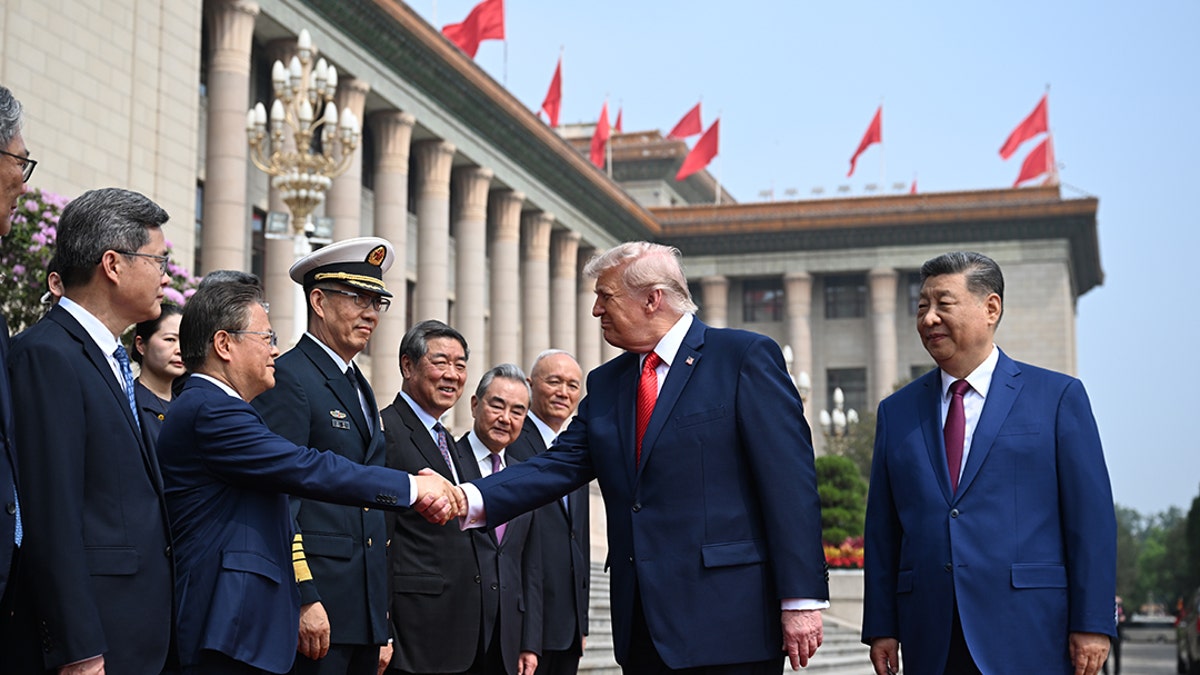
President Donald Trump, trailed by Chinese President Xi Jinping, greets other officials at the Great Hall of the People on May 14, 2026, in Beijing. (Kenny Holston-Pool/Getty Images)
"They spy on us," Trump told Fox News host Sean Hannity during the trip. "We spy on them too, I guess."
Trump otherwise used the visit to promote closer economic ties. He traveled with leading American executives, called Xi a "great leader" and said it was an "honor" to be his friend.
The White House later announced that the two countries had agreed to establish boards of trade and investment. China also committed to purchase 200 Boeing aircraft and at least $17 billion in American agricultural products annually through 2028, according to the administration.
CLICK HERE TO DOWNLOAD THE FOX NEWS APP
Preparations for Xi’s visit continued after Trump’s address.
Secretary of State Marco Rubio met Chinese Foreign Minister Wang Yi July 22 to lay the groundwork for what he called a "very positive" visit but said Trump’s election allegations were not discussed. Rubio added that it would be "reckless and irresponsible" for the two powers not to maintain a relationship.
China has denied interfering in the 2020 election. Chinese Foreign Ministry spokesperson Lin Jian called the allegations "entirely fabricated" and urged the United States to stop using China as an election issue.
