





















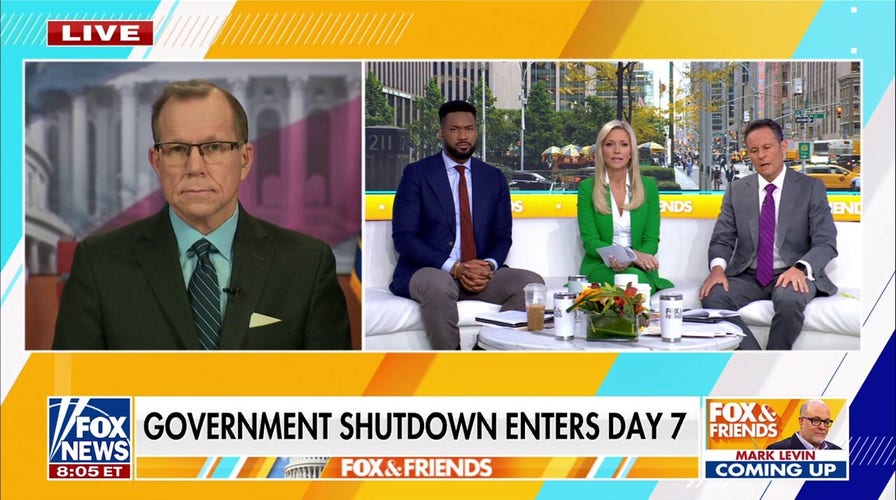
Senate remains deadlocked over funding as government shutdown fallout grows
Fox News senior congressional correspondent Chad Pergram reports after test votes failed in the Senate as Democrats continue holding out for healthcare subsidies.
Lawmakers were hoping to prevent another government shutdown in 2025 but failed to reach a deal by midnight on Oct. 1. The Senate remains deadlocked on a path to end the shutdown as it nears its second week, and Republicans’ meager support across the aisle to reopen the government could be weakening.
The government has now shut down 21 times since Congress introduced the Congressional Budget and Impoundment Control Act, which established the federal budget process in 1976.
WHAT HAPPENS DURING A GOVERNMENT SHUTDOWN? 7 THINGS YOU SHOULD KNOW
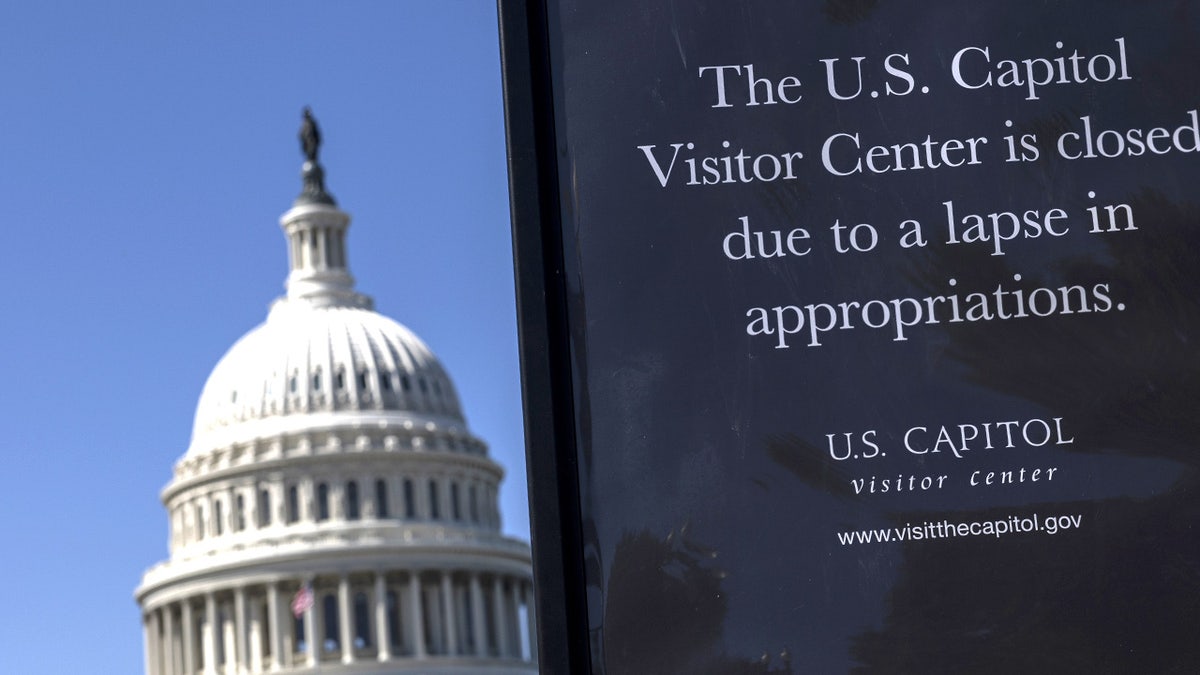
The government shutdown is expected to cost taxpayers $400 million a day to pay furloughed federal employees, according to Congressional Budget Office data. (Mehmet Eser/Anadolu via Getty Images)
But there have been a handful of lengthy U.S. government shutdowns.
On Jan. 25, 2019, the government reached 34 days, breaking the record for the longest shutdown in U.S. history.
The previous record breaker occurred during the winter of 1995 to 1996, when President Bill Clinton and the Republican Congress were at odds and shut the government down for a total of 21 days. The third occurred during the Obama administration in 2013. A stalemate between the House and Senate led to a 16-day hiatus.
Here is a look back at every government shutdown in the history of the U.S.
President Gerald Ford
When: Thursday, Sept. 30 to Monday, Oct. 10, 1976
Duration (full days): 10 days
The first partial shutdown occurred under Gerald Ford’s presidency when he vetoed a $56 billion spending bill for the Departments of Labor and Health, Education and Welfare, according to a 1976 report from The New York Times.
This was the year the Congressional Budget and Impoundment Control Act became law, allowing Congress to take an extension, known as a continuing resolution (CR).
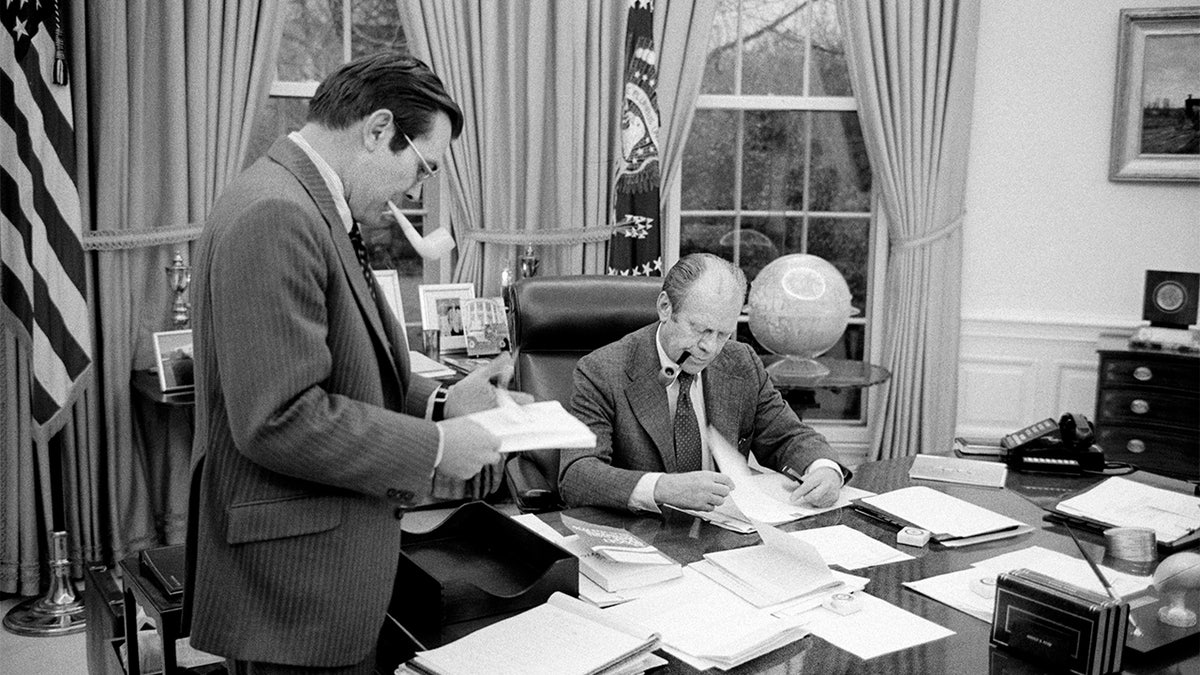
President Gerald Ford meeting with Donald Rumsfeld at the White House in Washington, D.C., on Feb. 6, 1975. (Universal History Archive/Universal Images Group via Getty Images)
President Jimmy Carter
When: Friday, Sept. 30 to Thursday, Oct. 13, 1977
Duration (full days): 12 days
When: Monday, Oct. 31 to Wednesday, Nov. 9, 1977
Duration (full days): 8 days
When: Wednesday, Nov. 30 to Friday, Dec. 9, 1977
Duration (full days): 8 days
There were three shutdowns, referred to as the "abortion shutdowns," in the late 1970s under the presidency of Jimmy Carter. The Democratic Party may have dominated both the House and the Senate, but they couldn't get Republicans on board when it came to using Medicaid to pay for abortions.
When: Saturday, Sept. 30 to Wednesday, Oct. 18, 1978
Duration (full days): 17 days

President Jimmy Carter addressing a town meeting on March 24, 1979, in Elk City, Oklahoma. (Getty Images)
In 1978, Carter vetoed a $37 billion national defense authorization bill, which included a $2 billion nuclear-powered Nimitz-class aircraft carrier – equipment he didn't consider essential to national security, The Washington Post reported. This led to the second-largest shutdown in the history of the nation.
When: Sunday, Sept. 30 to Friday, Oct. 12, 1979
Duration (full days): 11 days
Another funding gap took place a year later when the House and Senate disagreed over raising pay by 5.5% for members of Congress and senior civil servants, The Washington Post reported. And there was another debate over abortion funding.
President Ronald Reagan
When: Friday, Nov. 20 to Monday, Nov. 23, 1981
Duration (full days): 2 days
President Ronald Reagan vetoed a spending bill because it didn't make enough cuts.
When: Thursday, Sept. 30 to Saturday, Oct. 2, 1982
Duration (full days): 1 day
The government shut down for one day when Congress failed to pass the spending bill on time.
When: Friday, Dec. 17 to Tuesday, Dec. 21, 1982
Duration (full days): 3 days
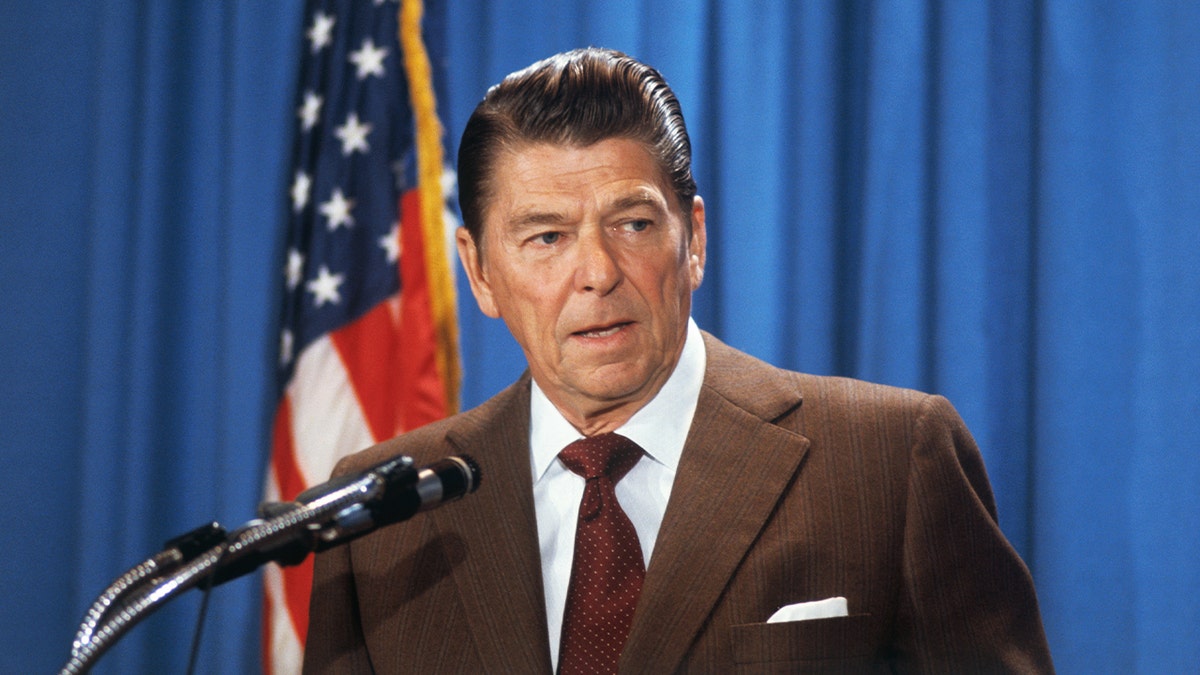
Ronald Reagan, then-Republican candidate for the presidency. (Getty Images)
Both the House and Senate wanted to increase public works spending in order to create more jobs – a move Reagan opposed. The House also opposed MX missile funding, which, The Washington Post noted, was a "major defense priority" of Reagan's.
When: Thursday, Nov. 10 to Monday, Nov. 14, 1983
Duration (full days): 3 days
Reagan argued over the Democratic-controlled House's proposed foreign aid and spending cuts and their plea for an increase in funding for education. At the same time, Reagan was pushing for more funding for the MX missile.
Eventually, both parties reached an agreement.
When: Sunday, Sept. 30 to Wednesday, Oct. 3, 1984
Duration (full days): 2 days
In short, Reagan agreed to the House's proposed crime-fighting package, but he opposed their water projects package.
"Reagan offered to forgo his crime bill in exchange for junking the water package... but a deal wasn't reached in time to avoid a brief shutdown," The Washington Post reported.
When: Wednesday, Oct. 3 to Friday, Oct. 5, 1984
Duration (full days): 1 day
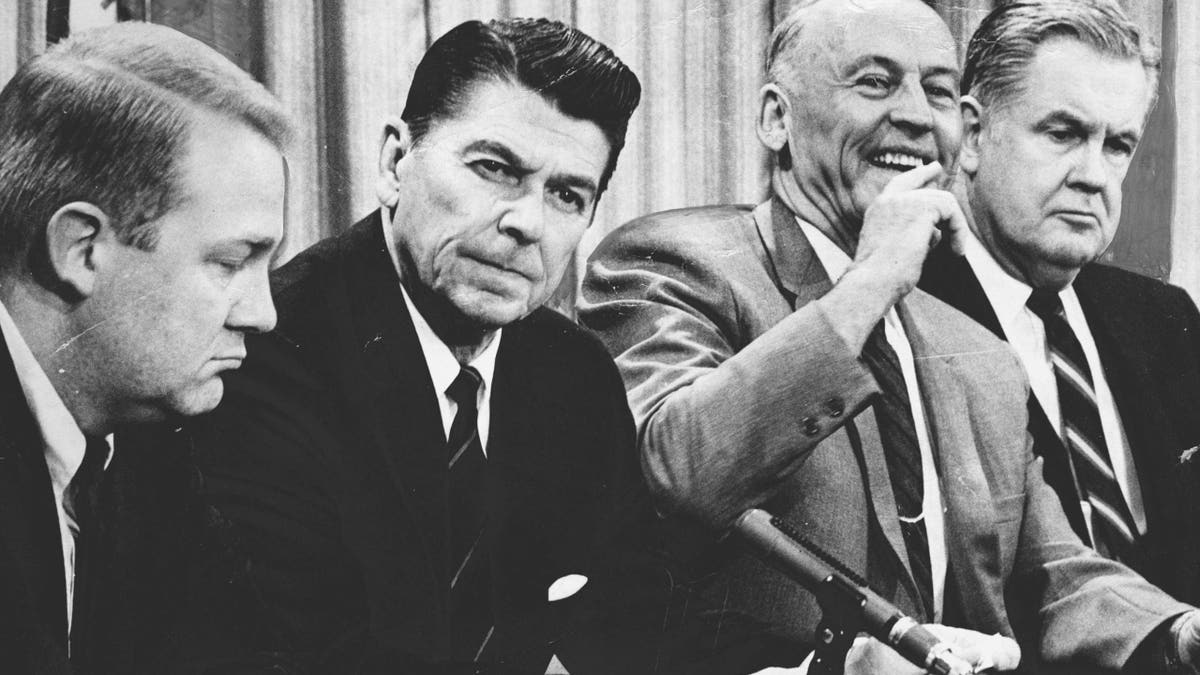
Then-California Gov. Ronald Reagan on Feb. 6, 1969. (Getty Images)
Lawmakers reportedly needed another day to discuss the spending bill.
When: Thursday, Oct. 16 to Saturday, Oct. 18, 1986
Duration (full days): 1 day
The Democratic-controlled House was once again in disagreement with Reagan and the Republican-controlled Senate. This time, over a welfare package deal.
When: Friday, Dec. 18 to Sunday, Dec. 20, 1987
Duration (full days): 1 day
Reagan and Democrats couldn't agree on funding for Nicaraguan "Contra" militants. Democrats also pushed to reinstate the "Fairness Doctrine," which required licensed broadcasters to give equal air time for people with competing political points of view.
President George H.W. Bush
When: Friday, Oct. 5 to Tuesday, Oct. 9, 1990
Duration (full days): 3 days
Only one shutdown took place during George H.W. Bush’s presidency. It occurred in October 1990 after Bush vetoed a stopgap spending bill, The New York Times reported at the time.
But the timing was right. The shutdown happened over Columbus Day weekend and most federal workers were already off for the holiday.

In this Feb. 11, 1991, file photo, President George H.W. Bush talks to reporters in the Rose Garden of the White House after meeting with top military advisors to discuss the Persian Gulf War. (Ron Edmonds/AP Photo)
President Bill Clinton
When: Monday, Nov. 13 to Sunday, Nov. 19, 1995
Duration (full days): 5 days
President Bill Clinton vetoed a continuing resolution in November 1995 over Medicare premium increases.
"The government is partially shutting down because Congress has failed to pass the straightforward legislation necessary to keep the government running without imposing sharp hikes in Medicare premiums and deep cuts in education and the environment," Clinton said during an address on Nov. 14, 1995.
When: Friday, Dec. 15, 1995, to Saturday, Jan. 6, 1996
Duration (full days): 21 days
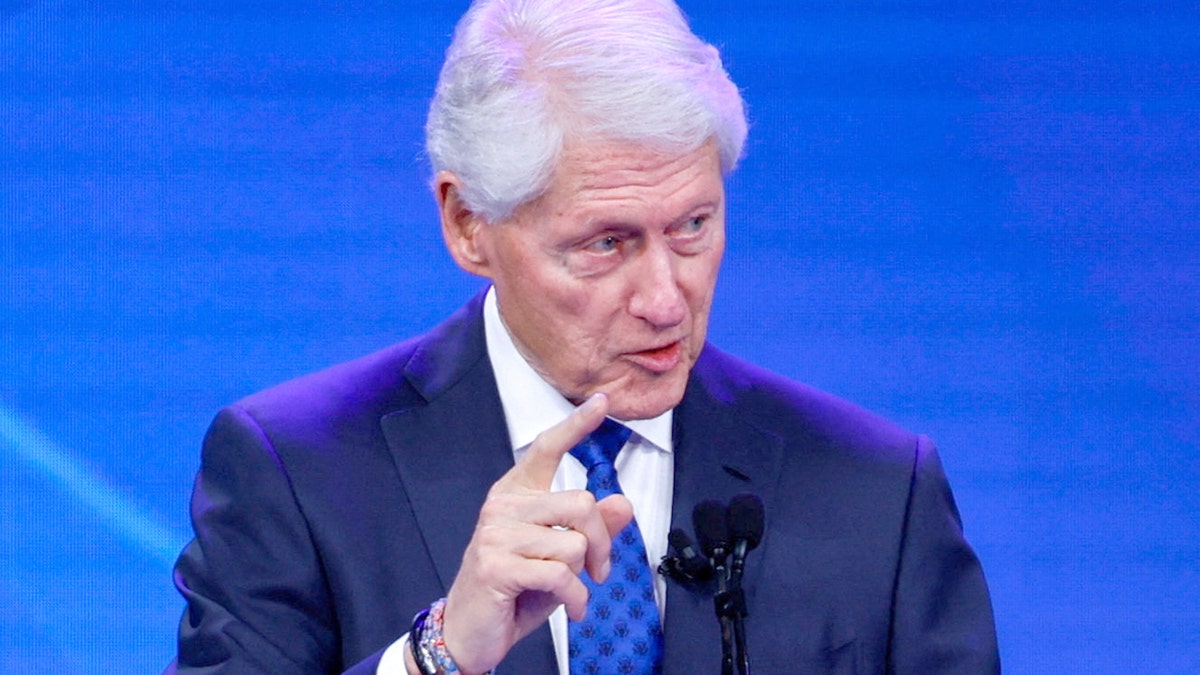
Former President Bill Clinton speaks during the Clinton Global Initiative in New York City on Sept. 24, 2025. (Kylie Cooper/Reuters)
It's the second-longest shutdown in U.S. history: 21 days.
The government shut down after Clinton vetoed the spending bill proposed by the Republican-controlled Congress.
After a long three weeks, the president and Congress agreed to a seven-year budget plan, which included "modest spending cuts and tax increases," according to research by the Regional Oral History Office at the University of California, Berkeley.
President Barack Obama
When: Monday, Sept. 30 to Thursday, Oct. 17, 2013
Duration (full days): 16 days
Seventeen years later, the government shut down once again. Lawmakers couldn't come to an agreement on the Affordable Care Act, also known as ObamaCare, in 2013.
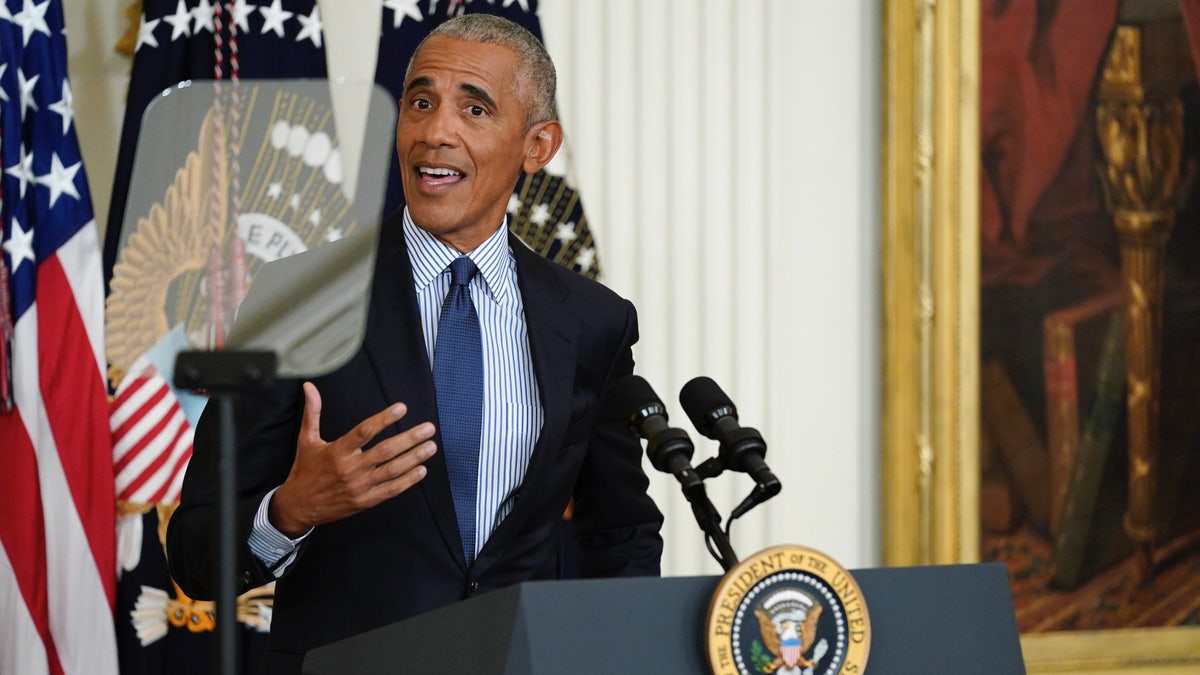
Former President Barack Obama in the East Room of the White House on Sept. 7, 2022, in Washington. (Andrew Harnik/AP )
The House passed several versions of the bill to fund the government. But each time, the Senate sent it back.
"This is an unnecessary blow to America," Harry Reid, the Senate Democratic leader at the time, said of the shutdown.
John Boehner, the House speaker during the shutdown, said Republicans were fighting to keep the government open, but the Senate "continued to reject our offers."
President Donald Trump
When: Saturday, Jan. 20 to Monday, Jan. 22, 2018
Duration (full days): 3 days
When it comes to immigration and spending, President Donald Trump, Republican lawmakers and Democrats were divided.
Republicans controlled the Senate, but they still needed 60 votes to break a filibuster.
"When you only have 51 votes in the Senate, then you have to have Democrat support in order to keep the government – to fund the government," OMB Director Mick Mulvaney told reporters during a White House press briefing.
Democrats said from the beginning that they'd reject any deal that didn't include a legislative fix for the Deferred Action for Childhood Arrivals (DACA) program, an Obama-era program, which offers protection for immigrants – also known as "Dreamers" – who came into the U.S. illegally as minors.
"I'm proud of the House and Senate Democrats' unity in insisting on a budget that supports our military and the domestic investments that keep our nation strong and honors the values by protecting our DREAMers," House Minority Leader Nancy Pelosi, D-Calif., said in a statement as the government shut down.
Trump, on the other hand, said Democrats only had themselves to blame when it came to both shutting down the government and failing to make a deal on DACA.
PARTIAL GOVERNMENT SHUTDOWN TIMELINE: FROM TRUMP'S DEMANDS TO DEMOCRATS' PROPOSALS

President Donald Trump talks to the media after walking off Marine One on the South Lawn of the White House on Oct. 5, 2025 in Washington. (Tasos Katopodis/Getty Images)
"Deals can’t get made when there is no trust! Durbin blew DACA and is hurting our Military," Trump tweeted, referring to Sen. Dick Durbin, D-Ill. "DACA is probably dead because the Democrats don’t really want it, they just want to talk and take desperately needed money away from our Military."
In the end, Democrats reached a compromise to reopen the government through Feb. 8 – with one condition.
"After several discussions, offers, counter-offers, the Republican leader and I have come to an arrangement," Senate Minority Leader Chuck Schumer, D-N.Y., said on the Senate floor. "We will vote today to reopen the government to continue negotiating a global agreement, with the commitment that, if an agreement isn’t reached by Feb. 8, the Senate will immediately proceed to consideration of legislation dealing with DACA."
When: Friday, Feb. 9, 2018
Duration: 9 hours
Republican and Democratic senators announced a two-year budget agreement on Feb. 7 that included an increase in military spending, an extension for the Children’s Health Insurance Program and additional funds for disaster relief, among other issues.
"I am pleased to announce that our bipartisan, bicameral negotiations on defense spending and other priorities have yielded a significant agreement," Senate Majority Leader Mitch McConnell, R-Ky., said in a speech on the Senate floor.
It's a deal "neither side loves, but both sides can be proud of," Senate Minority Leader Schumer, D-N.Y., added.
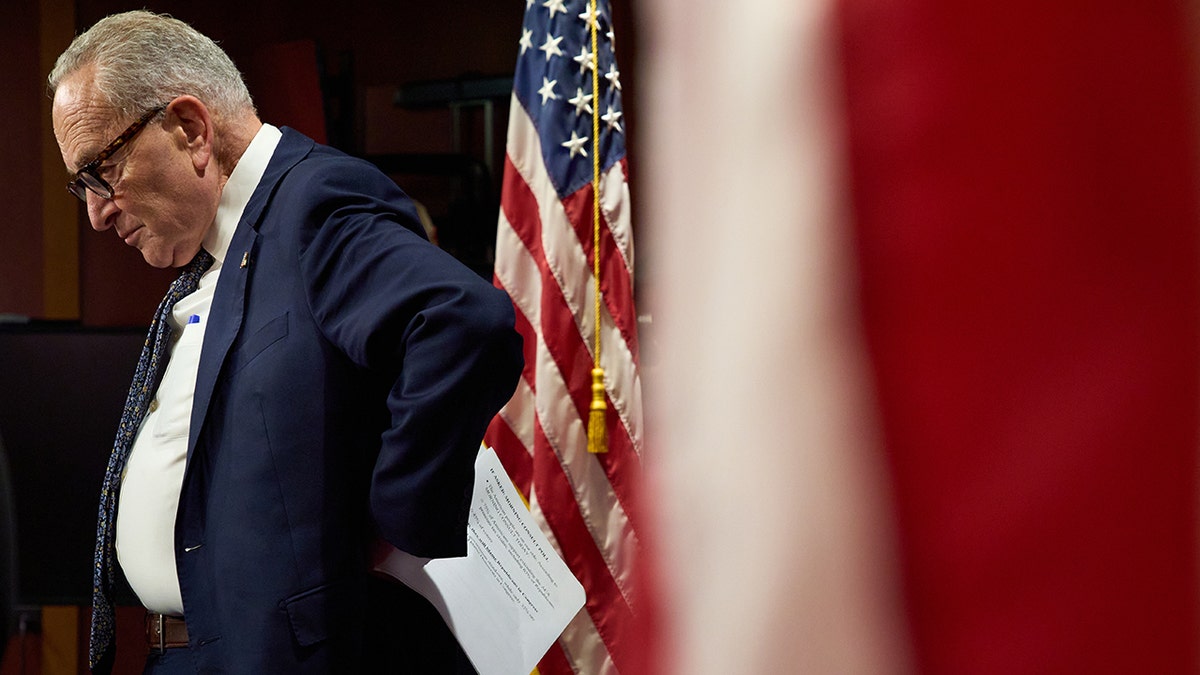
Senate Minority Leader Chuck Schumer, D-N.Y., attends a news conference about the government shutdown on Sept. 30, 2025, on Capitol Hill in Washington. (Jacquelyn Martin/AP Photo)
But not everyone was a fan of the deal.
House Minority Leader Pelosi slammed the plan for not addressing immigration.
"[The] package does nothing to advance bipartisan legislation to protect Dreamers in the House," said Pelosi, as she shared the stories of "Dreamers" on the House floor for more than eight hours. "Without a commitment from Speaker Ryan comparable to the commitment from Leader McConnell, this package does not have my support."
Sen. Rand Paul, R-Ky., also voiced his frustration with the deal, which he said irresponsibly busted through budget caps and increased the country's deficit even more.
"I ran for office because I was very critical of President Obama's trillion-dollar deficits," Paul said. "Now we have Republicans hand in hand with Democrats offering us trillion-dollar deficits. I can't, in all honesty, look the other way."
A last-minute maneuver by Paul led to an hours-long shutdown.
In the end, Congress agreed to pass the $400 billion deal, and it was on Trump's desk within hours. He announced that he had signed the bill at 8:40 a.m. ET.
When: Saturday, Dec. 22, 2018 to Friday, Jan. 25, 2019
Duration: 34 days
Democrats and President Trump were at an impasse over a spending bill – particularly with regard to funding for border security. As a result, and just ahead of Christmas, the government partially shuttered at midnight on Dec. 22.
Trump had urged Senate Republicans to use the so-called "nuclear option" to pass a spending bill that included enough funding for a border wall. The House scrambled to put together a package that included the $5.7 billion the president wanted but was unable to agree on a deal to fund the government by the deadline.
Trump had warned a closure could drag on "for a very long time." When it surpassed the 22-day mark on Jan. 12, it became the longest government shutdown in U.S. history.
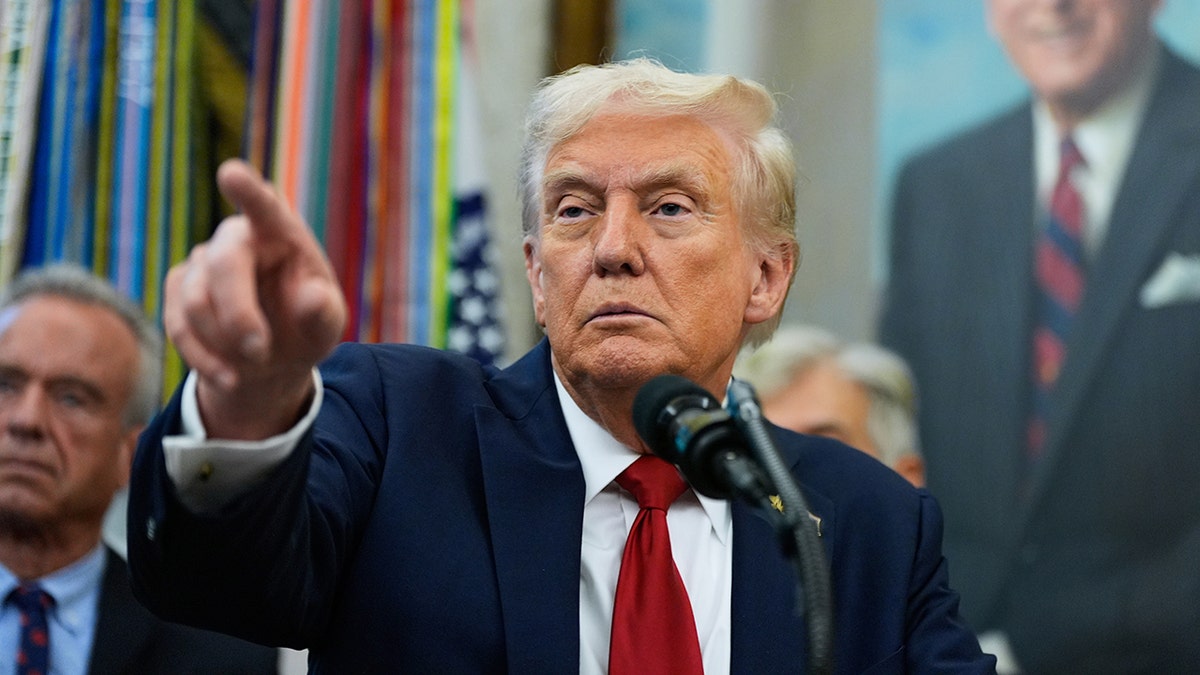
President Donald Trump points to a reporter in the Oval Office of the White House on Sept. 30, 2025, in Washington. (Alex Brandon/AP)
When: Wednesday, Oct. 1, 2025
Duration: Ongoing
After Democrats and Republicans failed to agree on a funding bill for the federal government, they entered a shutdown on Wednesday after the midnight funding deadline.
Senate Democrats argued for extensions to the Affordable Care Act and argued that America will see a rise in premiums during the upcoming open enrollment for healthcare coverage.
Senate Republicans, in turn, argue that Senate Democrats are using the shutdown as a means to control Trump's power and have agreed to negotiate with Democrats once they agree to reopen the government.
Fox News' Kaitlyn Schallhorn contributed to this report.
