























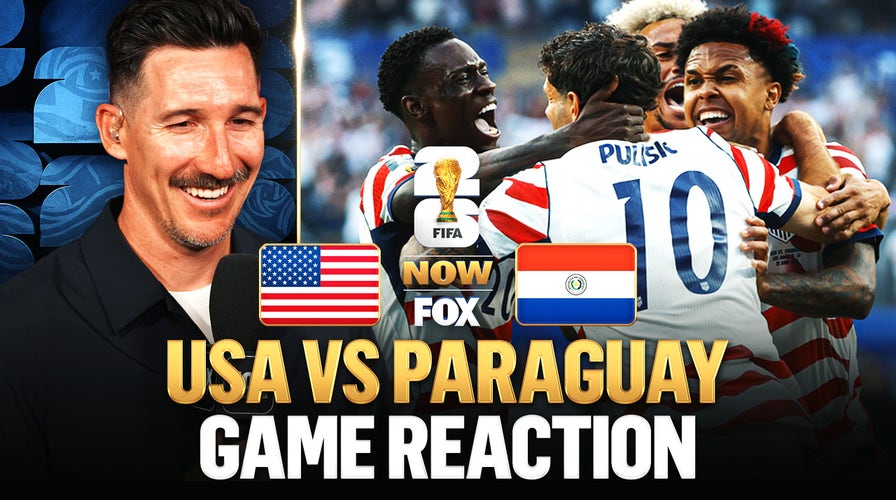
INSTANT REACTION 🚨 FIFA World Cup Now reacts to USA's 4-1 dominant win over Paraguay ⚽️
Melissa Ortiz, Peter Crouch, Sacha Kljestan, Bob Bradley, Stu Holden, Brad Guzan and Mo Edu react to USA's 4-1 win over Paraguay.
Flopping is a major issue in the NBA. I’ve written about it ad nauseam. The league has anti-flopping measures in place, but they rarely dish out fines based on reviews after the conclusion of the games, and in-game flopping calls are even more of rarity.
That’s why the NBA needs to take a page out of FIFA’s book when it comes to "mistaken identity" calls like what we saw in the USA vs. Paraguay World Cup match in Los Angeles on Friday.
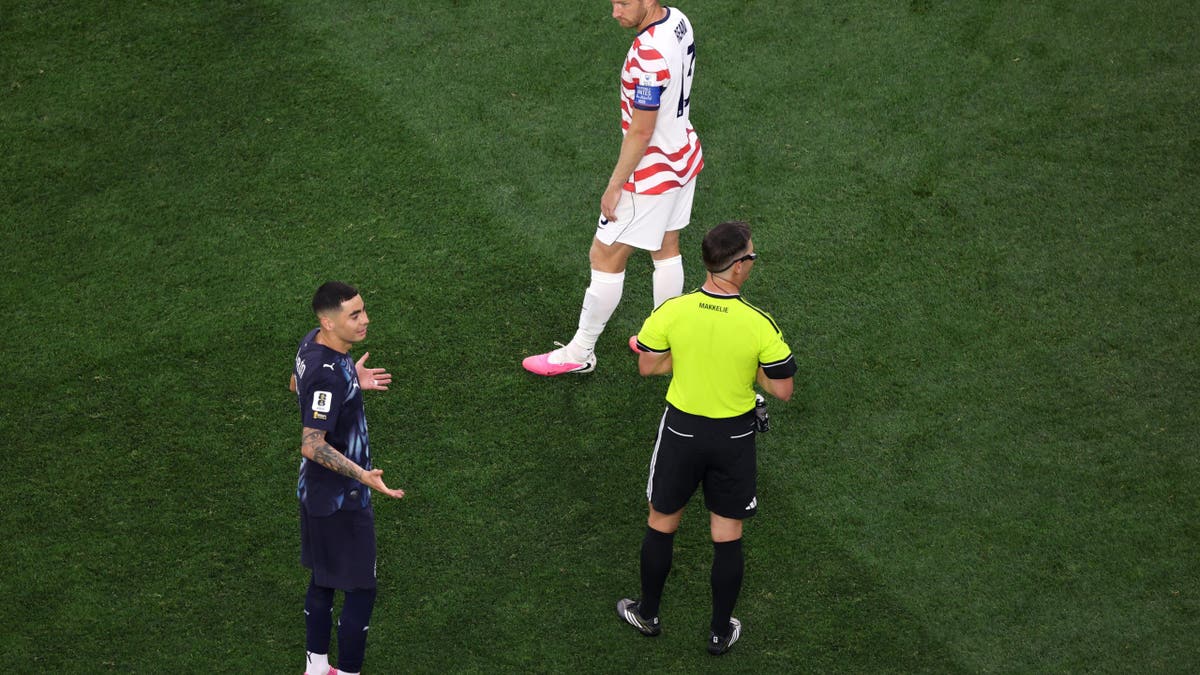
Referee Danny Makkelie speaks to Miguel Almiron of Paraguay and Tim Ream of the United States during a VAR check for mistaken identity in a tackle at Los Angeles Stadium on June 12, 2026, in Los Angeles, Calif. (Harry How/Getty Images)
In case you are unaware, USMNT captain Tim Ream was initially given a yellow card for a perceived trip on Paraguay’s Miguel Almiron as he was dribbling the ball along the sideline. After play resumed for a short time following the "foul," video assistant referee (VAR) Carlos del Cerro Grande intervened shortly after the ball was headed out of the United States’ penalty box and instructed referee Danny Makkelie to watch the incident again on the screen off the pitch.
WATCH THE WORLD CUP FINAL ON FOX ONE
After watching the replay, Makkelie rescinded Ream's yellow card, because the video evidence was clear that Ream never actually touched Almirón, and a yellow card was given to Almirón for simulation (diving).
The decision was historic because it became the first World Cup use of the new mistaken-identity VAR rule, and Ream became the first player in tournament history to have a yellow card overturned through that procedure.
This is exactly what the NBA needs to do when it comes to flopping. I believe if they take my advice I’m about to breakdown here, it would make the game more enjoyable to watch, and help discourage and punish flopping better than any rules they have laughably tried to implement over the years.
The NBA could adopt a version of FIFA's new "mistaken identity" rule that would allow replay officials to correct situations where a defender is wrongly called for a foul because an offensive player exaggerated or fabricated contact.
For example:
- A player drives to the basket, jerks his head back and falls on a shot.
- The referee calls a blocking foul on the defender.
- Replay shows the defender never made meaningful contact and the offensive player overly-exaggerated the contact (flopped).
- Instead of simply overturning the foul, the replay center could:Rescind the foul on the defender.Assess a flopping technical foul to the offensive player.Award the opposing team a free throw and possession (or whatever penalty the league chooses for this specific penalty).
- Rescind the foul on the defender.
- Assess a flopping technical foul to the offensive player.
- Award the opposing team a free throw and possession (or whatever penalty the league chooses for this specific penalty).
- Rescind the foul on the defender.
- Assess a flopping technical foul to the offensive player.
- Award the opposing team a free throw and possession (or whatever penalty the league chooses for this specific penalty).
With all of the camera angles and technology incorporated in today’s NBA, there’s no reason this change can’t be made.
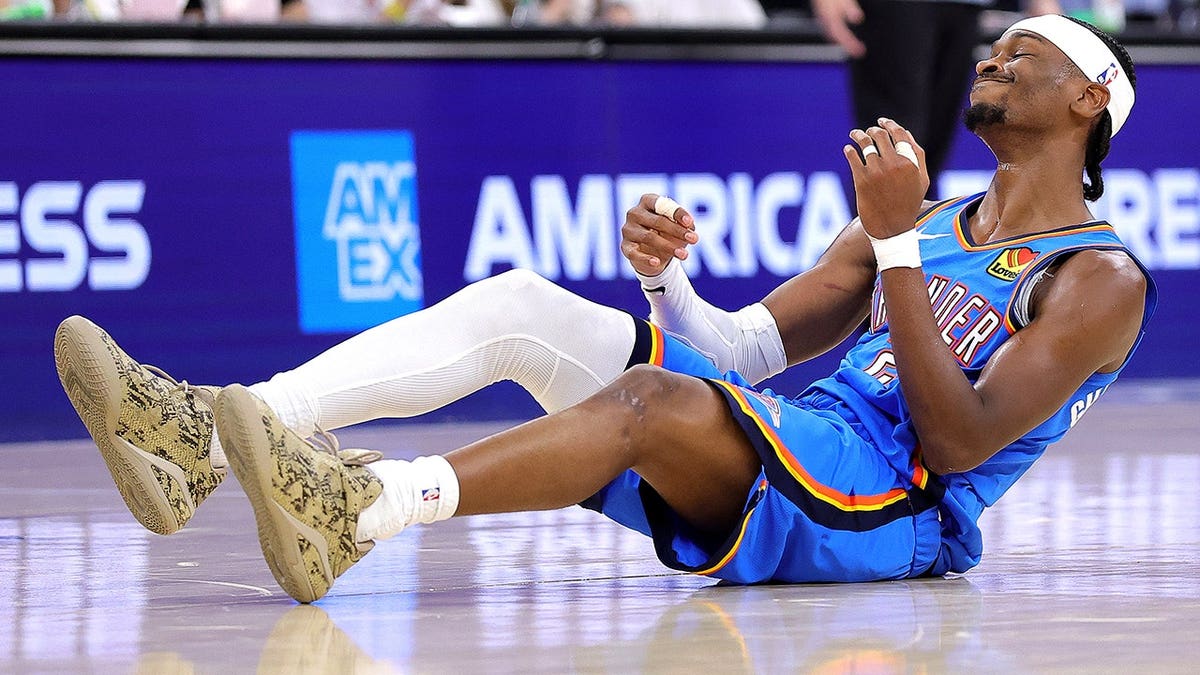
Shai Gilgeous-Alexander of the Oklahoma City Thunder reacts after scoring during the second quarter of Game Four in the NBA Western Conference Finals at Frost Bank Center in San Antonio, Texas, on May 24, 2026. (Alex Slitz/Getty Images)
A FIFA-style approach would make the correction almost immediate, since fouls are a stoppage in play anyway. The player who was wrongly penalized would have the foul removed, and the player who attempted to deceive the officials would be punished in real time.
FOX ONE’S NEW WORLD CUP VIEWING EXPERIENCE
Like the existing NBA rules where two technical fouls lead to an ejection from the game, plus the technical foul free throws, would cause many players like Shai Gilgeous-Alexander and others to change the way they play the game. The Replay Center would be a valuable assistant to the on-court referees who might have missed the flop because of a bad angle and the fact that they see these plays in real time, without the luxury of slow motion and multiple camera angles.
As for the review process, the NBA could limit reviews to shooting fouls resulting in free throws, potential sixth fouls, last two minutes of games, and allow coach's challenges for flops.
This new system would create a much stronger deterrent to flopping than a simple postgame $2,000 fine.
As I’ve stated in previous pieces, since flopping fines were introduced through the anti-flopping rule, there has been a shockingly low number of fines. Reports and Spotrac tracking say the total number of publicly documented postgame flopping fines since 2012 is likely somewhere around 100 to 120 total violations league-wide, including warnings and fines. That’s only 7–8 warnings and fines per season. We see about seven to eight flops per quarter, it seems like.
As for in-game flopping calls, those are exponentially more rare than post game warnings and fines. The NBA does not maintain a fully public official archive of every flopping technical, so most of the data was compiled by independent NBA technical foul trackers and community-maintained logs, which state that approximately 26 in-game flopping technical fouls during the 2023-24 season — the first year of the new live flop-tech rule.
Since the first few months of that season, enforcement dropped dramatically, which became a major criticism around the league and online. The NBA later made the rule permanent in July 2024 despite the low call frequency. The only clearly documented 2025-26 flopping fine I could find in SpoTrac’s database was Malik Monk, who was fined $2,000 for flopping on Dec. 1, 2025.
Flopping is an issue, mostly because the NBA is refusing to hold players accountable. They actually seem to be rewarding players for these antics more than punishing them.
One reason FIFA adopted this "mistaken identity" concept is that merely correcting the mistaken call isn't always enough; the player who caused the error through simulation may deserve punishment. Imagine this: Ream is assessed another yellow card in the match against Australia on Friday.
That means he’d have to sit out the USMNT’s next match. These calls have major consequences, so FIFA putting in the extra effort to get it right can be monumental for a team.
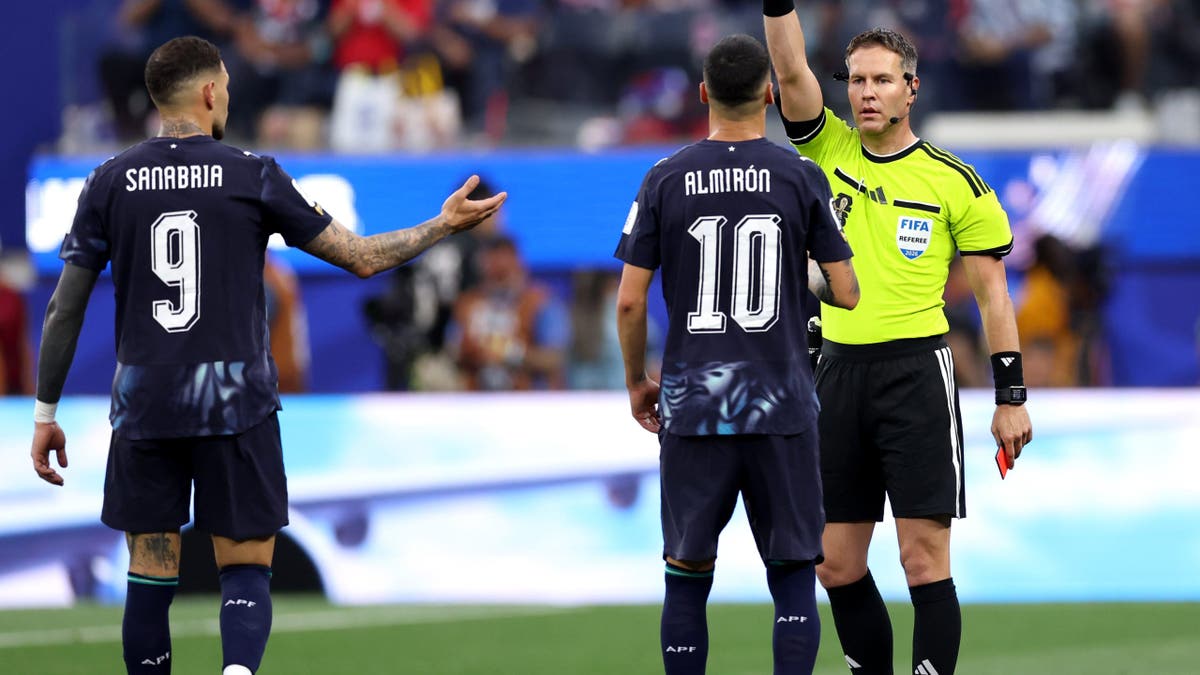
Referee Danny Makkelie shows a yellow card to Miguel Almiron of Paraguay after a VAR check for mistaken identity during the FIFA World Cup 2026 Group D match between the United States and Paraguay at Los Angeles Stadium on June 12, 2026. (Alex Livesey/FIFA/FIFA via Getty Images)
The NBA faces similar issues. If a flop only results in a "no-call" after review, players still have an incentive to try because the potential reward outweighs the risk. Plus, the minuscule fines, when they are applied, aren't going to deter millionaires from flopping to get cheap free throws. That money is a drop in the bucket for them. There has to be a real-time, in-game punishment.
CLICK HERE TO DOWNLOAD THE FOX NEWS APP
Of all the major American sports, the NBA is probably the league that could benefit the most from a FIFA-style "mistaken identity" framework because so many fouls depend on judging contact and player reactions in real time. It would help the flow of the game and fix the integrity issues the flopping and lack of accountability for it have caused.
Adam Silver, if you would like me to put this into a PowerPoint to present at the league offices, I’d be happy to. You know how to reach me.
