




















Retailers using artificial intelligence to track return fraud
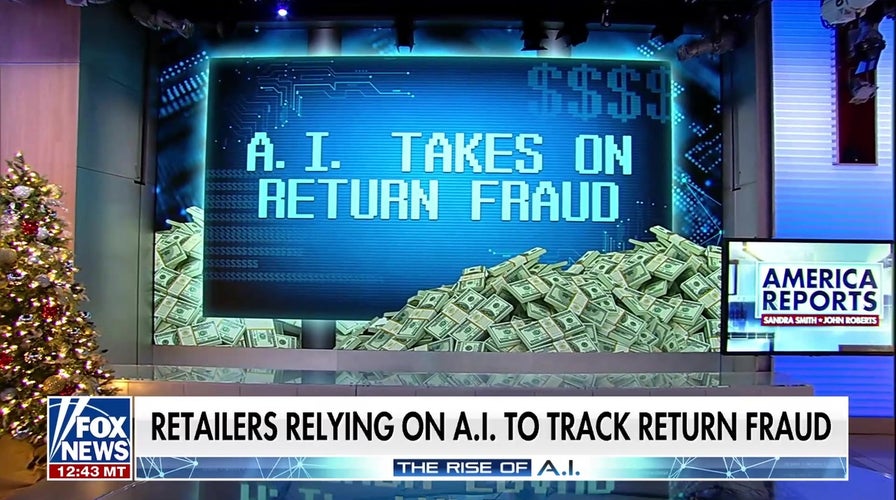
FOX Business correspondent Max Gorden explains how Happy Returns is using artificial intelligence to audit legitimacy of customer returns on ‘America Reports.’
History teaches a simple lesson: the nation that sets the standards sets the future. In the 20th century, America wrote the rulebook for aviation, computing and finance. In the 21st, the decisive battleground is artificial intelligence. And make no mistake — Beijing intends to write the rules.
As everyone is now grasping, artificial intelligence will not be a niche technology. It will fundamentally reshape medicine, manufacturing, logistics, national defense and financial markets. It will create whole new industries. Analysts project trillions of dollars in economic value by decade’s end. For now, the United States remains the innovation leader. But leadership is not guaranteed — especially when the Chinese Communist Party is deploying cheap, coal-fired energy, massive state subsidies and underhanded tactics to close the gap.
Beijing’s strategy centers on so-called "open-weight" AI models — systems whose parameters are downloadable and customizable. These models are exportable by design. They allow foreign governments to run the software on their own infrastructure, keeping servers, chips and data within their borders. In other words, China is offering countries a turnkey path to sovereign AI clouds — powered by Chinese architecture.
TRUMP'S SCIENCE AND TECH MAN LAYS OUT WHITE HOUSE'S GLOBAL AI STRATEGY
By contrast, America’s most advanced labs — companies such as OpenAI and Anthropic — largely operate closed systems. These proprietary models are technological marvels, and U.S. enterprises and federal agencies are adopting them at scale. But they are controlled environments. The rules, safety frameworks and innovation pathways are set inside corporate boardrooms. They are not built to be downloaded, modified and deployed globally as infrastructure.
China has recognized an uncomfortable truth: most nations will not build their own AI from scratch. They will adopt existing systems. For developing or resource-constrained countries, the choice may become stark — expensive, proprietary American services hosted abroad, or high-performing Chinese systems that can be run domestically at low cost. If that binary hardens, Beijing’s model will win market share — and influence.
This is not a purely commercial contest. AI systems reflect the societies that build them. A system shaped by the authoritarian priorities of the Chinese Communist Party will inevitably encode censorship, surveillance bias and state control. Evidence already raises alarms. Chinese models such as those developed by DeepSeek have been shown to amplify Beijing’s propaganda narratives and exhibit troubling vulnerabilities, including susceptibility to "jailbreaks" that bypass safety controls. Combined with China’s documented history of embedding hidden access points in advanced technologies, these weaknesses present obvious national-security concerns.

Allowing Chinese open models to become the global template would export more than code. It would export governance assumptions — about speech, privacy and political power. That is unacceptable for a free society.
TRUMP ADMINISTRATION'S TOP 'SCIENTIFIC PRIORITY IS AI,' ENERGY SECRETARY SAYS
The answer is not to retreat from openness but to compete in it. The United States must lead in open-weight AI grounded in American values and market incentives. As President Trump’s America’s AI Action Plan correctly observed, open-source and open-weight models can become global standards in business and academia. That gives them geostrategic weight. If we fail to provide credible, competitive alternatives, others will fill the vacuum.
Leadership requires policy clarity. First, Washington must embrace a light-touch regulatory framework that sets sensible guardrails without suffocating innovation. Excessive federal micromanagement would drive research offshore and hand Beijing a gift. Second, states should resist the temptation to erect a patchwork of conflicting AI regulations. Fifty different rulebooks will not strengthen American leadership; they will fracture it.
Third, policymakers must understand the enabling foundation of AI: abundant, affordable energy and cutting-edge semiconductor capacity. Affected companies should heed President Trump’s call to build their own power plants. Artificial intelligence runs on electricity and advanced chips. If we throttle domestic energy production or undermine our semiconductor ecosystem, we undercut our own ambitions.
CLICK HERE FOR MORE FOX NEWS OPINION
Finally, we must integrate AI into our national-security architecture. Advanced systems will be indispensable in identifying emerging military threats, hardening critical infrastructure and safeguarding communications. The free world should build atop American-designed platforms, not those engineered to serve an authoritarian state.
CLICK HERE TO DOWNLOAD THE FOX NEWS APP
The United States has always thrived thanks to innovation made possible by free markets. That’s why we have the world’s reserve currency, the dominant operating systems and the most dynamic capital markets. We did it not by copying others, but by setting the pace. Artificial intelligence is the next great arena.
If we allow Beijing to write the AI rulebook, we will inherit a world shaped by censorship and coercion. If we lead — boldly, intelligently and with faith in free enterprise — we will shape a future that reflects liberty, transparency and opportunity.
