












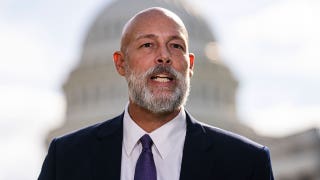








Rogan defends ICE raids, says 'they have to do this' because Dems let in millions of illegal immigrants
Joe Rogan, who has recently been critical of ICE tactics, argued that agency raids are ultimately necessary because Democrats allowed millions of illegal immigrants into the U.S., some of whom are violent criminals.
The State Department’s recent decision to freeze visa processing for nationals from more than 75 countries — including Somalia, Iran and Russia — reflects a growing recognition in Washington: large-scale migration is no longer viewed solely as a humanitarian matter. It has become inseparable from questions of national security, economic stability and state capacity.
In today’s era of hybrid warfare and gray-zone conflicts, population movements can function as instruments of state influence, economic survival and political leverage — even when they are not formally declared or centrally coordinated. These dynamics often operate below the threshold of overt conflict while producing long-term, asymmetric effects on receiving countries.
For some origin states struggling with corruption, weak institutions or limited domestic opportunity, exporting labor has become a de facto economic lifeline. Rather than pursuing difficult internal reforms, these governments often tolerate or quietly incentivize outward migration.
Foreign nationals abroad then become a steady source of income through remittances: predictable, recurring and largely sanction-resistant flows that support both households and governments without requiring transparency or structural change.
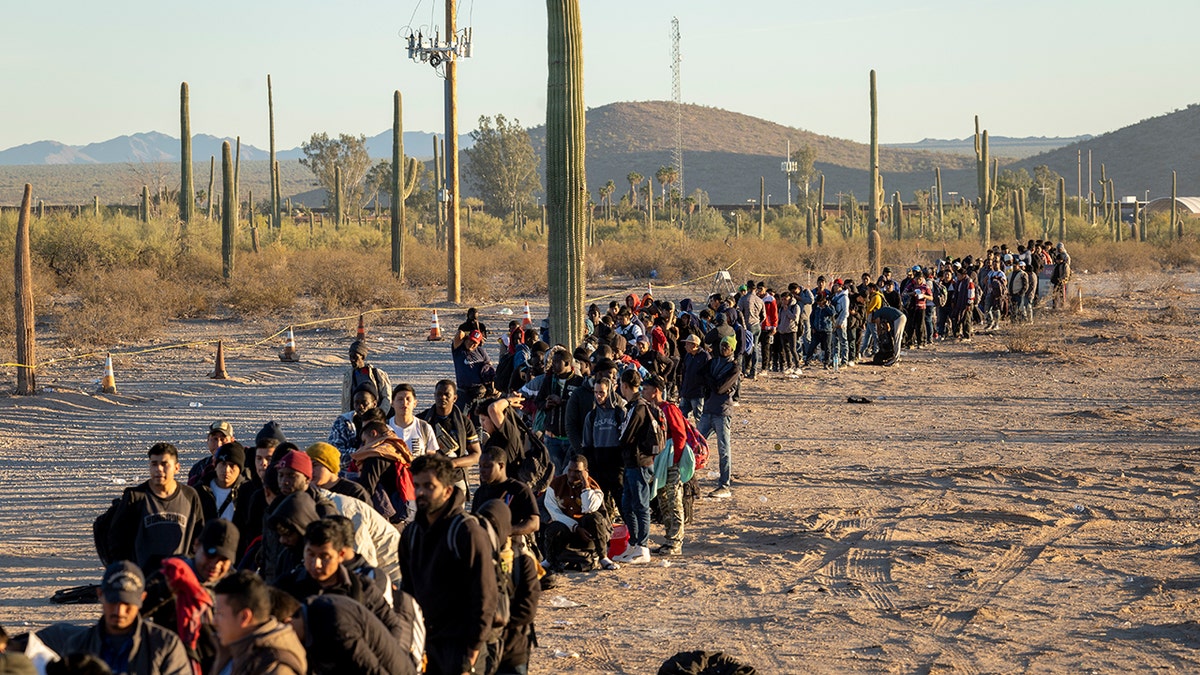
Immigrants line up at a remote U.S. Border Patrol processing center after crossing the U.S.-Mexico border on Dec. 7, 2023, in Lukeville, Ariz. (John Moore/Getty Images)
Importantly, no single remittance transfer is hostile. No individual immigrant constitutes an act of aggression. Many immigrants are seeking better lives for themselves and their families, and remittances often provide support to vulnerable communities abroad.
But modern conflict is not defined by individual intent. It is defined by aggregate effects. When mass migration and financial flows reach industrial scale and persist over time, they can impose real strategic pressures on host nations regardless of motivation.
The numbers illustrate the scope. According to World Bank estimates, officially recorded remittances to low- and middle-income countries reached roughly $685 billion in 2024, exceeding foreign direct investment and official development assistance in many cases. The United States is the world’s largest source of outbound remittances, with annual outflows estimated between $80 billion and $90 billion based on World Bank and Federal Reserve analyses of IMF balance-of-payments data.
Mexico alone received more than $64 billion in remittances last year — primarily from the U.S. — making it one of the country’s largest sources of foreign revenue. Independent analyses estimate that the U.S. loses at least $200 billion annually from remittances flowing out of the domestic economy, a figure that has risen significantly since 2019 and likely undercounts the true scale of transfers to the more than 130 countries receiving U.S. remittances.

In several countries, remittances now account for a significant share of national income. They exceed 20% of GDP in places like El Salvador and Haiti and reached approximately 25% of GDP in Somalia in 2024, according to the U.S. Department of State.
At this scale, remittances are no longer incidental household transfers; they become macroeconomic pillars. Governments that rely so heavily on these inflows face reduced incentives to facilitate the return of their citizens, including those unlawfully present in the United States, since large-scale repatriation would disrupt a critical revenue stream while reintroducing unemployment, fiscal strain and political pressure at home.
TRUMP STATE DEPARTMENT ORDERS GLOBAL VISA CRACKDOWN UNDER REVIVED ‘PUBLIC CHARGE’ RULE
As a result, some sending states have delayed travel documents, obstructed deportations or maintained permissive border policies that allow onward migration to continue. These actions may not always reflect deliberate hostility, but they do reinforce a system that prolongs and amplifies migration flows while externalizing domestic challenges.
Inside the United States, immigrant communities contribute in many ways. At the same time, heavy reliance on cheap labor in sectors such as construction, agriculture, food processing and services can suppress wages, distort competition and disadvantage American workers contributing over time to a more stratified labor market.

The Taaj Money Transfer storefront in Minneapolis’ "Little Mogadishu" neighborhood. The business is a licensed U.S. money-service provider and is not accused of any wrongdoing; it handles legal remittances before funds are transferred overseas for final delivery. (Michael Dorgan/Fox News Digital)
The same transnational networks of foreign terrorist and criminal organizations that facilitate large-scale migration can also overlap with illicit activity, including narcotics trafficking, money laundering and labor exploitation. Remittance channels and money-service businesses can be exploited to blend legitimate earnings with criminal proceeds, complicating enforcement and oversight.
Over the long term, economic dependence on foreign earnings combined with family ties abroad can create vulnerabilities to coercion or influence by origin governments, criminal organizations or other hostile actors. What begins as economic reliance can evolve into leverage.
CLICK HERE FOR MORE FOX NEWS OPINION
Through the lens of gray-zone conflict, remittances are not neutral financial transfers. They function as an asymmetric economic weapon, weakening U.S. labor markets, eroding the rule of law, and stabilizing regimes that act contrary to American interests. In gray-zone conflict, the rule of law itself becomes contested terrain.
For some origin states struggling with corruption, weak institutions or limited domestic opportunity, exporting labor has become a de facto economic lifeline.
Until weaponized mass migration and remittance dependency are recognized as elements of hybrid warfare, the United States will continue to finance systems that undermine its own sovereignty, economic resilience and social cohesion. Recognizing these aggregate effects as part of broader hybrid pressures does not impugn individual immigrants or ordinary remittances. It does, however, require acknowledging that scale matters.
CLICK HERE TO DOWNLOAD THE FOX NEWS APP
Until large-scale migration and remittance dependency are understood not merely as humanitarian or economic issues but as structural sources of economic warfare with strategic consequences, the United States will continue to subsidize dynamics that undermine its own labor standards, enforcement capacity and long-term security.
The contest is no longer confined to the border. It now plays out in labor markets, financial systems and the rule of law itself — domains where inaction carries consequences just as surely as action.
