
Iran retaliates against US by firing at Kuwait in 'blatant' aggression
Iran fired missiles and drones at Kuwait early Thursday in retaliation for U.S. strikes, as President Donald Trump warned Washington is prepared to hit Tehran again “anytime we want” amid escalating fighting across the region.
Coverage for this event has ended.
Israel says it has taken control of strategic Ali al-Taher ridge
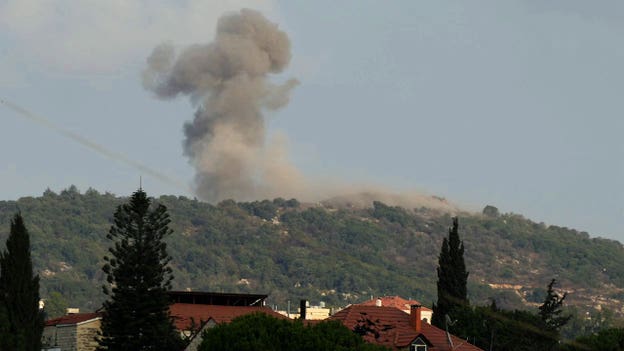
The Israeli military said Thursday it has established operational control of the strategic Ali al-Taher ridge in southern Lebanon following an offensive against Hezbollah positions.
The Israel Defense Forces said troops secured the area through ambushes, mortar fire, grenades and drone strikes. It said Hezbollah's Badr Unit built two tunnel complexes at the site with Iranian funding and planning and used them to direct attacks against Israel over recent decades.
An Israeli military official said forces targeted tunnel entrances during the operation but found no Iranian advisers or officers inside.
The announcement came hours after Reuters reported that Iran warned Washington a full-scale Israeli offensive on the Ali al-Taher ridge would trigger a large-scale Iranian response.
The ridge has been one of the most strategically contested areas in the Israel-Hezbollah conflict because of its elevated position overlooking southern Lebanon.
Follow the latest updates in the conflict with Iran
Click here to follow the latest updates in the conflict with Iran.
Iran-backed Houthis claim drone attacks on Saudi military positions
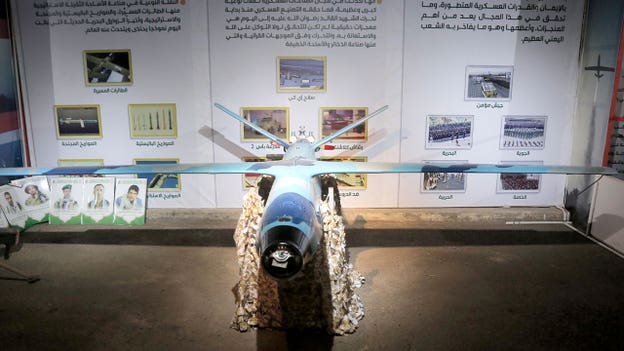
Yemen's Iran-backed Houthi rebels claimed Thursday that they launched drone attacks against Saudi military positions, vehicles and troop concentrations on multiple fronts.
According to the Houthi-run SABA news agency, the group said it used "Rujum" drones in the attacks and claimed several Saudi military vehicles were destroyed or set on fire.
The Houthis also said the strikes targeted military barracks and troop concentrations. The claims could not be independently verified, and Saudi authorities had not immediately commented.
The reported attacks mark another sign of continued military activity by Iran-backed proxy groups as tensions remain high across the Middle East following recent U.S. strikes on Iran and Tehran's retaliatory actions.
The Houthis have repeatedly targeted regional military and commercial shipping interests during past periods of heightened conflict, making the group a key part of Iran's network of allied militias.
Bessent welcomes EU joining effort to isolate Iran economically
Treasury Secretary Scott Bessent on Thursday welcomed the European Union's decision to join what he called "Operation Economic Outcast," describing it as a significant step in increasing financial pressure on Iran.
In a post on X, Bessent thanked the European Union for what he called its "strong and early stance," saying the United States and its allies are working together to cut off the Iranian regime's access to the global financial system.
"The United States stands firm with our allies in ensuring the murderous Iranian regime cannot exploit the global financial system to fund its nuclear ambitions, weapons programs, and terror proxies," Bessent wrote.
Bessent said the coordinated effort is intended to sever Iran's remaining financial lifelines and increase pressure on Tehran as tensions continue across the Middle East.
"The world is sending a clear message to the Iranian regime: We will not stop until every remaining financial lifeline has been severed," he added.
Canada's Conservative leader demands suspected IRGC operatives leave country
Conservative Leader Pierre Poilievre on Thursday called for suspected operatives linked to Iran's Islamic Revolutionary Guard Corps to be removed from Canada after reports that the son of Iran's former vice president received more than $2 million in Canadian government contracts while under investigation.
In a post on X, Poilievre said the individual had been flagged over national security concerns and was under investigation for allegedly helping Iran's regime develop missile systems and engage in procurement activities that benefited the IRGC.
"Why is he still in Canada?" Poilievre wrote. "Get active IRGC regime operatives out of our country."
Poilievre's comments followed a Global News report that the Edmonton resident, who is the son of Iran's former vice president, received millions of dollars in federal contracts despite being under investigation for allegedly helping Iran's missile program and evade sanctions.
The allegations have not been proven in court, and Canadian authorities have not publicly announced any charges in the case.
Iranian regime fears its own people more than US strikes, dissident says
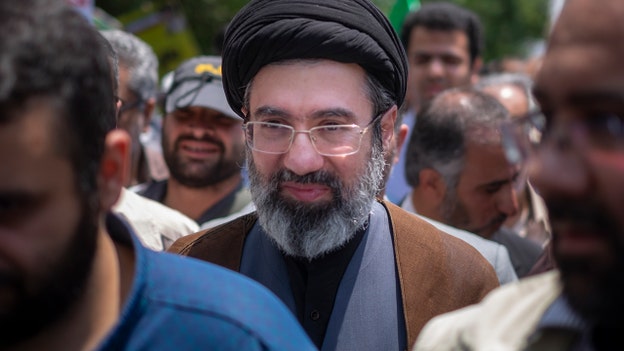
Regime leaders in Iran are more content to see continued confrontation with the United States and its Gulf neighbors rather than pursuing peace in an effort to keep their disenchanted population at bay, one expert says.
U.S. forces have launched airstrikes against Iran in recent days following a brief pause in hostilities amid renewed flare-ups in the Strait of Hormuz.
Tehran isn't as concerned about military action against the country, but rather discontent among Iranians, Dr. Majid Sadeghpour, a human rights activist and the political director of the Organization of Iranian-American Communities, told Fox News Digital.
Sadeghpour noted that U.S. officials offered guarantees to Tehran that provided a pathway to peace for Iran.
"You get America to give you a guarantee that it wouldn't seek regime change. Nevertheless, they still attacked ships afterward," Sadeghpour said. "They still attacked our bases in Jordan and Bahrain. So that speaks to the fact that the real threat to the regime is not the bombs from outside, but rather the population uprising."
Sadeghpour noted that U.S. officials offered guarantees to Tehran that provided a pathway to peace for Iran.
"You get America to give you a guarantee that it wouldn't seek regime change. Nevertheless, they still attacked ships afterward," Sadeghpour said. "They still attacked our bases in Jordan and Bahrain. So that speaks to the fact that the real threat to the regime is not the bombs from outside, but rather the population uprising."
This is an excerpt from an article by Fox News Digital's Louis Casiano.
State Department welcomes Peru's decision to cut diplomatic ties with Iran
The State Department on Thursday praised Peru's decision to sever diplomatic relations with Iran, calling it a strong rebuke of Tehran's actions abroad.
State Department spokesperson Tommy Pigott said in a post on X that the United States commends Peru's move, arguing Iran has long used its diplomatic presence in other countries to advance destabilizing activities.
"The Iranian regime has long exploited its diplomatic presence abroad to sow chaos and terror," Pigott wrote.
He added that Peru's decision "sends a clear message" that Iran's "terrorism—at home and abroad—will not go unanswered."
The statement comes as the Trump administration continues to encourage allies and partners to increase diplomatic and economic pressure on Tehran amid escalating tensions across the Middle East.
Arab states reportedly open talks with Eisenkot allies ahead of Israeli election
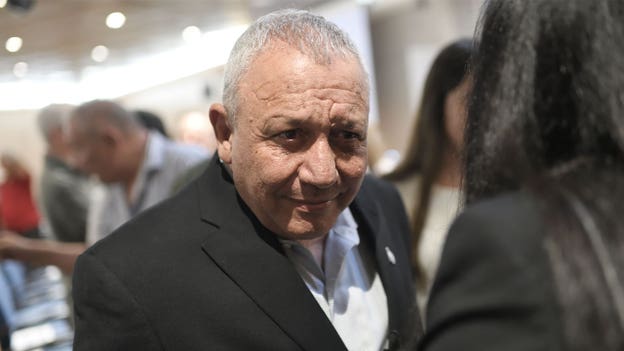
Officials from several Arab countries have begun holding discussions with people close to former IDF Chief of Staff Gadi Eisenkot as they prepare for the possibility that he could become Israel's next prime minister following October's election, according to The Jerusalem Post.
The report, citing two sources familiar with the discussions, said Arab governments are seeking to better understand Eisenkot's political strategy and positions, particularly on Israel's future ties with Arab nations.
According to the report, senior Arab officials are also maintaining contacts with other potential Israeli leaders, including former Prime Minister Naftali Bennett and Opposition Leader Yair Lapid, though those relationships largely predate the current election campaign.
A source familiar with the discussions told the newspaper that Arab governments are "in contact with anyone who could potentially become prime minister," reflecting efforts to prepare for different election outcomes.
The outreach comes as Israel prepares for its Oct. 27 election, with the outcome expected to shape the country's approach to regional diplomacy and ongoing tensions with Iran and its proxies.
Huckabee warns Iran may face more pressure if it refuses to back down
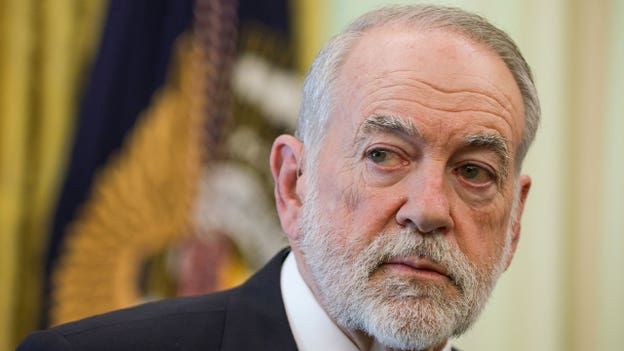
U.S. Ambassador to Israel Mike Huckabee said Thursday that Iran could face additional U.S. pressure if it continues refusing to abandon its nuclear ambitions and regional aggression.
Speaking to The Jerusalem Post, Huckabee said President Donald Trump has grown increasingly frustrated with Tehran's refusal to change course despite months of military and economic pressure.
"The Iranians are now after 'two kicks of the mule,' and they still don't seem to get it," Huckabee said. "They're not going to have a nuclear weapon, they're not going to get to enrich uranium, and it may take a 'third kick of the mule' at some point."
Huckabee said he hopes Iran changes course before further action becomes necessary, while cautioning that developments in the Middle East remain difficult to predict.
The ambassador also praised recent U.S.-Israeli military coordination against Iran, describing the level of cooperation between the two countries as "unprecedented."
Iran cites Qatari filing to defend strikes on US military sites
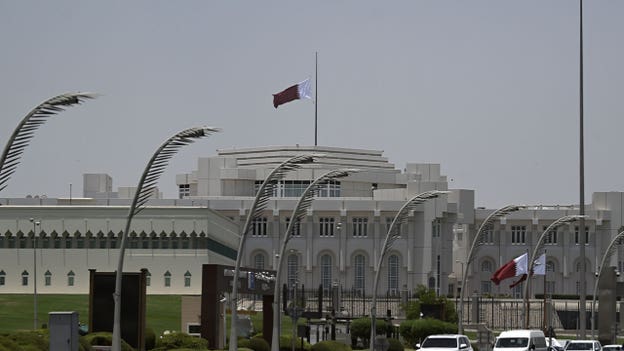
Iran's Foreign Ministry on Thursday said a Qatari government document submitted to the International Telecommunication Union supports Tehran's claim that its recent strikes in Qatar targeted U.S. military facilities rather than civilian areas.
Foreign Ministry spokesman Esmaeil Baghaei said the document states the strikes "were directed towards US military facilities" and that "no civilian areas have been targeted."
Baghaei said the only exception identified by Qatar was an attack on a gas facility on March 18, which he claimed had been used to support U.S. military operations against Iran.
The spokesman also accused the United States of having "a long record of deliberate attacks on civilian targets" and posted excerpts of what he described as Qatar's security assessment on X.
The comments come as Iran continues to defend its military actions amid heightened tensions with the United States and Israel, with both sides seeking to shape the international narrative surrounding recent strikes across the region.
Vance says Trump has broad options as Iran loses leverage
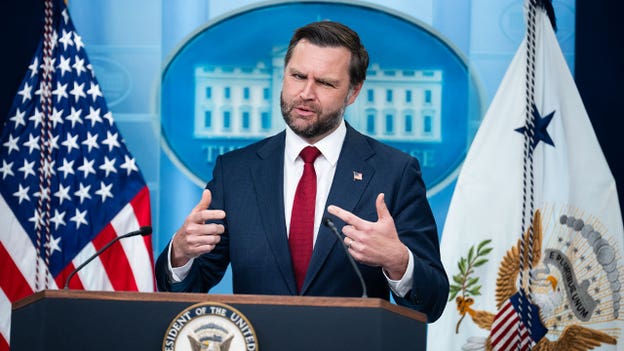
Vice President JD Vance said Thursday that Iran's ability to control the Strait of Hormuz is "effectively gone," arguing Tehran is losing leverage as U.S. pressure intensifies.
Speaking during a White House press briefing, Vance said Iran is "losing their capabilities by the day" and described the regime's influence over the strategic waterway as "a diminishing asset."
Vance said President Donald Trump has multiple options available to increase pressure on Tehran, including economic, military, diplomatic and covert measures, but declined to discuss what steps the administration could take next.
He argued Iran's threats to disrupt shipping through the Strait of Hormuz have become less effective as commercial traffic has recovered despite continued attacks.
The Strait of Hormuz remains a critical global shipping route, carrying a significant share of the world's oil exports, and has been a central flashpoint in the escalating conflict between Iran, the United States and Israel.
CENTCOM says US has redirected 87 commercial vessels during Iran blockade
U.S. Central Command said Thursday that American forces have redirected 87 commercial vessels, disabled three and boarded two as part of the U.S. blockade against Iran.
In a post on X, CENTCOM said the actions were taken "to ensure total compliance" as U.S. naval forces continue enforcing the blockade in regional waters.
The military shared a photo of a U.S. sailor standing watch aboard the guided-missile destroyer USS John Paul Jones, which CENTCOM said continues supporting blockade operations.
The latest figures offer one of the clearest snapshots yet of the scope of U.S. maritime enforcement efforts as American forces work to prevent Iran from using regional waterways to sustain military operations and respond to repeated attacks on commercial shipping.
The update comes as tensions remain high in the Middle East following U.S. strikes on Iranian targets and Tehran's retaliatory attacks across the region, with the Strait of Hormuz remaining a key flashpoint for global energy markets.
House passes bill targeting universities that boycott Israel
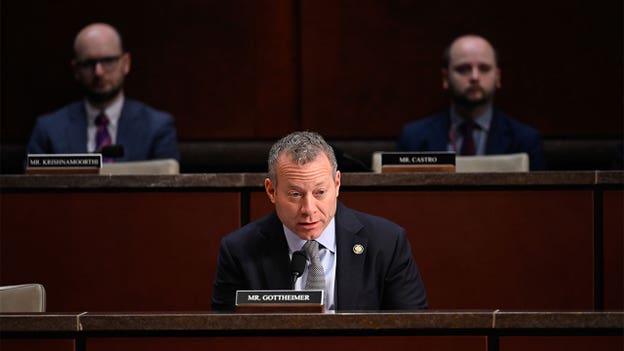
The House on Thursday passed legislation that would bar federal funding from colleges and universities that boycott Israel, sending the measure to the Senate for consideration.
The bill passed 237-169, with 33 Democrats joining nearly all Republicans in support of the measure. It must still clear the Senate before it can be sent to President Donald Trump's desk.
House Democratic leadership opposed the legislation, arguing it raises free speech concerns and broadly defines boycotts to include Israeli settlements in the West Bank.
House Minority Leader Hakeem Jeffries said he continues to oppose the Boycott, Divestment and Sanctions movement but argued the Republican-backed bill "does not achieve that goal" and would give the Trump administration authority to target colleges and universities.
Rep. Josh Gottheimer, a Democratic co-sponsor of the bill, defended the measure, saying it "simply says that if your university takes federal taxpayer dollars, it can't discriminate against academic partnerships or investments with one country."
Iraq war veteran says world is 'running out of patience' with Iran
Retired U.S. Marine Corps Col. Mike Jernigan said Thursday that countries are increasingly looking for ways to reduce their dependence on the Strait of Hormuz, arguing the world is "running out of patience" with Iran.
Appearing on Fox News' "America Reports," Jernigan said the U.S. military campaign and mounting economic pressure have significantly weakened Tehran's position.
"CENTCOM reports that we've struck 170 targets," Jernigan said, adding that Iran's missile attacks have declined dramatically compared to earlier in the conflict.
Jernigan also said he expects Iran to continue launching cyberattacks against U.S. infrastructure but expressed confidence in America's cyber defenses.
"The Iranians are gasping and reaching out and trying to do anything they can," he said. "They will continue to do cyber attacks, and I am confident in the U.S. military and the U.S. government's ability to defend against those attacks."
Looking beyond the battlefield, Jernigan said countries in the region are pursuing new pipeline projects to bypass the Strait of Hormuz, reducing Iran's ability to threaten global energy supplies.
"Everybody is running out of patience and has for the last 47 years with Iran," Jernigan said. "We're going to remove any leverage that you think you have about shipping, because all of a sudden we're going to have alternate routes."
US targets senior IRGC cyber commander with $10 million reward
The State Department on Thursday announced a reward of up to $10 million for information leading to the identification or location of Amir Yaryab, a senior cyber official with Iran's Islamic Revolutionary Guard Corps.
According to the State Department's Rewards for Justice program, Yaryab heads the IRGC Cyber-Electronic Command's Cyber Operations Command and oversees several affiliated groups accused of targeting defense, energy, financial, telecommunications, shipping, airline and media infrastructure in the U.S., Europe and the Middle East.
The department said Yaryab also oversees operations by IRGC-linked groups including CyberAv3ngers, Dadeh Afzar Arman and Mehrsam Andisheh Saz Nik, which it said have used malware to target civilian infrastructure around the world.
The Rewards for Justice program said it is offering up to $10 million or relocation assistance for information leading to Yaryab's identification or location.
The announcement comes as the Trump administration continues to increase pressure on Iran across military, diplomatic and cyber fronts amid the escalating conflict in the Middle East.
Netanyahu says toppling Iran's regime is Israel's 'main mission'
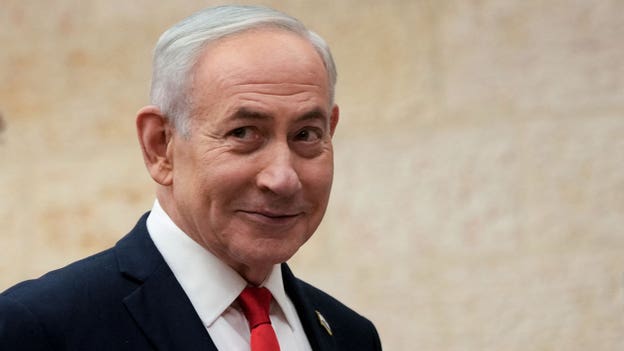
Israeli Prime Minister Benjamin Netanyahu said Thursday that toppling Iran's regime remains Israel's primary objective, saying the country's leadership is now vulnerable after months of conflict.
Speaking at an event with senior Israeli defense and military officials in Tel Aviv, Netanyahu said removing Iran's government was Israel's "main mission" and claimed the goal was "within reach."
"I am convinced of our ability to remove this threat once and for all ... that is, to topple this regime," Netanyahu said.
Netanyahu argued Iran's leadership is "weaker than ever" and "fighting for its life."
"Do not mess with us. We have the strength, the determination and the internal unity to defeat you," he added.
Vance says Iran is losing grip on Strait of Hormuz as commercial shipping rebounds
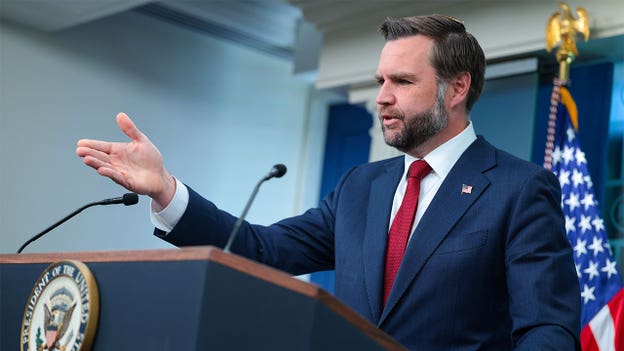
Vice President JD Vance said Thursday that Iran is "losing their capabilities by the day" and argued Tehran is no longer able to effectively threaten commercial shipping through the Strait of Hormuz despite continued attacks.
"The fundamental reality is that the reason gas prices are so high right now is because the Iranians are shooting at commercial shipping," Vance said during a White House briefing. He accused Iran of continuing attacks even after agreeing to stop targeting commercial vessels.
Vance said roughly 15 million barrels of oil moved through the Strait of Hormuz on Wednesday despite the attacks, arguing the U.S. remains the only country capable of ensuring global energy markets remain supplied.
He also said Iran's leverage over the strategic waterway is fading.
"I think that they're losing their capabilities by the day," Vance said. "I think they're realizing, by the way, that their control over the Strait of Hormuz is effectively gone, and it's a diminishing asset."
Vance also said the Trump administration would not engage with Iran diplomatically unless Tehran ends its attacks on commercial shipping.
"The president's been very clear. We're not talking to them, and we're not going to talk to them unless they stop shooting at commercial shipping," Vance said.
Vance ended with a message to Tehran: "My advice to the Iranians is stop acting like crazy people and stop shooting at commercial shipping."
Trump blasts ‘treasonous’ munitions reports, says US has ‘far more than we could ever use’
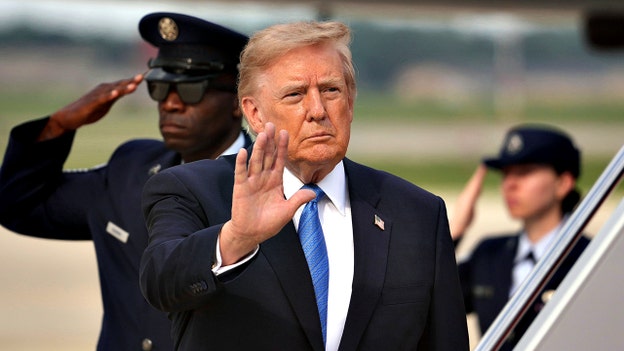
President Donald Trump declared Thursday that the U.S. has “virtually unlimited” ammunition and accused those reporting otherwise of being “treasonous,” pushing back against reports that the war with Iran has sharply depleted stockpiles of several critical weapons.
“The people and Media Outlets that keep harping on the fact that we have no ammunition (And they are 100% wrong!), are actually treasonous,” Trump wrote in a social media post. “They do it because they would rather see the United States LOSE a War that we’re easily WINNING, than see me WIN!”
Trump doubled down in a second post, saying the U.S. has “virtually unlimited amounts of Mid to High Grade Ammunition” and is producing munitions “at levels never seen before.”
“We are stockpiling and preparing for any contingency that could happen,” Trump wrote, adding that the U.S. is prioritizing its own supplies before resuming sales to allies.
Trump also criticized the Biden administration for providing weapons to Ukraine, claiming it gave away more munitions than the U.S. has used during the Iran war and saying his administration would seek money from Europe for past support.
The posts come amid scrutiny of U.S. weapons inventories after months of fighting with Iran.
Fox News reported early last month that some analysis has pointed to significant drawdowns of some critical weapons systems, including Tomahawk missiles and Patriot interceptors, while raising concerns about U.S. readiness for a potential future conflict.
Reuters first reported on Aug. 4 that the U.S. has used “virtually all” its highly accurate long-range missiles up to that point in the war with Iran. The outlet cited multiple sources familiar with the matter.
Following these reports, Trump disputed the claims about depleted munitions. On Aug. 6, he said the U.S. had “massive amounts” of munitions and that large quantities were being manufactured, though he did not provide evidence.
Trump also said the “leakers” behind what he called “treasonous statements” about U.S. munitions were being “hunted down” and that his administration would seek “long term jail sentences.”
Lutnick says he ‘misspoke’ about US military deaths in Iran war
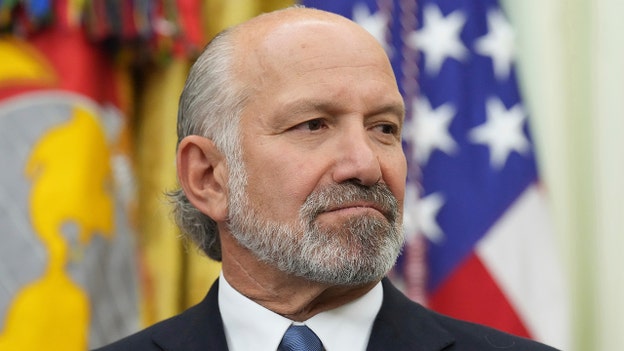
Commerce Secretary Howard Lutnick acknowledged Thursday that he “misspoke” when he said no U.S. service members had died in the Iran war, saying he had confused the conflict with the U.S. military operation in Venezuela.
“18 members of our military have died, and to those families my heart breaks and I am so very sorry for their loss,” Lutnick wrote in a social media post.
“I was thinking about the Venezuelan military operation where no service members died,” he added.
Lutnick issued the correction after President Donald Trump posted on social media that the commerce secretary “had Venezuela on his mind when he said nobody was killed.”
“18 people were killed in Iran!” Trump added in the post.
Lutnick had said in a Wednesday CNBC interview at the G20 innovation summit that no Americans had died in the Iran conflict while discussing the war, which began in February.
In his Thursday post, Lutnick also pointed to the approaching 25th anniversary of the Sept. 11, 2001, terrorist attacks and expressed gratitude for U.S. service members.
Lutnick, who was CEO of Cantor Fitzgerald at the time of the attacks, lost his brother Gary and hundreds of colleagues when the World Trade Center was attacked.
“I am deeply thankful for our military and the sacrifices the men and women who serve our great country make, so such an attack … never happens again,” Lutnick wrote.
Trump privately discussing whether to declare Iran war over: report
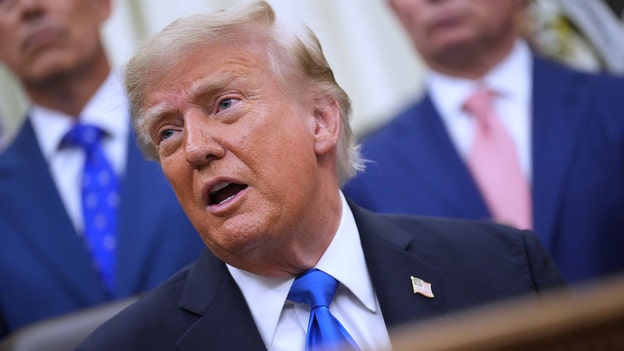
President Donald Trump has privately discussed with senior aides whether to declare the Iran war over and has indicated he favors the idea, according to a new report, as he publicly signals that the conflict may not last “very much longer.”
U.S. officials told The Wall Street Journal that Trump has discussed declaring the war over while telling aides he believes continued economic pressure will eventually force Iran to dismantle its nuclear program or lead to the collapse of the regime.
The reported discussions come as the U.S. and Iran continue to exchange fire and compete for control of the Strait of Hormuz.
When Fox News Digital reached out to the White House for comment on the report, officials pointed to remarks Trump made Wednesday in the Oval Office.
“It’s very simple. Iran could not have a nuclear weapon,” Trump said.
“As soon as it’s over, which I don’t think it will be very much longer. I don’t know how much more they can take, but, you know, whatever it is, it doesn’t matter,” Trump added.
Trump also said his approach to Iran was not being influenced by the election and argued that his party supports his efforts to prevent Tehran from obtaining a nuclear weapon.
“Number one, I'm not running, but my party is running and I'm going to help my party,” Trump said. “But I think my party respects the fact that we're not allowing Iran to have a nuclear weapon. And frankly, other presidents should have done that, but they didn't have whatever it takes to do it.”
Trump has pursued an economic pressure campaign in recent weeks to bring Iran back to the negotiating table, though Tehran has shown no sign of backing down.
Israel releases Lebanese prisoner in first handover since latest Hezbollah war began
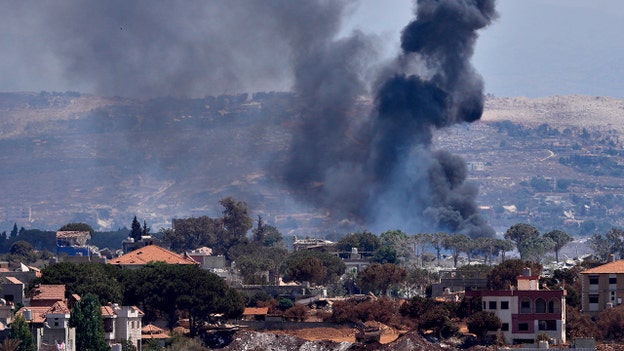
Israel released a Lebanese man from detention Thursday in the first such handover since the latest war with Iran-backed Hezbollah erupted six months ago, with four more Lebanese detainees expected to be freed as the two sides navigate stalled negotiations.
Malek Kamal Ghazi, who was captured in October 2025, was handed over by the International Committee of the Red Cross to Lebanese authorities at the Naqoura border crossing, according to Reuters.
Israeli Prime Minister Benjamin Netanyahu’s office said Ghazi was among five Lebanese citizens set to be released after authorities determined they had no links to militant groups.
Lebanese sources told Reuters that Ghazi and the four others were civilians. The circumstances surrounding Ghazi’s capture were not immediately clear.
The release comes as Israel and Lebanon negotiate the return of the remains of Jewish community leaders who were kidnapped and killed in Lebanon in the mid-1980s. Netanyahu’s office said the two countries have made several efforts in recent months to locate the remains, including operations on the ground.
The handover also comes as broader negotiations between Israel and Lebanon have struggled to make progress.
Lebanese sources told Reuters that 35 Lebanese detainees remained in Israel following Ghazi’s release, including 20 civilians.
Another round of talks between Lebanese and Israeli officials is expected to take place in Rome later this month.
The Associated Press and Reuters contributed to this report.
Israel warns it will send Iran ‘deep into the Stone Age’ should Tehran attack
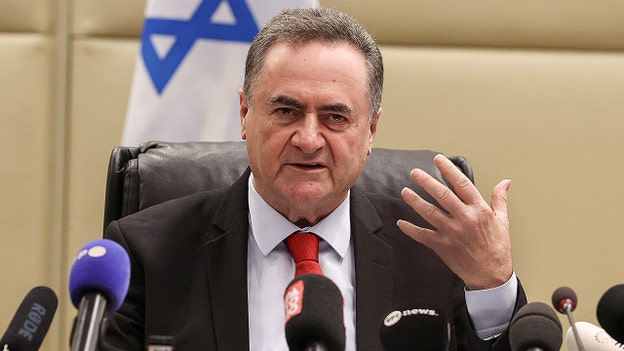
Israeli Defense Minister Israel Katz warned Thursday that Israel would target Iran’s energy and other infrastructure if Tehran attacks the country, threatening to send Iran “deep into the Stone Age and darkness” as tensions in the Middle East escalate.
Speaking to Defense Ministry employees, Katz said an Iranian attack would remove any restrictions on how Israel could respond.
“An Iranian attack on Israel would free Israel from any existing limitations on attacking Iran,” Katz said, according to Reuters.
“We will cripple all of Iran's national military and civilian infrastructure — including energy infrastructure — and return Iran deep into the Stone Age and darkness,” he added.
Katz said Israel is prepared both defensively and offensively for a possible attack and that the Israel Defense Forces is ready to respond. He added there were signs that mounting economic pressure in Iran and fears of an uprising could push Tehran to take “desperate measures,” according to the Times of Israel.
The warning comes amid a new escalation in fighting between the U.S. and Iran.
Washington and Tehran this week exchanged their heaviest barrage since July, with the U.S. striking Iran’s southern coast and Tehran firing at U.S. bases across the region.
Reuters contributed to this report.
Oil prices surge toward $100 as renewed US-Iran fighting rattles markets
Oil prices climbed sharply Thursday as renewed fighting between the U.S. and Iran pushed Brent crude closer to $100 a barrel, even as President Donald Trump suggested the U.S. bombing campaign may not last “much longer.”
Brent crude, the international benchmark, rose 1.7% to $97.25 a barrel after falling earlier Thursday. West Texas Intermediate, the U.S. benchmark, rose 1.9% to $92.71 a barrel.
Oil prices have risen sharply as the renewed conflict between the U.S. and Iran raises concerns that further fighting could disrupt global energy supplies.
Trump said Wednesday that he did not expect the U.S. bombing campaign to last “much longer,” suggesting the latest military action could be relatively short-lived.
For American consumers and businesses, higher oil prices could mean higher costs for gasoline, diesel, jet fuel and other petroleum products.
The Associated Press contributed to this report.
Iran fires missiles, drones at Kuwait as Tehran retaliates for US strikes
Iran fired missiles and drones at Kuwait early Thursday as Tehran continued retaliatory attacks following U.S. bombardments earlier this week.
Kuwait’s air defenses intercepted the incoming missiles and drones after sirens sounded across the country, according to Kuwait’s Ministry of Defense, which described the attack as a “blatant Iranian aggression.”
Kuwait’s foreign ministry posted a statement on X condemning what it called “repeated heinous Iranian aggressions” as “a direct threat” against the country’s security, stability and sovereignty.
“The Ministry reiterates its affirmation that the continuation of these brazen aggressions reflects a hostile approach, constitutes a dangerous escalation that threatens the security and stability of the region, and systematically undermines diplomatic efforts aimed at de-escalation and reducing tensions,” the statement said.
The attack followed Iranian strikes targeting what Tehran said were U.S. assets in Bahrain, Jordan, Kuwait and Iraq. Bahrain and Jordan said their air defense systems intercepted several Iranian attacks Wednesday.
Fighting between the U.S. and Iran has intensified after American forces struck Iranian rocket launchers on an island in the Strait of Hormuz on Sunday. The U.S. said Iran had planned to use the launchers to fire mines into the strategic waterway.
Iran has also threatened oil tankers traveling through the Strait of Hormuz without its authorization, further restricting traffic through the critical shipping route, which carried roughly 20% of the world’s oil supply before the war.
The Associated Press and Reuters contributed to this report.
Trump says US prepared for more attacks after Iran ‘love tap’
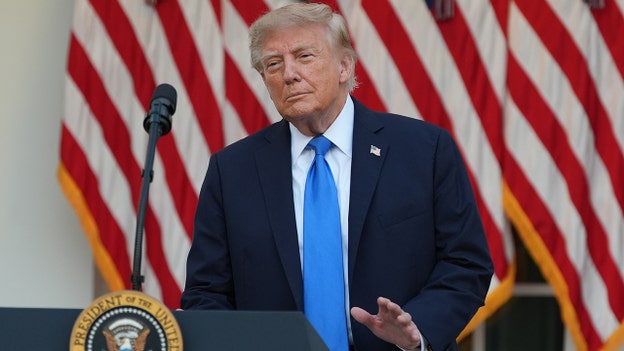
President Donald Trump on Wednesday said the U.S. is prepared to strike Iran again at any time, hours after U.S. forces intercepted several retaliatory Iranian attacks that Trump downplayed as a “love tap.”
“It was a very heavy attack last night, and we’re prepared to do another one anytime we want,” Trump said.
Trump said the U.S. “blew up much more than their radars,” touting America’s advanced defense systems.
“We have technology that's incredible. Nobody has technology like we have. So, we hit them hard last night, very hard. They gave a little love tap, but we hit them very hard,” Trump said.
“We took out all of the new equipment that they tried to build along the Strait of Hormuz, some defensive, some offensive.”
Live Coverage begins here