
Trump vows 'ultimate consequences' for Iran violations for reneging on ending nuclear aspirations
President Donald Trump, delivering tough talk at the G7, warned Iran to fully comply with the memorandum of understanding (MOU) and permanently give up its nuclear weapons aspirations for lasting peace.
Coverage for this event has ended.
Iran signals regime vulnerabilty in symbolic message backing Mojtaba Khamenei, says expert
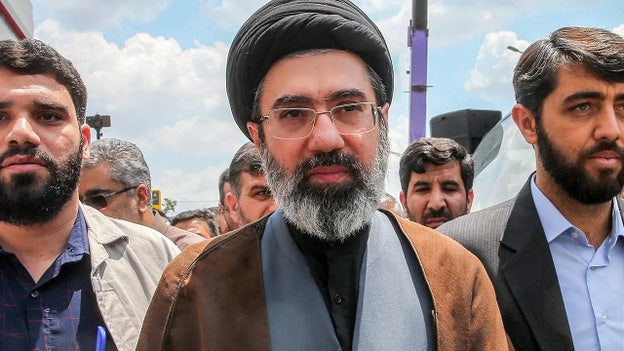
Iran’s foreign minister emphasized regime continuity on Tuesday in a heavily symbolic post shared on X.
The post shared Kazem Gharibabadi underscored Tehran's commitment to its founding principles under the new Supreme Leader, Mojtaba Khamenei.
Counterterrorism expert Dr. Mohammed Omar said the message suggested that, within the Islamic Republic, succession is never purely constitutional.
“Succession must be narrated. It must be sanctified. And when a regime feels vulnerable, it reaches for its deepest symbols,” the Director of the Antisemitism Research Initiative said.
“The message asks Iranians to understand political transition not as a contested transfer of power, but as the continuation of a sacred trust.
“It shows a regime trying to make obedience feel like mourning — and mourning feel like loyalty,” Mohammed added.
Oil prices plunge more than 5%, optimism grows over US-Iran deal
Oil prices dropped more than 5% Tuesday, extending losses from earlier in the week as optimism grew that a potential U.S.-Iran agreement could help ease tensions in the Middle East and keep oil flowing through the Strait of Hormuz
Reuters reported Brent crude futures fell $4.21, or 5.1%, to settle at $78.96 per barrel. U.S. West Texas Intermediate crude dropped $4.70, or 5.8%, to close at $76.05 per barrel.
The U.S. dollar also weakened in foreign exchange trading as investors welcomed signs of progress toward a possible peace deal involving Iran, the outlet said.
Trump in talks with Palestinian Authority to repair ties, advance Abraham Accords
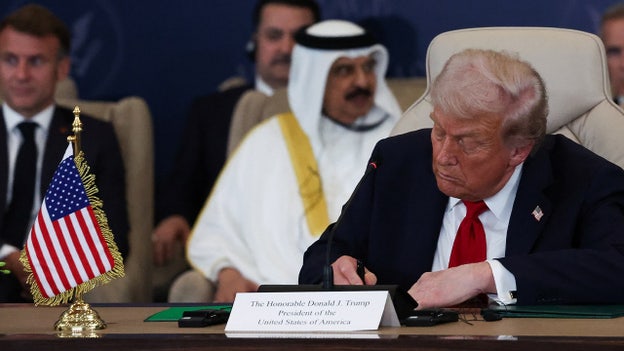
The United States and the Palestinian Authority (PA) are in talks to repair ties as Washington looks for Palestinian support for its regional initiatives and extends its Abraham Accords agenda, The Times of Israel reported Tuesday.
The Trump administration is also pushing to transfer billions of dollars in Palestinian tax revenues withheld by Israel to the U.S.-backed Board of Peace to support Gaza's reconstruction and eventual PA rule after reforms.
Saudi Arabia is also playing a role.
Negotiations have faced obstacles, including disagreements over Palestinian demands for limits on Israeli settlement expansion and U.S. requests that the PA suspend international legal actions against Israel.
FBI alleges Israel-linked motive in plot to attack UFC Freedom 250 White House event
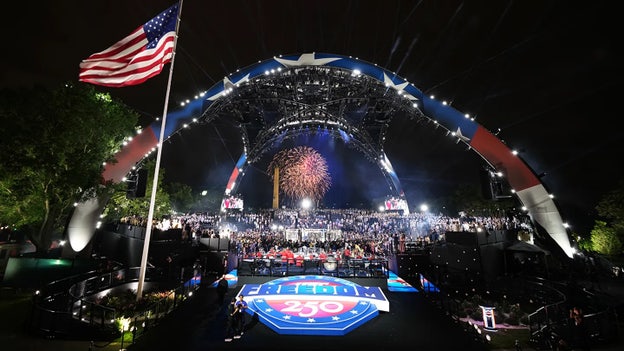
Israel appeared to be one motivating factor in an alleged plot to attack the UFC Freedom 250 event at the White House on Monday, with one suspect allegedly telling investigators the group wanted to target politicians who had received donations from the American Israel Public Affairs Committee, or AIPAC.
The FBI arrested five suspects and identified a broader network of 23 people allegedly involved in planning an attack using drones, sniper positions and a mass evacuation strategy.
Authorities also uncovered Signal chats detailing operational planning and travel arrangements.
The alleged plot was disrupted before the high-profile event, which drew thousands of attendees as part of President Donald Trump's birthday weekend.
Australia lowers travel advisories for Bahrain, Israel, Kuwait, Qatar, UAE amid diplomatic progress
Australia eased its travel advisory for Bahrain, Israel, Kuwait, Qatar and the United Arab Emirates after the United States and Iran announced a memorandum of understanding (MOU) scheduled to be signed Friday in Geneva.
Foreign Minister Penny Wong said the advisory level was lowered to "reconsider your need to travel" from the do not travel level and urged Australians to carry on postponing nonessential travel to the Gulf.
"While the security situation across the Middle East could deteriorate rapidly with little warning, the government has assessed current conditions in Bahrain, Israel, Kuwait, Qatar and the UAE as appropriate to move to this lower advisory level," Wong said.
Global shipping gears up for Strait of Hormuz reopening amid US-Iran deal
Ships were preparing for the reopening of the Strait of Hormuz on Tuesday, according to maritime intelligence firm Windward.
This came in the run-up to Friday’s memorandum of agreement signing in Geneva, after which President Donald Trump said the key global waterway would open.
“First signs are emerging that commercial shipping is preparing for a Strait of Hormuz reopening,” Windward said in a post shared on X.
“VLCCs signaling the UAE as their next destination are tracked sailing from as far away as the South China Sea and across the Indian Ocean,” Windward added.
“At least 23 VLCCs are currently heading for the UAE ports of Khor Fakkan or Fujairah based on their AIS messages, joining at least 30 already at anchorage there.
“Although more than 550 stranded ships west of Hormuz have yet to exit, including a reported 60 laden tankers, shipowners are readying for inbound transits to load oil once the memorandum of understanding to reopen the strait is signed on Friday,” the firm said.
“Watch for evolving behavior as regional transit patterns shift," Windward added.
The U.S. Navy also shared new guidance for vessels transiting the Strait on Tuesday, a senior US defense official told Fox News' National Security Correspondent Jennifer Griffin.
US-Iran deal highlights growing gap between American, Israeli interests: report
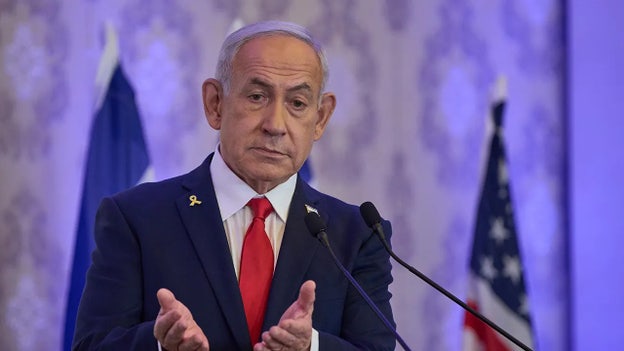
News that the United States and Iran had finalized a memorandum of understanding to end the conflict was met with dismay among Israelis on Monday and Tuesday, according to The Jerusalem Post.
Many, the outlet reported, argued that the deal leaves the Iranian regime intact and preserves what they see as an existential threat to Israel.
Several also said the agreement highlighted a growing gap between U.S. and Israeli interests.
“For us, it’s horrible. I don’t know what Trump is thinking,” said one dual U.S.-Israeli citizen.
“Maybe for the U.S. it’s a good deal, but not for Israel. If the regime is still there, Israel will still be in danger because the regime wants to eliminate Israel,” another told the outlet.
Vance questions Iran's intentions ahead of Geneva signing, vows to stay involved
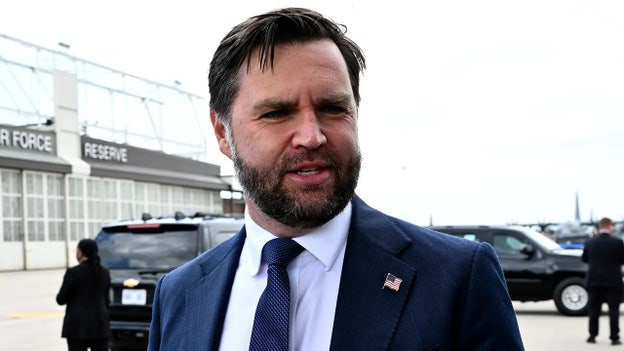
Vice President JD Vance on Tuesday explained his planned appearance at Friday's Iran deal signing ceremony in Geneva, arguing that his attendance will underscore the administration's commitment to securing concessions from Iran.
Speaking on “The Five” Vance also emphasized that any agreement would require significant compliance before Tehran receives any benefits.
"Look, they're going to have to do some serious compliance of very good things for the Americans in order for them to get any of the benefits of the bargain," Vance said of the Iranian regime.
Vance rejected the notion that attending the signing ceremony amounts to a reward for Tehran.
"So, I don't see it as a reward to take a photograph. I see it as we're going to get very serious about these negotiations, and what I'm trying to do is send a signal that the entire American government is actually oriented towards getting a good outcome for the American people," he said.
Vance also expressed skepticism about Iran's intentions.
"I kind of want to figure out how real are they, how fake are they," he said. "They're making a lot of promises. Are those promises actually going to be met with real action?"
"That's why I'm going to show up to the negotiation. That's why we showed up to Pakistan a couple of months ago, and we stay involved in this process," Vance added.
Vance says Qatar, Pakistan asked US to delay releasing text of the Iran deal
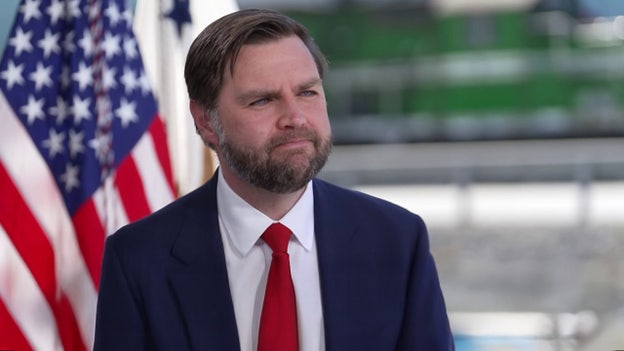
Vice President JD Vance said Tuesday that diplomatic requests from Qatar and Pakistan, who are mediating negotiations with Iran, are behind a delay in publicly releasing the agreement between Washington and Tehran.
"There's some diplomatic procedure at work here, where the Qataris and the Pakistanis have been mediating this entire negotiation with the Iranians, and they've asked us effectively to sequence the way that we roll this out," Vance said on "The Five."
"We'd be happy to release the agreement today or tomorrow. We may release it as late as Friday, but fundamentally, in the grand scheme of things, that doesn't matter, because whether it's tomorrow, whether it's Friday, people are going to see what's in this agreement very soon," he added.
Vance said Friday's formal signing ceremony is the primary reason for the delay.
"Friday, of course, is the formal signing ceremony, and they kick off these negotiations, and that's when they've asked us to delay it. We're trying to push that forward," he said.
Vance described the agreement as straightforward, centering on preventing Iran from obtaining a nuclear weapon while ensuring freedom of navigation through the Strait of Hormuz.
"If they fundamentally transform themselves as a country, so the United States wins either way," Vance said.
"As the president said, either they get nothing, we destroy their nuclear program and the Strait of Hormuz is open, or they fundamentally transform themselves, and that's a big win, too. It's really up to them."
Hesgeth not at odds with Trump over Iran deal, says Cornyn
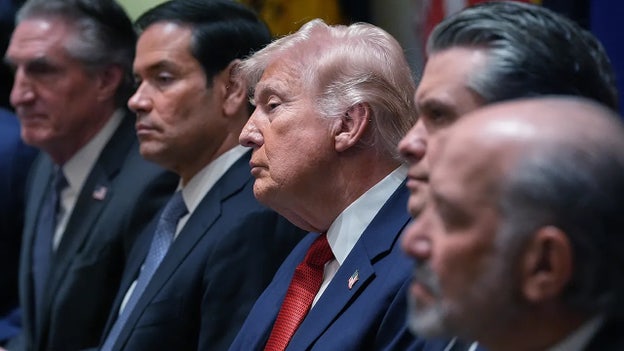
Secretary of War Pete Hegseth met with Senate Republicans on Capitol Hill Tuesday to rally support for Pentagon funding as lawmakers consider a reconciliation package and the administration’s defense priorities.
The meeting came amid ongoing talks over a potential Iran deal and reports of internal concerns about a recently announced Memorandum of Understanding (MOU).
Sen. John Cornyn, R-Texas, told Fox News the discussions centered on ensuring the Pentagon has the resources needed to sustain operations and replenish key weapons stockpiles.
"There's obviously been an extensive Operation Epic Fury, and they are running short of funding they need in order to acquire the weapons and missiles and things like that that they need to protect the nation," Cornyn said.
"So I certainly support what they're trying to do, but Democrats right now are threatening basically to shut down the government and not cooperating in any sort of defense funding at all," he continued.
"I told them it's going to be a pretty precarious effort, but I was committed to helping them because I think it's very important," he added.
Cornyn's comments come amid reports of internal debate over the Iran agreement.
Axios reported Monday that Secretary of State Marco Rubio, CIA Director John Ratcliffe and Hegseth expressed skepticism about a potential Iran deal and raised concerns during internal meetings.
Asked whether he got the impression from Hegseth that he was at odds with President Donald Trump over a potential agreement with Iran, Cornyn dismissed the suggestion.
"Not at all," Cornyn said.
Pressed on whether he would support an agreement with Iran, Cornyn said:"I would like to see something in writing."
Senate falls one vote short of advancing war powers resolution amid Tehran deal
The Senate on Tuesday failed to advance Sen. Raphael Warnock’s (D-Ga.) Iran war powers resolution and after Washington announced a framework agreement with Tehran aimed at ending the conflict.
The procedural vote fell one vote short of passage, effectively preventing the resolution from moving forward for floor consideration.
Four Republicans joined nearly all Democrats in supporting the measure: Sens. Bill Cassidy (R-La.), Susan Collins (R-Maine), Lisa Murkowski (R-Alaska), and Rand Paul (R-Ky.).
Sen. John Fetterman (D-Pa.) was the only Democrat to vote against the resolution.
Five senators did not vote: Sens. Michael Bennet (D-Colo.), Cory Booker (D-N.J.), Bernie Sanders (I-Vt.), Josh Hawley (R-Mo.), and Mitch McConnell (R-Ky.).
Supporters argued that Congress should reassert its constitutional authority over decisions involving military action. Opponents said the administration should retain flexibility in responding to developments in the region.
G7 leaders want to 'depend less on the strait' as Persian Gulf routes face pressure: report
G7 leaders discussed using new supply routes other than the Strait of Hormuz that could be opened to transport oil and gas out of the Persian Gulf, The Associated Press reported Tuesday.
French Foreign Ministry spokesman Pascal Confavreux told the outlet that the current dynamic needed to change.
“There were discussions to see how we can depend less on the strait,” he said. “This has to change for the future,” Confavreux said.
Before the Iran war, one-fifth of the world’s crude oil passed through the maritime chokepoint.
“Part of the discussions was, ‘OK, how can we imagine, finance and build infrastructure, sometimes on land, that will be able to go outside the route of the Strait of Hormuz?’” he said.
Germany ready to help preserve Middle East peace amid Iran-US deal, Merz says
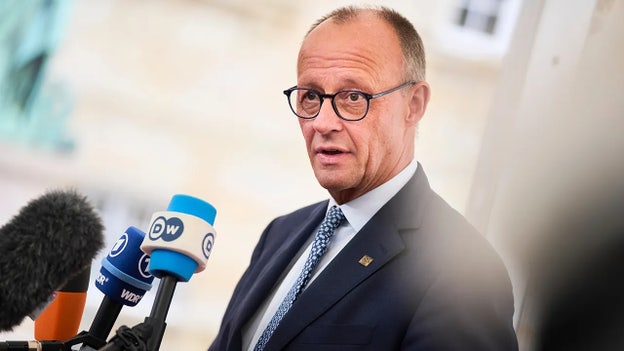
Germany is prepared to participate in efforts to preserve peace in the Middle East following a peace deal between Iran and the United States to end the war, Chancellor Friedrich Merz said Tuesday at the G7 summit.
"We have always said that we are ready to play our part. Indeed, we have already sent the first mine-clearing boats and ships to the region," he said at the French lakeside resort of Evian-les-Bains.
Merz also said that he was confident that the memorandum of understanding, or MOU, would work and that Tehran would accept the conditions because it had to.
He added that he had told President Donald Trump that the situation showed military strength could lead to a diplomatic solution and could serve as an example for Ukraine, Reuters reported.
US would allow Iran to resume oil sales immediately after deal signed Friday: reports
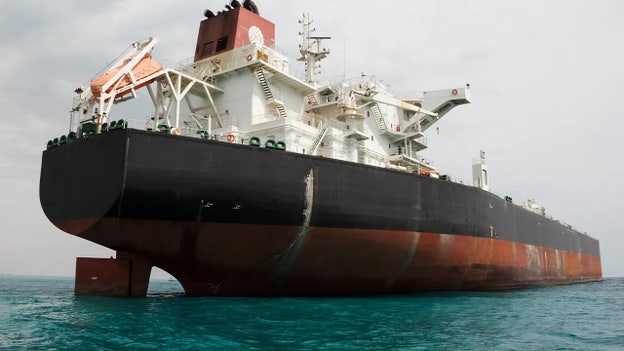
The United States would allow Tehran to resume oil sales immediately after an Iran-U.S. agreement is signed on Friday, according to reports.
However, Iran would only be permitted to sell oil if it complies with all terms of the agreement, including refraining from interfering with freedom of navigation through the Strait of Hormuz and not pursuing a nuclear weapon, Reuters reported, citing a senior U.S. official.
The Wall Street Journal, citing sources familiar with the memorandum of understanding (MOU) between Tehran and Washington, also reported that the agreement would waive certain banking and transportation sanctions to facilitate transactions.
According to the report, all measures would take effect immediately once the deal is signed in Switzerland on Friday.
Israeli drone strikes kill at least four in Lebanon, Iran issues military warning
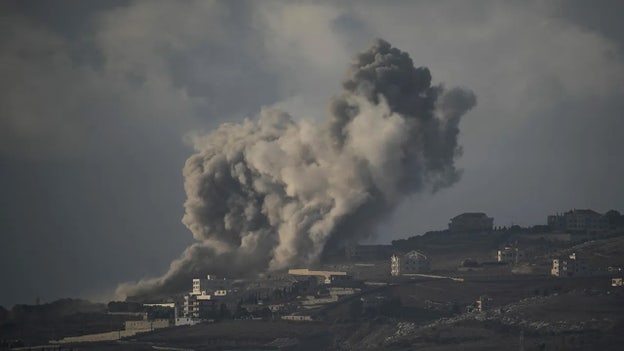
Israeli drone strikes killed at least four people in southern Lebanon on Tuesday, according to reports.
Reuters reported that Iran's Khatam al-Anbiya Central Headquarters, the country's top joint military command, said in a statement that Israel should expect a strong response from the Iranian armed forces if it does not stop its attacks in southern Lebanon.
The warning came amid calls from President Donald Trump for Israel to end its war in Lebanon, and following the announcement of the memorandum of understanding (MOU) aimed at ending the regional conflict.
The Israeli Defense Forces (IDF) also said it intercepted rockets launched by Hezbollah toward Israeli forces in southern Lebanon. The military added that it struck and destroyed the launcher used in the attack.
Hezbollah said Tuesday that it believes Iran will not sign a final nuclear agreement with Washington unless Israel withdraws from Lebanon, Reuters reported.
Citing a diplomat, the outlet said Israel's continued troop presence in Lebanon would be considered a violation of the U.S.-Iran MOU.
Iran warns US that any breach of agreement will be met with 'decisive, crushing response'
The head of Iran’s parliamentary national security committee warned Tuesday that any breach of the agreement with the United States would trigger a “decisive, crushing response.”
“Iranian resilience forced a strategic pivot: the U.S. came to the table on Iran’s terms,” Ebrahim Azizi wrote in a post on X.
“Now, Washington must prove its commitment by ending the war against Lebanon and upholding every clause of the memorandum of understanding,” he said.
“Any breach will be met with a decisive, crushing response. The era of unilateral imposition against Iranians is over,” Azizi added.
Senate to take procedural Iran War Powers vote despite US-Iran MOU
The Senate is expected to take a procedural vote at approximately 3 p.m. ET on Tuesday on a new Iran War Powers resolution.
Senate Democrats still plan to force the vote despite a memorandum of understanding (MOU) agreed to by the U.S. and Iran.
The vote is expected to be close again.
A previous procedural vote on a similar resolution succeeded 50-47 on May 19, though several Republicans were absent that day.
Fox News' Senior Capitol Hill Producer Kelly Phares contributed to this report.
Iranian tanker crosses US blockade line in Strait of Hormuz, sources say
An Iranian tanker crossed the U.S. blockade line in the Strait of Hormuz on Tuesday, according to sources familiar with the latest vessel-tracking data.
The tanker, Diona, was fully loaded with roughly 2 million barrels of crude, the sources said. Its last recorded load was April 10, and its last active AIS (Automatic Identification System) transponder ping was at 10:03 a.m. ET Tuesday.
CENTCOM is not commenting.
The move could mark a significant test of the U.S. blockade, which has been in place since April. Reports indicate other U.S.-sanctioned Iranian very large crude carriers (VLCCs) are also approaching the blockade line.
One source said it appears “something is happening,” pointing to fewer vessels docked at Iran’s easternmost port of Chabahar.
The Wall Street Journal reported that United Against Nuclear Iran, a nonprofit group, said an Iranian supertanker carrying crude oil had left Chabahar, crossed the U.S. blockade and was sailing out of the Gulf of Oman Tuesday with its location tracker active — the first such instance since the blockade began in April.
The vessel referenced in that report could be the Diona.
FOX Business' Lauren Simonetti contributed to this report.
‘This peace agreement could well be a surrender’: Sen. Blumenthal slams secrecy around Iran MOU
Sen. Richard Blumenthal, D-Conn., delivered a blistering rebuke of President Donald Trump's peace-making efforts with Iran.
“Apparently this memorandum is a page and a half, right? I've settled a lot of litigation, and even in the simplest dispute, a page and a half has never done the job," Blumenthal, a notorious Trump critic, told reporters in the Senate building Tuesday. "You can't sell your house with a contract a page and a half long.
"I think this peace agreement could well be a surrender in effect. And the president is very reluctant to make it public. He wants to keep it secret as long as possible so that he can frame perceptions and potentially deceive people about what's in it.”
Trump’s “M.O. is to overpromise and under deliver,” Blumenthal added, arguing the war imposed “catastrophic cost on American taxpayers and consumers” while raising major questions about what the Iran agreement actually contains.
Iran could gain access to “hundreds of billions of dollars in unfrozen assets,” he warned, which could be used to support Hezbollah, proxies or rebuild its nuclear program.
The secrecy around the Iran MOU “absolutely striking,” he concluded.
“There is no real verification or inspection for either this temporary agreement or longer term,” Blumenthal said, adding that lawmakers are merely “speculating” the deal “could be transformative for the region.”
Sen. John Kennedy: Iran deal should face Senate approval if final agreement emerges in 60-90 days
Iran must take “meaningful, real steps” to ending its nuclear weapons aspirations before any final agreement should come before the Senate for approval, according to Sen. John Kennedy, R-La., on Tuesday.
Kennedy told Fox News that lawmakers are not expected to see the document until Friday and that he expects it to include “general conceptual language.”
“I’m very hopeful that it will work,” Kennedy said. “We won’t know for 60, maybe 90 days whether we’re going to be able to confect a real agreement with Iran.”
Kennedy said he hopes the Strait of Hormuz is opened immediately but lasting peace is sketchy because “Iran’s run by religious zealots."
"They learned to lie before they learned to talk, and you can’t trust them,” Kennedy said in his patented way.
“No one’s confident that Iran is going to do anything,” Kennedy said. “And it’s unfair to hold anyone to that standard.
"You’re negotiating with an enemy,” Kennedy said. “Would I like to see us acquire the fissile material? Yeah, along with the centrifuges. Will it ultimately happen? Don’t know yet.”
Regardless, Kennedy conclude, “Iran has taken a curb stomp.”
“It’ll be 20 years before they can recover both their public sector and their private sector,” he said.
“We will know within a nanosecond if Iran restarts its nuclear weapons program,” he said, “and then we can go back in and bomb, as we did last year.”
Fox News’ Dan Scully contributed to this report.