Trump says he is personally involved in talks with Iran to reopen Strait of Hormuz
President Donald Trump said a deal with Iran to reopen the Strait of Hormuz has not yet been finalized, but he is personally involved in negotiations that are going “very well.”
Coverage for this event has ended.
Former Defense Secretary Esper warns Iran-Oman Hormuz arrangement could be ‘very bad outcome’ for US
Former Defense Secretary Mark Esper warned Friday that a potential arrangement giving Iran and Oman roles in administering traffic through the Strait of Hormuz could be a “very bad outcome” for the United States.
Speaking on Fox News' “America Reports,” Esper said reports indicate Tehran and Muscat are nearing an agreement that could divide passage through the strategic waterway, with a northern route into the Persian Gulf and a southern route along Oman’s coast.
“They may or may not charge a fee, but they would administer and control it in one way, shape, or form, which would be a very bad outcome for us,” Esper said.
Esper noted that President Donald Trump has said he is personally involved in negotiations, while Iranian officials have publicly disputed direct U.S. participation.
“I think what we’re waiting for now is to find out, is there a deal between Oman and Iran, and to what degree did the United States play a role or has a role in it,” Esper said.
Follow the latest updates in the conflict with Iran
Click here to follow the latest updates in the conflict with Iran.
President Trump honors Purple Heart recipients as US military remains engaged in Iran conflict
President Donald Trump honored Purple Heart recipients Friday, paying tribute to American service members who have been wounded or killed in defense of the country as U.S. forces remain engaged in the ongoing conflict with Iran.
“Today, on National Purple Heart Day, we express our tremendous gratitude to every American warrior and veteran who has received the Purple Heart,” Trump said in a video released by the White House.
Trump noted that nearly 2 million Americans have received the decoration, saying it commemorates the “courage, sacrifice, and grit” of men and women from every military service who have shed blood in defense of the nation.
“Our country could not exist without those patriots willing to shed their blood for all of us,” Trump said.
The message comes as American forces continue operations in the Middle East amid tensions with Tehran, including enforcement of the U.S. blockade against Iranian ports and continued negotiations over the Strait of Hormuz.
“We say God bless them, God bless our military, and God bless the United States of America,” Trump concluded.
American held in Iran warns of TB exposure, ‘almost non-existent’ medical care in prison: report
An American journalist imprisoned in Iran is warning of deteriorating conditions inside Tehran’s notorious Evin Prison, including possible tuberculosis exposure and what he described as “almost non-existent” medical care, according to CBS News.
CBS said it obtained a new recording from dual Iranian-American citizen Reza Valizadeh, who has been imprisoned since 2024 and is considered wrongfully detained by the State Department.
“Diseases that were eradicated decades ago have returned inside the prison, including pulmonary and gastrointestinal tuberculosis,” Valizadeh said, according to CBS. He said one inmate showing symptoms including coughing up blood remained in close quarters with other prisoners for months before being hospitalized.
Valizadeh also said he has been denied family visits for five months and that fellow American Kamran Hekmati was ordered back to Evin after less than a month of medical leave despite needing treatment for a suspected cancer recurrence.
His attorney urged President Donald Trump to prioritize the release of wrongfully detained Americans as talks with Tehran continue.
Fox News Digital's Emma Bussey contributed to this reporting.
Iran foreign minister urges Muslim unity against ‘malicious outsiders’ as US tensions remain high
Iranian Foreign Minister Seyed Abbas Araghchi on Friday praised Tehran’s armed forces and called for greater unity among Muslim countries as tensions with the United States remain high.
“Iran’s Powerful Armed Forces have shown their readiness, capability, and might in face of the world’s most expensive military,” Araghchi wrote on X, appearing to refer to the U.S. military.
“When Muslims stand together, we can face every challenge by malicious outsiders head-on,” he added. “Time to rely only on ourselves and embrace true brotherhood.”
The comments come as President Donald Trump says he is personally involved in negotiations with Iran over reopening the Strait of Hormuz, while U.S. forces continue enforcing a blockade against Iranian ports and coastal areas.
The X account that shared the message has been designated by the Islamic Republic of Iran’s Ministry of Foreign Affairs as Araghchi’s official account.
Captain of tanker that carried 1.8M barrels of Iranian oil sentenced after fleeing US Coast Guard
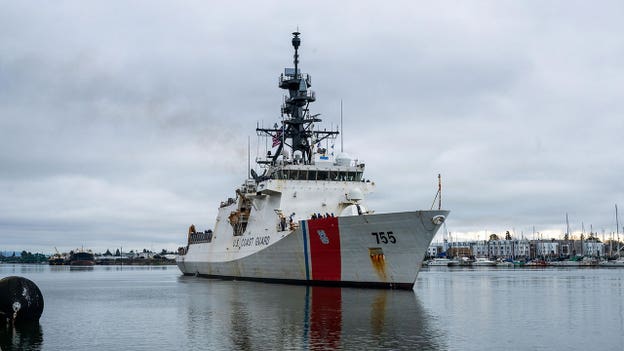
The former captain of a shadow fleet tanker that transported roughly 1.8 million barrels of Iranian oil was sentenced Friday to 10 months in prison after refusing U.S. Coast Guard orders and leading authorities on a weeks-long pursuit across the Atlantic.
Avtandil Kalandadze, 47, of the Republic of Georgia, captained the Bella 1 from September through late December 2025, according to U.S. Attorney Jeanine Pirro’s office. Prosecutors said the vessel carried Iran-origin oil to Asia while using tactics designed to conceal its activity, including shutting off its Automatic Identification System and hiding the ship’s name during a ship-to-ship transfer.
“Kalandadze captained a vessel used to conceal illicit oil shipments for U.S. adversaries, and when the Coast Guard ordered him to stop, he fled,” Pirro said.
The Bella 1 was intercepted by the Coast Guard Cutter Munro while traveling toward Venezuela in December 2025 but refused orders to stop and fled across the Atlantic, prosecutors said. Authorities ultimately seized the vessel Jan. 7.
Kalandadze pleaded guilty in June to failing to heave to a Coast Guard cutter and will be deported after completing his sentence.
Zelenskyy thanks Senate for advancing Graham sanctions bill targeting Russia, Iran
Ukrainian President Volodymyr Zelenskyy thanked the U.S. Senate on Friday for advancing the Lindsey O. Graham Sanctioning Russia and Iran Act, saying the measure would increase pressure on Moscow to end its war against Ukraine.
“Adopting the Lindsey Graham Sanctioning Russia and Iran Act certainly helps increase pressure on the aggressor to bring this insane Russian war against our independence and our people to an end,” Zelenskyy wrote on X.
Zelenskyy said Ukraine remains grateful for bipartisan U.S. support and warned that Russian President Vladimir Putin is increasingly relying on ballistic missiles as Kyiv searches for additional Patriot missiles to strengthen its air defenses.
“Real, strong American pressure and sanctions against Russia are what will help the most,” Zelenskyy wrote. “Diplomacy comes closer with every step of pressure on the aggressor.”
The Senate advanced the sanctions package earlier Friday, sending the measure targeting Russia and Iran to the House.
CENTCOM says US forces redirected 51 vessels enforcing blockade against Iran
U.S. Central Command (CENTCOM) said Friday that American forces have redirected 51 commercial vessels as part of enforcement operations against Iranian ports and coastal areas.
CENTCOM shared a photo of a U.S. sailor standing watch inside the combat information center aboard the guided-missile destroyer USS Mason as the warship sailed in regional waters supporting the blockade.
“As of Aug. 7, CENTCOM forces have redirected 51 commercial vessels, disabled 2, and boarded 2 to ensure compliance,” the command said on X.
The latest tally comes as the U.S. maintains military pressure on Tehran while President Donald Trump says negotiations over reopening the Strait of Hormuz are underway.
Pentagon touts domestic critical mineral push to build ‘lethal Arsenal of Freedom’
The Department of War on Friday touted its push to strengthen U.S. critical mineral supply chains, framing the effort as essential to maintaining American military dominance.
“Securing our domestic supply chains is vital to building a lethal Arsenal of Freedom for the American warfighter,” Pentagon Chief Technology Officer Emil Michael said in a graphic shared by the department.
The department said its Office of Strategic Capital is partnering with private industry to expand the U.S. industrial base and shore up domestic supplies of critical minerals used in advanced defense technologies.
The message comes as the Trump administration moves to reduce U.S. dependence on foreign mineral supply chains, with President Donald Trump announcing billions of dollars in new mining and processing investments Friday at a State Department roundtable.
The Department of War said the materials are critical to technologies that enable U.S. forces to maintain “DOMINANCE across all domains of warfare.”
Trump says he has ‘a war to prosecute’ as he pushes US mining buildup to counter foreign dependence
President Donald Trump told participants at a State Department mining roundtable Friday that he needed to move quickly because he has “a war to prosecute,” as his administration simultaneously pushed a major critical-minerals buildup aimed at reducing U.S. reliance on foreign powers.
“If you could go quickly, I would appreciate it, because we have a war to prosecute. OK? That’s my excuse for getting out of here a little bit early,” Trump said amid the ongoing U.S.-Iran conflict.
Trump announced $100 million for U.S. mining schools and argued that rebuilding the domestic minerals industry is critical to American economic and national security, drawing a direct comparison with China.
“Accredited mining programs in the United States now graduate less than 170 mining engineers each year, while China graduates more than 3,000,” Trump said.
The president said his goal is to ensure America is “never again reliant on hostile foreign nations for the resources our country needs to dominate in the future.”
Secretary of State Marco Rubio echoed that message, saying the administration wants mineral supply chains that are “diversified and reliable” so “no country can ever hold this over our head and threaten us in the future.”
Trump also pointed to Beijing’s energy strategy, saying, “China is smart, and they’re using coal,” while arguing the U.S. is rapidly rebuilding its own mining and energy capacity.
State Department sanctions Iran-linked crypto network after attacks on commercial ships
The State Department on Friday announced sanctions against six entities and one individual accused of helping Iran move illicit funds through digital assets, tying the action directly to Tehran’s attacks on commercial vessels in the Strait of Hormuz earlier this week.
State Department spokesperson Tommy Pigott said the Iranian regime launders billions of dollars through channels that include digital asset exchanges, allowing Tehran to maintain access to the international financial system despite U.S. sanctions.
“The United States will continue to deny the regime the resources it needs to threaten its neighbors and innocent vessels, support terrorism, and advance its nuclear ambitions,” Pigott said.
The sanctions target two major digital asset exchanges used by Tehran, as well as a network of companies accused of facilitating illicit cryptocurrency activity and sanctions evasion.
The State Department also said its Rewards for Justice program is offering up to $15 million for information leading to the disruption of financial mechanisms used by Iran’s Islamic Revolutionary Guard Corps (IRGC) and its branches.
Retired Marine general warns Iran control of Hormuz would set ‘terrible precedent’ for China
A retired two-star Marine Corps general warned Friday that allowing Iran to exercise control over traffic through the Strait of Hormuz as part of a potential agreement with the U.S. could undermine a core principle of American national security.
“Anything that would allow Iran to continue to exert any kind of control over an international waterway would be a violation of one of the most fundamental precepts of our national security, which is freedom of navigation,” retired Maj. Gen. Arnold Punaro said on Fox News' "America Reports."
Punaro was responding to discussions of a possible arrangement in which Iran would oversee incoming traffic through the strait while Oman would handle outgoing vessels.
He argued such a deal could set a “terrible precedent,” particularly in the South China Sea, where Beijing has asserted sweeping territorial claims.
“I could see Xi Jinping sending a thank-you note,” Punaro said.
The retired general also urged the U.S. to keep economic sanctions on Tehran and oppose any arrangement that would provide the regime with new revenue.
“With Iran, we should focus on deeds, not words,” he said.
Treasury targets global networks moving hundreds of millions for Iran’s shadow banking system
The Treasury Department on Friday sanctioned a web of companies and individuals across several countries that it says helped Iran move hundreds of millions of dollars through its clandestine financial system.
The Office of Foreign Assets Control (OFAC) targeted exchange houses, front companies and facilitators tied to Iran’s Shahr Bank, saying the network helped Tehran retrieve oil revenue and move foreign currency through shell companies in places including the United Arab Emirates, Hong Kong and Singapore.
“Iran’s shadow banking system is buckling under Economic Fury, and the regime is running out of ways to move money,” Treasury Secretary Scott Bessent said. “Every facilitator that keeps the regime afloat is putting a target on its own back.”
The Treasury said Friday’s action is its eighth move this year targeting Iran’s shadow banking apparatus as the Trump administration maintains its “maximum pressure” campaign against Tehran.
The sanctions block U.S.-based assets of the designated individuals and entities and generally prohibit Americans from conducting transactions with them.
Senate advances Lindsey O. Graham Sanctioning Russia and Iran Act
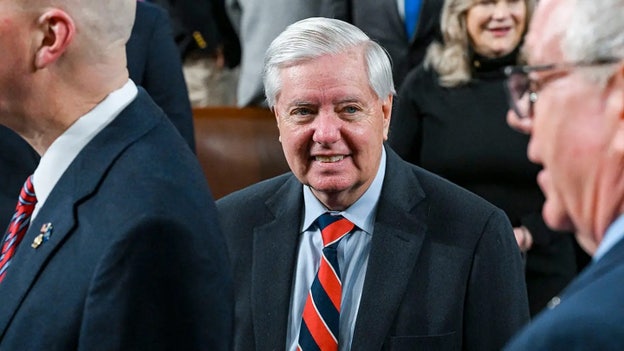
It’s taken well over a year of stops, starts, promises and derailments, but the Senate has at last advanced a bone-crushing package of sanctions against Russia, capping off one of the late Sen. Lindsey Graham’s biggest fights.
The Lindsey O. Graham Sanctioning Russia and Iran Act sailed through the Senate on another colossal bipartisan vote and is now headed to the House. It has the backing of President Donald Trump, too.
It comes after personal lobbying from Ukrainian President Volodymyr Zelenskyy last week, who, hours after Graham’s memorial service in Washington, D.C., pleaded with lawmakers to put a check on Russian President Vladimir Putin.
"Today, President Zelenskyy is watching from Ukraine, and Putin is watching from Moscow," Sen. Richard Blumenthal, D-Conn., said on the Senate floor. "I would like to think that Lindsey Graham is watching, too."
The bill focuses on kneecapping Putin’s war machine by targeting Moscow’s top financial driver: oil and gas sales.
It also extends sanction authority against Iran that hampers funding to the country’s weapons and energy sectors as the administration and negotiators abroad seek to find a long-lasting peace agreement for the war in the Middle East.
North Korea expert warns US can't take eye off Kim Jong Un following missile test during Iran war
A North Korea expert told Fox News Digital that the United States "can never take their eye off" Kim Jong Un and the Korean Peninsula after Pyongyang test-fired a missile this week amid the ongoing conflict with Iran.
The launch of the short-range ballistic missile — which Japan said landed in the waters off North Korea’s east coast — unfolded Thursday ahead of joint military exercises to be conducted by the U.S. and South Korea later this month.
"There's this unsettled conflict on the Korean Peninsula. And Kim Jong Un, a very unpredictable leader that seeks attention, that is something the United States can never take their eye off," retired Navy Rear Adm. Mark Montgomery, a senior fellow at Foundation for Defense of Democracies, told Fox News Digital on Friday.
"So we have all these challenges in the Middle East, these challenges with Russia and Ukraine, these challenges with China pressuring and trying to coerce Taiwan. You can never forget that the North Korean challenge to South Korea is sitting right there, and there are no constraints on Kim Jong Un," Montgomery added. "There's no version of an empowered elite or a population or a military that could unseat him. So we should always keep our eye on him, pay attention to him, and make sure we're constantly deterring any provocative behavior."
U.S. Indo-Pacific Command said following North Korea’s launch on Thursday that, "We are aware of the missile launch and are consulting closely with our allies and partners."
"Based on current assessments, this event does not pose an immediate threat to U.S. personnel or territory, or to our allies," it added. "The United States remains committed to the defense of the U.S. homeland and our allies in the region."
Fox News’ Liz Friden contributed to this post.
Pakistan hopes pact with Saudi Arabia, Turkey will be ‘shield of peace for generations to come’
Pakistani Prime Minister Shehbaz Sharif said Friday that he hopes a defense agreement signed today between his country, Saudi Arabia and Turkey will “remain a shield of peace for generations to come.”
“Three brotherly nations, united by faith, friendship and a shared resolve for peace and security,” Sharif wrote on X.
The deal states that “any armed attack against any one of the three States shall be regarded as an attack against them all,” according to Pakistan’s foreign ministry.
It was signed in Mecca, Saudi Arabia, during a meeting between Saudi Crown Prince Mohammed bin Salman, Turkish President Recep Tayyip Erdogan and Sharif.
Sharif has acted as a key mediator in U.S.-Iran talks to end the war.
US war against Iran has left oil energy prices ‘a little bit inflated,’ Hassett says
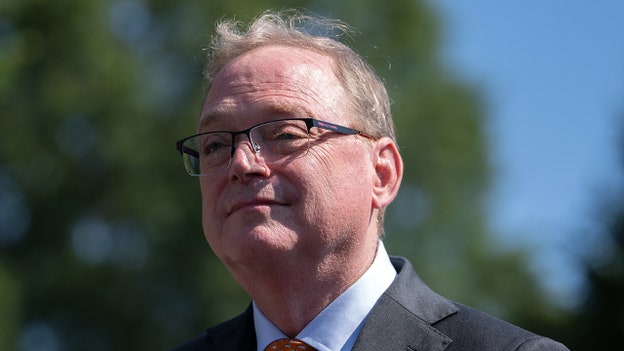
White House National Economic Council Director Kevin Hassett, when asked Friday if the U.S. war against Iran is having a negative impact on the economy, said “Oil energy prices are a little bit inflated, but we can say that way less than people expected.”
“But we're mindful of the fact that gasoline prices are high and we're making many steps to help reduce the stress of that for people,” he added.
As of Friday, the national average price for a gallon of gas is $4.04, down from $4.06 yesterday and $4.11 a week ago, according to AAA.
Trump to participate in mining roundtable at State Department as Iran talks continue
President Donald Trump is expected to visit the State Department Friday afternoon for a meeting with American mining industry leaders as talks remain ongoing with Iran to reopen the Strait of Hormuz.
Trump said Thursday that he was personally involved in the talks, adding that, "I think we're doing very well."
"I'm involved in the negotiation. I think we're doing fine. It could be. It could be soon," the president said regarding a potential deal to reopen the key Middle Eastern waterway.
US stealth fighter jet refuels over Middle East in photo released by CENTCOM
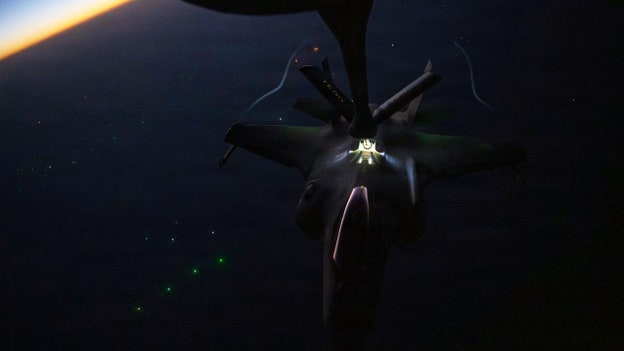
U.S. Central Command released a photo Friday showing an aircrew aboard a U.S. Air Force KC-135 Stratotanker refueling an F-35A stealth fighter jet "in the skies over the Middle East."
The U.S. military launched Operation Epic Fury against the Iranian regime on Feb. 28.
A ceasefire between both sides fell apart in early July as the U.S. military resumed strikes against Iran. CENTCOM carried out 13 consecutive days of strikes on Iranian military targets, aimed at diminishing “the threat Iran poses to civilian mariners and commercial vessels transiting the Strait of Hormuz.”
CENTCOM has since halted attacks against Iran as the U.S. and Tehran are working on a deal to reopen the Strait of Hormuz.
Nuclear experts urge Trump not to let Iran steer talks away from regime's atomic threat
As negotiations continue over the Strait of Hormuz experts are urging the Trump administration to keep their eye on the ball when it comes to the Iranian nuclear program.
On Wednesday, Prime Minister Benjamin Netanyahu reacted to news of reported comments from IRGC chief Ahmad Vahidi, warning that Israel would continue preventing Iran from obtaining a nuclear weapon, with or without a diplomatic agreement.
The remarks in question by Vahidi, which were first seemed to be reported in 2025 in an interview with an Iranian-regime-linked outlet, went viral on Wednesday, but after further investigation they seem to have come from an interview when he was interior minister and an adviser to the IRGC.
He reportedly told ILNA that the country's official line was that building a bomb was not on the table but "iran’s hand is open…Iran can take actions if has not taken until now," in an account published by Khabar online, and shared with Fox News Digital.
In reaction to the remarks that were amplified by Israel’s Ch. 14 on X, Netanyahu said during his speech that, "Today, we heard the commander of the Revolutionary Guards, Vahidi, explicitly declare Iran’s intention to continue developing nuclear weapons — ‘continue,’ as he put it," Netanyahu said at a ceremony marking the reinterment of Shimon and Rivka Herzl, the grandparents of the founder of modern day Zionism, Theodor Herzl."
"Well, as prime minister of Israel, I too, am determined to continue — to continue preventing Iran from possessing nuclear weapons," he said.
Trump says Iran wants a deal and ‘don’t want to be hit’
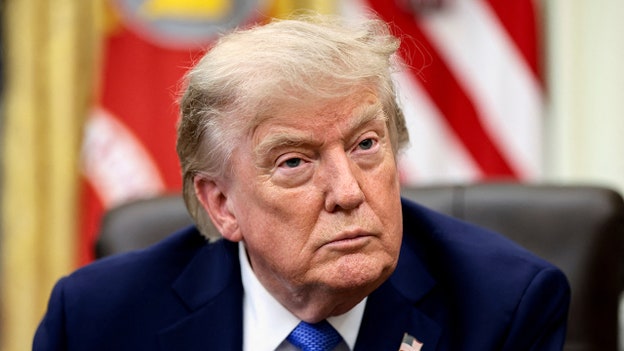
President Donald Trump said in an interview that the Iranians want to make a deal and “don’t want to be hit” as negotiations are ongoing to reopen the Strait of Hormuz.
“They want to make a deal. Look, it’s obvious. They don’t want to be hit. Ok? They want to make a deal. So we will see,” Trump said in an interview released by Punchbowl News on Friday.
The remarks come after Trump told reporters Thursday at the White House that he personally has gotten involved in talks with Iran to reopen the Strait of Hormuz.
"I think we're doing very well," he said. "I'm involved in the negotiation. I think we're doing fine. It could be. It could be soon."
Fox News Digital’s Brittany Miller contributed to this post.
Saudi Arabia bracing for possible coordinated attack from Iranian allies in Iraq, Yemen: report
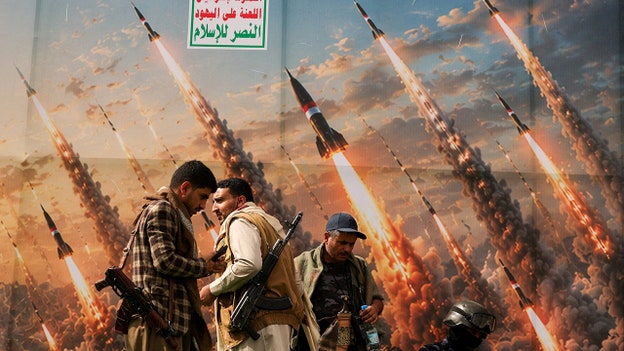
Saudi Arabia is expecting imminent attacks from Iraqi militias in the north and Yemen’s Houthis in the south under the direction of Iran’s Islamic Revolutionary Guard Corps (IRGC), a report said.
A senior Saudi official told Reuters that intelligence reports from Saudi Arabia, the U.S. and other countries indicated that energy infrastructure, ports and airports are among the potential targets.
The official added that Saudi Arabia has observed drones and missiles being moved in preparation, suggesting a coordinated operation from both directions could be looming.
Saudi Arabia is ready to respond to “any aggression,” the official also told Reuters.
Saudi Arabia, Turkey, Pakistan sign defense agreement following Iranian attacks on Middle East
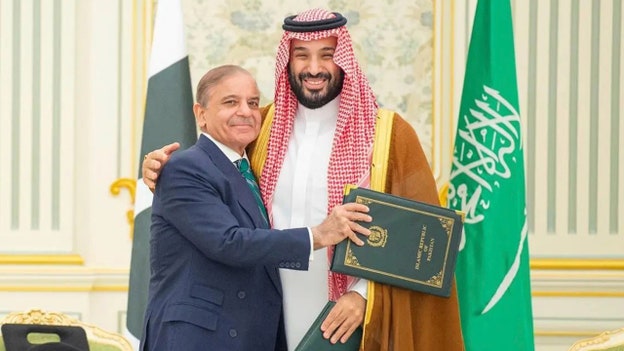
The countries of Saudi Arabia, Turkey and Pakistan signed a defense agreement on Friday stipulating that “any armed attack against any one of the three States shall be regarded as an attack against them all,” according to Pakistan’s foreign ministry.
It added that the deal is “intended to strengthen collective deterrence against any act of aggression.
The agreement comes as Iran has attacked Saudi Arabia during Operation Epic Fury. Saudi Arabia, in late July, also joined U.S. strikes against Iran-backed militias in Iraq.
The defense pact was signed in Mecca, Saudi Arabia during a meeting between Saudi Crown Prince Mohammed bin Salman, Turkish President Recep Tayyip Erdogan and Pakistan’s Prime Minister Shehbaz Sharif.
Sharif has acted as a key mediator in U.S.-Iran talks to end the war.
Expert says Iran's long-term goals extend beyond Hormuz negotiations
As the United States and Iran continue negotiating over reopening the Strait of Hormuz, one Middle East expert warned that Tehran's long-term strategic objectives remain unchanged.
Nazee Moinian, an adjunct fellow at the Middle East Institute, said on Fox News that Iran's revolutionary government continues to view diminishing American influence as a core ideological goal, regardless of short-term diplomatic developments.
"Iran is a revolutionary state," Moinian said. "It's committed to deflect, diminish, and eventually destroy American power and influence in the region and around the world."
Moinian said Iran's leaders take what she described as a long-term view of their conflict with the United States, arguing they see the struggle as ideological rather than transactional.
"They are looking at this as a battle between good and evil, between victimizer and the victimized, between the corrupt and the uncorrupt," she said.
Her comments came as Iranian and U.S. officials have both suggested negotiations over reopening the Strait of Hormuz are nearing a potential agreement, even as military tensions and proxy attacks continue across the region.
Trump says Hormuz deal has not been reached but suggests agreement could come soon
President Donald Trump said Thursday that a deal to reopen the Strait of Hormuz has not yet been finalized, though he indicated negotiations with Iran are continuing and an agreement could come in the near future.
Asked by a reporter during an Oval Office event whether a deal had been reached, Trump stopped short of declaring a breakthrough.
"Well, I don't want to say it has been," Trump said. "It's sort of open right now."
Trump said the U.S. Navy continues to enforce the blockade around Iran, arguing that military control of the waterway has helped stabilize the situation. At the same time, he cautioned that shipping risks remain because Iran could still deploy naval mines or carry out attacks that would discourage commercial traffic.
"They can always shoot something," Trump said. "They always have something or drop a mine. And if you have one mine sitting out there, you sort of mess things up because people don't want to take their billion-dollar boats and accidentally get hit by a mine."
Despite those concerns, Trump expressed confidence that negotiations are progressing.
"I think we're doing very well," he said. "I'm involved in the negotiation. I think we're doing fine. It could be. It could be soon."
Hours later, as he left a White House event honoring Team USA athletes, Trump offered a similarly optimistic assessment when asked whether there had been any developments.
"Moving along good," he told reporters before departing.
Yesterday's Fox News Digital live blog offers additional coverage of the conflict with Iran.
Live Coverage begins here