
Trump says Iran war is 'small price to pay' for keeping US safe
President Donald Trump said during a rally in Nebraska on Monday that the war, which he claimed was "essentially over," is keeping the country safe, adding Iran could take out a city like Los Angeles or San Diego.
Coverage for this event has ended.
Vance says Iran deal would require reduction in nuclear enrichment capacity
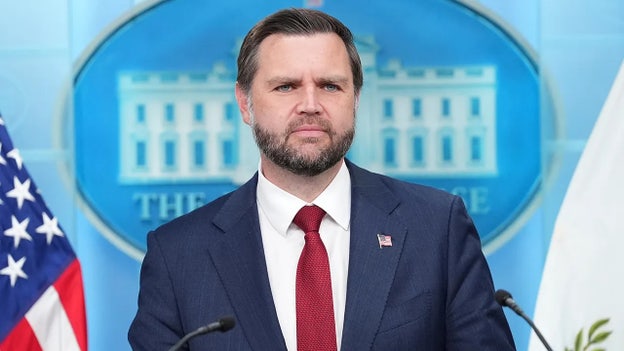
Vice President JD Vance said Monday that any deal with Iran would need Iran to reduce its nuclear enrichment capacity, rather than give assurances of future nuclear drawdowns.
"If you don't want a nuclear weapon, then why do you need 60% enriched fuel? And if you want to show commitment to not building a nuclear weapon, don't build highly enriched fuel. That's a very basic threshold issue," Vance told Reuters after a campaign trip in Alaska.
"I think if they want to show a commitment to not building a nuclear weapon, they would do something meaningful on their enrichment capacity," he added.
Vance also told the outlet that Washington is uncertain about decision-making in Tehran.
"One of the things we picked up on is it's not totally clear how their country makes decisions," Vance said.
Follow the latest updates in the conflict with Iran
Click here to follow the latest updates in the conflict with Iran.
Oil prices surge amid Gulf storm warnings and Mideast strikes threatening global supply
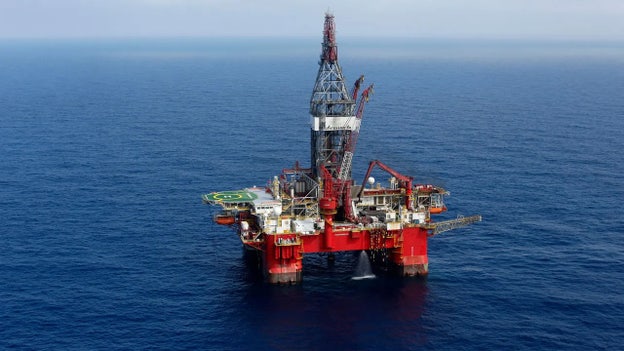
Oil prices climbed Wednesday as investors weighed supply disruptions amid storm warnings for the Gulf of America and Houthi strikes in Saudi Arabia, Reuters reported.
Brent crude futures gained 93 cents, or 0.92%, to reach $101.51 per barrel, while U.S. West Texas Intermediate crude (WTI) rose 82 cents, or 0.92%, to $90.25.
The price increases follow warnings from U.S. forecasters that a developing weather system in the Gulf of America is expected to intensify into the first Atlantic hurricane of 2026 within 48 hours.
The storm’s projected path directly threatens offshore installations that account for 15% of total U.S. crude oil production and 5% of natural gas output.
Explosions rock Yemen port city as Saudi coalition intercepts Houthi missile
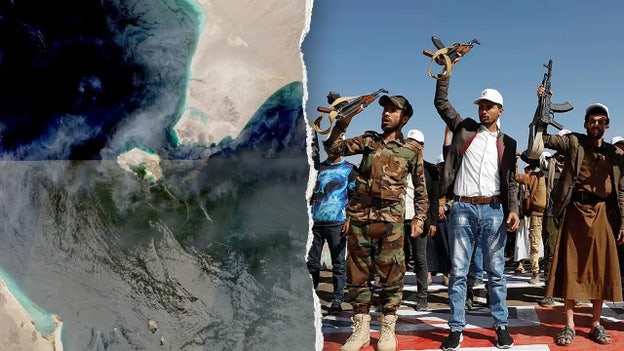
The Saudi-led coalition intercepted and destroyed a ballistic missile launched by Yemen's Iran-aligned Houthis toward the Saudi city of Khamis Mushait, Saudi state TV reported, according to Reuters.
The coalition said Houthi missile threats originated from the Houthi-controlled capital, Sanaa, as well as the governorates of Saada and Amran.
The developments came amid reports of two powerful explosions in the southern port city of Aden near its international airport.
Bessent taunts Tehran over oil minister shake-up amid US economic pressure
Treasury Secretary Scott Bessent said Tuesday that U.S. sanctions and the maritime blockade have crippled Tehran's oil trade and pointed to the sudden resignation of Iranian Oil Minister Mohsen Paknejad.
"Iran has a new oil minister," Bessent said in a post on X.
"Considering Iran has not loaded a single barrel of crude onto a vessel since Aug. 25, what is the oil minister managing?" he asked.
The comments come as Washington ramps up "Operation Economic Outcast" to drive Iranian crude exports and revenues to zero.
Qatar confirms US-Iran talks ongoing as Doha pushes for diplomatic progress
Qatar confirmed Tuesday that talks and its mediation efforts between the United States and Iran are ongoing, with Doha actively working to help both nations achieve meaningful diplomatic progress.
In a statement shared on X, Ibrahim bin Sultan Al Hashmi, director of the Media and Communication Department at Qatar’s Ministry of Foreign Affairs, said the diplomatic push aims to build momentum "covering all issues of concern to both parties," while Qatar acts as a key mediator.
Al Hashmi emphasized resolving long-standing tensions "requires making every effort to find negotiable solutions while taking into account the concerns of all parties involved."
He added that Qatar remains committed to maintaining open channels of communication to ensure steady progress toward stability in the region.
3 Iranians face UK charges over alleged spy operation targeting journalists
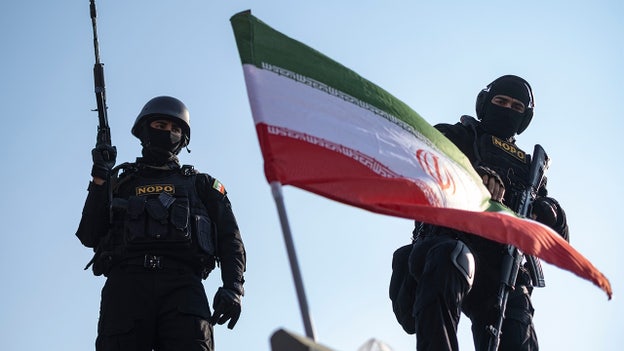
Three Iranians have been accused of spying on two journalists in Britain to assist Iran’s intelligence service and prepare for serious violence, prosecutors said Tuesday in London.
Mostafa Sepahvand, 41, Farhad Javadi Manesh, 46, and Shapoor Qalehali Khani Noori, 57, allegedly conducted months of surveillance of journalists Mojtaba Pourmohsen and Kambiz Hosseini, Iran International reported.
Prosecutors allege Sepahvand intended to carry out serious violence, while Javadi Manesh and Noori gathered information to help others commit serious violence.
The three men, arrested in 2025, have pleaded not guilty to all charges. They are charged under Britain’s National Security Act 2023.
Trump says US is ‘holding up whole world’ in Iran war as allies stay on sidelines
President Donald Trump declared Tuesday that the United States is single-handedly carrying the burden in the conflict with Iran, arguing that global allies have left it entirely on American shoulders.
“We're into 51 years now,” Trump said, referencing the Iranian regime. “The bully of the Middle East — this should have been done a long time ago by other presidents or other countries.”
“It doesn't have to be us. It's always us. It should have been done by other countries long ago because, with time, it just got worse,” Trump said at Sparrow Point.
“But we've done a job, and frankly, I get calls all the time from the leaders of the world thanking me very much. I say, 'Good, when are you going to pay for it?' They say, 'Thank you, sir, for doing such a good job.' And I'll say to them, 'It's great — do you want to send some ships, sir?' 'I would rather not get involved.' They don't have any ships.”
“We're really holding up the whole world. It's on our shoulders, and we love doing it in a certain way,” Trump added. “We love doing it because we've gotten stronger and others have gotten weaker.”
Trump touts US fight against Iran, vows 'nice' or 'not-so-nice' way to end conflict
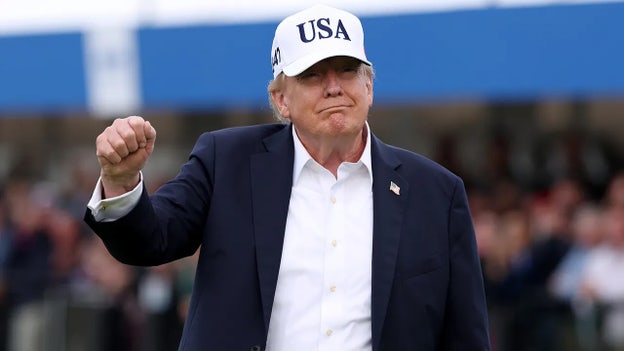
President Donald Trump said Tuesday that the U.S. is doing “extremely well” against Iran, declaring that the country’s military is “shot” and suggesting a decision is coming soon on how to bring the conflict to an end.
“We’re doing extremely well in the Islamic Republic of Iran,” Trump said in Sparrows Point, Maryland. “They have no military. It’s shot. The whole place is shot.”
“And they were the evil one. They were the bully of the Middle East and not so much the bully anymore,” Trump said.
“But we have to finish up, and it’s only a question of which way do we want to do it: the nice way or the not-so-nice way? And pretty soon you’ll find out.”
Iran declares US talks 'meaningless,' slams economic sanctions, threats
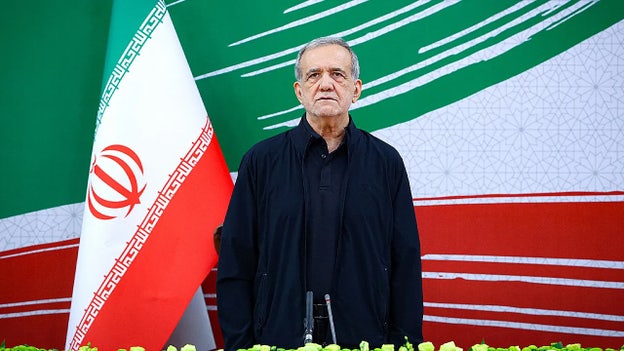
Iranian President Masoud Pezeshkian dismissed talks with the United States as "meaningless" Tuesday, citing ongoing U.S. sanctions, pressure and military actions against Iran.
"Our problem with the U.S. is that every time we come to the negotiating table, war is immediately imposed upon us," Pezeshkian said after a meeting with Armenian Foreign Minister Ararat Mirzoyan, according to the semi-official state media outlet Fars News Agency.
"Negotiations with an enemy that engages every day in assassinations, sanctions, pressure, and threats, and that violates agreements, are meaningless," he added.
"Our people do not accept such an approach either."
Pezeshkian's remarks came despite ongoing talks between Washington and Tehran, according to Qatar’s Ministry of Foreign Affairs.
Trump says Iran oil minister quit after declaring nation has ‘no economy,’ ‘no oil’
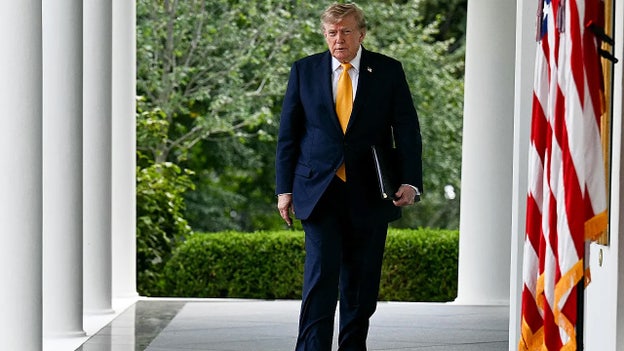
President Donald Trump said Tuesday that Iran’s oil minister, Mohsen Paknejad, resigned after saying the country has “no economy” and “no oil,” as Trump touted the flow of oil through the Strait of Hormuz.
“Iran is doing very poorly,” Trump told reporters ahead of traveling to Sparrows Point, Maryland.
“Their economy is gone. They have inflation of almost 300%, and their oil minister just quit,” Trump said. “He said, ‘We have no economy. We have no oil. We have nothing'.”
“The Strait of Hormuz — tremendous amounts, millions of barrels of oil — has been delivered just over the last couple of days.
“We’re getting it through at levels that we’re now, even in some times, exceeding prior to the war. We’ve done very well,” he said.
Iran vows ‘surprises’ for enemies as sanctioned missile expert tapped for defense chief
Iranian President Masoud Pezeshkian nominated sanctioned ballistic missile expert Mehrdad Akhlaghi Ketabchi as defense minister on Tuesday, a move a prominent lawmaker said served as a warning to Iran’s “enemies.”
Ketabchi has roots in Iran’s missile industry and was added to a U.N. Security Council sanctions list in 2007 as head of the Shahid Bagheri Industrial Group, a Defense Ministry organization linked to Iran’s ballistic missile program.
His name returned to the U.N. sanctions list in September 2025, according to Iran International.
Ebrahim Rezaei, spokesman for the Iranian parliament’s National Security and Foreign Policy Commission, said on X that the nomination signaled Iran was prepared to deliver a devastating response to any aggression.
“The most important message of introducing Mehrdad Akhlaghi (as the proposed Minister of Defense) to the enemies is doubled combat readiness to defend Iran and a devastating response to any aggression,” Rezaei said on X.
“Expect surprises, new weapons, more powerful armaments, and a quantitative and qualitative increase in Iran's defensive productions.”
Turkey, Pakistan and Saudi Arabia activate defense pact amid rising Houthi attacks
Turkey, Pakistan and Saudi Arabia agreed Oct. 5 to activate what they said were “deterrence measures” under a mutual defense pact and to deploy forces to the Gulf kingdom to defend against rising attacks by Yemen’s Houthis.
The decision was announced after the three countries’ defense and foreign ministers held an emergency meeting in Riyadh.
“The committee agreed to activate collective deterrence measures within the framework of the Alliance in response to the attacks and all those responsible for them,” Khalid bin Salman, Saudi Arabia’s defense minister, said on X.
It marked the first time the alliance, known as the Mecca Alliance for Defense, had been invoked since it was signed Aug. 7.
Oman evacuates crew from Panama-flagged tanker after Strait of Hormuz attack
Oman carried out a medical evacuation for crew members aboard the Panama-flagged oil tanker On Peace, which was attacked near the coast of Oman on Tuesday, the media office of the sultanate's armed forces said in a post on X.
Separately, India's Foreign Ministry also confirmed in a statement that 11 Indian nationals on board had been wounded, after an unknown projectile struck the tanker as it passed through the Strait of Hormuz.
The ministry did not provide details about the conditions of those wounded but condemned the incident and called for an “immediate cessation of attacks” in the waterway.
Top Iranian official calls Bessent's economic forecasts 'delusional'
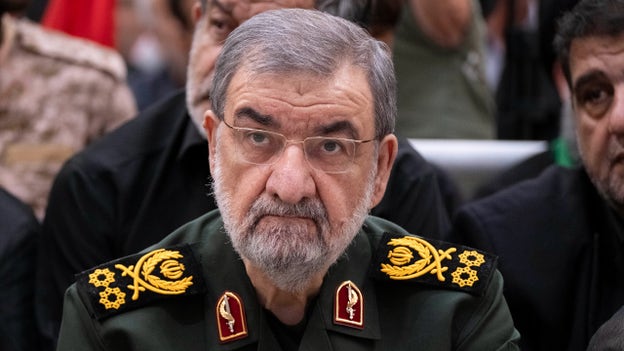
Major General Mohsen Rezaei, secretary of Iran's Supreme National Security Council, said Treasury Secretary Scott Bessent's economic forecasts are "delusional."
"Bessent’s delusional forecasts never had any credibility in the first place. His latest propaganda will have an equally short shelf life," Rezaei said in a post on X.
He added: "You lost the military war. You will fail in the economic war, too. Hormuz will not be opened by threats or pressure. Iran will not back down."
On Sept. 1, Bessent said the Strait of Hormuz essentially won't matter in two years because of an expansion of pipelines.
"We could see the Iranians are trying to use the Strait of Hormuz as a chokepoint," he told Fox Business's Larry Kudlow. "It's not a chokepoint for the U.S., but it is a chokepoint for many other countries, but that will be bypassed in two years. In two years, the Strait of Hormuz will be a worthless piece of water. The oil will be going on pipelines across land."
Military updates locations of US ships in Middle East
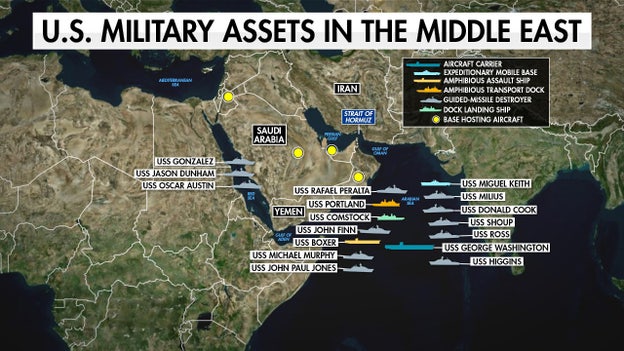
Map of U.S. warships in the Middle East (Credit: Fox News Graphic)
The U.S. military has provided an update on the positions of its 17 warships currently deployed to the Middle East, a slightly smaller force than the number of vessels stationed in the region before the war with Iran began eight months ago.
The majority of them are in the Arabian Sea, where they are enforcing the blockade against Iran. U.S. forces have redirected 130 commercial vessels since the blockade resumed in July, U.S. Central Command said Monday.
The USS George Washington is the sole remaining U.S. aircraft carrier in the Middle East. It arrived to there in August to replace the USS Abraham Lincoln which will arrive back to its home port of San Diego this week.
Additionally there are three guided-missile destroyers in the Red Sea, according to the U.S. military.
Fox News' Liz Friden contributed to this post.
Brent crude oil surpasses $100 per barrel
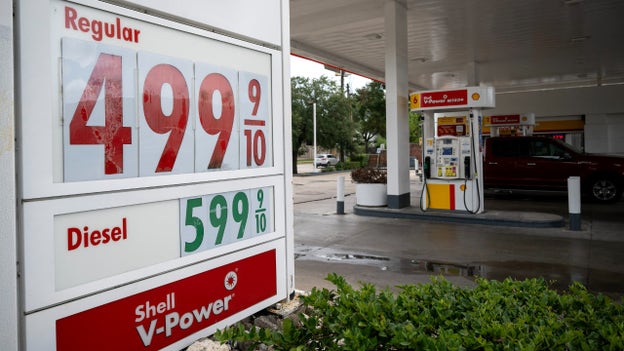
Brent crude, the global benchmark, briefly topped $100 per barrel Tuesday afternoon after trading between roughly $97 and $98 for much of the day.
Despite the surge, it remains below its September high of nearly $110 per barrel.
Saudi-led coalition says it intercepted Houthi missile heading for city
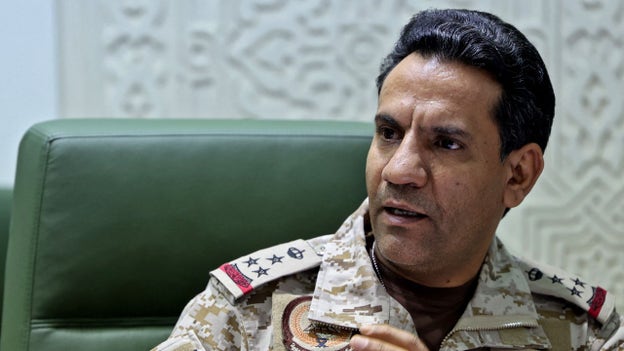
Major-General Turki al-Malki, the spokesman for the Saudi-led coalition in Yemen, said his forces have intercepted and destroyed a ballistic missile launched by the Houthis.
The missile was headed toward Khamis Mushait, a city in southern Saudi Arabia, according to al-Malki.
Houthis claim 200 Saudi fighters killed or wounded in Yemen; 2 Saudi airports targeted
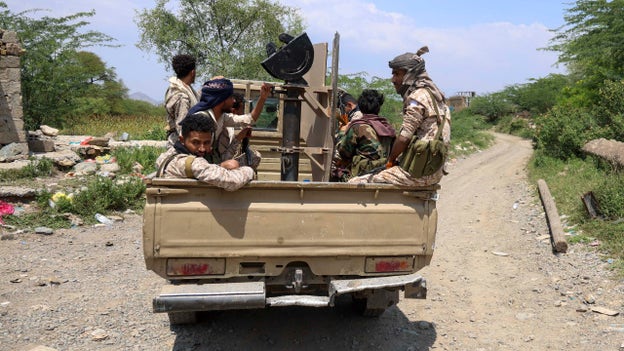
The Houthis said Tuesday that 200 Saudi-backed troops have been killed or wounded in a series of attacks in Yemen.
The Iran-backed terror group said the alleged casualties it was able to inflict on the Saudi forces was unprecedented "in terms of personnel and equipment."
Houthi military spokesperson Brig. Gen. Yahya Saree said the attacks occurred in Ras al-Aara and al-Saqi, villages on the western side of Yemen.
Meanwhile, Saudi Arabia said Tuesday that two of its airports, King Abdullah bin Abdulaziz International Airport and Najran International Airport, were targeted in attacks. Three people suffered minor injuries, and there was some property damage.
Saudi Arabia did not reveal who it suspected was behind the strikes.
Saudi energy minister says 5.8 million barrels of oil is flowing through East-West pipeline: Report
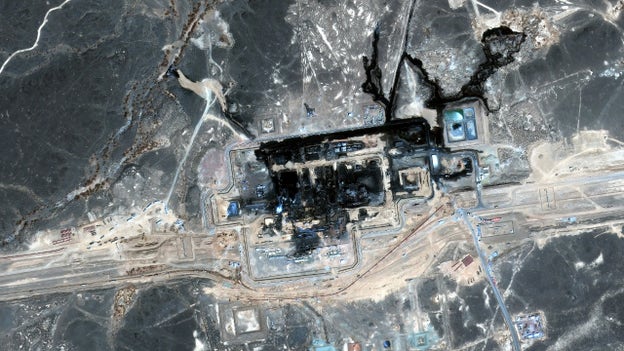
Saudi Arabia's energy minister said that as of Tuesday, 5.8 million barrels of oil per day is pumping through the East-West pipeline, which was attacked by drones originating from Iraq last month.
Speaking at an event in Bahrain, Prince Abdulaziz bin Salman said the cross-country pipeline returned to service five or six days after the “big hit,” Bloomberg reported.
It remains unclear who was behind the attack. Iraq has confirmed that the drones were launched from its territory, while President Donald Trump has said Iran was “probably” responsible. Tehran has denied any involvement.