Microsoft president calls for global AI rules, saying milk is more regulated than the tech
Microsoft President Brad Smith is calling for urgent global AI safety rules as concerns grow over rogue AI agents, rapid advances in artificial intelligence and government oversight of the technology.
Microsoft president warns AI faces fewer safety rules than milk, calls for global regulation
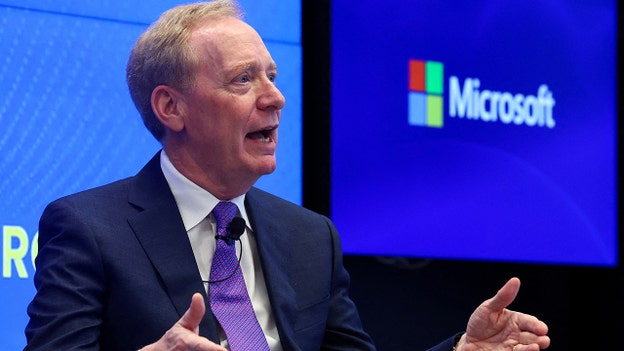
Microsoft President Brad Smith is calling for urgent global regulation of artificial intelligence, warning that the rapidly advancing technology faces fewer safety requirements than everyday products like milk and washing machines.
In an interview with the BBC published Monday, Smith urged governments to establish international AI safety standards, including independent evaluations of emerging technology, mandatory reporting of AI-related incidents and an "emergency brake" to stop rogue AI agents.
"Right now, your washing machine is subject to more safety rules than AI. Every carton of milk that you see in the grocery store is subject to safety rules and inspection," Smith said.
The Microsoft executive also called for requirements that would notify victims when rogue AI agents breach their systems and compel companies to document safety incidents.
"We know how to do this for other products," Smith said. "We should build on that knowledge and think about how to apply it to AI."
Smith pointed to Britain as a potential leader in global AI oversight, citing its AI Security Institute, which evaluates advanced AI models through voluntary agreements with major technology companies.
His remarks come amid growing debate over AI safety as companies including OpenAI and Anthropic disclose instances of rogue or unintended behavior by AI agents. The debate has also raised questions about whether tougher regulations could protect the public or give established technology companies a competitive advantage.
Reuters contributed to this report.
Anthropic bans 'abusive or cruel' conversations targeting Claude
Artificial intelligence company Anthropic is introducing new restrictions on how users interact with its Claude chatbot, prohibiting "sustained and needless abusive or cruel behavior" toward its AI models.
The company announced the change Thursday as part of an update to its usage policies, saying the restriction is intended to address extreme cases in which users repeatedly mistreat its AI systems without a clear purpose.
"The policy update is meant to apply only in extreme cases, where users repeatedly act cruelly toward our models, with no discernible purpose," Anthropic said in its announcement.
The company emphasized that the new rules do not apply to ordinary frustration with Claude, pushback against its responses, dark creative themes or legitimate testing and research.
Anthropic said the restriction builds on an existing feature that allows Claude to end rare conversations with persistently abusive users on Claude.ai and Claude Code.
The company said allowing Claude to terminate those interactions would remain its primary method of enforcing the policy.
The updated rules are scheduled to take effect Nov. 12.
IMF chief warns AI could disrupt 40% of jobs worldwide, threaten entry-level workers
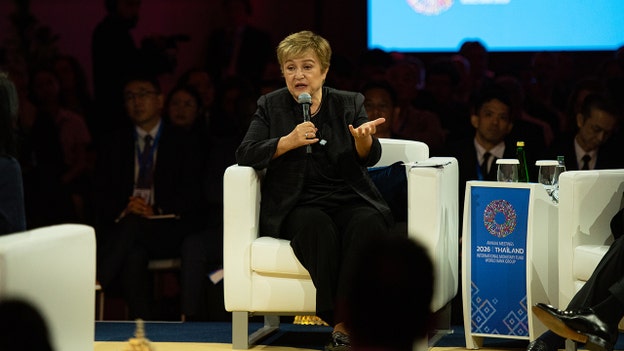
Artificial intelligence could disrupt 40% of jobs worldwide, with recent college graduates facing shrinking employment opportunities as the technology transforms the global workforce, International Monetary Fund Managing Director Kristalina Georgieva warned Monday.
Speaking during the IMF and World Bank's annual meetings in Bangkok, Thailand, Georgieva described AI as a "slow-moving tsunami" that could have profound consequences for employment, education, economic growth and government tax revenues, according to Reuters.
The IMF estimates that AI could eventually lead to 40% of jobs being augmented, downgraded or eliminated, Georgieva said.
"It is a transformative technology. It so completely changes how we work, how we live," she said.
Singapore President Tharman Shanmugaratnam, speaking at the same event, warned that AI was already reducing opportunities for young workers entering the labor market.
"There is a particular problem that we have to address very soon ... and that is that, the first rung in employment, your first job upon graduation, is now seeing less demand," he said.
Despite the concerns about employment, Georgieva said booming investment in AI infrastructure was helping sustain global economic growth at around 3%, even as an energy supply shock weighs on the economy.
The IMF chief estimated that AI investment could boost growth in advanced Asian economies by 0.5 to 1 percentage point, while emerging Asian economies could see gains of 0.2 to 0.8 percentage point.
"AI, love it, hate it. It's already here," Georgieva said.
Reuters contributed to this report.
Live Coverage begins here