Style + Beauty - Page 359
You want to be one of those women who happily slips into a pair of heels each morning, striding effortlessly out the door (cue the wind machine), standing tall all day, never flinching in her Louboutins. You really do, but … you’re not.
Try as you may, you feel like a fish out of water in high heels. Your feet hurt after mere hours (maybe even minutes!), your ankles buckle on a regular basis, and you risk slipping with every 10 feet you teeter cautiously.
READ: Are Your Shoes Killing You?
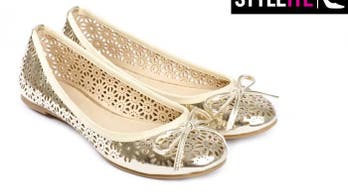
Thankfully, there’s a solution for the stiletto-challenged: eye-catching flats. Today, flats are not simply an alternative to our four-inched foes; no longer the substitute, they are the statement!
From sandals to slip-ons, check out our roundup of the hottest flats around. (And you know what would complement these flats? A goes-with-everything military jacket.)
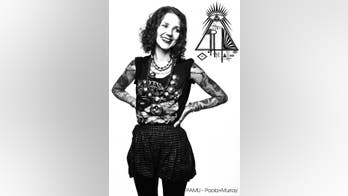
Minka Sicklinger has been tattooing professionally for five years. She currently works out of New York's East Side Ink.
Read our exclusive interview with Minka and check out some of her best work below!
How did you get your start?I was always fascinated by tattooing, but from a more anthropological and ritualistic standpoint. Once I started to get tattoos of my own, something clicked and I realized I felt a connection to the art form which I needed to explore, and I ended up teaching myself.
What's your tattoo style of choice and why? I love lines and the contrast you can create with black, grey and negative space (i.e. skin). My custom tattoo work is an extension of my illustration style, which is very graphic, so I suppose that's how I end up designing everything. I just draw what I see in my brain.
What makes tattoos special? Tattoos are markers in your life. Memories, milestones and experiences — basically the recording of your life's narrative on your skin!
Tattoos seem so mainstream now. Is that good or bad? I think it's good in that the taboo surrounding such an ancient art form is being broken down, and people of all ages and backgrounds feel comfortable to express themselves in this way. But within that, there is a problem that it can sometimes be seen as trendy and cool, which is never what tattoos were never meant to be about. But it is up to the individual artist to filter and ensure potential clients are getting things for the right reasons.
Do you see a current trend in the industry?I think there will always be many simultaneous trends in the industry. There are more and more artists and illustrators starting to tattoo, which is bringing a whole new wave of styles and ideas — some work as tattoos some don't! But tattooing is as subjective as any other art form, so whatever the client connects with is valid as far as I’m concerned.
Which piece of work has been your favorite? I cannot single any one piece out, but perhaps the first tattoo I ever did, because my life changed that day. There are so many pieces that I have enjoyed doing, as well as many tattoos that weren't the most amazing or inspiring pieces to render, but the person I was tattooing was so interesting to spend some time with — and to pick their brain — that it was just as fulfilling. For me, it is such an honor to create art for someone who will wear that for the rest of their life that I cannot disconnect a piece from the individual I did it for!
What inspires you and your art?Everything! Things I see on the street and in my dreams, encounters with other creatures, old books, antiques and jewelry. The list goes on and on.
Do you have a message for aspiring artists?Get tattooed A LOT before you even think of picking up a machine!
Check out some of Minka's work below:

For spring, a familiar fashion trend is blooming and style experts insist it's a fresh look that flatters everyone.
From shy daisies to bold roses, floral prints are popping up in everyday outfits with brilliant hues and soft-as-a-petal fabrics. While some may argue that this seasonal trend isn’t new, floral prints can always make a bold statement if worn correctly.
WATCH: Adding Retro Flair to Your Wardrobe
“Florals are universally flattering. There’s really no age group, skin tone or style that flower motifs don’t work for,” explains Shannon Davenport, the fashion and media editor for Stylesight.com. “We’re still in a very print-heavy moment in fashion, and in many ways florals are sort of a neutral print. This means you can combine them with other patterns, like stripes or dots, or you can wear them on their own.”
Davenport names designers such as Dries Van Noten, Chloe and Dior as just a few who have unveilled their flower-themed collections on the runways, but believes that florals can easily be worn by anyone looking to enhance their personal style in the sun-soaked months.
“The beauty of floral prints is that they truly have mass appeal,” she says. “All women can find a particular piece that works for them. Typically, tropical [styles] or styles with lighter backgrounds with pinkish or pastel patterns work well for day, and darker, moodier prints translate well into night.”
Looking to add some flower power to your wardrobe? Check out how to wear floral prints like a pro from well-renowned stylists:
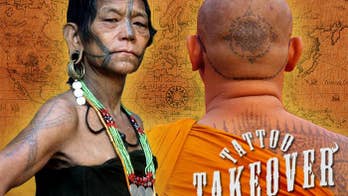
People have been etching tattoos into their skin since the beginning of time.
But what are the origins of inking? We turned to Dr. Lars Krutak, an author, world-renowned tattoo expert and anthropologist with the Repatriation Office of the National Museum of Natural History to give us some insight.
"It‘s part of our innate humanity, artistic pride, identity; [it's] a rite of passage," said Krutak, who has traveled around the world studying tattoos in different cultures.
"I quickly realized that no one was paying attention to true tribal tattoos. And I wondered about all the locations around the world, about the final gatekeepers who have all this knowledge. And these tattoo bearers were passing away, and no one was recording their stories,” he laments.
So just how far does the tattoo tradition date back? The first known tattoo — of a moustache — was discovered on a South American mummy from 6,000 B.C.
"It was a cosmetic tattoo, to make his wife more attracted to him, to make him more appealing,” Krutak explains.
READ: The Art of the Tattoo
But the 1991 discovery of the "Iceman" in the Alps, whose corpse dates back about 5,300 years, revealed tattoos that were used for a different purpose.
“Eighty-five percent of his tattoos line up with acupuncture points — so the tattoos were used for medicinal purposes," Krutak says. "He appeared to have terrible arthritis. [The tattoos were] so dark, they seemed to be repeated applications and some of them he could not reach on his own,” notes Krutak.
Aside from medicine and cosmetics, tattoos were used to mark important points in a lifetime or as symbolic markers. Popular styles from the distant past include centipedes (which Krutak says were used as a genealogical symbol to depict lineage), abstract forms and mythological figures. Some women also marked their cheeks if they were barren, or their breasts to increase milk flow.
And in certain societies, tattoos showed social class and standing, says Krutak. Tattooing for tribal aristocrats in the Kayan tribe of Borneo was reserved for powerful women. "Only the Kayan women could afford the exquisite leg and arm tattoos, and many Kayan tattoo symbols could only be worn by these leading ladies," he explains.
Tattoos were also used as "sort of a calling card," says Krutak. "In the Iroquois tribes and other neighboring groups, when a man had built up his name as a warrior, they would carve their tattoos into a war club and they would leave it near the body of their victim. "[It was] a way of taunting their enemies," he says.
READ: How to Hide a Tattoo Like a Pro
And despite being ancient, there's still plenty of interest in tattooing in tribal cultures. "Today, in tribes, there may be no or less warfare, but the people are still interested in tattooing and interested in the Western rock star tattoos!" Krutak claims. "I always bring a couple of tattoo magazines with me and say, 'Look what people are doing in America.' They are astonished by the realism and coverage," says Krutak.
But there are some mixed feelings in regards to how tribal tattoos are used today. "Many contemporary designs are genealogical symbols and forms of intellectual property related to specific families or clans, and there is a strong sense that they have become devalued as they have been copied by outsiders who have no knowledge of what these patterns are meant to convey," he explains.
No matter what far corner of the globe you're from, tattoos are a way to wear your life story on your skin. And as Krutak explains, it’s important to understand the history before you ink.
"I feel like I am connecting to these people to something that is as ancient as humankind. It's awe-inspiring to be with people who created the art. They had no magazines, no TV … my goal is to honor them, to give them respect and promote awareness.
"A lot of young [tattoo artists] today are just in it for the money; I wish they could give more back," says Krutak. "In another generation, this may all be gone. I’m glad that I wasn’t too late. In many places, we are at the final stages before it’s all over. I hope learning about and spreading awareness can draw inspiration [and] rekindle and revitalize the cultural traditions."
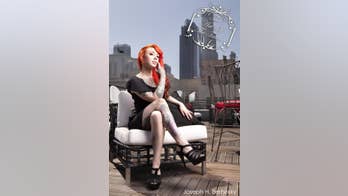
Megan Massacre tattoos out of the Wooster St. Social Club in New York's SoHo neighborhood, which is also the location of the TLC series "NY Ink," on which she's a featured artist. She marked her nine-year anniversary in the business in January.
Read her interview below, then check out some of her work at the bottom.
How did you get your start?I have been an artist in one form or another my entire life — I actually have drawings saved from when I was two years old. The first time the idea crossed my mind to learn to tattoo was when I was about 14. At the time I was studying different mediums, such as painting, calligraphy, sculpting, etc. I looked at tattooing as another medium that I would love to learn. I went to a local studio to find out exactly how I should go about learning, and they told me I needed to get an apprenticeship. I said, "Awesome, sign me up!" and they laughed at me, saying, "Sure. We just need $4,000."
My heart sank because I did not have that kind of money. I really thought my tattooing dreams were crushed until I walked into a tattoo studio again, about four years later. I gave a friend a ride to a local shop and she told the other artists in the shop how well I could draw. They asked me to sketch a few drawings and they seemed pretty stoked on them. They asked me if I had ever done a tattoo before — of course I said no — but then they followed with, "How would you like to do one right now?" A little shocked (and honestly a little terrified), I blurted out "Yes!"
The owner of the shop set up all the equipment for me and walked me through my first tattoo on the shop's apprentice (poor guy). My first tattoo turned out decent for a first tattoo. Good enough that they then offered me a tattoo apprenticeship, and I began my road to tattooing the very next day. What's your tattoo style of choice and why?It is pretty normal for artists to fall into a particular style, but I actually like doing all styles of tattooing. I have made it a point throughout my career to never get too comfortable doing just one thing. I have worked hard to learn black and grey and color, portraits and realism, new school and traditional. I really enjoy doing it all! However, I do have favorite styles, which tend to change. Right now I love bold, colorful pieces that combine both realistic and traditional styles: a fusion of a few different styles in one tattoo. As for subject matter, right now I really enjoy tattooing animals, particularly peoples pets, women's faces and cute [or] creepy styled things.
What do you think makes tattoos special?Tattoos are special because they make people happy. People get tattooed for a number of different reasons. Sometimes we want to commemorate a special person or event in our lives, or we want to memorialize a loved one that has passed. Some of us have a phrase or an idea that defines or helps us shape who we are, and we want to be reminded of that, and let the world know how we feel. Then there are some of us who just love the art, so much that we want to wear something we find beautiful on our bodies for the rest of our lives. Whatever the reason for getting a tattoo, that reason is bringing you happiness in one form or another. The idea that I have the ability to give that feeling to someone else is what makes tattooing so special to me. Tattoos seem very mainstream now. Do you think that's good or bad?Yes, tattooing is becoming increasingly mainstream; it has grown leaps and bounds from when I first started nine years ago. I believe this has quite a bit to do with television. I was tattooing for about two years before the first tattoo TV series, "Miami Ink," began. At the time, being a female tattoo artist wasn't a "cool" thing to do, so it was really awesome to see another female tattoo artist. My friends thought I was crazy for wanting to be involved in the stereotyped rough-gang-and-drug-related industry, and that I wanted to cover myself in tattoos. Today, women who tattoo and have tattoos are almost idolized and looked at as sex symbols — it's definitely a big change. I also think that the increasing number of celebrities with tattoos has a lot to do with the trend as well. There are both good and bad aspects when any underground culture starts to become more mainstream. People that would have never thought of getting tattooed on their own have now been introduced to it and are comfortable with the idea, which from a business aspect is great because it is creating a much larger demand and more work for me and my fellow artists. Now, more than ever, I am doing a lot of people's first tattoos. I really enjoy being able to share what I love to do with so many new people, and have them appreciate it. However, this has spawned a huge increase in bad tattoos. Many people don't know how to learn to tattoo and are going about it the wrong way. Home tattoo kits are not only extremely dangerous health-wise, but they also teach bad habits. There is crucial information that can only be handed down from one tattooer to another; it can’t be self-taught. Educating people on this is a big reason why I took part in the TLC TV series "America's Worst Tattoos," which is a program that talks about people who made these horrible mistakes, and shows that, with the help of a professional artist, you’re not stuck with a bad tattoo forever. Do you see a current trend in the industry?I've noticed an increasing popularity of tattoo artists switching from the traditional coil tattoo machine to a rotary tattoo machine. I have always been a coil tattoo machine girl, but I hear great things about rotaries and am looking forward to giving them a try. There are always trends when it comes to the subject matter of tattoos. When I first started tattooing nine years ago, the main tattoo trends were tribal "tramp stamps" and Kanji. Recently, I feel like I've been seeing a ton of people tattooing female faces with flowers, filigree and other girly subject matter. People also seem to really love anything Day of the Dead-themed, like sugar skulls and girls done up in sugar skull-styled makeup. Do you have any funny tattoo stories? What about horror stories?It was a normal day at a street shop, and I was doing small walk-in tattoos. I started a tattoo of a rose with a dove on a woman's ankle. I never met this woman before in my life but she seemed so familiar to me. Everything from her eyes to how she laughed, even her leg looked familiar; it was driving me crazy that I couldn't put my finger on it. In my tattoo room I had some photos hanging on my wall of some friends and family. She pointed to one photo and said, "Funny, that kind of looks like my brother David." I turned to look at which photo she was looking at, to see that it was of my Uncle… David. Very taken back by what she just said, I stopped the tattoo and pulled out a picture of my mother, and asked her if she knew this woman? She exclaimed, "That’s my sister Candie! Haven't seen them in years! How do you know them?" I said, "Well, this is my mother, and David is my uncle, so that must make you my aunt!" She looked familiar to me because she looked like both my mother and myself. That is the story of how I met my long-lost Aunt Kim. Which piece of work has been your favorite?One of my favorites was the very last tattoo I did on the first season of "NY Ink." It was a dog portrait on one of my very good friends. As an animal lover, I always enjoy tattooing people's pets on them because of how much they mean to the owner. What made this tattoo extra special was that, instead of just wanting her dog's photo and name tattooed on her, she wanted her dog dressed up in pretty Victorian clothes. At the time, this was something different that you don't see often, and I really enjoy doing something unique. I also saw this as an opportunity to fuse different styles together, doing the dog's face in a more three-dimensional style, and the clothing in a more traditional style. I like to try to mix design styles in my tattoos.
What inspires you?I derive inspiration from almost everything and everywhere. Whether I am taking a subway ride in NYC and checking out the graffiti, or walking through a thousand-year-old cathedral observing centuries-old architecture, there is always something inspiring. I take hundreds of pictures to have as reminders of cool things I come across. I am also highly inspired by other artists, whether they are other tattooers, painters, sculptors, etc. The internet has made it amazingly easy to view hundreds of amazing creations from people around the world; it’s truly an amazing time in technology. Do you have a message for aspiring artists?Anyone out there aspiring to be a tattoo artist needs to understand that the ART is key. Draw, paint, do anything you can to keep yourself active and learning artistically. Also, while I think finding a particular style that is your own is important, it is also important to never get too comfortable just doing one thing. Push yourself to learn all different styles, even when it may be intimidating. It will only help you grow. For anyone outside of the industry looking to break in, it is important to understand that you cannot teach yourself how to tattoo. You need to get an apprenticeship with a talented, professional artist at a professional tattoo shop. Also, "tattoo schools" are not a valid way of learning to tattoo, or considered a tattoo apprenticeship. They are a joke among the tattooing community, and by going that route you will be cheating yourself of much needed education. In the tattoo industry, respect is key. If you don't respect the industry, it will not respect you in return.
Check out some of Megan's work below:
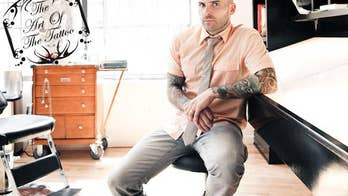
Mike Rubendall has been tattooing professionally for 18 years. He currently tattoos out of Kings Avenue Tattoo in New York, which he also owns.
Read Mike's interview below, then check out some of his work at the bottom.
How did you get your start?My whole life, or as far back as I can remember, I've always been creative and have been really interested in art. I became very interested in tattooing around the age of 15. I remember going to a local record store and thumbing through the tattoo magazines over and over, I was hooked. It wasn't until my senior year of high school, at 17, that I decided to pursue tattooing.
I was taught by a man named Frank Romano. It wasn't easy for me to persuade Frank to teach me how to tattoo. It took many attempts and several tests until he agreed. At that time, tattooing was a closed trade and artists back then held information very close to their chest. They cherished tattooing; they protected it and weren’t interested in sharing it with just anybody. Most of the time, if you were receiving any type of information or tips of the trade from a fellow artist, it was most likely misinformation — a tactic used to set you back and slow down your progress.
What's your tattoo style of choice? Today I would say my style is more of a contemporary approach to traditional Japanese tattooing. I follow the tradition to the best of my ability; however, not being born in the culture is a major disadvantage. I enjoy doing Asian influenced tattoos because it lends itself so well to tattooing. The imagery is really interesting and has a lot of deep symbolism. Tattooing in this style of work really stands the test of time. The tattoos will look beautiful and powerful for years to come.
I’ve spent time in both Japan and China. Studying woodblock prints and the mythology from that culture had a tremendous influence on my style. Japanese tattoo art is based on woodblock prints and other Edo period art, therefore it follows a tradition, and there are rules. I liked that about the style. There is structure.
Before I start a new tattoo, and after I've met with the client to discuss their ideas, I typically research the idea or subject matter to find if there is any type of mythological story or symbolism that best suits the client's vision.
What do you think makes tattoos special?It's a beautiful form of self-expression. For many, it's a rite of passage. Essentially, it is a permanent diary, a memory that you will have forever. It represents where you are at that particular time of your life. It shows that you're not scared of public opinion and would love to let the world know what you believe in.
Tattoos seem very mainstream now. Is that good or bad?As with anything, there are pros and cons that come with popularity. These days, tattoos are way more accepted as opposed to a few years back. All walks of people are getting tattooed, from doctors, lawyers, celebrities, and professional athletes, to even your everyday soccer mom. The tattoo industry has gained tremendous momentum and it's nice to see that tattoos are not frowned upon by most anymore. In fact it's respected — as it should be — as a serious art form.
The problem I see with the popularity of tattoos is that the craft is less cherished and disrespected by some. There was a certain mystique that tattooing possessed that has, in my opinion, disappeared. There are no more secrets. Tattoo culture is all over television and media and, more often than not, is misrepresented and unauthentic. Tattoos and the whole process of tattooing is a magical experience, however not everyone feels this way about tattoos. The industry is over-saturated with new tattooers that have possibly never picked up a pencil in all their life, but saw this as a good opportunity to make a quick buck. These are the tattooers that clients have to be aware of. It's important for potential clients to do their research to find a good artist, a reputable shop, and make sure that both are practicing proper hygiene and following Board of Health regulations.
Do you see a current trend in the industry?One major trend I see in tattooing is the scale of the work is getting bigger. These days, I'll have a client starting off with getting a full sleeve, back piece or even bodysuit for their first tattoo. Clients tend to be more educated and patient. They do the research, study artists portfolios, get comfortable with their tattoo concepts — and jump in headfirst.
Do you have any funny tattoo stories? What about horror stories?This is definitely an odd story. Over the years I've done an extensive amount of work for this funeral director. So one day, out of the blue, he gives me a call and has a rather strange request. He asked if I would be comfortable with tattooing a deceased person.
I was really unsure about the idea at first, and to be honest I wasn't sure how the skin would react to a tattoo. It was a sad story: It was a younger gentleman who passed away and had four children. He had three of the four children's names tattooed on his arm. His wife did not want to bury him without the fourth name and asked the funeral director if there was some way possible to get the last name tattooed on him. I knew it meant a lot to this woman and her family, so I agreed. I have to say it was an extremely heavy experience. The process went as smooth as possible, and it wasn't more or less difficult than tattooing at any other time. It was a success and the family was overwhelmed. At the funeral, they displayed a picture of the tattoo with four children's names. Some months later, the wife stopped into the tattoo shop. She expressed her gratitude and talked about getting the children's names tattooed on her as well, sometime in the future.
Which piece of work has been your favorite?That has always been a really difficult question for me to answer. It's kind of like asking me which one of my children is my favorite. Before I even applied the tattoo to skin, I've already invested a tremendous amount of time, energy and emotion into the design. So for me, creating tattoos is almost like I'm creating a timeline for my life. For instance, I could look back at a tattoo I've done five years ago and it'll spark an emotion.
Check out some of Mike's work below: