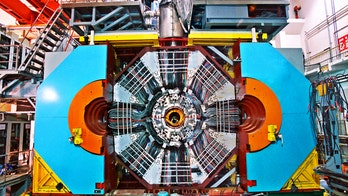
October 20, 2015 New 'charmed' particle may represent previously unknown state of matter A new type of particle may have shown up independently at two particle accelerators, physicists say.
October 20, 2015 Snake venom handler? Sex scholar? Weird science jobs Snake venom handler? Sex scholar? A career in science doesn't have to mean a job in a dank lab or cubicle.
October 20, 2015 How tiny, transparent lobsters get around These teeny-tiny infant lobsters may be small, but their commercial value is anything but.
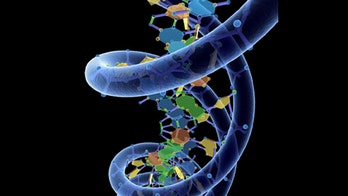
October 20, 2015 Monsters, Inc.? New software lets scientists program life With the latest computer tools, biologists can write their own genetic code and turn it into life.
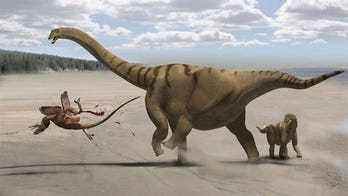
October 20, 2015 How dinosaurs grew the world's longest necks How did the largest of all dinosaurs evolve necks longer than any other creature that has ever lived? One secret: mostly hollow neck bones, researchers say
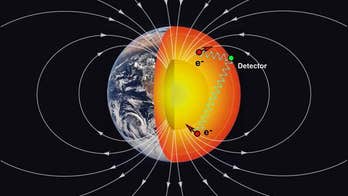
October 20, 2015 Scientists search for the 'unparticle' The long-sought Higgs boson particle seems finally to have been found at an accelerator in Geneva, and scientists are now hot on the trail of another tiny piece of the universe, this one tied to a new fundamental force of nature.
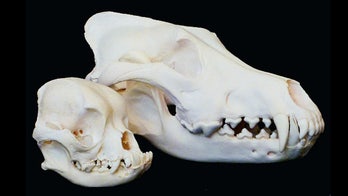
October 20, 2015 The genes behind Fido's facial features Thanks to human breeders, dogs exhibit an impressive variety of skulls. Studying the genes that determine these shapes could provide insight into human development and craniofacial disorders, scientists say.
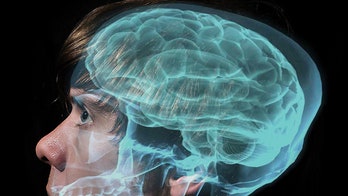
October 20, 2015 What evil lurks in the brain? German neurologist says he's found a 'dark patch' After studying the brains of violent killers, rapists and robbers, German neurologist Gerhard Roth claims to have found a “dark patch” in the central lobe -- a genetic source of violent behavior.
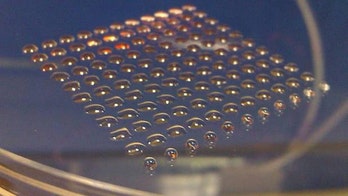
October 20, 2015 3D printer spits out human embryonic stem cells Imagine if you could take living cells, load them into a printer, and squirt out a 3D tissue that could develop into a kidney or a heart.
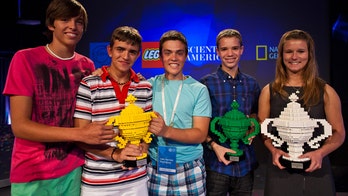
October 20, 2015 Google kicks off 2013 Science Fair, seeks projects to change the world The 2013 Google Science Fair -- an online science competition open to students around the globe ages 13 to 18 -- kicked off Wednesday, a search for young geniuses to change the world.