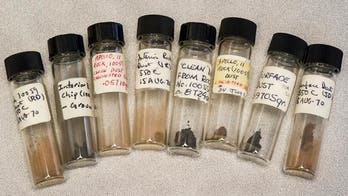
October 21, 2015 Lost Apollo 11 moon dust found in storage Vials of moon dust brought back to Earth by the first men on the moon have been found inside a lab warehouse in California after sitting in storage unnoticed for more than 40 years.
October 21, 2015 98 percent of DNA is unnecessary 'junk' So-called junk DNA, the vast majority of the genome that doesn't code for proteins, really isn't needed for a healthy organism, according to new research.
October 21, 2015 Congressional debate over science funding draws fire from critics A battle over science is under way in the halls of the Capitol, with some in Congress calling for more say in which research projects receive federal dollars.
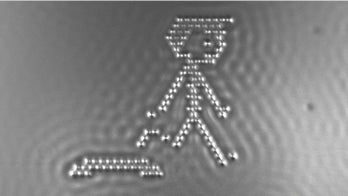
October 21, 2015 Scientists make world's smallest movie An ensemble cast of carbon atoms stars in the world's smallest stop-motion movie created by researchers at IBM.
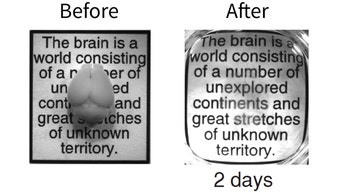
October 21, 2015 Let's make this perfectly clear: 'Stupendous' see-through mouse brains a new research tool Talk about clearing your head: Stanford University scientists have found a way to make see-through mouse brains.
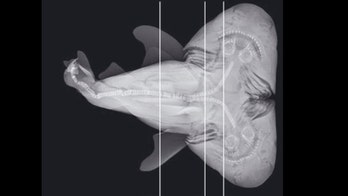
October 21, 2015 Double-headed shark fetus netted by fisherman When a fisherman caught a bull shark recently off the Florida Keys, he came across an unlikely surprise: One of the shark's live fetuses had two heads.
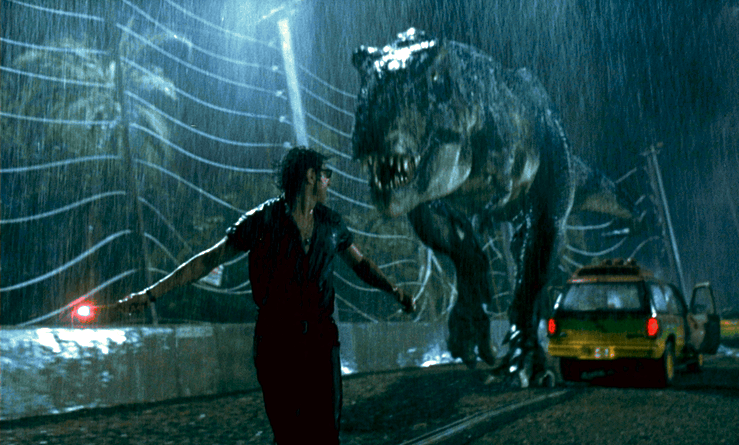
October 21, 2015 No 'Jurassic Park': Dinosaurs off the de-extinction menu, scientists say Dinosaurs won't be coming soon to a park near you -- although bringing them back to life might be possible.
October 21, 2015 Don’t call him 'Adam': South Carolina man’s genes help date first man DNA from an unnamed African American from South Carolina is so distinctive that it led scientists to a unique conclusion: the roots of the human tree date back much further than previously thought.
October 20, 2015 Sea slugs mate with throwaway penis A bizarre, hermaphrodite sea slug may give new meaning to the word "quickie." The nudibranch uses a disposable penis to have sex more frequently, according to a new study
October 20, 2015 Your DNA can store information from a million CDs, researchers say It can store the information from a million CDs in a space no bigger than your little finger, and could keep it safe for centuries.