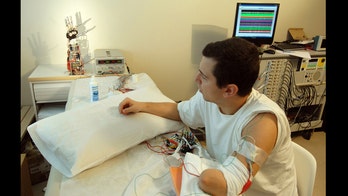
October 22, 2015 New bionic hand may let amputees feel again Thanks to wiring that connects it directly into the nervous system, a new bionic hand may one day return dexterity and the sensation of touch to an amputee.
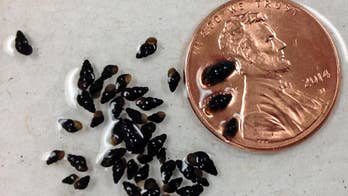
October 21, 2015 Microbes take center stage in this art contest Using their petri dishes as canvas, scientists from around the world have produced tiny masterpieces for the American Society for Microbiology’s annual agar art contest.
October 21, 2015 DNA tool helping biologists find elusive or invasive species When salmon, salamanders or other aquatic animals poop or shed skin cells, they leave behind traces of their DNA in the water, like clues left behind at a crime scene.
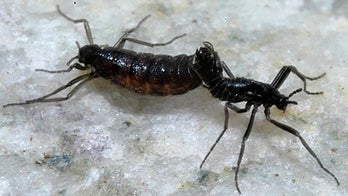
October 21, 2015 This extreme Antarctic insect has the tiniest genome The Antarctic midge is a simple insect: no wings, a slender black body and an adult life span of not much more than a week
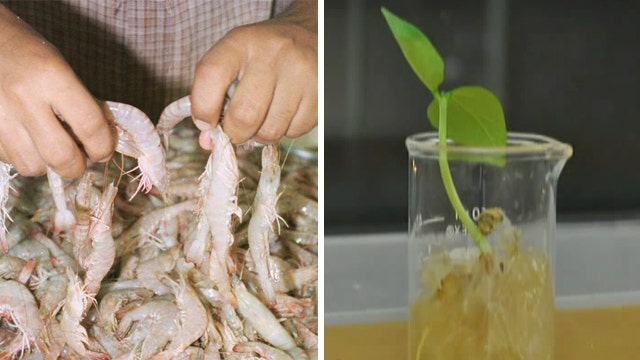
October 21, 2015 Harvard researchers develop bioplastic made from shrimp shells In their search for sustainable materials that can be mass produced, researchers at Harvard's Wyss Institute for Biologically Inspired Engineering turned to an unexpected source: shrimp.
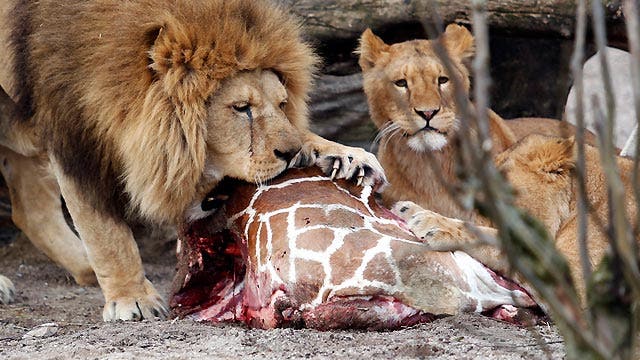
October 21, 2015 Second Danish zoo plans to kill young giraffe to stop inbreeding Despite the death threats and worldwide disgust when the Copenhagen Zoo in Denmark killed 2-year-old giraffe Marius to prevent inbreeding a few days ago, a second zoo in the country said it plans to kill a giraffe -- and it’s in the animal’s best interests.
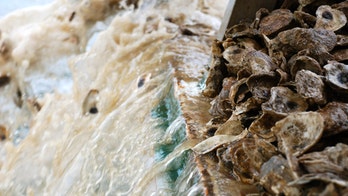
October 21, 2015 Acidic Chesapeake Bay Water could threaten oysters As the world’s oceans get more acidic, Chesapeake Bay oysters could be at risk.
October 21, 2015 Scientists discover ancient plague DNA in teeth, warn of future outbreaks Scientists say two of the deadliest pandemics in history were caused by strains of the same plague and warn that new versions of the bacteria could spark future outbreaks.
October 21, 2015 How the scorpion got its venom A single mutation may account for the scorpion's lethal toxin.
October 21, 2015 New cell therapy leading way to faster tissue repair Researchers may be closer to developing a means of accelerating the healing of wounds on a battlefield, something the Pentagon has a keen interest in.