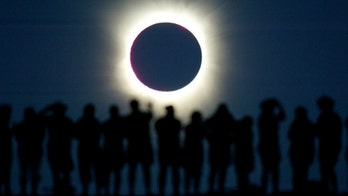
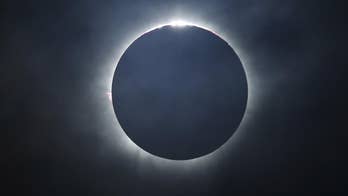
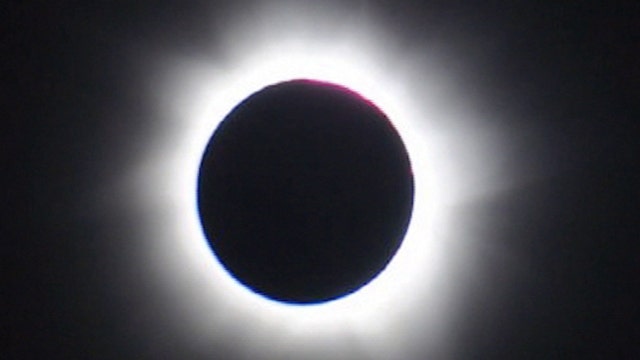
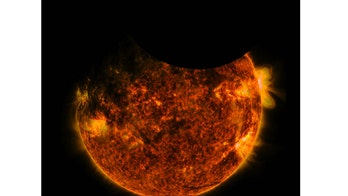
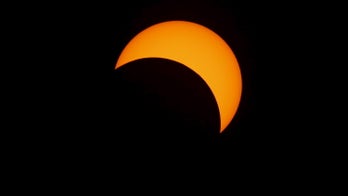
August 10, 2017 Stunning pictures of solar eclipses As the US prepares for a total eclipse of the sun here is a look at previous eclipses around the world
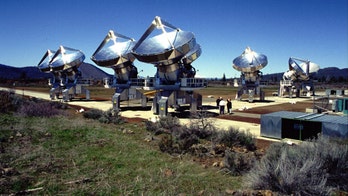
June 26, 2017 Alien contact could be 1,500 years away, say Cornell astronomers If you are hoping to meet an alien then you may be in for a very long wait, according to astronomers at Cornell University.
June 22, 2017 Brrr! How much can temperatures drop during a total solar eclipse? During the total solar eclipse on Aug. 21, 2017 , the moon will completely cover the disk of the sun from Oregon to South Carolina.
June 22, 2017 Can't view August's total solar eclipse? NASA has you covered If you can't get to a spot to marvel at the total solar eclipse this summer, then head to NASA's live-stream to enjoy a ton of imagery shot from spacecraft, aircraft, and even the astronauts aboard the space station.
May 31, 2017 Nasa Solar Probe Plus mission will help predict solar storms NASA will send a probe to “touch the sun” to help prepare for a “huge solar event” that could wreak havoc on Earth. The space agency today announced the “extraordinary and historic mission exploring arguably the last and most important region of the solar system."
November 30, 2016 Columbia, SC eyes solar eclipse bonanza 2 minutes and 36 seconds of complete darkness, that’s what will have millions flocking to Columbia, South Carolina next year to view the once in a lifetime transcontinental solar eclipse.
September 4, 2016 NASA spacecraft captures rare double eclipse on video NASA captured a rare space event Friday when Earth and the moon crossed in front of the sun.
August 22, 2016 Countdown begins for the 'Great American Eclipse' of 2017 In a year, a large swath of the United States will fall under the shadow of the moon during a historic eclipse that’s already generating buzz.
August 16, 2016 Does an Earth-like alien planet orbit the Sun's closest neighbor? Astronomers have found a rocky and possibly Earth-like
August 3, 2016 Worried about space weather? New satellite provides warnings A distant satellite called DSCVR is now sending information about potentially damaging space weather back to Earth, NOAA announced last week.