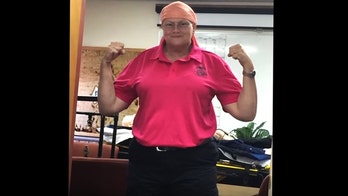
Florida firefighters create inspirational video for paramedic battling breast cancer A Florida firefighter who has spent the last 30 years saving the lives of others is starting the fight to save her own as she undergoes treatment for breast cancer – but not without the support of her Pasco County Fire Rescue family.
An alternative to the colonoscopy? Researchers on the hunt for new colon cancer tests With a person’s 50th birthday comes a special rite of passage: The need for a colonoscopy.
FDA approves Novartis's advanced skin cancer drug The U.S. Food and Drug Administration approved Novartis AG's oral pill to treat the most common form of advanced skin cancer.
New cancer drugs promise improved treatments, but come at a high cost A raft of new cancer drugs promise better, longer-lasting treatments with fewer adverse side effects -- but their high cost is a growing concern.
Colorado group helps breast cancer survivors get tattoos For women who have survived breast cancer, breast or nipple reconstruction can be a first step toward looking like their old selves.
Marching band accompanies cancer patient out of last treatment A video of a cancer patient being escorted out of her last chemotherapy treatment by a college marching band has gone viral.
WHO agency says insecticides lindane and DDT linked to cancer The insecticide lindane, once widely used in agriculture and to treat human lice and scabies, causes cancer and has been specifically linked to non-Hodgkin lymphoma, the World Health Organization said on Tuesday.
Groom who delayed lung cancer tests dies 6 weeks after wedding A British man who delayed tests for lung cancer in order to get married died six weeks after saying, “I do,” the Daily Mirror reported.
Americans wear blue to raise colon cancer awareness Advocates hope that people with colorectal cancer and their caregivers will dress in blue on Friday to raise awareness about the disease, which is the second-leading cancer-related cause of death in the U.S.
Are wireless phones linked with brain cancer risk? Swedes who talked on mobile or cordless phones for more than 25 years had triple the risk of a certain kind of brain cancer compared to those who used wireless phones for less than a year, a new study suggests.