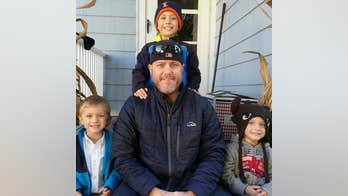
April 19, 2017 Town celebrates wedding, graduation with beloved doctor days before his death Dr. Dan Harrahill was well known and liked in his Nebraska town, where he delivered hundreds of babies and treated countless patients over his 18-year career.
April 12, 2017 Scientists halt growth of colon, stomach cancers Australian researchers have discovered a "revolutionary" new way to stop the growth of colon and stomach cancers, which could lead to a new cancer-fighting drug within three years.
April 12, 2017 Firefighters donate sick days, raise money for dad of 3 battling stage 4 cancer A Connecticut fireman is bracing for a series of trips to Illinois in hopes of finding a treatment that will stop his stage 4 colorectal cancer in its tracks.
April 11, 2017 Cancer researcher-turned-patient starts Facebook group to tackle complex world of clinical trials Five years ago, the clinical trial data on a cancer drug that Dr. Tom Marsilje had co-invented had just been presented at a health care conference when he received news that would forever change the way he approached the disease.
March 24, 2017 Palliative care linked to fewer repeat hospitalizations Comfort care for advanced cancer patients is associated with fewer repeat hospitalizations and more hospice referrals, according to a study highlighting how this approach may offer chronically sick or terminally ill people a better quality of life.
March 23, 2017 Boy's lemonade stand raises funds for grandpa's cancer battle A 9-year-old boy won’t be spending his spring break playing video games or sleeping in late, as he’s determined to sell enough lemonade to help his ailing grandfather pay his medical bills.
March 19, 2017 '90210' actor Luke Perry opens up about 2015 cancer scare After a personal scare with colorectal cancer, actor Luke Perry is raising awareness about the second leading cause of cancer death among men and women combined
March 7, 2017 Exercise better than drugs for cancer fatigue Cancer patients may ease fatigue more effectively with exercise and psychotherapy than with medication, a recent study suggests.
March 2, 2017 Obesity strongly linked to 11 types of cancer People who are obese have a greater risk of developing and dying from several types of cancer including malignancies of the breast, ovary, kidney, pancreas, colon, rectum and bone marrow, a research review confirms.
February 28, 2017 Colorectal cancer rates rise sharply in younger US adults Colorectal cancer rates are on the rise among millennials and Gen Xers in the U.S., a new study finds.