




























New York attack suspect Sayfullo Saipov: What we know
A look into the background of 29-year-old Sayfullo Saipov. He is the man who is reportedly behind the October 31, 2017, terror attack, where he allegedly mowed down pedestrians and cyclists on a New York City bike path.
An alleged ISIS fanatic accused of mowing down eight people during a 2017 rampage in New York City says he can't get a fair trial in the state -- because President Trump tweeted.
Lawyers for 30-year-old Sayfullo Saipov, an Uzbek man who pleaded not guilty to federal terrorism charges last year, said the president was “uninformed and full of rage” when Trump tweeted on the day of the attack that Saipov should be sentenced to die.
“His impetuous decision was uninformed and full of rage; he actually reveled in the prospect of condemning Mr. Saipov to die in the ‘home of the horrible crime he committed.’ But the Constitution does not tolerate a death-penalty scheme driven by bloodthirst or revenge,” Saipov’s lawyers said in papers filed in Manhattan federal court on Tuesday.
Saipov reportedly told authorities he drew inspiration from ISIS videos before he drove his truck onto a bike path in lower Manhattan Oct. 31, 2017, plowing over anyone in his way. He was arrested immediately after the attack.
A day later, Trump tweeted: “NYC terrorist was happy as he asked to hang ISIS flag in his hospital room. He killed 8 people, badly injured 12. SHOULD GET DEATH PENALTY!”
Trump tweeted Nov. 2 about the prospect of trying Saipov in New York City and, ultimately, convicting him and sending him to death row.
“There is also something appropriate about keeping him in the home of the horrible crime he committed. Should move fast. DEATH PENALTY!” Trump wrote.
Saipov's lawyers say prosecutors were out of line when they notified the court last month the Justice Department authorized them to seek death. The defense argues Trump’s tweets prevent Attorney General Jeff Sessions from acting independently.
In a filing last month, Saipov’s attorneys cited the tweets and demanded an independent prosecutor decide whether or not to seek the death penalty. They argued Sessions' tenuous relationship with Trump makes it impossible for the Department of Justice to be fair.
"President Trump's emotionally-charged directives were designed to constrain Sessions' decision-making and discourage him from genuinely considering the pursuit of a sentence less than death," the defense lawyers said Tuesday.
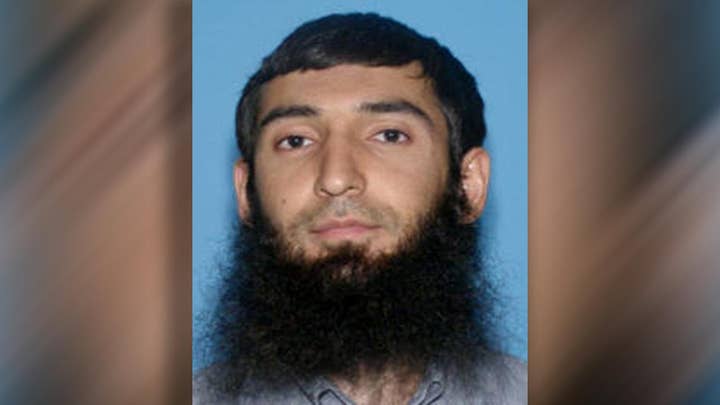
Saipov moved to the United States legally in 2010 from Uzbekistan, authorities said. He lived in Ohio and Florida and worked as a commercial truck driver before living more recently with his family in Paterson, New Jersey.
A trial is scheduled for October 2019. If a jury finds Saipov guilty, the jurors will decide in a second phase of the trial if he should be executed.
The Associated Press contributed to this report.
