







Sen. Barrasso says infrastructure bill must not raise taxes
Wyoming Republican discusses why the infrastructure bill lacks bipartisan support on 'Your World'
This is a rush transcript from "Your World with Neil Cavuto," June 22, 2021. This copy may not be in its final form and may be updated.
NEIL CAVUTO, FOX NEWS ANCHOR: Hey, without that voting rights bill, it's not dead yet.
A key move on the part of Senator Joe Manchin to support the measure on advancing that voting rights measure might have just changed the math here. But that does involve one other minor little detail, blowing up the filibuster. How close we are.
Welcome, everybody. I'm Neil Cavuto. Very glad to be back.
I want to thank my colleagues and friends Sandra Smith and Charles Payne and Gerry Baker. For mere job security, I rushed back. And I will just leave you with the images of what it was like when I was gone. But you don't need that.
What you need to know is what's happening right now on this voting rights measure. It isn't dead. Democrats could still eke this out if they get every single Democrat to go along. And Joe Manchin has indicated, as things stand now, he will go along.
But, as I mentioned, that also means blowing up the filibuster, so that you need a simple majority, 50 votes will do it, and the vice president casting the tie -- breaking that tie vote.
Chad Pergram on top of all this drama and where it's going -- Chad.
CHAD PERGRAM, FOX NEWS CONGRESSIONAL CORRESPONDENT: Good afternoon, Neil.
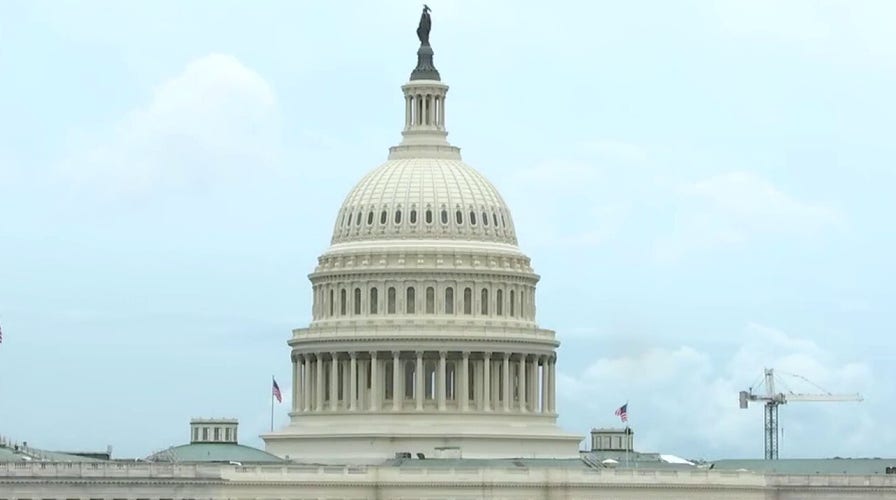
Well, the Senate won't even debate the voting rights bill later today. A GOP filibuster likely stunts the Senate from considering the bill. The reason? You need 60 votes to overcome a filibuster. Democrats won't lower the filibuster bar.
(BEGIN VIDEO CLIP)
SEN. MITCH MCCONNELL (R-KY): I do think that it's extremely admirable that there's at least a handful of Democrats left who believe in the institution .
(END VIDEO CLIP)
PERGRAM: Majority Leader Chuck Schumer has secured a deal with West Virginia Democrat Joe Manchin to vote yes to launch debate on the bill. But that only gets you to 50 votes, not 60. Schumer is coy about what happens next.
(BEGIN VIDEO CLIP)
SEN. CHARLES SCHUMER (D-NY): We will have the vote. And then we will discuss our future. I'm not going to put the cart before the horse.
(END VIDEO CLIP)
PERGRAM: This means the voting bill dies today.
Some House liberals are criticizing President Biden for not doing more.
(BEGIN VIDEO CLIP)
JEN PSAKI, WHITE HOUSE PRESS SECRETARY: I would suggest that is a fight -- that those words are a fight against the wrong opponent.
(END VIDEO CLIP)
PERGRAM: Expect Democrats to weaponize today's vote against the GOP in the 2022 midterms. Democrats want to use this issue as a wedge and implore their voters to get to the polls -- Neil.
CAVUTO: So, Chad, just to be clear, the likelihood of them making this a reconciliation-type vote, where they just need a simple majority, that would be a heavy lift and unlikely?
PERGRAM: Right.
Well, first of all, you can't use this as reconciliation, because this is not a fiscal bill.
CAVUTO: Right.
PERGRAM: You need to use reconciliation if it's a fiscal bill. So this does not qualify.
But one thing I do want to flag, we're told that Vice President Harris is going to be here. You have a 50/50 vote probably coming up at 5:30 Eastern time. You would need her vote possibly to establish a new precedent, if you wanted to impose a nuclear option and change the filibuster provisions.
That is similar to what happened in 2013 and 2017. You're starting to have a couple of stars align here about a nuclear option. But you need a failed cloture vote first. Unless they have thought of something completely brand- new, they probably could not do that today.
CAVUTO: Right.
PERGRAM: But, again, you would have to have all 50 Democrats on board to vote for the nuclear option.
CAVUTO: But if they voted to blow this up for this, then they have blown up the filibuster, period, right?
PERGRAM: Likely.
CAVUTO: I mean, you can't pick and choose what -- right?
PERGRAM: Likely.
But you know what else you have probably done? You have probably also blown up these bipartisan infrastructure talks, which are going on a separate track right now.
CAVUTO: Good point.
PERGRAM: You had White House officials in the building meeting with this coalition of Democrats and Republicans. So you're really on a tightrope.
The chances that they would do that -- you would never rule out anything, but the chances that they would do that are probably pretty slim.
CAVUTO: All right, thank you very much, my friend Chad Pergram on that.
And speaking of which, he mentioned that infrastructure measure that hangs in the balance here and may be affected by all of this, still an uphill battle and still nowhere near bipartisan support, but they say getting there.
Blake Burman with more on where things stand.
Hey, Blake.
BLAKE BURMAN, FOX NEWS CORRESPONDENT: Hi there, Neil.
And, as Chad just referenced there, top officials from the White House were indeed up on Capitol Hill today talking to that group of 20 bipartisan group of senators, trying to hammer out potentially at least a trillion- dollar or so infrastructure package.
One senator in that group called this a -- quote, unquote -- "critical day." The aforementioned Senator Joe Manchin says that he thinks, at least so far today, the talks have been positive.
(BEGIN VIDEO CLIP)
SEN. JOE MANCHIN (D-WV): We have a good bipartisan bill we're working on.
I got to keep going.
We have a bipartisan bill that we're working on together. I know he understands that. And he likes the movement that's going on there.
(END VIDEO CLIP)
BURMAN: Now, among the issues still is exactly how to pay for the package.
When asked if that is still the biggest hurdle, Republican Senator Bill Cassidy said today -- quote -- "I suppose you could say that. It's not quite that straightforward."
Now, the White House believes that stricter tax enforcements on the wealthy can pay for part of the package, and they are rolling out the idea of user fees.
(BEGIN VIDEO CLIP)
PSAKI: Our view is, there's a fundamental question right now. Are Republicans, members of Congress, do they believe that rich people should have to pay the taxes they owe? Or should we increase the cost of travelers who are just trying to make it work? That's the basic question here.
So we will see if they can make progress on that exact point.
(END VIDEO CLIP)
BURMAN: Now, Neil, keep in mind that, even if this group is able to negotiate a deal with the White House, and even if it were be able to make its way through Congress and over here to the White House to the president's desk, Democrats here in Washington are still suggesting that they will use a separate measure, a separate track -- you were just talking about it -- reconciliation -- that's the go-at-it-alone strategy -- to pass the president's other spending priorities as well -- Neil.
CAVUTO: Washington is numbingly confusing to follow, Blake. Thank you for trying to clarify that.
(LAUGHTER)
BURMAN: You got it.
CAVUTO: Blake Burman at the White House.
Excuse me. I'm speechless trying to follow these guys.
Anyway, Senator John Barrasso joins us right now, the Senate Republican conference chair.
Senator, where do you think infrastructure stands? Are we closer to a measure that has bipartisan support or not?
SEN. JOHN BARRASSO (R-WY): Well, Neil, the devil is always in the details.
And I want to see if this has something that actually is true infrastructure, and then, how are we going to pay for it? I would be -- very interesting in supporting a bipartisan bill if it passes three tests for me.
One is, it has to be true infrastructure. I mean, we have failing bridges and worn-out roadways. We need to do things with our waterways, our airports, our ports. That has to be true infrastructure. Number two, it has to be paid for. Can't be gimmicky. We can't add more money to the credit card, so it has to be true pay-fors.
And then number three is, it cannot touch the Tax Cuts and Jobs Act of 2017, which gave us the best economy in my lifetime. So if we can do that, stay on true infrastructure and not raise taxes and focus and have it paid for legitimately, I think there's going to be a lot of support.
CAVUTO: All right, so how do you pay for it legitimately? The president isn't keen on raising the gas tax. He's not keen on a mileage tax that would impact those with these electric vehicles and such.
You guys are opposed to reopening the Tax Act and maybe put a kibosh on some of that. So where are we?
BARRASSO: Well, number one, it's interesting that -- with the terms of the gas tax, people in Wyoming feel that their tax and their gas prices have gone up dramatically. And that's Joe Biden's inflation that we have seen because of all this government spending.
I mean, it's another -- it's $20 more to fill up now in Wyoming than it was the day that Joe Biden took office. So, people all across the country are paying more, except for the people driving electric vehicles. And Joe Biden wants to subsidize them. Well, they do a lot of wear and tear on the roads. There has to be some users' fee related to electric vehicles.
And then in terms of money that's available, there's been money appropriated for coronavirus relief that still hasn't gone out the door, still hasn't been spent on anything. And there's hundreds of billions of dollars that's available that could be repurposed.
I know Rob Portman's home state of Ohio, they are just looking for flexibility. They have lots of money left over they want to use for infrastructure. I think we ought to give the states the flexibility to use that coronavirus money that way.
CAVUTO: So, you're against raising fees on anything. You're against, obviously, raising taxes.
So, you guys still seem far apart on that key issue.
BARRASSO: Well, I think electric vehicles ought to be paying a fee for using the roads. They're getting subsidized.
Joe Biden wants to subsidize rich people in electric vehicles, while people in Wyoming are paying more for gasoline to fill up their vehicles. But, in terms of infrastructure, I think there are things that we can do that are true infrastructure.
A lot of the Democrats want this $7 trillion massive bullet train to socialism, with all of these liberal plans in the Green New Deal, and all of it, and they want to do a massive tax increase, which will absolutely hit every American.
If they do this, it'd be a party-line vote. I don't expect to see one Republican supporting it.
CAVUTO: So, real quickly, though, Republicans are no strangers to spending a lot of money, though, right? You will knowledge at least that? It didn't start with this administration, right?
BARRASSO: Well, we have a $30 trillion debt in this country. I'm hearing more and more about it at home.
We have just have come through a pandemic, a global pandemic. We did in bipartisan ways a number of coronavirus relief bills to help an economy when the government stepped in and said, we're going to shut down the economy. It was appropriate to do at that time. This is not a time to raise taxes.
CAVUTO: We were building it before, then, right?
(CROSSTALK)
CAVUTO: We were building up that debt before that, right, Senator?
I mean, we can go back and forth on this, but it seems that each party has had its hand in spending a lot of money.
(CROSSTALK)
BARRASSO: And you -- and I'm just saying that ,in terms of for my support -- and I was one of the people that originally met with President Biden on infrastructure.
The six ranking members of the committees who met with him at the White House said we're not going to touch the 2017 Tax Cuts and Jobs Act. We're not going to add more to the credit card for infrastructure at this point.
CAVUTO: Got it.
Senator, thank you very much. Good seeing you again, Senator Barrasso.
By the way, Jerome Powell, the guy who runs the Federal Reserve, did address spending today, speaking before Congress. He's worried about it, but, so far, he says, so good.
We will see -- after this.
(COMMERCIAL BREAK)
(BEGIN VIDEO CLIP)
JEROME POWELL, FEDERAL RESERVE CHAIRMAN: These effects have been larger than we expected. And they may turn out to be more persistent than we have expected.
But the incoming data are very much consistent with the view that these are -- these are factors that will wane over time and that inflation will then move down.
(END VIDEO CLIP)
CAVUTO: All right, Fed Chairman Jerome Powell indicating that, yes, we have some inflationary pressures, but they're transitory, they will wane over time, to quote him there, and he's confident that things will improve.
But, of course, all of this on the day we learned that the median price of a home is the most expensive it has ever been, $350,000 for your average U.S. home. That is up year over year north of 24 percent, 23.6 percent, to be exact.
No surprise, then, that, in the latest month, actual home sales, existing home sales, dipped by 1 percent. But if this is a worry for the markets, as I have been saying, they have a funny way of showing it. The Nasdaq, rich in all these big technology names, hitting another record today, Microsoft another all-time high, technology stocks in general doing very well in this so-called Goldilocks world, where no one is worried about inflation running up and away yet, again, if it is contained, as the Fed chief says it will be.
That seems to be the consensus among many in the market. We shall see.
Susan Li is here of FOX Business Network. We got Larry Glazer, Mayflower Advisors.
Susan, it's definitely a tricky position for the Fed to be in. Normally, you would be raising rates in an environment like this, where prices are running at this pace. He seems to think that some of that will ease and there's no need to jump the gun. How is that playing out in the Street. Apparently, well.
SUSAN LI, FOX NEWS CORRESPONDENT: Well, if you think about it, what we heard today is pretty much from the same playbook we heard over the last few weeks from Jay Powell, the chair of the Federal Reserve, which is that transitory, temporary factors pushing up consumer prices.
We saw GDP at 7 percent this year. We haven't seen that type of growth since the early 1980s. And he's not going to touch interest rates for at least a few years. So, as you mentioned, this is what we call a Goldilocks scenario for Wall Street.
And I think the case is being made right now on Wall Street that maybe we have already seen the taper tantrum. That's a negative reaction you see when you have our expectations that the Federal Reserve will remove the stimulus punchbowl. That taper tantrum is pretty much what we saw in the fall. And it looks like we're at record markets from here.
CAVUTO: You know, Larry, what gets inflation going is people willingly paying higher prices for stuff, and a lot of this coming out of the pandemic, where a lot of people's financial position had improved, not everyone, but enough that they paid off some debts, they built some savings, and they're buying, and they continue to buy.
We see that popping up in retail inflation figures, consumer price increases. But I'm wondering. Obviously, the Fed is sending a signal, we think that's going to slow down.
Do you?
LARRY GLAZER, MAYFLOWER ADVISORS: Yes, well, Neil, look, we don't have to hang on every word that the Fed says to know what all of us already know.
It's so obvious that the prices of everything are going bananas, right? Milk, eggs, beef. Forget buying a car. Forget buying a house. The prices are going crazy. And the scary thing is, in the free market, high prices are the cure for high prices. And what might be a problem is, what if the Fed is actually right, and what if this leads to slower future economic growth?
On Wall Street, they're whispering things like stagflation, 1970s. I'm not saying that's going to happen. I'm just saying that's the fear, that all of this stimulus may actually be counterproductive. The spending is a problem. It's preventing the economy from getting going.
And it may actually slow the economy in the future. That's what the bond market is telling you right now. And the bond guys are usually the smartest ones in the room.
CAVUTO: All right, we shall see.
Guys, thank you both very, very much. Sorry for the truncated time here.
Also updating you on China and, of course, long resistant to getting to the source of how this whole COVID thing started. So, how about suing them, suing them? Because, well, it did start there.
The senator who is trying to make that happen -- after this.
(COMMERCIAL BREAK)
CAVUTO: All right, so if you're not getting the COVID answers you want from China, how about suing China?
Senator Tom Cotton says you should be able to do that. And he's got a measure that has widening support now to make sure you can -- after this.
(COMMERCIAL BREAK)
(BEGIN VIDEO CLIP)
DR. ANTHONY FAUCI, CHIEF MEDICAL ADVISER TO PRESIDENT BIDEN: The Delta variant is currently the greatest threat in the U.S. to our attempt to eliminate COVID-19.
(END VIDEO CLIP)
CAVUTO: All right, that Delta variant, as Dr. Fauci was saying, now accounts for 10 percent of the latest cases being reported in this country. Should we worry about it?
Dr. Amesh Adalja joins us, the Johns Hopkins University infectious disease specialist.
Doctor, good to have you.
Should we be worried about this variant? It seems pretty stubborn.
DR. AMESH ADALJA, INFECTIOUS DISEASES SOCIETY OF AMERICA: If you're talking about unvaccinated populations, the Delta variant, just by simple biology, is going to take hold and it's going to spread there.
What I think won't happen is, I don't think it's going to throw hospitals into crisis. You will see hospitalizations have an uptick, but so many high-risk people have been vaccinated that we will likely see cases decoupled from hospitals in crisis. And I think that's a good thing.
But I don't think we are going to ever eliminate COVID-19 with or without the Delta variant. This is a virus that's established itself in the human population. It's going to be with us. Our goal is to remove its ability to cause serious disease, hospitalization and death through vaccinating high- risk individuals.
CAVUTO: Do you think it should push those who've been leery to get vaccinated to get vaccinated, particularly young people, who feel they don't need to?
ADALJA: This is one reason for people who've been holding out to get vaccinated, because we know, if they encounter the Delta variant and they don't have any prior immunity from an infection and they're not vaccinated, they're likely to get infected.
And we want to avoid infections as much as possible, especially if you have got clusters of unvaccinated people. And there are some counties in the South where there's a high number of people who aren't vaccinated. And what you will see is, those patients, people get infected with the Delta variant, and then will spread it to their friends and family members who are also unvaccinated.
And that's going to cause a lot of disruption, a lot of pain and suffering that doesn't need to happen, because we have the solution at hand. It's just to get vaccine into people's arms.
CAVUTO: Dr. Adalja, thank you.
ADALJA: Thank you.
CAVUTO: All right, I want to go to Senator Tom Cotton right now, because this is among the many things he's cited, that we get to the bottom of what got COVID-19 and all these variants since started.
A measure that he was looking at in the Senate to get to the bottom of all of this might have had a tough sell. But, in the House, almost a duplicate version is moving along pretty nicely. The question then becomes, if the Chinese are still unwilling to help out on the sources of all of this, can we sue them to force answers, or at least those who've lost loved ones to sue outright to get money?
Senator Tom Cotton with us.
Senator, where does this stand?
SEN. TOM COTTON (R-AR): Neil, thanks for having me on.
CAVUTO: Thank you.
COTTON: Early last year, I was one of the first to ring the alarm bell about the coronavirus.
And then I was also one of the first to suggest that we should make China pay, in this case, make them pay very concretely for the harm they have caused to Americans and our families and our businesses.
There's a model for this kind of legislation. We have done it before with the 9/11 victims. We have done it for various terrorist victims as well. There's legislation in the House too. It's got bipartisan support. This is just one of many ways that we can make China pay for unleashing this pandemic on the world.
CAVUTO: It doesn't look like they're budging, Senator. And I'm wondering, of those who do try to sue China, getting money from them could prove even tougher, right?
COTTON: Yes, that's right.
That's the experience we have had with, for instance, lawsuits that have succeeded against the ayatollahs in Iran for their terror campaigns against Americans or various other foreigners.
But it certainly makes it much harder for the Chinese Communist Party to do business around the world to place monies and assets outside of China's border. Look, I don't expect them to cooperate on these matters, just like I don't expect them to cooperate on the investigation to get to the bottom of the origins of the coronavirus.
But I think most Americans can use their common sense on that as well.
CAVUTO: You know, we have had luck in the past going after nations, sanctioning them, putting curbs on them -- Libya comes to mind -- and extracting cash that way.
Do you think that should be the next tack we take if China isn't addressing any of this?
COTTON: Look, Neil, I think there's a lot of steps we could take that would make China pay for this pandemic. And they're steps that, frankly, should have been taken long ago.
For instance, we can revoke their permanent most favored nation status. So, the president, the Congress have to decide every year if we're going to continue giving special trade privileges to China. We could insist that international financial organizations, like the World Bank, treat China like the advanced industrial economy it is, not a Third World economy, as it once was, and stop giving them sweetheart financing deals.
We can yank visas from Chinese Communist Party officials and their kids, so they can't benefit from the United States' free and open system and our world-class higher education institutions.
There's a lot that we can do to make China pay for this and make it clear that we're taking these actions in part because of Chinese malevolence and deceitfulness in unleashing this pandemic on the world.
CAVUTO: You know, what caught my interest today concerning you, Senator, was your pretty aggressive back-and-forth with Michael Gilday, the chief of Naval operations, over his recommended reading for new recruits in the Navy, among them, how to be an anti-racist.
You were not a fan of that. And this exchange kind of shows it, to hearken back to earlier, this exchange.
(BEGIN VIDEO CLIP)
COTTON: When you're asked questions about this, you characterize it as a criticism of sailors for being weak.
That is a straw man. It's not a criticism of sailors being weak. It's a criticism of your decision to include these books on your professional reading list. How did these books get on your reading list?
ADM. MICHAEL GILDAY, CHIEF OF NAVAL OPERATIONS So, I chose a variety of books. There are over 50 books in my reading list to give our sailors a wide range of information from which I hope they can make facts-based decisions on both their ability to look outwardly at potential aggressors, like China and Russia, as well as looking inwardly and being honest with ourselves in areas that we need to improve.
(END VIDEO CLIP)
CAVUTO: Senator, he obviously defended including such books in his recommended reading, but it did -- it did surprise people that that was even out there.
What did you think of what he said, that this is something, a way for those to just be open to all sorts of views?
COTTON: Well, at best, it's a waste of time for sailors to be reading such nonsense. They should be focused on basic seamanship, or maritime strategy, naval history, leadership and so forth.
But, more likely, it absolutely -- it actually subverts morale and unit cohesion when the chief of Naval operations is recommending a book that says capitalism is essentially racist, racism is essentially capitalist, that the only remedy for past discrimination is present discrimination, that there are certain races that are inherently oppressive or collectively guilty of America's past sins, or that certain races are inherently victimized or oppressed.
That's not the way to build a cohesive fighting force. I wish the Navy would focus on fighting real wars, rather than fighting cultural wars.
CAVUTO: You know, in the meantime, Senator, Iran has indicated right now, and its newly elected leader, that it has no interest in joining in talks with Joe Biden or even broaching the subject.
What do you make of that?
COTTON: Yes, Iran elected the hardest of hard-liners last week, a man who committed mass murder in the 1980s of thousands of political prisoners.
He's probably being set up to replace the aging and infirm supreme leader. He said he's not going to negotiate any follow-on agreement, if we reenter the nuclear deals, the so-called stronger and longer agreement that the secretary of state and the president want.
Yet we're still sitting in Vienna still making concessions to Iran and the ayatollahs, still begging for them to come back into the original nuclear deal. It's just a reminder that, for the Democrats, there is always -- it's always a good time to make a bad deal with Iran.
In 2013, they elected a so-called moderate. Barack Obama and the Democrats said, we have to have a nuclear deal to empower them. Last week, they elected the hardest of hard-liners. And Joe Biden and the Democrats say, we have to have a nuclear deal to constrain them.
The Democrats will always make a bad deal with Iran if they want to. And, remember, they're not getting taken to the cleaners. They're not negotiating poorly. This is exactly what they want. They want to get any deal that they can say has stopped Iran's nuclear program, even if it doesn't, so they can continue their efforts to build a tacit alliance with Iran that puts distance between the United States and our traditional allies, countries like Israel and the Arab nations in the Persian Gulf.
That is very dangerous for America.
CAVUTO: But, apparently, they're willing to do that without us, in other words, to reach out to European partners who originally signed on to the last deal that Donald Trump tore up, and that they will go it their own way without us.
What do you think of that?
COTTON: Well, I think that we should keep the sanctions in place that the Trump administration put in place.
It's the reason why Iran was even willing to sit down in the first place. It wasn't just because they thought Joe Biden would give them a good deal. It's because their number one priority, both domestic and foreign, frankly, is to get the sanctions lifted. They need it for their economic growth and, therefore, political stability at home.
But they also need it to restart their campaign of terror and imperial aggression throughout the Middle East, supporting groups like Hamas that were shooting rockets into Israel just last month, supporting the terrorist groups that are shooting at American troops and civilians across the region that have killed thousands of Americans over the years.
CAVUTO: You know, this happens in the backdrop in this country where the Democrats are trying to resuscitate this voting rights measure. And they now seem to have won the support of Joe Manchin, which would mean, technically, if they blew up the filibuster, they might have the votes to get that through.
Republicans have countered, you do that, then you can just forget about our support on infrastructure. Do you agree with that sentiment, that any hope of bipartisanship or cooperation infrastructure is gone if Democrats force this issue on this voting rights measure, where you only need a simple majority to get the vote?
COTTON: Well, Neil, not quite, because I don't think Joe Manchin is committed to supporting this terrible bill to federalize our elections. He only has said he wants to start debate and offer amendments that he thinks would improve it. That's fine.
I'm not going to start that -- vote to start that debate. No Republican will today. And the reason is simple. If you ask us what our alternative is to federalizing elections, we don't have an alternative. We don't want to federalize our elections. We think our states and county governments do a pretty good job of it.
We don't see any reason to move forward to debate a bill that would put all the hand -- all the power over our elections in the hands of politicians in Washington and use your tax dollars to fund campaigns.
CAVUTO: Well, apparently, though, Chuck Schumer says, Senator -- but to be -- just to be clear, just to be clear, sir, Senator Schumer says that: "Senator Manchin and I have come to agreement. We worked it out. Senator Manchin then said he would vote yes to ensure every eligible voter is able to cast their ballot and participate in our great democracy."
So it sounds like they have indeed found a way to be on the same page. If that is so, then they might push a simple majority vote on this.
How would you feel about that?
COTTON: Well, so, again, I'm not sure that Senator Manchin would vote to support this bill in the end.
But he has said clearly, as Senator Sinema said today in an op-ed in The Washington Post, that they will not vote to destroy the rules and the customs of the Senate that are designed to forge bipartisanship and compromise.
I don't think that will happen. If they did nuke those rules, I can promise you it would be nuclear winter in the Senate for a long time to come.
CAVUTO: Senator Cotton, thank you, sir. Very good seeing you again.
COTTON: Thank you, Neil.
CAVUTO: All right, do any of you remember those two fatal Boeing 737 MAX crashes?
Well, there's been an announcement of a half-billion-dollar settlement for U.S. victims and the compensation fund, open to 346 individuals. The guy who is going to be in charge of administering that, Ken Feinberg -- after.
(COMMERCIAL BREAK)
CAVUTO: Do you remember years back those two fatal Boeing 737 MAX crashes with Lion Air and Ethiopian Airlines? They claimed 346 lives, virtually grounded the entire fleet of 737 MAXes in the interim.
Now a $500 million fund has been set up, the victim compensation fund to open up to the relatives of the 346 who died in those two fatal crashes.
Ken Feinberg is the guy in charge of administering it, the Boeing Compensation Fund administrator and attorney. He's had this role many times before, most famously dating back to 9/11 and those who suffered and died, their families back then, hard to believe, almost 20 years ago.
Ken, very good to have you back.
KENNETH FEINBERG, VICTIM COMPENSATION ATTORNEY: Glad to be back, Neil. Thanks.
CAVUTO: Can you explain to me, Ken, help this will work? Is it evenly then divided among the families of all 346? Or how will it go?
FEINBERG: Yes, these are victims families from 29 foreign countries.
And what we have done is, we have taken this $500 million, which is part of a deferred prosecution agreement entered into between Boeing and the Department of Justice. And we will -- as you intimate, we will distribute equal shares to the rightful heirs and survivors of the victims in these 29 countries.
CAVUTO: How do you decide on who is a rightful heir, though, especially when you're dealing with that many countries?
FEINBERG: You have really asked a real tough question.
Now, the co-administrator, Camille Biros, who, as you know, has been with - - working with me on these cases for decades, she's the world's expert.
CAVUTO: Right.
FEINBERG: And what she has done is, she has told each of these families, in Africa, and Kenya, and in Malaysia, Indonesia, whatever the law in that country might be as to who is the rightful heir of the estate, according to that local law, will receive the distribution and will distribute the funds, according to local law, about almost $1.5 million per family.
CAVUTO: You know, Ken, I'm thinking now, as we approach the 20th anniversary of 9/11 -- I still can't believe that -- but there was a great deal of controversy at the time when you were dispensing funds, where you didn't vote evenly because there was a claim that a broker, high-paid broker in securities is different than a firefighter.
I'm overly simplifying it. But, in other words, it was not even per victim's family.
FEINBERG: That's right.
CAVUTO: That's looking back at that and how those funds were distributed, any regrets? Or do you think that model still holds in special circumstances?
FEINBERG: That model was enacted by Congress, because, remember, Neil, if you recall that, in that fund, anybody who accepted the funds under 9/11, the Victim Compensation Fund, had to sign a release, I will not go to court.
CAVUTO: Right.
FEINBERG: I will not sue the World Trade Center. I will not sue the airlines. I will not sue the federal government. I will not sue the Port Authority of Massachusetts or New York.
And just like judges and juries do every day in every court, you had to calculate different individual awards based on financial circumstances, in order to guarantee that that claimant would sign that release and take the funds, very, very difficult, very time-consuming.
CAVUTO: I remember.
FEINBERG: And you're absolutely right, a lot of criticism, you will recall.
Mr. Feinberg, my husband was a firefighter, a hero, and he died at the World Trade Center. Why am I getting $2 million less than the Cantor Fitzgerald victim on the 103rd floor of the World Trade Center?
You tried to explain the law. That got me nowhere, as you know, and it was very, very difficult.
CAVUTO: But you handled it very, very well. And we got through all of that. And God forbid anything like that should ever happen again. It was something that was closely scrutinized the world over.
Ken Feinberg, best of luck on this front and dealing with all of these countries, because that's 29 times more difficult in this particular case.
Ken Feinberg, the Boeing compensation fund administrator and attorney, big Red Sox fan, but he's not perfect. So it's pretty close.
All right, we have a lot more coming up here, including what's happening at the border. More governors jumping in to help Texas build that wall.
Nebraska's governor on why now -- after this.
(COMMERCIAL BREAK)
CAVUTO: Look at a U.S. map, and Nebraska is nowhere near the border with Mexico.
But Nebraska Governor Pete Ricketts was so concerned about what was going on down there, and Governor Abbott of Texas wanting to build a wall himself, that he said, you know what, I will send troops along that to help you out on that and to beef up the border security.
Pete Ricketts, the Nebraska governor, kind enough to join us.
Governor, very good to see you.
What are you doing? How many troops are you sending?
GOV. PETE RICKETTS (R-NE): Well, again, thanks very much for having me on it.
And, again, let's be clear, these are state troopers. So these are law enforcement officers, not National Guard. And we're going to be sending 25 for up to 16 days, probably toward the end of this week, to be able to help out with the immigration crisis that we have at the Southern border.
CAVUTO: All right, so -- and thank you for clarifying that, sir.
But I know Florida and Georgia are among those that have expressed interest or committed state troops of their own, or at least looked with great interest at it. How many states do you think will join yours?
RICKETTS: Well, we have had a number of states actually reach out since we made the announcement to ask for more information, some of our neighbors like Iowa and South Dakota. So it's difficult to say how many other states will participate.
But it really is the situation where, because the Biden administration is failing so miserably at the Southern border, that Greg Abbott, the governor of Texas, feels like he's got to ask for help from the other states to be able to help get the situation under control.
So, we do these emergency management requests all the time. And we sent state troopers, for example, to Minnesota, during the George Floyd trial, to North Dakota, when they were having issues with Dakota Access.
So, this is not an unusual request from that standpoint. And, again, we feel like we have got to help out because the federal government is really failing.
CAVUTO: You know, there are a lot of lawyers who have looked into this -- I'm not one myself -- Governor, saying, well, this is a lot of federal land we're talking about here, so it's a federal issue along the border, and that Governor Abbott can't do this, at least across the entire border.
What do you say to that?
RICKETTS: Well, again, what we're going to be assisting with is law enforcement operations. We're going to be working directly with the Texas Department of Safety.
And the issue here is that we see ,for example, Customs and Border Patrol agents have had 180,000 encounters of people trying to cross illegally in May. That's up from 23,000 a year ago may. We know that ICE arrests have dropped from about 6,500 under the Trump administration's last few months to about 2,500, so significantly down there.
So it really appears that the federal government and the Biden administration is not doing its job, not providing the resources. And that's where the states are helping, stepping up to help Texas with these operations for the people who are crossing here illegally.
CAVUTO: All right, keep us posted, Governor Pete Ricketts of Nebraska.
We have reached out to the administration to get us their take on whether this is a federal issue or a state issue or comment on anything having to do with this issue. Have not heard back.
In the meantime, do you remember that school district in New Jersey that was interested and finally had succeeded in getting rid of all holiday names on its academic calendar?
Well, parents protested big time and got it changed big time.
(BEGIN VIDEO CLIP)
UNIDENTIFIED FEMALE: If the calendar is just a piece of paper, then what was the point of doing it in the first place?
(END VIDEO CLIP)
(COMMERCIAL BREAK)
(BEGIN VIDEO CLIP)
UNIDENTIFIED FEMALE: When see the calendar all of a sudden gets sanitized, our immediate reaction is they're trying to go after our religious freedom. And that is not OK.
UNIDENTIFIED MALE: The Board of Education must ensure children learn how, not what to think.
UNIDENTIFIED FEMALE: Your actions were a toxic cocktail of arrogance, indifference and sheer stupidity.
UNIDENTIFIED FEMALE: Instead of worrying about holidays on the calendar, you should have been worried about getting our kids back in school full- time.
UNIDENTIFIED FEMALE: Reinstate the holidays. Reinstate Columbus Day. And I think you all should resign also. Thank you.
(CHEERING AND APPLAUSE)
(END VIDEO CLIP)
CAVUTO: All right, somewhere, Christopher Columbus is smiling because upset parents in Randolph, New Jersey, got their way. The holidays are back, called what they have always been called. And the fight goes on.
But it was slippery. This was being force-fed down a lot of parents' throat, and they didn't like it. So they held a meeting, pushed the issue, and they won. It can happen.
Sarah Westwood, Washington Examiner, Mike Gunzelman, Internet radio sensation.
Guys, thanks for joining me.
Sarah, what did you make of this? You don't see that happen all the time. But that was quick.
SARAH WESTWOOD, THE WASHINGTON EXAMINER: You don't, but it's sort of reflective of a broader movement that you're seeing across the country of parents really vehemently pushing back against the racialization of everything in schools.
And the school board reacted in the way that a lot of schools and districts are reacting to, for example, the anti-critical race theory movement, which is just to claim that the parents who were opposing their decisions didn't really understand what they were opposing.
The school board said that the parents here misconstrued what the school board was trying to do, which was really just to avoid a debate over whether to rename Columbus Day Indigenous Peoples Day. And that's the same argument that you hear schools using to invalidate the concerns of parents who are -- don't want critical race theory taught to their children.
They say critical race theory isn't being taught, if the 1970s academic framework of Derrick Bell isn't what is being taught to students. And it's a way of not having to support the merits of their own argument, because they're claiming that parents are confused.
But, in this case, the school reversed pretty quickly because of the pressure from parents, even though they said the parents' concerns were misplaced.
CAVUTO: Yes, but, again, looking at that calender, what they were calling, it was almost like a Dr. Seuss thing, holiday one, holiday two, Thing One, Thing Two.
I don't know, Mike, but I'm looking at that, I'm thinking at least bounce this off parents. I mean, let's try that.
MIKE GUNZELMAN, FOX NEWS HEADLINES ENTERTAINMENT REPORTER: Yes.
CAVUTO: I mean, this was forced down their throats.
GUNZELMAN: I mean, this was completely ridiculous. And it didn't have to happen.
But, Neil, we're seeing this time and time again. These school boards and some of these school board members are out of their minds. They act like lunatics sometimes, and they just have these thoughts in their minds that they want to put onto the parents, and they claim to be acting for the goodness of the children.
This isn't anything to do with the children. This is their own beliefs that they want to push onto others. And what I find interesting is because it deals with schools. Well, in school, you're supposed to be -- you're supposed to learn how to be accepting and kind and caring about others.
So what did the school board do here? Rather than, like, learn about these holidays and the history of them, they literally erased them. Oh, December 25, erased. Martin Luther King, that's gone. Like, how does that benefit anybody? They got exactly what they deserved by going on their high horse.
We all know these types of people in our local towns. They're all just holier than thou, and this is what you get for doing something as ridiculous as this.
CAVUTO: Well, we did want to get someone from the school board on.
They did issue a statement: "Randolph has a reputation for academic integrity and strong sense of community. It is the sincere hope of the school board that those values are once again on display and any past negativity will dissipate as we focus on students and their educational needs."
But those are pretty open, gaping wounds, Sarah, still. What do you think?
WESTWOOD: That's right.
And proponents of this kind of ideology, they like to conflate parents' legitimate concerns about their children being taught to view everything themselves, holidays, their peers, through an exclusively racial lens, with opposition to teaching kids about history about slavery and the Civil War.
That's not what's at the core of the movement against this leftist ideology being pushed on schools.
CAVUTO: All right.
WESTWOOD: And, in this case, a lot of the opposition was being painted as pro-Christopher Columbus or pro violence against indigenous people.
CAVUTO: Yes, it wasn't about that at all.
WESTWOOD: But parents are just opposed to the racialization of this stuff.
CAVUTO: All right.
All right, guys, I want to thank you.
Gunz, I knew you had issues with school when you were in your own experience.
(LAUGHTER)
GUNZELMAN: Yes.
CAVUTO: I'm glad you didn't bring that to the table. It would have been embarrassing. But that's a separate show.
Guys, I want to thank you both very, very much.
So, congratulations, parents. You won.
Content and Programming Copyright 2021 Fox News Network, LLC. ALL RIGHTS RESERVED. Copyright 2021 VIQ Media Transcription, Inc. All materials herein are protected by United States copyright law and may not be reproduced, distributed, transmitted, displayed, published or broadcast without the prior written permission of VIQ Media Transcription, Inc. You may not alter or remove any trademark, copyright or other notice from copies of the content.
