








This is a rush transcript from "Your World with Neil Cavuto," March 12, 2020. This copy may not be in its final form and may be updated.
DONALD TRUMP, PRESIDENT OF THE UNITED STATES: I made a very tough decision last night and a very tough decision a long time ago with respect to China. I don't want people dying. And that's why I made these decisions.
And whether it affects the stock market or not, very important, but it's not important compared to life and death.
(END VIDEO CLIP)
CHARLES PAYNE, FOX NEWS HOST: President Trump says preventing the loss of life is his top priority.
As the coronavirus continues to wreak havoc on the economy and the markets, trading curbs kicking in for the second time this week, as the Dow plunges more than 2,000 points, finishing down 2,300 points, the biggest point loss in history.
Welcome, everyone. I'm Charles Payne, in for Neil Cavuto, and this is "Your World." And there's a whole lot to get to today.
And we have got you covered with FOX Business' Susan Li on the financial fallout from all of this, Chad Pergram on how Congress is dealing with it. Laura Ingle is at New York's JFK airport on new travel restrictions kicking in and how fliers are coping with it.
We begin with Susan Li.
SUSAN LI, FOX NEWS CORRESPONDENT: It's official, Charles, the worst day for the Dallas since 1987, Black Monday, when we saw a historic 23 percent decline in the stock market.
According to our analysis, it looks like the worst day for the S&P and the Nasdaq since at least 2008. Fear, anxiety as high as it was during 2008, according to the volatility index, and we hit circuit breakers once again this morning only for the second time since 1997, but the second time this week.
And that means that trading was halted for 15 minutes after the stock markets began the trading session today. And the reason, well, there's a lot of fear and anxiety that there won't be a substantive fiscal stimulus package being passed by Congress, meaning no payroll tax holiday.
That would free up a trillion dollars in cash. Also, what about the hit to the economy, since we are talking about sporting leagues are postponing their events and also events outright being canceled, also travel limitations as well?
One of the worst performers on the Dow today is a playmaker, Boeing seeing a historic slide of close to 30 percent over the past two sessions. Also, we have travel companies and airlines being hits as well, the likes of Royal Caribbean, Carnival Cruise Lines, and Carnival stopping the itineraries for its Princess cruises for the next two months.
Also seeing double-digit declines as well, airline stocks, like the Deltas of the world, the American Airlines, and also United seeing some big hits as well.
And there is concern about the impact to the economy. We have seen 13 bear markets over the past 93 years for the S&P 500. That means a drop of 20 percent from recent peaks. And over that time, 11 out of those 13 times, a recession followed.
And some people are pricing that in right now for the U.S. economy -- Charles.
PAYNE: Susan, thank you very much.
Now to Capitol Hill. Lawmakers poring over a new coronavirus bill, as Broadway suspends performances through mid-April, the NBA suspends its entire season, and now some cruises are suspended for two months. And, of course, the list goes on and on.
To Chad Pergram on Capitol Hill with -- on how they're dealing with the fallout from all of this -- Chad.
CHAD PERGRAM, FOX NEWS CONGRESSIONAL CORRESPONDENT: Well, House speaker Nancy Pelosi has spoken with the Treasury secretary, Steven Mnuchin, four times today. She's talking with other leaders in her office right now.
I spoke with a senior Democratic leadership aide about 20 minutes ago about whether or not they would try to do a retooled coronavirus bill on the House floor today. Remember, they were going to vote on a Democratic proposal earlier today. And that aide said to me -- quote -- "That is the plan."
So we're expecting them to release the text sometime in the next few hours and maybe vote tonight. Republicans didn't like this bill, in particular President Trump. Listen.
(BEGIN VIDEO CLIP)
QUESTION: Support the House bill, the House Democrats bill?
TRUMP: No, because there are things in there that have nothing to do with what we're talking about.
So, it's not a way for them to get some of the goodies that they haven't been able to get for the last 25 years.
(END VIDEO CLIP)
PERGRAM: Republicans had reservations about the legislation and how it would affect Social Security, Medicaid and eligibility for disaster assistance.
I spoke with House Speaker Nancy Pelosi earlier this afternoon about the status of the bill, as the aides are scrambling to revamp it. And she said -- quote -- "We're ready."
An aide to the Senate majority leader, Mitch McConnell, said the bill -- quote -- "won't fly here." But McConnell said -- quote -- "We will look at anything they send us."
Now, the Senate has officially left town. The Senate is still in session, but most senators have left. There's not going to be any legislative activity there.
But Mitch McConnell has canceled the recess for next week. So the hope here, when you talk to some both Democratic and Republican senators, namely, Roy Blunt from Missouri and Chris Coons from Delaware, they indicate that they hope that the House can get a bill, they ping it over to the Senate, maybe they work on it, retool it in some way, maybe have to pawn it back to the House of Representatives, but get a bill out the door some time next week.
And keep in mind that this will probably be the first of several bills that they have to do. They don't know exactly just how dire this crisis will be with coronavirus. Remember, with the financial crisis in 2008, they did TARP in the fall of 2008, and then it took them until February of 2009 to do the stimulus package, and then Dodd-Frank in the summer of 2010 -- Charles.
PAYNE: I remember those days.
Chad, thank you very much.
PERGRAM: Thank you.
Flyers now dealing with the president's 30-day ban on travel for most of Europe.
Laura Ingle at JFK Airport in New York City with more than that -- Laura.
LAURA INGLE, FOX NEWS CORRESPONDENT: Hey, Charles.
Well, just like all health emergencies, we're seeing a little bit of mixed reaction. Some people here are very concerned, very worried, while others are taking it in stride.
But I can tell you one thing, every single person we have talked to today is talking about it with each other, with their family members, with their travel teams.
Now, New York Governor Andrew Cuomo has just announced that the state's number of coronavirus cases is up, 112 new cases as of today in the state, going from 216 to 328, something health officials have been warning could happen.
We want to mention 14 percent of those 328 are hospitalized now, news that every traveler needs to consider as they make their next move.
(BEGIN VIDEO CLIP)
INGLE: How did you feel traveling with all this going on?
UNIDENTIFIED FEMALE: Well, it was a tough decision.
UNIDENTIFIED FEMALE: I was actually fine. I wasn't -- I have not been panicked by it at all.
UNIDENTIFIED FEMALE: The airport did take enough precautions by the gel and by using masks. So, I believe that that was fine.
(END VIDEO CLIP)
INGLE: As the number of COVID-19 cases continues to swell here in the U.S. and across the globe, many travelers told us it was a little bit of a shock to hear that President Trump had announced that travel from Europe would be restricted for 30 days starting at midnight tomorrow, but felt it was necessary.
Perhaps one of the most unsettling things people heard about today, Charles, was the news that a passenger who left from this very airport yesterday on a JetBlue flight to West Palm Beach took the flight just as he received a text that he tested positive for coronavirus, meaning he flew anyway.
JetBlue issuing a statement to Fox, which reads, in part: "In last night's case, our crew members did an incredible job coordinating with health authorities. After health officials allowed customers to disembark, we conducted a thorough sanitizing of the aircraft, according to CDC guidance. We have also sanitized common areas in both airport terminals involved."
Health officials of Florida said that passenger was never seen -- he was never observed coughing or sneezing, but that, of course, is cold comfort to those who were sitting around him or on the flight at all -- Charles
PAYNE: Laura, thank you. Thank you very much.
Folks, and I want to go right now to New York Mayor Bill de Blasio, who is speaking about the coronavirus.
(JOINED IN PROGRESS)
MAYOR BILL DE BLASIO (D-NY): ... private sector does, and going to try my best to explain the specific approach we're taking.
But, again, it will be evolving literally daily and hourly. We will update you constantly.
In light of several new developments, obviously, the numbers that we now have seen over the last 24 hours here in New York City, what we're seeing nationally and internationally, the reality of community spread that's been with us over these last few days, and the close working relationship between the city and state, the decisions that we are making together -- and I spoke with Governor Cuomo at length earlier today about a specific set of decisions.
And, obviously, you heard his announcements earlier today, which he and I discussed in detail and which I agree with fully.
In light of all those changing realities, it is time now to declare a state of emergency in New York City. And I will explain what that means, the powers that invest in me, what it will allow us to do going forward.
I will also emphasize that the declaration of state of emergency authorizes the use of the powers, but we will use them as needed. That doesn't mean everything will happen at once. And we're going to try and be very, very careful to give you accurate information about what the city is doing and why.
There's already some very inaccurate information out there, which we will speak to later on. I want to ask all of you in the news media, you're hearing things that are being attributed to the city of New York. Please ask if it's true or not. We will confirm with you instantly. It's very important that the people of the city know what is really coming from their government and what is not.
But now, again, it's time to sign this state of emergency declaration.
And continuing on the conversation with the governor, again, I fully support, and we are in total agreement, his decision related to large gatherings.
So, we will be working with the state to enforce that new rule that relates, obviously, to anything where over 500 people would gather, parades, rallies, concerts, sports events, professional conferences, et cetera.
And all of our largest venues will now no longer have gatherings until such time in this crisis, as it's acceptable to do so again. And, again, I, unfortunately, suspect that will be a number of months.
So, places like Barclays, Madison Square Garden, Radio City obviously will not be operating.
As you heard, for most venues, that will begin the 5:00 Friday. For Broadway, as I understand, it begins 5:00 tonight.
Also agree with the decision for gatherings of under 500 people. This essentially refers to nonessential, non-workplace-related dynamics. So we're talking about events, we're talking about restaurants, we're talking about bars.
Gathering places under 500 people will be mandated to have occupancy levels at 50 percent or less of their legal occupancy. That will allow for space between people. That will allow for some...
PAYNE: New York City, Bill de Blasio announcing a state of emergency for the city of New York and going over the powers and some of the things that we can expect here in this city.
He's going to outline those details. And we may come back and bring you them later. But, of course, this follows many other cities and jurisdictions.
And, of course, it all follows -- also follows what's been happening in the stock market, the Dow Jones industrial average off more than 2,300 points, the biggest point loss in history, and one of the biggest point -- percentage losses in history as well, down 10 percent.
Want to bring in our market watchers to discuss, Hitha Herzog and John Layfield.
John, just your initial assessment. Just three weeks ago, we were at all- time highs. We have given all that back up. And it feels like we have gone from a state of euphoria, certainly complacency, to full-on panic.
JOHN LAYFIELD, FOX NEWS CONTRIBUTOR: Yes, Charles, I completely agree with that.
I mean, just somebody who brought me in here to FOX in the studio said, it feels like end times. And, unfortunately, it does.
And our reaction to the virus -- I'm talking about us as a country -- even if the virus, say, in the best case -- or one of the best-case scenarios is, it peaks in a couple of weeks, like the Chinese model did, and then you start to see a decline, because of what's going on as far as what Mayor de Blasio is doing, which is probably completely justified -- we hope that, in three months, we say, man, we overreacted.
That would be a wonderful statement to be able to make in three months. But these reactions that we're making are probably going to put us right on the brink, if not into some type of recession for our economy.
It's the right thing to do. I really believe that, but it is going to hurt our economy.
PAYNE: And, Hitha, that is what everyone in the markets grappling with. You can't assess the market if you don't know what the earnings are going to be, you don't know the economy is going to be, although the market appears almost on a daily basis to be pricing in a worst-case scenario.
HITHA HERZOG, RETAIL WATCHER: We're looking at -- exactly.
We're looking at the markets right now, but we also have to think about what the ripple effect will be as we go through into the next couple quarters here.
So, when you are looking at these stocks that you're seeing up here, Yum! Brands, Johnson & Johnson, even some of the consumer spending stocks that I cover, while people aren't going out there and purchasing, but when you get through to the earnings reports that are coming out in a couple of weeks, what are -- the forecasts are going to be?
I was talking to a couple people on the Street, and I got in touch with some of the guys over at Raging Bull, Jason Bond and Jeff Bishop. They were saying that the bottom still isn't going to happen yet. They expect another 20 percent drop before we even see an upward trend.
PAYNE: Well, we will see. The estimates are dire, although some think we're already oversold, just can't get a handle on it.
John and Hitha, love you both, but we have got a lot of breaking news, so appreciate your wisdom already.
LAYFIELD: Thanks, Charles.
PAYNE: And some of that breaking news for you right now, folks.
The Archdiocese of New York announcing today that it will close all Catholic elementary schools through Friday, March 20. Now, the decision was made out of an abundance of caution over coronavirus concerns.
The virus going viral, and the stock market going off the rails. How would our next guest handle this crisis if she were in charge?
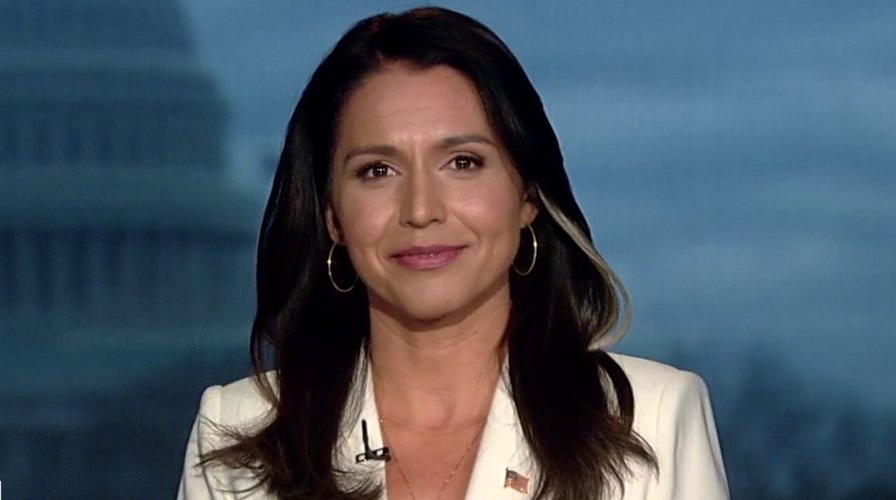
2020 Democratic presidential candidate Tulsi Gabbard is with us next.
(COMMERCIAL BREAK)
PAYNE: Folks, I have got -- first, let's start with Lindsey Graham, news breaking right now.
Because he was at Mar-a-Lago, where there was someone with the COVID-19 case, he is now under self-quarantine. And we will keep you abreast of that news.
And, also, got a quick clarification for you as well. The Archdiocese of New York announcing today that it will close all Catholic elementary schools starting Monday, March 16, through Friday, March 20.
All right, want to go back to Mayor de Blasio for more comments.
Let's take a listen.
(JOINED IN PROGRESS)
DE BLASIO: ... compromised, running low on food for their families.
Our Department of Social Services is activating emergency food contracts, working with nonprofit organizations, community-based organizations, to increase the amount of available food. We will have more details on that in the next day or two.
And, again, there's nothing that would be more important in terms of providing support and relief for people than federal action. We all understand, in a national crisis, the federal government can provide a level of relief that state and local governments simply can't.
We need the federal government to move immediately with a huge stimulus program and a program of relief for working people, paid sick days, any number of measures that would help people through what could easily be a half-year or more.
The House of Representatives has put forward a stimulus plan that is very helpful and a very positive step. We need to see action by the House, Senate and the president as quickly as possible.
Want to give updates about our school system. And I will talk about the school in the Bronx in just a moment. But, first overall -- and this is absolutely essential to our strategy and something we are working very, very hard to continue to keep continuity on, and I know the state feels the same way -- we want our schools to remain open, we intend for our schools to remain open.
That said, there are nonessential and non-instructional activities that we will alter. They will either be moved online, if they can be, or they will be canceled. Depends on the each activity. So that includes PSAL activities, athletic activities, games and practices, assemblies, parent- teacher conferences, PTA meetings, and school plays and recitals.
And I will stay on the topic of schools, and then double back.
This morning we have a potential -- and, please, everyone accurately note this -- we do not have independent confirmation -- we have a potential case of a student at a school contracting this disease.
But it is self-confirmed. We do not have a medical provider or a testing agency that has independently verified. That is not in any way doubting what the individuals are saying. It's saying that we have to make a series of decisions, and we need medical confirmation. And we don't have it right now.
We hope to have that confirmation in the next hour or two.
Two schools -- and the chancellors here obviously will add in the Q&A. Chancellor, I'm going to make sure I describe properly. If there's anything you need to correct me on, feel free.
Two schools in the same building, the Laboratory School of Finance and Technology and South Bronx Prep -- this is in the Mott Haven neighborhood in the Bronx. The school is at -- or the two schools are in a building at 360 East 145th Street.
Again, this was a decision we made this morning a little after 7:00 a.m., based on decisions -- excuse me -- made based on the information that had just come in. And it was a tough decision, because we didn't have that confirmation, but, out of an abundance of caution, determined that it was the right thing to do to close the school, to work to get that confirmation.
If we were so lucky as to get a negative confirmation, that would be ideal. If we get a positive, it's quite clear the follow-through. In the meantime, the full disinfection and cleanliness regimen is put in place in the school today. The disease detectives from the Department of Health have been deployed to figure out any close contacts, as we said would be the case in any potential temporary school closure.
We have checked the school, and we will keep double-checking. But, as of now, there are no children in the school who reach what we call a tier one level of preexisting medical conditions, so children who would be particularly vulnerable. We're double-checking that.
But, as of this point, we do not have an indication of any children in the school having those particular preexisting conditions.
Want to talk for a moment about two things, the city work force and then the private sector work force.
On the city, we now intend to authorize 10 percent of the city work force to work from home. The specific details are being determined. So this is telecommuting. We believe that's a number we can hit in the short-term, but it will take some real work. It's not the norm, obviously, for city employment.
There's, as is obvious, a huge number of our employees who cannot telecommute, who we need at their posts. But we believe, in short order, we can have 10 percent telecommute. I am -- want to confirm that number. I believe leave that as 34,000. But I want to check that.
And our...
UNIDENTIFIED FEMALE: Thirty five thousand.
DE BLASIO: Thirty five thousand. Thank you, Commissioner.
And then of the remaining 90 percent of the work force, there are 20 percent we intend to put on staggered schedules, again, understanding a lot of our folks not only play a crucial role, but cannot be on staggered schedules, but others can. So we, in short order, hope to put 20 percent on staggered work schedules, even as they report to their normal work locations.
And I want to -- that -- so that's 20 percent of the remaining 90 percent. I want that number too. Do you know it?
UNIDENTIFIED FEMALE: Seventy thousand. Seventy thousand.
DE BLASIO: Seventy thousand.
Thank you, Commissioner.
So, between those two categories, that's about 100,000 city workers will either be in telecommuting or on a staggered schedule, get them as much as possible away from the rush hour.
And, again, our message to New York City businesses, as much as humanly possible, please authorize maximum telecommuting and/or staggered schedules for your employees.
I want to say it's our impression so far from the information we're getting that the business community is really honoring that. A lot of them are acting on that.
The meeting we had here, which was organized with the help of the New York City Partnership, and CEOs and business leaders of some of the most prominent businesses in New York City.
Just going around the room and going with each of -- going through with each of them what they are doing, we saw a very, very high level of adherence to the guidance to institute telecommuting.
In fact, in the case of some of the companies which had the ability -- obviously, if it's a technology company, for example, more capacity to do that -- we had companies that were literally at 100 percent telecommuting now.
Other companies are going to have a much harder time and strike a balance.
A great example, one of the great New York City iconic companies, Macy's, CEO is here. Macy's is in a different situation, where a lot of their workers obviously work in physical locations. But they're working with us to maximize any kind of adjustments they can make.
So I want to say, I appreciate the high level of cooperation from the business community.
I also want to note that every business is different. Some can do a lot of -- have a lot of flexibility. Others do not. They are all taking this seriously. They're all working with us.
We do want to keep reminding any business that's not yet instituted maximum telecommuting and/or staggering work hours that we need them to. But we again are sensitive to the fact that not every business can do that, and that we are simultaneously extremely concerned to keep people employed, keep people from running out of their livelihood, because that has a huge number of other ramifications.
So we're trying to strike that balance, but very, very pleased with the cooperation we're getting.
And we're going to try and work with these businesses on any help they need as they proceed.
Hang on one sec. OK, a couple other matters.
There's been concern about the special election scheduled for March 24 for borough president of Queens. We are analyzing those concerns. But I want to be very, very clear, that election will continue as scheduled.
We are dealing with an unprecedented challenge, but I think it is a signature of a stable democracy that elections happen when scheduled.
So we very much want that election to happen on time, so long as we believe it can happen effectively.
However, I want to urge all candidates and campaigns to alter their activity right now. We're reaching out to each campaign specifically, believe that door-to-door canvassing should be stopped immediately.
And I want to note -- and knowing a lot about campaigns over the years, campaigns have many, many...
PAYNE: New York City Mayor Bill de Blasio gone over a long slate of items, as New York City declares a state of emergency, one that many municipalities, cities and states are going to have to do.
And, on that, I want to get the read from 2020 Democratic presidential candidate Tulsi Gabbard.
Thanks for joining us.
REP. TULSI GABBARD (D-HI), PRESIDENTIAL CANDIDATE: Thanks, Charles.
PAYNE: This news is coming quickly from all -- all areas.
First of all, Bill de Blasio made some comments about running low on food, families needing to survive, and pinpoint it back to the federal -- federal government, saying, that's where it has to come from, that's the most important area, and they must move immediately.
I think everyone agrees on that.
GABBARD: Yes.
PAYNE: And, still, it feels like there's a lot of -- a lot of stalling there, a lot of the old political shenanigans.
GABBARD: And this -- this continues to be a problem, unfortunately, where partisanship is getting in the way of just delivering what the American people need right now, especially as our country faces this crisis.
Now is not the time for politics. Now is the time for leaders to step up, stand together, we are all in this together, and to put the health and well-being of the American people above all else.
I think it's a little bit encouraging today that I came in expecting that we were going to have votes at 10:00 this morning on a direct aid package directed towards working people, everyday Americans across the country.
But there was concern coming from Republicans. It was not crafted in a bipartisan way. And so that vote never happened. And, literally, both sides are coming together. I think they're working with the administration on making sure that what we pass in Congress is something that both Democrats and Republicans have worked on to get through the Senate and get onto the president's desk as quickly as possible.
PAYNE: And I think that's the most important point.
I did see where Mnuchin and Nancy Pelosi have had several conversations today. The idea of the same usual big wish list from one side and a big wish list from the other, and all this wrangling, there's no time for that.
GABBARD: There isn't.
PAYNE: The window is closing.
And there seems to be low-hanging fruit in who we want to help. I think everyone would agree, paid sick leave, folks out there in the gig economy, people without health insurance.
I mean, it's some pretty simple stuff. But what about something bolder and bigger than President Trump is talking about, the payroll tax cut? This was something Democrats really seemed to embrace when President Obama was in office. It's something that helps small business employers and employees. And it's huge. It's big. It would be impactful.
GABBARD: I think, overall, when we look about -- look at the struggles that small business owners especially have in just trying to keep their doors open and keep people employed, I think that's a very good debate that we need to have.
And I think there's a lot of value in that. I think where I I'm looking is this immediate short-term impact. And that's where I differ a little bit. I don't think that this payroll tax credit will do enough to help those, for example, who make less than $25,000 a year.
They won't see much of a help coming from that. As you mentioned, those who are Uber drivers, that's where they get their income from, or who are working on the gig economy, freelancers, those individuals won't get assistance from that payroll tax credit.
What I'm proposing is an immediate emergency temporary universal basic payment that goes directly to every adult American in this country to help them in this dire situation, where most Americans in this country, they're working paycheck to paycheck...
PAYNE: Right. Sure.
GABBARD: ... struggling just to get by, and don't even have a buffer to think about how do you buy two weeks of food supplies for your family and the other considerations that people are concerned with.
PAYNE: We have got less than 30 seconds because of all the breaking news. And I appreciate you staying.
So, how much would it be? And when you say all Americans, it's not means- tested. Everyone would get a check. How much would that check be?
GABBARD: I'm proposing $1,000. I think that can be negotiated. But, again, this is a time of crisis.
We have been spending $4 billion a month in Afghanistan, with a lot of people wondering, what is this for? How is this helping the American people?
We need to put the well-being of the American people first right now and invest in them.
PAYNE: The idea that this has to be big, what we have seen in Japan is, now they have gone twice with stimulus, Italy working on their third package.
I think the American public is giving you license to go huge, go as big as possible the first time, so it's not -- you're not chasing the epidemic. Is that possible?
GABBARD: It is possible. We have to make it happen.
I want to make one note. The thing that has not yet been done that we have seen successful in countries like South Korea...
PAYNE: Right.
GABBARD: .... is mass testing, free testing, not hoops, red tape to go through.
PAYNE: Representative Gabbard...
GABBARD: We have got to get people tested.
PAYNE: We got you down for $1,000 for every American.
Thank you very much.
GABBARD: Thank you.
PAYNE: Folks, more right after this.
(COMMERCIAL BREAK)
PAYNE: Folks, we're just getting word, news that Senate Minority Leader Chuck Schumer is going to try and get a bill passed that has paid sick leave, emergency unemployment insurance, and additional Medicaid funding for coronavirus.
We will be right back.
(COMMERCIAL BREAK) PAYNE: We're just getting word Disneyland will be closing its doors starting March 14 through the end of the month in response to the coronavirus outbreak.
Now listen to this:
(BEGIN VIDEO CLIP)
MARK CUBAN, OWNER, DALLAS MAVERICKS: When it's something this critical, when people's health and the safety of our fancy customers is at stake, I didn't have an opinion.
And I told -- we said that, effectively, we will go with what the NBA says.
(END VIDEO CLIP)
PAYNE: Dallas Mavericks owner Mark Cuban agreeing with the NBA to suspend the rest of the season, this after a player from the Utah Jazz tested positive for coronavirus.
Now, since that announcement last night, an additional Jazz player has also tested positive for COVID-19.
So, was this the right move?
Let's ask Orlando Magic co-founder Pat Williams.
Pat, thanks so much for joining us.
PAT WILLIAMS, CO-FOUNDER, ORLANDO MAGIC: Charles, nice to talk to you. And I'm glad that we have a chance to visit here.
PAYNE: So am I.
A lot of rumors last week about playing to empty arenas. There was initial pushback, LeBron James saying he would not play without a live audience because that's what he lives for.
Well, things have changed dramatically. Are you happy with the decision so far from the league?
WILLIAMS: Well, all of sports has done the right thing here.
Baseball has announced today, and the colleges, as well as the NBA and the NHL. They are listening, Charles, to the medical experts and doing what they are told. And that's what we should all remember here. Listen to those medical experts.
I would also add, stay positive, stay optimistic through this. This too shall pass.
And one other thought, and it's simply this. To all of us, to everybody watching, listening, stay close to the lord. Don't let the fear that we all feel now threaten your faith, because our God is big enough to deal with all of this. I'm certain of that.
PAYNE: There's no doubt, Pat, that people are starting to fill it on a personal level, particularly those folks who happen to be in quarantine areas. And it's testing our faith. It really is.
And, of course, when we start to see athletes who, for the most part, particularly when you're younger, seem invincible, when it seems like maybe it's even taking them down, what -- how do we get this message home that, for the most part, this is -- people survive this, healthy people survive it, it should be a short-term challenge, but one that we should overcome?
WILLIAMS: Well, Charles it's really interesting.
I'm chuckling. I can still hear my mother's voice from years and years ago. Patrick, wash your hands just before dinner.
Well, that's what we're hearing all the time, isn't it? Wash your hands frequently, because that's where many of the germs reside. So, wash your hands frequently. Stay hydrated. Get the proper rest that you need. Eat properly. Continue your workout schedule.
I think that's all good advice.
But here's one other thought. With all these games off now in every sport, college basketball, and baseball's start, I mean, there are going to be a lot of free hours. To those people who stayed glued to the games on TV, I got an idea for them. Read.
(LAUGHTER)
WILLIAMS: Lots of time now to catch up on your reading. So dive into those good books that you have had sitting around and didn't have time to it. Now you have got it. So start a reading program.
And spend time in your Bible as well. That's good advice also.
PAYNE: From someone who is a bestselling author, among all the other accomplishments.
The NBA, though, suspending these games, is there a chance -- I mean, we're talking huge money, potentially billions of dollars, with all these leagues. It doesn't just impact the leagues, but the TV networks and everyone else.
What will be the signal, in your mind, for the NBA to say, OK, it's OK, we can go back? Because every business is starting to timestamp these suspensions to mid-March, late March, maybe early April.
WILLIAMS: Well, that's a great point.
And here's what I think is going to happen. The NBA, for example, is going to get caught up on the games. And we're going to be playing basketball well into the summer.
And wouldn't that be interesting...
PAYNE: Yes. Yes.
WILLIAMS: ... after seeing that, if that became the norm, that the NBA would suddenly...
PAYNE: Well, we will see.
Pat, I got to let you go. I'm sorry. I went over.
But one other thing mom said, always wash behind ears. Amazing how mother always knew best.
(LAUGHTER)
WILLIAMS: We should all listen to our mothers, Charles.
PAYNE: I think we will. We got to go.
By the way, it's not just the NBA that's responding to the coronavirus, the NHL also suspending their season, Major League soccer postponing games for 30 days, NCAA canceling all winter and spring championship tournaments. And the PGA will not have fans at their tournaments.
Also, Major League Baseball will cancel the rest of spring training and delay opening day by two weeks.
So, what kind of economic impact will all of these events being canceled have?
FOX News Headlines 24/7 Jared Max joins me now.
Jared, I just know the number is huge. What is it?
JARED MAX, FOX NEWS CORRESPONDENT: Well, you look at the fact that the NCAA men's basketball tournament generally would probably register about $1.5 billion in ad revenue.
And, suddenly, just a few minutes ago, the men's and the women's NCAA basketball tournament got called off. We have all these conference tournaments getting called off.
There is no Major League Baseball to look forward to, no more spring training, as you said, at least for the first two weeks of the season.
Something outside of the box, think of gambling. We have so much widespread legalized gambling right now. What are people going to be betting on, aside from maybe a game of tiddlywinks going on in their living room, over the next couple of weeks?
This is very much a changing landscape of sports, Charles. And it is unprecedented. The closest thing I can think of is in the days really after 9/11, when there wasn't much sports at all and, in New York, where we are from, what those teams dealt with and what happens.
We have never seen anything like this. And I agree with Pat Williams and everybody else. The right call was made. And when the time is right to get back on the field, I think we're going to know it.
There's only a couple of sports which still say they're going to have fans. Like, the PGA Tour will have fans coming into events. Well, the Masters tees off on April 9. It's -- really, that's less than a month away. The cost for tickets for the opening round badge is running around one-quarter of the price of what it was just two years ago.
So, maybe there's some deals to be had. There might be cheap flying to be had.
PAYNE: Right. Right.
MAX: But, for right now, we don't know what it's going to be.
PAYNE: Jared, thank you very much. You're right. It just doesn't stop. Everything has stopped, though.
Thank you very much. We will see you again real soon.
MAX: Yes, it has.
PAYNE: So, how do you tell Main Street not to panic about money, when it sees Wall Street in full-blown freak-out mode?
(COMMERCIAL BREAK)
PAYNE: Investors losing more than $7 trillion in market value since the start of this coronavirus sell-off.
Any relief coming tomorrow?
I want to bring in personal finance expert Chris Hogan, always the voice of calm through these turbulent times. And, boy, are they turbulent.
Chris, what are you telling people?
CHRIS HOGAN, PERSONAL FINANCE EXPERT: Well, Charles, we know we are definitely inside of a bear market and things are looking rough right now.
But I'm reminding people that we have been here before. As we have walked through the situation with SARS and swine flu and post 9/11. So I'm telling people, while drama may be going on, we must remain calm.
I want to caution people from making knee-jerk reactions when they're investing. And I'm reminding people this. Understand your goal, revisit your process, and remember your plan. And that means talking to your investment professional, looking at things and understanding, what are some tweaks that you can make? But we don't want to panic.
PAYNE: On those tweaks, a lot of people now want or are contemplating selling, in part because of the swiftness of the sell-off. But we're already down 20 percent. Some stocks are down 40, 50 percent. So it's a gut-wrenching decision.
How do they get over that? Or maybe do they have to sometimes bite the bullet?
HOGAN: Well, I think if we look back to where -- look at history. Things that have gone down always come back up.
And you and I have talked about this. The stock market's like riding a roller coaster. But I'm hearing from people that they are getting into the market. They're looking at this that things are on sale right now, that there's a blue light flashing, and so they're being focused.
So I think people need to understand their risk tolerance, but also they need to understand this process. Knee-jerk reactions lead to devastation and frustration.
Be clear, remain focused, and get proper guidance.
PAYNE: Chris Hogan, always appreciate you, buddy. You are indeed the voice of calm and expertise. We will see you again soon.
HOGAN: Thank you, my friend.
PAYNE: So, as more cities and towns across the country declare states of emergency, my next guest is urging people not to reach a state of panic.
(COMMERCIAL BREAK)
(BEGIN VIDEO CLIP)
TRUMP: We're very much working with the states, because the states are a smaller form of government. They can control individual arenas and individual things better.
And it's different for different areas. Some areas have no problem whatsoever in our country, and others do.
(END VIDEO CLIP)
PAYNE: President Trump today emphasizing the importance of local governments in all of this.
One of those officials is here with me now, Mayor of Englewood, New Jersey, Michael Wildes.
Mayor, thanks for joining us.
MAYOR MICHAEL WILDES (D-NJ): Pleasure, Charles. Thanks for having me.
PAYNE: We spoke yesterday. You said things are -- quote -- "well under control." I thought it was a fantastic comment, one perhaps the president could make.
How are you just 24 hours later? Because more and more cities are declaring states of emergency.
WILDES: This is a massive global mobilization, a government mobilization, if you would.
It has a humbling experience on elected officials. It has biblical import. We're now talking to residents and to city leaders about social distancing. This is actually a time, Charles, for social media to kind of repudiate and redeem itself, because these are not just the vulnerable that we're protecting.
We're protecting fathers and mothers and grandmothers and grandparents. And that means, if you're healthy, keeping yourself at harm's way, and making sure that you're exercising good choices.
So, I'm very happy where the county executive in Bergen County is taking action. All of the synagogues have shut down in Bergen County. We're now dealing with other new normal, if you would, the anti-Semitism that's developing because of clusters in that community, the anti-Asian rhetoric that's there.
So, when it comes to price-gouging, when it comes to dealing with that kind of insidious hate behavior...
PAYNE: Right.
WILDES: ... you have to lead by example.
And it's for every elected and appointed official to do it properly.
PAYNE: Mayor, I have got less than a minute to go.
How much or how badly does your region need the White House and the Congress to come together to provide some funding?
WILDES: We need relief for everyday workers. We need medical equipment.
The rumor in the New York City hospital system -- I'm an EMT myself -- is that there isn't a lot of equipment but for a few weeks, and a lot of the materials that are being made in other countries.
This is time for us to not declare ourselves as Democrats and Republicans, to put our partisanship away, and to make every American safe. And it means leading by example and making sure that your neighbor, your family, your co-workers are not overwhelmed or taking this less than serious.
PAYNE: All right.
Mayor Wildes, thank you very much. Appreciate it.
WILDES: Thank you, Charles.
PAYNE: The coronavirus canceling events across the nation, but is the panic outpacing the pandemic?
Right after this.
(COMMERCIAL BREAK)
PAYNE: Coronavirus cases keep ticking up.
But as over 60,000 people have already recovered from COVID-19, does everyone need to calm down?
Psychotherapist Dr. Karen Ruskin joins me now to discuss.
Doctor, thanks for joining.
DR. KAREN RUSKIN, PSYCHOTHERAPIST: My pleasure. Thank you for having me. This is important.
PAYNE: It is important.
We never hear, though. We never hear that 65,000 of these cases have -- people have recovered from this. We just hear the number who've had it over the whole world. And I think part of that is feeding into this period of anxiety and fear.
RUSKIN: Absolutely. Anxiety is contagious.
It's an anxiety epidemic, an anxiety pandemic, if you will. The anxiety increase is tremendous. It is the most number one common mental disorder in the United States to begin with, and health anxiety exacerbates that.
Those who don't typically have anxiety are experiencing it, being triggered by things like social distancing. My goodness, look around you. Sports, something that you normally find is pleasurable, that's being suspended and canceled. Universities are doing online, where you can't have proper learning anymore, normal learning.
Shelves are being not stocked for things like toilet paper. Facilities such as for the elderly aren't allowing families to come in to see their family members.
PAYNE: Right.
RUSKIN: My goodness, this is affecting people profoundly.
And social media 24/7 with fake news, so to speak, exacerbates the anxiety. And the madness of crowds, so to speak, is full-blown what is happening here, escalation, anxiety, panic, heart rate going up, loss of oxygen to the brain.
PAYNE: So, Doctor...
RUSKIN: The anxiety muscle, instead of the logic muscle. Yes.
PAYNE: How do we get through this, then, when social distancing also means we can't hug loved ones?
I mean, this is one way we normally get through stuff like this.
RUSKIN: You can hug loved ones. That's the thing.
We're social distancing, even when there isn't actual medical illness. We're worried about what's to come. We are fearing the unknown. And fear of the unknown is what escalates.
PAYNE: Yes.
RUSKIN: So then we stop ourselves from doing things that normally give us comfort.
And so what we should be doing and need to be doing is our normal routine, as much as we can, to do things that allow us to feel stable, loved and connected as much as we can.
That helps us through this.
PAYNE: Well, Dr. Ruskin, thank you very, very much. We really needed those words of wisdom, particularly today.
Folks, it was another crazy day on Wall Street, the biggest point drop in history, Dow off the most since the financial crisis. It's been a real critical time, of course.
And it's going to continue, although we might get some relief, if we can get Washington, D.C., to exude some confidence. This is what we need more than anything else. It's not about fundamentals. It's not a financial crisis. It's a crisis of confidence.
"The Five" starts right now.
Content and Programming Copyright 2020 Fox News Network, LLC. ALL RIGHTS RESERVED. Copyright 2020 ASC Services II Media, LLC. All materials herein are protected by United States copyright law and may not be reproduced, distributed, transmitted, displayed, published or broadcast without the prior written permission of ASC Services II Media, LLC. You may not alter or remove any trademark, copyright or other notice from copies of the content.
