




Tucker: Tijuana residents wary of caravan
Residents of Tijuana are protesting the arrival of migrants from the caravan, is their protest racist? Tucker takes on Univision anchor Enrique Acevedo.
This is a rush transcript from "Tucker Carlson Tonight," November 19, 2018. This copy may not be in its final form and may be updated.
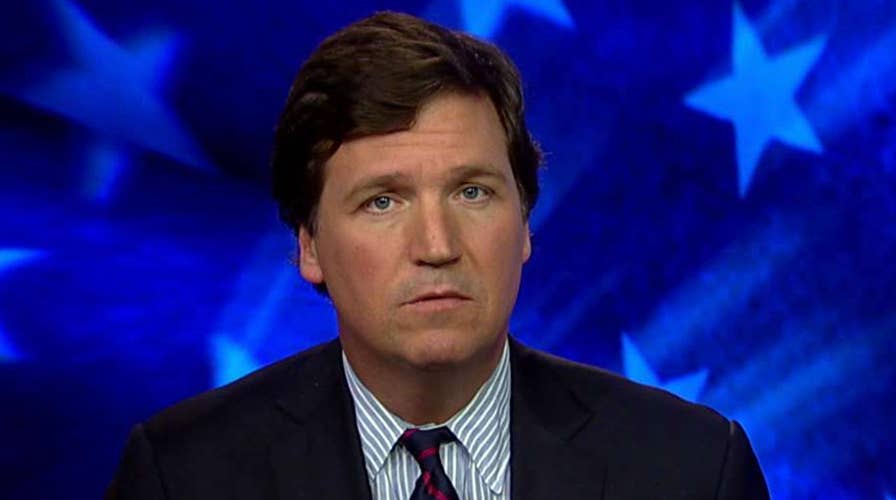
TUCKER CARLSON, HOST: Good evening and welcome to "Tucker Carlson Tonight."
One thing we've learned about mass immigration over the past couple years is that all good people support it. Immigration is the ultimate moral litmus test. When a Caravan of poor migrants from the third-world shows up, uninvited on your doorstep, the decent among us step forward to welcome them in. That's commanded by the moral code of cable news and, more importantly, by the poem at the bottom of the Statue of Liberty.
Only bigots and haters slam the door. That's what they've been telling us in the media now for years. CNN's Jim Acosta has made that point repeatedly.
Well, it has finally happened. The Caravan has arrived. But here's the funny part. It didn't arrive in our country. It arrived in Mexico, in the border city of Tijuana, just across the fence from San Diego. The people of Tijuana are Mexican citizens.
So, by definition, they are good people, much better than you are. They're more welcoming and compassionate, less selfish and less American. They must be thrilled by the new arrivals. As immigrants, their new Honduran neighbors will grow their economy and add rich new diversity to their culture. That's what low-skilled immigrants always do, again, a point that Jim Acosta frequently makes.
So are the people of Tijuana grateful for this Caravan from Honduras? Fox's William La Jeunesse went there to find out firsthand. Here's what he discovered.
(BEGIN VIDEO CLIP)
WILLIAM LA JEUNESSE, FOX NEWS: Should this caravan had been stopped at the Guatemala border?
UNIDENTIFIED MALE: Of course, I agree with that 100 percent, it should have.
UNIDENTIFIED MALE: Your country has to beware of -- of these people because they are people -- they are bad people.
UNIDENTIFIED MALE (THROUGH TRANSLATOR): Because they don't belong here. They're just migrants but it's like the same -- in the same case, it's like when Mexican migrants going to the U.S., they're undocumented.
UNIDENTIFIED MALE: We do know of incidences here in Tijuana and in other cities that some of these people that are coming into these -- with these Caravans are committing crimes.
This is not about racism. We don't dislike a certain group of people because they're from a country, one country or another. We are here because our government has not taken control of these, what we call invasions.
(END VIDEO CLIP)
CARLSON: Whoa! Wait a second. That's not the script we expected at all. The migrants are disruptive. They "Don't belong here."
(CROWD PROTESTING)
CARLSON: Some of them are criminals. It sounds like what they're saying in Tijuana is when Honduras sends its people, it's not sending their best, and that's a racist statement, obviously.
We know that because Donald Trump said something like that about Mexico once, and the geniuses on cable news never forgot it. They're still talking about that line years later as evidence of Trump's White supremacy.
And yet, here you have non-White people in Mexico saying pretty much exactly the same thing. How can that be? Let's check back with Tijuana to make sure we heard that right.
(BEGIN VIDEO CLIP)
UNIDENTIFIED MALE (THROUGH TRANSLATOR): Donald Trump was right. This was an invasion. What Donald Trump said was true. This is an invasion.
(END VIDEO CLIP)
CARLSON: Donald Trump was right? Wait. How can someone in Mexico say that? Everybody in Mexico hates Trump. He believes in borders. Nobody in Mexico believes in borders. They're better than that.
Well maybe that was just a lone extremist talking, some crazy person who found a microphone and a TV camera. We better check with the elected Mayor of Tijuana. If anyone can speak for the people of that city, he can. Here's what the Mayor had to say about the migrant Caravan.
(BEGIN VIDEO CLIP)
JUAN MANUEL GASTELUM BUENROSTRO, MUNICIPAL PRESIDENT, TIJUANA (THROUGH TRANSLATOR): No city in the world is prepared to receive this if I may. It's an avalanche. It's a tsunami.
(END VIDEO CLIP)
CARLSON: An avalanche? A tsunami? Note the dehumanizing terms he uses. If this were a Liberal arts college in America, the Mayor might be suspended for saying that. He'd definitely be in some kind of diversity re-education class by now. If he worked at Google, he'd be fired instantly.
But he's not a student or a tech drone. He's the Mayor of Tijuana where people can still say what they think without fear of being denounced by Don Lemon on CNN as a White supremacist. So, they do say what they think.
And in Tijuana, what they think is that a massive and abrupt demographic change is destabilizing to a society, no matter what the color of the people involved might be. It's particularly destabilizing if you're not rich, and most people in Tijuana are not rich.
Even in Mexico, they're wary of ignoring the law completely, and treating borders like they don't exist. They know that doesn't end well. Most people know that doesn't end well. The difference is in Mexico they can say that out loud. We could learn from that.
Enrique -- Enrique Acevedo is an Anchor at Univision. He was just in Tijuana. He joins us tonight from Miami, Florida. Enrique, thanks a lot for coming on.
ENRIQUE ACEVEDO, ANCHOR, NOTICIERO UNIVISION LATE-NIGHT EDITION, SPECIAL CORRESPONDENT, THE FUSION MEDIA GROUP: Thanks for having me, Tucker.
CARLSON: I'm confused. We just saw a group of Mexican citizens in Tijuana saying basically the same things that President Trump says almost to the word, endorsing Trump. Are they White supremacists?
ACEVEDO: Well, you have to understand that unlike human beings, intolerance, hate, and even racism flow freely across borders. And that's what you saw in those interviews. They're not running for president. They're not running for President of the United States either.
They are part of a group of around 300 protesters in a city of 1.3 million who, like many others along the way this Caravan, are opposed to -- to their presence in -- in Tijuana. And, you know, the overwhelming majority of people in Tijuana welcome immigrants. It's a city of immigrants--
CARLSON: Wait but --- wait but -- can I -- I'm sorry to interrupt but can I just back up a little bit--
ACEVEDO: --it was made by immigrants, as you know because you grew up in San Diego across the border.
CARLSON: --no it's -- it's a bit city, for sure. But can I suggest that --
ACEVEDO: So--
CARLSON: --hold on. You just said that they're racist but they're Latino, Spanish-speaking Latinos, attacking other Spanish-speaking Latinos. So where's the racism?
ACEVEDO: Well, we're not a monolithic community, Tucker. We have people from Central America, from Venezuela, from Colombia, different backgrounds, different ethnicities. And yes, racism exists in Mexico towards Central Americans. It's not new. It's happened through, you know, throughout history--
CARLSON: But how is it -- but I'm confused. How is it racist? Wait, but hold on--
ACEVEDO: --I know with that . It's part of what this migrants face when they--
CARLSON: --how is this--
ACEVEDO: --go across Mexico, violence, extortion--
CARLSON: OK.
ACEVEDO: --and racism.
CARLSON: No, OK, but I'm not quite sure how it's racism if they appear to be of the same race. But moreover, they said, and I think I'm quoting one of the protesters, it's not about racism.
This is almost exactly what he said. We want our government to enforce our borders, which is what a lot of people, including me, say frequently in the United States. Maybe, has it occurred to you, maybe it's not just racism? Maybe it's OK to want your government to keep your border intact?
(BEGIN VIDEO CLIP)
(CROWD PROTESTING)
(END VIDEO CLIP)
ACEVEDO: I think we should stop framing this debate about immigration in absolutes good, bad, enforcing, not enforcing the -- the border, as you saw there and, as you can see, is enforced.
There's border security through Border Patrol, through military, you know, members, and through things like drones and ATVs and high-tech surveillance equipment. So, we're enforcing the border. We're just getting ready--
CARLSON: So -- so how did all -- wait, but how did all the Hondurans--
ACEVEDO: --for these large teams of immigrants--
CARLSON: --get -- wait --
ACEVEDO: --which is not a crisis or an invasion--
CARLSON: --OK.
ACEVEDO: --it's just a -- a, you know--
CARLSON: OK. No, I know what the talking points--
ACEVEDO: --a large group of immigrants wanting to--
CARLSON: --no, I know what -- I know what the talking points are.
ACEVEDO: --to -- claim asylum.
CARLSON: What's so interesting about these interviews is that they seem to contradict the talking points. So, to the people of Tijuana, we could both agree they're probably not White supremacists. I -- I think we can take that as a matter of faith.
They seem to think this is a crisis. It's their city. And, by the way, their Mayor agrees with them. I assume he's not a racist, either, or maybe he is. Do you think they have any--
ACEVEDO: Actually I -- I interviewed the Mayor--
CARLSON: --real concern?
ACEVEDO: --last week and he--
CARLSON: Is he a racist too?
ACEVEDO: --rolled back some of those statements. He said that all immigrants are welcome in Tijuana and that he didn't mean any discrimination or harm to the people who were part of the Caravan. So, you know, in putting those--
CARLSON: Well I'm sure you bullied him, as--
ACEVEDO: --statements in context he was--
CARLSON: --as most politically correct media figures do. But before -- before we get to him retracting his statements under pressure from Univision, can we just address the core question, which is do you think he has any legitimate complaint? Does anybody who's city is overwhelmed by--
ACEVEDO: Of course.
CARLSON: --people from another country--
ACEVEDO: No, no and this--
CARLSON: --have any legitimate complaint at all--
ACEVEDO: Exactly.
CARLSON: --as it always been history .
ACEVEDO: I -- I was just complaining that we framed the debate on immigration on absolutes. Of course, he has a point. You know, the city is overwhelmed by the presence of these migrants and governments--
CARLSON: Oh.
ACEVEDO: --you know, all the governments involved should understand this is a humanitarian crisis and start acting like it, instead of just having these security measures at the border.
You know, again, I've said this a 1,000 times. We can spend a little more in the countries where these people are coming from and make a huge difference at the border or we can -- we can keep spending billions of taxpayers' dollars at the border--
CARLSON: Oh, so you figured out, wait, hold on--
ACEVEDO: --without making any sort of difference in the countries--
CARLSON: --so you figured out--
ACEVEDO: --where these people are coming from.
CARLSON: --you figure -- I'll -- I'll actually give -- give you airtime. We're live right now. You figured out how to fix Honduras and make it such a thriving country that no one wants to leave to raise GDP to American levels. How would you do it? Just really quick, how would you do that?
ACEVEDO: No, it's -- I'm -- I'm not coming up with a new idea. We've done this before--
CARLSON: Oh, OK. I didn't think so.
ACEVEDO: --with USAID and it's worked . We just need more resources--
CARLSON: No, it -- it hasn't worked, actually.
ACEVEDO: --focused on instead at the border.
CARLSON: It -- it's been a miserable failure.
ACEVEDO: Instead of spending a $100 billion over the past decade on border security, we could have used some of that money on programs that USAID has said--
CARLSON: So, which -- which program, hold on -- which program, hold on--
ACEVEDO: --it's been working. They're reducing violence , the murder rate--
CARLSON: --I know -- I know what the talking point is.
ACEVEDO: --in the border towns where the migrants are coming from.
CARLSON: Let's get specific. I'm giving you a chance live on TV.
ACEVEDO: Yes.
CARLSON: Which program specifically would have made the economy of Honduras so strong that no one would want to leave and come to the United States?
ACEVEDO: So USAID, for example, is working on two of the communities with the highest murder rate in Honduras. Throughout the last two or three years, with this program, they've been able to reduce violence there and, therefore, reduce the amount of people who were leaving that town. These are only two--
CARLSON: So, why do we have a--
ACEVEDO: --examples--
CARLSON: --Caravan of Hondurans coming if the USAID program worked so well?
ACEVEDO: Well because violence is not the only factor. We have other factors, poverty --
CARLSON: So but I'm just saying what's the pro -- because I -- I hear that a lot from dump people on--
ACEVEDO: Yes.
CARLSON: --I think Don Lemon said that at on CNN, we should spend more money in these countries. Has there ever been a program that has changed a country in the third-world--
ACEVEDO: Yes.
CARLSON: --they made it so appealing that no one wanted to come to the United States. I--
ACEVEDO: I mean--
CARLSON: --I don't think there is a program like that, is there?
ACEVEDO: --but again, absolutes, no one. It's impossible to just have a program for -- for everyone. Violence is a factor. Poverty is a factor.
CARLSON: OK.
ACEVEDO: Even climate now is becoming a factor. We saw a crew from the Weather Channel with the Caravan. They were, you know, tracking the -- the journey of a group of immigrants from Honduras where 90 percent of crops have collapsed.
CARLSON: Right.
ACEVEDO: John Carlos Frey, their correspondent, was telling me how the U.N. has declared Honduras, El Salvador, Guatemala--
CARLSON: OK.
ACEVEDO: --region with famine. So--
CARLSON: But -- but what about the people--
ACEVEDO: --so, you know, there are different factors.
CARLSON: --look, I feel sorry for the people in the Caravan. And I -- and I understand why they want to come to the United States. I love this country. I appreciate their good taste in--
ACEVEDO: We all do.
CARLSON: --countries. But what about the people--
ACEVEDO: And -- and that's the great thing, Tucker.
CARLSON: --of -- but hold on, what about everybody else?
ACEVEDO: Maybe we should be worried not that people were coming--
CARLSON: Hold on--
ACEVEDO: --we should start worrying when people don't want to come to the United States--
CARLSON: Right. Well that's going to happen soon--
ACEVEDO: --that's when we should start worrying.
CARLSON: --if we don't get a real border, so, because we'll be like Honduras, so, why would people want to move here? I mean honestly the -- honestly, my question is what about the people--
ACEVEDO: Yes.
CARLSON: --who live in the United States or, in this case, who live in Tijuana, do they have any legitimate reason not to want--
ACEVEDO: By all means.
CARLSON: --they do have legitimate reason?
ACEVEDO: By all means, of course, you understand that.
CARLSON: OK. Good.
ACEVEDO: And we've discussed this in the past. Undocumented immigration is not a desirable outcome for any of the parties--
CARLSON: No, it's not. Well good--
ACEVEDO: --involved.
CARLSON: --I'm glad you're admitting that.
ACEVEDO: You know, these people leaving their homes and the people who--
CARLSON: That -- that's all I want.
ACEVEDO: --you know the countries --
CARLSON: You don't have to be a racist to be against illegal--
ACEVEDO: --go against these immigrants--
CARLSON: --migrants.
ACEVEDO: --well there are better ways more humane, compassionate and common-sense laws that we could have instead of what we're doing with family separation--
CARLSON: I don't really think it's our fault--
ACEVEDO: --border limitation --
CARLSON: --actually.
ACEVEDO: --and these measures that really don't make any difference.
CARLSON: Yes, I don't -- I'm not going to accept blame for the disaster that is Central America, sorry. Enrique, thank you, though. Appreciate it.
ACEVEDO: Thank you, Tucker.
CARLSON: Brandon Judd is the President of National Border Patrol Council. He joins us tonight.
So Brandon, you're seeing what's going on in Tijuana right now. Do you see that, and I feel sorry for the people of Tijuana, I feel sorry for the people in the migrant Caravan, but do you think the chaos that we're -- we're watching on the screen in Tijuana vindicates the position of Americans who say, you know, this kind of Caravan can destabilize your society pretty quickly?
BRANDON JUDD, PRESIDENT, NATIONAL BORDER PATROL COUNCIL: Well, they're absolutely correct. I mean all you have to do is look at what just happened at our Port of Entry, at the San Ysidro Port of Entry today.
This migrant Caravan, they were tired of waiting, properly waiting in line, waiting for their turn to claim asylum, and they tried to shut down the entire Port of Entry by rushing the Port of Entry.
(BEGIN VIDEO CLIP)
(CROWD PROTESTING)
(END VIDEO CLIP)
JUDD: Look, if -- if it wasn't for President Trump, and -- and him sending the troops to the border, doing what he did, we would have ultimately shut down a Port of Entry that generates millions of dollars for the -- the American economy per year, and we just can't have that. That's the lawlessness that we're facing.
But Tucker, I just walked out of a meeting with the President and to see him and to see the -- the things that he's trying to do to secure our borders, it's something that gives me great hope because he was left with a mess from his predecessors.
And this is a President that once and for all is trying to end this debate and trying to secure the border for the American public. And for that, everybody should be grateful.
CARLSON: I -- I mean, people have differing views on what we should do about immigration. I think it's OK to have differing views about anything, really. But do you think it's helpful to shut down the conversation again and again and again by attacking people who disagree with you as bigots, as moral monsters?
JUDD: No. Again, I mean all you have to do is look at me. Unfortunately, I'm follically challenged. So, am I automatically a bigot because I don't have hair? The -- the -- the truth is -- is absolutely not.
I adopted two children of Hispanic descent. We're not bigots simply because we want border security. What we want is we want our children to be able to be raised in a country that believes in laws--
CARLSON: Yes.
JUDD: --that makes us free and protects us.
CARLSON: Well, of course. And the people of Tijuana want the same thing. Why wouldn't they?
JUDD: Yes, they do.
CARLSON: Brandon, thank you very much.
JUDD: Thank you.
CARLSON: Well, a Democratic Member of Congress says it's time to ban millions of guns, take them from you by force, and if you don't like it, the government may kill you, for real. That's next.
(COMMERCIAL BREAK)
CARLSON: Left are retaking the House of Representatives. Congressional Democrats are feeling newly emboldened about rolling back the Second Amendment. Early this year, California Democrat, Eric Swalwell, called for confiscating all so-called assault weapons, scary-looking rifles, and bringing criminal charges against anyone who resisted. We're not misquoting that. He wrote it in an op-ed in USA TODAY.
Then, just days ago on Twitter, one critic said this would provoke armed resistance against the government because, obviously, it would. Swalwell responded this way. "It would be a short war, my friend. The government has nukes." In other words, obey or we'll kill you.
Jumaane Williams is a New York City Councilman. He joins us tonight. Mr. Williams, thanks a lot for coming on.
JUMAANE WILLIAMS, NEW YORK CITY COUNCIL MEMBER: Thanks for having me.
CARLSON: So, there's something admirable about the straightforwardness from our old friend, Congressman Swalwell. If you don't obey, we'll just kill you. What do you think of that?
WILLIAMS: Come on, Tucker. We have to -- we all have to get to a place where we can have a conversation about what's happening in this country.
CARLSON: Yes.
WILLIAMS: And have a respectful one . So--
CARLSON: Do you think threatening people with violence is a good way to get to that--
WILLIAMS: No, I don't think--
CARLSON: --rhetoric ?
WILLIAMS: --that's a good way to have a conversation, nor do I think having a conversation about guns not being part of the problem is a good way to have a conversation. So, we should -- we should start with guns are a part of the problem, and figure out how to deal with that.
CARLSON: OK. But when a sitting U.S. -- and, by the way, we've at -- we know Swalwell very well.
WILLIAMS: Sure.
CARLSON: I personally like him. We asked him to come on to respond directly. I should say that. But when a sitting U.S. Congressman says, you know, if you just don't -- if you don't like it, if you're going to resist anyway , we'll just drop a nuclear -- your nuclear weapons on you. We don't even threaten our -- our martial enemies with that. I mean that's a bit much, no?
WILLIAMS: Well, of course, I was remiss , you know, prayers and peace of comfort for the victims of the Chicago mass shooting. But like the mother of a victim that happened in California who said she was tired of prayers, she wanted action, we have to have actionable items. And so, I don't consider nukes on people who have guns an actionable item. But there are actionable items and--
CARLSON: So, you are the moderate for the first time. I'm impress --
WILLIAMS: I don't know about moderates.
CARLSON: --well, you're against killing American citizens so that puts you- -
WILLIAMS: If that's a moderate--
CARLSON: --that puts you in the moderate guidelines . So, let me just ask you this. So, here's my confusion. I have no problem trying to disarm people who're threatening.
The problem I have with gun confiscation is that it punishes people like me who pose no threat at all and many millions of others Americans with no criminal record, no intent to harm anybody, want guns for self-defense, and it says to them, you're a criminal now because you have a gun that we think was--
WILLIAMS: Well, you have jumped--
CARLSON: --scary.
WILLIAMS: --to confiscation.
CARLSON: Well but no, Eric Swalwell who's on -- who's a Member of the Intel Committee--
WILLIAMS: But -- but we should have a--
CARLSON: --half the time --
WILLIAMS: --conversation about one, is there an issue with guns in this country, and what do we do with that? And the--
CARLSON: OK.
WILLIAMS: --actionable items are quite clear. One, we can address loopholes in assault weapons and high-capacity magazines. Two, we can deal with dealers who have been unscrupulous.
CARLSON: OK.
WILLIAMS: And three, we can begin to treat guns like we do cars. That's just on the demand side.
CARLSON: No but -- but -- no, but OK--
WILLIAMS: I mean on the supply side--
CARLSON: --then I'll address that I mean look--
WILLIAMS: --has to be on the demand side as well .
CARLSON: --you have Members of Congress, at least one prominent Member of Congress saying we're going to take your guns away by force, OK? So, apparently, you're not calling for that, though, we both know you're secretly for that. But would--
WILLIAMS: We don't both know that. But OK.
CARLSON: OK. But I believe you're -- I believe you're for that like many on--
WILLIAMS: Wait you can believe what--
CARLSON: --the Left .
WILLIAMS: --you'd like. I'm here to have a discussion on the issue--
CARLSON: Are you for that?
WILLIAMS: --no, listen--
CARLSON: Good.
WILLIAMS: --let's have a -- we should have a discussion--
CARLSON: OK. Then let -- let's talk about magazines--
WILLIAMS: --sure.
CARLSON: --you say high-capacity. I think it means any more than 10. I -- if I have a magazine that has 15 round capacity, why is it a threat to anyone?
WILLIAMS: We have to start with, and I'm repeating this again, with everyone agreeing that guns and the access to guns are an issue in this country.
CARLSON: Well how about this? I don't agree with that.
WILLIAMS: You do not.
CARLSON: And I think a gun is a tool--
WILLIAMS: As I'm -- sure.
CARLSON: --and in the hands, like any tool, in the hands of someone with mal-intent, it's very dangerous.
WILLIAMS: So, I will say this--
CARLSON: I don't have mal-intent. So, would I be forced to give up any magazines that I had that exceed the capacity--
WILLIAMS: --I will -- I will say this. If a -- if a hammer killed 33,000 Americans every single year, we would be screaming and yelling, "Let's regulate hammers." Guns are only made for killing. What I'm saying is let's at least treat guns how we treat vehicles--
CARLSON: OK. But you're speaking theoretically. And I want to--
WILLIAMS: I am not. I'm speaking--
CARLSON: --speak tangibly.
WILLIAMS: --specifically.
CARLSON: So there are millions upon millions of so-called high-capacity magazines out there. They're in circulation, tens of millions of them, what do we do with those?
WILLIAMS: So, I mentioned three things. I mentioned dealing with the high- capacity magazines and the assault weapons. I mentioned the loopholes of gun dealers--
CARLSON: Let's just stick with the magazines for the conversation --
WILLIAMS: --but I mentioned also treating guns like we treat vehicles. That's just on the supply side--
CARLSON: OK. But, you know, I'm sorry -- I'm sorry to press you for specifics but--
WILLIAMS: --we also have to deal with the demand side .
CARLSON: --since--
WILLIAMS: Sure.
CARLSON: --this is what you do let me--
WILLIAMS: Yes.
CARLSON: --let me press you. There are tens of millions of magazines that fit more than 10 rounds, in circulation. People -- normal people with no criminal--
WILLIAMS: Sure.
CARLSON: --records own them. What do we do with them?
WILLIAMS: I'll tell you what. In New York City, we're the safest city of guns we've been since 1951. I've been a leading voice in dealing with gun violence in New York City.
CARLSON: Oh, so -- so, you won't answer the question--
WILLIAMS: No.
CARLSON: --that's why nobody trusts the gun people--
WILLIAMS: No.
CARLSON: --because we know that you're gun grabbers because you're--
WILLIAMS: A gun--
CARLSON: --not straightforward.
WILLIAMS: --again, part of the gun violence problem, actually it's last time--
CARLSON: What -- what would you do with the--
WILLIAMS: --you wouldn't answer it.
CARLSON: --magazines?
WILLIAMS: But -- but--
CARLSON: Is that not a fair question?
WILLIAMS: No, we have to start from someplace where we all agree.
CARLSON: No, that -- that -- no, no we don't.
WILLIAMS: If you want to -- we absolutely do --
CARLSON: No, tell me what you think and then--
WILLIAMS: --because--
CARLSON: --maybe you can convince me.
WILLIAMS: --the way you start, we'll never have a conversation. So, I want to start--
CARLSON: Oh, you need to--
WILLIAMS: --from having a conversation--
CARLSON: --lie to me first--
WILLIAMS: No.
CARLSON: --and then oh you're not going to answer a straightforward question--
WILLIAMS: Are you? Are you?
CARLSON: --I'm not lying at all.
WILLIAMS: No, I'm asking are you going to answer--
CARLSON: I'll tell you exactly what I think.
WILLIAMS: --a straightforward question? Are--
CARLSON: I'll answer any question.
WILLIAMS: --are guns a part of gun violence in this country?
CARLSON: Well, of course. They're the tool that is used very often to commit violence.
WILLIAMS: So, we have to start--
CARLSON: OK.
WILLIAMS: --from that point. Finally--
CARLSON: OK. That's fine.
WILLIAMS: --thank you for agreeing.
CARLSON: So, I have--
WILLIAMS: Thank you for agreeing--
CARLSON: --if I have a--
WILLIAMS: --finally.
CARLSON: --high-capacity magazine in my possession, your -- your definition of high-capacity, and I don't want to give it up, will you take it from me?
WILLIAMS: So, let's take that one off the table.
CARLSON: Why?
WILLIAMS: What about the other two?
CARLSON: Wait, why -- why would -- hold on --
WILLIAMS: Because you like to stick on the one that will prevent a conversation--
CARLSON: I look I'd like to ask very simple factual--
WILLIAMS: --from going forward.
CARLSON: --questions--
WILLIAMS: No, I mentioned three things--
CARLSON: --and see if you're straightforward enough to--
WILLIAMS: --I mentioned three things.
CARLSON: --answer them.
WILLIAMS: And so, the way this happens in government, people present things--
CARLSON: But why wouldn't you--
WILLIAMS: --and we figure out--
CARLSON: --answer them ?
WILLIAMS: --because you want to get to a point where people will reject any conversation about dealing with guns.
CARLSON: But I think all of our viewers--
WILLIAMS: I want to get to a point--
CARLSON: --know where you stand.
WILLIAMS: --no, they don't.
CARLSON: The answer is, of course, I'm going to take it from you--
WILLIAMS: No, they don't.
CARLSON: --and punish you if you don't give it to me.
WILLIAMS: The -- the -- the fact of the matter is we own -- we have less than 5 percent of the population and we own all the half of civilian guns--
CARLSON: OK.
WILLIAMS: --and 31 percent of mass shootings. But thank you for agreeing that guns are a part of gun violent problems in America. Next time, we have a--
CARLSON: I always say--
WILLIAMS: --conversation we can get to the phase .
CARLSON: --what I think.
WILLIAMS: OK .
CARLSON: In -- in contrast to you, I will say--
WILLIAMS: I always say what's on my mind .
CARLSON: --to discuss . Thank -- thank you for joining.
WILLIAMS: Thanks for having me.
CARLSON: Appreciate it.
Colion Noir is an NRATV host and he joins us tonight. Mr. Noir, thanks a lot very much for coming on. So do you -- I'm starting to get the sense--
COLION NOIR, AMERICAN GUN RIGHTS ACTIVIST, NATIONAL RIFLE ASSOCIATION MEMBER, NOIR HOST: Good to be here , Tucker.
CARLSON: --that confiscation, clearly the goal, because there's no other goal that makes sense. You can't -- if there are tens of millions of so- called assault rifles in circulation, and many tens of millions of these so-called high-capacity magazines, you're never going to solve the problem that the Left believes is responsible for gun violence unless you take those away, right?
NOIR: It's the only logical conclusion because if you think about it, if you start with gun control based around the idea of restricting or taking something away, if we got rid of, let's say, we got rid of the AR-15s, they account for less than 3 percent of gun deaths in this country.
CARLSON: Right.
NOIR: So, let's say we get an Assault Weapons Ban, right? At that point all right, let's say another shooting happens like the one we just had recently, in California, where he used a handgun. Then they'll be telling us, "You know what? That didn't work. So now we need to do something more strict, which is ban firearms."
So inevitably, we're -- it's always a race to total and complete confiscation but they never want to admit that. They want to act like they're being reasonable and say, "No, no, no, no, no, no, no, we just want to get rid of the big scary guns."
But it's like the big scary guns aren't the problem. They account for less than 3 percent of gun deaths. But 80 percent of gun deaths in this country are committed by way of handguns. So, if you honestly believe that the tool is the issue, why aren't you addressing the handguns?
CARLSON: Well that's a very smart point, and one that I plan to bring up next time we speak to someone on the other side. But my question's even broader than that. Why in a chaotic, an increasingly chaotic world, the one that we live in, would you want to disarm normal law-abiding people? What threat do they pose?
NOIR: I think -- I think there are two different dynamics going on here. I think there's one dynamic, which is composed of people who are just generally ignorant about firearms. And then, I think there's another dynamic of people who are generally have an -- have an agenda to gain more control and to push the idea--
CARLSON: Yes.
NOIR: --of reliance on -- on the government.
CARLSON: Yes.
NOIR: And it sounds conspiratorial but it's not because if I'm self-reliant in my ability to protect myself, my natural inclination is not to depend on the government to be there when something goes wrong.
CARLSON: Right.
NOIR: And you can't push the necessity of -- of -- of government if you have a populace of people who understand and embrace the idea of self- reliance, especially when it comes to protecting your life and your family. And so, the people on the side --
CARLSON: That -- that's a very deep point.
NOIR: --go ahead.
CARLSON: No, that's it--
NOIR: Yes.
CARLSON: --I was just complimenting the point as deep. So, what you're saying is that many people on the periphery of the conversations haven't really thought about it, but the people who--
NOIR: Yes.
CARLSON: --driving the conversation, who have thought about it, do have an agenda?
NOIR: Absolutely.
CARLSON: Ah.
NOIR: It's one of those things where -- go ahead, sorry--
CARLSON: No, that's it. I'm just impressed. Thank -- I hope you'll come back--
NOIR: Yes.
CARLSON: --and join us again, thank you.
NOIR: Absolutely, thanks.
CARLSON: Nancy Pelosi led the Democrats back to a majority in the House, almost 40 seats. But now she could be removed from power anyway by her fellow Democrats. That smells like sexism. We're sounding the alarm right now. We're going to talk to Richard Goodstein about it, after the break.
(COMMERCIAL BREAK)
CARLSON: Democrats just retook control of the House of Representatives after eight years, and the rest of us are waiting to see what they will do with their new political power. We know the Democrats despise the President. They've mentioned that. But what are they for? What's their organizing principle?
If you imagine something simple and straightforward like lower prescription drug prices or more transgender Marines, think again. Their mission is bigger than that. In fact, it's more metaphysical than it is political. The Democrats are planning nothing less than the moral revival of this country. Listen to their leaders.
(BEGIN VIDEO CLIP)
JOE BIDEN, FORMER VICE PRESIDENT OF THE UNITED STATES: That invisible moral fabric is being shredded, I mean literally being shredded.
SHEILA JACKSON LEE, U.S. REPRESENTATIVE FOR TEXAS'S 18TH CONGRESSIONAL DISTRICT, DEMOCRATIC PARTY MEMBER: I knew that the good people of Texas would rise up and find their moral compass.
BILL NELSON, SENIOR UNITED STATES SENATOR FROM FLORIDA: Ridiculous policy that has offended the morality of the American people.
RICHARD BLUMENTHAL, UNITED STATES SENATOR, CONNECTICUT: If my Republican colleagues have any sense of morality, they will refuse to go forward on Friday.
(END VIDEO CLIP)
CARLSON: Senator Richard Blumenthal of Connecticut. That's right. The party of sex-selective abortion is now lecturing you about morality. And, frankly, you're coming up a little short in that department.
You don't measure up to the high moral standards of, say, Senator Kirsten Gillibrand of New York, a longtime friend and defender of Bill Clinton, Harvey Weinstein, and Anthony Weiner. Gillibrand has recently been reborn as a fire-breathing fundamentalist preacher. Here's a selection from a few of her sermons over just the past week.
(BEGIN VIDEO CLIP)
KIRSTEN ELIZABETH GILLIBRAND, JUNIOR UNITED STATES SENATOR, NEW YORK: This country was founded on some basic moral principles that we have a moral compass as a nation.
Our morality as a country is literally on a knife's edge.
For me, it's really a moral question.
For me, it's very much a moral question.
I've been called to fight as hard as I possibly can to restore that moral integrity that moral decency.
(END VIDEO CLIP)
CARLSON: For me, it's a moral question. Keep in mind the hand gesture. Keep in mind also that Senator Gillibrand isn't just fighting for moral integrity and moral decency. She says she has been called to fight for these things.
You know who called her? Don't you. It wasn't her friend, Anthony Weiner, from a prison payphone. Nope, it was God himself. He called Senator Gillibrand directly. He's got her cell. That's how close they are.
Remember when Democrats used to say they're worried about a theocracy? Who knew they'd try to start their own?
Well after eight years, the minority Democrats are, as we said, back in control of the House that may soon have a new leader of the House, the Speaker, a growing number of Democrats publicly voicing opposition to electing Nancy Pelosi to that job for another time.
(BEGIN VIDEO CLIP)
ABIGAIL SPANBERGER, DEMOCRATIC MEMBER-ELECT FOR VIRGINIA'S 7TH CONGRESSIONAL DISTRICT IN THE U.S. HOUSE, FORMER CIA OPERATIONS OFFICER: One of the things that I talked about frequently on the campaign trail was the need to have new voices in Congress, the need to turn a new page.
SETH WILBUR MOULTON, U.S. REPRESENTATIVE FOR MASSACHUSETTS'S 6TH CONGRESSIONAL DISTRICT, FORMER MARINE CORPS OFFICER, DEMOCRATIC PARTY MEMBER: We answer that call for new leadership by reinstalling the same status quo establishment leadership that we've had in this party since 2006 then we're letting down the American people.
KATHLEEN MAURA RICE, UNITED STATES REPRESENTATIVE FOR NEW YORK'S 4TH CONGRESSIONAL DISTRICT, DEMOCRAT, FORMER PROSECUTOR: I think once we show that the leader can't get to 218, you're going to see other people throw their hat in the ring too.
(END VIDEO CLIP)
CARLSON: Now, there are lot of ways Pelosi could respond to that. The most obvious is by saying, "Look, we just won 39 seats in the House. Possibly, we're going to get to 40. I did that." She could say that. Instead, she's crying sexism.
(BEGIN VIDEO CLIP)
NANCY PELOSI, MINORITY LEADER OF THE UNITED STATES HOUSE OF REPRESENTATIVES, SAN FRANCISCO, CALIFORNIA, FORMER SPEAKER OF THE HOUSE: You'd have to ask those people what their motivation is. I think of the 17, it's mostly like 14 men who are on that letter.
If in fact there is any misogyny involved in it, it's their problem, not mine.
(END VIDEO CLIP)
CARLSON: Men. Toxic masculinity in the Democratic Party. Richard Goodstein, a living expert on this. No, just kidding. But he is an attorney and former advisor to both Bill and Hillary Clinton, joins us tonight.
I didn't know, Richard, there was that much sexism in the Democratic Party. Nancy Pelosi says there is. What are you guys going to do about it?
RICHARD GOODSTEIN, DEMOCRATIC STRATEGIST, POLITICAL CONSULTANT, FORMER CLINTON ADVISOR: Yes. I was sorry to see Nancy Pelosi attribute these rebels to misogyny and sexism.
I -- I actually think she knows that's not what it is that when Conor Lamb was running for -- for election initially in that district in Pennsylvania that went for Trump by 20, and all these ads were being run saying, "He was just going to be a puppet of Nancy Pelosi's," guess what, he said he wasn't going to vote for her if he got elected to be Speaker.
And you know what, he's not. It's not because she is a woman. It's because he made a commitment to his constituents because he basically thought that's what he needed to do to A, get elected, and B, what he thought was right that the Democrats needed to turn the page.
CARLSON: Oh. So, he just wants the most qualified candidate irrespective of her sex. I can't let you off the hook that fast, Richard. These are the rules that you guys wrote and the rules are as follows.
The most important thing about you is how you're born, your sex, your race, your sexual preference, your innate qualities, your DNA, that's what defines you. It's called identity, Richard. I don't know if you knew that in the intersectional world that you guys made, you can't just say, "Oh, we found a better candidate."
You're blowing off a woman. 14 men are doing that. Is there an investigation into institutional sexism in the Democratic Party? I'm dead serious. Why wouldn't there be ?
GOODSTEIN: Yes. Yes, here's what's worse. The -- the problems for the Democrats, and I'm serious about this, it's got nothing to do with identity, it's with seniority. And -- and they, I think respect the fact that when Newt Gingrich came in that the Republicans did something different.
They basically said we're going to put the sort of younger, vital, able, competent people in our leadership position at committee chairs and it -- Paul Ryan's a young guy. And I think that's something that frankly a lot of Democrats wish Democrats could figure out a way to embrace. It has nothing to do with Nancy Pelosi's gender or -- or Congressman Clyburn's race. It has to do with the fact that--
CARLSON: Really? Then but--
GOODSTEIN: --yes.
CARLSON: --but everything outside the Democratic Party's leadership structure, according to Democrats, has to do with race and gender, everything. I mean every time I flip on the Tube, there's some moron tugging his chin and saying, "I don't see enough people of whatever in this picture." I mean that is the most basic Democratic talking point. But we're not supposed to apply it to the Democratic leadership because why?
GOODSTEIN: Well, again, I think the Democratic talking points are about healthcare, about making sure that tax cuts go to working people, you know, about, you know, gun background checks, about infrastructure. That's what Democrats are united around.
CARLSON: OK. Can they stop lecturing the rest of us about racism and sexism since clearly they don't hold themselves to the same standard? That's all I'm asking for.
That's -- by the way, I agree with -- I hope the Democrats talk about healthcare. I think it's an important topic. I think we'd all benefit from that. Can they lay off the race and gender stuff a little bit though since they're obviously not playing by those rules?
GOODSTEIN: Again, Republicans put Nancy Pelosi on the ballot, all these ads they ran against her, Donald Trump said himself, he was on the ballot. And, as you just said, Democrats picked up 39 seats. Had nothing to do with race or gender, having to do with the sort of a belief that A, they needed an agenda that the Democrats supported, and B, frankly, to put a check on Donald Trump.
CARLSON: Wait. I'm -- I'm confused . Wait but hold on, wait you just lied over , nothing to do with race or gender, really, I mean or gender, how do we know that? So, here's what I know. Here are the stark facts of the case. Donald Trump is for Nancy Pelosi as Speaker.
GOODSTEIN: Right.
CARLSON: But Seth Moulton is not. Trump is comfortable with a strong woman in power. Seth Moulton clearly isn't.
GOODSTEIN: Yes.
CARLSON: Seth Moulton looks like a sexist to me, by this measure, and Donald Trump seems very enlightened.
GOODSTEIN: Yes.
CARLSON: I mean that's what I see. Why do you see something different?
GOODSTEIN: You're -- you're assigning weight to what Donald Trump says. I think most Democrats and, frankly, most people in the country anymore don't. With all due respect, they just don't assign weight to what he says- -
CARLSON: Look, I mean--
GOODSTEIN: --because so many times he says things --
CARLSON: --wait he says he's for Pelosi. OK, how about this?
GOODSTEIN: --that aren't true.
CARLSON: I'm for Pelosi. Look, I'm just using the rules that you guys made up and enforce with Germanic efficiency on the rest of us. That's all I'm doing. And how does it feel? It feels bad because it's unfair and stupid, isn't it?
Can you just admit that? It's unfair and stupid and the rest of us have to live like this in fear and maybe you guys should live that way, just for a day, to see what it feels like. Do you see what I mean?
GOODSTEIN: Well OK. You're -- you're ascribing things that I think Democrats and the public generally, they wouldn't have voted in the Democrats to run the House if they accepted what your -- your proposition, Tucker. They--
CARLSON: Ha-ha. I guess, I don't know why they did.
GOODSTEIN: --they--
CARLSON: Richard Goodstein, great to see you. Thank you.
GOODSTEIN: My pleasure.
CARLSON: I don't think you're a sexist. I was just kidding.
GOODSTEIN: Thank you.
CARLSON: Well the new face of the Democratic Party just endorsed a plot to make the party even more Liberal than it already is. Mark Steyn joins us to assess what happens. Stay tuned.
(COMMERCIAL BREAK)
CARLSON: Newly-elected Democratic Congresswoman and Democratic Socialist, Alexandria Ocasio-Cortez has quickly become one of the most famous Democrats in America at the age of 28. And sometimes, occasionally, it is clear that she's only 28 as here.
(BEGIN VIDEO CLIP)
ALEXANDRIA OCASIO-CORTEZ, U.S. REPRESENTATIVE-ELECT, NEW YORK'S 14TH CONGRESSIONAL DISTRICT: I would love to get inaugurated January 3rd. January 4th, we're signing new healthcare, we're signing this, we're--
(CROWD LAUGHING)
OCASIO-CORTEZ: --declassifying our society.
And if we work our butts off to make sure that we take back all three Chambers of Congress, rather all three Chambers of Government, the Presidency, the Senate and the House in 2020--
We look at these figures and we say, oh, unemployment is low, everything is fine, right? Well unemployment is low because everyone has two jobs.
(END VIDEO CLIP)
CARLSON: Some missteps but that does not mean she's not popular. She's very popular among the Democratic base and she's determined to remake the party along very different lines. She just gave support to Justice Democrats. That's a group plotting primary challenges to Democrats they deem insufficiently progressive and insufficiently diverse.
Author and Columnist Mark Steyn joins us, who I should say in an editorial comment is one of the single smartest people I've ever met in my life and who never went to college. So, if you're thinking about whether to send your brilliant son or daughter off to school at 70 grand a year, look at Mark Steyn and reconsider.
Anyway, I couldn't -- I couldn't control myself.
MARK STEYN, AUTHOR, COLUMNIST, STEYNONLINE.COM: No, no, drop-out at fifth, drop-out at fifth grade America. You'll -- you'll--
CARLSON: I looked it --
STEYN: --thank me for it.
CARLSON: --there's something to it anyway. That's another show. What do you -- so, the Democratic Party has a reckoning, it seems to me. They need to figure out who they are and what they stand for. What are they going to decide? Where are they going?
STEYN: Well I think they're going with Ms. Ocasio-Cortez. You were -- you were talking with our pal, Richard, about identity politics. And there's actually something absurd about it. We had a fellow called O'Rourke pretending to be Hispanic, some kind of Hispanic--
CARLSON: You're talking about Beto.
STEYN: Be -- be -- be -- be -- Beto O'Rourke pretending to be Hispanic. And -- and essentially what you have permanently is extremely old White people--
CARLSON: Running against an actual Hispanic guy named Ted.
STEYN: Yes. And but you -- but if you look at, you know, Joe -- Joe Biden, Nancy Pelosi, Bernie Sanders, Dianne Feinstein, and all about -- as you said, they're all about the identity politics . They're saying, oh yes, you know, if you're a Muslim, a transgender then Joe Biden is your guy or Bernie Sanders is your guy.
And at a certain point, these identity groups, like the youngest Congresswoman, decide well, wait a minute. We'd like a piece of the action ourselves .
CARLSON: Well exactly.
STEYN: Yes.
CARLSON: So, I don't know. I mean I have mixed feelings about this. I don't think that you should elevate people on the basis of irrelevant criteria like their race, of all things. I think it's immoral actually, no matter what the race is.
STEYN: I know .
CARLSON: On the other hand, they wrote these rules.
STEYN: Right, yes, right.
CARLSON: And they don't want to live by these rules. But they want everyone else to live by the rules.
STEYN: And now, and they're being taken out by people who took them at their word like Alexandria Ocasio-Cortez. I mean we can -- we can laugh at her. I thought though I don't even know what three Chambers of Government mean. I -- I -- I -- well, I do, because it's like if you're an immigrant it's in the test.
I think the three branches of -- the three branches of government are the Special Counsel, the Broward County Elections Office, and -- and the Judge who gave Jim Acosta his Press Pass back. They're the three branches of government.
But -- but what's more interesting is not that she doesn't know that but that millions and millions of Democrat voters don't think it's actually essential to know that. They're way beyond that now and they have a new view of America and she represents it. And fellows like Joe Biden and Bernie -- well Bernie does, but fellows like Joe Biden, Nancy Pelosi, Hillary, they really don't.
CARLSON: They're -- they're in for a real reckoning, I think.
STEYN: Yes, yes.
CARLSON: They're about to find out that--
STEYN: Yes.
CARLSON: --their dumb ideas have consequences going to hurt them. Mark Steyn, great to see you, as always.
STEYN: Yes, and you, Tucker.
CARLSON: A rare in-person setting--
STEYN: Ha-ha.
CARLSON: --who'll be filling in, by the way, who's going to be hosting this show while I'm gone and we're always grateful that he does.
STEYN: Yes. Have a good Thanksgiving.
CARLSON: Thank you.
Up next, there's new scientific evidence, of which you already knew, Facebook is making Americans miserable, depressed. What can we do about that? We'll tell you after the break.
(COMMERCIAL BREAK)
CARLSON: Well there's still more scientific evidence that Facebook and other tech companies are hurting America and distorting our brains. A brand new study by psychologists at the University of Pennsylvania finds that Facebook, just Facebook, among many social media platforms, can substantially increase depression in people and loneliness, and these feelings go away when a person gets off Facebook.
This should not surprise us. Just a year ago, early Facebook investor, Sean Parker bragged that the company deliberately made the site as addictive as possible without caring at all about the harm it could inflict. Imagine if it's tobacco chieftains admitted that, they'd be in prison. But these people are walking free.
Tom Kersting is the Author of the book, Disconnected: How To Reconnect Our Digitally Distracted Kids, and he joins us tonight.
Tom, I'm not going to ask if you're surprised by this because I know that you're not because you wrote a whole book on it. What is the answer for parents of teens, of young people, who are watching their kids slip away, become remote and sad because of overuse?
TOM KERSTING, PSYCHOTHERAPIST, DISCONNECTED AUTHOR: Well the number one advice I give, and I'm lecturing on this topic, is everybody is a -- we -- we had -- we've turned into a Keeping Up with the Joneses sort of society where everybody seems to be doing what everybody else is doing.
So, for example, the average age that kids are getting their first smartphone is fifth grade, and I can ask any parent--
CARLSON: That's the average?
KERSTING: --that's the average. The average -- average child is -- in fifth grade is getting a smartphone that has all the social media and everything else on it. And if we ask anybody that's listening, do we think that's a good idea as parents, they're going to say, "No." Yet, the majority of them are doing it anyway.
CARLSON: Yes.
KERSTING: That's kind of a conformity sort of thing.
CARLSON: It is conformity. So, maybe the first step is saying out loud what everybody suspects which is this is destroying our society. It's making us dumb and sad.
KERSTING: It is. And as far as the depression component, all right, and I wasn't -- I was happy to see a study come out because they're always looking for a study, and sometimes we need to look at common sense when we look around and we see what's--
CARLSON: That's for sure.
KERSTING: --happening--
CARLSON: Yes.
KERSTING: --you know, the fact that the suicide rate among teenagers has gone up 70 percent since 2006 and all of the research behind are the researchers --
CARLSON: Seven -- just to -- please restate that. 70 percent since 2006--
KERSTING: Since 2006 among teenagers--
CARLSON: --suicide rate among young people--
KERSTING: --among teenagers, yes, has gone up 70 percent. And the researchers although there's nothing to substantiate it yet, but the researchers are suggesting that that's because of social media because when you're on social media all the time, what are you craving, what are you looking? You're looking for feedback. You're looking to fill an internal sense of self--
CARLSON: Yes.
KERSTING: --from an external source. And self-esteem, joy, and happiness is an inside-out thing. It's never an -- it's never an outside-in thing. And that's where people are getting tangled up and they don't even realize it.
CARLSON: So the cigarette companies never killed that many teens, not even close, right?
KERSTING: Yes, exactly. Yes.
CARLSON: I mean it takes many years, right, to get sick from smoking.
KERSTING: Yes.
CARLSON: And yet, they got hauled up and barbecued and basically federally regulated into near extinction because of the threat they pose to kids. But nobody's doing anything about this because why?
KERSTING: Well, again, it goes back to -- there was a study that came out showing the dangers from the radiation from cellphones in California, all right, and when the Center of Disease Control came across the study, they refused to release the findings.
They had to go to Federal Court -- they had to go to State Court in order to get the findings released, and we know what it's about. It's about big tech industry, all the money that's behind that, the lobbying and -- and -- and everything that they -- they're not thinking about the well-being of the human beings. They're thinking about their bottom line.
CARLSON: The people who should be raising alarm are so caught up hating Trump, it's like they're missing the story, which is this is wrecking our country.
KERSTING: Yes, yes.
CARLSON: Tom, you've been a lonely voice in this subject.
KERSTING: I appreciate.
CARLSON: Hope you'll come back once again. Great to see you.
KERSTING: I would love to.
CARLSON: Thank you .
KERSTING: Thank you, Tucker.
CARLSON: Much more ahead, much more news, breaking news from Washington, after the break.
(COMMERCIAL BREAK)
CARLSON: Christmas season arrived at 1600 Pennsylvania Avenue today. Thanksgiving is three days away. But the White House Christmas Tree arrived via a Jingle Bell adorned horse-drawn carriage, as is tradition. And in a break with tradition though, the President himself was on hand to receive that Tree, best part of the job. It was a 19.5 foot fir. It will be displayed in the Blue Room.
Friday, by the way, is Black Friday. If you like to grab a copy of the book Ship of Fools, it's on tuckercarlson.com. That's it for us. Every night 8:00 P.M., the show that is the sworn enemy of lying, pomposity, smugness, and groupthink. Have a great night.
Sean Hannity, live from New York City, right now.
SEAN HANNITY, FOX NEWS: All right, Tucker, great show as always. And welcome to Hannity.
CARLSON: Thank you, Sean.
Content and Programming Copyright 2018 Fox News Network, LLC. ALL RIGHTS RESERVED. Copyright 2018 CQ-Roll Call, Inc. All materials herein are protected by United States copyright law and may not be reproduced, distributed, transmitted, displayed, published or broadcast without the prior written permission of CQ-Roll Call. You may not alter or remove any trademark, copyright or other notice from copies of the content.
