







Oct. 11, 2020 – This is a rush transcript from “Media Buzz” October 11, 2020. This copy may not be in its final form and may be updated.
HOWARD KURTZ, FOX NEWS ANCHOR: This is MEDIA BUZZ. I'm Howard Kurtz. As President Trump mounts a media blitz, he was just on his fourth Fox show in four days moments ago. The second presidential debate is now officially off after Trump reacting to the Debate Commission's move to make the face-off virtual said this to Maria Bartiromo.
(BEGIN VIDEO CLIP)
DONALD TRUMP, PRESIDENT OF THE UNITED STATES: I'm not going to waste my time on a virtual debate. That is not what debating is all about. You sit behind a computer and do a debate. It is ridiculous.
(END VIDEO CLIP)
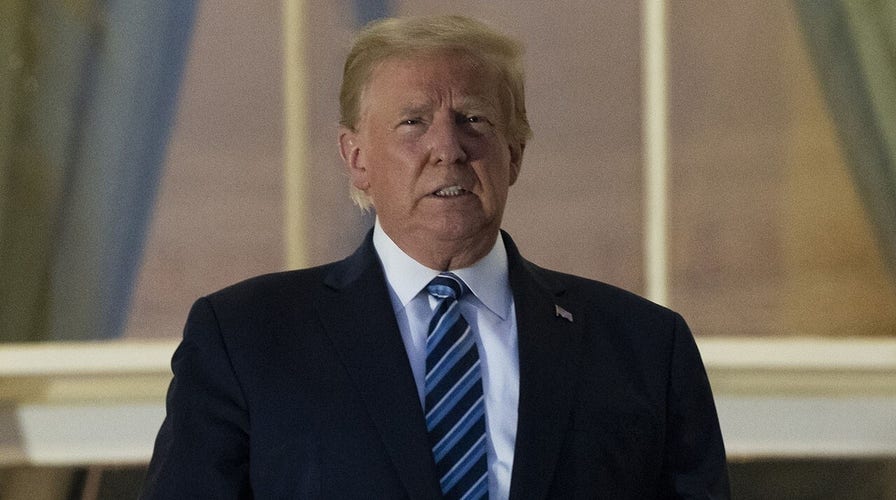
KURTZ: After the president left Walter Reed to recuperate from the Coronavirus at the White House, and especially when he climbed the steps from the south lawn, struck a pose and took off his mask before heading inside, the coverage has been almost relentlessly negative.
(BEGIN VIDEO CLIP)
TRUMP: I feel great. I feel like perfect. So I think this was a blessing from God that I caught it. This was a blessing in disguise.
UNIDENTIFIED MALE: I hold rallies. And I tell you to ignore masks and I rip mine off as I vanquish the virus because I'm a leader. What a bunch of bull (Bleep).
UNIDENTIFIED MALE: There are children who don't have parents now because of this virus. Don't let it dominate your life?
UNIDENTIFIED MALE: You don't need to be a Trump partisan to feel good about the president's recovery. You just need to be a decent person.
UNIDENTIFIED FEMALE: This is a Mussolini moment.
UNIDENTIFIED FEMALE: He is standing there as if he is, you know, a member of the Old Russian Czar family.
UNIDENTIFIED FEMALE: And what kind of people seem visibly disappointed when a president of the United States, admitted to an army medical hospital, seems to be turning a corner?
(END VIDEO CLIP)
KURTZ: Joining us now to analyze the coverage, Mollie Hemingway, senior editor of the Federalist and a Fox News contributor, Susan Ferrechio, chief congressional correspondent for the Washington Examiner, and in Los Angeles, Leslie Marshall, radio talk show host and Fox News contributor.
Mollie, there are legitimate journalistic questions to be asked about the president's release from Walter Reed and some of the things he has said and done since then.
But ever since he got out of the hospital, the media reaction has been deeply and viscerally negative.
MOLLIE HEMINGWAY, FOX NEWS CONTRIBUTOR: The media reaction has been so negative. It is almost impossible to quantify or qualify how bad it's been.
I saw one New York Times person say that Walter Reed had destroyed its reputation by taking in a sick Donald Trump and returning him healthier. I mean, that is textbook example of what Trump derangement can do to you.
But that was kind of the mood across all sorts of media platforms. They seemed very, very upset that Donald Trump is not fitting with their preordained narrative that you have to believe that Coronavirus will destroy your life. And this has been a problem with media coverage going back months. They have relentlessly hyped how dangerous it is.
It is a dangerous virus, but they have always exaggerated how dangerous it is, and given very, very negative feelings for people. And I saw a poll that showed that Democrats in particular are going to bleed these things.
Something like 77 percent of Democrat men and 80 percent of Democrat women are very worried about the Coronavirus.
Relative to 20 percent of Republican men and 29 percent of Republican women, there is a real partisan divide. And since the media are so overwhelmingly Democratic, they push that narrative and they are relentless about it.
KURTZ: Susan, the press has been pounding the president for saying don't fear the virus. Don't let it dominate your life. Yesterday, he said it is disappearing. He said that at the White House despite the death toll and the number of people who've gotten it, your thoughts.
SUSAN FERRECHIO, WASHINGTON EXAMINER CHIEF CONGRESSIONAL CORRESPONDENT:
Well, he is trying to relay a sense of optimism that the treatments, the vaccine development, how quickly he was able to recover, how quickly others have been able to recover from this virus, and the fact that it seems to impact people who are not young, no children, mostly people who are very old and have pre-existing conditions.
He's also said even one death is not OK, and that this should have never happened. I think he is just trying to relay a sense of optimism. And I believe if it was -- if it was a President Hillary Clinton relaying a sense of optimism, the response from the media would be entirely different. It would be about heroic efforts by the president to lead the nation out of this terrible crisis.
Instead, we have the reverse course here, which is that this president is underplaying the virus. And I don't think that's really fair. I don't think that is very nuanced and careful coverage. And it is just -- it's leading to the kind of things that Mollie was just talking about.
KURTZ: All right. Let me get to Leslie so we could move it around. Look, to complete the media indictment here, highly dismissive, I would say, of the president saying the virus was a blessing from God and talking about this unproven antibody cocktail that he took as a cure. He's going to make it available to everybody for free.
That would be great. But of course, everybody in the country doesn't get world class treatment at Walter Reed Medical Center.
LESLIE MARSHALL, FOX NEWS CONTRIBUTOR: Exactly. And that's why it was so negative from where I sit on the left side of the aisle. It is not that people are -- I personally am certainly glad when anybody comes on the other side of this virus. My husband has to practically wear in a hazmat suit to go into the hospital to work as a surgeon everyday as a result of this virus.
And we and our family alone with so many families in the United States know people that have been touched by this virus, whether they're having long term cardiac problems, respiratory problems, or their families that are literally hundreds of thousands of families reeling the death of loved ones, and not all elderly loved ones either.
(Inaudible) are the majority. There are children that have died. There are young people, millennials that have died. And that is part of the problem.
It's twofold here. How he -- one, is if you're saying it's a blessing from God, it is insensitive to those that are currently suffering or that have buried loved ones or that continue to suffer, because there is that lingering the president spoke of for many people respiratory and cardiac- wise.
KURTZ: All right.
MARSHALL: Because they don't have the option to have the treatment that the president had. You know, most Americans aren't going to have access to that.
KURTZ: OK. Let me move on to the debate. The second debate now officially cancelled by the Debate Commission after the president objected to the commission's move to make it into a virtual format. And Joe Biden scheduled something October 15th, an ABC town hall with George Stephanopoulos. And the president said he would do it in person.
What do you think, Mollie, because the media take here is that the president blew it? Because he needed this debate and now it is not happening.
HEMINGWAY: Well, the people who are blowing it are the Presidential Debate Commission. They have performed horribly this year. And I was really struck by what Bob Dole, the guy who ran for president as a Republican years ago, said he know -- it is supposed to be a bipartisan commission. He knows every Republican on the commission. He is friends with many of them.
And he doesn't know a single person who is supportive of Trump. Well, that shows him how they're running these debates. The day after Mike Pence, like, obliterates Kamala Harris all of a sudden they decide, without consent of the parties, that they're going to make it a virtual debate to help out Joe Biden. Everybody is sees what is going on.
And they're destroying their own reputation. And it's a situation where Republicans have been treated like second class citizens for a very long time. And this is going to be sustainable for the Presidential Debate Commission going forward.
KURTZ: Well, Susan, the president wanted to do it in person, once he started to more fully recover. The Debate Commission said no. Biden wasn't crazy about it. The president's doctor, Sean Conley, the White House physician now, says in a statement he is not contagious but he didn't say he didn't test negative. And the president of course spoke.
He was on the balcony at the White House event yesterday. And now, he has three rallies planned the next three days. So there are still these media questions about he is completely over the virus, quick thought.
FERRECHIO: He could end the concern by taking a Coronavirus test and showing he is negative. That's easy thing to do. I'm not sure why the president's not doing it. But there is the protocol that 10 days after you're symptom-free, you don't even have to have a test. You're considered not contagious. You're allowed to go back to work. So there are two sides to this.
I think the president could end all the speculation by taking a Coronavirus test, and telling us what the results are.
(CROSSTALK)
KURTZ: Right. The president, Leslie, was just on with Maria Bartiromo. He talked about Joe Biden coughing in a speech yesterday, you know, a guy who just got out of the hospital for COVID-19. But the White House says, when asked repeatedly by reporters, saying this is private medical information.
And of course, the press is, like, he is the president. We need to know how negative is he? How long did he have it? When was the first negative test?
We're not getting that.
MARSHALL: You know that -- I spoke to my husband who is a physician about this, and it is a fine line. Dr. Conley is not only a physician, and he has to abide by HIPAA, which is a, you know, national privacy law for all patients, which the president is as well. But he is also a member of the Navy. So the president is his commander-in-chief, and he has to follow orders from the president in addition to being a physician.
Then again, on the flipside of this, we the American people, have a right to know the health and well being of our leader, especially going into an election. Here is the problem I have. In California, if you were diagnosed, and I think this is the way through most states. But if you were diagnosed with COVID-19, it is recommended that you and anyone you came in contact with have a two-week, 14 day quarantine, incubation period.
KURTZ: I understand.
MARSHALL: And I think the Debate Commission was looking, not in a political partisan bent in favor of Joe Biden. I think they were looking at any health issues that could come up, because with all due respect --
(CROSSTALK)
KURTZ: All right, let me jump in.
MARSHALL: So the president's physician, not -- no one knows exactly whether you're contagious or not. It is kind of a guess at this point.
KURTZ: Leslie, all right. The president has been focusing recently on the investigation of the origins of the Russia probe. Here is what he said in an earlier interview with Maria Bartiromo about the attorney general.
(BEGIN VIDEO CLIP)
TRUMP: This was the greatest political crime in the history of our country. And that includes Obama and it includes Biden. Bill Barr is going to as either as the greatest attorney general in the history of the country, or he's going to go down as a, you know, very sad, sad situation.
(END VIDEO CLIP)
KURTZ: Mollie, I know you have strong feelings about this investigation but focus on this question. Journalists are saying how can it be appropriate for the president to be openly pressuring his attorney general to bring criminal charges against a former president and a former vice president who happens to be his opponent?
HEMINGWAY: The last people I would listen to on this story are the media who perpetrated this Russia collusion hoax. We have had so many stories coming out in recent days showing, you know, not only -- we knew Hillary Clinton had invented the Russia collusion hoax. The Russians knew that. We know that there was disinformation in her dossier.
We know that the dossier was authored to a Russian agent. For years, we had the media was relentlessly dripping this false collusion hoax that caused real damage. And then now that all the stories are coming out the opposite way. They are refusing to cover it. They're pretending that they were sceptical about the hoax when they never were.
And as for President Trump talking about Barr and Durham, I think there is a lot of disappointment about failure to hold people accountable. But what we really need are the media to also -- I mean, yes. They were totally participating in it. But they have done a horrible job, not just perpetrating it, but then covering it up once the truth is starting to come out.
KURTZ: Leslie, I have half a minute. The president also told Rush Limbaugh that it is a disgrace and embarrassment that Barr has not produced any indictments against Obama, Biden, and perhaps others.
MARSHALL: I think the president's quote is right the way that Attorney General Barr will be looked at in history as to whether his allegiance is to the president of the United States, or what he is supposed to have -- pledged allegiance to, which is the Constitution of the United States. One thing the dossier did tell us is that Russia was and now we know still is interfering in our elections.
KURTZ: All right. President made a little news with Maria Bartiromo moments ago. He said he wants a bigger package for a stimulus bill that Republicans or Democrats are proposing. He said Republicans want to do it, but actually some in the Republican Party think that the cost is getting too high. Let me get a break. Ahead, we'll get Sean Spicer's take on coverage of the president's illness.
When we come back, Mike Pence versus Kamala Harris, how the media are scoring the VP debate.
(COMMERCIAL BREAK)
KURTZ: Many journalists say the VP debate between Mike Pence and Kamala Harris was basically a draw, but the commentators of course, were quick to take sides.
(BEGIN VIDEO CLIP)
UNIDENTIFIED MALE: Senator Harris was very uncomfortable when confronted with the truth. At times, she could do little more than make these awkward smiles and just shake her head.
UNIDENTIFIED FEMALE: The problem tonight is that Vice President Pence appeared flaccid and anemic, and that's going to hurt him with men. He had to look presidential tonight, and he just looked limp and lame.
UNIDENTIFIED FEMALE: Pence did fine tonight. He obviously won. And Harris did nothing to contradict what we already know about her. But none of here eye-rolling, her grimacing, or the insect-moving on Pence's head is going to change this simple fact.
UNIDENTIFIED MALE: A black woman went out there, nine minutes later, nobody -- (Inaudible) you know, nobody is saying she could not be president of the United States.
(END VIDEO CLIP)
KURTZ: But both candidates ducked the questions they didn't want to answer from the moderator, USA Today's Susan Page.
(BEGIN VIDEO CLIP)
UNIDENTIFIED FEMALE: How would your administration protect Americans with pre-existing conditions, have access to affordable insurance, if the Affordable Care Act is struck down?
MIKE PENCE, UNITED STATES VICE PRESIDENT: I couldn't be more proud to serve as vice president to a president who stands without apology for the sanctity of human life. I'm pro-life. Are you and Joe Biden, if somehow you win this election, going to pack the Supreme Court to get your way?
KAMALA HARRIS (D) VICE PRESIDENTIAL CANDIDATE: I'm so glad we went through a little history lesson. Let's do that a little more. In 186 --
PENCE: I would like you to answer the question.
(END VIDEO CLIP)
KURTZ: Mollie, it looked bad that Kamala Harris repeatedly refused to answer the question about court-packing if they win and said she'd kill time with a story about Abe Lincoln in 1864. But isn't that on the Biden campaign, which obviously told her not to take a stance, not to provide a clear answer?
HEMINGWAY: Right. Well, debate -- people who debate are always ducking questions. And it is up to the voters to decide how to deal with that. And you saw both Vice President Pence and Kamala Harris declining to answer questions they didn't want to. What I thought was interesting about it was that it was Mike Pence who brought the question to Kamala Harris. It hasn't been the media.
Yes, clearly, Kamala Harris is in favor of court-packing, and Joe Biden who used to say it was horrible and tyrannical is now saying it's totally -- he's declining to say anything. But more importantly than that, I think this shows why a virtual debate is not acceptable. We have a media that refuse to ask tough questions of Democratic candidates.
The only people who are going to ask Joe Biden or Kamala Harris are President Trump and Vice President Pence. And you have moderators who keep on trying to keep a debate from breaking out. And Pence being able to really pursue that line of questioning is why we're thinking so much about her refusal to answer that question and how court-packing would affect First Amendment rights and Second Amendment rights and why Democrats are threatening to do it.
KURTZ: Right. Well, I think they've got to provide some kind of answer before the election. Leslie, should Senator Harris have come up with some kind of answer or what about Vice President Pence ducking such questions as what about the peaceful transfer of power.
MARSHALL: I'm glad that you asked about that question, because one of the things that I said is I thought both of them were not prepared enough for the debate. You know that as a leader of the task force on COVID-19, you were going to get the question. How do you explain the death of hundreds of thousand of people? He skirted that, didn't have an answer for that. And the question you posed and the clip we just saw.
And the same would go for Senator Harris. You know that they're going to ask about court-packing. You know they're going to ask about certain things that you did when you were attorney general in state of California. So I don't think they were prepared. What I heard, former vice president, Democratic nominee Joe Biden say is that he's not going to respond to that unless he is elected president.
And I get it. And the reason I get it is if an individual is voting for Joe Biden, they know that it is a possibility. And if they don't want that possibility, they don't have to vote for Joe Biden. And if Joe Biden does not become president, it's a moot point and futile to discuss.
KURTZ: All right. Susan Ferrechio, I thought Susan Page did a good job of asking hard questions of both candidates. But she often didn't follow up when the candidates were ducking the questions or answering what they wished they had been asked. And of course, the time limits got out of control, first, Pence then Harris busting through that. What is your assessment how she handled it?
FERRECHIO: Well, this time around, the Debate Commission did not want the moderators to serve as fact checkers. If you think back to what happened in the last presidential election, there was a lot of criticism about moderators becoming fact-checkers. So I think the moderators were trying to be as objective as possible and to just be sort of people controlling the time and controlling the flow of conversation.
The problem is that it's getting harder and harder to do that, because the insults are flying. The contradictions are flying. And the candidates are going at it. And as Mollie was saying, this was a debate trying to break out. You can look at it that way. But on the other hand, people can't hear what the candidates are saying, so they're not getting an idea where they stand on these really important issues because they're talking over each other.
And I think it's a really hard job for these moderators, other than cutting off someone's microphone to try to get these people -- walking up on the debate stage, how are you going to get them to stop cross-talking? It's just a really tough role -- great sympathies for Susan Page. I think she did a good job.
KURTZ: Fifty million people watched which is huge for a VP debate. Fox led the pack with more than 11 million viewers. Let's do a once-around, one sentence each. Can we agree, no matter which candidate you thought did better that this was serious substantive debate that didn't have anywhere near the level of interruptions of the cacophony in Cleveland, Mollie first.
HEMINGWAY: It's great to see policy. And I think this -- that the reason why the viewership was so high is because never has a vice presidential pick been so important, given the age of the people who are running as president.
KURTZ: Leslie.
MARSHALL: Oh, God. Mollie, we just agreed. I would concur with that. It definitely shows that this vice presidential debate is different than any other, because the American people are looking at them, not just as number two, but potentially number ones.
KURTZ: Susan.
FERRECHIO: Yeah. I thought that you definitely got more of an idea where they stood on policy. Most of the times, vice presidential debates don't matter at all really when it comes to the presidential election, as Mollie was saying, much more important this time. I think people are looking at the age and the, you know, capacity for each of these presidential candidates. And they're looking at Harris and Pence as next in line.
KURTZ: I agree with all of that. I still question how much debate -- effect this debate had on the overall campaign. But you all stuck to time, so you all get an A grade, Susan Ferrechio, Mollie Hemingway, and Leslie Marshall. Thanks very much. Up next, Frank Luntz on what his focus group said about the VP debate and how he views the campaign coverage.
(COMMERCIAL BREAK)
KURTZ: Frank Luntz held a focus group after the VP debate, asking folks in swing states for a one word reaction to Mike Pence.
(BEGIN VIDEO CLIP)
FRANK LUNTZ, POLLSTER: Florida.
UNIDENTIFIED MALE: Bit of a robot.
LUNTZ: Curt from Florida.
UNIDENTIFIED MALE: Presidential.
LUNTZ: Laura from Florida.
UNIDENTIFIED FEMALE: Even keeled.
LUNTZ: Anne (ph) from Ohio.
UNIDENTIFIED FEMALE: Presidential.
LUNTZ: Tony from New Hampshire.
UNIDENTIFIED FEMALE: Bland.
(END VIDEO CLIP)
KURTZ: And he asked the same question about Kamala Harris.
(BEGIN VIDEO CLIP)
UNIDENTIFIED FEMALE: Nervous.
LUNTZ: Nick from Arizona.
UNIDENTIFIED MALE: Focused on the past.
LUNTZ: James from Nevada.
UNIDENTIFIED MALE: Shifting blame.
LUNTZ: Minnie from Nevada.
UNIDENTIFIED FEMALE: Caring.
LUNTZ: Debbie from Florida.
UNIDENTIFIED FEMALE: Snarkey and sarcastic.
(END VIDEO CLIP)
KURTZ: And joining us now from Los Angeles is the veteran Republican pollster, Frank Luntz. And Frank, seems like some of your focus group folks didn't like Mike Pence but more of then didn't like Kamala Harris. And in her case, the criticism often seemed more personal. Why?
LUNTZ: Because they didn't like her response. And her -- and I know that you're not supposed to talk about style. The news discourages, that they always say let's talk about substance. The fact is the president and vice presidents are given an aura. They're still given a presentation. The Americans have to decide whether or not have to decide they trust it.
And Senator Harris, simply in her presentation, in her scoffing, in her facial expressions, really irritated our focus group participants. Now Howie, I will acknowledge. I did this session the day after just with women. And they thought that she was absolutely fine. And in fact, the criticisms they saw as being typical of what a white male would say.
Still, I stand behind what that first night's focus group said. And you can see it on YouTube if you want to see the whole thing. In the end, if you want to be presidential, it's how you look, not just what you say, it's how you present yourself, how you carry yourself. And they had an issue with Senator Harris on that.
KURTZ: Right. Well, as you alluded to, there is often -- it is often said that female candidates are judged a little bit differently. Much of the media, I think, favored Kamala Harris' performance. They said Pence had a tougher case to make because he had to defend the administration on COVID- 19. Does it matter at all that she is a newcomer to the national stage?
She's a freshman senator going up against an incumbent vice president. So that if it's even close to being a draw that helps the Biden campaign. And in the larger scheme of things, how much did this debate mattered at all?
LUNTZ: I don't think it mattered at all because Donald Trump stepped on the message. Mike Pence did better than Senator Harris. And he was calm, collected, rational, reasonable response as she was trying to needle him.
He was very impressive to my swing voters. But the next morning, Donald Trump comes out and says he's not going to participate in the debate.
And everybody forgot about what had happened the night before. This went on four years ago. Mike Pence had a brilliant performance four years ago. And Donald Trump allowed that performance to breathe for a couple of days. I think the Trump campaign made a big mistake by making an issue of the next debate rather than taking the time to enjoy the benefits of this vice presidential debate.
KURTZ: Yeah. I pointed out by the very next morning we were all talking about President Trump again and things that he was saying and not about Pence and Harris. Finally, I don't imagine most people fixate on the details. But now that there's not going to be a second presidential debate, is that a bigger loss for the media, which loves these events or for the Trump campaign because he had two more cracks at directly going at Biden, and now, he's got one.
LUNTZ: He needed that confrontation. He needed the chance to stand side by side with the vice president, with the voters themselves and challenge, and not behave the way he did in the first debate but demonstrate where he stands and where Biden stands. I think this makes it virtually impossible for Trump to catch Biden. Biden has got a lead in the swing states.
He's got a lead nationwide. And if -- without that confrontation, the ads won't do it, the speeches won't do it. The rallies won't do it, only debate with 70 or 80 million people watching. Only the debate does it.
KURTZ: Right. We'll come back to that when we have you later in the program. Of course, they wouldn't be standing side by side. It was supposed to be a virtual. That was the sticking point.
All right, coming up, Sean Spicer joins us on the debates to coverage of President Trump's illness and other media controversies. Stay with us.
(COMMERCIAL BREAK)
KURTZ: Joining us now is a man who knows the president well. Sean Spicer, the former White House press secretary, "Newsmax" host, and author of the new book "Leading America." Sean, welcome.
Let me start by saying I am very happy the president's condition is improving but the media had been absolutely pounding him, as you know, for saying don't be afraid of the virus, don't let it dominate your life, it is disappearing, he said yesterday, given the fact that we have lost 214,000 Americans.
SEAN SPICER, FORMER WHITE HOUSE PRESS SECRETARY: They have been pounding it since day one. So, this is nothing new. I think it is just the topic has changed. He has been under assault from the media since the day he stepped into the White House, and I don't think it is going to end until the day he leave the White House and probably not end until even after.
But this is nothing -- so, this is nothing new. I think it is just the topic changes. We're obviously closer to the election. It counts. But the president is going to be back out there making his case to the American people and hopefully focusing on those lines that he said at the debate, 47 months of accomplishments versus 47 years of doing nothing in Joe Biden's case.
KURTZ: Right. Well, he has got three rallies scheduled in the next three days. He really wants to get out there. If you were still the press secretary and you were asked when was the last time the president tested negative for COVID as journalists tried to assess was he or is he still a danger to others, could you get away with saying, sorry that is private medical information?
SPICER: If I was still the press secretary, I would have lost all my hair by now, and I think I would look a lot older.
(LAUGHTER)
SPICER: But, look, I think that the more the transparent they can be, the better. Obviously, there is a sort of a balance. You discussed this earlier in the show with trying to be transparent and understanding that he does have some degree of privacy as a citizen under HIPAA. So, the more they can give, the better.
If they could just say, here is when he was tested, it was negative, it was sort of take the talking point away, because he is what is happening, Howie, when you're not talking about the issues and the economy, what he has been able to do for the military and veterans, then they will just talk about COVID and testing and things like that.
So the more you can take those things off the table, it allows the focus to get back on his policies and his accomplishments.
KURTZ: The president, as you know, has attacked Steve Scully of C-SPAN who was to be the moderator of the second debate, calling him a never-Trumper.
This morning on Fox, he called him a fraud. This after there was a message posted that Scully has supposedly sent to Anthony Scaramucci, a fierce critic, asking for his advice. You looked into this. Tell us briefly what you found.
SPICER: I talked to Steve. He says that didn't do it. The only times he has ever talked to Anthony Scaramucci were on two separate C-SPAN interviews. I've known Steve a long time. He is a good upstanding man. He is a pro.
Frankly, the way he conducts himself on C-SPAN, if you're looking for someone who is going to be a straight, good moderator, focuses on candidates and not themselves, I think Steve would be a great person to do that.
KURTZ: Yeah. FBI is looking into Scully's explanation that his account was hacked. I know he was once a student intern for Joe Biden, but, you know, he has a solid record of fairness over decade now at C-SPAN.
Look, I mentioned this earlier, the president is telling Maria Bartiromo in an earlier interview that unless Attorney General Bill Barr indicts these people -- he mentioned Obama and Biden by name -- he will go down in history as a very sad situation. Those are the president's words.
He also wants Mike Pompeo to release Hillary Clinton's e-mails. That has become a comeback that actually would give you a deja vu from 2016.
The journalists' reaction is if this was the other way -- remember when Bill Clinton met with Attorney General Loretta Lynch, your side went nuts and rightly so, why -- how do you justify him openly calling for indictments of his predecessors?
SPICER: Go back to what I said a moment ago, Howie. Look, this president, I think, has a strong record of accomplishments. His policies are moving the country forward. I have written an entire book on that. I think he should stick to his policies. He has got a lot to be proud of what he has done.
This justice that he is appointing, Amy Coney Barrett would be his third Supreme Court justice as a conservative. These are things that we've yearned for decades. The president should focus on the accomplishments that he has made, the policies that have gotten us here, and what he will do in the second term.
I get he may want do that. I don't know the legality of it. I don't know the evidence or what exists. But at the end, no one out there in America is going -- that isn't already voting for him is going to vote for him because additional e-mails come out or not, right? What they will vote for him on is whether or not his policies will grow the economy, eradicate the coronavirus, build up our military, and take care of our veterans.
That is what he should focus on. Stay focused on the policies, stay focused on the accomplishments in contrast to those 47 years that Biden has been in Washington. But no one additionally is going to vote for you over e-mails.
KURTZ: So just briefly, Sean, you worked for him. Obviously, a more disciplined approach. It would make sense to talk about what he has done, what he will do in the second term. So why does he keep going back to Obama, Biden, Hillary? Why does he do it?
SPICER: I think to some degree, there is a level of unfairness there. He looks at some of the activities that they engaged in and that they got away with. I think, wait a second, I've been -- had a Mueller report, I've been impeached, and these people are not held accountable for what they have done.
I think there is level of unfairness, especially when it comes to how the media looks into this or not. When you're watching Joe Biden --
KURTZ: All right.
SPICER: -- getting away with not being able to answer basic questions. And there is a level of unfairness. I understand that. It is not fair. But at the end of the day, like I said, people aren't going to vote for you because of that. They are going to vote for you because of what you have accomplished and done for the country.
KURTZ: OK. I mentioned Biden in the context of the last administration. So about a half a minute here, you write in "Leading America" that the legacy media has a view that guests who come on Fox are compromising their credibility. But you say, sitting alongside the likes of extreme leftists like MSNBC's Rachel Maddow, Chris Hayes or Joy Reid is just fine. Explain.
SPICER: That is what I'm saying. I think that somehow, they look at the things that Joy Reid or Chris Hayes or Rachel Maddow or numerous others say and yet there is no accountability. For journalist who goes on there, that makes total sense. If they go on Fox or come on my show on "Newsmax,"
somehow they're tainted.
This is ridiculous. It just shows you that they are in the pocket of the left. There is a whole chapter in the book about journalism school and how they're not learning to report on the facts. They're learning to make the world a better place. When you start realizing how these journalists are born and bred and this process by which they get their jobs and they're rewarded and what's --
KURTZ: Right.
SPICER: -- it totally starts to make sense this. And this is the problem that we have right now. Journalists are viewed as good if they go do certain things and bad if they do others. I mean, exposing --
KURTZ: All right.
SPICER: -- is part of the reason that I wrote the book.
KURTZ: Sean, good luck with the book. Good to see you. Thanks very much for joining us this Sunday.
SPICER: Thanks, Howie.
KURTZ: After the break, is the media criticism of Kamala Harris too personal? Joe Biden gets mostly softballs at an MSNBC town hall.
(COMMERCIAL BREAK)
KURTZ: When President Trump called in to Maria Bartiromo's Fox Business show the morning after the VP debate, he had some pretty harsh words for Kamala Harris.
(BEGIN VIDEO CLIP)
DONALD TRUMP, PRESIDENT OF THE UNITED STATES (voice-over): I thought that wasn't even a contest last night. She was terrible. She was -- I don't think you can get worse and totally unlikeable. And she is. She is a communist. She's left of Bernie.
(END VIDEO CLIP)
KURTZ: Joining us now with another viewpoint, Harold Ford, chairman of RX Saver and a former Democratic congressman. Welcome. We heard the president say that Kamala Harris was totally unlikeable. He also called her a monster. Some of his conservative allies said she was smug or condescending. Is the unlikeable charge one that is aimed most often at female candidates and perhaps particularly women of color?
HAROLD FORD, FORMER TENNESSEE CONGRESSMAN: First off, good morning. Thanks for having me on. There is certainly history in politics, certainly at the national level where women are treated very differently than men in language, in temperament, disposition, especially how people talk to them, certainly how their opponents do.
President Trump has a history of taking on his political opponents, even former cabinet members and staff. I saw my friend Sean Spicer who might have been a recipient of some of that. There is no doubt there is a repugnant stone and intolerance to how the president's -- the language of president uses at times.
I was reminded my kids come in my office here and grab books off the shelves normally to play with them, but hopefully one day they will read about Kennedy and Lincoln and LBJ and figures like Mandela, people who fought for change and used and established a discourse to pull the nation up instead of shoving us down.
Civility, honesty, good temperament, those are the kinds of things I think we want restored in politics. I think those issues --
KURTZ: All right.
FORD: -- much as any other issues are in November.
KURTZ: Now, Kamala Harris, as you know, the senator at the debate repeatedly refused to answer a question about packing the Supreme Court in the future. Joe Biden, her running mate, the other day asked by a reporter in Phoenix, had this response.
(BEGIN VIDEO CLIP)
JOE BIDEN (D) PRESIDENTIAL CANDIDATE: My opinion on court packing when the election is over. Look, I know it's a great question. I don't blame you for asking. But, you know, the moment I answer that question, the headline in every one of your papers will be about that.
(END VIDEO CLIP)
KURTZ: Congressman, Biden says he doesn't want to make headlines in papers across the country. What kind of lame excuse is that? Don't voters have a right to know his position before the election?
FORD: Look, I probably would answer that question differently. I would just say my answer. Vice President Biden is on the record at least two times publicly saying that packing or putting more people on the court, passing legislation to do that is something he wouldn't support.
I do think he is trying his hardest to help the Senate Democrats focus their attention this week on the judicial philosophy of Judge Barrett who is impressive on every level. I think the real challenge she faces in terms of the mechanics of this is just the timing.
I do think she deserves to be questioned in a forthright, direct, and maybe even aggressive way about health care, about big business or small business, even obviously women -- reproductive rights of women. I imagine those questions will come. And Democrats will have to wait and see. If she passes and is voted in favor --
KURTZ: Right.
FORD: -- it is something that the country and for that matter our politics will have to digest.
KURTZ: Look, in my view, if Biden still holds the position that we shouldn't pack the court, he would just say so. By the way, Amy Coney Barrett putting out a statement to the media today about what she is going to testify on the hill tomorrow, praising both Ruth Bader Ginsburg, by the way, as well as Antonin Scalia.
I want to play another sound bite for you. This week, MSNBC, NBC anchor Lester Holt in a town meeting with Joe Biden, doesn't do that many national interviews, here is some of what he got.
(BEGIN VIDEO CLIP)
LESTER HOLT, NBC ANCHOR: So when you hear that this president was infected with COVID-19, were you surprised?
BIDEN: Quite frankly, I wasn't surprised.
HOLT: If you become president, can you pledge transparency about your health? Sixty-five percent of Americans think the president bears some responsibility for contracting this virus. Do you agree?
(END VIDEO CLIP)
KURTZ: You have to admit, as an ex-politician who has been interviewed many times, you would love to have soft questions like that. A political writer called it infomercial. The audience also seemed to favor Biden.
Doesn't that fuel the accusations that the media are soft on the candidate that you favor?
FORD: Look, I want to see both of these candidates take tough questions, direct questions about what they see America's future looking like and how they will advance policy to deal with that, eradicating COVID, growing the economy. All the things --
KURTZ: We didn't see it there.
FORD: Right. I think there were questions during that time that I think are important that were asked by the audience and by Lester Holt. Look, I'm not one to defend easiness in politics. When you run for president, it is the biggest job in the world and most important.
One thing I hope President Trump will discontinue doing or stop doing at least the last 30 days of this campaign or 23 days of the campaign, stop complaining, stop acting as if this thing -- that everything is rigged against him.
Two hundred and fourteen thousand Americans are dead, 11 million are without work, and one out of five small businesses won't ever return. That is hardship. If you can't take a little hardship whether you're Joe Biden or Donald Trump, you shouldn't be in this business.
Up to this point, I think Joe Biden has taken tough questions from all sides. I do hope he sits down with this network soon, perhaps, you Howie or Bret Baier, Martha MacCallum or someone and takes him some direct questions about what he sees the future of our nation.
KURTZ: Well, thank you for saying that. He has an open invitation on this program, other Fox shows. I've also asked his campaign for surrogates. They have not provided one, but I am able to get people like you. For that, we thank you this Sunday, Harold Ford.
FORD: Thanks for having me.
KURTZ: Still to come, are the media overreacting to all those polls showing Biden with a growing lead? That's next.
(COMMERCIAL BREAK)
KURTZ: The polls have all been moving in one direction, one that is not encouraging news for President Trump. Fox News gives Joe Biden a 10-point lead over Trump, 53 to 43. A Washington Post/ABC survey out today gives Biden a 12 point margin. NBC/Wall Street Journal has a lead at 14, CNN at 16.
We are back with Frank Luntz. Obviously, some of these polls may be off.
There is wide variation. They're not battleground state polls, which are the crucial. But they drive a huge amount of media coverage, do they not?
LUNTZ: And they deserve it. This is all in response to the first debate when you had 80 or 90 million people tuning in either on television or through their camera and their web. And this is in reaction to the performance of the two candidates. Every survey had Joe Biden beating Donald Trump in that first debate.
This is why the president needed the town hall. This is why he should not have made that decision. I think it is going to come back to haunt him 23 days from now.
KURTZ: I see you've moved from the Oval Office to the Lincoln bedroom at your home in L.A. Let me jump in with another question, Frank, and that is this. You made a little news earlier on the program, you said, because of the cancellation of the second debate. You believe it is extremely unlikely or almost impossible for the president to catch up.
And you're entitled to your opinion. That is why we have you on the show.
But the more the media taut these numbers, you know, numbers can change,
2016 we're all familiar, are they giving the impression that this race is basically over?
LUNTZ: And they should not be because those confrontations, when they are standing face-to-face or even in boxes on T.V., that is what changes voters mind. But if you don't give them those opportunities, then their minds cannot be changed. The ads only do so much, the ads only move two or three percent. Turnout matters. Participation matters.
But in the end, you don't have these crystallizing key moments that are played again and again. Let me give you an example historically. Ronald Reagan was one point behind Jimmy Carter the Thursday before the election.
Because of his superior performance in that debate, he beat Jimmy Carter by nine points just six days later.
That is the kind of thing that Donald Trump needs. He only has one more 90- minute confrontation with Joe Biden. That is not much to close a 10-point gap.
KURTZ: Well, as a journalist, I am going to be very careful here. I am going to say it is still a competitive race. I think we should report these poll numbers, which the president, by the way, calls fake news. But lots can change as we have seen. Who knew that he would end up in the hospital?
On that point, last question to you, Frank Luntz. Obviously, COVID-19 is the defining issue of this campaign and the administration's handling of it. The fact that the president was in the hospital, got out, now seems to be close to fully recovered, does that linger as an issue? Is there symbolism there or is it like everything else, by next week, we'll all be fixated on 16 other things?
LUNTZ: It is not by next week. It is by -- I would say by tomorrow. But it could be by this afternoon. There is so much going on that you can never turn off your computer. You can never turn off your T.V. because there is some major event or statement every six hours.
The number one statement that we're getting about this election campaign, I am tired about being so tired. That is how the American people feel. They are desperate for this thing to come to an end.
KURTZ: Yeah. There is a suggestion, perhaps even in the media. Frank Luntz, very good to see you. Thanks very much for joining us.
LUNTZ: Thank you.
KURTZ: Wish I had a backdrop like that. That's it for this edition of MEDIA BUZZ. I'm Howard Kurtz. We hope you will also like our Facebook page.
We post my columns there during the week. Let us continue the conversation on Twitter.
Hey, check out my podcast, "Media Buzzmeter." You can subscribe at Apple iTunes, Google podcast, on your Amazon device.
On the final statement, I mean, we are down to the last three weeks, folks.
This is crunch time. There is so much to deal with every single day, every single hour. You can't turn off your T.V. or computer. We will see you next Sunday.
Content and Programming Copyright 2020 Fox News Network, LLC. ALL RIGHTS RESERVED. Copyright 2020 ASC Services II Media, LLC. All materials herein are protected by United States copyright law and may not be reproduced, distributed, transmitted, displayed, published or broadcast without the prior written permission of ASC Services II Media, LLC. You may not alter or remove any trademark, copyright or other notice from copies of the content.
