




This is a rush transcript from "Media Buzz," May 24, 2020. This copy may not be in its final form and may be updated.
HOWARD KURTZ, HOST: This is "Media Buzz." I'm Howard Kurtz. Ahead, we'll look at the coverage of Joe Biden's damaging comments to a black radio host, and Matt Lauer defending himself by slamming Ronan Farrow's reporting. But first, President Trump and the press are doing battle on issues ranging from churches, to whistleblowers, to wearing a mask.
But what's really resonating is his disclosure that he's taking an anti- malarial drug as protection against COVID-19, and that's sparking sharply different media reactions, including on Fox News.
(BEGIN VIDEO CLIP)
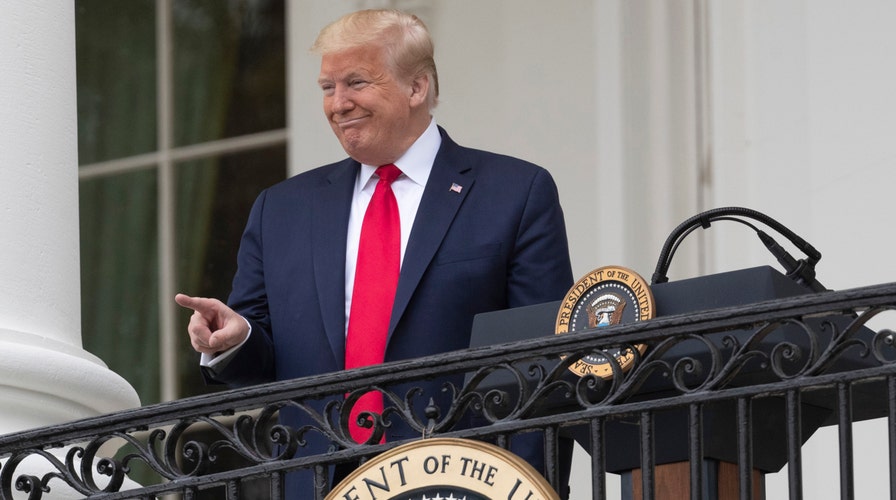
DONALD TRUMP, UNITED STATES PRESIDENT: I'm taking Hydroxychloroquine.
UNIDENTIFIED FEMALE: When?
TRUMP: Right now. Yeah, a couple of weeks ago I started taking it, because I think it's kind of a -- I've heard a lot of good stories. And if it's not good, I will tell you right. I'm not going to get hurt by it.
UNIDENTIFIED MALE: If you're in a risky population here and you are taking this as a preventive treatment to ward off the virus, or in a worst case scenario you're dealing with the virus. And you're in this vulnerable population, it will kill you. I cannot stress enough. This will kill you.
UNIDENTIFIED FEMALE: Look, people should be monitored. And I think people aren't getting it when perhaps, I say perhaps, I'm not a doctor. It could actually benefit them, and it's very safe.
UNIDENTIFIED MALE: I assure you the president of the United States is not taking Hydroxychloroquine. He's not taking something that his own administration has said will kill you.
UNIDENTIFIED MALE: He wins this argument, why? Because he believes because he's taking a chance, because he's strong, he's not the party of no. He's not the Democrats, no. Don't take Hydroxychloroquine just in case. You stay home. You can't go out. You can't work.
(END VIDEO CLIP)
KURTZ: Joining us now to analyze the coverage, Mollie Hemingway, senior editor at The Federalist, Kristen Soltis Anderson, columnist at the Washington Examiner, both are Fox News contributors, and Ray Suarez, host of the WorldAffairs podcast and a Washington reporter for Euro News.
Mollie, there's been enormous media criticism.
As you know, the president for taking this drug with even the conservative National Review calling it a stupid sideshow, your thoughts?
MOLLIE HEMINGWAY, FOX NEWS CONTRIBUTOR: It's very weird how interested people are in Donald Trump's medical treatment. I mean, usually we have in the media this idea that when it comes to ending unborn human's life, that's a decision between a mother and her doctor. But somehow, this is a decision not between Trump and his doctor, but between Trump and everyone in the media.
And I think there's been some misinformation in play, too. Whether or not this is a good idea for Trump to be taking or other people to be taking this Hydroxychloroquine, this is very common treatment not just as a prophylactic for malaria, but it's used daily in treatment for lupus and arthritis. And I think some people were trying to present it as if it's a very dangerous drug.
Instead of, you know, yes, you need a doctor to prescribe it. But it's not dangerous. It's used widely across the world. And also that saying it was dangerous has made it so that people are saying it's harder to do clinical trials on this because people have so politicized the use of this drug. And that's not good for anybody.
It's a public health threat if they can't do proper clinical trials on whether this is a good treatment or not for people who are suffering from Coronavirus.
KURTZ: Ray, for the press, this is Donald Trump defying a scientific consensus based on limited testing Hydroxychloroquine and relying on anecdotal evidence from friends. Almost no one in the media has said -- some exceptions, well, that's a really good idea that the president's taking it.
RAY SUAREZ, WORLDAFFAIRS PODCAST HOST: Hydroxychloroquine has never been rated as a prophylactic drug for a virus, so it's never been also proven safe and effective for use in treating COVID-19 or treating Coronavirus infection. His own medical authorities say that. Is this a worthwhile thing for the press to cover? Yes, because I'm old school, Howie. If the president does it, it's news.
If the president says it, it's news. And if the president is touting a drug that hasn't been rated safe and effective for an illness, he's taking it prophylactically, that's news.
KURTZ: Well, what the president says and does is certainly news, especially in this environment. Kristen, what really struck me and this was immediately as soon as the president had finished talking, he turned on MSNBC, and people were saying he's lying. I don't believe it. He's making it up, which struck me as odd.
KRISTEN SOLTIS ANDERSON, FOX NEWS CONTRIBUTOR: It definitely seems odd. I don't know why they would assume they know what medicine the president is not taking on the basis of what he says is taking. But what I think most folks need to bare in mind is that like my product that is a pharmaceutical product, there's side effects. And any ad you see on TV that talks about any kind of medical product has to have all of that side effects may include yada, yada, yada.
Now, the president when he gets up and says he's taking something, it's almost like a celebrity endorser. He's got a lot folks out there that really look up to him. They look to him for an example, and so my hope would be that he continues to communicate that there are potential side effects, and this is not something you should take because Trump is taking it.
You should talk to your doctor before you decide that want to proceed with this course of medicine.
KURTZ: Now, the president made some news on Friday walking into top of Kayleigh McEnany's briefing, as he likes to do heading into a weekend, didn't take any questions but he made a brief statement. Here's part of it.
(BEGIN VIDEO CLIP)
TRUMP: I'm correcting this injustice and calling houses of worship essential. I call upon governors to allow our churches and places of worship to open right now.
UNIDENTIFIED FEMALE: Boy, interesting to be in a room that desperately wants to seem to see the churches and houses of worship stay closed.
(END VIDEO CLIP)
KURTZ: Mollie, how the president calling for churches and synagogues and mosques and other houses of worship to be open. And the media take is, well, everybody wants them open in theory but it could be dangerous packing people into the pews.
HEMINGWAY: Yeah. This has not gotten as much media attention as it should have in recent weeks. You've seen a lot of people at the state level taking action to be able to reopen churches or allow churches to reopen if they feel it's necessary. You have governors saying that you can open up Walmart's or Costco's or even tattoo parlors, but they are still prohibiting churches.
And that's what happened in Minnesota where the Lutheran Church, Missouri's
(Inaudible) which is my church body in the Roman Catholic church, told the governor they weren't going to comply with the order because it's illegal.
Dis-favoring religious groups compared to other groups is unconstitutional, particularly in light of what the First Amendment says about our freedom to worship.
It's the very first thing mentioned in the Bill of Rights. And I don't think that we have gotten as much attention on this as it should have. And I do think that reflects to some extent less religiosity in the press core than is apparent in the rest of the population.
KURTZ: I will come back to that in a second. But Ray, the president also said in that brief -- apparent said he would override the governors if they don't do what he wants on this issue. And the reaction by many, many journalists was he doesn't have the authority to do that under federal law, and, you know, brings up what happened a few weeks ago where first he said that he would tell the states what to do and then he said, no, I will defer to the governors, but not on this issue it now turns out.
SUAREZ: Well, he wants to put this part of the overall health public response to the virus into the center of the culture war. Get culture war energy into what is essentially a public health problem. My church is closed. I'm longing to go back and see my people. But a lot of them are over 60. And it's an open question whether it makes sense to put us inside a sanctuary before we know that the rate of infection in a population has gotten down to a level where we don't put people in danger when we put them in large groups.
That's the question, not freedom of worship. But whether making people, assuring people that it's OK to be in groups of 100, 150, 200, singing and speaking and praying, makes a lot of sense when we are still, in a widespread way, giving each other this infection.
KURTZ: Kristen, what Ray just said --
(CROSSTALK)
KURTZ: Go ahead, Mollie.
HEMINGWAY: I just want to say that's why it's important to note that -- you cannot dis-favor religious groups relative to other groups. If you're allowing other people to gather in groups of larger than 10, if you're allowing other places to open like tattoo parlors or stores or whatnot, but you're not allowing churches to make that decision for themselves.
That's where it's a constitutional problem. And it -- being allowed to reopen doesn't mean that churches aren't going to continue to recommend that they're at-risk populations stay at home or do other things like so many churches across the country have done throughout this entire situation.
(CROSSTALK)
SUAREZ: -- crowded tattoo parlors than I do, but they're rarely more than
10 people when I go get my --
(CROSSTALK)
KURTZ: Interesting side debate there. Kristen, what Ray said was very similar to comments by Jeff Mason of Reuters who told Kayleigh McEnany he thought her comments about the reaction of the room were unfair. He said I go to church. I'm dying to go to church. The question is whether it's safe.
Do you think there's any effort here to kind of paint the press as being anti-religion?
ANDERSON: Well, certainly. I mean, I think that's -- the point that the press secretary was trying to make. I'm glad there was pushback, because I don't think it's fair to say that the entire press core is a certain way in the same way that any time you are generalizing to an entire group. I do think that often times topics like religion are not covered well by the media, in part because if you've got a lot of folks based in big cities D.C. or New York, they're just not interacting as often with folks who may live in the American heartland.
And you've seen that sort of crop up in problems of coverage over the last couple of years or so. But I don't think that it's fair to suggest that nobody in the media wants churches to be reopened. I think Mollie's point about churches should be treated the same way that we treat a Walmart, the same way that we treat anything else that's essential.
Meaning, if you're going to be opened, you have to be open and be safe. I think seems to be a good direction to go.
KURTZ: We're a little tight on time. I need quick answers. The president went to a Ford plant in Michigan the other day. There was a big debate about whether he would wear a mask. This is what he told reporters.
(BEGIN VIDEO CLIP)
TRUMP: I did wear -- I had one on before. But I didn't want to give the press the pleasure of seeing it.
(END VIDEO CLIP)
KURTZ: Mollie, why did the president not want reporters to see him wearing a mask, and why are the media obsessing over this issue?
HEMINGWAY: Well, you saw the attorney general in that state making a political issue out of whether or not the president was wearing a mask or not. I think it's a proxy for a bigger debate about whether it's time to reopen or about whether the economy should continue to be shut down. There is a huge partisan divide on that issue and media being -- tending to be on the left are on the side that wants to sort of keep the shutdown going.
And I think that's why they are so obsessed with the mask. I don't actually understand their obsession with it.
KURTZ: Right. Ray, the president did go after Michigan's Democratic attorney general, Dana Nessel, saying she's a wacky, do-nothing attorney general. She had gone on CNN and said he's acting like a petulant child who won't follow the rules. The media tends to love these kinds of sideshows, don't they?
SUAREZ: Well, sure they do. And -- but this goes back to the president saying that he's taking Hydroxychloroquine. He understands very well that his behavior and his personal gestures are symbolic, wearing a mask or not wearing a mask. That sends a message. Taking the drug or not taking the drug, that sends a message.
KURTZ: Yeah. Mask is symbolic, but of course, a lot of public health professionals are suggesting it. Let me get a break. When we come back, the president is slamming 60 Minutes for interviewing a vaccine whistleblower, and later, Matt Lauer breaking his silence on a sexual assault allegation by going after author Ronan Farrow. And as we go to break, the New York Times front page today, listing 1,000 of the nearly 100,000 American who have died of this virus.
(COMMERCIAL BREAK)
KURTZ: President Trump unloaded on 60 Minutes after the CBS program interviewed vaccine expert, Rick Bright, who said he was transferred to a lesser job at HHS for political reasons.
(BEGIN VIDEO CLIP)
DR. RICK BRIGHT, FORMER BARDA DIRECTOR: I am not disgruntled. I am frustrated at a lack of leadership.
TRUMP: There's a lot of bad things coming out about him, but you people don't want to write the news. And then we have this crazy whistleblower, this fake whistleblower get out and try and, you know, knock it.
(END VIDEO CLIP)
KURTZ: Trump took to the Twitter, calling Bright a creep, at 60 Minutes and third-place anchor Nora O'Donnell doing everything in their power to demean our country, wrote. Tonight, they put another yet whistleblower, disgruntled employee who supports Dems, fabricates stories, and spews lies.
And then, there was this. The whole whistleblower racket needs to be looked at very closely. It's causing great injustice and harm.
Mollie, Rick Bright who had just testified before House committee was in the news. Why would the president denounce 60 Minutes for interviewing the guy?
HEMINGWAY: Well, first off, President Trump is wrong when he says that the media haven't covered problems with this particular whistleblower or his testimony or his changing story. The reason why we know there are problems with whistleblower is because it has been covered in the media. And so he's wrong to say that.
And there's a different issue about whether the media have been responsible with how they've whistleblowers, whether they have applied the scrutiny that they should to anybody who is making any allegation. And you can see where that causes damage. You saw where the previous whistleblower issue that that was a media-led frenzy that led to impeachment.
And it was very -- there was a lot of reason to have problem with it. And it's pretty obviously that there's an attempt to do this again. And it would be good for the media to apply more scrutiny than they have to this and all allegations that are made against anyone.
KURTZ: I'm all for scrutiny, Ray. But when the president says whistleblowing is a racket that must to be looked at, the reaction in the press almost universally is a challenging look (ph) designed to protect individual critics that in the past that's been championed by both Democrats and Republicans like Chuck Grassley.
SUAREZ: This goes in the same bucket as firing inspectors general and various government departments. If you don't want scrutiny and if you don't want ever anybody saying anything bad about you, I guess that's the line to take. But the United States is one of the leaders in the world in the rate of infection and in the rate of death from this disease. And if a source takes you inside the deliberations of the administration, it's a source and it's a story.
KURTZ: Kristen, when the president said the other day that having the most for the U.S. to have the most Coronavirus cases in the world, about a million and a half right now, was a badge of honor, got a lot of criticism.
Do you think the media misinterpreted what he was trying to say?
ANDERSON: I hope that there's a misinterpretation of what he was trying to say, because I can't fathom how having the most cases of Coronavirus is in any way, shape, or form a good thing. I mean, you mentioned later in the show you're going to talking about that front page in The New York Times.
Today, they list a thousand names of those who have died from the Coronavirus, which is just one percent of those who have died in the United States.
Not one of those needed to happen. This was something that -- it never should have made its way to the shores, nothing about this is positive, nothing this is uplifting, and it is not a badge of honor to have these many Americans having passed away.
HEMINGWAY: I have to take issue with that.
(CROSSTALK)
HEMINGWAY: I think it was pretty clear to understand what he was saying. He was saying that when you have more testing, and we have far and away the most testing of any country in the world. You're going to have more cases.
And a high percentage of those cases are completely asymptomatic. And that is one of the things that I think the media need to do a better job with doing.
There is a certain amount of risk associated with getting Coronavirus. And you don't want to have a media that makes it sounds like it is 5, 10, 20, or even 100 times riskier than it is. We need to have accurate understanding of who gets this, who is at risk, who is not at risk, or who is at a lower amount of risk. And that's something that we are not getting in a media environment that is really all about hype and less about just factual basis of understanding things.
Further, I just want to say the U.S. is not at the top when it comes to deaths per capita. In fact, there are many countries that are ahead of the United States when it comes to deaths per capita.
KURTZ: Ray, there were problems with testing for months. The governors complained about it. But in recent weeks, there's been a surge in testing to point where there are not enough people available to take the test.
Shouldn't the media give some credit to the White House on this, whether this should've happened sooner or not? There's now a lot of tests available.
SUAREZ: There have been a lot of tests. We're raising the game in the rate of testing. I think the problem and it's been widely reported that the problem is that it started too late at scale. But yes, we are doing a lot of tests right now. And the raw number, I mean, we are the third largest population among all the nations of the world. So it's not the raw number you should be paying attention to.
It's the per million population rate that you should be paying attention to. And that's rate of rising.
KURTZ: And I agree with that, Ray Suarez, Mollie Hemingway. Thanks very much for joining us this Sunday. Kristen, stick around. Ahead, Joe Biden says it was a bad joke, but many pundits saying his comments about pro- Trump blacks ain't that at all. But up next, the media challenging Trump over his opposition to voting by mail.
(COMMERCIAL BREAK)
KURTZ: President Trump drew plenty of media brick baths (ph) when he threatened to cut-off funding to Michigan and Nevada for what he said was illegally sending out absentee ballots.
(BEGIN VIDEO CLIP)
TRUMP: Well, we don't want them to do mail-in ballots because it's going to lead to total election fraud. So we don't want them to do mail-in ballots.
We don't want anyone to do mail-in ballots.
(END VIDEO CLIP)
KURTZ: But Michigan said these were routine mail voting applications, and Nevada's Republican secretary of state defended the process. And we are back with Kristen Soltis Anderson. You study this for a living. The president later backed off his no funding threat. But the press says there's no evidence of significant fraud in voting by mail. And it may not be true that voting by mail helps Democrats over Republicans, your thoughts?
ANDERSON: So to that second point, does it help Democrats or Republicans more. There's actually evidence that it doesn't help one party or the other more. You've had instances where, for instance, in that recent pickup election for Republicans really picked up that seat in California, an awful lot of ballots cast by mail, more of them I believe were cast by Republicans than by Democrats.
So there's plenty of study and there's mail-in balloting helped Republicans or Democrats. It's never shown that there's a bias one way or another. On the voter front piece, there have been instances of voter fraud linked to mail-in balloting. However, the most high-profile example was in North Carolina. It was a Republican strategist who was trying to go around and do this ballot harvesting and was collecting ballots and handing them improperly.
Where some of them had been tampered with, so it happens but it's very infrequent. And it's not something that's just combined to Democrats during it. Again, that most prominent case was a Republican doing it. So I think Republicans should not be pushed back on this in the way that they are.
KURTZ: I'm not saying it never happens. By the way, the president tweeting about this just in the last hour, saying there's a lot of absentee voting.
It will be the greatest rigged election in history. Now, president also tweeted this week that Fox News should fire its quote, "fake pollster."
Never had a good Fox poll, the widely respected Fox survey is giving Joe Biden an eight-point lead over President Trump.
But a Quinnipiac survey gives Biden an 11-point lead. The president prefers to tout the CNBC, which gives Biden just a three point lead. I got about half a minute. Why such a wide range in these recent polls?
ANDERSON: It's a really interesting question. I think some of them are focusing on registered while some are looking at likely voters. So they have different assumptions about who they are focusing on. But you also just have any type of poll you're doing. Again, it's a statistical probabilistic exercise. The danger for the president in pushing, say, the CNBC poll this week is that the next month the CNBC poll might be the worst poll for him.
So you can't really pick and choose. You should always just look at those polling averages. That's going to be your safest bet.
KURTZ: All right, well, you know politicians love to pick and choose when it comes to these numbers. Kristen Soltis Anderson, thanks very much.
Ahead, the Cuomo brothers drew some media criticism for fooling around during a segment on COVID-19 in New York. But first, Bill Barr getting zero credit from the media as he all but rules out prosecution of Barack Obama and Joe Biden.
(COMMERCIAL BREAK)
KURTZ: President Trump talking up what he calls the "Obamagate" scandal.
Attorney General Bill Barr stunned the press with this pronouncement about the criminal probe being conducted by federal prosecutor John Durham.
(BEGIN VIDEO CLIP)
WILLIAM BARR, UNITED STATES ATTORNEY GENERAL: As to President Obama and Vice President Biden, whatever their level of involvement based on the information I have today, I don't expect Mr. Durham's work will lead to a criminal investigation of either man. Our concern over potential criminality is focused on others.
ARI MELBER, MSNBC HOST: This is the classic lawyerly legalistic sneaky way of pretending you're doing something by the book because Mr. Barr is saying, hey, we're not going there, while also with no evidence, no reason, no rationality, throwing dirt on Biden.
PETE HEGSETH, CO-HOST, FOX AND FRIENDS WEEKEND: I believe that John Durham and Bill Barr gonna get their day. They're digging their finding. The truth will come out and thanks to -- frankly this network and people that are willing to ask for the truth.
(END VIDEO CLIP)
KURTZ: Joining us now to analyze the coverage in Seattle, Emily Compagno, a Fox contributor and host of the Fox Nation show "Crimes that Changed America," and here in Washington, Clarence Page, columnist for The Chicago Tribune.
Emily, President Trump, as you know, has been accusing Barack Obama of a crime. He has accused Joe Biden were criticizing for participating in the so-called unmasking of Mike Flynn. And here is Bill Barr basically saying, I don't see any criminal prosecution here. Was this a problem for the mainstream media because their narrative is basically that Barr is a Trump lucky (ph)?
EMILY COMPAGNO, FOX NEWS CONTRIBUTOR, FOX NATION HOST: Exactly. What I find ironic is that if you did deeper into AG Barr's comment as well as his actions, you'll find that he's decrying the use of our Intelligence Community and also the FBI and DOJ as weapons as he said.
So I think the irony is that the media is portraying him, as you said, as some type of lucky (ph), but actually what he is uncovering is identifying existing corruption, rooting it out, and maintaining the commitment to that impartiality.
I think the most important thing actually is the fact -- you showed it, his comments after when he said our concern over potential criminality is focused on others.
The American people can rest assured that there will be accountability. I think this type of witch hunt without an investigation that uncovers evidence that support it does no favors. Final point, if anyone is worried about this --
KURTZ: Let me -- I got to get -- I got to get Clarence in.
COMPAGNO: Oh, sure.
KURTZ: I got to get Clarence in. So, for all the media criticism of Barr and the Mueller investigation and the Roger Stone case and the Flynn case, why don't I see any story saying that at least in this instance, the attorney general stood up to his boss when it came to Obama and Biden?
CLARENCE PAGE, COLUMNIST, CHICAGO TRIBUNE: Well, we don't know what the evidence is yet in this case. Barr knows more about that than we do. The question is -- Barr is a smart man. First of all, yes, he is very smart. He knows the law very well. He has that kind of constitutional view that makes him Donald Trump's Roy Cohn (ph) in a way, especially with the Russia investigation.
Now, with this aspect of the Russia investigation, Barr -- I would say if Barr has to see any evidence yet to link Obama and Biden to corruption, I would say there is not much evidence, and we've already seen that there is not that much evidence behind Obamagate or exactly what it is that President Obama and other people did wrong.
KURTZ: All right. Well, that has to play out. But I want to turn now to Joe Biden because of a lot of media attention to what he told black radio host Charlamagne Tha God on a morning radio show. Take a look.
(BEGIN VIDEO CLIP)
JOE BIDEN (D) PRESIDENTIAL CANDIDATE: If you have a problem figuring out whether you're for me or Trump, then you ain't black.
(END VIDEO CLIP)
KURTZ: Emily, Biden's comment, which he says was joke, has gotten a lot of media attention. But, you know, it's extremely controversial in the black community. But is it -- do you think the press is giving Biden a pass when it comes to judging him for making what we can only describe as a serious gaffe?
COMPAGNO: Yes, I do. I think this was more than a gaffe. I think the media is getting him a pass not only with that but the fact that it sort of displace the notion that the entire Democratic Party has just for this entire time which is taking for granted communities of color, taking for granted people's votes just because the fit into a certain box that the party puts them into.
I think as well the evidence is the fact that after those comments, when he talked about the NAACP's endorsement, that was profoundly rejected by the existing president and CEO Derrick Johnson who said, we are a nonpartisan organization, we don't endorse candidates at any level, and the media has also sort of refused to cover that, as well.
KURTZ: Clarence, did you find the remarks offensive to blacks who happened to be conservative or happened to be Republican, when Biden walking it back saying, well, I shouldn't have been so cavalier, I shouldn't been a wise guy? Do you think the media are going relatively easy on him?
PAGE: Well, first of all, I have been covering Joe Biden off and on since the late 80s, since his first attempt to run for president. This is not the first time he has made a racial gaffe.
But quite seriously, this time, I think this could damage him, particularly with younger black voters. Older black voters like me, we have pretty much made up our minds who we are voting for and we have a choice between Trump and Biden, it looks like. Whereas younger voters, getting them out to vote is going to be tough here.
That's why Biden was on Charlamagne show in the first place. That has got a predominantly younger, more millennial-type viewership. He goes and commits this gaffe, which looks like he's taking black voters for granted, just as Emily said. This is the kind of thing that he does not need right now. So, I would be concerned in his campaign about getting just, you know, getting young voters excited.
KURTZ: Right. He makes relatively little news and this, of course, is not helpful to him or his campaign. All right, half a minute for each of you.
The president on a tweet storm last night re-tweeted a guy who did the
following: posted mockery of Hillary Clinton, calling her a skank, accused Nancy Pelosi of wearing dentures, and mocked Stacey Abrams weight.
Does this deserve coverage or have of all of us in the media just become a nerd to these kinds of presidential insults on Twitter? Emily first.
COMPAGNO: Everything deserves coverage, I think, coming out of the presidential office. I think that the real losers here are all of us, right? It comes on the heels of Pelosi's comments, her saying I don't have any idea what the president does.
This is a constant back and forth. We are paying the salaries of these elected officials. I hope that at some point, they can rise above this type of language and these types of, you know, slanders thrown back and forth.
KURTZ: Clarence?
PAGE: Well, I expected something like this. When Nancy Pelosi referred to the president as morbidly obese, obese would have been good enough, I think. But anyway, this is the kind of thing that reminds me of the good- old days when you didn't have presidents who call people names on Twitter or any place else. But what was done is done.
We expect that the president was going to lash back when he feels not only frustrated about the campaign but also frustrated about his inability to hold rallies, so he has these one-man rallies on Twitter late at night. It does not serve him well.
KURTZ: In fairness, the president gets called a lot of names, as well.
Emily Compagno and Clarence Page, thanks very much for stopping by.
PAGE: Thank you.
KURTZ: Next on "Media Buzz", A New York Times columnist says Ronan Farrow is practicing resistance journalism in his reporting on sexual assault and harassment. Is that true? Stay with us.
(COMMERCIAL BREAK)
KURTZ: Matt Lauer has launched a counterattack against author Ronan Farrow over the accusation that got to "Today" show host fired three years ago.
Former NBC staffer Brooke Nevils had told Farrow that she and Lauer had a drunken sexual encounter at Sochi Olympics followed by a four-month consensual affair Nevils now calls the "Olympic rape (ph)."
Lauer writes on Mediaite, "I was shaken, but not surprised, that few in the media were willing to thoroughly challenge the accusations against me. It is about understanding the difference between journalism and activism."
Farrow addressed this last year when his book "Catch and Kill" was published.
(BEGIN VIDEO CLIP)
RONAN FARROW, AUTHOR: I can't say that Matt Lauer's thinking that is presented in this letter is in the book. And I think this young woman, this journalist, Brooke Nevils, presents what I found to be a persuasive response to that.
GEORGE STEPHANOPOULOS, ABC NEWS ANCHOR: If he or his allies were to say that you didn't fact check those claims --
FARROW: Extensively fact checked as with everything in this book.
(END VIDEO CLIP)
KURTZ: Lauer's denunciation followed a takedown piece by New York Times columnist Ben Smith, who says Farrow's work "reveals the weakness of a kind of resistance journalism that has thrived in the age of Donald Trump, that when it comes to damaging reporting about public figures most disliked by the loudest voices, the old rules of fairness and open-mindedness can be seen more like impediments than essential journalistic imperatives."
Joining us now from New York, Kat Timpf, co-host of the Fox's "Greg Gutfeld Show." So, when Ben Smith says Ronan Farrow was a resistance journalist, meaning uses a double standard when going after politically unpopular targets, let's say maybe Donald Trump, does he have a point?
KAT TIMPF, FOX NEWS CONTRIBUTOR, CO-HOST AT "GREG GUTFELD SHOW": It's interesting, right, because he certainly does have a point, but it's also true that no matter what, if you're a journalist, you're also a human being, which means you're always going to be coming to any story with your own preconceived notions about things, your own bias, and that's always, always, always going to be the case.
It seems that with Ronan Farrow, there were some things that maybe he missed in fact-checking. But Ben Smith is a human too, right? So, he was coming to his reporting on Ronan Farrow with his own biases, as well. So I think that this is bigger than just Ronan Farrow and it is a good reminder to all of us as readers that these aren't robots that are writing these stories, these are humans just like us, and that they have their own bias.
We do, too, as readers, as well.
KURTZ: Right, it's an important debate. Now, putting aside the other allegations against Lauer, he says in his piece that he betrayed the trust of many people. Lauer says that he talked to four people at NBC and gave the names and phone numbers to media, which verified this, who were never contacted by Farrow and say that what his book says about their conversations with Brooke Nevils never happened, what she described as a consensual affair.
For example, in one case, she went crying, according to the book, to a guy in a control room about the supposed assault, in Lauer's dressing room. The control guy says it didn't happen. So, did Lauer make a good case on this particular allegation?
TIMPF: I think that the case by Ben Smith would be better than the case from Lauer because I read Matt Lauer's entire piece. My name takeaway was, wow, how could he possibly think that we wanted even one word from this guy, let alone 5,000 words, he's more of a narcissist than I thought.
But the same point was made by Ben Smith about, for example, that producer was not contacted when that could have been like something that would have been pretty easy to do. Now, Ronan Farrow said that he did fact check in other ways, but I don't -- I couldn't find if he said anywhere how or what gave details, I did not see those. So, again, it's a case that's better made by Ben Smith than Matt Lauer.
KURTZ: OK. In his book, there are no quotes, even unnamed quotes, blind quotes from the people he says -- where he describes his conversations.
Now, here is Farrow's response. It was brief. It was on Twitter. He says Matt Lauer is just wrong, catch and kill is thoroughly reported and fact checked, including with Matt Lauer himself. His publisher, Little, Brown backs him up.
I reached out to Matt Lauer yesterday. He told me that he was stunned that Ronan Farrow, on the day since the piece posted, has not done a single interview or responded to a single specific point that Lauer raised. I think that's interesting.
TIMPF: It is very interesting, especially because when you look at Ronan's reporting, you can't deny that what he's done, if you go back to Weinstein and that story, these are positive outcomes that came from this reporting.
But I think that also makes it more difficult because you're not going to see people out there saying you know what, he wasn't fair to Harvey Weinstein, because I don't think people really care.
Weinstein is not a good guy, and Matt Lauer, as well. He's admitted that he's done a lot of things that are wrong and also sort of feel bad for him because all of his mistakes and he's, you know, still sitting on a pretty decent pile of money. So these aren't really good victims.
So, I think that could make it easier to, you know, I don't know if I want to say get away with, because I'm not sure that that's what Ronan Farrow was trying to do, because again, with the human mind, I think these things can happen subconsciously all the time.
KURTZ: All right. Let's just keep it brief at this point. So, Lauer is entitled to defend himself, in my view. He can defend himself against an allegation as serious as rape. We shouldn't put him in Harvey Weinstein category.
One of the things that Lauer said is that Ronan Farrow -- look, Ronan Farrow did incredible reporting on Harvey Weinstein. He was followed by private detectives. But at the same time, he clashed with NBC, which eventually pushed him out, didn't do the story for NBC. So Lauer says, well, how can Ronan Farrow possibly be objective on anything that happened at NBC?
TIMPF: I would say that he can't. I would say there are few people who have that complicated and contentious really of a relationship with NBC. So, the claims or things he was suggesting in terms of conspiracy, those are pretty extreme.
But again, it is up to us his readers to say -- to not just believe everything at face value that we read that was written by a human and say, OK, where can this be coming, from what lens is Ronan Farrow looking at this through, rather than just blindly believing everything we read all the time.
KURTZ: Right. My understanding is that Lauer plans to remain silent until this New York Times story came out and there was this question about what he can tell as a consensual affair and it did become consensual.
Finally, Ben Smith writes that the son of Woody Allen and Mia Farrow delivers narratives that are irresistibly cinematic but don't always include the complicating facts and details. Kat Timph, great conversation.
Thanks so much for joining us.
After the break, some thumbs down reviews for the Cuomo brother show and a big escalation in the war of words between Donald Trump and Mika Brzezinski.
(COMMERCIAL BREAK)
KURTZ: The Cuomo brother show was back in action on CNN and they drew some flak when Chris Cuomo teased Andrew Cuomo by having taken a coronavirus swab test during one of his gubernatorial briefings.
(BEGIN VIDEO CLIP)
CHRIS CUOMO, CNN ANCHOR: Is it true that this was the swab that the nurse was actually using on you and that at first, it went into your nose and disappeared --
GOV. ANDREW CUOMO (D-NY): It is just not right.
C. CUOMO: -- or was it this? Tell people the truth. Come on --
A. CUOMO: That is enough (ph).
C. CUOMO: Come on, which was -- this is not love.
A. CUOMO: This is not love.
(END VIDEO CLIP)
KURTZ: Here is the problem. I know there is a time and place for joking around. But critics found it tone deaf because Governor Cuomo is under fire right now for policy to fail to prevent more than 5,000 nursing home deaths in New York. Fox News' meteorologist Janice Dean lost both her in-laws to the virus in New York nursing homes.
(BEGIN VIDEO CLIP)
JANICE DEAN, FOX NEWS METEOROLOGIST: And the fact that I am seeing last night him on another channel making fun inappropriate jokes, insensitive jokes, cruel jokes -- make no mistake, I am really glad that Chris Cuomo has recovered from COVID --
TUCKER CARLSON, FOX NEWS HOST: Right.
DEAN: -- because he apparently did have it, and I am glad that their family is well, but my family is not well, and that is not something to joke about.
(END VIDEO CLIP)
KURTZ: The subject of nursing home deaths did not come up during the CNN interview. MSNBC's Mika Brzezinski, a fierce critic of Donald Trump along with her husband Joe Scarborough, now wants the president kick off Twitter, and she says the call is being set up with Twitter CEO Jack Dorsey.
Well, it seems unimaginable that Trump would be banned. Were these recent tweets intensified the daily warfare between these former friends turned bitter enemies? The president, who claims only occasionally pick at Morning Joe, has been tweeting about an unfounded conspiracy theory from 19 years ago.
That is when 28-year-old Lori Klausutis, an aide in Scarborough's Florida congressional office, died suddenly. Medical examiner ruled that irregular heartbeat caused her to fall and hit her head and there was no suggestion of foul play.
The president recently hit back against Scarborough's harsh criticism of his handling of COVID-19 by tweeting, "When will they open a cold case on the psycho Joe Scarborough matter in Florida? Did he get away with murder?
Some people think so," hitting that Joe is a "total nut job."
There was more the other day. "And guys like low ratings psycho Joe Scarborough are allowed to walk the streets? Open cold case." Well, that was more than enough for his co-host, who said such postings are damaging to Lori's family.
(BEGIN VIDEO CLIP)
MIKA BRZEZINSKI, MSNBC ANCHOR: Donald, you're a sick person. You're really a cruel, sick, disgusting person. And you can keep tweeting about Joe, but you're just hurting other people. And, of course, you're hurting yourself.
(END VIDEO CLIP)
KURTZ: And Trump tweeted about it again last night, saying keep digging, use forensic geniuses. Now, I can't defend the president, suggesting without a shred of evidence that a cable news guy however rough his criticism might be linked to murder.
But I also don't think the president of the United States should be barred from communicating with his 80 million Tweeter followers. People are smart enough to make up their own minds about his controversial tweets.
Still to come, national media attention for a Washington tennis coach, who dropped out of sight as the pandemic hit and is now battling back from a massive medical setback. That's next.
(COMMERCIAL BREAK)
KURTZ: The coronavirus can ruin people's lives in more ways than one. That is what happened with a tennis coach here in town. He lives alone, suffered a stroke, and wasn't found for days because he wasn't missing from work.
His Maryland fitness center had been shut down. Local D.C. stations and the tennis channel have done stories on the community rallying behind them.
(BEGIN VIDEO CLIP)
JOSH ROSENTHAL, WTTG REPORTER: For decades, Coach Steve Parker has helped countless tennis players throughout the area.
BRETT HABER, TENNIS CHANNEL HOST: Steve is one of those guys you dream about having in your community. Everybody knows him and everybody loves him. When he's teaching, you can hear his contagious laugh from like five courts away.
(END VIDEO CLIP)
KURTZ: Now, this is very personal for me. Steven Parker has been my tennis coach. He has taught me too love the game. He has taught my kids starting from scratch. I watched him connect with kids of all ages. Everyone who has encountered Steve, everybody, without exception, considers him a friend.
And I watched him play the game with such joy and such enthusiasm. It is absolutely infectious. He is an incredible human being, warm, gracious, funny, work 12-hour days, rarely took a day off.
So I was stunned to learn that Steve has no health insurance. He is out of the hospital now but has a long way to go in rehab because he can barely talk and has trouble moving in his right side. It is hard for me to fathom because he's always been in such great shape.
Now, a lot of people have contributed to a GoFundMe page for Steve Parker.
I hope you read more of his story there.
That is it for this edition of "Media Buzz." I hope you're enjoying this Memorial Day weekend, getting out, enjoying some sunshine, social distancing and all that. Let's continue the conversation on Twitter. I'm Howard Kurtz.
We hope you will check out my podcast "Media Buzz Meter." You can subscribe at many places, including Apple iTunes, Google podcast or Spotify. Also, if you want to read my daily columns, they are on our Facebook page. We try to break some ground there. We do that before we even get on the air on Sundays. We will be back here, same time as usual, 11:00 Eastern next Sunday.
Content and Programming Copyright 2020 Fox News Network, LLC. ALL RIGHTS RESERVED. All materials herein are protected by United States copyright law and may not be reproduced, distributed, transmitted, displayed, published or broadcast without the prior written permission of Fox News Network, LLC. You may not alter or remove any trademark, copyright or other notice from copies of the content.
