




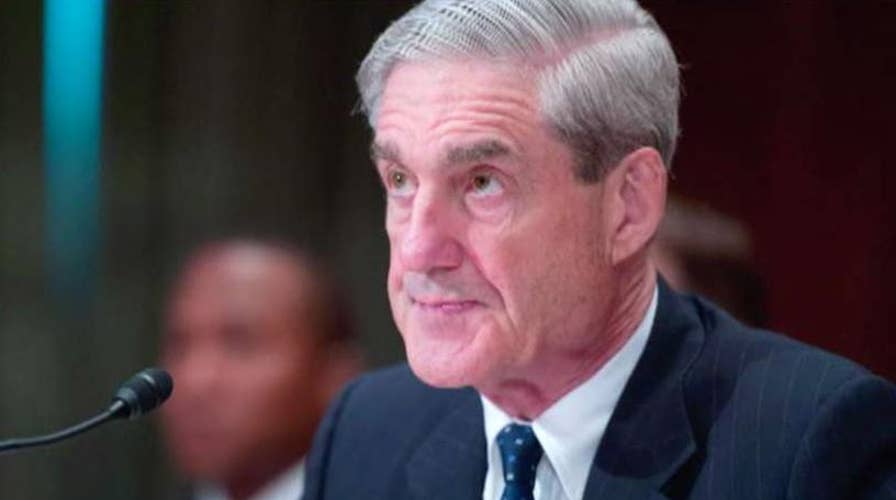
The politics and the fallout from the completion of the Mueller report
Senior Department of Justice official says special counsel Robert Mueller is not recommending any further indictments in the Russia probe; reaction and analysis from the 'Special Report' All-Star panel.
This is a rush transcript from "Special Report," March 22, 2019. This copy may not be in its final form and may be updated.
BRET BAIER, HOST: Ok John -- we'll head back for breaking details.
Just got a statement from Senator Chuck Grassley -- he's the former head of the Senate Judiciary Committee -- released today. We heard from Lindsey Graham earlier. Saying Robert Mueller has been investigating any ties between Trump associates and the Kremlin for nearly two years now. And the Justice Department has been at it since even before the 2016 election.
We know that the Russians tried to meddle in our democratic processes to sow divisions, as they have in so many other countries. But throughout this prolonged investigation which cost tens on millions in taxpayer dollars and included aggressive surveillance tools, we still haven't seen any evidence of collusion.
Republicans and Democrats have roundly praised Mueller's reputation for integrity and thoroughness. Now that he's wrapped up his investigation, Attorney General Barr must provide Congress and the American people with the findings to finally put an end to the speculation and innuendo that has loomed over this administration since its earliest days."
Senator Chuck Grassley from Iowa.
Let's bring in our panel now.
Matthew Continetti, editor in chief of the "Washington Free Beacon; Molly Hemingway, senior editor at the "Federalist" and Jeff Mason, White House correspondent for Reuters.
Molly -- your thoughts.
MOLLY LINE, SENIOR EDITOR, "FEDERALIST": Well, this is a very interesting conclusion to a lengthy investigation. You had pointed out in the last hour that it was one year and ten months but, of course, it actually went on for close to a year before that.
Because the entire Russian narrative was something that was very prominent throughout the 2016 campaign. And it is worth remembering how that started, that was a political operation, sort of secretly bought and paid for by Hillary Clinton and the Democratic National Committee, which spread the story that Donald Trump was a Russian agent.
That led to FISA warrants. That led to targeting on the campaign with human informants. And it led to, eventually, a special counsel.
And we have for the last three years frequently hysteria about treasonous collusion with Russia to steal the 2016 election. We heard Chris Wallace say in the last hour that the fact that there are no more indictments coming doesn't necessarily mean much since the President can't be indicted.
Tut it's also true that if that were true, that Donald Trump had colluded with Russia to steal the 2016 election, you would not see one indictment, you'd be seeing dozens, if not hundreds of indictments of the people who were involved who were operating with a foreign power to commit treason.
And the fact that there are no more indictments coming and the fact that all of the indictments that we've seen thus far have been for process crimes or things unrelated to what we've been told by so many people in the media with treasonous collusion to steal the 2016 election. I think it's very significant.
We do have to wait and see exactly what the report says and I think people on all sides want to know a lot. But if there is nothing there that matches what we've heard from the media for many years, there needs to be a reckoning. And the people who spread this theory both inside and outside the government who were not critical and who did not behave appropriately, need to be held accountable.
BAIER: Jeff -- Kamala Harris, presidential candidate, Democrat, senator from California says "Americans deserve to know the truth now that the Mueller report is complete. The report must be released immediately and Attorney General Barr must publicly testify under oath about the investigation's findings. We need total transparency here." That's a familiar theme that we're hearing from Capitol Hill and the campaign trail.
JEFF MASON, WHITE HOUSE CORRESPONDENT, REUTERS: It is a familiar theme and I think you'll hear more of it from Democrats whoa re running for president and from Democrats who are in Congress and others who have been pushing for full disclosure on what has happened.
I think it is important to mention though right now as some have said, we are just speculating because we haven't seen the contents of that report. It is a key fact to know that the Special Counsel has decided he's not going to do more indictments. And I will add when I first heard you say that earlier in the broadcast, the first name that came to my mind as someone who's probably relieved is Jared Kushner.
There's probably some relief going on in the White House, even though they haven't seen that report yet based on that knowledge.
But all of that said, we don't know what's in there. We don't know what conclusions he's drawn. And it will be -- it's just too early to say what that means for the White House in particular and for others involved until we get to see the actual report.
BAIER: Right. Matthew -- your thoughts?
MATTHEW CONTINETTI, "WASHINGTON FREE BEACON": , You know, Bret -- this might turn out to be the greatest anticlimax in American history. Washington has been trembling with anticipation for this report for weeks.
And once it emerges, it's going to be anti-climatic in two ways. One, as Molly suggestions, it may be very well the case that all of this was for nothing. This was an investigation without a crime.
And secondly, the battle will continue. So I think it's incumbent on the White House and Republicans who think that this is over, they need to understand that it's not over. That the arguments over transparency are about to begin, that the investigations that were kind of spun-off from the Mueller investigation will continue and will continue to dog the President. And moreover now the terrain shift to the Congress and the House of Representatives and the Democrat fishing investigations that's been going on now for several weeks.
BAIER: Jeff -- I want to go back to you because you are right, we cannot get to the conclusions of the report and hopefully over the wekend and in coming days, we'll figure out what the attorney general is going to put out publicly to Capitol Hill.
But we can definitively say that Special Counsel Mueller made it to the end of the Russia investigation for all of the speculation and all of the worry that President Trump was going to fire Mueller and even an effort on Capitol Hill to have a bill to protect Mueller, that never came to pass.
MASON: That's absolutely right and that's a victory for some people who are concerned that that wasn't going to happen. And there was a lot of speculation as you just said that the President might intervene. Yes, it's something that he was asked repeatedly. It's something that he mused about occasionally,
even in an interview with Reuters, he talked about that. But it didn't happen, you are right. It finished. And now we just need to see what's in the report. But the fact that there is a conclusion is a start.
BAIER: Molly?
HEMINGWAY: Yes, I do think about all the things that haven't happened over the course of the last several years, all of the things that we were sort of promised that were going to be very major. People being indicted, there would be evidence of this treasonous collusion with Russia.
So many of the things that we were told, for instance that Bob Mueller would be fired or that certain people would be indicted, haven't come to be true.
What I don't think people have done is thought about whether some of those criticisms of this investigation warranted much more concern. You know, you had voices in the White House complaining about what was going on, You had a few lonely voices saying this does not seem a very appropriate thing.
It was a very disruptive process to have a Special Counsel sideline an incoming administration, to have these investigations, undermining an administration.
You had an attorney general rendered completely impotent by the claim that he was a Russian agent. You might remember that one of the many people who were fired from the FBI or let go or otherwise gone who were involved in this Russia story, Andrew McCabe has set up an investigation of the attorney general as if he were a Russian agent. That's a ludicrous thing.
And I do not think we had enough people in the media speaking truth to power in that sense. Being a questioning agent of the FBI and how they were operating both before the Special Counsel and then with the setting up of the Special Counsel.
BAIER: Let me ask another way. Let's say that this Special Counsel report, Molly, does in essence clear President Trump. What about the folks who went the other way and said Mueller was, you know, a dirty cop or deep state? Will there be a turnaround in his reputation if it goes the other way do you think?
HEMINGWAY: I think there's sort of a question about what the Special Counsel was set up to do. Was it really set up to investigate whether Donald Trump was a Russian agent or was it set up sort of in a sense protect the FBI for what it had done during the campaign and in the months leading up to the appointment of that Special Counsel?
There is a lot of questionable behavior, whether it was running human informants, what you might call spies against the campaign, wiretapping people close to Trump with a FISA warrant that was I think is under investigation right now. Whether there were other wiretaps involved as well.
If he comes out with the report and it shows, as I think we're -- I think we have a sense of that there was not treasonous collusion to steal the election, but also sort of says that the agency was justified in taking some of these reckless actions. I think he will have done what may be people had hoped he would do, which is protect an agency that had behaved a bit recklessly prior to being launched.
Whether the that whole thing is good though or whether there should be more questions. And again, whether people should be held accountable, we don't to see people taking political disputes and weaponizing them with law enforcement agencies or intelligence agencies.
Just because you disagree with someone politically, whether that's a Democrat or Republican, does not mean you should use a full powers of the state to target them and destroy the lives of people who help them.
You know, there are a lot of people who are going to prison or have had -- had been found guilty of things that are a result of this Special Counsel investigation that have nothing to do with what it was sold as -- you know, process crimes, lying to the FBI.
And that -- this whole thing happened right after you had a very different situation with the Hillary Clinton campaign which was sort of -- you saw a lot of people be let go for what they were doing. Nobody was brought up on process crimes, even though they had people on false statements up and even including Hillary Clinton.
You want to see an evenness in how are FBI and law enforcement handled different. You don't want to see them being friendly with one side and not with another.
There's a lot that remains to be done to cleanup the reputation. But if Bob Mueller has somehow helped clean up the reputation by handling this part of the process, well, that would be good.
MASON: Bred -- I'd like to take a stab at that question too --
BAIER: Remember that the Senate --
MASON: -- if I may.
BAIER: Go ahead. Yes. I think the question is good, when you think about there was a very concerted effort by some including at the White House including the President of the United States -- to undermine Robert Mueller's credibility. If he does come out with a report that says there was no collusion on there will have to be a back tracking by people who did that including at the highest levels of the White House and that includes President Trump.
HEMINGWAY: A good example might be with the Amtrak situation where eventually the FBI came out with an Amtrak report that didn't charge -- people think didn't charge long prison with no crime. But that went through years of problems with wrong people being accused of the crime. So it's a long story.
BAIER: Yes. And the a complicated one.
The Senate Intelligence Committee did its own report. You remember Senate Intelligence committee Richard Burr saying that they had not found any evidence of collusion in their efforts in looking into this.
He has released a statement, very brief, saying I trust Special Counsel Mueller has conducted a fair and thorough investigation and I look forward to reviewing his report. "
Catherine Herridge joins again with some new details -- Catherine.
CATHERINE HERRIDGE, CHIEF INTELLIGENCE CORRESPONDENT: Well, some of the information I was able to gather, Bret, over the last nearly two years came from contacts that were subjects of the Special Counsel investigation but I was not able to report it on the promise that I will wait until the report was concluded.
And what they described as the Special Counsel's approach was it was very forensic and that the investigators took the big events, so the June 2016 Trump Tower meeting as well as the Republican convention and the platform in the way it was described to me, they said the approach was like a crime scene. Everybody was a suspect in this.
And every record was attained, reviewed, and the witnesses were then challenged with the recollections of those records. So I think that that gives you kind of a flavor for how the Special Counsel approached the investigation. I want just a focus for a moment on what happens next not so much with indictment. indictments that may have grown out of the Special Counsel investigation, but what I would describe as a parallel track of investigations that have been running with the inspector general at the Justice Department.
UNIDENTIFIED FEMALE: Once surveillance warrant was My contacts report that those investigations are well progressed and they focus on these allegations of FISA abuse, one surveillance warrants but granted, that abuse of the surveillance warrants process, one surveillance warrant was granted in the 2016 election, And whether lines in the application, pardon me, and hopefully that's not going to be someone super important. I will turn that off right there.
And then next thing is, the leaking of classified information. That has also been an ongoing investigation by the inspector general and it relates specifically to the sharing of Comey memos. These were the memos that he provided to a reporter to kick start this Special Counsel investigation, at least one of the memos was found to have classified them information as well as a series of leaks that had been well documented of gifts by FBI officials from member so the media and others.
So we have the Mueller track which has come to a close with his recommendation of no further indictments in this lane of Russia. There may be indictments in other jurisdictions that have grown out of Mueller.
And then I would get people to start to focus on the second track, the Inspector general, FISA and the leaking of classified information -- Bret.
BOLTON: That is quite a ringtone.
HERRIDGE: It is. I can't figure out how to change it.
(CROSSTALKING)
BAIER: BAEIAR. That is quite a ring tone.
F1: It is. I can't figure out how to change it. That's the problem.
BAIER: Ok.
F1: Thanks.
BAIER: They're a duck when they call you.
(CROSSTALKING)
BAIER: Ok.
They're duck when they call you. Ok.
BAIER: they're a duck when they call you, ok.
HERRIDGE: I KNOW.
BAIER: Catherine -- we'll head back for breaking details.
HERRIDGE: All policy senior of I officials very important there. Ok.
BAIER: Ok. If they quack, let us know.
Donald Trump has been president for almost 800 days. He's been president for almost 800 days; 675 of those included Special Counsel Mueller's investigation. As Molly pointed out, obviously there were stories and allegations prior to that about this Russian investigation.
So no matter who you look at it, this is a consequential moment. For this presidency, for this nation. And no matter what happens from this report and it's important to point out we don't have the details inside.
We do know from senior Department of Justice officials that the Special Counsel is not recommending any indictments tied to this report.
Joining us again -- Dana Perino, Juan Williams and Chris Wallace-- Chris. WALLACE: Well, you know, I think that it's -- we don't want to rush to judgment and I think that because this report has come out, since no one has seen it, to say that somehow this clears the President seems like the height of rushing to judgment.
You know, people talk about the appointment of the Special Counsel. The fact is the reason the Special Counsel was appointed was because of the fact that the President fired James Comey in the middle of his investigation. If Comey had been allowed to finish his investigation there probably wouldn't have been a Special Counsel.
I'm also a little surprised of this talk about process crimes. Process crimes are not parking tickets. Process crimes are lying to federal prosecutors. They're lying to the FBI.
This is the very basis under which justice is administered. And to the degree that you commit perjury, that's a very serious crime and oftentimes you're committing perjury to hide important facts that investigators want to know.
I think we should also point out that the special prosecutor, the Special Counselor resulted in the indictment and guilty pleas and serious convictions of Michael Flynn, the former national security advisor to the President; Paul Manafort, the former campaign chairman for the President for several months; and Michael Cohen, the President's personal lawyer and fixer.
You know, when you look at this in a kind of a big picture way, there's no question the President has been under a cloud for his entire presidency on the question of this investigations, suspicions and then a formal investigation as to whether or not he colluded with the Russians and whether he obstructed justice.
So the fact that that investigation is over is a big milestone even if we don't know what the final conclusion of the Special Counsel was.
You know, we'll have to wait and see, and I do think that if, and repeat if it should be that the President is cleared of the basic fundamental charges of the Special Counsel, whether it was one collusion or two obstruction of justice, that that is a major victory for the President.
And yes, Congress and their six committees that will continue to investigate. But if he's basically cleared of those charges, then it seems to me that there's going to be relatively little patience on the part of the public for a continuing investigation and they'll be seen as simply an effort by Democrats to try to find ways to cut up the President after the election.
But on the basic charge, the cloud that he has been under, if the evidence shows that, it'll be a tremendous victory for the President. And he'll be largely in the clear in terms of these investigations.
BAIER: And to you, Dana -- we are making clear that this is a consequential moment. The big moment no matter what's in the report and the caveats all over the place when we talk about this.
But the politics are front and center.
DANA PERINO, HOST: They are and of course, I think that one thing that could be very interesting is because this has been so secretive in many ways, you think about Robert Mueller -- there have been no leaks, no grandstanding, he's run a very tight ship. And that's a good example on how to keep the integrity of an investigation. And I think that he ends this with his reputation that was already stellar, he leaves with that completely intact, and now he can go back to doing whatever he was trying to do before he was called back into service to do this report.
In addition though, Bret, think about all of the people that have had to hire lawyers, that have had to be interviewed by the Special Counsel. It is very stressful. It's something that you have to keep very quiet, between you and your attorney and your family, that's it.
But we might start to hear a little bit more about that. I do not know what we'll learn -- we could learn the extent of it, but that of course we know that there are some people in the White House that had to submit to those interviews. And so we might hear a little bit about how they were treated. And -- however, that said, when you ask about the politics, I think there will be, as Chris said, very little patience if Congress decides that they want to just go ahead and just go back over this entire report.
You just said it was a two-year report? $12 million, $25 million total? The American people, yes, they want to know what was in it. But are they going to want to watch leading Democrats on Capitol Hill rehashed this two years. And the Democrats -- ought to thinking about, do they want to show that they can govern.
Do they want to start having hearing son issues that matter because, you know, 2020 is really not that far away.
BAIER: one thing to point out before I get to you, one -- and that is not one person is being getting indicted for colluding with Russia or conspiracy with Russia to affect the election or his campaign. And that's a fact from officials at the Justice Department. Report or no report as we learned whatever's in it.
Some experts who know this very well say this. "There could be a secret grand jury, information known as Six E that's in the report . That's not supposed to be released publicly since witnesses do not have lawyers present in those grand jury proceedings, and it's not technically a court proceeding.
There could be secret intelligent information in the report, the release of which might damage national security in some way, shape, or form. There could be unproven and provocative statements or claims in the report but tested by a court process that are over the top.
The attorney general is not just a clerk in this process. He has significantly constitutional and statutory role, Special Counsel Mueller reports to him. And Attorney General Barr is exercising his judgment in this case. Just to adding that to this conversation.
JUAN WILLIAMS, HOST: I think that's an important point. You got to keep in mind here as we hit this moment in terms of, you know, the nearly two-year long process that what we've learned from Robert Mueller on the record, if you will, what's in the public at this moment is that he has charged 34 people with crimes, Bret -- six people who were intimate with President Trump.
You know, Mike Flynn, for example, Paul Manafort. Apparently Manafort was providing polling information like all of this is known because of the indictments that were filed by Robert Mueller.
In addition, you have 24 people of the 34 in total that have been charged with crime who are Russians, who in fact are Russians that he has charged with interfering in the 2016 election. We will never see those people because they cannot be extradited from Russia to come and face a trial here in the United States.
So that, in a sense, gives you the universe that is on the record of what we know from Mueller's work. When it comes to the politics of it, you can imagine that the Democrats are already chomping at the bit to say why didn't Mueller go further, specifically in regards to Trump's relationships with some the Russian oligarchs.
The loan and the Like, Deutsche Bank, it specifically has come to great attention in recent days, you know, loans made, alleged lies, told in terms of Trump's wealth.
Much of this laid out by again another Trump intimate Michael Cohen when he was brought before Congress and testified and said that there were people in the Trump organization who knew about these things.
That is the kind of line of breadcrumbs that leads to so much of the activity that's going to take place in the southern district prosecutors office here in New York, but also give ammunition to Democrats who already, it seems to me, readying for the 2020 campaign saying, we want to know more and we are willing to put more out there on the record to keep this flame going as we begin the political process for the 2020 election.
BAIER: Chris -- just to mark this moment, Michael Beschloss historian tweets out and so March 22nd 2019 turns out to be the date that'll go on to the history books. Obviously just noting that the report is in.
To Juan's point though understanding that we don't know all that's in the report. But if -- the Pers dis largely cleared of any thing in this report. And it comes out that he is using IT to say see, I told you so.
Is there a decision for Democrats to make on the investigations that they have launched already as we head into this next election that, as Governor Rendell told us on election night in midterms, you have to decide whether to legislate, legislate, legislate, or investigate, investigate, investigate?
WALLACE: I mean you can do-- At the same time but it gets very hard.
But the fact is that I mean take for instance the week that Michael Cohen testified, Congress passed major legislation now. I forgot whether it was the Gun Control Bill or the (INAUDIBLE) reform (INAUDIBLE) reform bill but the fact is that the if it's the gun reform bill, or the ad-election reform bill, but the fact is that the Cohen hearings sucked up all the oxygen. And that's all that people paid attention too.
I think Democrats are going to have to be very, very careful about this because, you know, we are all tired of this investigation. It's been a strain obviously on the President especially on as Dana points out. especially on people who have had to hire lawyers, and I know what a lawyers hourly fee is here in D.C. it's substantial.
But I think that country at large has been suffering Mueller fatigue, investigation fatigue. if the bottom line, and again this is just if, but if the bottom line is that the President has basically been cleared of the major charges -- obstruction of justice and collusion. I'm not sure there's going to be much patience to see a lot more high profile hearings.
I think Democrats are going to pursue it at least for a while, It certainly energizes their base, there's still going to be a large percentage of the country that regardless of what is shown here is going to very much oppose the President and want to see him brought down, whether in the election or an impeachment.
But I do think tahst there is a danger for Democrats if they continue to pursue this too long the it sucks up the oxygen, and even if they are legislating, people won't be paying attention to that. They will think that these, the House Democrats, that's the chamber because they control that the chamber, that they are just duty-bound and doing everything they can to carve out the duly carve out the duly elected president of the united states.
I think that will be very tricky for them as to how far they go on that.
BAIER: Dana, I mean it's worth pointing out that you had John Brennan, the former CIA director on another channel predicting just recently that when the Mueller report comes down that there will be multiple indictments of people very familiar, significant names, quite familiar to the average Americans, going to the top, predicting that this would be all wrapped up in a rush of conspiracy collusion and indictments from this report. And that, even though we do not know the report, we can confirm it's not true.
PERINO: Well, although -- and so he might have egg on this that is not true.
He might have egg on his face, right? Of course, partisans might say it's not the first time. However there were these -- there is the possibility of sealed indictments. That might mean there are no more indictments coming, but they were sealed indictments, perhaps those aren't going to go anywhere. We just truly --
BAIER: Or tangential to Russia.
PERINO: If they are sealed, do we know that, Bret?
BAIER: No, we don't. I'm saying they could be. There are no indictments according to senior DOJ officials tied to this report on Special Counsel Mueller's Russia investigation.
PERINO: Right, and maybe those sealed indictments, maybe we will never know.
The other thing, I think this report could take some time for them to parse out. I do think that the attorney general will make a good on his claim that this weekend he'll be able to release something to the people. And there is pent-up demand for it, and I think he'll be able to do that.
But, as you know, Bret, it's not going to satisfy. I was just looking at the 2020 Democratic candidates, all demanding that this report be released, they want it in full. One of the things I'd have to ask them, though, is let's say the president is totally exonerated. Let's say that Mueller found that, yes, Russia was trying to interfere in our election, but the Trump campaign wasn't doing anything. Wouldn't that actually be good news for the country? Setting aside the politics, they aren't necessarily going to win on this issue anyway, politically, but wouldn't that be a great thing, if Robert Mueller finishes this thorough investigation and we find out that there was no problem, there was no collusion? I would think that most people would say, good. OK, so now how do we get about the business of preventing Russia from interfering in the future?
BAIER: Juan, final word here. It's just interesting noting the time here. We're on Friday afternoon. Usually Friday late afternoon, right before SPECIAL REPORT, is a time when bad news is dumped by administrations left and right heading into the weekend. This Friday is even more so under the radar because you have the NCAA tournament playing on other channels as teams are fighting it out in their brackets. What about the timing of this as we head into the weekend? And is there any thought behind that?
WILLIAMS: Well, I don't think that Robert Mueller is paying too much attention to that. I think the pressure here, the political pressure is so intense, Bret, that for the people who were at the epicenter of this, I think the effort was to get it done as quickly as possible, that they did not want this to drag on. You go back to the Clinton-Lewinsky affair, go back to Whitewater, go back to Watergate, and these things all took much longer than the almost two-year period that we attach to the Mueller report. But I think for Mueller, the emphasis was to do it quickly and maintain credibility.
I can't emphasize -- I think everybody that you've talk to here this evening has said that Robert Mueller to this point has come out of this with his integrity intact, that people expect that he will have done a thorough job and been fair. And the polls show this, that the American people think that he has been fair. And the fact that he has been silent, there have not been leaks out of his office, has helped to assert that he has been conducting a fair investigation, not using the media to his advantage, and that he wanted to get done quickly so that people wouldn't tire of it. I think that's what it is.
Now, I agree you with about “Special Report.” I've seen you have to deal with late Friday night dumps, my friend. But I think this is much more about simply getting us to the point where you could take some of the pressure off the president, good or bad, leave that up to the partisans to decide. And secondly, to say this is what we've been able to find in a limited but fair investigation.
BAIER: Dana, Chris, Juan, thank you.
Now let's turn to John Roberts on the north lawn with the possibility, are we going to hear anything else from the White House?
JOHN ROBERTS, CORRESPONDENT: It all depends, Bret. If it were to be that some information comes out of this report, we are likely going to hear from the White House. However, White House officials say they do not expect that we are going to hear anything from the report until sometime this weekend. So it's unlikely that we are going to hear anything more from the White House this evening, but there is a general sense here of relief, that the daily questions about when is the Mueller report going to come out are finally over, that this at least phase of the investigation is over.
Now, it doesn't mean that anybody is going to move on because certainly, as you've been talking about for the last almost hour now, there are congressional investigations that are likely to continue all the way through the 2020 investigation.
It is interesting to note, though, that the president by saying repeatedly and almost constantly that this was an unfair witch hunt and that his campaign and he were unfairly targeted, it appears to have gotten some traction with the American people. We talked about a "USA Today" poll that was released in recent days that found fully 50 percent of Americans believe that the president is the subject of a witch hunt. And even as he was on his way out the door to Mar-a-Lago this morning, the president was continuing to beat that drum. Listen here.
(BEGIN VIDEO CLIP)
DONALD TRUMP, PRESIDENT: We are going to see what happens. It's going to be very interesting. But we'll see what happens. There was no collusion. There was no obstruction. Everybody knows it. It's all a big hoax. I call it the witch hunt. It's all a big hoax. I know that the attorney general, highly respected, ultimately will make a decision.
(END VIDEO CLIP)
ROBERTS: And of course, now it is in the hands of William Barr to decide what to do next. Statements from Rudy Giuliani and Jay Sekulow, the president's outside counsel who have been on point on this for, Sekulow at least for a couple of years now, and Rudy Giuliani since John Dowd left a year ago March, saying, quote, "We're pleased that the Office of Special Counsel has delivered its report to the Attorney General pursuant to the regulations. Attorney General Barr will determine the appropriate next steps."
I spoke with Rudy Giuliani on the phone after announced by senior DOJ official that Robert Mueller was not recommending anymore indictments. He said, "This marks the end of the investigation," he was talking about the Russia investigation there. "We await disclosure of the facts. We are confident that there is no findings of collusion by the president, and this underscores what the president has been saying from the beginning -- that he did nothing wrong."
It's unlikely that we will hear anything more from Giuliani unless some of the facts start to get out, in which case if they do come up before Sunday morning, he will likely, I'm told, by him, appear on at least one if not more Sunday morning shows. And the White House also weighing in on this, saying Sarah Sanders, the press secretary, saying, "The next steps are up to Attorney General Barr and we look forward to the process taking its course. The White House has not received or been briefed on the Special Counsel's report."
I said earlier that there is a chance that the White House may request to see this report before it goes to Congress, and that would be in the event that there is material contained in the report that is subject to executive privilege. I imagine, and have been told that Pat Cipollone, the White House counsel, would likely want to review that material to see if they could waive executive privilege or if they might need to ask for redactions. Bret?
BAIER: John, stand by. We are going to go to the Senate minority leader, Chuck Schumer, who's talking in New York. Let's listen in.
SEN. CHUCK SCHUMER, D-N.Y., SENATE MINORITY LEADER: -- underlying documentation and finding to congress. Sorry. I didn't say that right. I left out a word.
UNIDENTIFIED MALE: You should move the mic a little closer to you.
SCHUMER: Is this better? OK. Now that Special Counsel Mueller has submitted his report to the Attorney General, it's imperative for Mr. Barr to make the full report public and provide its underlying documentation and findings to Congress. Attorney General Barr must not give President Trump, his lawyers, or his staff any sneak preview of Special Counsel Mueller's findings or evidence. And the White House must not be allowed to interfere in decisions about what parts of those findings or evidence should be made public.
The Special Counsel's investigation, focused on questions that go to the integrity of our democracy itself, whether foreign powers corruptly interfered in our elections, and whether unlawful means were used to hinder the investigation. The American people have a right to the truth. The watchword is "transparency."
In conclusion, the president himself has called without qualification for the report to be made public. There is no reason on god's green earth why Attorney General Barr should do any less. We are only going to take one question or two. Any?
UNIDENTIFIED MALE: The indications are that there are no new indictments, that's the word coming out. Do you think that that is the case, that there's an apology to be made to the president?
SCHUMER: I think we should wait for the full report to be issued before jumping to any conclusions. I should say that again. I think we should wait for the full report to be made public before jumping to any conclusions.
UNIDENTIFIED FEMALE: Senator Schumer, how confident are you that we're going to get the full depth of that report with a Trump appointed attorney general?
SCHUMER: I think the demand of the public is overwhelming to see the report when it's on such a serious matter, and it will be made public. Public pressure will force it to be.
UNIDENTIFIED FEMALE: Any sort of timeframe that you forsee?
SCHUMER: No. Thank you, everybody. Last question to the Yankee fan.
UNIDENTIFIED MALE: Will you and the rest of the House and the Senate accept what it says and if it's good or bad for you or not --
SCHUMER: Look, I'm not going to draw any conclusions until we see not only the whole report, but the underlying findings and documentation.
Thank you, everybody.
BAIER: Senator Chuck Schumer, Senate Minority Leader, again calling for transparency, echoing members on his side of the aisle who are saying the same thing. But his colleague, the Senate Majority Leader, Mitch McConnell, also called for transparency, saying that Attorney General William Barr will make that decision.
Worth noting that this investigation comes to an end, the Russia investigation, the Special Counsel's investigation, without the president of the United States sitting for a formal interview with Special Counsel Robert Mueller. There was a lot of back-and-forth whether he was going to, there were weeks of coverage about that decision, whether it was going to happen or not. He didn't. He submitted written answers. And Robert Mueller, the Special Counsel, never broached this issue of subpoenaing the president, and that would've been obviously a battle if they came to be.
It has wrapped up. The Mueller probe on the Russia part is over. And there was no threat, it turns out, that the president was going to fire him. He made it to the end.
Joining us now, Alan Dershowitz, noted attorney, author as well. Alan, your thoughts as we get to the end of this investigation?
ALAN DERSHOWITZ, HARVARD LAW PROFESSOR EMERITUS: I don't think anybody should come to final conclusions even after they read the whole report. We have to wait and see what the response is from not only from the White House but from President Trump's legal team. Remember, this is an adversarial report, it's one-sided. It's only evidence that's exculpatory. Special Counsel, who are prosecutors, don't look at all the evidence. They don't invite witnesses who are favorable to the president or evidence that's favorable to the presidents.
So my preference would have been not even to release the report until the Trump team had an opportunity to file a 10 or 15 page response, and then release them simultaneously. But the pressure from the media and from Congress is such that I think the report will be released first. But I urge Americans, Democrats or Republicans, to withhold final judgment until they hear the other side of the story. That's what our adversary system is all about. Listen to both sides before you come to any conclusions. Remember, this is one-sided. No matter how fair the investigation was, and it seems like it might have been a very fair investigation, no leaks, it is a prosecutorial document presenting only one side. We have to wait to see what the Trump defense team comes up with in terms of documents, evidence, witnesses.
Remember, too, that the witnesses against President Trump or against the administration have not been subject to cross-examination. That's why we have trials. This is more like an indictment than like a conclusion based on hearing all the evidence.
BAIER: Just seeing that senior Department of Justice officials, Alan, say the Deputy Attorney General Rosenstein called Special Counsel Mueller around 4:30 to thank him for his work. We're told the White House was aware that the report had landed at 4:45, and Congress soon thereafter.
When you hear a senior Department of Justice official tell reporters that this report does not recommend any more indictments, what do you take from that?
DERSHOWITZ: Well, I take from that we may still see indictments coming out of the southern district of New York, or Washington, or Virginia. We may see actually in this report a roadmap for other and further investigations by U.S. attorneys' offices and by Congress. What we see is there are no further indictments, unless there are sealed ones, from the Special Counsel himself. I think that's very significant, but that doesn't mean that the president's problems are over.
But I do think that if the report does conclude, as the president has said, that there is no collusion and there's no obstruction of justice, it will really take the wind out of the attack on the president himself, though many of his colleagues are still now facing indictments, sentencing, imprisonment. So I think we'll see some more in continuation of investigations, particularly by Congress. But even that may come to an end because there will be court cases challenging the authority of Congress to conduct investigation after investigation if it doesn't relate to any legislative purpose.
BAIER: What about this argument about process crimes, understanding that they are crimes and that they -- and the indictments we've seen and the people who have been brought forward, Michael Flynn, George Papadopoulos, we haven't seen in the end of the Michael Flynn situation, others, that they were not hiding crimes. In other words, they lied to investigators, but, from what we understand, there were not crimes behind it. What about that for people to digest?
DERSHOWITZ: Well, what I've seen, and again, I haven't read the report, is that the only indictments that have come out are either category one crimes that allegedly occurred before this administration came to office -- Manafort -- crimes that related to things unrelated to the administration - - tax medallions, Cohen -- one indictment involving Russia, but they'll never get those people to trial so that's really a show indictment in some ways, and then finally the process crimes. Every investigation produces process crimes because people lie, they obstruct witnesses, they do all of these things. These are crimes that are generated, not caused, but generated by the investigation itself. They are serious crimes, but you don't appoint a Special Counsel in order to prosecute process crimes. You appoint a Special Counsel to prosecute or investigate substantive crimes relating to collusion. And on that, unless we see something dramatic in this report, this Special Counsel has not come up with very much.
BAIER: And explain to people the thought process about obstruction of justice at the executive level and how the attorney general, Barr, has written about this before?
DERSHOWITZ: Well, he's right. Barr is right, and I think borrowed heavily form what I have said and written over the years, that is you can't have obstruction of justice when the president simply exercises his Constitutional authority to fire, which he did of Comey, or even to pardon. What you need is Nixon-type crimes to have obstruction of justice. Nixon paid hush money to federal witnesses. He told his subordinates to lie to the FBI, he may have erased the tape, and those are the obstructions of justice that are charged. President Nixon could not be properly charged with obstruction for firing Attorney General Elliot Richardson.
So I think that Barr has absolutely cut the issue in the right place, indicating where obstruction could occur. No president is above the law, but the law is what guarantees that a president can't be convicted for firing or pardoning or conducting any other constitutionally protected act, just like George Bush wasn't prosecuted for pardoning Caspar Weinberger and five other people, which ended the investigation of Iran-Contra and infuriated the special prosecutor in that case, but no indictments ensued because a president cannot be charged with obstruction for simply carrying out his Constitutional authority.
BAIER: Alan Dershowitz, we appreciate your time. Thank you.
DERSHOWITZ: Thank you.
BAIER: Peter Doocy joins us now with a look at how the 2020 Democratic candidates are responding. Peter?
PETER DOOCY, CORRESPONDENT: And this is the end of a recess week here on Capitol Hill, so none of the lawmakers who are running for president are actually in the hallways for us to go and track down, but we are hearing from their campaigns.
First of all, we've got Bernie Sanders. He just released a statement that says this. "As Donald Trump said, let it come out. I call on the Trump administration to make Special Counsel Mueller's full report public as soon as possible. No one, including the president, is above the law." Former lawmaker here, Beto O'Rourke, is just saying this, "Release the Mueller report to the American people." That's all that he has said.
And then Kamala Harris, who sits on the Judiciary Committee, is suggesting what might be coming next from the senators who are on the minority of the Judiciary Committee. She says this, "A declassified report must be made public immediately and Attorney General Barr must publicly testify under oath about the investigation and its findings, and provide all underlying material to the appropriate Congressional committees." Most of the top- tier Democratic candidates do have events this weekend in early states -- Iowa, New Hampshire, South Carolina. But -- and so we should expect to see some additional reactions, but not a ton, because from all the events that I've been to, Special Counsel Robert Mueller's investigation into Russia collusion has not been high on the list of concerns for people dealing with issues like health care and jobs. Bret?
BAIER: Peter Doocy live on the Hill. Peter, thank you.
Washington is a leaky place. Usually you get leaks from Capitol Hill, from sources at Justice, from sources all over Washington. The only place that doesn't really leak is the Supreme Court. Robert Mueller's investigation has not leaked throughout these 675 days. It has been pretty tight.
Shannon Bream joins us now. Shannon, there are calls for complete transparency, and Attorney General Barr will make that decision, how much to give Congress and to the American people. But there are issues there with that decision.
SHANNON BREAM, ANCHOR: Yes, and there are limits, because some of those who are now saying, listen, we want to see everything, we want to see everything underlying what Mueller decided, his report, the interviews, the documents, everything. Well, the Special Counsel statute actually prohibits that. He can't just release all this material. Mueller can't. It has to go through the attorney general.
And there are no real hard-and-fast rules about exactly how much or to whom he has to release this information. Certainly report to Congress, but it could be bare-bones. So these Democrats may not get what they want. We've heard talk of bringing Barr up to the Hill, the attorney general, making him testify, trying to force the release of some of these documents. And as we've noted if they decide, Democrats, that they want all that information, it's not forthcoming, they could issue subpoenas, some of the chairs of these big committees on the House side, which are now controlled by Democrats. If that happens, the president oversees the executive branch. He could direct the DOJ not to comply with that. That sends us to the Supreme Court.
Now, it's interesting because this is an contrast to back in 1998, as a friend of mine points out, Ken Starr then released his whole 455 page document and all of his findings to Congress. He was under a different statute. Remember, he was under the Independent Counsel statute. There were Democrats then who were very upset that so much of the underlying information which they found was salacious about the president, then President Clinton, should not have been released. That statute expired. They wanted nothing to do with that because they raised a big stink about the underlying information being so easily and publicly available.
So now we have this different statute, the Special Counsel statute, it limits what can be released. So people who were upset about the full release than are going to have to live with the parameters this time. It's a different statute, there are limits. And now everything is really up to Attorney General Barr. Bret?
BAIER: Shannon, thank you. Steve Scalise just out with a statement where he is more forward leaning about -- even though we don't know the report, the reports are that there will be no new indictments, says Scalise, confirm what we've known all along. There was never any collusion with Russia. The only collusion was between Democrats and many in the media who pedaled this lie because they continue to refuse to accept the results of the 2016 election. He goes on to say that he's glad that Attorney General Barr is now in charge.
Mike Emanuel joins us now. Stand by. We're going to go back to our panel, Chris Wallace, Dana Perino, and Juan Williams for some final thoughts. Juan?
WILLIAMS: I think that at this point, I was taken by what we just heard from the Senate Minority Leader, Chuck Schumer. I think he's speaking for a lot of people who are not Trump fans, Bret, when he said he not only wants the report, he wants the underlying documents. And I think that what you are going to see here is an emphasis on whether or not the White House does get a look at the report before the general public, and is the White House allowed to comment on any of this before the public is allowed to make their own decisions.
What we heard just a moment ago from Alan Dershowitz was that it's an adversarial process and the prosecutor acts in search of evidence of guilt, but I think given the public pressure, the politics of this at this moment, that any suggestion that the White House, Rudy Giuliani, Jay Sekulow, had their hands on this before the public is going to be a cause for alarm.
BAIER: Dana?
PERINO: I would point to the fact that the institutions, once again, of our great country have held up. Robert Mueller was able to finish his job. The Congress is now going to get a report from the attorney general, the newly confirmed attorney general. We will be able to see this process play out. And I think that's something -- there's something to be said about the system that we have and supporting that. A lot of nasty things were said about Bob Mueller, and terrible things have been said about the president. Terrible things have been said about the Democrats. I don't think anybody is going to be getting an apology. But this could be the turning point where America learns about Russia's involvement, how to maybe deal with it in the future. And then moving on to the many other important issue areas that the country really needs to start dealing with.
BAIER: Chris, this tells you how much this plays in the 2020 race. Cory Booker sent out an email raising money on the Mueller report, saying our democracy needs to know what's inside.
CHRIS WALLACE, ANCHOR: It's interesting, we've been talking about the 675 days of the Mueller investigation. In fact, really Donald Trump in the final days of his candidacy for president and his entire presidency has been under a cloud. The cloud isn't removed, but it's beginning to lift. There's clearly going to be, and you saw that in the statement from Senate Minority Leader, Democratic leader, Chuck Schumer, that Democrats, especially in the House where they actually have some control, are going to demand the full report, they are going to want to go through that, they are going to want to see whether or not there are other things. There are six separate committees that are investigating other areas involving the Trump Organization and tax returns and all of that.
But you do get the feeling that the cloud is beginning to left a bit. In terms of the cloud they are under, and there are a lot of recriminations, this investigation never should have been held. I think one of the really bad decisions that Donald Trump made was to fire James Comey. He probably should've fired him before he became president during the transition for various things that Comey had done, but to fire him in the middle of the investigation led to this Special Counsel. And I think that turns out to have been a huge miscalculation on the part of the president.
Finally, I'm going to take a line which I heard when she said it and I thought it was so smart, of Dana Perino. If the president is cleared, that's good news. We should hope that's the result of this is. If the president is removed from any suspicion of collusion with an enemy, if he is removed from any suspicion of obstruction of justice in the investigation, that would be the best outcome here. Not saying it will or won't be, but that's what we should hope for. And exactly as Dana said, it would be great if we could go back not to investigations of criminality but to debates over policy. It's kind of taken a backseat over these last months, whether it was health care or the environment or the economy or all of that. And wouldn't it be great if that took the front seat and the front burner and that's what we focused on between now and the very consequential election in November, 2020.
BAIER: Just a process thing here. A security official from Special Counsel Mueller's office delivered hard copies of the Special Counsel's report by hand to the Deputy Attorney General, Rod Rosenstein's office this afternoon. Also, officials tell FOX that only a few people at DOJ have copies of the Mueller report. Obviously, Attorney General Barr, the Deputy Attorney General, Rosenstein, are among the very small group who have copies and are reading the report. As mentioned in his letter to Congress, there could be some information that he comes forward with to the committees, to the Judiciary Committees, as soon as this weekend. There will be a lot of effort to try and get details inside.
Dana, as we go forward here, the president is in Mar-a-Lago. We are not going to hear from him. They just called, as you are very familiar with, a lid for the night.
PERINO: But does a lid really mean anything anymore?
BAIER: It doesn't. He could pop up any time, or on Twitter.
PERINO: Exactly.
BAIER: But your thoughts as we wrap up this day?
PERINO: I would go back, and thank you, Chris, for pointing that out. I just feels like if the outcome here is that there was no collusion, as the president has been saying, but that this report says there was none, and we get to move on from this, we've got some big issues to deal with. Just last week on your show, Secretary Nielsen was here talking about the Homeland Security issues and cyber security, that we are not prepared. We have infrastructure problems. All of those things, that would be a good outcome. But we'll see. There is a lot we don't know.
BAIER: Is the term. Dana, Juan, Chris, thank you. Final word from Mollie Hemingway as we wrap up our coverage that will continue all through the weekend, through the night and through the weekend. Mollie?
MOLLIE HEMINGWAY, SENIOR EDITOR, "THE FEDERALIST": It will be good to see more about this report and everything that comes out of it. One of the things that I think is very important is not just that we move on. This might be closing out a major part of an investigation that has been going on for several years. But we already kind of knew that there was no collusion. We already had the House report, we already had the Senate report.
What we don't really understand is what went on within the government to allow this type of thing to happen. There are a lot of questions about senior officials and the FBI and the Department of Justice, whether they were thinking about wearing a wire to target the president, again, because of this crazy theory, or what other things that were going on. There's a lot that we need to know about that. This report might resolve the issue of whether Trump is an agent of Putin, but it doesn't resolve whether we can trust our FBI and the Department of Justice to not turn political things into law enforcement issues. And that is something that is very important for the future of the country, the health of the country. And we need the media to hold them accountable and not just fall for these types of conspiracy theories in the future.
BAIER: Mollie, last thing. I bounce about the country and talk to people left and right, center. They get frustrated with investigations, that they never really come to a conclusion, that it just goes into the ether in Washington. Do we real that there will be an end?
HEMINGWAY: Again, even if there is an end to this particular thing, that we find out that Trump is not an agent of Putin, we still won't be at the end of finding out how it was that we were able to all fell for this, that there were many people in the country who fell for this. And that's something that does need further investigation, and it should happen soon.
BAIER: We're going to stay on it. We'll have you covered here on Fox News Channel. Panel, thank you very much.
It's been quite a two hours, as Special Counsel Robert Mueller has delivered his report to the attorney general, who now will make the decision what goes public, what goes to Capitol Hill. We have got you covered on all sides. It's been a busy hour. Thanks for covering and staying with us for breaking news.
“Special Report” will be back Monday, 6:00 p.m. eastern time. And we've got you covered.
Content and Programming Copyright 2019 Fox News Network, LLC. ALL RIGHTS RESERVED. Copyright 2019 ASC Services II Media, LLC. All materials herein are protected by United States copyright law and may not be reproduced, distributed, transmitted, displayed, published or broadcast without the prior written permission of ASC Services II Media, LLC. You may not alter or remove any trademark, copyright or other notice from copies of the content.
