


This is a rush transcript from "Special Report," June 30, 2020. This copy may not be in its final form and may be updated.
BRET BAIER, FOX NEWS ANCHOR: That was quite a show. I think it was one of Jesse's best shows. Thanks, Dana. Thanks.
Good evening. Welcome to Washington, I'm Bret Baier. Breaking tonight, a stark warning from Dr. Anthony Fauci to Senators that the United States is going the wrong direction. As coronavirus cases top 2.6 million, Fauci, says he believes new cases could hit 100,000 a day if we don't turn things around in certain states.
Some states are taking action, reclosing bars and beaches ahead of the July 4th holiday weekend. Late this afternoon, the White House coronavirus task force met and offered a more optimistic view. Vice President Mike Pence, saying the country is in a much better place than it was four months ago.
We have "FOX TEAM COVERAGE" tonight. Congressional correspondent Chad Pergram looks at the economic recovery from coronavirus. But we begin with Casey Stegall in Dallas with the concern from Capitol Hill on the growing case numbers across parts of the country tonight. Good evening, Casey.
CASEY STEGALL, FOX NEWS CHANNEL CORRESPONDENT: Bret, good evening. Our nation's top health experts testified for about three hours, or so, in front of that Senate committee today as coronavirus cases continue to increase in about three dozen states, many of them in the southeast and also right here in the southwest.
(BEGIN VIDEOTAPE)
DR. ANTHONY FAUCI, DIRECTOR, NATIONAL INSTITUTE OF ALLERGY AND INFECTIOUS DISEASES: I'm very concerned and I'm not satisfied with what's going on because we're going in the wrong direction.
STEGALL: Words of worry on Capitol Hill today as COVID-19 cases continue their summer surge, doubling over the past month in at least 10 states. The biggest jump in Arizona, where cases increased nearly 300 percent in June and hit a new daily record of nearly 5,000 on Tuesday.
Governor Ducey has delayed the start of school, closed bars, gyms, theaters, and water parks.
GOV. DOUG DUCEY (R-AZ): Indoor and outdoor public events of 50 or more will be prohibited.
STEGALL: As for the opening of schools, experts believe it will depend on local conditions and could be a mix of in-person and online learning.
FAUCI: -- is very important to get the children back to school.
STEGALL: There's also fear the upcoming 4th of July holiday will promote further spread of the virus with large gatherings. In California, Los Angeles County beaches will close over the weekend, following the steps taken in four southern Florida counties.
And while a majority of states have not issued mask mandates, the governors of Kansas and Oregon have now issued statewide orders, requiring masks be worn -- advice echoed by the nation's top doctors.
ROBERT REDFIELD, DIRECTOR, CENTERS FOR DISEASE CONTROL AND PREVENTION: It is critical that we all take the personal responsibility and embrace the universal use of face coverings. Specifically, I'm addressing the younger members of our society.
STEGALL: The recent spike in cases has been attributed to younger Americans, but new data from the CDC shows the disease is not as deadly for them. For those under 25, only 160 deaths are attributed solely to COVID- 19. More than 64,000 deaths deemed as COVID are those over the age of 75.
The head of the CDC says, between five to eight percent of the American public has experienced the virus, emphasizing the need for a vaccine. But even though dozens are being developed and tested around the world, doctors say it cannot be our only hope.
FAUCI: There is no guarantee that we will have a safe and effective vaccine, but we are cautiously optimistic.
(END VIDEOTAPE)
STEGALL: Doctor Fauci went on to say in that testimony that we should know just how effective those vaccines are by sometime in December or early next year. The hope is that they would be about 75 percent effective and that then supplies and doses would be available to people starting as early as 2021. Bret.
BAIER: Casey Stegall, live in Dallas. Casey, thanks. A safe vaccine that works cannot come fast enough for businesses and workers, especially those in locations slowing down the reopening process.
Congressional correspondent Chad Pergram looks at the economic concerns and what Congress may or may not do about it.
(BEGIN VIDEOTAPE)
CHAD PERGRAM, FOX NEWS CHANNEL CONGRESSIONAL CORRESPONDENT: Stark words on Capitol Hill about the future of the U.S. economy.
JEROME POWELL, CHAIRMAN, FEDERAL RESERVE: This reversal of economic fortune has caused the level of pain that's hard to capture in words as lives are upended amid great uncertainty about the future.
PERGRAM: Dire predictions from lawmakers.
REP. ANDY BARR (R-KY): I think we're going to see without intervention a wave of foreclosures and defaults.
REP. MAXINE WATERS (D-CA): All of the job gains of the past decade have been wiped out.
PERGRAM: But Congress takes a two-week break on Thursday without approving another coronavirus bill.
SEN. CHUCK SCHUMER (D-NY): We just can't wait for our Republican colleagues to wake up to the reality in this country. People are losing their homes. People are not being fed. People are losing their jobs.
PERGRAM: Senate Majority Leader Mitch McConnell won't commit to another coronavirus bill. The only thing McConnell's pushing, liability protections to prevent people from suing if they get sick at work or school.
SEN. MITCH MCCONNELL (R-KY): These are the kinds of smart solution; the Washington must continue discussing as we evaluate what further steps may be necessary.
PERGRAM: Today is the deadline for small businesses to apply for loans under the Paycheck Protection Program. Treasury Secretary Steve Mnuchin, told a House hearing, there was bipartisan support for repurposing the funds remaining $135 billion. But that requires congressional action and there is no consensus about extending unemployment benefits set to expire in about a month.
And economic reopening is uneven, you can roll the dice again at casinos in Maryland. But the neon lights on Broadway are dark until, at least, January. And questions remain about the viability of pro sports.
FAUCI: I never said we can't play a certain sport. I am completely unqualified to tell you whether you can play a sport or not.
PERGRAM: Experts say, trust is the key to reopen.
POWELL: The path forward for the economy remains extraordinarily uncertain and will depend in large part on our success in containing the virus. A full recovery is unlikely to occur until people are confident that it's safe to engage in a broad range of activities.
(END VIDEOTAPE)
PERGRAM: The virus wiped out tax season in April, the new deadline is July 15th. The IRS is sticking to that, but refunds may be delayed by months. Bret.
BAIER: Chad Pergram, live on the Hill. Chad, thanks.
The Dow gained 217 today. The S&P500 rose 56, the NASDAQ finished up 185. Might have liked what they heard. But today ends the second quarter for 2020, and really, it was a blowout period.
The Dow rose almost 18 percent, the best quarter since 1987. The S&P 500 gained nearly 20 percent, the top quarter since 1998. And the NASDAQ grew more than 30 percent, the largest increase since 1999.
Joining me now, Dr. Marc Siegel, professor of medicine at New York University Langone Medical Center, and of course, a Fox News contributor. Doc, thanks for being here. What did you hear today, and what perch or ears?
MARC SIEGEL, FOX NEWS CHANNEL MEDICAL CONTRIBUTOR: Well, I was very concerned today about the idea that Dr. Fauci was talking about the possibility of 100,000 more deaths occurring by the fall, the idea that we may not be able to control this, that was one thing.
The other issue is it's become clearer and clearer, Bret that the elderly people are at much more at risk than the young people are. The statistics coming out of CDC on that are really quite shocking.
Four percent -- less than four percent of the deaths are under the age of 44. Over the age of 65, to give you an idea, 85,000 out of 107,000 deaths. So, as the virus is spreading among our young people, we're seeing milder cases. But the danger will be that it could spread to the higher risk groups again into the elderly, and we would see then the deaths catch up with it.
BAIER: Yes, I think we have a graphic that shows the age of deaths as it -- as it stands now as of June 20th. And if you take a look at this, obviously, the numbers overall are disconcerting, but some of these numbers, Doc, are deaths tied to COVID, but there -- the end result according to the CDC, it doesn't -- it's not blaming solely COVID. They didn't had -- they had other underlying conditions, and it's tough to parse out some of those numbers as we look at the breakdown here.
SIEGEL: Well, but Bret, here is the thing, as you get older, you have more pre-existing conditions. You're more prone to the inflammation that COVID is now becoming famous for. As you're younger, you're much less likely to have those inflammatory chemicals in your body.
Also, young people have less of those receptors. We call ACE2 receptors in their noses. So, when they get the virus, they get much lower loads -- viral loads. Older people get a lot more of the virus in their systems, they have much more proclivity to secondary effects. And therefore, the risk of death is a lot higher.
(CROSSTALK)
BAIER: So, let me ask you this --
SIEGEL: One of the things that Dr. Fauci was --
BAIER: Go ahead.
SIEGEL: One of things, Dr. Fauci was pointing to today, Bret, is that if it spreads through younger people, it's going to lead to the -- a difficulty in reopening the schools because older people are working at the schools: teachers, superintendents, workers at the schools, cleaning people at the schools are going to be at risk.
So, even if the young people at schools are not at risk, those that support them are. So, he's worried about more and more virus in the community we put in at risk whether the schools can reopen.
BAIER: So, you read my mind. That was my question is that that's what struck me today is the concern about schools. Doc, if we can't open schools, you tie that directly to the economy, to the ability of parents who have kids who need to be at school. When are we going to know, do you think, if we can do that in the fall or not?
SIEGEL: Right now, we have to do a laser surgical approach to the problem. When Dr. Fauci says we reopen too soon, I would put it a little bit differently, Bret. I think we reopen certain things too soon. Bars should never have been open, indoor restaurants to 50 to 75 percent capacity when the virus spreads through poor ventilation. Through it -- when it hangs in the air for hours.
Outdoor activities, I can see. But we needed to -- we need to going forward, emphasized mask-wearing, social distancing, outdoor activities, and across the country, close the bars and anywhere where people are congregating indoors. That will decrease the amount of circulating virus, we still have time.
With Secretary Azar, says we're running out of time, we are running out of time. But we still have time. If we can decrease the number of cases, then we can consider reopening schools.
BAIER: Last thing, quickly, one of the traditional ways that the CDC and health experts go after this is through contact tracing. It doesn't seem like states have enough contact tracers to be able to handle the numbers that we're looking at now inside the U.S.
SIEGEL: Yes, that's a great point, Bret. And not only that. I think we have to go towards what Dr. Fauci was calling pool testing. What does that mean? It's not just contact tracing, because you may not be able to figure out all of the people that somebody came in contact with in the past 24 hours.
We need a huge ramp-up of testing right now. And that one of the ways we can do that is to switch over from this antiquated test we are doing, called a PCR test from the 1990s over to antigen or protein testing which is much more rapid.
Bret, when you get a flu test, if you go to your doctor and get a flu test, you're getting a protein antigen test. That's where we need to go. If we get antigen testing going, then we can test millions of people at a time rather than hundreds of thousands of people. We need to test everybody in the area of positive cases to really get control over this.
BAIER: OK, Dr. Mark Siegel, as always. Thank you.
SIEGEL: Thanks.
BAIER: A select group of Democrats, have now been briefed on the intelligence reports about the alleged Russia bounty program, with some calling for increased sanctions against Russia. Correspondent Kristin Fisher is at the White House where the administration response is focused on a frequent target, leakers.
(BEGIN VIDEOTAPE)
KRISTIN FISHER, FOX NEWS CHANNEL CORRESPONDENT: After days of President Trump on the defensive, over what he knew and when about alleged Russian bounties, the White House is now firing back and blaming irresponsible anonymous leakers for endangering U.S. troops.
KAYLEIGH MCENANY, WHITE HOUSE PRESS SECRETARY: You may seek to undermine our president, but in fact, you undermine our country's safety and our country's security.
FISHER: The White House press secretary maintains President Trump was never briefed about it. But she declined to answer when other White House officials first learned the intelligence existed.
The Associated Press, reports top White House officials knew about it in early 2019. And National Security Adviser Robert O'Brien, said in a statement, his team has been preparing should the situation warrant action.
But he also notes that the allegations have not been verified or substantiated by the intelligence community. The Pentagon also appears to have been caught off guard, "To date, DOD has no corroborating evidence to validate the recent allegations found in open-source reports."
Today, nearly a dozen Democratic lawmakers came to the White House in hopes of learning about the underlying intelligence that led to these reports, but they say they received no new substantive information.
REP. ADAM SCHIFF (D-CA): The right people to give the briefing early we're not in the room. We need to hear from the heads of the intelligence agencies about how they assess the allegations that have been made publicly.
FISHER: Democrats are now calling for all members of the House and Senate to be briefed by members of the intelligence community. They also want the White House to explain how intelligence of this magnitude was not elevated to the president.
REP. STENY HOYER (D-MD): President Truman, said the buck stops here. President Trump says, I never saw the buck. This is a serious matter.
FISHER: If the intelligence turns out to be true, it could jeopardize the president's election-year goal of negotiating a peace deal with the Taliban, and ending the war in Afghanistan. But the White House, says, if true, the president will act.
MCENANY: The president has always taken tough, unadulterated action against Russia.
(END VIDEOTAPE)
FISHER: And this afternoon, in his first press conference in 89 days, former Vice President Joe Biden, said that he too may ask for a classified briefing on this intelligence. He also described the president's response to it as a dereliction of duty. Bret.
BAIER: Kristin Fisher, live in the North Lawn. Kristin, thank you. More on this with the panel.
China has released details of the new national security law for Hong Kong. Aimed at some of the actions of anti-government protesters last year, residents can be given life in prison for subversion, terrorism, or collusion with foreign forces.
A law -- the law could be tested soon. Pro-democracy politicians say they will defy police bans and demonstrate on July first, the anniversary of the handover from Britain to China.
Secretary of State Mike Pompeo, announced the end of exports of U.S.-made defense equipment to Hong Kong and says the administration is reviewing additional actions now. And House Speaker Nancy Pelosi has called for more sanctions on China.
The Federal Communications Commission has named Chinese companies Huawei and ZTE as national security threats. Meaning, U.S. telecom companies cannot use money from the Universal Service Fund to pay the two Chinese firms for equipment or services. The FCC Chairman cited close ties to the Chinese Communist Party and China's military apparatus as reasons for that decision.
Secretary of State Pompeo had some harsh words about Iran while speaking to the United Nations Security Council as he encouraged the international body to extend the arms embargo ahead of the October expiration date.
State Department correspondent Rich Edson, looks at the tense global debate.
(BEGIN VIDEOTAPE)
MIKE POMPEO, UNITED STATES SECRETARY OF STATE: The arms embargo on the world's most heinous terrorist regime is scheduled to expire --
RICH EDSON, FOX NEWS CHANNEL WASHINGTON CORRESPONDENT: In a virtual session, Secretary of State Mike Pompeo, urged the United Nations Security Council to extend restrictions on arms sales to Iran.
Iran is already violating the arms embargo. Imagine if Iranian activity were sanctioned, authorized by this group if the restrictions are lifted.
EDSON: The secretary seized on a United Nations report, confirming Iranian weapons were used to attack Saudi Arabia in September, and were part of an armed shipments seized months ago off Yemen's coast.
The effort to extend the arms embargo has its challenges with significant opposition to U.S. pressure on Iran's government.
VASSILY NEBENZIA, UNITED NATIONS AMBASSADOR OF RUSSIA: Iran literally wouldn't be able to breathe. This is like putting a knee to one's neck.
EDSON: Officials, say Russia and China want the arms embargo to expire, in part, so they can sell weapons to Iran. The State Department effort involves Iran envoy Brian Hook, traveling this week to meet with Arab and Israeli officials. A show of regional allies solidly behind the U.S. effort against Iran.
A U.S. official, says Hook will travel next to Vienna and meet with the members of the International Atomic Energy Agency to discuss Iran barring inspectors from its nuclear sites. Iran dismissed the American effort.
MOHAMMAD JAVAD ZARIF, FOREIGN AFFAIRS MINISTER, IRAN: Do we return to the law of the jungle by surrendering to the whims of an outlaw bully?
EDSON: Secretary Pompeo has threatened to exercise all diplomatic options to extend the arms embargo against Iran. Officials say that includes trying to force the U.N. to restore international sanctions against Iran for its violations of the 2015 Iran nuclear deal.
Iran also issued an arrest warrant for American officials involved in the January operation that killed Iranian General Qasem Soleimani. Atop the list, a demand to arrest President Trump. Interpol rejected the request. Bret.
BAIER: Rich Edson, live at the State Department. Rich, thanks.
Tomorrow, I will have an exclusive interview with Secretary of State Mike Pompeo right here on SPECIAL REPORT, 6:00 p.m. Eastern Time. A lot to talk about with the secretary.
Up next, for the first time in nearly three months, Joe Biden answers questions from the media. We'll bring you out on the campaign trail. First, here is what some of our Fox affiliates around the country are covering tonight.
FOX 45 in Baltimore, where the NAACP announced the plan to move its headquarters south to Washington. The group's president called the change an exceptional opportunity to amplify the voices of black people in the fight for policy and economic changes.
FOX 25 in Oklahoma City, where residents are voting on a constitutional amendment to ensure the expansion of Medicaid by passing the Republican- controlled legislature and the governor's office.
Idaho, Maine, Nebraska, and Utah have all expanded Medicaid through valid questions. Increasing number of Oklahoma voters took advantage of mail-in voting, and polls are open until 7:00 p.m. Eastern Time. So, on the races tonight as well.
And this is a live look at Orlando from FOX 35, our affiliate down there. One of the big stories there tonight, a Florida based company wants to fly customers to the edge of space using a hydrogen balloon, the size of a football stadium.
Startup firm, Space Perspective, plans to launch from an Alaska location. A ticket will cost about $125,000 for a six-hour journey. I might pass on that one.
That's tonight's live look "OUTSIDE THE BELTWAY" from the SPECIAL REPORT. We'll be right back.
(COMMERCIAL BREAK)
BAIER: former Associate Deputy Attorney General Bruce Ohr, spoke with the Senate Judiciary Committee behind closed doors today, as part of the investigation into crossfire hurricane and FISA abuse. Ohr's wife, Nellie Ohr, worked for Fusion GPS and send information to Christopher Steele, who wrote that infamous dossier used by the FBI.
Ohr is one of dozens of officials subpoenaed by the Judiciary Committee earlier this month.
Former Vice President Joe Biden, hit the campaign trail today traveling a short distance from his home to tout how he would respond to the coronavirus pandemic. But his plan was overshadowed as he finally took questions from the media today, for the first time in months.
Correspondent Doug McKelway was there and reports from Wilmington, Delaware.
DOUG MCKELWAY, FOX NEWS CHANNEL CORRESPONDENT: Joe Biden jogged to the microphones and took reporter questions for the first time in three months. The unprecedented hiatus due to the restrictions COVID-19 has imposed on campaigning. But the 77-year-old is also the subject of widespread speculation among political opponents that he is experiencing some degree of cognitive decline.
JOE BIDEN (D), PRESIDENTIAL CANDIDATE: I've been tested, and I'm constantly tested. Look, all you -- all you got to do is watch me and I can hardly wait to compare my cognitive capability to that cognitive capability of the man I'm running against.
MCKELWAY: Today's appearance may have marked his return to a more active campaign. He committed to, at least, three debates. He said he would request access to classified briefings, which he no longer receives, regarding allegations of a Russian bounty on the heads of U.S. soldiers in Afghanistan. And he drew a contrast between how he received Intel briefings and President Trump.
BIDEN: I was briefed every morning before I got to the White House, and then, again. So, the idea that somehow he didn't know or isn't being briefed, it is a dereliction of duty.
MCKELWAY: The White House rejected any suggestion the president doesn't read Intel briefings.
MCENANY: This president, I'll tell you, is the most informed person on planet Earth when it comes to the threats that we face.
MCKELWAY: A day after the Democratic National Committee's official Twitter account tweeted then deleted that the president's upcoming Fourth of July celebration at Mount Rushmore is, "a rally glorifying white supremacy at Mount Rushmore." Biden offered a nuanced approach to the ongoing destruction of monuments.
BIDEN: Don't be surprised if someone pulls down the statue of Jefferson Davis. It's better than they do not. But it's fundamentally different than pulling down the statue or going into Lincoln Memorial, we're trying to pull, you know, not the Lincoln Memorial.
(END VIDEOTAPE)
MCKELWAY: While President Trump flat-out rejects the New York Times reporting of an alleged bounty, Joe Biden is not taking it as the gospel truth either, carefully injecting the phrase, if it's true, whenever he talks about the alleged bounty. Bret.
BAIER: Doug, thank you.
Former Marine pilot Amy McGrath will face off against Senate Majority Leader Mitch McConnell in Kentucky this November. McGrath overcame a tough challenge from progressive Charles Booker in the Democratic primary there. Voting ended on June 23rd, but a call in the race was delayed until today, because of the type margin and increased use of mail-in ballots.
Be sure to check out my podcast, "THE CAMPAIGN", which comes out every Tuesday, 5:00 p.m. You can download it on https://urldefense.proofpoint.com/v2/url?u=http-3A__foxnewspodcast.com&d=DwICAg&c=cnx1hdOQtepEQkpermZGwQ&r=tgDLkJy54PfJyWJwul3dKe54qGxqO7b7d5vjo7RcZds&m=84MgoDgVQx8cl0EH-rjuGd8Iiwh6Xhl8BI6BKap-dAQ&s=f80jQ7D8XkTURvj8gjIbHIEao3wxZiIsEx8fDHhcUhQ&e= or wherever you download podcast. It's a really great discussion in-depth about the state of the presidential race and politics right now.
Up next, cities try to deal with budget woes stemming from the coronavirus and nationwide protests. We'll bring you to one of those. First, "BEYOND OUR BORDERS" tonight.
Hundreds of Spanish taxi drivers protested today in Madrid against City Hall decisions impacting their business. The honking cars caused traffic issues around the city's most central landmarks for hours. The drivers are calling for limits on the number of pay for ride vehicles amid a slump and demand due to the coronavirus pandemic.
Germany's defense minister plans to restructure the country's Special Forces unit after numerous allegations of far-right extremism from within the ranks. German media reports one of four combat companies is expected to be disbanded.
Legislation has been proposed to allow the military to more swiftly expel soldiers if their presence would seriously threaten the military order.
The European Union will reopen its borders to travelers from 14 countries, but most Americans will be refused entry due to soaring coronavirus infections inside the U.S. Travelers from other big countries like Russia, Brazil, and India will also miss out. They're on that list. The list will be updated every 14 days with new countries being added or removed depending on whether they are keeping the pandemic under control in their countries.
Just some of the other headlines "BEYOND OUR BORDERS" tonight. We'll be right back.
(COMMERCIAL BREAK)
BAIER: Breaking tonight, Mississippi's governor has signed the bill retiring the last state flag with the Confederate battle emblem. In a statement, Republican Tate Reeves says it was a solemn occasion for the state to come together and move on. A commission will now design a new flag, one that cannot include the Confederate symbol, and must include the words "In God We Trust." Voters will be asked to approve the new flag in the November election.
Another breaking story tonight, a vote is expected in just under two hours on a budget that would include $1 billion cut to the New York City Police Department. The council has twice delayed the budget vote today as hundreds of demonstrators demanding defunding of the department remain outside City Hall. That's where find correspondent Aishah Hasnie. Good evening, Aishah.
AISHAH HASNIE, FOX NEWS CORRESPONDENT: Good evening, Bret. Protesters have been waiting outside of city hall for eight days now for this vote to happen tonight, and so far it has been pretty calm. Earlier this morning, a different story. There were clashes between protesters and dozens of officers in riot gear. Police arrested one person for assaulting a police officer. The city council is voting tonight on Mayor de Blasio's plan of slash the NYPD's $6 billion budget by $1 billion and then divert those savings to youth and community programs, all while promising to keep the city safe.
(BEGIN VIDEO CLIP)
MAYOR BILL DE BLASIO, (D) PRESIDENTIAL CANDIDATE: We will be canceling the upcoming recruit class that would've started in July, and we are going to make sure that patrol strength is consistent by reassignments from administrative duty to patrol duty.
(END VIDEO CLIP)
HASNIE: But violent crime across the city is surging over a nine-day period ending this past Saturday. There were 114 shooting victims compared to just 39 over that same period last year, another reason why not everyone on council is going to be voting yea for the mayor's budget tonight.
(BEGIN VIDEO CLIP)
JOSEPH BORELLI, (R) NEW YORK CITY COUNCILMAN: We are undoing everything we did to make New York City the place I like to live and the place that so many people like to visit. And it's just a sad day for New York, and I'm confident that this vote will be replicated in so many of America's large cities.
(END VIDEO CLIP)
HASNIE: Even if a budget passes, a New York City public advocate is now threatening to use his powers to block the execution of this budget in an effort to obtain even more cuts.
And Bret, another question lingering right now is, will these protesters willingly pack up and leave city hall tonight if this budget passes? Some of them have said that they are not willing to leave because they have even more demands in mind, but they are going to basically talk it out after this vote tonight and then decide on what to do. Bret?
BAIER: Aishah live outside City Hall in New York. Aishah, thanks.
New York is not the only place with cost concerns. Many cities were already worried about budgets because of the coronavirus. Now demonstrations following the death of George Floyd are adding to the balance sheet troubles. National correspondent William La Jeunesse looks at the numbers.
(BEGIN VIDEOTAPE)
WILLIAM LA JEUNESSE, FOX NEWS NATIONAL CORRESPONDENT: It's adding up to be the costliest civil disturbance in U.S. history -- the arson, looting, and vandalism that followed the death of George Floyd.
UNIDENTIFIED MALE: The Santa Monica location was completely decimated, ravaged, nothing to be salvaged.
LA JEUNESSE: David Weiss' cigar store was among thousands of businesses damaged or destroyed.
SEAN KEVELIGHAN, INSURANCE INFORMATION INSTITUTE, CEO: If you're looking at the losses collectively, they will be significant.
LA JEUNESSE: Until now, insurers designated the L.A. riots in 92 as the America's costliest at $1.4 billion in today's dollars, one city, five days. The Floyd riots lasted three weeks in 140 cities, 21 states activated the National Guard.
KEVELIGHAN: I am confident that you will be seeing a collectively more substantial losses than we have seen with these single-city incidents.
LA JEUNESSE: A police task force in L.A. is offering $10,000 awards to help identify alleged arsonists and violent agitators.
KRIS PITCHER, LOS ANGELES POLICE DEPUTY CHIEF: Chunks of concrete, pieces of rebar, full bottles of bleach.
LA JEUNESSE: Ten buildings torched in L.A., 156 patrol cars damaged or destroyed, millions in losses in New York and Minneapolis. The losses mean more than higher insurance rates. Taxpayers will also feel the pinch. Police overtime alone, $38 million at the California Highway Patrol, $6 million each in Portland and Seattle, Cleveland hit hard as well.
FRANK JOHNSON, CLEVELAND MAYOR: In order for us to do what we had to do, we had to spend over $3 million in overtime.
(END VIDEOTAPE)
LA JEUNESSE: These costs come at a time when city services are already hurting because of the COVID-19 crisis. Insurance losses are something else. Industry says it should have preliminary numbers in about 60 days but promised the cost will be in the billions. Bret?
BAIER: William, thank you.
Up next, the Supreme Court hands another win to the Trump administration, but as we had to break, Carl Reiner, the creator of "The Dick Van Dyke Show" has died. Ingenious and versatile writer, actor, director, died Monday night of natural causes in his Beverly Hills home. In recent years, Reiner starred alongside George Clooney in the "Ocean's Eleven" movies and recounted his childhood and creative journey in the 2013 book "I Remember Me." Reiner is the father of actor, director Rob Reiner. Carl Reiner was 98.
(COMMERCIAL BREAK)
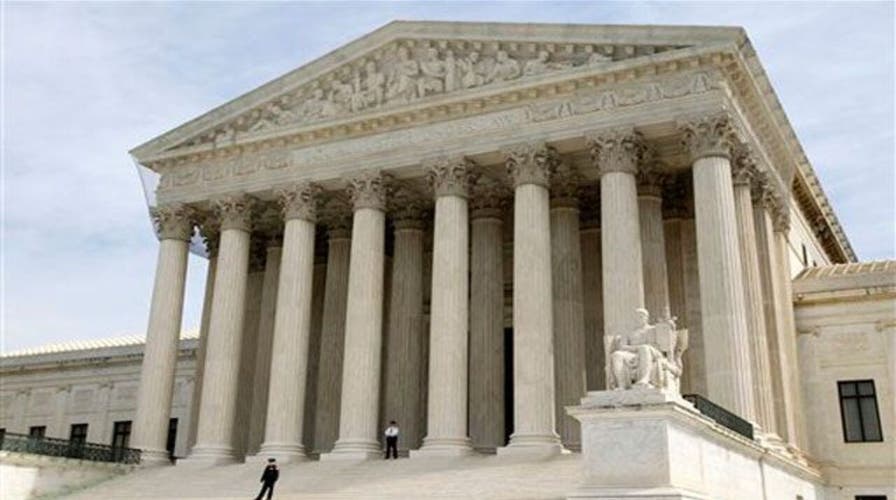
BAIER: The U.S. Supreme Court has made it easier for private religious schools to receive public funding in a five-four decision today. Here with more on the fallout from that ruling and what to expect from the rest of the term is chief legal correspondent and "FOX News at Night" host Shannon Bream. Good evening, Shannon.
SHANNON BREAM, FOX NEWS ANCHOR: Good evening, Bret. Tonight Chief Justice John Roberts once again the swing vote in a high-profile case, but unlike yesterday his vote today is likely to make conservatives happy. In a five- four decision the court ruled in favor love several mothers in Montana who were suing for the right to use scholarship money attached to a tax credit to pay tuition at a Christian school.
Now, under the plan, donors to the scholarship program get a tax credit. Those scholarships can then be accessed by low-income parents seeking to put their kids in private schools. But the Montana Department of Revenue issued a regulation banning the scholarships from being used at religious schools. Roberts writing for the majority said this, quote, "A state need not subsidize private education, but once a state decides to do so, it cannot disqualify some private school solely because they are religious."
The White House praising the result as well, saying this, "Laws that condition public benefits like need-based academic scholarships on religious status demonstrate state sanctioned hostility to religion." Several dissenters, Justice Sotomayor among them, she disagreed, writing in her dissent "A state's decision not to fund religious activity does not disfavor religion. Rather it represents a valid choice to remain secular in the face of serious establishment and free exercise concerns." The National Education Association, the country's largest labor union, blasted today's decision is well, quote, "An extreme Supreme Court just joined the far right effort to undermine one of our country's most cherished democratic institutions -- public education."
Supporters of today's decision say the implications could extend far beyond schools to all kinds of partnerships that religious groups have with government entities, and that's exactly what worries the other side. We are still awaiting several critical decisions, and we are in uncharted territory here. The term should have wrapped up by now, and tonight we still have no word on when we can expect those remaining opinions. Bret?
BAIER: So we don't know when it's coming out. We've got the president's taxes, right. That's a big one.
BREAM: We do, yes, access to his financial and tax records. We've got the Little Sisters of the Poor still fighting that mandatory contraceptive requirement under the ACA. We've got the faithless electors, people who can go to the Electoral College and decide they don't want to vote the way they promised their state they would. So there's a lot there. We'll let everyone know as soon as we get word when those opinions are coming again.
BAIER: All right, Shannon, and we'll see you tonight at 11:00. Thanks.
BREAM: See you then.
BAIER: Next up, coronavirus cases and hospitalizations rise in some states as health experts offer warnings of what may be ahead. Plus, the White House deals with intelligence questions about Russia and Afghanistan. The panel joins me after the break.
(COMMERCIAL BREAK)
(BEGIN VIDEO CLIP)
DR. ROBERT REDFIELD, DIRECTOR, CENTERS FOR DISEASE CONTROL AND PREVENTION: It is critical that we all take the personal responsibility to slow the transmission of COVID-19 and embrace the universal use of face coverings. Specifically, I am addressing the younger members of our society, the millennials and the generation z's.
DR. ANTHONY FAUCI, NATIONAL INSTITUTES OF ALLERGY AND INFECTIOUS DISEASES: We are now having 40 plus thousand new cases a day. I would not be surprised if we go up to 100,000 a day if this does not turn around. The numbers speak for themselves, I'm very concerned and I'm not satisfied with what's going on, because we are going in the wrong direction.
(END VIDEO CLIP)
BAIER: Warnings from health officials up on Capitol Hill today testifying, as we look at the new numbers, the cases, the deaths in the U.S. and around the world. This comes as 15 states in the U.S. are now pausing or delaying reopening plans, as you look at that, the south and west, out west, California, all of those delaying some aspect of opening plans as you head into the July 4th weekend.
Let's bring in our panel, Charles Lane, opinion writer for "The Washington Post," Mollie Hemingway, senior editor at "The Federalist," Steve Hayes, editor of "The Dispatch." Mollie, the warnings were stark today. The vice president and the Coronavirus Task Force said reopening should not slow down as long as people do what they are supposed to do. Here's the vice president.
(BEGIN VIDEO CLIP)
MIKE PENCE, U.S. VICE PRESIDENT: Wash your hands, practice good hygiene, and wear a mask. Wear a mask whenever your state and local authority say it's appropriate. It's always a good idea to wear a mask when social distancing is not possible.
(END VIDEO CLIP)
BAIER: People are really trying to get their head around where we are and where we're going by the fall, especially with school. Mollie?
MOLLIE HEMINGWAY, SENIOR EDITOR, "THE FEDERALIST": It's absolutely true, the American Academy of Pediatrics came out with a statement a few days ago saying that schools should absolutely be open. That's the umbrella organization for pediatricians across the country. I think a lot of people have been focusing on the virus, which is very bad, but not focusing enough on the downside of some of the reactions to the virus.
We know so much more now than we knew when this started, and what we are seeing in the cases that come through now is that even the hospitalizations, the hospital directors say the cases are much less acute, requiring much less intervention, much shorter hospital stays than what they saw back in April, and so on. And so as we learn more and as the case fatality rate drops, that should be incorporated into how we talk about this.
And we should also be thinking much more about the downsides of some of what has happened. I think it's been a really massive psychological experiment on a large population of people, and quite clearly it has not gone very well. We should particularly care about young people and what has happened to them and what would happen to them if we were to keep them out of schools, particularly when studies show that they are not big transmitters to the virus.
BAIER: That would also have a detrimental effect on the U.S. economy. Charles Lane, what about, we are seeing more young people infected. The deaths overall are coming down as far as the rate, the mortality rate of this virus, but it is a scary scenario as you look around the states that are seeing case numbers go up.
CHARLES LANE, OPINION WRITER, "WASHINGTON POST": I think people are crying out for certainty and consistency and leadership. And I understand that there's gray areas in whatever prescription or recommendations are going to come out, but they want some clarity and some consistency, and it starts at the top. And president Trump really kind of took his eye off the ball a few weeks back, made fun of, or disparaged the idea of wearing masks, didn't wear a mask himself, and lent his support to a kind of more cavalier mood that's out there among some people. And I think in his own camp now, there's, among Republicans there's an almost desperate cry for him to change that tone.
BAIER: Yes, I think you saw some of that with the vice president and Secretary Azar today. But it wasn't the president saying it. Steve, quickly on this. I want to turn to the other story.
STEVE HAYES, FOX NEWS CONTRIBUTOR: I think Chuck is right. I think you're starting to see other Republicans speak out. You saw the photograph of Dick Cheney wearing a mask. You saw Mitch McConnell touting wearing a mask. People are pushing the common sense things that we can do to individually take action against this virus. I think it's been a failure of leadership all around at the federal level and way too many state levels as well.
BAIER: This other story is about the intelligence surrounding this story that Russia may have been sending money to the Taliban, putting bounties on U.S. soldiers' heads in Afghanistan. Here is the White House press secretary today about a focus on leaks.
(BEGIN VIDEO CLIP)
KAYLEIGH MCENANY, WHITE HOUSE PRESS SECRETARY: To the anonymous sources who leaked classified information, you should know this -- you may seek to undermine our president, but in fact you undermine our country's safety and our country's security. Who is going to want to cooperate with the United States intelligence community? Who is going to want to be a source or an asset if they know that their identity could be disclosed? Which allies will want to share information with us if they know that some rogue intelligence officer can go splash that information on the front page of a major U.S. newspaper?
(END VIDEO CLIP)
BAIER: Steve, there is reporting that this was in the presidential daily brief back in 2019 in February, but there's some back-and-forth about the intelligence and whether it was really accurate or not. But what's your thought on this story overall?
HAYES: There seems to be some dispute about the intelligence itself, which I think we'll learn more about in the coming days. I think Kayleigh McEnany, it makes sense for her to focus on the leaks, one, because leaks are serious, but, two, I don't think the administration has a much better other response. If you look back at what the administration has been saying, they've been touting this budding peace initiative with the Taliban now for more than a year. A year ago, about this time last year they were touting how the U.S. has common interests with Russia in Afghanistan. And now we know that neither one of those things are likely to pass.
BAIER: All right, Mollie, quickly.
HEMINGWAY: This story is coming from the same exact people who are using the exact same tactics that were used to spread the false and damaging Russia collusion hoax. That's where you have intelligence officials illegally leaked to co-conspirators in the media to set a false and damaging political narrative. It's not surprising that Democrats are falling for it or that media people are hyping it, but I think Republican voters are frustrated that Republican leaders are falling for it yet again.
BAIER: All right, wish we had more time. I don't think this topic is going away. Chuck, I will be with you the next time. Thank you, panel.
When we come back, the brighter side, some good news.
(COMMERCIAL BREAK)
BAIER: Finally tonight, a pair of milestones. Mother of three Ruby Scott turned 100 years old over the weekend. Her family wanted to make sure the party was safe as possible so they had a surprise drive-by party at Ruby's home in Oklahoma. She celebrated her special day with a lot of kids and grandkids and great-grandkids.
United States Coast Guard veteran Andy Washington celebrated his 100th birthday with friends and family in New Orleans. Washington is a World War II veteran, served in the Coast Guard from 42 to 46. A parade of well- wishers drove by his neighborhood as well. Happy birthday.
Thanks for inviting us into your home tonight. That's it for the SPECIAL REPORT. Fair, balanced and unafraid. Here's Martha.
Content and Programming Copyright 2020 Fox News Network, LLC. ALL RIGHTS RESERVED. Copyright 2020 ASC Services II Media, LLC. All materials herein are protected by United States copyright law and may not be reproduced, distributed, transmitted, displayed, published or broadcast without the prior written permission of ASC Services II Media, LLC. You may not alter or remove any trademark, copyright or other notice from copies of the content.
