






Byron York on Wuhan lab leak report: It was failure of official sources like Fauci
'Special Report' All-Star panel analyze suppression of lab leak hypothesis by media
This is a rush transcript from "Special Report with Bret Baier," May 24, 2021. This copy may not be in its final form and may be updated.
BAIER: Let's bring in our panel, FOX News senior political analyst Brit Hume, Bill Bennett, former Education Secretary, host of "The Bill Bennett Show" podcast, Mara Liasson, national political correspondent of National Public Radio, and Byron York, chief political correspondent of "The Washington Examiner." Brit, let me start with you. Your thoughts on where we are on this origin story?
BRIT HUME, FOX NEWS SENIOR POLITICAL ANALYST: It's striking to hear Jen Psaki say that the Biden administration is really pushing to get more information about this by pressing the WHO, whose record on this whole issue has been appallingly bad and was one of the leaders in dismissing the theory that the virus could have emanated from that Wuhan lab. Pushing the WHO to do an open investigation, I don't think that's a serious comment and shouldn't be taken seriously.
What's been so striking about this, as you mentioned, Bret, is not just the fact, look, we don't know what happened here, and we haven't known. But the Wuhan lab theory was always plausible, at least as plausible as the theory that this somehow jumped from bat to pangolin to human out of a meat market or a wet market. So the dismissal of that idea, that it came from the lab, by so many news organizations was another in the long line of recent media failures.
BAIER: Not only news organizations, but also experts. We have kind of an evolution from Dr. Anthony Fauci, what he said back then and what he is saying now.
(BEGIN VIDEO CLIP)
DR. ANTHONY FAUCI, WHITE HOUSE CHIEF MEDICAL ADVISER: If you look at the again genomic sequences of the viruses that are in bats in the wild, it's strikingly similar to the sequences that you have found now with in people who have been infected with the original wild type virus.
UNIDENTIFIED FEMALE: Are you still confident that it developed naturally?
FAUCI: Actually, no, I'm not convinced about that. I think that we should continue to investigate what went on in China until we find out to the best of our ability exactly what happened.
(END VIDEO CLIP)
BAIER: Mara, much different, obviously, take there. Things evolve, we learn more. But it was dismissed at the beginning.
MARA LIASSON, NATIONAL POLITICAL CORRESPONDENT, NATIONAL PUBLIC RADIO: Right, it was dismissed. Now it sounds like it's possible that it was a bat virus, but it was a bat virus in a laboratory that infected a human being. And this is a big embarrassment if this is the case for China, because it would mean that their protocols in the lab didn't protect people who worked there from getting these viruses. And I think that the Biden administration sounds like they want to let the WHO look into this. But it's important that the true origins be released. We're not saying that China developed this as a biological weapon, as some theories had it in the original. But we want to know how it started, because that would help us prevent this from happening in the future.
BAIER: We should point out we're going to try to get Bill Bennett back. I don't think it was China that took him out there. But, Byron, your thoughts?
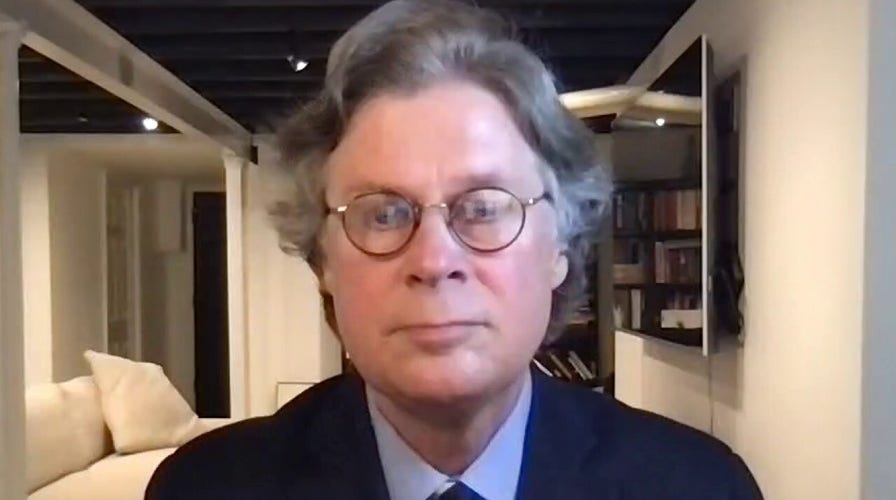
BYRON YORK, CHIEF POLITICAL CORRESPONDENT, "THE WASHINGTON EXAMINER": This was a failure of some official sources like Dr. Fauci, but there were others who were suggesting there might be some validity to this lab leak hypothesis, at least circumstantial evidence supporting it. The Trump State Department under Secretary of State Mike Pompeo reported intelligence that some people at the lab had gotten sick in November of 2019, about the time we would think that coronavirus was beginning. They had coronavirus-like symptoms, and they were hospitalized.
And, yet, as Brit suggested, there was contempt and mockery, and in some cases suppression of this lab hypothesis. Senator Tom Cotton, a Republican senator from Arkansas, mentioned the hypothesis, and it was quickly shot down by "The New York Times" as if he were kind of a wild conspiracy theorist. So one lesson from this, completely apart from the story of coronavirus, is that we shouldn't be suppressing information when we don't know all the facts.
BAIER: OK, you mentioned former Secretary Pompeo, he was on our air today.
(BEGIN VIDEO CLIP)
MIKE POMPEO, FORMER U.S. SECRETARY OF STATE: The Chinese Communist Party knows what happened here. They know who patient zero was. They know precisely where this began. These three individuals who became sick, the symptoms were consistent with what someone would get that would be symptomatic if they had COVID-19.
REP. MIKE GALLAGHER, (R-WI): We know for a fact that the Chinese Communist Party has been deliberately covering up a transparent and thorough investigation from the start. We know the WHO has been corrupted by the Chinese Communist Party, and even the head of the WHO, Dr. Tedros, looked at the initial report that got released in March and said, actually, we need to investigate the lab leak.
(END VIDEO CLIP)
BAIER: All right, we are back with Bill Bennett now. Bill, your thoughts on where we are here?
BILL BENNETT, FORMER EDUCATION SECRETARY: Well, look, there is a reason that this has been obscured and not looked into. And that's the 800-pound gorilla known as Donald Trump. If Donald Trump said this is what he suspected, then this entire administration is going to be disposed to say the opposite. It's the inversion theory. It was in a "Star Rrek" or a "Twilight Zone" a long time ago. You go in the machine one way and come out the reverse. If Donald Trump said it, we have to do the reverse and believe the reverse.
Now that he is out of office, this thing can come to light. Even a "Washington Post" reporter today said maybe we were too hard on Trump when he had suspicions about the laboratory. That is what has obscured this. Ideology has obscured the search for truth. Not the first time, and I suspect not the last time.
BAIER: Brit, what are the implications for China? It doesn't seem like the evidence is there, that perhaps it's been destroyed. But let's say you get down an investigation and does prove that that escaped from that Wuhan lab, what are the implications here?
HUME: One thing is that it becomes I think undeniable and more clear than ever that this is a rogue state. This is an outlaw state. This is not a member of the international community as it is so fondly referred to by so many people nowadays. This is a nation that will suppress the truth, that will fire, even maybe wipe out people who in their own ranks who try to tell the truth, and so on. I think it becomes increasingly therefore difficult to do regular business with China.
So I think it would be quite a moment for that regime in which we are so economically intertwined now. It would be a huge problem. And, look, Mara said that it's a crazy theory that the Chinese did this deliberately. So far as we know, there is nothing -- no evidence to that. But it hasn't been effectively completely disproven. And the way China acts, I don't think you can completely rule it out. We need more evidence to find out what really happened, and I'm afraid some of it may be gone and we will never see it.
BAIER: Mara, last word.
LIASSON: Yes, I agree with that. But it's going to be a black eye for China if it originated in a lab. It means they were lax. They didn't have the right protocols. It doesn't have to be something that China did on purpose. It will be a black eye for them if it -- just if it originated in a lab. And that's what it sounds like. They are not a transparent country. They're an autocracy, and they are going to try to cover that up.
BAIER: All right, panel. Stand by, if you would. Up next, the coast-to- coast crimewave here in the U.S.
(COMMERCIAL BREAK)
(BEGIN VIDEO CLIP)
JOE BORELLI, (R) NEW YORK CITY COUNCIL: We tried it. We spent the last year, almost two years, anywhere in the country that has an entrenched progressive government in their city hall or even in their state house, they have experimented with defunding the police. And not one of these cities run by progressives can say that their city is safer than it was just two years ago.
(END VIDEO CLIP)
BAIER: New York City councilman there taking talking about crime. As you take a look at stat around the country, major cities seeing a major increase. New York, 81 percent increase in shootings from this point last year, Chicago 33 percent increase, and that's significant. Chicago had a lot last year. Atlanta 50 percent increase in homicide, Minneapolis 113 percent increase in homicides. And you can bounce around the country. We are back with the panel. Bill, your thoughts on these stats and what they tell us about where we are?
BENNETT: Classic question of civil society here in the news. This is partly attributable to human nature. Philosophers have wrestled for this for years. Thomas Hobbes said famously in his famous book life in the state of nature is solitary, poor, nasty, brutish and short. "Brutal" was the word you used to introduce this. And this is what we are seeing at least resemble going on in many of our cities.
Policy is the second part. By releasing or getting rid of or thinning out that thin veneer of civilization and protection provided by the police, we are giving encouragement to the worst instincts of human nature to come forward. This is an experiment that's been done 1,000 times before. We shouldn't have to do it again. The evidence is mounting. Maybe if public policy could be reversed. Human nature can't, public policy can.
BAIER: Ezra Klein talking about the left and police policies and what that means for politics, take a listen.
(BEGIN VIDEO CLIP)
EZRA KLEIN, "THE EZRA KLEIN SHOW": In a direct way police are first responders to lot of violent crime. There is good research that they prevent it. And I do worry about both the politics and the outcomes of the left and police primarily seeing themselves in some kind of fight with each other.
Do liberal politicians right now have an answer on violent crime. If you say to them, what should we do about violent crime, do they have something they can say back?
(END VIDEO CLIP)
BAIER: Byron, he continued on, saying if this continues, the numbers continue keep rising, you're going to have a law and order candidate that will have a lot of political power either in 22 or 24.
YORK: It seems like that has to be the case. You can say now well, the weather is getting warmer, or coronavirus has driven all of us a little crazy for the last year. But these increases are stunning, and they are coming at a time in which there is extraordinary anger at the police, which the defund the police movement, which has been around for a few years, just took off in 2020 when some cities like Minneapolis, you just gave us the numbers for Minneapolis, 113 percent increase in homicides, have actually started to try to defund the police with disastrous results.
And it seems to me that, obviously, former President Trump is a law and order candidate if he were to run. But there has to be the emergence of some candidate, perhaps even in the Democratic Party, who places more emphasis on the idea of law and order.
BAIER: You look at the New York mayor's race, that's changed the perspective there on the ground in that. Mara, your thoughts overall?
LIASSON: Yes, look, historically, when there has been a rise in crime, the party that is seen as tougher on crime, the law and order party has generally won. And that's the danger for Democrats. If they become identified with this key defund the police -- now, I would say that was only supported by minority of Democratic candidates. Joe Biden explicitly was against it. But it was used very effectively against Democrats writ large in 2020. And I think it's going to be used again by Republicans in 2022. So Democrats have to be for a platform that says we want to keep our communities safe, and at the same time we want to reduce killings of unarmed people by the police. They should be able to come up with that.
BAIER: Brit?
HUME: Well, Joe Biden was for defund the police before he was against it. You remember a call last year during the campaign he talked about reallocating resources away from normal law enforcement into other things before he realized or wised up to the fact that defund the police is bad policy and even worse politics.
But I don't know that his party can easily get out from under the label of supporters of defunding the police. Their sympathies generally seem to be against the police, against law enforcement, and that's the posture that they are in now.
And you look around, Bret, there is one of a number of issues. People are being told this is racist country and that they themselves by extension racist, or being told our history isn't what we thought it was, and so on. The coronavirus shutdowns, I think, are becoming increasingly unpopular, and in retrospect even more so than they were when they were going on in full cry. There is a lot of potential backlash out there, which I think we'll see evidence of it in 2022 during the midterms and perhaps well beyond. These are problems I think at the moment constitute an opportunity for Republicans if they have the wit to seize them.
BAIER: We'll see.
When we come back, tomorrow's headlines tonight with the panel.
(COMMERCIAL BREAK)
BAIER: Finally tonight, a look at the tomorrow's headlines with the panel. Mara?
LIASSON: My headline is Europe halts flight over Belarus airspace after hijacking of dissident. I think this is a huge story. This is Belarus forced down an airplane to arrest a dissident journalist who was traveling to Belarus or from Belarus but merely over it. And it's a big test for the European Union and also for the United States.
BAIER: Big. Yes, Brit?
HUME: New York Governor Cuomo and New Jersey Governor Murphy propose a new border wall to prevent residents of their states from moving to Florida and Texas.
(LAUGHTER)
BAIER: All right, Bill, your headline?
BENNETT: That's too funny. Looking to the future, many Republicans are focusing more on Trump policies rather than Donald Trump himself. I think that's wise given the uncertainties about the former president. Fewer uncertainties about the policies.
BAIER: Byron, bring it home for us.
YORK: I want to start with a real, actual headline from today in "The Washington Post," quote, "Weight-lifting, Gatorade, birthday calls, inside Biden's day." So I think tomorrow we might have part two, President gets up, has breakfast, plays with dogs, more on Biden's day.
(LAUGHTER)
BAIER: Part two. OK, panel, thank you so much.
Content and Programming Copyright 2021 Fox News Network, LLC. ALL RIGHTS RESERVED. Copyright 2021 VIQ Media Transcription, Inc. All materials herein are protected by United States copyright law and may not be reproduced, distributed, transmitted, displayed, published or broadcast without the prior written permission of VIQ Media Transcription, Inc. You may not alter or remove any trademark, copyright or other notice from copies of the content.
