




Biden talked relationship with North Korea during event with South Korea
'Special Report' All-Star panel discuss the president's answers on dictator Kim Jong-Un
This is a rush transcript from "Special Report with Bret Baier," May 21, 2021. This copy may not be in its final form and may be updated.
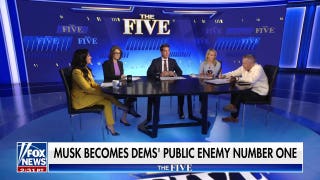
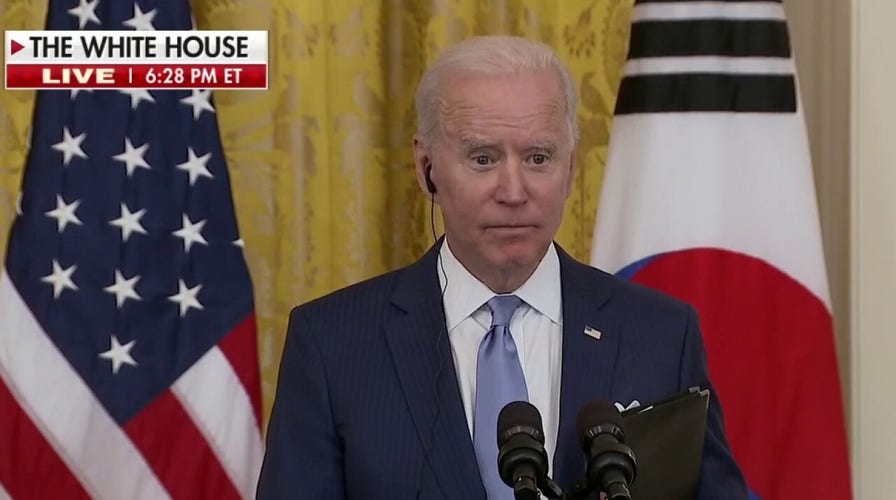
I'm Shannon Bream in tonight for Bret Baier. Breaking tonight, you've just seen President Biden's news conference with his South Korean counterpart from the White House. FOX News White House correspondent Peter Doocy was among the journalist at the event. You heard his question there. We're going to hear from him in just a bit.
But first let's go to our panel, Harold Ford Jr., former Tennessee Congressman, CEO of Empowerment and Inclusion Capital, Morgan Ortagus, former State Department spokesperson, and Steve Hayes, editor of "The Dispatch." Panel, welcome. A lot to meat to dive into. Morgan, I'll start with you because of your involvement with the last and State Department, the last administration. What did you make of the conversation about denuclearizing the peninsula, where we stand, where the relationships are tonight?
MORGAN ORTAGUS, FORMER STATE DEPARTMENT SPOKESPERSON: So, you're right, Shannon, I have been through a lot of those press conferences, and I wrote down some notes here. First of all, this could have been in many ways a Mike Pompeo press conference. A lot of the key words and phrases that we have used amongst many administrations were there. We talked about shared future, shared values.
What's really important here is that President Biden and Moon committed to the complete denuclearization, and that's really important because we saw strategic patience was the philosophy that the Obama administration pursued. Obviously, we went for a bigger grand bargain in the Trump administration.
But I think two big things that are coming out of this has been reported that the Biden team are going to use the basis of the Singapore summit. That was between Trump and Kim Jong-un the first time at the leader level that Kim Jong-un, that a leader of North Korea committed to complete denuclearization. So President Biden may be changing the style by which he operates with DPRK, but he certainly is using very similar language, very similar substance.
One thing that I would say a that was really missing, though, in this whole conversation that was just in a glaring omission to me was there was no mention of China significantly at all. And I don't know how you have President Moon at the White House and how you don't have a major announcement on the policy towards China from these two major allies. Big omission.
BREAM: And Harold, they did have some discussion of Taiwan and where the two are on discussing these issues, South Korea and the U.S. That's a critical issue as well.
HAROLD FORD JR., FORMER TENNESSEE REPRESENTATIVE: No doubt. I think that President Biden showed a real difference in his style and his approach to governing, particularly foreign policy. Here's a president with 40 of experience, foreign policy experience. Every president is an answer to his, and one day we'll say her predecessor. This president brings more experience in government than any president in my lifetime, and I would argue as much as any president has brought. He recommitted and made clear our commitment to a two-state solution. He made clear, as Morgan said very well, the commitment to a denuclearized region. But I think more so than anything, when he said that he has private conversations with leaders and he takes leaders at their word, as much as there is a stylistic difference, there's a bit of a substantive different there as well I think with him and his predecessor.
I was hoping to hear something on China. I don't think the omission is quite as glaring as my good friend things. I would have been nice to hear more there. But I was really pleased just to see the dynamic between these two presidents.
BREAM: And very quickly, Steve, the mention there that Harold made of the previous administration. Go back several administrations and North Korea, including the one that President Biden, when he was vice president, was part of, that continues -- that problem at this points to foment over decades.
STEVE HAYES, EDITOR, "THE DISPATCH": Incredibly difficult problem to solve, and you heard Joe Biden say the past four administrations haven't gotten it done. I was struck by the major difference that he said he was not going to meet with Kim Jong-un. We saw President Biden in theatrical photo op meetings. Joe Biden made pretty clear that that is not going to happen under his watch.
ORTAGUS: But Shannon, if I could just --
BREAM: He doesn't want to give any legitimacy. Very quickly before we get cut off.
OK, we will get back to you guys. Stick around, panel. We have a lot more to discuss.
Up next, we're going to go to the Middle East and we're going to check in with correspondent Trey Yingst. There is a lot to discuss on that came from this press conference on that topic as well.
(COMMERCIAL BREAK)
BREAM: The cease-fire between Israelis and Hamas appears to be holding tonight. The agreement ended an 11-day outbreak of hostilities. Correspondent Trey Yingst is live tonight in Gaza. And Trey, we just heard from the president there, he was pretty clear. He said my position has not shifted on Israel. We will fully support them, and he talked about where the conversations go from here, but making it pretty unequivocal the U.S. stands with Israel.
TREY YINGST, FOX NEWS CORRESPONDENT: Shannon, good evening. President Biden speaking from Washington today talking about the Israeli-Palestinian conflict, and it does come amid this cease-fire announcement last night that ended 11 straight days of fighting between Hamas, the group in control of Gaza, and Israel.
What the president didn't really talk about was Hamas. And Hamas is the group in control of Gaza. They control about 40 percent of the Palestinian population. So, while he was very clear about the possibility of a two- state solution, he didn't address this key issue of how to involve the Gazans in that conversation.
We spoke with a senior Hamas official over the past 24 hours who indicated the Biden administration is still not speaking directly with Hamas inside Gaza. So it creates this situation where you have the American administration talking directly with the Palestinian Authority and Palestinian President Mahmoud Abbas, but Abbas does not represent the 2 million Palestinians living here. So while this cease-fire agreement is great news, it isn't necessarily great news for a larger peace process because you still have this major disconnect between the Palestinians living in the West Bank and the Palestinians living in Gaza. Shannon?
BREAM: Yes, yes. Very, very delicate and tricky, because the president made it clear there will be no discussions with Hamas. They are obviously viewed as a terror organization by the U.S. and many other countries, but saying there has to be a rebuilding in Gaza. That's where a lot of people think this may get very sticky, because if you are going to pledge billions of dollars potentially there, that is something that you're going to have to have a conversation with the right people, and sometimes that's not the same people who are controlling the area. Trey, thank you very much.
Up next, the fallout over the CNN anchor getting involved in the sexual harassment allegations against his brother, the governor of New York.
(COMMERCIAL BREAK)
BREAM: Stocks were mixed. The Dow gained 124, the S&P 500 lost three, Nasdaq fell 65. For the week, the Dow and the S&P were off about a half percentage point, Nasdaq was up around one third.
Now a follow-up on a story we brought you last night. Critics are piling on CNN Anchor Chris Cuomo for his involvement in the crisis management surrounding his brother, New York Governor Andrew Cuomo. Here is FOX News media analyst and host of FOX News "Media Buzz" Howard Kurtz.
(BEGIN VIDEO TAPE)
CHRIS CUOMO, CNN ANCHOR: My family means everything to me. And I am fiercely loyal to them.
HOWARD KURTZ, FOX NEWS HOST: CNN's Chris Cuomo now says he's sorry that his loyalty to his brother prompted him to join conference calls that included the New York governor's top aides, lawyers, and PR people, and that limiting the damage of sexual harassment allegations against Andrew Cuomo. CNN says it was inappropriate for the primetime host to be in those strategy sessions.
C. CUOMO: To be looped in calls other friends and his and advisers that did include some of his staff, I understand why that was a problem for CNN. It will not happen again. It was a mistake.
KURTZ: The feminist group Ultraviolet is urging the network to suspend Cuomo and investigate his coverage on coverage of the allegations. But CNN is taking no disciplinary action.
The network last year waived its ban and allowed the veteran anchor to repeatedly interview his brother, which led to wise-cracking chats after Chris Cuomo contracted COVID, and a mutual admiration society.
C. CUOMO: Obviously, I love you as a brother. Obviously, I will never be objective. Obviously, I think you are the best politician in the country.
GOV. ANDREW CUOMO, (D) NEW YORK: I have never been prouder of you than I am right now.
KURTZ: But when early praise of the governor's handling of the pandemic turned to harsh criticism over a cover-up of the scope of nursing home deaths, CNN again barred any appearances on "Cuomo Primetime." And when the first of a series of women accused the governor of sexual harassment and unwanted touching, he fighting calls for his resignation.
A. CUOMO: I acted in a way that made people feel uncomfortable. It was unintentional, and I truly and deeply apologize for it.
KURTZ: A state investigation led to those conference calls with Chris Cuomo, according to "The Washington Post," urging his brother to remain defiant and refuse to quit.
(END VIDEO TAPE)
KURTZ: It would be too much to expect that Chris Cuomo, a relentless critic of Republicans, would refrain from canceling his brother. It is not too much to expect that he avoid the appearance of being part of the Democratic governor's team, as he and CNN now understand. Shannon?
BREAM: All right, Howie Kurtz, thank you so much.
Up next, the panel is back.
(COMMERCIAL BREAK)
BREAM: Let's bring back our panel, Harold Ford Jr., former Tennessee Congressman, CEO of Empowerment and Inclusion Capital, Morgan Ortagus, former State Department spokesperson, and Steve Hayes, editor of "The Dispatch." Steve, I want to pick up with somewhere that I left off with Trey Yingst, this idea that the president has talked about the money that will need to flow into Gaza for rebuilding there, and a lot of folks watching from the outside say this is where it gets really tricky because of Hamas's controlling the area, and we said we will talk with them. How does this rebuilding come about?
HAYES: Yes, you are exactly right. I think the devil will be in the details, to use the old cliche. One of the things that sort of jumped out at me, though, in President Biden's comments was he was rather unambiguous about how he approaches Hamas. He said Hamas is a terrorist organization. We recognize that. I think that was the exact quote.
You have others in his party who have encouraged him to deal with Hamas, to talk about Hamas as a political organization with a terrorist wing. He was rather unequivocal about it, said Hamas is a terrorist organization. I do think that makes it difficult. If you go back and you look at the roots of some of what we have seen over the past few weeks and the power struggle between the Palestinian authority and Hamas, Hamas is gaining strength. Hamas is doing well. They were expected to do well in these elections. And I think the president sent a message in effect saying Mahmoud Abbas could potentially be a partner here. Hamas cannot.
BREAM: Morgan, did you take any of what the president said today about being very clear that he likes to have private conversations with people, and he takes leaders at their word, and doesn't like to do things publicly, as a mention or an allusion to the previous administration?
ORTAGUS: Well, I think he has been around a long time and that's his style. And we'll see if there is any policy outcomes from his style. I was encouraged by the fact that he was so defensive of Israel, especially in the face of some pretty extremist things that you have seen from his party. But one point that he got wrong, and I will end on this, is he said that there won't be peace in the Middle East between Israelis and Palestinians until the Arab neighbors recognize Israel. And I would remind President Biden that four Arab states have recognized Israel in Abraham Accords, and what he should do is build on that and not trivialize those accomplishments that can help him get to peace.
BREAM: Quick final word to you, Harold.
FORD: I agree with Morgan there. I think Joe Biden believes that building a coalition of allies to isolate and pressure whichever nation or what the problem may be, whether it's with North Korea or the Middle East, that's the approach I heard from him today. That's the approach I have known for him when I was in Congress, about him, and I'm pleased to see he is continuing in that tradition.
BREAM: All right, panel, thank you very much.
Content and Programming Copyright 2021 Fox News Network, LLC. ALL RIGHTS RESERVED. Copyright 2021 VIQ Media Transcription, Inc. All materials herein are protected by United States copyright law and may not be reproduced, distributed, transmitted, displayed, published or broadcast without the prior written permission of VIQ Media Transcription, Inc. You may not alter or remove any trademark, copyright or other notice from copies of the content.
