




Sen. Ernst on SOTU: I hope the president highlights the great January jobs report
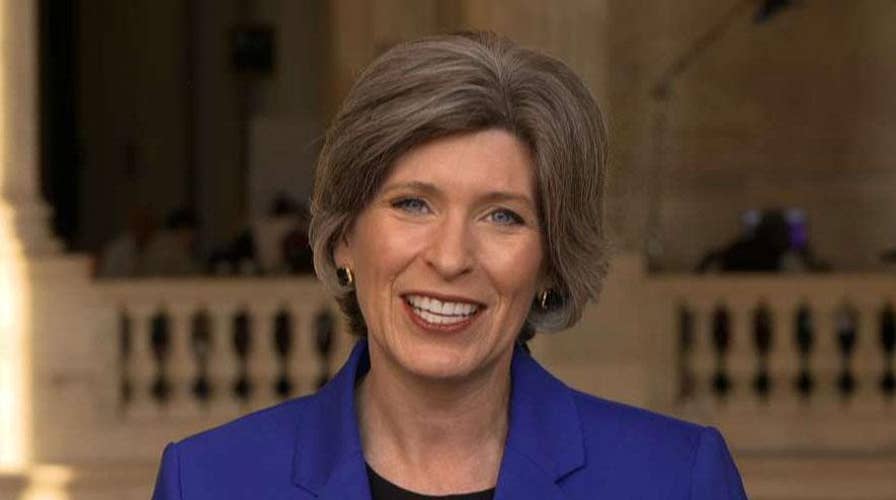
Iowa Sen. Joni Ernst weighs in on the economy and what she hopes to hear President Trump address during the State of the Union.
This is a rush transcript from "Your World," February 5, 2019. This copy may not be in its final form and may be updated.
NEIL CAVUTO, HOST: All right, less than five hours to go, President Trump's big State of the Union address. When it all comes to the wall, we knew he had a very tough sell, but our new numbers just out showing exactly how tough.
Welcome, everybody. I'm Neil Cavuto.
And there's new Gallup poll that find 60 percent of Americans might oppose building that wall. So what, if anything, can the president do to turn those numbers his way?
We are all over it with Florida Republican Senator Rick Scott on if the president can get Congress united, Ohio Democratic Congressman Tim Ryan on the speaker, Nancy Pelosi, and what she should be offering, national Border Patrol council president Judd, Brandon, on what could happen now if he doesn't get that wall in the offing, and the Iowa Republican Senator Joni Ernst with some advice for Democrats who will be responding.
First, we go to John Roberts at the White House, where a busy president is no doubt preparing -- John.
JOHN ROBERTS, WHITE HOUSE CORRESPONDENT: He is.
And he will giving that speech in just a few hours, as you pointed out, and immigration, the border wall, border security will form a large section of that.
Members of the conference committee that have got until February the 15th to come up with a solution to open the government and satisfy border security are expressing some optimism that there may be a way out of this. They say that their staffs are beginning to talk together. There's some measure of cooperation that's going on there.
And this is significant. Tomorrow, they will be inviting up to Capitol Hill for briefings members of Customs and Border Protection, ICE, other agencies who are tasked with border security. They hope to learn enough from them that they will be able to come up with some sort of comprehensive solution.
There's also overriding all of this, Neil, this idea that the president could declare a national emergency. Not expected to do that tonight at the State of the Union, though he may make mention of it.
Senator Richard Shelby, who is a member of that conference committee, said pressure from the president on this idea of a national emergency might not be such a bad thing, that it might not split the conferees, but bring them together. Listen here.
(BEGIN VIDEO CLIP)
SEN. RICHARD SHELBY, R-ALA: It could put us together. It could be the opposite. It could bring us together. And will it? We don't know. But, sometimes, dire circumstances bring us together. Sometimes, it pulls us apart.
(END VIDEO CLIP)
ROBERTS: So this week, what's left of it, and then the first part of next week is going to be crucial, if they hope to get an agreement.
Listen to what Senator Patrick Leahy of Vermont, another one of the conferees, said. Listen.
(BEGIN VIDEO CLIP)
SEN. PATRICK LEAHY, D-VT: There seems to be a real effort to reach a conclusion. We have got senior Republicans and senior Democrats I know, and I trust them all.
I think, certainly in the Senate, we could -- we could wrap this up fairly easily. I feel more confident today than I might have a few days ago. I think we're working hard.
(END VIDEO CLIP)
ROBERTS: Now, the president for his part has given up hope that the conferees are going to come up with anything. He said on several occasions, Neil, that they are wasting their time.
But, then again, it could be negotiating tactic to say to the conferees, if you can't come up with something between now and the 15th, you're looking at an emergency declaration or shutting down the government again . Maybe just trying to light a fire under them to see if they can get something going.
But, again, very positive sign that they're inviting up to Capitol Hill tomorrow these experts who know what it takes to secure the border -- Neil.
CAVUTO: All right, thank you, my friend, very much, John Roberts at the White House.
By the way, I misspoke. We have the National Border Patrol Council president, Brandon Judd, on all of this. We will be talking to him later in the broadcast.
Of course, the Florida Republican senator, the former governor of the Sunshine State, Rick Scott.
Senator, good to have you.
SEN. RICK SCOTT, R-FLA.: Excited to go to the State of the Union tonight.
I brought Andy Pollack, who's become a friend. He unfortunately lost his daughter at the Parkland shooting. So, it's going to be an interesting night.
CAVUTO: Oh, sure.
There's a lot of pressure on the president to find maybe a middle ground or help Democrats and Republicans find a middle ground. He's offered a lot, the White House said more than enough. But he wants funding for that wall. If he doesn't get it by next Friday, we could be looking at an emergency to get it.
How do you feel about that?
SCOTT: Well, my -- it's not my first choice. I didn't think it was great when Barack Obama used executive orders.
But the president has proposed things. He's tried. He's tried to compromise. And the Democrats just haven't worked with him. So, in the end, the president needs to use the authority he has to secure our borders and to keep people safe.
So I think he ought -- if he does it, I would hope he would do a permanent solution for TPS and DACA also, take care of these kids that didn't come here on their own. Their parents brought them here.
CAVUTO: Now, a lot of your Republican colleagues particularly, Senator, are concerned about going the emergency route, that it would be almost as problematic as, you know, facing another shutdown. It's a no-win situation for them as well.
Do you share that?
SCOTT: Sure.
No one wants the president to have to use his emergency -- use an executive order, use the emergency power. But what is he to do? He knows the crisis. There's a crisis on the border. The Democrats won't come to the table. Nancy Pelosi has basically said, no way, there's not going to be any money.
I mean, the way I look at it is, I'm going to the State of the Union. There are going to be more actors there than is at the Oscars, because people are just acting like they care about things. But then pass a bill.
I mean, if you say you care about border security, Nancy Pelosi, do something. Chuck Schumer, do something about it, instead of just talking about it and doing nothing about it.
CAVUTO: All right, there has been talk as well that, if he is able to cobble together something with Democrats, the next here could be infrastructure, or maybe dealing with drug prices, and that both parties find common ground here.
Do you agree with that?
SCOTT: Absolutely.
We have got to figure out how to drive down the cost of health care. It's way too expensive, especially drugs. We have got to figure out how to do that. I think he needs to highlight the importance of continuing to build the economy. It's what we did in Florida.
So, as we did that, we had more revenues to do good things, like in the environment. So, he needs to talk about what's happened in the last year, three million more jobs since the tax cuts came in. So he needs to keep doing those things and also talk about border security.
So I'm very optimistic. This is my -- I think my fifth week up here, so I want to get things done.
CAVUTO: You know, we're talking about drug prices. And you're well- schooled in the health industry, before you went into politics.
And the drug companies, the CEOs, of which I think about a dozen companies in the end might be called to the Senate to testify on what's been going on here, they have recently been pointing the finger at middlemen, not themselves, for this run-up.
What do you think?
SCOTT: I think we need to figure it out, but we have got to drive down the cost of drugs.
If you -- if you want people get more health care, the way to do it is -- is not have some big government program, but drive the cost of health care down. And so whether it's -- whatever we can do. I mean, there's -- there's a lot of ideas on the table. I have been talking to a lot of different senators about ideas.
But I want to get something done on driving drug prices down.
CAVUTO: Senator, thank you very, very much. Good catching up with you.
SCOTT: Thanks, Neil.
CAVUTO: All right, in the meantime, fair and balanced, we are going to hear from Ohio Democratic Congressman -- in fact, was in the running for speaker for a while -- Tim Ryan in a moment.
Now, he's the guy, of course, who was speaking for a more moderate way, middle ground way among Democrats to deal with this, and not necessarily toe Nancy Pelosi's line. His view after this.
And then, meanwhile, don't forget, with the president expected to be touting a strong economy tonight, and foreign markets all open tonight, FOX Business will be following these developments closely, beginning at 7:00 p.m. with my colleague Lou Dobbs.
We take over on "Coast to Coast" on Fox Business at 8:00, where we gauge not only the speech, but the Democratic response, futures reaction, foreign market reaction, tick by tick around the world.
And then Trish Regan wraps it up at 11:00 with analysis you can only find on FOX Business, the best of politics, the best of business. It's your life. It's your money. We have got it.
More after this.
(COMMERCIAL BREAK)
CAVUTO: All right, well, there will be drama tonight, certainly for the president, the first time he will be speaking before a Democratically- controlled House.
That means the person behind him, the House speaker, Nancy Pelosi, won't necessarily be complimentary of everything that president is talking about, including a wall along the border, something she's called immoral and something she says for which she would not contribute $1.
The read from Ohio Democratic Congressman Tim Ryan, who joins us right now.
Congressman, good to have you.
REP. TIM RYAN, D-OH: Good to be with you, Neil.
CAVUTO: I'm always interested, sir, when I talk to you or your colleagues, who your guest is tonight. You're all entitled to bring a guest.
Who do you have?
RYAN: I'm bringing the head of the local Auto Worker Union of a plant that got closed down. His name is Dave Green, Local 1112 in Lordstown, Ohio.
And that plant is going to be empty as of March, due to all the General Motors job cuts. And so we're bringing him to make sure that the president and everyone else is paying attention about what's happened in Lordstown, Ohio.
CAVUTO: Now, as you know, on those job cuts here, GM said it had no choice, up to 4,000 white-collar workers hit as well, and that this is a way of keeping the company viable and vibrant.
What -- when you heard Mary Barra, the CEO, say that, what did you think?
RYAN: Well, I have talked to her on several occasions, and we're still trying to work, because they may distribute some products after the union contracts are negotiated.
And we're fighting real hard to make sure one of those products ends up in Lordstown, Ohio. But I think it's more indicative of what's happening in the economy today, Neil.
We saw a little bit of this with the government shutdown, where working- class families literally cannot survive losing one paycheck, where 45 percent of the country have less than $400 in savings.
And it's been a failure really on both parties' parts to plug in communities and families and areas of the country that have missed globalization, missed automation. It passed us by.
And because there's been no national industrial policy or no national strategy on how we make sure the Youngstown, Ohio's of the world, and the Gary, Indiana's of the world, and many parts of the Southern part of this country get plugged in.
Globalization is yielding great wealth, but it's not getting everywhere. It's getting concentrated in certain parts of the country. I have said it before on your show; 80 percent of venture capital goes to three states, California, New York and Massachusetts.
Well, how do we have a national strategy that gets those investments into communities like ours? And the salt in the wound, lastly, is that when General Motors makes these cuts, people lose their jobs, communities erode, their stock goes up 6 percent.
I mean, that to me is not an economic model.
CAVUTO: Well, but the president is going to apparently mention infrastructure, and that kind of thing, that could benefit some of those workers.
RYAN: Yes.
CAVUTO: Would you be for something like that? There does seem to be broad bipartisan appeal.
RYAN: Yes, absolutely.
I have been waiting for the president to push a legitimate infrastructure bill since he got into office. In fact, I saw Steve Bannon and Kellyanne Conway the night of the inauguration. And we talked on the on the dais right after his speech. And I said, let's do infrastructure. Let's find a way to get together on this stuff. It would be critically important.
But it goes well beyond that. I mean, there was an article today in The Washington Post about 5G. China's kicking our rear end on 5G. And it has defense and military implications.
These are the kind of -- this is the leadership we need from the White House on how we grow these area of the economy.
CAVUTO: But the president is addressing those issues in the trade talks with China. I mean, you're not lumping all this on his doorstep, because last time I checked, the economy, it's doing pretty well.
I understand in your district and some of the concerns about that. But, by and large, we're in and out of record low unemployment. We got 304,000 jobs in the latest period, wages going up at better than a 3 percent clip for four months in a row.
That's a -- that's a pretty good direction, right?
RYAN: Well, Neil, I would just say, look, I think the old metrics aren't applicable to what's happening in the world today.
I mean, there are so many communities in America that are being left behind, people that don't have money in the stock market, people that are working part-time or two or three jobs to make ends meet.
CAVUTO: So, those particular metrics, Congressman, are better than they were under Barack Obama, those examples I stated.
Now, so, were they OK when the same thing was happening or worse under Barack Obama, and not now because it's Donald Trump?
(CROSSTALK)
RYAN: No, I don't want to get into that, Barack Obama, Hillary Clinton, Donald Trump. I'm caring about my people.
I'm just saying, Neil, both the Democratic Party and the Republican Party has failed to address the structural problems in the United States economy. And...
CAVUTO: Fair enough, because a lot of your presidential candidates of the party -- and I don't -- you might stand out because for now you're not one of them -- but they are advocating things like a wealth tax, a higher estate tax to address this and other things.
Do you like that approach?
RYAN: I think we need more progressivity in our tax code. There's no question about it.
We have a trillion-dollar deficit next year and the years to come. That's a problem. We have got huge infrastructure needs in the United States.
CAVUTO: Well, what is progressivity to you? Would it be beyond the 37 percent top rate we're at now? And, if so, to what level?
RYAN: Well, I'm not going to sit here and negotiate a tax policy with you.
I'm saying we have the highest...
CAVUTO: Feel free.
(LAUGHTER)
RYAN: I'm sure everybody would start turning off their TV.
(LAUGHTER)
RYAN: But my point is, we have the highest level of income inequality and the highest concentration of wealth that we have had since the Great Depression.
Now, whether you're a Democrat or Republican, whether you're rich or you're middle class, with trillion-dollar deficits and investments that we need to make, and China pumping 5G and clean energy, and rebuilding their military, and going in Africa for raw materials, we don't have a strategy.
CAVUTO: No, you make a compelling case, Congressman. People can agree or disagree on some of the details. But it's a moderate, thoughtful case.
Would you consider running for president? Your name has been bandied about.
RYAN: Yes. Yes, I will, and I have, and I am. And I'm having conversations right now.
CAVUTO: Wait a minute. You are? You are definitely going to run for president?
(LAUGHTER)
RYAN: No, I didn't say that. I am considering -- that was good, though, Neil. You're good at this. You're good at this.
CAVUTO: Well, what are you considering?
RYAN: There are -- running.
CAVUTO: OK.
RYAN: And there are some -- there are some serious problems. When I when I look at...
CAVUTO: Wait a minute. When you say you're seriously considering running, when are you going to make up your mind, and what what's holding you back now?
RYAN: Well, I'm still looking at it. And I don't have a time frame just yet.
But when I sit, and I see what's happening in our schools, I see what's happening with our economy, I see what China is doing -- I sit on the Defense Appropriations Subcommittee.
(CROSSTALK)
CAVUTO: So, you're interested.
RYAN: Very, yes.
CAVUTO: And the crowded field doesn't dissuade you, right? It doesn't dissuade you at all?
RYAN: No, no, no.
And I think the more ideas we have out there, the better. And the one thing I will just say, Neil, that you can say it's moderate, it's conservative, it's liberal. As Americans, we need to recognize that we are in a very stiff competition with China.
And they are using the entire government that they have, their economic system, their educational, research, infrastructure, military, everything, to take over Asia and to displace the United States.
And we live in a 24-hour news cycle that is not addressing this issue. And I'm very, very concerned about it, because we will get so far behind, we may not be able to catch back up.
CAVUTO: You mentioned the 24-hour news cycle. If you do make up your mind and announce you're running for president, I hope you stop by here. We'd love to have you.
RYAN: You're on the list.
CAVUTO: And I mean first. I don't want you to start doing like the Cartoon Network, and then you get around to me.
(LAUGHTER)
RYAN: Thanks, Neil.
CAVUTO: All right, Congressman, thank you very, very much. Very interesting.
RYAN: Thank you.
CAVUTO: So we could have a presidential aspirant in our midst, to make it 10.
All right, we shall we.
In the meantime, the president is going to be pushing for a lot of unity tonight. May be just me, but I'm thinking about this tomorrow.
(COMMERCIAL BREAK)
CAVUTO: All right, the president's big speech tonight.
You heard from a prominent Democrat who just could be the next entrant into the presidential sweepstakes here. You stand out more these days for not running for the White House.
Get the read from Republican National Committee Chair Ronna McDaniel.
Ronna, good to have you.
RONNA MCDANIEL, CHAIR, REPUBLICAN NATIONAL COMMITTEE: Great to be here. Thanks for having me.
CAVUTO: We did, by the way, call your Democratic counterpart, Tom Perez. He wasn't available today. But, as I like to say, hope springs eternal, and, oftentimes, they do come on.
Ronna, we're very happy to have you.
You heard from a number of Democrats as well on this air, elsewhere, who said, you know, there might be more middle ground here than you think. Nancy Pelosi might find a wall immoral or might find the idea of walls period, not funding a $1 for them -- they're not in synch on that.
Steny Hoyer has indicated that. Others have told me that.
So, are you getting -- or there's a sense from a lot of your Republican colleagues that there is ample room to deal with this without declaring an emergency?
MCDANIEL: I do think so.
What the president's proposed has been very commonsense. Many of his proposals have been supported by Democrats in the past. Even Chuck Schumer supported the Secure Fence Act. So a lot of these things are issues that we should be able to come together on.
And we know that there is an issue in our southern border. We know we have drugs coming across our southern border. We know that we have human trafficking. These are issues that we have to address. And Democrats, especially Democrats like Congressman Ryan from Ohio, recognize that the middle of this country and Americans want to see Republicans and Democrats work together.
CAVUTO: All right, now, if something is able to get achieved on that front -- and maybe hope -- like you say, we could see something -- if not, and the president does declare an emergency, a lot of Republicans, Ronna, have been telling me they're nervous about it, because it could be as problematic as a shutdown.
And I'm wondering what you make of that.
MCDANIEL: Well, we have seen presidents in the past declare national emergencies.
And we have seen the military intercede 18 times on our border with things like the drug war. And there are allowances, even within Congress, statutes that they have put forward that allow the president to build infrastructure to fight drugs.
So, we will see what happens. I imagine it will end up in the courts. But the president does have a crisis on our southern border. Asylum claims are up 1700 percent in eight years. You're seeing more family units come across our border. You're seeing children come unaccompanied.
We have 12,000 right now in custody of HHS who came without parents. There is a overwhelming crisis, on top of the 800,000 cases that are backlogged in our courts. We just can't handle this deluge. And we can't keep kicking it down the road, because it has to be solved eventually.
CAVUTO: You know, the president will be looking at the economy, touting the economy, how strong it is.
Yet, when you hear Democrats portray the have-nots, or those who haven't participated along, does the president feel this venue tonight is an opportunity for him to go through what's been happening on the economy, or is he gun-shy about it?
A lot of Republicans, for example, when it comes to the tax cut, are -- almost are afraid they were behind it, because suddenly it's very unpopular. What's his stance on this?
MCDANIEL: I think the president has a lot to tout in terms of the accomplishments of his administration the past two years.
You have seen our economy grow five million new jobs. Wages have increased over 3 percent. That's more than we have seen in the past decade. You have seen four million people, Neil, four million people have gone off of food stamps. Think about what that means for a family to not have to take food stamps, because now you're able to find gainful employment.
So many good things are happening because of President Trump and his policies with the tax cuts and the deregulation. I think, absolutely, he needs to tout that, on top of funding our military, taking on bad actors like Syria and North Korea.
I mean, there's been so many gains, our energy policy. So he can give a state of our union and give a -- say that our union is strong, and then present a vision on things that we can work together on. Americans want to see Republicans and Democrats work together and compromise and solve issues that average people are facing.
CAVUTO: Yes, but it never happens.
MCDANIEL: It doesn't.
But this is a president who's extending his hand. He's reached out to Nancy Pelosi. He offered DACA for the wall.
CAVUTO: Yes, but when he extends his hand, the next day, he tweets something nasty, right?
(LAUGHTER)
MCDANIEL: Well, Nancy hasn't shown any budge. She hasn't moved at all.
CAVUTO: All right.
MCDANIEL: And, again and again and again, she rebuffs this president.
So, he's going to say, let's choose greatness. Let's hope the Democrats don't choose pettiness.
CAVUTO: All right, we will see what happens.
Ronna, thank you very, very much.
MCDANIEL: Thank you.
CAVUTO: All right.
All right. Well, as you probably heard by now, former Georgia gubernatorial candidate Stacey Abrams is set to give the Democratic response to the president's State of the Union address tonight.
It's a tough position to be in. And doesn't Republican Senator Joni Ernst know it? She was in that exact same position in 2015, responding to President Barack Obama. She's next.
(COMMERCIAL BREAK)
CAVUTO: All right, we should have known something was up when we saw that guy celebrating at the Magic Kingdom. Now we know. The Disney earnings and sales are out for the quarter just completed, and they were off the charts, and so's the stock.
More after this.
(COMMERCIAL BREAK)
CAVUTO: I know what you're thinking. That's the crowds in Boston excited for Tom Brady and the Super Bowl champion New England Patriots.
Actually, no. They're going crazy because they found that they all get FOX Business Network, and they're eager to watch our coverage tonight. Prove me wrong. Would I lie to you? In a heartbeat.
But, no, it starts with Lou Dobbs at 7:00. I take over at 8:00. We go to 11:00. Trish Regan takes over with some after-the-speech analysis, concurrent with real-time market reaction, futures market reaction. The world is watching this too. So you get the best of the political and government stuff, also your money stuff combined.
I know this lady is excited about it. I'm talking about Senate Republican Conference Vice Chairwoman Joni Ernst.
Senator, good to have you.
SEN. JONI ERNST, R-IA: Oh, great to be with you. Thank you.
CAVUTO: I bet you didn't know those crowds were so excited about FBN.
(LAUGHTER)
CAVUTO: Senator, what is your take on what the president has to do tonight?
One of the things that I have heard from some of your colleagues, Senator, is that -- and I'm talking your Republican ones -- they're not keen if he goes ultimately the emergency route at the border, because they say that could be as problematic as another potential shutdown.
How do you feel?
ERNST: Well, of course.
I hope that, tonight, the president spends a lot of time discussing our economy. Boy, we had a great jobs report that came out in January. I think we really need to highlight that.
Iowa has very low unemployment, 2.4 percent. So, they have really capitalized on the economy. I hope he spends a lot of time discussing that, rather than a number of things that might divide us.
CAVUTO: There is concern as well that Nancy Pelosi is kind of ruling the roost for Democrats on this. She doesn't want any money for a wall, still insists that it's immoral.
Now, she has slightly finessed this to say, well, you might call it a wall if we're reinforcing something that's already there, fencing and the like. So that might be her version of bending a little bit. Where do you think the middle ground will be on this?
ERNST: Well, I think Speaker Pelosi needs to bend a little bit more, because we really do need to see physical barrier as part of an overall plan for our southern border.
Of course, we need technology. We need additional agents as well. But let's rely on the experts. And that would be the folks at CBP. They are the ones that know that area best. They know what we need. So, Speaker Pelosi, please come to the table. Let's work through this. Let's get this done, so we don't even have to consider any other alternatives that the president might propose.
CAVUTO: Senator, I was a little bit surprised at one poll that came out that showed the tax cuts that Republicans orchestrated last year are not resonating with Americans; 40 percent think they were a good idea.
Now, it depends on the time and the day.
ERNST: Right.
CAVUTO: But I contrast that with all the prominent Democrats now announcing or rumored to announce presidential runs of their own.
To a man or woman, they have a tax package that includes everything from higher taxes on corporations, to higher taxes on the wealthy, to an estate tax, to just a wealth tax across the board.
ERNST: Right. Yes.
CAVUTO: What do you think?
ERNST: Well, I think, one, we need to do a better job at talking about the wonderful effects of the Tax Cuts and Jobs Act.
(CROSSTALK)
CAVUTO: Well, are you surprised you have to do that?
Are you surprised? Because, if you do look at the unemployment rate, you do look at the jobs gained, and you do look at the wage gain over the last four months in a row, you're quite right, but it for some reason isn't punching through.
ERNST: Well, we just need to look at the economy, and we need to talk about it and how it's affecting our American families and how much better off they are today than they were two years ago.
But look at what the Democrats are proposing, as you mentioned, for heaven sakes, a 70 percent tax rate and higher. The American people can't afford that. And there are many families that struggle already to send their kids to college, to pay their mortgage, to buy groceries.
CAVUTO: Yes.
ERNST: And here we are talking about raising their taxes. I don't agree with it.
CAVUTO: Now, maybe that will be the point that Stacey Abrams will take, the former Georgia gubernatorial candidate who barely lost. But she is really speaking for the Democrats tonight.
ERNST: Yes. Yes.
CAVUTO: You were in that position I think back in 2015 with Barack Obama.
ERNST: I was.
CAVUTO: It's a tough position to be in, right?
ERNST: It is a tough position, but it is quite an honor. I was just honored to be able to accept and deliver that message.
But in Ms. Abrams' case, wow. She stands for Medicare for all, and that is a plan that Americans can't afford. Nobody can explain how to pay for it. A lot of different socialized ideas, which are not -- not truly American.
So I'm anxious to hear what she has to say, how she compares and contrasts herself with President Trump. Her interesting -- her message will be very interesting to hear. But I don't think it's a message that will resonate with a lot of Americans.
CAVUTO: Real quickly, I would be remiss if I didn't mention, obviously, the China-U.S. trade talks, the president talking about meeting with Chinese leader Xi Jinping thing later this month.
ERNST: Right.
CAVUTO: If they don't strike a deal, and soon, Iowa has been feeling the pinch of this with agricultural products. And are you worried that this is just going to turn into a disaster?
ERNST: Well, Iowa farmers and ranchers, right now, they are feeling the pinch. Believe me, they are.
And we would love to see an agreement worked out with China straight away. But, for now, our American farmers and ranchers are saying, we're standing with Trump. We agree with what he's doing. This should have been done a long time ago in a previous administration.
It took President Trump standing up to the Chinese to get it done. We want to see the fruits of his labor very soon.
CAVUTO: Senator, thank you very, very much.
ERNST: Thank you. Thanks, Neil.
CAVUTO: Senator Joni Ernst.
You ever hear that line people would have in religious circles, what would Jesus do? In other words, if he came down and looked at everything that was going on, what would he do?
Well, we got the guy behind "Duck Dynasty," Phil Robertson, the closest thing, because he thinks he knows -- after this.
(COMMERCIAL BREAK)
(BEGIN VIDEO CLIP)
PHIL ROBERTSON, "DUCK DYNASTY": Socialism out, communism out, Zoroastrianism out, humanism out, atheism, all the isms, burn them all, except for two.
I hold on to two, capitalism and baptism. Those are the two I hold on to. The rest of them, thrown them in the trash can. Baptism is from the almighty. Capitalism, our founding fathers saw fit that we practice that kind of system.
I think it's beautiful.
CAVUTO: Do some abuse capitalism, you think?
ROBERTSON: That's why I became a multimillionaire. I said, I can sound like a duck with this little...
(CROSSTALK)
(LAUGHTER)
ROBERTSON: Now, just think about it.
CAVUTO: But do some people abuse capitalism?
CAVUTO: You have given back and then some.
ROBERTSON: Well, I'm just saying...
CAVUTO: There is an obligation, if you're very wealthy, to give back?
ROBERTSON: I drank some of Starbucks coffee a while ago. I tasted it. And I said, I know why the guy's a billionaire. This is great coffee.
He puts coffee grounds before he puts the water, a lot of coffee grounds. That's all he did. He just made a good strong cup of coffee. He's a billionaire. I would never want to take his money.
I'm like, capitalism...
CAVUTO: But do guys like you and Howard then have to pony up more in taxes to help your fellow man?
ROBERTSON: I looked at what we pay out. You got to remember, I'm a multimillionaire, and I'm famous.
Someone says, is that going to help you, either one of those things, with your sin and with the grave problem that's coming up for you? They're not going to help me, Neil. They're not going to help me.
CAVUTO: Yes. Can't take it with you. Can't take it with you.
ROBERTSON: No.
(END VIDEO CLIP)
CAVUTO: You notice he didn't answer my question there? That was "Duck Dynasty" legend Phil Robertson making the case for capitalism, and I think trying to make the case that just hiking taxes on him won't make a dime's worth of difference here.
But, nevertheless, a number of prominent Democrats running for the White House now are considering doing just that.
The read from former Obama economic adviser Austan Goolsbee.
Austan, good to see you.
AUSTAN GOOLSBEE, FORMER CHAIRMAN, COUNCIL OF ECONOMIC ADVISERS: Yes, great to see you again, Neil.
CAVUTO: I think what he was getting at is, we can't take it with us, so whatever money we have, forget about putting it in the coffin.
But I think the bigger issue is this debate back and forth as to whether taxing the rich more, certainly to the degree some of the candidates have proposed, with a wealth tax or as high as a 75 to 77 percent estate tax, whether that addresses the problem.
What do you think?
GOOLSBEE: Well, look, I'm not going to get into a theological discussion with somebody who knows as much about religion as he does.
It does strike me as a little odd. Maybe there are some tensions between capitalism and baptism in his phrasing.
I think if we take a step back, as an economist, we just cut taxes for high-income people and big corporations by $2 trillion. So the idea that, if taxes went back up to on average something like what they were before, that that would be devastating for the economy, I think is not laughable, but is disproven by the facts.
CAVUTO: Well, I think what they're saying is not to bring it to what it was before, that it would go a lot higher than the 37 percent now.
Some of them are saying probably something in the low 40s. How do you feel about that?
(CROSSTALK)
GOOLSBEE: I feel that the economy has done quite well and totally fine at times when the tax rate on high-income people was in the low 40s, as well as times when the tax rate on high-income people was above that and below that.
I think the taxes on high-income people are not magic beanstalk beans and that the supply-side argument that those tax cuts will pay for themselves or generate magical growth in the country have been disproven so many times, that it's almost a cliche.
CAVUTO: But we do know that a narrower and narrower base of people are paying the taxes. And to your point, they have got the money. That's where it is. That's where you go. I get that.
But when half of the country is not paying federal income taxes, and maybe they are paying FICA taxes, they are paying Social Security-related, I get that.
GOOLSBEE: Right.
CAVUTO: But do you worry, as just an economist, that that is not sustainable, especially as the government continues growing? I know you were concerned about the growth of government spending, be it for defense or entitlements.
Each party has its own sort of area it prefers. But no one has addressed that. And I often think that if we address that first, then we could talk about the taxation issue.
GOOLSBEE: I guess I would observe the following.
We have had a -- you and I and the entire country have had a longstanding debate about what should the rate of spending be, what should the level of taxation be?
What's happened in the last two years is, we have had a dramatic reduction in taxes as a share of the economy, well below -- virtually unprecedented in non-recession times.
So I think the argument that really what the big problem here is spending, I think that what has happened, the big problem that's exploding the deficit, is we have a massive revenue shortage.
CAVUTO: But you also have a problem that finds a similar solution.
Republicans will cut taxes. Democrats will raise them. No one addresses the underlying spending. And I guess we will see that all over again if a Democrat takes power. And I'm just wondering who is going to have a grand bargain on this and look at the fact that you take $3 trillion in and you spend $4 trillion, not sustainable?
GOOLSBEE: Yes.
But, look, under President Obama, if you recall, he ran for president saying that he would cut the deficit in half by the end of his first term. And he did that.
And Republicans hounded him about the -- even as he cut the deficit in half: Oh, it's too much. The debt continues to go up.
And the second they took office, they disregarded all of whatever things he had done.
(CROSSTALK)
CAVUTO: You're quite right about it. The debt just went up.
And you could argue that when he came into office, cutting that deficit at those levels wasn't as dramatic a story as what he was dealing with.
GOOLSBEE: I totally disagree. And if it weren't dramatic, Neil, then why can't Donald Trump do it?
(CROSSTALK)
CAVUTO: Believe me, I see debt building under this president. I bemoan that as well.
My only worry is, since no one is addressing it -- and I noticed that Fitch Investors rating agency is seriously thinking about downgrading our AAA credit rating.
Do you worry that this back and forth and pointing fingers, not you, but that it will just lead to that, we will have a lower credit rating, and we might be in a heap of trouble?
GOOLSBEE: Maybe. I'm a little worried about that.
I don't think that would put us in a heap of trouble, what Fitch thinks. I think the level of the debt, it does matter. I think the first step we should have now is to go back to something like normal levels of taxation.
And the $2 trillion tax cut for high-income people and big corporations, in the middle of a boom, wasn't a wise decision. And we're seeing that play out every month now.
CAVUTO: Well, I can not so respectfully disagree with you. How's that?
(LAUGHTER)
CAVUTO: But, no, I'm kidding.
Austan, very good catching up with you. Let's see what happens, see what the president proposes tonight.
GOOLSBEE: Any time.
CAVUTO: For all I know, he's going to raise taxes tonight.
Be kind of interesting.
GOOLSBEE: Look, I hope that he's a unifier tonight.
CAVUTO: All right. All right. Thank you, my friend, Austan Goolsbee.
In the meantime, what is a wall? And maybe that's all this comes down to addressing tonight, just finding another name for a wall.
(COMMERCIAL BREAK)
CAVUTO: The fight over the border.
National Border Patrol Council president Brandon Judd with us.
Brandon, thanks for coming.
Do you think the president is eventually going to get what he wants?
BRANDON JUDD, PRESIDENT, NATIONAL BORDER PATROL COUNCIL: Yes. Yes, I do.
I think that he's absolutely going to get what he wants. Whether that's from Congress, the funding that he needs from Congress, whether he declares a national emergency, whether he goes Title X, I think that he's got multiple options, and I ultimately think that he is going to get what he -- what he needs.
CAVUTO: Do your colleagues you used to work with, do they support what he's doing?
JUDD: Neil, I put on a uniform on a very regular basis. I patrol the border.
I can tell you personally that physical barriers work. Our agents absolutely support this president in trying to get the infrastructure and technology that we need in order to secure the border. We want that border secured, so that we can end this debate once and for all.
CAVUTO: All right, there's signs that the trouble might be the very word wall. I know that seems silly.
But in the past, Democrats have been for it. They don't like the idea that it's exclusively a wall. The president hasn't said that. But do you think that, if they say, all right, this is for security funding, including structures along the border, what do you think that would mean?
JUDD: Oh, I think that would be perfectly fine.
If you look at what Congressman Cuellar is proposing out in Laredo, Texas, he's proposing what we call a bulkhead, which amounts to the exact same thing as a wall, as a physical barrier. So call it what you want. We don't care.
Just give us that physical barrier, that structure that's going to allow us to dictate where illegal immigration takes place, so that we can be as successful as possible in interdicting both the narcotics and the illegal aliens that are entering our country.
CAVUTO: All right, Brandon Judd, thank you very much. Good talking with you.
JUDD: Thank you.
CAVUTO: All right, Sean Spicer is coming up after this. Who goes to the speech as an invite of the president of the United States, including a boy whose only problem is his last name is Trump? And he's not related to the president.
(COMMERCIAL BREAK)
CAVUTO: He's 11 years old. His name is Joshua Trump. He will be a guest a President Trump tonight. He's been facing a lot of bullying, simply for having the last name Trump.
Former White House Press Secretary and America First Action senior adviser Sean Spicer joins me right now.
It's an interesting story. How do they pick out these people will be guests of the president, Sean?
SEAN SPICER, FORMER WHITE HOUSE PRESS SECRETARY: Well, in this case, Joshua is a sixth-grader.
And I don't know what his story was. In some cases, people have written letters to the White House explaining a situation, and one of the offices there will flag individuals throughout the year. There's an Office of Public Liaison that is constantly working with groups and individuals on issues that they have around the country where the president's agenda can be helpful to their lives.
And so there are times throughout the year when people come across the White House purview, and that they kind of mark them, and say, this is an individual that might be worthy of presenting for the State of the Union.
CAVUTO: Yes. And in this little kid's case, he was bullied simply because his last name is Trump. No relation to the president.
SPICER: Right.
CAVUTO: But it is interesting. I always have liked when this president and other presidents have taken to referring to guests sitting with the first lady and to tell their story. It humanizes the approach to the address.
How important do you think it is to communicate an idea?
SPICER: I think it's very important.
If you think about the last two addresses that the president has given, first, his joint address right after he took office and the one last year, he has really effectively used these Americans' stories in so many walks of life to illustrate either a need and a problem that exists that he wants to solve, or an area where his administration has really improved the lives of Americans.
Last -- the first year, it was the widow of Chief Ryan Owens, who was the first individual killed, military member killed in action under the president's watch. And you remember the entire chamber lighting up in applause and honoring her husband's service.
Last year, you had the North Korean dissident. And this year, the president and the first lady have 13 individuals that talk about everything from prison reform and how the president's First Step Act has given individuals a chance to turn their lives around and get a second chance in life.
You have got victims of opioid addiction who are overcoming it, thanks to the president's commitment to this. And there are -- an individual who's benefiting from tax reform and growing his business.
But it's not just the individuals there that are there, Neil. It's how the president talks about them and integrates them into the speech.
And if you look back on the last two joint addresses, one a joint address, one a State of the Union, that the president's given, he's used them extremely effective. And he's humanized an issue and brought to life either a problem that he is seeking to solve or something that his administration has done that has truly positively impacted the lives of Americans.
CAVUTO: No, I agree with you. And I think he's very, very good at it.
We don't have much time left, but I think he ruins it the next day by tweeting something nasty. You know what I'm saying? And I wonder how that goes, because he does a very good job at these events and venues. And I'm just wondering, is there a temptation? You think the people on the staff tell him, don't say anything bad about Nancy Pelosi? Don't -- you're on a roll here.
SPICER: Well, I think you don't have to say that much.
I mean, the first year, I remember being there, and the accolades were pouring in from the left and the right about what a great job the president did. He understands the stage that he's on tonight, the -- not just the domestic, but the international audience.
CAVUTO: Yes, but then he was saying stuff about Barack Obama. And it just took the aura away, right?
SPICER: Yes, well, I think that there is a lot.
CAVUTO: All right.
SPICER: He has grown tremendously in the office.
CAVUTO: All right.
SPICER: And I think he's going to give another great speech tonight.
CAVUTO: All right. He's good at this stuff, as are you, Sean.
Thank you very, very much.
SPICER: You bet, Neil.
CAVUTO: Don't forget our coverage tonight on FOX Business 8:00 p.m.
We're there. We have got you covered.
Here comes "The Five."
Content and Programming Copyright 2019 Fox News Network, LLC. ALL RIGHTS RESERVED. Copyright 2019 ASC Services II Media, LLC. All materials herein are protected by United States copyright law and may not be reproduced, distributed, transmitted, displayed, published or broadcast without the prior written permission of ASC Services II Media, LLC. You may not alter or remove any trademark, copyright or other notice from copies of the content.
