


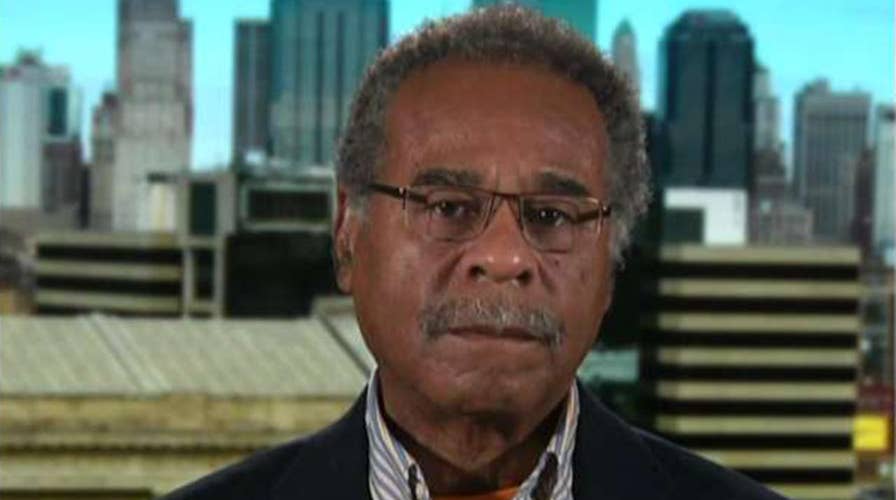
Rep. Cleaver on potential fallout of impeachment on 2020 election
Pelosi delays sending impeachment articles to the Senate; Missouri Rep. Emanuel Cleaver reacts.
This is a rush transcript from "Your World," December 20, 2019. This copy may not be in its final form and may be updated.
Neil Cavuto, anchor: All right. Plenty of drama on Wall Street, but it's really not responding in any way to the drama on Capitol Hill because we have an impeachment and kind of a limbo here, folks. The bottom line is, unless Nancy Pelosi formally passes along those impeachment directives to the Senate, you technically don't have impeachment. So, the big question then becomes, "When do we have impeachment?" Mike Emanuel on Capitol Hill with a high-stakes game of poker, it looks like, here, Mike. What's happening?
Mike Emanuel: Yeah, Neil, no doubt about it. Good afternoon to you. Several senior White House officials were up here for a walkthrough for a potential Senate trial. And when they left a short time ago, Eric Ueland, the legislative affairs director, told reporters, "President Trump wants the opportunity to present his case fairly and robustly." And he says that the White House is working very carefully with Majority Leader Mitch McConnell and Senate Republicans. Meanwhile, lawmakers are gone until the week of January 6th and a Senate impeachment trial is totally up in the air. House Speaker Nancy Pelosi sent the House of Representatives home for the holidays without sending those articles of impeachment over to the Senate. But a complicating factor for Pelosi and her team is Harvard Law Professor, Noah Feldman, who testified for Democrats in a House Judiciary impeachment hearing, tweeting, "Trump isn't impeached until the House tells the Senate." Today, the ranking Republican on House Judiciary blasted the Speaker.
[BEGIN VIDEO CLIP]
Doug Collins: Remember, her great statement was, "This is going to be a conscience vote. Vote your conscience. We're doing this for the moral -- for the morals of our country and for the, you know, clear and present danger that this president creates." And now she's holding the documents? This is typical Speaker Pelosi. This is typical from what she's done from day one. She has no rudder, except one thing, get this president defeated.
[END VIDEO CLIP]
Mike Emanuel: The top Senate leaders, Mitch McConnell and Chuck Schumer, we are told, had a cordial conversation yesterday. But the majority leader says they are at an impasse. Democrats had all the power in the House. But in the Senate, Republicans are the majority, which could frustrate the Democrats.
[BEGIN VIDEO CLIP]
Jeanne Shaheen: It would be nice if it could actually be a bipartisan process. I think that's what the American public is looking for. They want answers to the questions. They want to see a process that they believe is fair. And I think the -- this kind of maneuvering just further raises questions in the public about what's happening in Congress.
[END VIDEO CLIP]
Mike Emanuel: One sign of progress, Pelosi invited President Trump to deliver his State of the Union address on February 4, 2020, and he has accepted. Neil?
Neil Cavuto: All right. We'll see what's happening by that time. Thank you, Mike Emanuel --
Mike Emanuel: [laughs] You bet.
Neil Cavuto: -- very, very much. By the way, I mentioned at the outset, this was not a concern to anyone who is investing right now, today. I know I'm sounding like a broken record here, but the fact of the matter is the Dow hit another record today, the S&P hit another record today, the NASDAQ got another record today. So, Wall Street is concerned about this. As I so often say, it has a funny way of showing it. It is a nonevent to investors thinking it ends up that way, a nonevent. Are they right? Or, are they getting ahead of their proverbial financial skis? Attorney Lisa Kuharski is with us, and The Wall Street Journal's James Freeman. James, what do you think? The market's shrugging shoulders again at this; in fact, buying on it. What's going on?
James Freeman: Yeah, I think the expectation is still that the president does not get removed from office. Maybe there won't even ever be a Senate vote, I guess, waiting to determine whether the articles ever go over. And I think it continues to be a rebuttal to the Pelosi claim that the president is tearing apart our rule of law and our Republic. Investors like to invest in places where there is sturdy, predictable rule of law. And that number on the screen tells you they still believe that's true about the United States.
Neil Cavuto: Yeah. You know, help me with the mechanics of this, not the Wall Street part, Lisa, but just the legal part. Is that true that if those actions in the House are not forwarded to the Senate, you don't technically have an impeachment?
Lisa Kuharski: Yeah, legally, you do not have an impeachment right now. It -- according to the article, the Senate must receive the articles to impeach and they, also, must receive the managers. Those will be the prosecutors at trial.
Neil Cavuto: But the time to get those articles, is there a timeline on that?
Lisa Kuharski: There is no timeline. This is the question. And that is because nobody has ever faced this question before. There have been --
Neil Cavuto: Well, this is the first time we've done impeachment in the House that has not been followed immediately with passing the baton to the Senate.
Lisa Kuharski: Yes, and obviously --
Neil Cavuto: Nixon, of course, resigned before it got to that.
Lisa Kuharski: Of course. And we all look at this, as Americans, people watching the impeachment process. And this was put forth as a crisis. So, certainly, we are expecting a sense of urgency, but we're not seeing it. The only thing that the Senate can do would be to amend those rules, which, quite frankly, I'm not sure if that would be the right thing to do to go forward. I think, now, people are saying, "Trump needs an opportunity to defend himself." I think the Senate is going to support that. I think there starts to be a lot of pressure to deliver the articles. Quite frankly, I think it's, basically, you have to question now what the articles truly contain.
Neil Cavuto: So, are they physical pieces of paper, data, files that are given to the Senate that articulate the abuse of power, obstruction of justice? Is there more to this than I'm missing? Because it's been everywhere in the press.
Lisa Kuharski: There is a certain degree of formality. There are --
Neil Cavuto: All right.
Lisa Kuharski: -- actual articles that are presented, and they are called managers. They are the lawyers that will go --
Neil Cavuto: Yeah.
Lisa Kuharski: -- before the Senate. I mean, look, in the past, this was done very quickly because, obviously, the people want to see it completed. We are, also, in a 2020 year. You're talking about the markets. I mean, there's a lot of impact going on out there. And I think right now you're just seeing really, like, the circus continues. We're questioning, really, can they meet this, the -- can they meet the threshold that they've set for themselves when they get to the Senate floor? I wouldn't be surprised to see the Senate adjourn as soon as they do present the articles, if they wait too long, and an adjournment in the Senate when it comes to impeachment, that could actually be a dismissal, unlike an adjournment in a legal proceeding in a federal or state level.
Neil Cavuto: But, one way or the other, if it goes beyond the timeline that others had envisioned -- I don't know and I'm not here to debate whether that was Democrats or Republicans. I do know it could complicate a lot of other things people want to see done. Now, they've been walking and chewing gum at the same time, you know, by getting a spending bill done to avoid a government shutdown, dealing with the, you know, the Mexican-Canadian American trade deal, to get that wrapped up. But, then, you start backing up into time deadlines here, right?
James Freeman: Yeah. The timing of this is -- this is interesting. Because I think there's a liberal fantasy that, perhaps, Nancy Pelosi could hold on to these charges until there's a new Senate. As you point out, unlike legislation, an impeachment --
Neil Cavuto: And can she do that?
James Freeman: -- doesn't die with the --
Neil Cavuto: Can --
James Freeman: -- end of the Congress.
Neil Cavuto: -- but can she do that?
Lisa Kuharski: Well --
James Freeman: But -- well, that if she gets away, constitutionally, with taking this vote and --
Neil Cavuto: But there's nothing --
James Freeman: -- sitting on it.
Neil Cavuto: -- in the Constitution --
James Freeman: And how long can she wait --
Neil Cavuto: -- that allows for this --
James Freeman: -- for this?
Lisa Kuharski: She needs --
Neil Cavuto: -- right --
Lisa Kuharski: Right. Well --
Neil Cavuto: -- or doesn't --
Lisa Kuharski: -- legally --
Neil Cavuto: -- allow her?
Lisa Kuharski: -- legally, it's open-ended. She can sit on the articles. And he's, technically, not impeached, so he doesn't have to defend himself. I don't think the American people will sit well with that.
Neil Cavuto: Right.
Lisa Kuharski: And could it just be a ploy? Is this what they wanted all along? They wanted to be able to say, in the media, "Trump has been impeached." He is not actually impeached. Now, we're going into legalese. And go into a 2020 year. Maybe they wait until a certain point in time, for election cycles. You know, there's a lot --
Neil Cavuto: Crazy.
Lisa Kuharski: -- of questions.
James Freeman: Yeah, I think it does create a credibility problem here. We were told over and over, "We need to get this done. It's urgent. We got to ignore rule of law. We can't pursue these court questions about access to documents, et cetera."
Neil Cavuto: Right.
James Freeman: And, now, an indefinite wait while she seeks the terms she wants out of the Senate.
Lisa Kuharski: That's a great point and it's true.
Neil Cavuto: If it even happens. All right. And, by the way, what if there is no trial? What if it never gets to the Senate, they never -- everything just ceases and desist? Then what? After this.
[COMMERCIAL BREAK]
Lindsey Graham: The Constitution never envisioned the House being able to impeach the president and dictate the terms of the trial in the Senate and hold them back at a time of their choosing. That does create a constitutional extortion mechanism that's dangerous for the country.
Neil Cavuto: All right. Lindsey Graham convinced that this delay here is the equivalent constitutional extortion. There are many on both sides who fear he might be right if it drags out the process. The president has already indicated that he would like an opportunity for a trial and and witnesses and those from the Bidens and you name it, who could prove that this was all a cabal against him. As I said, for the financial community, this has been a nonevent. Home Depot co-founder Bernie Marcus joins us right now. His thoughts on how all of this is playing out. Always good to see you, Bernie. Thank you for coming in. What do you think? How is this playing out?
Bernie Marcus: I think it's a charade, and, you know, it's your tax dollars at work. And very frankly, I'd like a refund on my tax dollars right now after watching this going on for a week in the House and listening to the nonsense going on, one speech after the other. Nobody listening to anybody. It's a total waste of their time, and I think the American people have to start looking at this and saying, "What is going on here? What was the whole purpose of this thing? It accomplished nothing."
Neil Cavuto: Do you think the fact that the support numbers for impeachment have been dropping steadily, slowly, but consistently, particularly in the battleground states that this is boomeranging?
Bernie Marcus: Look, I hope so. I think the American people have to look at this again as a charade. It's politics at work, pure politics and not only that. Think about the damage that's been done to the president.
I hope the American people understand that this whistleblower thing is going to go on for many, many years. I don't know how the next president comes in, whether a Democrat or Republican, is ever going to be able to speak freely on the phone because he doesn't know who is on the phone, who disagrees with him. And, you know, we're going to end up in an impeachment policy from here on in. So, it's going to hurt our foreign policy. It's going to hurt the presidency itself. It's going to have a ramification for America that we don't want to know about. And I'm talking about Democrats should understand what you've done. This is not good for America.
Neil Cavuto: Do you worry right now on that, regardless of how this plays out, you know, obviously, the financial community is interested in the big picture stuff, earnings, which are good, numbers, which are good, very strong retail sales, all of that housing that seems to be picking up depending on the day and the data and then that will dictate the course of events? None of this impeachment stuff.
Bernie Marcus: Well, you know, it is. And listening to the debate last night, Neil, you know, it's as though people are passing on a different plane in America. If you listen to them debating last night, the economy's in terrible shape. The fact is the economy's in great shape. They're talking about America losing out, American workers losing out. And yet all the policies that they want to continue or the policies they want to bring back are going to create jobs losses in America. And I don't get the whole thing is, oh, Zo, they're living in a world that doesn't exist. The facts are the economy is the best it's ever been in 50 years. The facts are more people are working than ever, ever in the United States and ever, the lowest unemployment rate for Blacks and Hispanics, and the general for small businesses, which are creating most of the jobs, and you know, Job Creators Network, which we helped to fund and start, is working with the small business people. They love what's happening. And yet, last night, they're talking about taking away those tax reforms. Why would you want to hurt the economy? Why would you want to hurt the very people that you claim you represent? It doesn't make sense to me, and I don't know. I don't know how -- where they're coming from, frankly. I really don't.
Neil Cavuto: I do wonder, too, Bern, as well. I mean, there was a discussion of impeachment, which was fairly limited. I was surprised. It was more about more moderating proposals, moderating among a group of candidates who all want to raise taxes, do something I'm sure you're not keen on. But they have sort of recalibrated from the, you know, Medicare for All, all this big government stuff. They dialed it back a little bit. I don't know whether that is -concern that they got ahead of themselves or the fact that Elizabeth Warren started scaring people or the Boris Johnson thing in Britain. But it is clear to me that they're trying to pivot. What are we to make of that?
Bernard Marcus: I think you're probably right. I think that they are pivoting. You know, they're supposed to be out visiting with the American people. I think the American people are saying, "What did you do? What did you accomplish? Have you solved the problem of immigration? Have you really solved the problem of medical care for all for people? Have you solved the problem of the budget, which is going to come back in another year and hit us again in the rear end?".
The fact is that they put their mind and they put their effort and energy all on something, and then they came up with weak excuses for impeaching the president. There's nothing criminal. I'm not a constitutional lawyer, I can't tell you about it. But from what I understand, most of the issues that came up at the past were criminal charges and there was nothing criminal charge of, "I just hate Donald Trump. I don't like Donald Trump. I think Donald Trump is a terrible human being." And on that basis, you impeach him? Come on. This is America. He was voted into office. He is the president. Support him or just don't vote for him again. It's as simple as that.
Neil Cavuto: So when you hear Joe Biden and some of these others talking about, you know, the jobs aren't what nearly the president says they are or that the quality isn't good and that people are, you know, between a rock and a hard place -- obviously, I understand the position of the opposition party when the economy seems so strong, but they seem to be advocating for more government to patch that, to fix that. Now, of course, you come from a position of just the opposite of that. But they're saying that, ironically, that capitalism has failed us. Do you think capitalism, the one that made you a millionaire and created this Home Depot empire, has failed us?
Bernard Marcus: Well, it's not [laughs] -- it not only made me a wealthy person. You know, we have over 400,000 people working for Home Depot. I would estimate that we had millions working for the Home Depot over -- since, you know, 1979 when we started the company. How many millionaires we created -- forget about myself -- how many millionaires we created of people who had high school educations, who never could have made any other way, who worked hard every day, and achieved things that --.
Neil Cavuto: But Elizabeth Warren said --.
Bernard Marcus: -- the American Dream --.
Neil Cavuto: -- that you didn't do that, Bernie. You didn't do that, there were a lot of people, a village people, who made that possible. That wasn't you. It wasn't Ken Langone. What do you think of that?
Bernard Marcus: No. No, no, no. When I was working 80 hours a week, it wasn't me working because it was somebody else working inside my body. But 80 hours a week, week after week, stuck struggling to build this company up. The government didn't help me. I must tell you, the government did everything they could to stop me from being successful and to cancel all the people, you know, to hear this nonsense -- look at her. How much money is she worth today, and what the hell did she do to get that money? Did she work the way I worked? I doubt it very much.
Neil Cavuto: Now, I don't know if you have these, you know, wine chambers and all of this stuff, these bunkers, there's wine caves, and all the rest, but obviously it's popular even there to continue to pound that theme. And guys like you have a target on them. How do you feel that?
Bernard Marcus: I feel good about it. Look, I feel like I'm the American dream, reliving the American Dream. Came out of nowhere, my parents were Russian immigrants, poor as possibly can be, who would ever dream I get to achieve what I've achieved in my life today? I could achieve what I've achieved in my life today only because this is America and only in America could you do that.
[CROSSTALK]
Neil Cavuto: Young people are now not as disposed or impressed with capitalism as they are socialism.
Bernard Marcus: No wait until they pay their first paycheck. What they ask -- that first paycheck when they get it, and all of a sudden they're working 50 hours they're working 50 percent of their time to pay taxes when they wake up and they will wake up and, you know, this is the time they could be liberal and stupid, which they are. And then they grow up and they start to learn to real life in the real life is that life it doesn't give you anything and nobody gives you anything. You have to earn it and work hard for it.
Neil Cavuto: In the meantime, good luck coming out of your shell it seems to be working.
Bernard Marcus: Yeah thank you very much.
Neil Cavuto: Always good having you my friend, be well. The man who brought a beautiful aquarium to Atlanta, Georgia. That was on his dime he made that possible and it's found its iconic destination worldwide. He made that possible. We'll have more after this, including Emanuel Cleaver, a top Democrat, who's also a minister by training. Who's kind of saying everyone take a chill pill he's next.
[COMMERCIAL BREAK]
Neil Cavuto: All right, we've got Emanuel Cleaver with us right now, the Missouri Democratic congressman, a key player in the House, also a minister by training who has a calming presence whether you agree with his politics or party or not. And I'm sure he's been urging for calm on both sides right now. You know, a lot more is getting done than was the case before congressman, you know, both sides, I guess, trying to prove that they can do lots of stuff at the same time. Are you concerned, though, that when all of this is done and settled, whenever Nancy Pelosi hands over these articles of impeachment, the Senate, whatever that process is, the Senate presumably, you know, doesn't, you know, impeach the president, then everyone has to move back to doing stuff together. Can you guys get to that stage?
Emanuel Cleaver: Well, I think a lot of us are already there are a lot of us attempted, as you mentioned earlier, to get things done. We have some bipartisan legislation that should be eventually taken up by the Senate and sent on to the president's desk. The impeachment thing, make no mistake, and with some of the members, some Democrats and some Republicans, it has been all consuming it's been a point of anger and hostility and so forth. But for many of us, we went -- we came we went to Washington to try to get something done for the country and for our communities, so we've been working together. For example, the bill that the White House is warning us about now, warning us not to push, which is sanctioning Russia for their meddling in our elections, that's bipartisan. Lindsey Graham is one of the sponsors of the legislation.
Neil Cavuto: But are you worried that your party, you know, might be losing the support of the American people when it comes to bases? It's still close nationwide, but it's been dipping consistently, slowly but remarkably consistently, particularly in battleground states. Are you concerned that this is hurting your party? And this was one of the reasons why Nancy Pelosi and others was trying to say we're working on USMCA, we're not going to talk about impeaching, as she said yesterday, when prior to that, it was always impeachment. What's happening?
Emanuel Cleaver: Well, you know, the polls are moving a little in the favor of the president. I'll grant that to you and anybody else it's reality. I do think, however, that the president still under what even Clinton was doing in terms of his popularity at the same time. But I am --
Neil Cavuto: But he is higher, ironically, at this stage, Congressman, than Barack Obama who wasn't being impeached, at this same moment.
Emanuel Cleaver: Well, that's true.
Neil Cavuto: It's kind of interesting, isn't it?
Emanuel Cleaver: It really is. You know, Barack Obama, it took him a time, a pretty good while to get everything together for his reelection make no mistake about it. Remember, most many people went to sleep that night, including, I think, Mitt Romney believing that he had won the election so, you know, there are some. Here's what I think is that nobody knows what's going to happen and nobody can figure out what's going on with the American public 70 percent, for example, say they want us to have the trial and they want the witnesses, the witnesses to come forward. I think we're frustrating the people in the country. I think they want to know whether things are, as they were presented at the impeachment hearing or whether the president is, you know, being just beat on.
Neil Cavuto: Well, do you think it's proper for Nancy Pelosi, Congressman then, to withhold his articles of impeachment, which has never been done in our history before. Rare as this event is, period and keep the nation kind of in limbo.
Emanuel Cleaver: Well, yes, I think I would like for her to have moved on but I also believe that it was Mitch McConnell saying, you know, well, I'm not going to deal with this issue, you know, independently and free of my prejudices. He said, I'm you know, this is not going to end in any way except for an acquittal for the president. So, I think Pelosi said, well, if that's the case, then why would we send it over? And is it healthy for the country for this to hang out here and linger? I doubt it but what I would it would be good if people got together and came up with a plan. With would the House and the Senate like they did in years gone by when this happened before. And so now --
Neil Cavuto: They're not doing that, right? Well, hopefully all sorts out.
Emanuel Cleaver: I know.
Neil Cavuto: Hopefully it at all sorts out. Emanuel Cleaver, thank you very, very much if we don't chat again have a merry Christmas. All right we now we're just getting word now that the FISA presiding judge is demanding more answers from the FBI over these surveillance warrants and linked to this whole Carter Page hunt. It comes at a time, as well, when a lot of people are saying, "The whole process itself stunk from the beginning." Did it? After this.
[COMMERCIAL BREAK]
Neil Cavuto: Well, it looks like we're going to have to keep hitching a ride to the space with the Russians because the Boeing Starliner, while it was impressive today, it didn't quite make its orbit today. They're going to try soon, again, but mission delayed. After this. [COMMERCIAL BREAK]
[BEGIN VIDEO CLIP]
Male Speaker: As a director sitting on top of an organization of 38,000 people, you can't run an investigation that's seven layers below you. You have to leave it to the career professionals to do.
[END VIDEO CLIP]
[BEGIN VIDEO CLIP]
Reporter Question: Do you believe that?
Chuck Schumer: No. I think that the -- one of the problems with what happened was precisely that they pulled the investigation up to the executive floors, and it was run, and bird-dogged by a very small group of very high-level officials. And the idea that this was seven layers below him is simply not true.
[END VIDEO CLIP]
Neil Cavuto: And, now, to add fuel to the legal fire on this whole issue of how an investigation started in the first place, you have the FISA presiding judge demanding the FBI answer more questions over its surveillance, warrants, and anything linked to initially tracking Carter Page. You remember him. The former acting attorney general of the United States, Matthew Whitaker, with us right now. You know, the more time goes by, Matthew, the more, you know, kinks we become aware of ,where you begin to wonder, "What was going on and who was leading the charge?" What do you think?
Matthew Whitaker: Well, there's several things that this causes me to think about. One is that the FISA report did not just say that the FBI was clumsy or, somehow, you know, just made mistakes. These were -- these were acts possibly intentional. We know of at least one case by the FBI lawyer who changed a fact, that that was an intentional act. And then, I also am reminded sort of -- one of the things when I became acting attorney general that I really tried to implement at DOJ, and that was to follow regular order, where investigations are handled at the appropriate levels, like they always are. And anytime the executives -- in the fifth floor at DOJ, or on the seventh floor at the FBI -- get involved in a meaningful way in investigations, they -- it always turns out to burn them in the end. And I think, you know, this story is not over yet. Not only do we have Durham, still, but I think this this FISA court is really looking for answers and is very suspicious, now, of what the FBI is doing in these --
Neil Cavuto: Well, could you help me --
Matthew Whitaker: -- ex parte --
Neil Cavuto: -- with that?
Matthew Whitaker: -- proceedings.
Neil Cavuto: Matt, I'm not a lawyer and you're a good one. And I'm just learning that when Comey, when he was --
Matthew Whitaker: Appreciate your confidence.
Neil Cavuto: Well, it's true. But, I mean, when -- apparently getting a FISA warrant isn't that difficult? I've heard some say, you know, "better than 99 percent of the time, they're granted." Yet James Comey --
Matthew Whitaker: Yeah.
Neil Cavuto: -- in his discussion with Chris Wallace, said, "It's very difficult to get." Educate me here. Which is it?
Matthew Whitaker: Well, so, there's no opposing party in a FISA warrant application. But the rules are written, and the court expects, that the FBI not only provides the probable cause to get the warrant, but to also provide exculpatory information, or facts that would cut to the opposite direction in not allowing the warrant. They do almost always get these warrants because they are supposed to be so high, at such a at such a high standard that all of the information is accurate and has been completely --
Neil Cavuto: So, you don't believe --
Matthew Whitaker: -- run into the ground. And in this case --
Neil Cavuto: -- they were just sloppy?
Matthew Whitaker: -- it's very obvious it was.
Neil Cavuto: You don't believe they were just sloppy, here; they were deliberately so, to push an agenda, even though the Inspector General Horowitz says, "that was not the case?"
Matthew Whitaker: What Inspector General Horowitz said was that he could -- did not find any evidence --
Neil Cavuto: Right.
Matthew Whitaker: -- either testimonial or written, that suggested that these were in bad faith or were --
Neil Cavuto: Or deliberate. Right.
Matthew Whitaker: -- politically-motivated.
Neil Cavuto: Right.
Matthew Whitaker: We've also heard the Attorney General Barr say that he can't rule out bad faith, as of yet.
Neil Cavuto: Okay.
Matthew Whitaker: And I'm going to wait until Durham comes back. But these -- to me, some of these look like intentional acts.
Neil Cavuto: All right, fair enough. Matthew Whitaker, thank you very, very much. Good seeing you again.
Matthew Whitaker: Merry Christmas.
Neil Cavuto: Oh, to you --
Matthew Whitaker: Thank you.
Neil Cavuto: -- as well. We have a lot more coming up, including some fiery exchanges at that big debate this night that might be moving the dial for certain voters, but not the way the candidates want it.
[BEGIN VIDEO CLIP]
[applause]
Elizabeth Warren: Billionaires in wine caves should not pick the next president of the United States.
[END VIDEO CLIP]
[BEGIN VIDEO CLIP]
Pete Buttigieg:
[applause] This is the problem with issuing purity tests you cannot, yourself, pass.
[END VIDEO CLIP]
[COMMERCIAL BREAK]
Neil Cavuto: All right. So, who are those Democrats debating last night got the most buzz or the most interesting dial response? Who would know better than pollster extraordinaire Frank Luntz? You were monitoring it very closely. Who seemed to click?
Frank Luntz: So, The L.A. Times decided to do a town hall, and I invite viewers to go to the L.A. Times dot com, download the app, and you can see everything, Neil, I'm going to show you for the entire debate -- both the focus group and the dials. The first clip I want to bring you is that battle between Mayor Pete and Elizabeth Warren over campaign finance. It was the snappiest of the debate.
Neil Cavuto: Right.
Frank Luntz: Democrats really did not like them going back at each other, and you can see that the lines go up. But when Mayor Pete delivers the attack, watch it cave. Let's take a look.
Elizabeth Warren: We made the decision many years ago that rich people in smoke filled rooms would not pick the next president of the United States. Billionaires in wine caves should not pick the next president of the United States.
[BEGIN VIDEO CLIP]
The Press: Mr. Mayor. Your response?
Pete Buttigieg: According to Forbes magazine, I am the literally the only person on this stage who's not a millionaire or a billionaire. So, if this is important, this is the problem with issuing purity tests you cannot yourself pass.
[END VIDEO CLIP]
Neil Cavuto: He seemed to be ready for that, Frank. Right?
Frank Luntz: But she wasn't really ready for it, and the audience kind of gasped. It was one of the most dramatic moments of all the debate season. Now, that red line of moderates, the green line are progressives, are liberals. And in this case, on campaign finance, they both climbed in unison. And what was fascinating about it is that Democrats do not want their candidates attacking each other. They'd rather focus their fire on Donald Trump, but in this case, they don't like billionaires. They don't like the money in politics. And they were basically mad at both campaigns, at both candidates, for doing things that some of our focus group participants thought was unseemly.
Neil Cavuto: All right. So, what else struck out or might have struck a chord?
Frank Luntz: What's great about this one is that Joe Biden -- this is Biden at his best. He kicked off the debate in a very strong way, not by talking about the economy in general, but by focusing on middle class voters. This is one of the highlights of the debate. Let's take a look.
[BEGIN VIDEO CLIP]
Joe Biden: Middle class is getting crushed. The working class has no way up as a consequence of that. You have, for example, farmers in the Midwest, 40 percent them could pay, couldn't pay their bills last year. You have most Americans, if they've received a bill for $400 or more, they'd have to sell something or borrow the money. The middle class is not as behind the eight ball. We have to make sure that they have an even shot. We have to eliminate significant number of these god-awful tax cuts that were given to the very wealthy. We have to invest in education. We have to invest in health care.
[END VIDEO CLIP].
Frank Luntz: It was a homerun for the vice president. The problem was he didn't keep it up in the rest of the debate, that his energy kind of got a little bit lower. And the language that he used in that, again, not focusing on the stock market, not focusing on jobless rate, but on the challenges facing the middle class. For Democrats, that is a winning message.
Neil Cavuto: That's very interesting. We'll see who moves the needle the most. I don't know how they were able to speak with those graphs going over their head the whole time, but they somehow --
Frank Luntz: They -- Neil, they don't see the graphs. And by the way, the winner last night was Bernie Sanders. He did better than the other candidates.
Neil Cavuto: Okay. Interesting. I was joking about the graph thing. All right. We're going have a lot more coming up, including the big fuss over this latest Star Wars movie. There was some hope expressed that it might be the last one, but apparently, it's not.
[COMMERCIAL BREAK]
Neil Cavuto: All right, apparently this latest Star Wars, I was hoping would be the last one, but apparently, it's not. But it's out, and it's making money hand, hand over fist, although it's getting mixed reviews. Apparently, it's the end of this particular genre. There's another genre -- I'm lost. Anyway, he's young and hip, the kids who are with me today, unfortunately no.
Your World audio technician and best-selling author, Dan Baia; The New York Post, Brookee Rogers; and also Sincerely, Kat on Fox Nation, much, much more, Kat Timpf. Any of you seen this yet?
Dan Baia: I have not seen it yet.
Brookee Rogers: Never would.
Kat Timpf: [negative] No.
Dan Baia: It only came out twelve hours ago. So -- but people have already gone and --
Neil Cavuto: I know.
Dan Baia: -- it's getting, you know, that people are going and getting to go -- to get it.
Neil Cavuto: Yes. Indeed, they are.
Dan Baia: You know?
Neil Cavuto: Are you guys big fans --
Kat Timpf: You know, a few years ago I made a joke about Star Wars on Red Eye, and it ended up I got --
Dan Baia: You got death threats right?
Kat Timpf: Like hundreds death threats. So, I should tread lightly here, but I won't. I do not I've never seen Star Wars. None of them don't know what a Yoda is don't know what a Jedi is do know there are things that nerds --
Dan Baia: How livid are you?
Kat Timpf: Things that --
Dan Baia: Pretty mad you are about this.
Kat Timpf: No, that's for nerds. So, to be clear, I'm not only saying that I do not watch it I'm saying if you do, I think less of you.
Neil Cavuto: Well I'm telling you be an angry Kat but this one is getting not quite the robust reviews. Some of the others have.
Brooke Rogers: Yeah, I. It seems like a lot of the diehard fans that I follow on Twitter or know in real life who have seen it in the last twelve hours. It is newly out. They don't like it. And I think that --
Neil Cavuto: Maybe because it looks like all the others.
Dan Baia: No, though --
Brooke Rogers: Yea potentially.
Dan Baia: The problem is like the Mandalorian show, that's getting really good praise on Disney Plus.
Neil Cavuto: Right right.
Dan Baia: That's done by fans.
Neil Cavuto: These people were lining up days in advance to see.
Dan Baia: Well it's no matter what they will go see it if they want to love it or hate it. But the problem is --
Neil Cavuto: I understand, but that's a loyal bunch.
Kat Timpf: Grown people dressing up to go to the movies. I'm sorry.
Dan Baia: Well that doesn't just happen with Star Wars.
Kat Timpf: Yeah, but to be clear. I'm saying anytime it happens, it's not OK.
Dan Baia: Rocky Horror --
Kat Timpf: Also, not OK.
Neil Cavuto: But it's still going to be still a billion dollar --
Kat Timpf: I think you're right.
Dan Baia: I think the problem is, it's just people now there's too much politics into it. The last three have actually been a very political.
Neil Cavuto: Really?
Dan Baia: Yeah, they take for added to their --
Neil Cavuto: Did they add like a Donald Trump character?
Dan Baia: Well you know, there's kind of implications so people are fed up with it. And that's why the Mandalorian, the Disney Plus show, is doing so well because it's a show from fans. Ok, I'll be quiet.
Kat Timpf: Isn't a Yoda an alien.
Dan Baia: To us he is technically --
Kat Timpf: Are Jedis aliens?
Neil Cavuto: Oh, my god. Stop please.
Kat Timpf: I don't know
Neil Cavuto: Meanwhile, so much for spreading holiday cheer.
Dan Baia: That was him then.
Neil Cavuto: Yes, indeed. A new survey finds that one in five Americans are taking people off their holiday card mailing list over political differences. Brookee, I can't believe that.
Brooke Rogers: Well I'm taking Kat off my Christmas list for not liking Star Wars so she's off.
Kat Timpf: I'm morally opposed to it.
Neil Cavuto: Yeah exactly.
Brooke Rogers: No, I think --
Neil Cavuto: That's kind of petty right.
Dan Baia: Taking her off for the --
Brooke Rogers: It is, and I stand by it. No, I think that honestly, sending out Christmas cards is like so labor intensive and expensive that honestly, I would do it, too. I think any reason that you can get off my Christmas card list, you're off. It's too much work.
Dan Baia: Well you can automate them now.
Neil Cavuto: Warm and fuzzy holiday type.
Dan Baia: You can do things now and have complete companies do it yourself. But I think politics has almost become the new religion where people are so polarized that, you know, they get so upset.
Neil Cavuto: But really if you found out someone who was against your political beliefs, you would say not good.
Dan Baia: No, I don't think I would. I would purposely send them a card.
Neil Cavuto: I could see Kat doing it.
Dan Baia: Oh, Kat's already did it.
Kat Timpf: Well, I wouldn't take anyone off my Christmas card list for politics because I do not have one.
Dan Baia: Yeah.
Kat Timpf: I do not send out Christmas cards to anyone.
Dan Baia: Really?
Kat Timpf: No, I don't and --
Dan Baia: Because you're just a Debbie downer.
Kat Timpf: I understand that because I'm a grown up. I you know --
Neil Cavuto: Something happened to you when you were little right.
Dan Baia: Heavens to merk a troy.
Kat Timpf: I just don't what am I going to do? Like, I don't have, like, babies. I'm going to send out pictures of me and my cat to all my loved ones.
Dan Baia: Yeah well people do that they send out you've got pictures of my dog Kat.
Kat Timpf: It's very, very hard to hold a cat.
Dan Baia: I agree with you that's why you sedate it.
Neil Cavuto: This is on the subject of holiday greetings. Comedian Whitney Cummings is getting a surprising reaction to wishing her coworkers a merry Christmas. Take a look.
[begin clip]
Whitney Cummings: I was leaving like on the 18 or whatever today was. I was like, bye, guys, merry Christmas. Like just a formality what you would say right.
Conan O'Brien: Right right.
Whitney Cummings: I come back like June 6. H.R. calls me and they're like, hey, we need to talk to you one of the interns is pissed off that you said Merry Christmas. And I was like, which, by the way, I was like, I don't even care how your Christmas was it was just a formality. Like that's what you say when you leave.
[end clip]
Neil Cavuto: I like that she didn't really care what it's like but come on.
Dan Baia: Oh, I got to watch what I say now if that's the bar. I mean that's actually terrible. I mean, why? It just seems so inappropriate.
Brooke Rogers: I'm sad to hear is H.R. calling Deon.
Dan Baia: Yeah exactly. Well, that's for like if it's about Deon press 0.
Neil Cavuto: Yeah. But I mean if we've gotten that bad where that says I like to think that they know --
Dan Baia: Obviously.
Neil Cavuto: They know, there are a lot of people they don't.
Kat Timpf: I just can't imagine this intern actually calling H.R even if someone would just say to me, I hope your Christmas is terrible, you jerk. I still would be like oh well I'll brush that one off.
Dan Baia: What is that a chip on the shoulder.
Kat Timpf: Yeah.
Dan Baia: People are like, how dare you assume that I would even want to celebrate this holiday? Maybe it's that kind of like they think it a front.
Neil Cavuto: But you know, people of all different persuasions, they say still say Merry Christmas or this you know, what's the big deal?
Brooke Rogers: I think it just means that this person too much time on their hands, really. I think like if you go through all that effort of filing an HR complaint because somebody wished you Merry Christmas, you just you need to get a hobby.
Dan Baia: Can you imagine calling each HR and trying to, you know, listen, what did they say --
Neil Cavuto: I'm call HR about the Star Wars thing.
Dan Baia: They said Merry Christmas. Wrong yea I know. What's a Jedi?
Neil Cavuto: It one thing you never never Jedi.
Kat Timpf: Everyone thinks I'm joking what's a Jedi?
Neil Cavuto: Never Jedi.
Dan Baia: You don't know what a Jedi is?
Kat Timpf: What's a Jedi?
Dan Baia: It's very involved. We're going to have to walk you through the break.
Kat Timpf: Exactly I'm bored already. That's my point.
Dan Baia: That's why they made movies for you to watch them though.
Neil Cavuto: Well okay not impressed. Yeah. Exactly we're going to come back after this and see what the president is planning on. This whole trial issue, he has his own interests here. He wants to see the Senate act on after this.
[COMMERCIAL BREAK]
Neil Cavuto: All right tis the season for impeachment or is it Fox News, this is Kristin Fisher at the White House how they're playing and reacting to all of this. Hey, Kristin.
Kristin Fisher: Hey, Neil. Well Congress is heading home for the holidays at an impasse on impeachment and President Trump is just a few hours away from leaving the White House, he's going to be going to Florida and we're hearing that he's experiencing a range of emotions after the week that he has had here in Washington. Republican Senator Lindsey Graham says he's mad as hell, while his daughter Ivanka says that he's really been energized by everything that's happened this week. But he's mad as hell, according to Republican Senator Lindsey Graham, because of what House Speaker Nancy Pelosi has decided to do. She has decided not to send those articles of impeachment over to the Senate. She says she's doing it because she wants to ensure a fair trial in the Senate, but Senate Majority Leader Mitch McConnell says it is not up to her and President Trump he simply wants to get all of this over with. He wants the trial to start as soon as Congress gets back from winter break but, Neil, it will almost certainly be delayed days, weeks, perhaps even longer now Neil.
Neil Cavuto: That perhaps longer, part of that scares a lot of folks. Kristin Fisher. Thank you very, very much. By the way, we'll be monitoring all of this with our light coming on that show tomorrow with Republican South Carolina Senator Tim Scott, a fair and balanced Democratic South Carolina Congressman James Clyburn. The pros and cons of this, 10:00 a.m. Eastern Time. real time, and live for you the fallout, tomorrow. Here's "The Five."
Content and Programming Copyright 2019 Fox News Network, LLC. ALL RIGHTS RESERVED. All materials herein are protected by United States copyright law and may not be reproduced, distributed, transmitted, displayed, published or broadcast without the prior written permission of Fox News Network, LLC. You may not alter or remove any trademark, copyright or other notice from copies of the content.
