






This is a rush transcript from “Fox News Sunday," April 26, 2020. This copy may not be in its final form and may be updated.
CHRIS WALLACE, FOX NEWS ANCHOR: I'm Chris Wallace.
Closing America was hard, but could the reopening be even harder?
(BEGIN VIDEOTAPE)
DONALD TRUMP, PRESIDENT OF THE UNITED STATES: I think our economy will start to pick up very substantially as soon as the states can open.
WALLACE: Some governors announced plans to get back to business and start returning to normal life. But with 26 million losing their jobs since March, how quickly can the country bounce back?
We'll discuss that and new relief headed to small businesses with Treasury Secretary Steven Mnuchin, only on "FOX News Sunday".
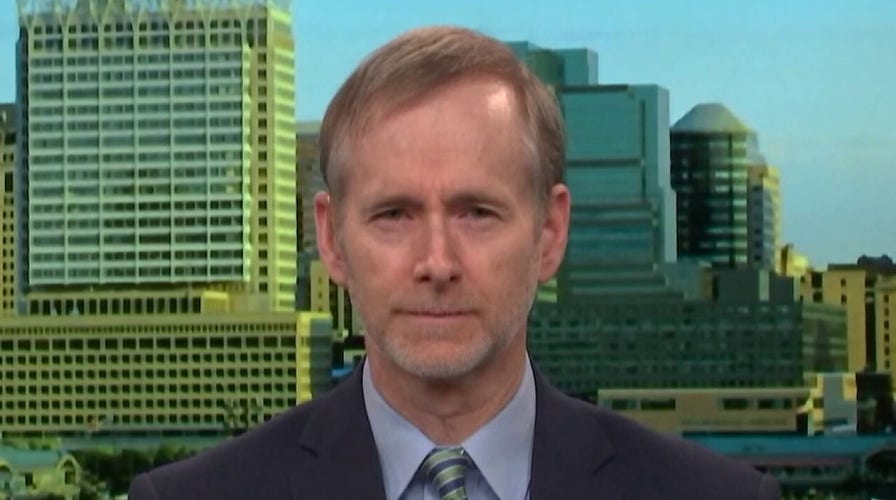
And how best to balance economic recovery with keeping Americans safe. We are joined by Dr. Tom Inglesby, director of the Johns Hopkins Center for Health Security.
Then --
GOV. KEVIN STITT (R), OKLAHOMA: Personal-care businesses can reopen for appointments only.
WALLACE: Oklahoma among the first states to reopen businesses, raising questions about public health. We'll ask Governor Kevin Stitt about criticism it's too much too soon.
Plus, foreign powers flex their muscles in the midst of the coronavirus. We'll ask our Sunday panel about the new test of American resolve.
And our "Power Player of the Week," a Broadway legend's quest to spread joy and hope after his own battle with the coronavirus.
All, right now, on "FOX News Sunday".
(END VIDEOTAPE)
WALLACE: And hello again from FOX News in Washington.
The U.S. death toll from the coronavirus now tops 53,000 in just two months. That's close to the number of all the Americans killed in the Vietnam War over 19 years.
Now, some states like Georgia and Oklahoma are starting to reopen businesses despite warnings from public health officials that relaxing restrictions too soon could lead to more cases and more deaths. But the economic pain is severe with unemployment numbers in this country not seen since the Great Depression.
In a moment, we'll speak with the Secretary of the Treasury Steven Mnuchin, but first, let's bring in Mark Meredith with the latest on the debate over when and how to reopen -- Mark.
MARK MEREDITH, FOX NEWS CORRESPONDENT: Chris, some governors are easing health restrictions to allow certain businesses to reopen now while others are holding off just a little bit longer and begging people to stay home.
(BEGIN VIDEOTAPE)
KEISHA LANCE BOTTOMS (D), ATLANTA MAYOR: What I would say is simply, just stay home.
MEREDITH: Atlanta's mayor is furious Georgia Governor Brian Kemp is allowing gyms, bowling alleys and barbershops to reopen.
UNIDENTIFIED FEMALE: I own a salon in Savannah, Georgia, and I am not at all happy with the situation in which we found ourselves.
MEREDITH: Health experts fear reopening too soon could lead to more cases and an increased death toll. But some Americans tell us they're not worried.
UNIDENTIFIED MALE: I would, without hesitation, visit businesses that are opening in my state, and I live in East Texas, it opens up.
MEREDITH: In Oklahoma, some businesses began reopening this weekend. Next Friday, the state will allow gyms, theaters and restaurants to reopen if social distancing is kept in place.
Meantime, Michigan's governor is extending her state's lockdown until mid- May.
GRETCHEN WHITMER (D), MICHIGAN GOVERNOR: The data shows that most Michiganders are doing their part by staying home and staying safe.
MEREDITH: The White House has 5 million people have been tested for the virus so far. Officials warn as testing increases, the number of confirmed cases in the U.S. will go up.
MIKE PENCE, VICE PRESIDENT OF THE UNITED STATES: People should not be discouraged by those numbers. We are looking at very positive trends in hospitalization, in emergency room entrances.
MEREDITH: But some experts say the availability of testing remains an issue.
DR. CARLOS DEL RIO, EMORY INFECTIOUS DISEASE PHYSICIAN: We still are not where we need to be interesting.
MEREDITH: Forcing governors to make decisions without the data they may need.
(END VIDEOTAPE)
MEREDITH: The president also appears to be cutting back on the daily White House briefings that we've come to expect. There was only a short one held on Friday where the president did not take questions. We didn't have a briefing on Saturday. We'll wait to see if we have one later on today -- Chris.
WALLACE: Mark Meredith, reporting from the White House -- Mark, thank you.
CHRIS WALLACE, FOX NEWS SUNDAY ANCHOR: And joining us now, Treasury Secretary Steven Mnuchin, who's a member of the president's Coronavirus Task Force.
Mr. Secretary, welcome back to "FOX News Sunday".
STEVEN MNUCHIN, UNITED STATES SECRETARY OF THE TREASURY: Thank you, Chris. It's good to be back with you.
WALLACE: President Trump says that once the country reopens, that we're going to see a sharp quick recovery.
Here he is this week.
(BEGIN CLIP)
DONALD TRUMP, PRESIDENT OF THE UNITED STATES: We're going to rebuild it and we're going to rebuild it better and it's going to go faster than people think. I built it once, I'll built (ph) it a second time.
(END CLIP)
WALLACE: How sharp a recovery do you see? And how soon, sir?
MNUCHIN: Well, Chris, I think as we begin to reopen the economy in May and June you're going to see the economy really bounce back in July, August, September. And we are putting in a unprecedented amount of fiscal relief into the economy. You're seeing trillions of dollars that's making its way into the economy and I think this is going to have a significant impact.
WALLACE: But that quick bounce back that you talk about goes against the forecast of most experts. Take a look at these numbers sir. The nonpartisan Congressional Budget Office now projects GDP will shrink by 5.6 percent total this year. Unemployment will end 2020, they project, close to 12 percent. And your former company, Goldman Sachs, says the global hit will be four times worse than the 2008 Great Recession.
Question, are all those independent experts wrong?
MNUCHIN: Well, Chris, we've never seen anything like this. This is not the Financial Crisis. This is a scenario where we've closed the economy and we're going to open the economy. So all these models are based upon health assumptions, how quickly we reopen, so we'll see. My own opinion is, again, we have unprecedented amount of liquidity in the system. We're very sympathetic to all the people that are out of work. But there is enhanced unemployment, there's the PPP, there's direct deposits. This is going to put (ph) a lot of liquidity. And as businesses begin to open you're going to see demand side of the economy rebound.
WALLACE: Let's talk about the PPP. The president just signed a bill that Congress had passed, another $310 billion for the Paycheck Protection Program. But the first round, I think it was $250/$300 billion, the sign-up for that ran out in 13 days. How long do you think this next tranche of $310 billion is going to last? And can you guarantee that big corporations, for instance like Ruth's Chris that got money the first time around, eventually pay it back, but did get money won't even get money this time?
MNUCHIN: Chris I just want to put this in perspective -- and I want to thank everybody at the SBA and the Treasury because we launched a brand new program and in an incredibly short period of time. And the fact that we ran out of money just goes to show the success of this.
Now let me put this in perspective, in the first round over a million companies had workers of 10 people or below. And there has been a lot of focus on these bigger companies, public companies. We came out with new guidelines. We made it clear they shouldn't have applied. They're paying back the money. So I think you're going to see this move in the right direction and I think you're going to also see in this round the average loan size go down significantly.
WALLACE: But to my other question which was that the money for the first program lasted less than two weeks. How long do you expect this money to last?
MNUCHIN: Chris to me it's not a matter of how long it lasts, the -- actually I think the sooner the money is dispersed the better. So the first round impacted about 30 million workers. I think this round will be about the same. That will be close to 50 percent of the private workforce. So I actually hope we run out of money quickly so we can get the money into the workers' pockets. And, again, in this round we're making it clear that small businesses have access. We've signed up a lot of CDFIs. We're signing up more of them. So we're going to make sure that this is distributed fairly.
WALLACE: Congress is already talking, with all the money that's already been dispersed, it's talking about yet another relief bill. And one of the big issues there is whether or not to give $500 billion in relief to state and local governments so that they can continue to pay first responders and other workers and to provide services.
This week Senate Majority Leader Mitch McConnell and New York Governor Andrew Cuomo split sharply about that. Take a look sir.
(BEGIN CLIP)
MITCH MCCONNELL, (R-KY), SENATE MAJORITY LEADER: I would certainly be in favor of allowing states to use the bankruptcy route. It saves some cities.
GOVERNOR ANDREW CUOMO, (D-NY): He says maybe the states should declare bankruptcy, OK? This is one of the really dumb ideas of all time.
(END CLIP)
WALLACE: Does the president support giving aid -- hundreds of billion (ph) dollars to the states and what would the economic effect be if major states, like New York and Illinois, were to declare bankruptcy?
MNUCHIN: Chris, I first want to just say, I really want to thank the Senate and the House for the unprecedented and bipartisan support. The bill first passed 96 to O (ph) and this one was unanimous consent in the Senate. So my comment on this is, this will be something that both the Senate and the House debate. It will be something that we discuss on a bipartisan basis.
The president has heard from governors. He wants to speak to governors. This is something we'll consider. But our focus right now is really on execution and -- that's what we're focused on and if we need more money -- as I've said, this is a war. We'll win this war, if we need to spend more money we will, and we'll only do it with bipartisan support.
WALLACE: All right. Let me pick up on that last point because with all of the money that's already gone out, the national debt will, by the end of this year, exceed the gross domestic product, the total output of the economy, it will be over 100 percent of GDP which has always been considered a kind of redline for stable economies. How much do you worry about a debt in excess of 100 percent of GDP?
MNUCHIN: Well, Chris, the good news is that interest rates are extremely low. So if you look at the portion of the budget that we're actually allocating to interest it's extremely low and we're locking in long term rates to make sure this additional money we've locked up for a long period of time. Overtime that is something we're going to need to look at and we're going to need to look at overtime how we deal with that issue. But right now we're in a war and we have to protect American workers and American business. And we're going to do whatever we need to take to do that.
WALLACE: In the time we have left, I'd like to do a lightening round. I've done these with you before, quick questions, quick answers. We see states starting to reopen. If they reopen too quickly, if we see a spike in cases -- a second spike, how damaging would that be to the economy?
MNUCHIN: I think we have to balance this in this time with the advent of testing -- more testing, the advent of antibody testing, I think we're going to be able to monitor this very, very carefully.
WALLACE: Will the administration bail out oil companies because, as you well know, there are some critics who say that yes there are problems that came from the coronavirus and the global drop (ph) but that a lot of problems of oil companies were of their own making before we ever got into this pandemic?
MNUCHIN: Chris, let me be very clear, the president has said no bail outs to any companies, whether that was airlines or oil companies. We will consider, again, loans to companies in a proper scenario with (ph) strategic importance, but no bail outs. No shareholder bail outs.
WALLACE: And would you consider loans to oil companies?
MNUCHIN: That we would and we're looking at it carefully. The Secretary of Energy and I are studying it and we're looking at it very carefully.
WALLACE: Finally, some top Republicans are talking about going after China, to punish them for their failure to be much more transparent at the very start of this pandemic. And in fact the Attorney General of Missouri has already sued China. How do you balance on the one hand wanting to hold China accountable, to hold them responsible, but on the other hand we're in the middle of a pandemic, we're in the middle of a global economic crisis, wanting to protect global markets, especially global trade?
MNUCHIN: Well, for the moment, we need to work globally to conquer this virus. But the president's made very clear, he wants to understand what China knew, when they knew it, and if they knew things that they didn't turn over that could have stopped this he will hold them accountable.
WALLACE: So, at this point, can you see sanctions, strong economic action, against China?
MNUCHIN: Chris, I think you know we never make comments on future sanctions options.
WALLACE: We're going to leave it there. Secretary Mnuchin, thank you. Thanks for your time this week and it's always a pleasure to talk with you, sir.
MNUCHIN: Thanks. Great to be back with you, Chris.
WALLACE: Coming up, what factors do states face choosing to relax restrictions early while also trying to keep residents safe? We'll talk with a top public health official. That's next.
(COMMERCIAL BREAK)
WALLACE: As policymakers debate when and how to reopen state economies, public health officials continue to warn about the danger of moving too fast.
Joining us now from Baltimore, Dr. Tom Inglesby, director of the Center For Health Security at Johns Hopkins University.
Doctor, good to be with you again.
DR. TOM INGLESBY, JOHNS HOPKINS BLOOMBERG SCHOOL OF PUBLIC HEALTH: Good morning, Chris.
WALLACE: Where are we with the virus?
Have we reached the peak? Are we on the downslope of the virus?
And now that we see the number of deaths over 53,000, almost 54,000 this morning, can you give us a sense of the range, of how many deaths we may see from this virus overall, depending on how careful we are in the -- in the reopening?
INGLESBY: Yes. I would say that we are, you know, for lack of better words, maybe near the end of the beginning of this pandemic in this country. We have reached a plateau nationally at this point.
I mean, trends can change over time, but at this point we have a plateau in new cases per day. Unfortunately, it's a very high plateau. We still are seeing about 30,000 new cases of COVID-19 every day in the United States and still are seeing something on the order of 2,000 deaths per day.
So we are not through -- out of the woods by any means, in terms of this pandemic, but at least we have reached a kind of a stable number of new infections and the number of people who are dying from this illness.
WALLACE: If you --
INGLESBY: And one last point on that --
WALLACE: And you know --
(CROSSTALK)
WALLACE: Let me just say, at one point we were talking about models, 1 million people; then it was 100,000 people; then it was 60,000. Now we're already up to 53,000. So give me a sense of the number -- I understand these are -- these are predictions, but the number of fatalities we might see from this.
INGLESBY: So I think modelers are pretty reluctant to model way beyond a month or two out from now because of so many variables. If we change our social distancing policies and depending on how well states get prepared for the easing into the reopening, that could change outcomes quite a bit.
But the leading models at the moment protect anywhere from 58,000 deaths to 110,000 deaths in the next month in the united states. I think no one is really modeling beyond that. And really, it's going to depend on many things that are difficult to wrap up into a single number.
WALLACE: All right. Let me ask you one more question, trying to foresee the future. Vice President Pence gave a timeline this week for when we're going to come out of this.
Here he is.
(BEGIN VIDEO CLIP)
VICE PRESIDENT MIKE PENCE: If you look at the trends today that -- I think by Memorial Day weekend we will largely have this coronavirus epidemic behind us.
(END VIDEO CLIP)
WALLACE: Memorial Day weekend, Doctor -- is that realistic?
INGLESBY: Well, at this point, if you go state by state, you see that about half of the country -- in half of the country, the numbers are still rising day to day. And about another third of the country, there seems to be a leveling off. And only a minority -- in a minority of the country the numbers are actually coming down day by day.
And so I -- I don't think it's likely that we will be at that position by Memorial Day, but even more importantly, wherever we are in the epidemic, this virus is going to be with us until we have a vaccine.
So as we ease up on social distancing measures and economies begin to very carefully reopen, we are at risk of recurrence or re-spikes in the illness in the epidemic. So I think everyone needs to be aware that, even as we're beginning to open up again, there is a -- a clear chance of a rise in cases in states that are doing that.
WALLACE: Let -- let's talk about that, because a number of states, as you know, are beginning to reopen spas, salons, gyms, even restaurants.
Is that safe for people -- you know, you talk about a spot where people are giving massages, a salon where people are filing people's nails are cutting their hair. Is that safe for people to be that close, at this point, if they're wearing masks and gloves?
INGLESBY: I don't think it's going to be possible for anyone to say something is safe, you know, completely safe at this point. Because the virus is very transmissible between people and because some people don't have symptoms, at least -- either in the beginning of the illness or maybe even at all during their illness.
But we can say some things are safer than others, and businesses that have small numbers of people are probably safer than businesses that have very large numbers of people. And the closeness of the interaction, that also is a factor. So if people are going to be closely interacting, they should be using personal protective equipment if that's available in their state. And outdoors will be safer than indoors.
So there is a range of different -- there are going to be a range of different risks that businesses face, and it's important for all businesses now to be trying to understand their risks and making plans for how to diminish the risks as best they can within their own business and their own operations.
WALLACE: Let -- let me ask you a quick, direct question. Would you feel safe at this point getting a haircut, getting a massage, if you and the person doing it were both wearing gloves and masks?
INGLESBY: I think, at this point, in most places in the country, with the rate of illness as it is, I -- I don't think so. There may be some places where community -- community transmission is so low and testing is so good that we have confidence that the risk is low. But I'd say I would be cautious about doing that at this point.
WALLACE: You talk about testing. I know one of the problems you have with the White House guidelines is that you think they failed to address the issues of testing and contact tracing. Here is President Trump on that this week.
(BEGIN VIDEO CLIP)
PRESIDENT DONALD J. TRUMP: We're doing very well on testing. We've tested far more than anybody else anywhere in the world.
(inaudible), go ahead.
QUESTION: Do you agree with Dr. Fauci that we're just not there yet?
TRUMP: No, I don't agree with him on that. No, I think we're doing a great job on testing.
(END VIDEO CLIP)
WALLACE: We're averaging -- averaging about 150,000 tests a day. Isn't that enough?
INGLESBY: No, it's not enough. And the reason why is because we're not testing a lot of the mild and moderate illness that isn't -- people who aren't sick enough to be in the hospital. And so all those people are not getting counted and they aren't necessarily having their contacts traced or told to isolate in their own homes. So we're missing a lot of the illness in the country.
Until we get that under control, we're going to continue to have lines of transmission that we can't see. And beyond that, many businesses are now really beginning to think about how diagnostics might factor into their reopening plans. And we just don't have diagnostic testing available on large scale for businesses.
We're still focused on diagnosing the sickest people, those in nursing homes, health care workers, which is completely appropriate, but they're a small fraction of the number of people that we're going to need to test to really find all the illness and to get the economy moving in the right direction again.
WALLACE: I want to squeeze two more questions in here in the time we have left, Doctor.
I want to ask you about another White House guideline, and that is a steady decline in the number of new cases over the course of two weeks. I want to put some stats on the screen.
Oklahoma is coming down from its peak but had a 26 percent increase in new cases in the last week. And it went, over the course of the last week -- the numbers jumped from a low of 29 new cases last Sunday to over 100 new cases just this past Thursday and Friday.
Should a state with those kinds of numbers be reopening now?
INGLESBY: You know, I would be very cautious about doing that. I think we've seen -- there's an example in the papers this morning about a state in Japan that reopened quickly in March after a few weeks of low-ish numbers and three weeks later rebounded to the point where they have to now close their economy down again.
So I think it's going to be important to really go slowly. For those states who do reopen, I think it should be done very carefully with a lot of monitoring of both hospitalization rate, ICU rate, death rates.
So at this point only about five states in the country, to my count, have had two weeks of decline, so only about two weeks in the -- two states -- or five states, rather, in the country, have met the gating criteria laid out by the White House.
WALLACE: I've got about a minute left for one final question. As you know, President Trump --
INGLESBY: Yeah.
WALLACE: -- has come under fire over the last week or so, first for advocating the use of hydroxychloroquine and then later this week -- this week -- for talking about the possibility, speculating about the possibility of injecting disinfectant.
Here he is on that.
(BEGIN VIDEO CLIP)
TRUMP: I see the disinfectant knocks it out in a minute, one minute. And is there a way we can do something like that by injection inside or -- or almost a cleaning?
(END VIDEO CLIP)
WALLACE: I know you want to stay away from politics, and I think it's clear that any kind of ingestion of a disinfectant is dangerous. But two quick questions.
One, where are you at this point about the use of hydroxychloroquine?
And two, how do we sort through all of the conflicting advice that we get?
INGLESBY: Well, to your first question, I think the -- there needs to be more study of hydroxychloroquine. Two studies that have come out so far have suggested it is possibly more harmful than helpful and possibly dangerous.
So I don't think anyone should be taking hydroxychloroquine unless they are in a randomized controlled trial that's being carefully studied.
And the second point is that I think the -- the most important thing now in terms of medicines and vaccines is to follow where medical leaders and scientific leaders guide us. They are doing the studies. These studies take time. These medicines can actually hurt people. So there is a harm that could potentially --
WALLACE: Right.
INGLESBY: -- happen if people take medicines that aren't studied. So it's important to follow scientists.
WALLACE: Dr. Inglesby, thank you. Thanks for joining us again and giving us your expert analysis. Please come back.
INGLESBY: Thanks so much.
WALLACE: Up next, as we said, several governors are starting to lift some restrictions. We'll talk with Oklahoma Governor Kevin Stitt, who has started to reopen his state, that's next.
(COMMERCIAL BREAK)
CHRIS WALLACE, FOX NEWS HOST: Coming up, some states move to reopen in phases under certain conditions.
(BEGIN VIDEO CLIP)
GOV. KEVIN STITT (R-OK): Our plan to open up and recover safely includes a significant focus on testing and tracing.
(END VIDEO CLIP)
WALLACE: We'll ask Oklahoma Governor Kevin Stitt about pushback from mayors and health officials in his state, next.
(COMMERCIAL BREAK)
WALLACE: Oklahoma is one of the states trying to get back to business despite concerns reopening too soon could lead to a new surge of coronavirus cases.
Governor Kevin Stitt joins us now from Oklahoma City.
Governor, why did you decide to start reopening your state?
GOV. KEVIN STITT (R-OK): Well, thanks for having me on, Chris.
You have to go back and think about why we closed down in the first place. You know, I've issued 15 executive orders since March 15th, when I first declared the state of emergency, but it was but to build capacity in our hospitals, to make sure we didn't over run our health care system, it was to build supply for PPE and it was to flatten the curve.
The facts in our state are, March 30th we had -- we peaked at hospitalizations with 560 across the state. Today we have 300 across the state in our hospitals. And so we think it's time for a measured reopening.
But I've been very clear with Oklahomans that coronavirus is still in the United States and it's still in Oklahoma, so we have to continue with the social distancing, but we will start taking some measured reopening in a phased, measured approach.
WALLACE: But, Governor, here is the head of your state -- your state medical association, Dr. George Monks. Let's put up his comments on the screen. Even without widespread testing, Oklahoma has seen an ongoing growth in the number of cases, hospitalizations and deaths in the past week alone.
He points out the White House guidelines call for a two-week downward trajectory in cases and says, we are far from this point.
Governor, that is the head of your state medical association.
STITT: Well, I -- I don't know exactly who that is, but the department of health head in our state is Gary Cox, and we have followed all of the White House guidelines. There were four gates that we've met. And the facts are, we have been on a steady decline since March 30th in hospitalizations and we have 300 across our state. And that's when we decided to have a measured reopening.
We're always going to be data driven in Oklahoma. We're watching it. We -- I have put up 80 different mobile test sites across the state. We currently ranked 25th in the nation in number of testing. And it is time for a measured reopening. But I also told Oklahomans that we'll be data driven. We'll continue to watch the trends. And if the percentage of tests start increasing or hospitalizations start increasing, that we'll kick back one of those phases and we can obviously reserve the rights to back up if we need to. But we believe it's the time to have a measured reopening.
WALLACE: Well, in fact, the reopening started two days ago when under your order spas and nail salons and barbershops could reopen.
Do you have any sense of how many in fact did reopen on Friday?
STITT: Well, you've got to realize that -- and I gave that -- you know, certain communities could start with a phase one yesterday on the 24th or two days ago on the 24th by appointment only. These are barbershops. These are folks like in Midwest City that have been in business for 50 years.
And next Friday, on May 1st, is when where going to have a limited reopening for churches, if they -- if they follow social distancing and have every other pew, some in restaurant dining, we're going to spread the tables out six feet apart, mask up, do temperature testing. So we have a list of guidance for those restaurants that want to start opening. And, again, we're going to be data-driven. But I'm -- I'm -- we will not make decisions in Oklahoma, what we're seeing on television or what we're seeing happening in other states. And the facts are, we've gone from 560 hospitalized people on March 30th, today we have 300 across the state.
We built capacity. We now have 4,600 hospital beds for Covid-related patients.
WALLACE: Right.
STITT: And that was the whole objective when we got here on March 15th and we started this executive orders, was to build capacity in our hospitals because we understand that Covid is still here. We're -- people are still going to get it. But Oklahomans are safe and -- and -- and we're ready for a measured reopening.
WALLACE: Well, I want to ask you about -- about the measured reopening. There's nobody who wants to reopen a country more than President Trump. But he said this week that he's concerned about some of these places that -- that do up close, personal services, like spas, like salons, like barbershops, that it may just be too close.
Here he is. Here's the president.
(BEGIN VIDEO CLIP)
DONALD TRUMP, PRESIDENT OF THE UNITED STATES: I love those people that use all of those things, the spas and the beauty parlors and barbershops, tattoo parlors. I love them. But they can wait a little bit longer. Just a little bit. Not much. Because safety has to predominate.
(END VIDEO CLIP)
WALLACE: Governor, is President Trump wrong?
STITT: Of course -- of course safety is number one. And the two guiding principles that I told Oklahomans we're going to use to -- through this whole process was the health and safety of Oklahomans, number one, and then mitigate the loss to our economy and get our workers back working as quickly as possible.
We're data-driven. I can't speak to what's happening in other states. But in my state, we're seeing the trending go down. Our testing is going up. Our tracing. We put 80,000 -- 80 different testing sites up. We've tested over 55,000 folks. Our positive tests right now are 6.3 percent.
And, again, 300 hospitalized cases across the state with a capacity for 4,600. We think it's a -- it's a reasonable time to reopen.
WALLACE: Right.
STITT: And you could always play Monday morning quarterback and say, hey, let's wait until we have 100 folks in the hospital in Oklahoma or 50 or zero, but I just don't think that's practical. So we've done what we set out to do on March 15th --
WALLACE: Governor.
STITT: Yes, sir.
WALLACE: Yes, well, let me just ask you one last question because we're running out of time.
Localities under Oklahoma rules can ignore your order and keep their stay- at-home directives. But the mayors of a number of the big cities say reluctantly they are going to reopen because they say since you've opened up the state, they -- if -- if the town next door has reopened and they can't protect their -- their residence anyway.
Here is the mayor of Norman, Oklahoma.
(BEGIN VIDEO CLIP)
MAYOR BREEA CLARK (D), NORMAN, OKLAHOMA: We don't have that testing capacity right now and so it's very, very dangerous to open without it. We need to get to a position where we are proactive, not just reactive. And then opening businesses where it's sustained, close personal contact is very dangerous.
(END VIDEO CLIP)
WALLACE: Mayor -- I mean, Governor, I've got about a minute left. Mayors say that you're pitting cities against each other. In fact, one of them called it Oklahoma's version of "The Hunger Games."
STITT: Well, you know, I've got a great relationship with the mayors across the state. And these are tough decisions. And I know they're concerned about their citizens as well.
I'm putting guidance for the whole state because, as you know -- but I've never been heavy-handed with the mayors in different locations. I've let them make decisions based on their communities.
But I'm thinking about all 4 million Oklahomans. I'm giving guidance. If a restaurant doesn't feel like they're ready to reopen, they don't have to.
WALLACE: Right.
STITT: If you don't feel like it's time to go by appointment only to a barbershop, you don't have to. But we think it's a -- it's time and we can always back up or we can extend these phases.
WALLACE: Governor Stitt, thank you. Thank you for taking time out on this very busy weekend to talk with us.
STITT: Thank you.
WALLACE: Up next, we'll bring in our Sunday group to discuss some of America's adversaries taking provocative actions in the midst of this global pandemic.
(COMMERCIAL BREAK)
(BEGIN VIDEO CLIP)
UNIDENTIFIED MALE: You're the president and people tuning into these briefings, they want to get information and guidance and want to know what to do. They're not looking for rumors.
DONALD TRUMP, PRESIDENT OF THE UNITED STATES: Hey. Look -- look, I'm the president and you're fake news.
(END VIDEO CLIP)
WALLACE: President Trump igniting a storm of controversy this week when he suggested the coronavirus might be vulnerable to injections of disinfectant.
And it's time now for our Sunday group.
Cofounder of "The Federalist," Ben Domenech, Katie Pavlich, editor of townhall.com, and Mo Elleithee of Georgetown University's Institute of Politics and Public Service.
Ben, there are reports this weekend that President Trump is going to cut back on the number of White House briefings and cut back on his appearances at them.
Do you think that's smart? Do you think these briefings have begun to backfire politically on the president?
BEN DOMENECH, CO-FOUNDER, "THE FEDERALIST": I think that it does make sense to cut back a little bit on these briefings as much as we do get some information out of them and many times we've seen them just go off the rails and back and forth in battles between the president and those in the press.
But I think that what we really need at this moment is seriousness and we need more seriousness from these briefings. Just given your interview with Oklahoma's governor right now, I think that a lot of people are still operating under some false premises about the kind of challenges that we're facing, the idea that we're going to ramp up mass testing, that we're going to have it in a conference of level very shortly. The idea that a vaccine is going to come within the next few months as opposed to 12 to 18 or even more. And that something that I think we need to start wrestling with, not just at the gubernatorial level, but at the presidential level as well, giving some of this tough talk to the American people about the trade-offs and the risks we're going to face.
WALLACE: Let me pick up on that with you, Mo. Do you think there's too much happy talk coming out about where we are as a country and how long the virus is going to be with us?
MO ELLEITHEE, FOX NEWS CONTRIBUTOR: Well, I think it depends who we're talking to. And we've seen that time and time again. We've even seen that in these White House briefings where, if you listen to the medical experts, they -- you're not getting a lot of happy talk from them, you're getting a lot of sobering talk from them, whereas you here the political leaders, when they're at the podium, and they're trying to -- to be a little bit more aspirational I think in best case scenarios.
Look, I think the briefings have gone off the rails and I think -- which is too bad because we do need them. We do need to hear from our leaders. We need to hear from our public health professionals. I hope that the White House continue the briefings, but maybe puts more of the spotlight on Dr. Fauci, on Dr. Birx, on the public health professionals, bring in relevant policymakers when they're translating the public health situation into what we're doing and maybe a little bit less of the self-congratulatory tone that we've seen help derail some of these things in the past.
WALLACE: Katie, then there's the question of how fast to reopen the country, which has become one of the big questions. And a lot of people, I think it's fairly to say, were surprised this week because the president has really talked up reopening the country, the cure can't be worse than the -- than the illness.
But when it came to brain Kemp, the governor of Georgia, who reopened on Friday, a number of things, particularly personal care businesses, the president took him to task.
KATIE PAVLICH, FOX NEWS CONTRIBUTOR: Right, which I think proves that this is not just political for President Trump. He's listening to people who are around him on the White House Coronavirus Task Force who are talking about the health implications of this. But it's not that the president is just berating Governor Brian Kemp for -- for no reason. I mean the White House did put out a series of phases that they believe that states and local governments should take to meet the criteria of making sure that the cure is not worse than the disease.
And on the topic of the briefings and whether we continue to go forward with them and the federal government's response, you know, we are in another phase here now with the economic fallout of what is going on. And states and local governments, this has really move to their arena and they are the ones who are going to have to make decisions for their localities moving forward.
Unemployment is a major problem for state governments around the country. They had to deal with that. And they're also hospital consequences and consequences for long-term instability in terms of mental health, addiction for these local jurisdictions that they are weighing as a risk to opening up the economy as this virus continues.
WALLACE: I want to switch subjects on all of you now because there has been a growing sense that other foreign countries, adversaries, are taking advantage of the -- of the pandemic to try to probe for U.S. weaknesses. After Iranian gunboats got pretty close to some U.S. Navy ships in the Persian Gulf this week, President Trump issued this order.
(BEGIN VIDEO CLIP)
DONALD TRUMP, PRESIDENT OF THE UNITED STATES: We're not going to stand for it. So, if they do that. that's putting our ships in danger and our great crews and sailors in danger. I'm not going to let that happen. And they will, they'll shoot them out of the water.
(END VIDEO CLIP)
WALLACE: Ben, U.S. officials called Iran's actions with these gun boats dangerous and provocative.
DOMENECH: Well, I think we're going to continue to see a lot of America's enemies around the world engage in this kind of dangerous and provocative action as they test basically American resolve in the midst of a number of different distractions. Not just the pandemic, but the economic lockdown as well.
I think one area in particular to keep an eye on is the behavior of China in the past couple of weeks as it relates to Hong Kong. They have locked up a number of human rights demonstrators, people who were engaged last fall in all types of protests against the government in Beijing. We're going to continue to see regimes around the world behave in ways that they know that they can maybe get away with when America is distracted.
WALLACE: Yes, I want to pick up on China with you, Katie, because Secretary of State Pompeo took off -- he's -- he's been on a campaign of trying to call China to account. But this week he talked about China's bullying, which includes not only what's going on in Hong Kong, also pressure they're putting on Taiwan and also seeming to expand their authority and control over the South China Sea.
What do we do about China, Katie?
PAVLICH: Well, China is very clearly taking an advantage of a situation that they unleashed on the world, whether it's geopolitically, economically or militarily. They've been hoarding personal protective equipment. They're being aggressive in the South China Sea and geopolitically they are, quote, Joe-nating (ph) personal protective equipment that is faulty to a number of European countries that is then, in return, had to be returned because it does not work properly.
The way that you deal with China, I've talked to a couple of senators actually this week on background, they have said that they do have legislation in the works to bring back manufacturing of pharmaceuticals and incentivizing big companies to bring their businesses back from China and some types of deregulation so that it's easier for American companies to function and produce in America than it is to function in China.
China is not sorry about what they have done and they are taking every advantage of the current situation to advance their goals long-term.
WALLACE: And I've got about 45 seconds left, Mo. The same question I asked Secretary Mnuchin, how do you balance on the one hand, holding China to account, with, on the other hand, we're in the middle of a global economic crisis. Might not be the best time to being involved with sanctions or trade wars with China.
ELLEITHEE: No, I think this does show a little bit of the weakness of the administration's approach to China up till now, focusing all in on the trade battles, but not really having a holistic response on national security. This is a time when we do need to hold them accountable, but we do need their help. We need to work together. And we're just not equipped to do that right now.
WALLACE: Thank you, panel. I threw a lot at you. Thank you very much. See you next Sunday.
Up next, our "Power Player of the Week," a Broadway legend now giving thanks from his balcony to those on the front lines of the coronavirus fight.
(COMMERCIAL BREAK)
WALLACE: Every night New Yorkers open their windows at 7:00 p.m. to salute workers fighting the coronavirus.
Well, now, a Broadway legend is lending his voice to the tribute. And what a voice it is. Here is our "Power Player of the Week."
(BEGIN VIDEOTAPE)
BRIAN STOKES MITCHELL, TONY-AWARD WINNING ACTOR: I would go to the window, as everybody does here in New York City, and cheer on all of the essential workers, the first responders, the health care workers, every night. And one night I just started spontaneously singing "The Impossible Dream."
MITCHELL (singing): This is my quest.
WALLACE (voice over): Broadway legend Brian Stokes Mitchell bringing his signature baritone to his window each night to spread a message of hope.
MITCHELL (singing): No matter how hopeless, no matter how far.
WALLACE: It's Don Quixote's ballad from "The Man of La Mancha."
MITCHELL (on camera): People think that it's a song about doing the impossible. It's not. It's a song about trying. Trying, period. And the lyrics to the song couldn't be more perfect, to dream the impossible dream, to fight the unbeatable foe, to bear with unbearable sorrow, to run where the brave dare not go.
WALLACE: The song is a trademark for this two-time Tony winner, once dubbed the last leading man.
MITCHELL (singing): (INAUDIBLE).
To be willing to march --
WALLACE: Only now, instead of singing in a Broadway theater, he sings from his apartment window on Broadway, still drawing a crowd.
MITCHELL (on camera): I will look down sometimes and there's a fire engineer there, or there's an ambulance or there's a police car and I'm singing for them.
I've been laying low for the last number of days because I could feel my body fighting something unusual.
WALLACE: In early April, Mitchell announced he had tested positive for the coronavirus.
MITCHELL: And I got hit with a fever. I got hit with body aches, chills, a very high fever.
WALLACE (on camera): But there was a period when Brian Stokes Mitchell couldn't sing?
MITCHELL: Yes, without coughing. You don't know any of these things. And will I be able to sing again if something happens? Will it get into my vocal cords? Now I have a few more answers than I do questions, but still there's a whole of questions.
WALLACE (voice over): Now recovered, Mitchell wonders when his city will come back.
WALLACE (on camera): Do you worry about one Broadway will open again, when people will feel safe coming to New York and sitting in a theater with strangers?
MITCHELL: Yes, I'm very worried about that, actually. The theater, movie theaters, the live theater are going to be one of the last sectors to kind of get back to any kind of normalcy because we rely on people showing up, sitting next to other people in theater seats.
MITCHELL (singing): The world will be better for this.
WALLACE (voice over): When Mitchell sings "The Impossible Dream," he changes the lyrics.
MITCHELL (singing): (INAUDIBLE) fire person, or sanitation worker.
MITCHELL (on camera): The quest is to get through this. The quest is to get through this together. The quest is to collaborate.
Everybody sing with me!
MITCHELL (singing): The unreachable stars.
MITCHELL (on camera): Thank you. And thanks to workers of New York!
(END VIDEOTAPE)
WALLACE: A great voice and a wonderful human being.
Mitchell is chairman of the Actors Fund, which helps people in the arts get by. Now he's donating all proceeds from his album, "Plays with Music," to the fund. If you want to learn more, you'll find a link at foxnewssunday.com.
And now this program note. Tune into Fox News Channel or Fox Business Network tonight at 10:00 p.m. Eastern for a special "America Together" program that highlights inspirational stories in these tough times.
And that's it for today. Have a great week and we'll see you next FOX NEWS SUNDAY.
Content and Programming Copyright 2020 Fox News Network, LLC. ALL RIGHTS RESERVED. Copyright 2020 ASC Services II Media, LLC. All materials herein are protected by United States copyright law and may not be reproduced, distributed, transmitted, displayed, published or broadcast without the prior written permission of ASC Services II Media, LLC. You may not alter or remove any trademark, copyright or other notice from copies of the content.
