




Pelosi opposes efforts to remove Trump from office
House speaker takes a stance against impeachment; reaction and analysis from the 'Special Report' all-star panel.
This is a rush transcript from "Special Report with Bret Baier," March 11, 2019. This copy may not be in its final form and may be updated.
(BEGIN VIDEO CLIP)
HOUSE SPEAKER NANCY PELOSI, D-CALIF.: We have two investigations, and Mueller report that we are all anxiously awaiting. And as was indicated, the one thing I did see widely reported was that the witness said that other issues that he was aware of were under consideration by the Southern District of New York. So let's see what that is.
But, again, impeachment is a divisive issue in our country. When the facts are known, then we'll make a judgment then.
(END VIDEO CLIP)
BRET BAIER, ANCHOR: Well, that is what Speaker Pelosi said almost two weeks ago. Today, she had an interview with The Washington Post magazine, and she told the reporter "I'm going to tell you news now." She started by saying that. Then she said, "I'm not for impeachment. Impeachment is to divisive to the country that unless there is something so compelling and overwhelming and bipartisan, I don't think we should go down that path, because it divides the country. And he's just not worth it," speaking, of course, about President Trump.
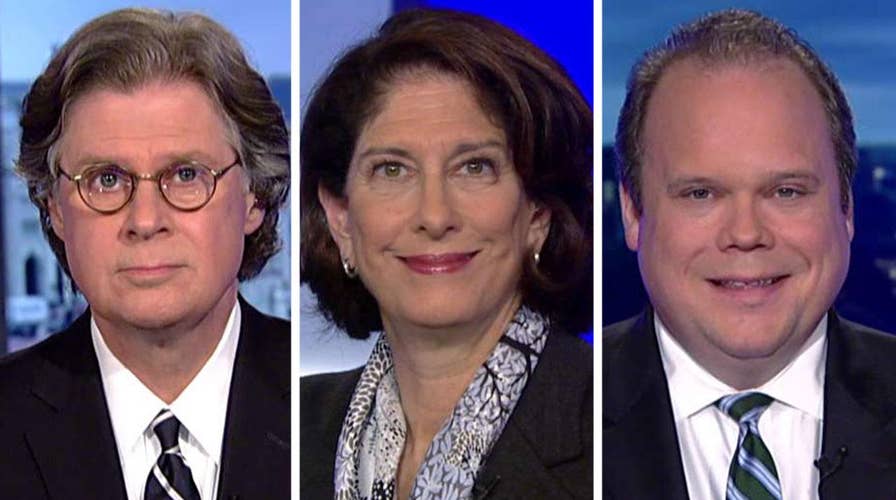
Let's start there with our panel, bring them in: Chris Stirewalt, politics editor here at Fox News; Mara Liasson, national political correspondent for National Public Radio, and Byron York, chief political correspondent for the Washington Examiner. OK, Mara, thoughts?
MARA LIASSON, NATIONAL PUBLIC RADIO: Well, she has been inching up to this declaration for a while. Jerrold Nadler said something along the same lines, if there was impeachment it should be bipartisan. And what she is doing is this is why they pay her the big bucks. This is why she is the leader. And for people who want impeachment, they can now blame it all on her. She is going to take the hits. But what she said was this could backfire on Democrats politically. And it's not worth doing it.
BAIER: We've seen it before.
LIASSON: We have seen it before with Bill Clinton who said that his impeachment was a partisan witch-hunt, or something like that, and his numbers went up about 10 points. And what people forget is impeachment is not removal. He is not going to be removed from office because Republicans in the Senate are not going to vote for that. The voters have a chance in 2020 to render a verdict on Donald Trump. And that doesn't mean that you don't investigate the president. But I think what she is saying is politically it's a fool's errand.
BAIER: In the big timeline, though, we could be, and we have said this a lot, a couple of days away from Robert Mueller's report coming out. And the fact that the speaker is taking this moment to say no on impeachment is interesting.
CHRIS STIREWALT, FOX NEWS: And she is setting the bar high. What she is really doing here is saying unless there is enough votes, unless Republicans, enough Republicans say that what they find out is so damning or so explosive that they, too, would join, she is not going to do this on a partisan vote.
And she is, of course, right. She is, of course, right in the broad interest of the Democratic Party that it would be better to beat Donald Trump head to head in the 2020 election than it would be to go through an anguishing and ultimately unsuccessful effort for removal. But it's in the political interest of Congresswoman Rashida Tlaib and others in their districts and for their purposes to keep talking about impeachment, and that's her problem.
BAIER: Byron?
BRYON YORK, WASHINGTON EXAMINER: The impeachment machine was up and running. There is no doubt. Just a week ago Jerrold Nadler, who is chairman of the Judiciary Committee, said that the president is undoubtedly guilty of obstruction of justice. When he was asked, well, if that's the case, why aren't you impeaching him right now? Chairman Nadler said, well, we have to organize the evidence and we have to get a communications campaign.
BAIER: To convince the America people.
YORK: To convince the American people.
LIASSON: He said we need to have bipartisan support.
YORK: He did. And that's what the communication campaign was for. So he said we are not there yet.
But it was absolutely clear with the demands to 81 people, very wide- ranging demands, for information from them, plus the idea of setting up new investigations just in case Mueller didn't come through for them, they were ready to go.
BAIER: In the meantime, the star witness, who was the star witness, Michael Cohen, could be facing more charges, a possible referral. Take a listen to one of the key Democrats on that committee.
(BEGIN VIDEO CLIP)
REP. KATIE HILL, D-CALIF.: I would imagine that in the panic that was going on when you are about to go down, right, that you are going to say, like, yes, figure out whatever you can do. So, probably, and I imagine that Chairman Cummings will end up referring him.
(END VIDEO CLIP)
BAIER: Referring him for prosecution for lying to Congress, again.
LIASSON: Yes. We have to see what happens. He was asked some questions that seemed to not comport with the record, like whether or not he wanted a job in the Trump White House. And then there is the whole question of who asked who for a pardon. Yes, and I'm sure we haven't heard the last of the Michael Cohen.
YORK: The pardon was the big deal. The "I didn't want a job" was face- saving, but the pardon was the big deal. And he comes out and he says I never sought nor would I accept a pardon from the president. And as it turns out he authorized people to talk to the president's side about a pardon, and he contradicted himself in later conversations with people in the House. So --
BAIER: He already wasn't a good witness to begin with.
YORK: They're going to refer him to the Justice Department.
STIREWALT: So the degree to which Michael Cohen was able to get Democrats to buy in and talk about this stuff, this was never a good bet. You have a guy who has pleaded guilty to lying and has pleaded guilty to these things in the past. He was never going to be your star witness and I don't know why they gave him as much oxygen as they did.
BAIER: Mara, the budget. We had the acting budget director on the show. Obviously, this is a political document. It's a blueprint. We go through this all the time. But what about this?
LIASSON: I think it very clearly expresses the president's priorities and vision, which is exactly what budget proposals are supposed to be. He wants more money for defense, big cuts for domestic programs, including something like 31 percent for the EPA. He wants more money for the wall. He hasn't given up on that, nor will he. This is number one priority for him, the symbol of him keeping faith with his base. And he also wants to say that he tried to do something about the deficit even though it went way up on his watch, and he promised in the campaign to not only eliminate it but to eliminate the entire national debt. So that's what's in this budget proposal.
BAIER: But let's be honest, Washington is not in that framework.
LIASSON: No. Nobody cares about the deficit anymore.
BAIER: Dealing with the debt or talking about the debt, even?
STIREWALT: It's really shameful. And it's a bipartisan condemnation that we have two parties. We have $22 trillion national debt right now, and we have a budget blueprint that comes out from a White House that says we're going to add another $10.5 trillion to that. And they are going to mortgage the futures of my children and my grandchildren and for three generations after this because nobody has the political will to say real things and say hard things. And it's really quite shameful. And it's on both parties 100 percent.
YORK: On the wall, the Democrats obviously said they were given nothing on it before they gave him $1.375 billion. So we are going to hear this whole argument over again. And the one thing that the White House is hoping against hope, I'm sure, is that they can convince the people that the situation has changed, because Democrats are saying, look, this is a manufactured crisis. There is no emergency at the border. And now we have seen a number of press reports, The New York Times did a press report saying that the border was at a breaking point with 76,000 migrants crossing in a month. They will try to make that case. We'll see if any Democrats listen.
Content and Programming Copyright 2019 Fox News Network, LLC. ALL RIGHTS RESERVED. Copyright 2019 CQ-Roll Call, Inc. All materials herein are protected by United States copyright law and may not be reproduced, distributed, transmitted, displayed, published or broadcast without the prior written permission of CQ-Roll Call. You may not alter or remove any trademark, copyright or other notice from copies of the content.
