





Officials urging Americans to avoid grocery shopping as COVID-19 pandemic worsens
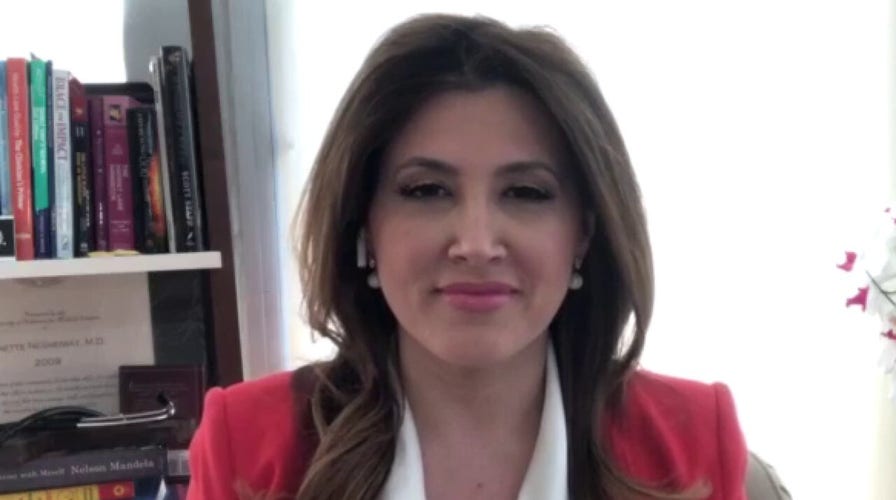
Reaction and analysis from Fox News medical contributor Dr. Janette Nesheiwat.
This is a rush transcript from "Your World with Neil Cavuto," April 7, 2020. This copy may not be in its final form and may be updated.
NEIL CAVUTO, FOX NEWS ANCHOR: Bill, thank you very, very much.
We are following all these fast-moving coronavirus developments, not the least of which is this concern that cases in the U.S. are now eclipsing those abroad, particularly in Italy. We will have the latest on that and how they're trying to smack this down in the New York metropolitan area.
And at the corner of Wall and Broad, after a close to 1,000-point gain, after a 1,600-point gain yesterday,a bit of a sell-off today, when all was said and done. But, again, we were up 1,600 points.
Welcome, everybody. I'm Neil Cavuto, and this is YOUR WORLD.
And all the attention right now on coronavirus cases in the United States, where everyone seems to be waiting for the so-called apex, the high watermark, and the light at the end of the tunnel from there.
Again, in New York, the epicenter of all of this, that has been the focus.
To Bryan Llenas with the latest outside the USNS Comfort -- Bryan.
BRYAN LLENAS, FOX NEWS CORRESPONDENT: Neil, so, yesterday, New York Governor Andrew Cuomo said that things were starting to look like we were at or at the beginning of the so-called apex, and possibly the flattening of the curve.
Today, more data that could support that. The three-day average in terms of the number of hospitalizations in New York is down and discharges from the hospitals here are up. Take a look at the numbers, 17,000 total hospitalizations in New York, over 656 new hospitalizations in one day yesterday.
That number is up. But, again, the three-day average is down. There have been 89 new ICU admissions over the last 24 hours. That is the lowest number in the past 17 days.
The bad news, that's the deaths. The total number of deaths in New York is now at an astonishing 5,489. Tragically, in the last 24 hours, 731 New Yorkers have died. That is the largest one-day increase in deaths that we have seen.
Now, the governor did say that it's a lagging indicator. Many of these people were hospitalized last week, and they had been on ventilators and now they're being counted as part of the death toll.
Back here at the Comfort, yesterday, a crew member tested positive for COVID-19. A Merchant Mariner tested positive for COVID. They were not part of the medical personnel. We're told that person is now in a cabin and isolated. They had no contact with the patients. They had no contact at all. And they are now an isolation away from the crew members.
People -- the crew members that were in contact with this particular crew member have also been put -- had been tested and put in isolation out of an abundance of caution.
But, remember, Comfort is now taking on COVID-19 patients. And as a result, they have reconfigured the ship, Neil. It is now 500 beds, instead of 1,000. That is able -- there -- they did that so that they can create a red zone and a green zone, a red zone that is strictly for COVID-19 patients and the personnel taking care of them, a green zone for the crew that is not.
They are doing everything that they can to make sure that there is not an outbreak on board. And as part of that protocol, 800 of the medical personnel on board the Comfort, Neil, are now staying at a local hotel that's just for them. They will be taking a bus directly to the Comfort every single day, that way that they can increase social distancing on board.
So we shall see how many patients will be taken on board the Comfort. So far, there are 44 at this time -- Neil.
CAVUTO: Bryan Llenas, thank you very much, my friend, Bryan in New York outside the USNS Comfort.
I want to hop across the pond right now to Great Britain and London. Everyone curious about the status right now of Boris Johnson, the prime minister, second day in intensive care there right now.
And we're told that he had earlier received oxygen, no need of a ventilator at this time. But a lot of people want to know, how's he doing?
So let's get the read right now from Benjamin Hall, who is there -- Benjamin.
BENJAMIN HALL, FOX NEWS CORRESPONDENT: Good afternoon, Neil.
Yesterday, when this news broke that he had gone to the ICU, there were shockwaves across the U.K., there was a degree of panic, because it appeared as if his health had taken a turn for the worse very quickly.
We now know that he has at least stable, he's in good spirits. He is in hospital. And, as you say, he is not on a ventilator. So that is important to mention, the government really pushing that line.
But he did spend the night in intensive care. He is still there. And that's because yesterday his symptoms had worsened and he had started to suffer breathing difficulties.
According to The London Times, he required around four liters of oxygen. For comparison, an average COVID ICU patient requires 15 liters. So that again is a positive sign.
But, yesterday -- or, rather, today, the Cabinet met at Downing Street without him to continue discussing the coronavirus response. Dominic Raab, the foreign secretary, is now the acting prime minister, though he today was in pains to say that he was merely carrying out instructions that Johnson had given him.
(BEGIN VIDEO CLIP)
DOMINIC RAAB, BRITISH FOREIGN MINISTER: He's not just our boss. He's also a colleague, and he's also our friend.
So, all of our thoughts and prayers are with the prime minister at this time, with Carrie, and with his whole family. And I'm confident he will pull through, because if there's one thing I know about this prime minister, he's a fighter. And he will be back at the helm leading us through this crisis in short order.
(END VIDEO CLIP)
HALL: There are still questions, Neil, about how transparent the government has been.
There were practically no details on Johnson's condition all week when he was in isolation in 10 Downing Street, and before he was suddenly rushed to hospital. And some now arguing that the prime minister's health shouldn't be a private issue. It is very much in the public interest.
And also a lot of unanswered questions now about the line of succession. The U.K., unlike the U.S., doesn't have a written Constitution. It doesn't have a formal line of succession. Dominic Raab was only announced last week, when Boris Johnson started showing symptoms.
And so when it comes to those big questions, those big decisions, like the nuclear deterrent or others, the cabinet style here needs a strong leader. So the big question, how long is Boris Johnson going to be in hospital? When can he get back to Downing Street, Neil?
CAVUTO: All right, Benjamin, thank you very, very much.
As Benjamin pointed out, when this happens to someone as high-profile and boldfaced a name as the prime minister of Great Britain, a head of a sovereign nation, that alarms a lot of people. If it could happen to someone like that, could it happen to me, let alone the stars who have been afflicted with this, from Tom Hanks to a host of others?
Let's get the read on all this.
Dr. Feranmi Okanlami, COVID-19 expert, very, very big in the medical community, Michigan Medicine hot line, so much more.
Doctor, thank you for taking the time.
It is jarring when we see someone of that heft have to succumb to this, go to intensive care, and get treatment. Hopefully, he will be OK. But it is a stark reminder to folks, don't take it lightly. Anyone and everyone can get this, right?
DR. FERANMI OKANLAMI, MICHIGAN MEDICINE: Yes, absolutely. Thanks for having me, Neil.
I think it's an important point to point out that, yes, this is not something that discriminates. Everyone is susceptible to this. And I think that hopefully, when they have public figures like Prime Minister Johnson, it shows that it's really some of our most vulnerable populations that we often don't think about, such as people with disabilities, chronic illnesses and people of color, really everybody that is being affected by this, but some people disproportionately.
CAVUTO: Yes, you mentioned people of color, Doctor. And it is disproportionately affecting minorities, Latinos, and African-Americans.
Why is that? Do we know yes?
OKANLAMI: Well, I think that's something that a lot of people have been doing a lot of work to discuss this.
It's that there are certain populations that have not necessarily always had the same access to care, and therefore when there are things that then are subjected to our most vulnerable, the people that were already at highest risk are then going to continue to be at highest risk.
And so, hopefully, that's something that we pay more attention to moving forward.
CAVUTO: You know, Doctor, I was thinking, testing positive for the virus, we did find out today that Rand Paul is on the way out of this, testing negative right now. So he seems to have had it a few weeks, and then it goes away.
But we have also heard of some 50-some-odd cases of people who had contracted the virus, then got out of it, tested negative, and then got it again. It seems a little weird to me, but can you explain how that happens? And is that a worry?
OKANLAMI: Well, I think the most important thing at this point is that, if somebody is symptomatic, given what our president has been rightfully saying to do, we should be sheltering in place.
So, if you have symptoms, you shouldn't be out and about, and you should do your best to try to stay away from individuals.
I think that then the symptoms that people have and how they're manifest is what we should be doing a good job of taking care of. And then if people like Prime Minister Johnson, if he needs to go into the hospital, whether you're COVID-positive or whether it's that you have something else, I think we need to take care of those issues.
But the testing and the result of the tests, I think that's had a lot of attention, but truly managing the symptoms that people have and being able to take care of folks, I think that's what the focus should be on.
CAVUTO: Doctor, I wonder, just tapping your fine brain on when it's advisable to sort of ease off some of these stay-at-home measures.
I have been pursuing this on a lot of my shows with a lot of smart folks like you. What would you be comfortable? One of the definitions of revisiting this is 14 straight days of a decline in the rate of increases in cases and/or deaths.
It doesn't mean that it would be the decline in cases, but decline in the rate of increase. Would you feel comfortable seeing 14 straight days of something like that to revisit, let's say the end of the month, if we have something approaching that, to ease up on these stay-in-place restrictions?
OKANLAMI: I think, as you rightfully pointed out, there have been a lot of very smart people, much smarter than me, who have been looking into this for quite some time.
And I think that what we need to make sure that we are careful not to do is, a lot of people are looking for an answer today that may be different in two days.
And so I think that I respect all of the work that all of the public health officials have been doing to give us the most up-to-date guidelines that they can. So, I think that we are working hard.
A lot of people around the country and world are working hard together, including a strong group of people at Michigan Medicine, to try to provide the most up-to-date information as to what it is that we can expect, because, as you see it in this process, there are things that we said a week or two ago about what we should expect and what we should do that are different today.
So I think that, once again, as we get more information and as we see people starting to improve, I think that we will probably get some updates as to when it's appropriate or when it's safe to then relax on some of these shelter-in-place mandates and guidelines and recommendations.
CAVUTO: And, to your point, we're probably not there just yet.
Doctor, thank you for all your hard work on the front lines and talking to us besides. We appreciate it.
OKANLAMI: No, thank you.
CAVUTO: All right, in the meantime, to the doctor's point, there are three basic things they look for.
Thank you, Doctor.
There's this idea of a sustained reduction in the increase in cases for at least 14 days. They also must be able to prove that states are able to test everyone who has symptoms, to the point nationally that this can be tested to the point of 750,000 a week, at a minimum, and, finally, that hospitals must be able to track all patients requiring hospital -- hospitalization without taxing their facilities to the brink.
All three of those in place, then maybe people can start leaving their place or their homes or start moving in that direction. China did so today, officially unlocking down, if you will, the Wuhan province, where you might recall all of this started a few months ago.
It represented most of the 60 million Chinese who were effectively quarantined and cut off from the rest of the world. Today, they're free men and women. And a lot of them, we're told, were shopping.
Stay with us.
(COMMERCIAL BREAK) CAVUTO: All right, there's a lot of money heading out of the Small Business Administration, working with member banks, to get into the hands of those businesses that have been adversely impacted.
Right now, we're told about $130 to 150 billion bucks of that money, that roughly $360 billion, has already been allocated, bumps along the way, some computer problems along the way.
Kristin Fisher with the latest at the White House on how all of that is going and how small businesses, part of a joint conference call with the president today, among others, are faring -- Kristin.
KRISTIN FISHER, FOX NEWS CORRESPONDENT: Hey, Neil.
Well, one of the problems with this small business loan program, or the PPP, as they like to call it, one of the problems has simply been its popularity. The first loan went out on Friday. That was just four days ago.
But, already, take a look at this. The president says more than $70 billion of the total $349 billion in the PPP, that Paycheck Protection Program, already spoken for. Those loans have gone out to more than 260,000 small businesses, which the SBA estimates has saved around six million jobs.
So you can see why there is now bipartisan consensus that that program needs a bit more funding. And during that meeting, President Trump put a price tag on it, $250 billion. Listen to this.
(BEGIN VIDEO CLIP)
DONALD TRUMP, PRESIDENT OF THE UNITED STATES: We just asked Congress to pass legislation to fund an additional $250 billion for the Paycheck Protection Program. So we're going to be raising it up to a new level.
And the way it's going, we're going to need that, because it's really going -- people are loving it. They really loving it.
(END VIDEO CLIP)
FISHER: Now, Treasury secretary Steve Mnuchin was also at that meeting with the CEOs of about a dozen PPP loan lenders, joining via videoconference to comply with those social distancing guidelines.
Mnuchin says that he spoke with the top four congressional leaders today about expanding the program. The two Republican leaders have already put out statements saying that they want to move through this fast, separately from any other kind of legislation.
Senate Majority Leader Mitch McConnell says that he hopes to approve further funding for the PPP by unanimous consent or voice vote during the next scheduled Senate session on Thursday.
But the Democratic leadership still has some holdouts. Here's Speaker Pelosi:
(BEGIN VIDEO CLIP)
REP. NANCY PELOSI (D-CA): We want to make sure that the program is administered in a way that doesn't solidify inequality in how people have access to capital, but instead benefit to everyone who qualifies for it.
(END VIDEO CLIP)
FISHER: But, Neil, just to give you an idea of how much these banks are dealing with right now, how fast this is moving, in that meeting, the CEO of Bank of America, he said that they're continuing to get several thousand applications per hour, not per day, per hour -- Neil.
CAVUTO: It's incredible. How you just keep up with that is a voluminous task, to put it mildly.
Kristin, thank you very, very much.
Charlie Gasparino has been looking at this whole phenomenon, because, Charlie, as you pointed out in the very beginning, there is a lot of money involved here. And it almost reminds me of getting the Affordable Care Act up and running.
Remember that and the computer snafus those that followed? This was a big deal, but for which a lot of people were not really ready to prepare for the onslaught online. But that's just a part of it. Right?
CHARLIE GASPARINO, FOX NEWS SENIOR CORRESPONDENT: Yes.
I mean, let's be clear here. No one expected this thing to go seamlessly, right? I mean, we're doling out $350 billion on the first leg. They're going to do another $250 billion now.
But here's the problem, Neil. And I think this is basically what I have been reporting since last week -- or the last two weeks, actually. There is general agreement that more money should be thrown at this, that small businesses are the hardest-hit.
We reported first last week that there was going to be another leg to the program, billions of dollars. We did that on your show and on "Claman Countdown."
But one thing that hasn't been dealt with -- and this is key -- is the bureaucracy to get the money to the small businesses. And I'm telling you, Neil, I know there's $70 billion that's been handed out. I don't know a single small business person that has the money.
I mean, nobody is saying that they have sent me the money. Most -- we're getting numerous complaints that small businesses can't get the money, can't get the money, that -- and the banks are blaming the Small Business Administration for a bureaucratic bottleneck, because they don't know how to -- they don't have the infrastructure to process the loans.
The banks are blaming -- the clients are blaming some of these banks for finding reasons not to give them the loans.
And there's one other odd thing. As you know, Wells Fargo is maybe one of the -- is one of the top five banks in the country, maybe the world. Because of that scandal involving creating the faulty checking accounts, work with -- listen to me here.
The bank is saying, because of that scandal and some requirements, its capital requirements stemming from that, they cannot make loans, these loans, to their small business customers, which is the oddest thing in the world.
So this thing is basically a mess. Again, they were trying to do something really big, really fast to help an economy that really needed it. And particularly small businesses represent about 50 percent of the work force. And, as you know, they're getting crushed by the recession that is -- that is related to the coronavirus shutdowns and lockdowns.
But, again, it wasn't well-thought-out. The Small Business Administration, if you listen to the banks, just it -- they cannot process these loans. And no one thought that through when they started throwing money at the problem -- back to you.
CAVUTO: Well, it all makes sense. It's a lot of money, right? We're talking hundreds of billions of dollars, when all is said and done.
So you would have these snafus. But they should have been prepared for that, right? So whatever...
GASPARINO: They should have been.
CAVUTO: It is what it is.
Yes, Charlie, great reporting, as always, Charlie Gasparino.
All right, we might point out, of course, this was a problem with the Affordable Care Act and the launch of that and the systems that went down.
I'm not casting aspersions on anyone, but when you have a big initiative that is very, very popular, and people want to sign up for it, this is the kind of stuff that happens.
It gets ironed out. And just to be consistent, though, this happens whether Democrats come up with it, Republicans come up with it, or both parties come up with it. But there are problems. Sometimes, machines get overwhelmed, as do those who are using them.
Stay with us.
(COMMERCIAL BREAK)
CAVUTO: All right, we're talking about distancing. We're talking about maintaining all of this, so that we can get out of this sooner, rather than later, hit this apex that is so important, the highest number cases.
But you also have Walmart dealing with a wrongful death lawsuit here. Two workers in the very same store dies of coronavirus. So, a lot of people are stepping back and saying, all right, now we know that stores like Walmart, you have seen this at Costco, you have probably seen this at your local grocery store, where they're pushing more of this distancing stuff, to mixed degrees.
But we will likely see more of it.
First on the Walmart situation with Jeff Flock -- Jeff.
JEFF FLOCK, FOX BUSINESS NETWORK CORRESPONDENT: One of the keys, Neil, to the Walmart wrongful death lawsuit is a charge that the company didn't do enough to enforce social distancing.
So they are taking steps to do that very thing. Take a look at what they're doing right now. One of the things they're doing is making sure they take the temperatures and make personal protective equipment available to Walmart employees.
They're also putting sneeze guards up at the checkout locations. They're limiting capacity in the stores. It's a one person in, one person out at times, 20 percent capacity, and reducing the hours to make more time for sanitizing and cleaning.
We have got pictures inside this Walmart. This is the one where the two workers worked that lost their lives to the virus. As perhaps you can see, it's one of the Super Walmarts, has food as well. It's fairly well-stocked. And there is sanitizing that you can see going on during the day, as employees and shoppers are in there.
In addition, they have now placed on the floor little spacers to make sure, when you're standing in line, that you don't stand too close. They are also -- I should point out they haven't implemented this store-wide yet, but they are going to start trying to do one-way aisles, so that people don't kind of crash into each other as they come down the aisle together, don't get too close.
As to the wrongful death suit. The company has said that it certainly mourns the loss of the employees, one of them a 15-year Walmart employee. And they also point out, though, in terms of this store, last week, it passed a third-party safety and environmental protection assessment, as well as passing a health department inspection.
Things are changing at Walmart and perhaps everywhere else in our lives these days -- Neil.
CAVUTO: And I suspect, to your point, that, after this incident, they will change all the more and we will see this really being policed aggressively pretty much everywhere.
Great reporting, Jeff, as always, Jeff Flock, on that.
And this whole distancing with Dr. Nesheiwat, who joins us right now. She has been advising folks to follow those guidelines and standards. And now they're stretching them out and putting fewer people in stores.
And as you know, Doctor, the rule of thumb is, don't come into the store with any more than one other person, preferably not a child. But you get the drill. They're trying to crack down. What do you think of that?
DR. JANETTE NESHEIWAT, FOX NEWS MEDICAL CONTRIBUTOR: Yes, we have to.
These very minor, easy steps can help save lives, Neil. You got to keep six to 10 feet away from other people. And what Dr. Birx was suggesting, she was suggesting that, if you have to go grocery shopping, the whole family doesn't need to go out to the store.
Let one person go. Designate one person to go out, do the shopping, do enough shopping for two to three weeks, so that you minimize the outdoor exposure, minimize picking up the virus, minimize bringing it back to the entire family.
So it's a matter of staying at home to help prevent the spread of this virus, because it's a very highly infectious and contagious virus. And it's a very wicked virus that is causing a lot of lung damage and putting a lot of people in the hospitals. And I'm seeing that firsthand, so these little minor steps that we can take to help save lives.
CAVUTO: You know, Doctor, you know, we talk about an apex, hitting the highest upper cases. Presumably, that means, from that point, they go down.
But almost every example that I'm presented or experts bring to me is, it's not the case is going down. It's the increase in the cases that goes down. And they all say, well, that's a good sign.
No doubt it is. But is it a good sign enough to say, all right, end the distancing rules, end the stay-at-home stuff? I mean, what would you feel comfortable, if you were advising just your patients to do?
NESHEIWAT: Yes, I wouldn't feel comfortable to relax the guidelines with that.
That's great. We're moving in the right direction that the daily number of increasing is going down. But I would like to see several weeks, maybe even a month or two, of prolonged, sustained reduction in the number of cases, reduction in the number of hospitalizations, admissions to the ICU, and the reduction the number of ventilations.
That's -- that -- I see a lot of that. One of my patients, I was stunned and shocked to hear that he ended up being put on a ventilator and lost his life. I wasn't expecting that.
So, I would like to see prolonged, sustained reduction in all of those situations, on top of making sure that hospitals can handle the load, if there's any further mini-peaks are mini-outbreaks.
And that's why the mayor in L.A., he's -- this week is very critical for them. They don't want to become like New York or Italy or China, where we'd have to depend on ventilators and be fearful of the lack of ventilators.
But I think two weeks is not long enough to determine if we can relax the guidelines. I would be more happy with at least a month of prolonged, sustained reduction in the number of cases, to the point where it's back in the single digits.
Don't want any double digits.
CAVUTO: I hear you.
Doctor, always good having you. Thanks for all your advice and sound and calm thinking on this, Dr. Nesheiwat.
By the way, it was a couple of weeks ago, I think a couple of weeks -- time goes by fast here -- when Jon Taffer, the "Bar Rescue" -- he's a brilliant guy -- he had said, I think, even after all this is settled, it's going to be a different world. There are going to be fewer people going to bars and restaurants, much more spread-out seating.
Wouldn't you know, since I talked to Jon last, I'm hearing that from some of the biggest players in the restaurant industry, who no doubt heard Jon and are now saying, you know, I'm afraid Jon's right.
Jon's back after this.
(COMMERCIAL BREAK) CAVUTO: What happens after social distancing ends, but we still keep our distance?
Jon Taffer of America "Bar Rescue" fame is saying, it's going to happen. It won't be awful, awful, awful, but it's going to change the way we live -- after this.
(COMMERCIAL BREAK) (BEGIN VIDEO CLIP)
DR. ANTHONY FAUCI, NIAID DIRECTOR: If back to normal means acting like there never was a coronavirus problem, I don't think that's going to happen until we do have a situation where you can completely protect the population.
If you want to get to pre-coronavirus, that might not ever happen, in the sense of the fact that the threat is there.
(END VIDEO CLIP)
CAVUTO: You know, long before Dr. Fauci made those remarks, I had Jon Taffer with me of "Bar Rescue" fame. He is a brilliant guy, very good read of what works in a bar or restaurant or just in society and what doesn't.
Jon Taffer joins me right now.
JON TAFFER, HOST, "BAR RESCUE": Hi, Neil.
CAVUTO: Jon, I want to tip my hat to you, my friend, because -- well, I'm not wearing a hat, but if I had one, I would tip it.
And one of the things I remember you said, that don't assume everything goes back to normal after all lifts, that people might be leery of being in crowded settings, and maybe restaurant capacity is half to two-thirds what it normally is, the same for theaters and elsewhere.
Why do you fear that or see that?
TAFFER: Well, I just don't think, Neil , that we're going to sit shoulder to shoulder with a stranger anymore.
If you coughed in public, you're like a criminal today. So distancing is going to continue for a period of time. So, when I take a look at restaurant bars and those types of business models, even casinos, we have to spread our seating, so that there's a comfort for people to come inside of our businesses.
When we do the math and I look at different floor plans, Neil, it's a loss of between 30 and 60 percent capacity, based upon the configuration of the business. So if we lose that amount of seating, imagine a restaurant does 100 lunches in an hour, and now they lose 30, 40, 50 percent of their capacity.
That hour is worth half of what it was to them. So there's a new way of doing business, Neil. Lunch now has to be three hours, so that I can get those 100 people in over a longer period of time. I have got to adjust the way I'm doing business to compensate that.
But at the end of the day, capacity goes down in every -- I call it LBE business, location-based entertainment. In any location-based entertainment business, whether it's a bowling center, a movie theater, Broadway, a restaurant, a bar, a nightclub, capacity is going to change going forward.
And I'm focused on, how do we change our business models to adapt?
CAVUTO: You know, it's interesting, Jon, but I -- working in the New York metropolitan area, there are a lot of small restaurants. You might be shocked to know that I know restaurants inside and out. I know I don't look it.
(LAUGHTER)
CAVUTO: But one of the things I have wondered, some of them very small, intimate places. Sometimes, as few as 20 to 30 people, if you're lucky, can fit in there.
TAFFER: Yes.
CAVUTO: Now, if they have to spread out or half that crowd, that's going to drive a lot of those guys out of business right there.
TAFFER: It will.
And casual restaurants and small restaurants in a place like New York have the tightest seating. So they have to spread the most. They're going to lose the most seats.
A luxury dining restaurant, in theory, an upscale restaurant, is spread a little more in the first place, Neil, so they would lose less when they spread a little more.
But there are changes that even New York City could make. For example, what if they allow more sidewalk seating, so that a bar can add 20 percent more seating out front, or a restaurant can?
That's an interesting solution. So, we take a look at Times Square and certain areas in Manhattan, where they have created mall streets, where businesses can do more revenue outside. I think that cities can start to make changes like that, Neil.
And the way we market has to change. Meal periods need to be longer now. I could do early-bird lunch specials at 11, late-bird lunch specials after 1:00. I got to spread my business, so I can use the reduced capacity that I have over a longer period of time.
CAVUTO: Fascinating.
You know, you have been ahead of so many trends. I think you're ahead on this one. We will watch it closely.
Jon Taffer, thank you very much, my friend.
TAFFER: Good to see you.
CAVUTO: Something to think about, what Jon is saying, and whether our social distancing rules will extend beyond restaurants, to theaters, and forget about stadiums and all of that. That's a whole 'nother story.
Stick around.
(COMMERCIAL BREAK)
CAVUTO: I bet you didn't know that, with everything else going on today, Wisconsin has a presidential primary going on today, and there are crowds. They are keeping their six-foot distance, but there are long lines, we're told.
Matt Finn in Kenosha, Wisconsin, with the latest.
Hey, Matt.
MATT FINN, FOX NEWS CORRESPONDENT: Hi, Neil.
Well, there is a statewide stay-at-home order here Wisconsin, but voters that want to physically cast their ballot have to step outside of their homes and end up at a polling center.
Inside, there are some extra precautions in place, large Plexiglas barriers, pens being sanitized by hand. And, outside, there are handwashing stations and signs asking anyone with symptoms not to enter.
Some voters here in Wisconsin tell us these extra measures are enough to keep them safe. Others we have talked here on the ground have some strong words for their elected leaders on both sides.
(BEGIN VIDEO CLIP)
UNIDENTIFIED MALE: All the old people are here taking a chance to get sick. There's a lot of people that are not voting in our neighborhood because they don't have access to this.
UNIDENTIFIED MALE: I think we assumed that the election was going to be postponed somewhat and give us some time. So don't tell my daughter I'm out here doing this.
(LAUGHTER)
UNIDENTIFIED FEMALE: I am not really that nervous about it. I mean, it's kind of like there's space. It's good. It's not -- it's better than going to the grocery store.
(END VIDEO CLIP)
FINN: Milwaukee has been described as a big problem right now. Video shows voters there waiting and very long lines, some wrapping around city blocks.
And here in Wisconsin, so many voting center volunteers backed out that the state had to call in 2,500 members of the National Guard to work voting centers.
And we talked to a few inside -- Neil.
CAVUTO: All right, Matt, thank you very, very much.
As Matt was speaking there, I just want to pass along some interesting news out of Jack Dorsey, the co-founder of Twitter, also runs the mobile payments concern Square.
Well, he has apparently put aside $1 billion, $1 billion, we're told, in Square money, again, coming from Square, that mobile payments processor, to the tune of $1 billion for coronavirus relief, again, the largest amount by any CEO, by any executive, by anybody, to my math, Jack Dorsey, $1 billion dollars to help fight this thing.
Stay with us.
(COMMERCIAL BREAK)
CAVUTO: All right, let me get this straight. Jack Daniel's is now into the hand sanitizer production? Yes.
John Hayes, Jack Daniel's North America CEO, joins us right now.
Great thing to do, but, boy, you talk about a big switch from something. How are you managing to pull this off? JOHN HAYES, PRESIDENT, JACK DANIEL'S NORTH AMERICA: Well, it's been a challenge, as you can imagine.
We started early on a small scale, making it pretty much by hand for our employees, first responders in the Central Tennessee area, police departments, nursing homes, et cetera.
But we realized that the need is so great that we have been happy to announce that we have dedicated one of our distilleries that we call Jack Daniel's 2 to making industrial amounts of ethanol.
And, today, we, in fact, delivered our first tanker truck full of ethanol to our commercial partner, where they're going to be making roughly 20 million six-ounce bottles per month for us.
So we're making two million gallons of ethanol a month for this -- for this effort.
CAVUTO: That's incredible.
What about just the liquor? Does production slow on that side, or what?
HAYES: Well, fortunately, we're -- we're a pretty big operation. We have another distillery, our Distillery 1, that is keeping up with distilling.
Our people are distilling, aging, bottling and shipping Jack Daniel's still to 160 countries around the world. So, we have been very fortunate that there's not been any confirmed cases of COVID-19 in Moore County, Tennessee, our home county, or at our distillery.
So, our employees still operating, obviously at very safe distances, but the show still goes on.
CAVUTO: Well, you're doing a good show. And it's going on for a lot of people who desperately want to get their hands on this stuff, hand sanitizer very, very tough to find.
John Hayes, thank you for that. Thank you for joining me.
HAYES: Thank you, Neil.
CAVUTO: All right, John Hayes, Jack Daniel's North America CEO.
All right, getting ready for that White House briefing.
A question that might come up is, when did the administration know or was warned about this, and who warned them?
After this.
(COMMERCIAL BREAK) CAVUTO: Did the World Health Organization know something about China cooking the books and numbers on this virus or not?
Well, it is serious enough for Arizona Republican Senator Martha McSally to say she doesn't trust the Chinese, doesn't trust the WHO officials any better, even though other evidence has emerged that others might have known as well.
Take a look.
(BEGIN VIDEO CLIP)
SEN. MARTHA MCSALLY (R-AZ): China has put us in this position because of their lies, the cover-ups, and the complicit World Health Organization.
CAVUTO: But it might not have been just the World Health Organization.
Now we have reports that Peter Navarro was warning the president about the danger of a virus that could have a huge impact on the economy, to say nothing of the health of Americans.
So what do you think of those developments, if true? We don't know, Senator, to be fair, that did this get up to the level of the president's attention, but does it trouble you?
MCSALLY: Yes, Neil, this is what I know. I learned the day I entered the military is never trust a communist.
China is to blame for this pandemic and the death of thousands of Americans. They knew about this virus. Their dangerous, inhumane and deadly wet markets, where live and dead animals are being sold, allowed this to spread, allowed people to continue to travel, locked down their doctors, and didn't allow them to speak out, and punished them when they did.
They then used a propaganda machine and kicked out journalists, so the rest of the world wouldn't understand what's happening with this pandemic.
And it looks like the World Health Organization was parroting their propaganda. So that's what we do know.
But one thing is for sure. We would be in a better place, as a country, clear-eyed, realistic, to attack this virus and kill this virus and minimize the economic impact if China, communist China, and the World Health Organization wasn't so reckless.
CAVUTO: All right, but we apparently knew enough or suspicious enough about it -- at least Peter Navarro was -- that he did send out alarms, and they were ignored.
Now, it's easy to play Monday-morning quarterback and who knew what and when. I get that. But whatever China did, or the World Health Organization allegedly ignored, there's a possibility here that, within the White House itself, they knew about this as well and didn't do anything.
MCSALLY: Yes.
Neil, I haven't seen that report. I'm sure there will be internal debriefing. But, as I said, one thing is for certain...
CAVUTO: All right.
MCSALLY: ... that communist China is responsible for so many deaths.
And if we...
(END VIDEO CLIP)
CAVUTO: All right, well, you can't have it both ways.
And with all respect to the fine senator, if you are arguing that something wasn't communicated via the World Health Organization, well, something wasn't communicated from the White House.
Now, if it ever reached the level of the president, we don't know. We do know that the warnings were put out and the suspicions about China were put out by no less than Peter Navarro.
As this gains traction, a lot of questions to answer, who knew what and when. It won't solve or address any of the problems that have happened since, but is it fair to just criticize the World Health Organization?
Anyway, let's get the latest from Kevin Corke on this.
So, Kevin, the big question then becomes how much of an issue this becomes at not only the health task force briefing, but other briefings going forward.
KEVIN CORKE, FOX NEWS WHITE HOUSE CORRESPONDENT: Yes, I think you hit on a couple of very important questions.
Number one, to use the old adage in Washington, what did you know and when did you know it? But I think, more importantly, Neil, here is, the White House needs to come to grips or come to terms with this idea that they were warned, at least internally.
Now, was this February? Was this January? Was this later in the month, perhaps even early into March? That still has to be drilled down upon.
But I can certainly tell you this. At least based on conversations I have had both on air and off air, the real sense at the White House is, you're right. The World Health Organization and the Chinese do bear some responsibility in this.
But I don't think -- and, again, this is just based on nothing more than anecdotal conversations that I have had with senior administration officials -- they don't believe that this is something that they can wholesale say, somebody else should have done more.
They recognize, and obviously so, that they could do more earlier, but no one -- and I think it's also fair to say, did anyone really know the extent to which this would turn out? And I think that's a fair question as well.
CAVUTO: Do you know, Kevin, whether Navarro, in the middle of this trade imbroglio with the Chinese, was distracted, and his points were maybe ignored because they were focused on a trade deal with China, getting that done, these other warnings seemed aberrant to that?
CORKE: I don't think that is too far afield, to be honest with you.
And, in fact, if you listen very carefully -- and I know you do -- this is more for the folks at home -- if you listen to what the president was saying in his response to a question from a journalist from China yesterday, he immediately pivoted back to trade, what the Chinese will do, what they may or may not purchase.
That was really the bulwark as far as the relationship is concerned from the White House's perspective from the outset, going all the way back to the trade deal. And so is it fair to suggest that perhaps Navarro was so deep in the weeds on that, that maybe he wasn't being heard properly, or certainly not in a more fulsome manner by others at the White House?
That's entirely possible. But I imagine you're going to get some pushback on that, mostly because the belief is, the action the president took in shutting down flights from China, and being very aggressive in that posture, does underscore this idea, Neil, that they took this very seriously from the outset.
CAVUTO: All right, we will watch it very closely.
Kevin Corke, thank you, my friend.
CORKE: You bet.
CAVUTO: All right, just to put this in perspective, we did notice that a lot of people were focusing their time and energy on blaming the World Health Organization for covering up for China, for saying that they knew what was going on in China.
There's no proof of that. But, of course, if -- there's also no proof to say how high up Peter Navarro's concerns about a possible Chinese virus could go, whether it made it to the president. But you can't blame one without at least discussing the other.
And when it comes to the clumsy rollout of the Small Business Administration loan-giving computerized process, you can't say that a lot of greater good has come of that, and so some snafus are an order, when you said just the opposite when they rolled up the Affordable Care Act.
Whether Democrats mean to do some good or Republicans mean to do some good, you can't pick and choose your sinners and saints.
Bottom line, things get botched. But, bottom line, someone has to take responsibility and say two words: I goofed.
Good night.
Content and Programming Copyright 2020 Fox News Network, LLC. ALL RIGHTS RESERVED. Copyright 2020 ASC Services II Media, LLC. All materials herein are protected by United States copyright law and may not be reproduced, distributed, transmitted, displayed, published or broadcast without the prior written permission of ASC Services II Media, LLC. You may not alter or remove any trademark, copyright or other notice from copies of the content.
