


Minneapolis activist explains difference between dismantling and defunding police departments
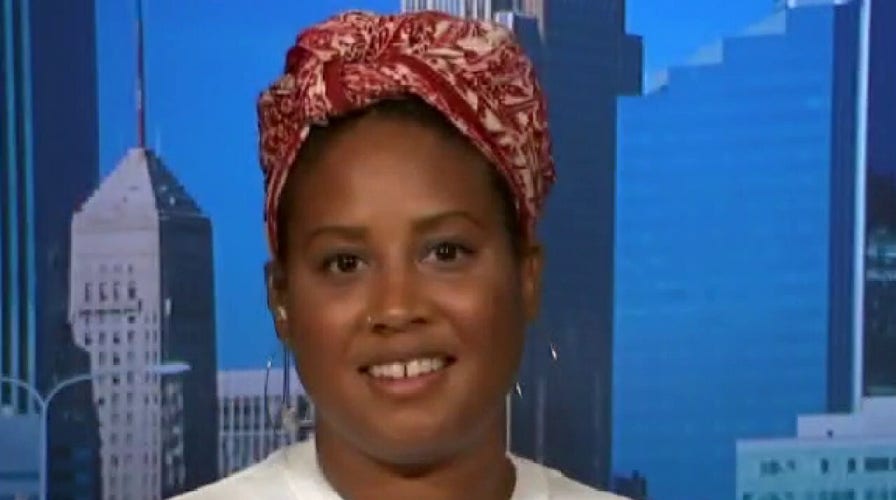
Raeisha Williams discusses how Minneapolis is handling police reform on 'The Story.'
This is a rush transcript from "The Story," August 5, 2020. This copy may not be in its final form and may be updated.
SANDRA SMITH, FOX NEWS: Good evening, everyone, I'm Sandra Smith, in for Martha MacCallum, and this is "The Story."
(BEGIN VIDEO CLIP)
PRESIDENT DONALD TRUMP: We want law and order. We want strong police. We're not defunding the police. We're probably could say, we're doing the opposite of defunding the police.
(END VIDEO CLIP)
SMITH: President Trump telling Fox News that one of the fundamental pieces of his campaign is his opposition to defunding our nation's police. Several cities across the U.S. are considering proposals to slash police budgets. And in Minneapolis, the site of George Floyd's death, a proposal to dismantle the entire department is in the works by the city council.
Minneapolis, like many American cities right now, is experiencing a surge in violent crime. This past July saw 166 percent increase in gun fire incidents compared to July 2019. According to analysis by the Minneapolis Star Tribune. The New York Times reports, residents complain of rampant police mistreatment, but also out of control, crime, and violence. That reality has left many black residents here unenthusiastic about what has become known as the defund movement, adding complexity to the debate.
They say that they despise the police but need someone to call when things go awry. In moments, Raeisha Williams, a Minneapolis activist, critical of the police force, but also with efforts to dismantle it entirely. And then HUD Secretary Dr. Ben Carson. Also, on deck, Trump 2020 National Press Secretary Hogan Gidley, KT McFarland and Mississippi Governor Tate Reeves. But we begin tonight with Raeisha Williams. Ms. Williams, good evening and thank you for being here to tell your story.
As a member of that community in Minneapolis, do you want to see a police presence maintained in your community?
RAEISHA WILLIAMS, MINNEAPOLIS COMMUNITY ACTIVIST: Absolutely, absolutely, and I want to make a correction, I'm not for dismantling, I'm for defunding, which are two very different things.
SMITH: So, explain, what is the difference and what do you want to see actually happen?
WILLIAMS: Yes, so dismantling is to make something completely different of new and defunding is doing just what it's talking about. It's taking funds out of one pot of funding and moving it over. Well, when I talk about defunding, I'm talking about moving funds to community resources. Unfortunately, police do not have the insight, the understanding, the capability, or the training to take care of all of the issues that take place in community. And so, when we're talking about that, we're talking about mental health issues. We're talking about domestic calls.
Let's take some of that funding and repurpose it in the community's hands with organizations who are on the ground doing the grassroots work.
SMITH: I know your brother was a victim of gun violence in that city and that has prompted you to be an activist in your community. You say you feel like your voice isn't being heard. What are they not hearing from you?
WILLIAMS: Well, I was an activist before my brother. God bless his soul. Tyrone Williams was murdered by gun violence and Tyrone himself was an activist. What prompted me to become more involved in gun violence and anti-gun violence was my brother's death. But what they're not hearing is, is that as a community, we are citizens, we're American citizens that help build this country. And we're not asking for the police to be completely abolished. What we're asking for is equal treatment. What we've asked for from the beginning of time since we've landed here as slaves in America.
Equal treatment so that we as citizens get the same treatment as our white citizens. When African Americans typically call the police for help or when they're in the need, the call time is much longer and the line for them to arrive to the scene is greater. These are statistics that are already out there. And so, what we're asking is when we call, show up and show up quickly, as quickly as you do in prominent white affluent communities. Show up and be respectful and kind and have a little bit of understanding that we may be going through some trauma at the time. Just treat us as human beings.
And as we see with George Floyd, Philando Castile, Jamar Clark, that's not happening. Here in the Twin Cities and around the nation.
SMITH: Raeisha, they're powerful words that you're sharing with us. And there's a new Gallup poll that I want to run by you because it's fascinating. It just came out today and it asked black Americans what they want as far as police presence in their communities. 61 percent of those African American respondents said that they want police to spend the same amount of time in their communities that they already are.
In addition to that, 20 percent of those surveyed said that they want the police to spend more time in their communities. So, with this defund the police movement that we're seeing across the country right now, are they getting it wrong?
WILLIAMS: Well, I think we need to contextualize what African Americans are saying. What we're saying is we want you to focus more on high crimes such as gun violence in our community, rapes, African American males, and young children go missing at greater numbers than white Americans. And those aren't - those missing reports aren't being taken serious. We're having a lot of break ins and vandalism that's happening in our community. And what we're saying is we want community presence to focus on those high crimes versus those low crime rates.
Like unfortunately, what murdered Philando Castile, stopping us for a taillight being out or stopping us just on a stop and search. We want you to focus on real crime that is happening across the nation in all colors of - all communities of color. But we want you to focus on the real crime and stop over policing African Americans and people of color and focus on the crime, the drugs, the gun violence that's taking place, and really, really help us bring about change in our communities. That's what the poll is asking.
SMITH: Seems to be that this is a difficult solution to come to. I know you're so active in your community. You ran for city council, didn't quite make that, but you're extremely tight in there. Obviously, you're sharing with us that your family was the victim of gun violence. We're sorry for the loss of your brother, but this is a message that you're trying to get out there because you feel that that is not there. Are members of your community, is this city council listening?
WILLIAMS: I think parts of the city council are listening, but what this amendment charter did was a rush resolution. It wasn't a resolution that went into the community that they are - they've been put in place to serve. It's in fact, just them listening to a very small group of liberals who have a very, very skewed lens of what policing means for African Americans.
Here in the Twin Cities, only 6 percent of our police live within the Twin Cities or Minneapolis boundaries. And so, could you imagine over 94 percent of African American police officers going into predominantly all white communities to police them? I mean, just think about that visual, the contrast of that. And so, what we're saying as a community is that we need those who've been elected in position to work with us, to listen to what our needs are. And this charter amendment proves that they haven't been doing that in a fair and adequate way.
We certainly want our police. We want them to be there. We want them to treat us with dignity and respect, which hasn't happened. But we do want them to have a presence. Just quickly, I attended Howard University in Washington, D.C., and when I was a student there, I would say 83 percent of the police officers on the force were African American. And I never once had a negative encounter with police officers.
My sister-in-law is a sheriff in Florida. So, it's not that we're saying we're against police officers. We're not even saying we're against white police officers. We're saying we're against police injustice and mistreatment, abuse and murdering of African Americans and people of color.
SMITH: Raeisha Williams, thank you for coming on and sharing your message tonight.
WILLIAMS: Thank you so much, Sandra for having me.
SMITH: Thank you. Also, here tonight, Dr. Ben Carson, Secretary of Housing and Urban Development. Dr. Carson. Mr. Secretary, good evening and thank you for being here. Care to respond to what you just heard there?
DR. BEN CARSON, HUD SECRETARY: Well, I think she has a number of good points. What happens is we have a tendency to put people in separate corners and have them come out fighting rather than spending time working together and communicating appropriately.
You know, there's things that we can learn from what's happened in the past, in the 30s and the 40s. It was very common, particularly in places like New York City, to have police patrols. And the people in that community knew the policemen and the policemen knew the community. And there was a trust that developed there. That's what happens when there's communication that becomes so important.
As we talk about police reform, it is vitally important to make sure that we include the opinions of the people who are being policed. You want to know what they're feeling and how what solutions they have. No one side has all the answers.
And in medicine, what we frequently would do when somebody thought they had a great idea and it was different than what had been going on before, you would do a trial, you would just say, well, let's try that in this section for this period of time and see what the results are. And if the results are good, you further that trial and eventually that becomes the accepted way of doing things rather than saying, let's just dismantle this whole thing and start all over again. That's too dangerous.
The police do a very important function and there are bad people out there. And if you just take them away, believe me, they're going to have a field day. They're just licking your chops, waiting.
SMITH: Dr. Carson, based on that, the President said today that a central component to his reelection campaign is opposition to the defund the police movement. So, based on everything that you just said, how do you fix this? How do you unite the country?
CARSON: Well, again, the key thing is you have to communicate, you don't impose, you communicate, you work with the people who are being policed. They know what they're feeling. And the police also bring some very good things to the table. I've never had any problems with police. I guess I'm one of the very fortunate ones.
But the vast majority of police are very reasonable people. And if they're treated with respect, there is absolutely no problem. I think you have a hard time finding that to be the case, that they're going to abuse you if you're treating them with respect and carrying out whatever orders have been given.
By the same token, we need probably some different types of training for certain police. If police have a record of being abusive to people, we need to retrain those police or take them off the force. And right now, there is not a good mechanism every place to do that.
SMITH: It was a powerful message from Raeisha Williams listening to her story there on the ground in Minneapolis, where you are seeing rising crime rates, and something has to be done. So, we'll see what that city decides to do. So many other American cities dealing with this. Dr. Carson, appreciate you coming on tonight. Thank you. Go ahead.
CARSON: The key is just working together and listening to each other. That's the key.
SMITH: All right, Dr. Carson, thank you. Joe Biden getting testy when pressed about a cognitive test.
(BEGIN VIDEO CLIP)
JOE BIDEN, PRESIDENTIAL NOMINEE: No, I haven't taken the test. Why the hell would I take a test? Come on, man. That's like saying you before you got in this program, you take a test where you're taking cocaine or not. What do you think? Are you a junkie?
(END VIDEO CLIP)
(COMMERCIAL BREAK)
SMITH: The big headline from the Biden campaign today, the former vice president will forego travel to Milwaukee to accept the Democratic nomination for President, instead opting for an acceptance speech in his home state of Delaware. Biden's campaign appearances have been far and few between, prompting the headline Hiden Biden on the cover of the New York Post and what some call a deliberate basement strategy to avoid moments like this.
(BEGIN VIDEO CLIP)
BIDEN: No, I haven't taken the test. Why the hell would I take a test? Come on, man. That's like saying you before you got in this program, you take a test where you're taking cocaine or not. What do you think? Are you a Junkie?
(END VIDEO CLIP)
SMITH: Michael Goodwin is a New York Post Chief Columnist. He joins us now and a Fox News Contributor. Michael, no, I haven't taken a test. Why the hell would I take a test? Roll the tape on June 30th.
(BEGIN VIDEO CLIP)
BIDEN: I've been testing, I'm constantly testing. Look, all I've got to do is watch me, and I can hardly wait to compare my cognitive capability to the cognitive capability of the man I'm running against.
(END VIDEO CLIP)
SMITH: So, his staff later clarified that he was responding to tested as in tested in the everyday rigors of a campaign. But what did you think of that new interview?
MICHAEL GOODWIN, NY POST CHIEF POLITICAL COLUMNIST: Good evening, Sandra. It was another one of those moments where when he was challenged, he gets belligerent. And I think a lot of that is overconfidence on his part. But it's also the sense that he's entitled to be treated with respect by the media as though because he's been around Washington forever. He knows everything. He knows everybody. And therefore, how dare you challenge me.
That's not going to work on the campaign, but that's probably part of the reason why they don't let him out of the basement that often because you see those flashes of anger. Recall back earlier when he challenged the hard hat to a fight. I mean, he had some really weird moments. And I think a lot of it has to do with why they are sheltering him and not letting him come out more often and face the rigors of the campaign.
SMITH: To be clear, his staff, his campaign says that they are staying where they are as far as the nomination speech and everything, because that is the advice of doctors and he is in a high-risk category. That being said, based on his announcement that he'll be staying in his home state of Delaware for that, not going to Milwaukee, what does that tell you about whether or not he'll show for the debates?
GOODWIN: Well, I think it's one day at a time here with them inching further and further away from the debates, we've had a number of their media supporters and some from within the party saying who needs debates, he shouldn't debate. If he does debate Trump, will lie. Debates are old. I think that's a real insult to voters. And if he tries to duck the debates, which I think is a distinct possibility, it will be to me a confirmation that he knows he can't handle 90 minutes with Donald Trump, that going face-to-face with him, that there will be cracks.
And look, everybody makes mistakes in debates. And we remember many of the televised presidential debates for their mistakes. But I think you cannot avoid them in this day and age. They are here to stay. They're a fixture of the fall campaign, three of them. And I think President Trump is looking forward to them. And the Biden campaign and the Democratic Party and its media Praetorian Guards are giving the impression that Biden is not looking forward to them and doesn't want to do them.
So, I think there is a moment coming here, where Biden either have to say, I'm not going to debate or I am no matter what, and he'll have to show up? And I would not be surprised if he pulls out of one debate or tries to limit them or does something to limit his own exposure.
SMITH: All right. Well, we'll ask the Trump campaign about that coming up. But in the meantime, Joe Biden yesterday on this network saying that he's ready and willing and committed to coming to those debates and his campaign saying the same as well. Michael Goodwin, great to have you on tonight. Nice to see you. Thank you.
GOODWIN: Thank you.
SMITH: Also, here tonight, Guy Benson, host of The Guy Benson Show and political editor at https://urldefense.proofpoint.com/v2/url?u=http-3A__Townhall.com&d=DwICAg&c=cnx1hdOQtepEQkpermZGwQ&r=sFAZs1s6OsYn8_1zLEwORPZR5plqG0bJtDiwqh5im-0&m=67EQ03iVShYon0gsiqT9b00WCWf-iKBay95j8oG_jUE&s=6rTDI91RfxfkntWSMhCHGlW3w0d3i6ZW5nFJT5bWjMk&e= , and Richard Fowler, nationally syndicated radio talk show host. Both are Fox News contributors. Really looking forward to having you both on tonight. You were listening to the discussion there about the basement strategy that Michael Goodwin is talking about and writing about in the Post this morning, the upcoming debates. But, Richard, to that interview, what did you think of that?
RICHARD FOWLER, FOX NEWS CONTRIBUTOR: Listen, I would say this, I think if you look at the Vice President's record and you look at what he said very clearly, he thinks that he should be judged by the American people. He should be judged by both his physical and mental strength by the American people. And if you look at all the polls, they're judging him very favorably.
In addition, if you're talking the cognitive exam that he's talking about, he was questioned about there is the same one that Chris Wallace, our colleague showed to Donald Trump. And that exam is used to determine if folks are cognitively aware. I mean I can attest that now Donald Trump is cognitively aware. And I think we can also assume that Vice President Joe Biden is also cognitively aware. So, this is an issue that really needs to go away for both of these candidates so we can move on to the real issues of the day. What's your plan? How do you plan on dealing with the Coronavirus? What's your plan of getting the economy back on track?
SMITH: Fair enough.
FOWLER: The real issues affecting everyday Americans?
SMITH: Let's talk to the issues and let's hope that we see debates that tackle the issues as well and both candidates showing for them. But to the issue at hand here, we saw so many of the Trump critics push him to get a cognitive test. Is that happening now with Joe Biden? Is he going to be pushed into taking a test?
GUY BENSON, HOST, THE GUY BENSON SHOW: I mean, I think he should. I think he should because Trump's done it, Biden says, I can't wait to debate Trump. My mental acuity is just fine. No problem there. So fine. Put the issue to bed, put it to rest, take the test. You know, if you ace it, then you can tout it. You can do what was it, person, woman, man, camera, TV. Right. Impress everyone and dazzled the world with that.
But I think he should do it. I think what we're seeing right now though, Sandra, is - look, I'm a sports fan. I know you are as well. We don't know if we're going to have football this season based on Coronavirus, but we're already seeing a prevent defense from the Biden campaign. They think they've got this. They're dropping back. They don't want to let up any big first downplays. And they're trying to just prevent a significant comeback from Team Trump.
And if that works out, if it pans out and he's elected, it will look brilliant and it will look like a stroke of genius. But if this race tightens, which I think it very well could, if situations on the ground and the realities on the ground with COVID, with the economy start to improve and President Trump ticks up in the polling all of a sudden if they need to adjust. And former Vice President Biden doesn't have the reps under his belt and he's very rusty, and then he tries to kick it into high campaign gear. He may not be prepared to do that. So, this is a risky strategy still, in some respects.
SMITH: It's a great point. He might be a little rusty if he's forced into doing that, Richard?
FOWLER: I don't know how I feel about that. Listen, Guy is my buddy, I just disagree with him on this particular point. I think the Biden campaign is not taking any vote for granted. If you look at what the Biden campaign did today, today, they decided that they were going to reserve over $2 million worth of ad buys all across the country. On top of that, they are making the largest investment into black media because they understand they want to talk to voters wherever they are.
They're investing in Hulu; they're investing in online gaming. They are going to talk to voters where they are and have a conversation with them about what his plan is around COVID-19. What's his plan on getting the economy back on track? What's his plan for black America? What's his plan for Latin America?
While that's happening? Meanwhile, back at the ranch, Donald Trump wants to reopen schools when we know that's not the best plan. Donald Trump doesn't have any plans. And Biden is talking about his plans.
GOODWIN: I've only got a minute left. And I've got to ask you about VP picks, because Van Jones is saying Biden should pick a black woman for VP, give six great options, obviously, on the list, Kamala Harris, Susan Rice, Karen Bass, and others. Axios is now reporting that Biden confidants see vice presidential choice is narrowing to Harris and Rice. Give us your picks. We could hear this tomorrow. We could hear this next week, we're told early August still. What do you think happens, Guy, to you first?
BENSON: First of all, prepackaged ads are different than rigorous questions. We know that. When it comes to the VP, I've said Harris, because they are running a very cautious, safe campaign. And I suspect they view her as the safest pick. We'll know soon, although, that keeps drifting farther and farther back.
SMITH: Richard?
FOWLER: Everything in campaigns matter, I think this is a decision that the Vice President is going to make, I think any of the women's listed, Sandra, are brilliant and I think it's the Vice President's pick to pick.
SMITH: OK, we like when buddies come on and have debates. Thanks to both of you. Thanks, Richard. Thanks, Guy.
BENSON: Thanks, Sandra.
SMITH: OK, KT McFarland on today's hearing on the crossfire hurricane investigation of General Michael Flynn and claims the former national security adviser attempted to undercut Obama's foreign policy by playing nice with Russia. That's next.
(COMMERCIAL BREAK)
SMITH: Former Deputy Attorney General Sally Yates facing a grilling from the Republican-led Senate judiciary committee trying to get to the bottom of the FBI's Crossfire Hurricane investigation. Yates was pressed over her time in the Obama administration, FISA warrant, the interview of Michael Flynn, and even her opinion of President Trump.
(BEGIN VIDEO CLIP)
SEN. JOHN KENNEDY (R-LA): You don't like Donald Trump, do you?
SALLY YATES, FORMER U.S. ATTORNEY GENERAL: I don't like -- I don't respect the manner in which he has carried out the presidency.
KENNEDY: OK. You despise Donald Trump, don't you?
YATES: No, I don't despise anyone, Senator.
(END VIDEO CLIP)
SMITH: For his part, the president weighing in earlier, tweeting in part, quote, "Sally Yates has zero credibility."
Fox News correspondent Gillian Turner has THE STORY from Washington.
(BEGIN VIDEO CLIP)
SEN. LINDSEY GRAHAM (R-SC): Could you raise your right hand, please?
(END VIDEO CLIP)
GILLIAN TURNER, FOX NEWS CORRESPONDENT: Chairman Lindsey Graham dove in headfirst, grilling Sally Yates about that now infamous Oval Office meeting with President Obama and FBI director James Comey on January 5, 2017.
(BEGIN VIDEO CLIP)
GRAHAM: Did Comey go rogue?
YATES: You could use that term, yes.
(END VIDEO CLIP)
TURNER: That wasn't the only criticism Yates had for Comey. She claims he blindsided her by failing to share information about Michael Flynn, a key figure in Crossfire Hurricane and his conversations with the Russian ambassador.
(BEGIN VIDEO CLIP)
YATES: This was the first I had heard of the calls between Flynn and Kislyak. I was really surprised. I was frankly irritated with Director Comey.
(END VIDEO CLIP)
TURNER: Yates claim Comey never offered a full explanation and she saved her harshest criticism for Flynn himself, accusing him of neutering President Obama's foreign policy towards Russia and insisting the FBI was right to interrogate him.
(BEGIN VIDEO CLIP)
YATES: What we were about was that he was undercutting Obama policy and then he was covering it up.
(END VIDEO CLIP)
TURNER: But it was the tale of two hearings. Democrats and Republicans failing to agree even on what they were supposed to be investigating.
(BEGIN VIDEO CLIP)
SEN. DIANNE FEINSTEIN (D-CA): The Mueller investigation uncovered more than 120 contacts between the Trump campaign and individuals link to Russia. Revealing that the Trump campaign knew about, welcomed, and expected it would benefit electorally from Russia's interference.
(END VIDEO CLIP)
TURNER: In a boost for committee Republicans, Yates confirmed the Steele dossier, a key piece of evidence used to approve a 2016 FISA warrant for Carter Page was deeply flawed.
(BEGIN VIDEO CLIP)
YATES: If I had known that it contained incorrect information, I certainly would have done something.
GRAHAM: And do you agree with me it did contain incorrect information?
YATES: I know that now based on the Horowitz report.
(END VIDEO CLIP)
TURNER: Looking ahead sources here on Capitol Hill say to expect more Crossfire Hurricane hearings. Chairman Graham has the authority to summon dozens more witnesses over the coming weeks and months. Sandra.
SMITH: Gillian, thank you. Here now, K.T. McFarland, a former deputy national security adviser, she served under Lieutenant General Michael Flynn in the Trump administration. She is also the author of "Revolution: Trump, Washington, and We the People."
K.T. good evening. Thanks for being here. You heard Yates in that hearing today defending the investigation. But clearly, for what we saw and heard, she was challenging the handling of the investigation. What did you think as you watched it?
K.T. MCFARLAND, FORMER DEPUTY NATIONAL SECURITY ADVISER: Well, I was really I took offense because she talked about a phone call that I had with General Flynn and she completely misrepresented it. She said that I was passing along from candidate, vice president, and President Trump a conversation that I'd had with President Trump that I was a conduit to General Flynn.
Well, we didn't talk about the topics that she portrayed them. And in any event, the timeline was all wrong. I didn't talk to President Trump until after I had talked to General Flynn. And you know, the other thing that really got me, Sandra, was when she said well, President Trump was trying to neuter the Obama administration's approach to Russia.
Neuter, really? If you are so concerned about election interference why didn't you say something before the election? They knew about it before the election but they kept their mouths shut. And if they were so offended and they wanted to punish Russia or they wanted to deter Russia, why didn't they talk about it right after the election? Why wait until three weeks before President Trump was supposed to take the oath of office and carry out the foreign policy that he promised to the American people?
If anybody violated the Logan Act, it was the Obama administration because what they tried to do was to jinx it for President Trump.
SMITH: She was clearly pressed on whether or not former Vice President Joe Biden, former President Barack Obama had any influence on the investigation. Here's how she responded to that.
(BEGIN VIDEO CLIP)
YATES: During the meeting, the president, the vice president, and the national security advisor did not in any way attempt to direct or influence any kind of investigation. Something like that would have set off alarms for me. And it would've stuck out both of the time and in my memory. No such thing happened.
(END VIDEO CLIP)
SMITH: So, Biden and Obama did not try to direct or influence any part of the investigation, K.T., stating it very clearly.
MCFARLAND: Somebody did. You know? I mean, we have notes, we have handwritten notes. We have text messages. We have conversations that have been taken down verbatim. What do those conversations say? Well in that meeting that she's referring to, they did talk about it, and in fact the vice president was the one who brought up the idea of the Logan Act violations.
So, maybe she can claim that no, everything was done by the books but as far as we are now seeing, because we see it in people's own hand. It's not anonymous sources from some intelligence community source that can't be named. These are hard, cold facts. These are notes and people, in some cases, even of people's own handwriting of what they were trying to do.
And they were setting up Flynn, they were trying to get President Trump on collusion with the Russians and they knew there was nothing there. That's the thing that is upsetting. They dragged the American people through three years of this and they are still dragging us through it when they knew there was never anything there and they knew it from the very beginning.
SMITH: What did you think when Senator Kennedy pressed her on her view of Donald Trump? Saying, she was asked if you don't -- do you not like him. And she said that wasn't the case but she didn't have respect for his presidency.
MCFARLAND: You know, whether you like him or not he was the duly elected president of the United States. And it doesn't matter if a government bureaucrat likes him or doesn't like him. Their job is to carry out their office. Their job is to carry out the foreign policy positions in this case of the President of the United States. Why? Because he is representing the American people. So, who cares whether she likes him or not. She should have done her job.
SMITH: K.T. McFarland, great to have you on tonight. And good to see you.
MCFARLAND: Thank you.
SMITH: Thank you.
In the State of Mississippi, Governor Tate Reeves is delaying the start of school in some hotspots but is adamant kids get back into classroom saying he believes it's the right thing to do. The governor will join us exclusively next.
(BEGIN VIDEO CLIP)
GOV. TATE REEVES (R-MS): There is no doubt that in our public schools, there are going to be risks associated with opening schools. We know that. We also know that there is risk sitting in this room right now. There's also risk for kids not going back to school.
(END VIDEO CLIP)
(COMMERCIAL BREAK)
(BEGIN VIDEO CLIP)
DONALD TRUMP, PRESIDENT OF THE UNITED STATES OF AMERICA: For whatever reason, the China virus, children handled very well. And they may get it but they get it and it doesn't have much of an impact on them.
(END VIDEO CLIP)
SMITH: Tonight, more than 100 students in Mississippi are quarantining after a handful of confirmed COVID-19 cases in the Corinth school district, the first to reopen in that state. For the second time this week there have been more than 1,000 new cases of the virus prompting a statewide mask mandate from Gov. Tate Reeves who is now delaying the start of school in hotspot zones affecting seventh to 12th graders across eight counties. Most schools will proceed with plans to reopen.
Mississippi Governor Tate Reeves joins us now. Governor, thank you for being here tonight.
Looking at what's happening in your state, total positivity rate over 13 percent. But this past week, 28 -- 25.8 percent. Why are you seeing a spike in cases in Mississippi?
REEVES: Well, first of all, thank you for having me on tonight, I really do appreciate it. We certainly saw a significant increase in cases through mid-to-late June and it carried throughout July. We're actually seeing positive movement over the last couple of weeks. We had two weeks ago, we averaged about 1,300 cases per day. Last week were average about 1,050 cases and in the first three days of this week, we've average actually less than 850 cases.
And again, we know that three days does not a trend make but certainly we're seeing positive movement. We think the reason that we're seeing that positive movement is because we have had a mask mandate in 37 of our 82 counties that has been in place. And most importantly, the people of Mississippi are participating. They are actually wearing their masks, they're staying socially distance.
We can always improve but we are seeing positive movement and the total number of cases and stabilization amongst hospitalizations.
SMITH: OK, but states and cities across the country are looking at what's happening in your state because you did decide to send kids back to school. Now you are pausing that and you are delaying the opening for the seventh to 12 graders, you've had several students in your state where schools were reopened test positive. What's the update there and why are you delaying the school openings now?
REEVES: Well, we have 450,000 kids in Mississippi schools and we have delayed the reopening in eight counties which affects approximately 7 percent of all students. And we simply delayed it until August the 17th, which is about two weeks and the reason we did that is because we think we have to take a piecemeal approach.
We understand that those kids that are under the age of 12 are much less likely to be affected significantly by the virus. They are also much less likely to spread the virus. As you get kids that are older in their upper teenage years, they are more like adults in terms of their spread.
And so, the reason we've decided to reopen schools but to look at those eight counties, we have a measure, and it's a very objective measure where if you have more than 200 cases in your county plus you have more than 500 cases per 100,000 residents over a two-week period, and that's the -- that's when we delayed the openings.
SMITH: OK. But with so many, a lot of curiosity obviously at the news conference today and everything about this one county where schools were reopened and you had kids and teachers test positive. Why did that happen?
REEVES: Well, what happened is that many kids in our state, really across the country during their summer months, it's not as if they've been holed up in their house and haven't seen or done -- anybody. And so the reality is that what happened is, that many of these kids when they started back to school early last week came into the schools. They came in and they had the virus.
But the good news about what's going on in Corinth in our state is that they identify those cases, we did contact tracing. And so we actually have 100 students approximately that are quarantined now. You know, those who want to attack everyone, look at that as a negative, I actually look at it as a positive.
The system is working whereby we've identified positive cases, we've contact traced those back and we're trying to protect those kids. There's literally hundreds and hundreds of students in that district that are actually learning.
And so, what we've got to understand is that there are risks to anything that we do. There is risk to opening schools, no doubt. But there's also risk to not opening schools because you've got these young kids, many of whom are lacking nutrition. We've got things in classrooms and that's very important.
SMITH: I know -- I know there's a lot happening. I know that the educators have spoken out, they are concerned about the spread now with those positive cases. It's a lot to take on. We'll continue to watch the progress that your state is able to make. Governor, we appreciate you coming on tonight. Thank you.
REEVES: Well thanks so much for having me.
SMITH: OK. Governor, thanks.
The Trump campaign's Hogan Gidley on its request for an additional presidential debate with Joe Biden. He's next.
(COMMERCIAL BREAK)
(BEGIN VIDEOTAPE)
SMITH: Has the campaign, to Lilly's point, formally committed to the debate commission to engage in those three scheduled debates in the fall?
ERIN PERRINE, PRINCIPAL DEPUTY COMMUNICATIONS DIRECTOR, TRUMP 2020 CAMPAIGN: Yes, we have agreed with the debate commission.
MERCEDES SCHLAPP, TRUMP 2020 CAMPAIGN SENIOR ADVISER: Our goal would be to see an additional debate happened earlier on.
SMITH: OK. So, the commitment has not been made?
SCHLAPP: You know, I can't confirm that.
(END VIDEOTAPE)
SMITH: An update on THE STORY that we've been covering all week. The Trump campaign officially requesting an added fourth debate with presumptive Democratic nominee Joe Biden for the first week of September.
In a letter to the debate commission, Rudy Giuliani citing early voting, writing this. For a nation already deprived of a traditional campaign schedule because of the COVID-19 global pandemic, it makes no sense to also deprive so many Americans of the opportunity to see and hear the two competing visions for our country's future before millions of votes have been cast.
The Biden campaign saying, quote, "Joe Biden will appear on the dates that the commission selected and in the locations that they chose.
Joining us now is Trump 2020 national press secretary Hogan Gidley. Hogan, good evening. I was looking forward to having you on tonight. Can you clarify the Trump campaign position because there seemed to be some differing answers this week? Has the campaign formally committed to the commission on the three scheduled debates? We'll talk about the additional request later.
HOGAN GIDLEY, TRUMP 2020 CAMPAIGN NATIONAL PRESS SECRETARY: Sure. Absolutely. We want to debate. We want to do the three debates they have. But our contention is that it does a disservice to the American people because they deserve to see these two men speak and debate each other on a national stage before votes start happening.
And right now, 16 states will already be voting with the potential of eight million voters before they see the two men debate.
SMITH: Right.
GIDLEY: That is completely ridiculous. And so, we are trying to move up the calendar so that they can actually see without campaigning them talk about their visions for the future.
SMITH: So, I get the earlier debate request because of the early voting nature of this year about why the fourth debate? How does an additional debate benefit your candidate?
GIDLEY: Well, look, it's pretty clear any time these two men get out and speak directly to the American people you get to see a stark difference and a stark contrast. When this president gets up and delivers his message without the filter of the mainstream media, it is bold. It is aggressive, it is decisive, it is uplifting, it is unifying, it is patriotic.
And when you compare and contrast that with someone like Joe Biden who pops out of the hide the hole every once in a while, to deliver some canned remarks you see the difference. In 50 years of failed leadership with Joe Biden versus what Donald Trump has done with a record-setting success in record-setting time for every single American.
SMITH: All right. Well this morning in a brand-new interview the president on Fox News said he and the campaign and the RNC are floating the idea of giving his formal nomination speech from the White House. That immediately drew a lot of criticism. Listen.
(BEGIN VIDEO CLIP)
UNIDENTIFIED MALE: Mr. President --
TRUMP: There are some great, great people making speeches. I'll probably do mine live from the White House. If for some reason somebody had difficulty with it, I would -- I could, you know, go someplace else.
(END VIDEO CLIP)
SMITH: All right. So, do we have Tom Perez and Nancy Pelosi on today taking on the president. Listen.
(BEGIN VIDEO CLIP)
TOM PEREZ, CHAIRMAN, DEMOCRATIC NATIONAL COMMITTEE: It's ethically breathtaking to hear the president say that I'm going to give a political speech from the White House. That is so unethical. But there is no surprise there.
REP. NANCY PELOSI (D), UNITED STATES SPEAKER OF THE HOUSE: And for the President of the United States to degrade once again the White House as he has done over and over again by saying he's going to completely politicize it is something that should be rejected right out of hand.
(END VIDEO CLIP)
SMITH: Concerns of the hat jack have immediately come into play. Are you concerned that this is illegal?
GIDLEY: I love the fact that President Donald Trump lives rent free in the heads of the Democrats and the mainstream media. Listen, let's be honest about what this is. They didn't want him to speak at Mount Rushmore. They pitched a fit when he spoke in the Rose Garden. And now they are going apoplectic because he may speak from the White House.
Have you noticed a common theme here? They don't want him to speak at all because they know the difference between this president's message. It resonates. It works.
(CROSSTALK)
SMITH: Well, Hogan, he doesn't live rent free in the White House.
GIDLEY: The American people appreciate.
SMITH: That is the people's house. And we all pay for that. So, is this the right venue? Hat jack (Ph) aside, is this the right venue for the president to deliver that speech?
GIDLEY: Look, that's going to be up to the president to decide, and when he makes this decision, I'm sure you'll probably be one of the first to know. But the fact is it doesn't matter where he gives the speech. What he's going to be talking about with the future of this country at stake is uplifting and patriotic and you're going to see a difference in our convention and the president's speech talking about this being the land of opportunity and heroes and greatness.
Joe Biden is about defunding the police, socialist agenda items and apologizing for America. That cannot stand. We're going to win this thing.
SMITH: OK. Hogan Gidley, I appreciate you coming on tonight. Thank you very much.
GIDLEY: Thanks.
SMITH: More of THE STORY right after this.
(COMMERCIAL BREAK)
SMITH: That went by fast. Thank you for joining us, everyone. That is THE STORY of Wednesday, August 5th, 2020. Can you believe it? We are already working our way into the middle of it. But as always, THE STORY continues. I'll see you again America's Newsroom tomorrow morning. Back here tomorrow night. Have a great night, everyone.
Content and Programming Copyright 2020 Fox News Network, LLC. ALL RIGHTS RESERVED. All materials herein are protected by United States copyright law and may not be reproduced, distributed, transmitted, displayed, published or broadcast without the prior written permission of Fox News Network, LLC. You may not alter or remove any trademark, copyright or other notice from copies of the content.
