


This is a rush transcript from "Media Buzz," January 5, 2020. This copy may not be in its final form and may be updated.
HOWARD KURTZ, HOST: The air strike in Baghdad that killed Iran's top general on President Trump's orders sparks a global uproar with the Iranians threatening to retaliate and a deep and emotional divide in the media between those cheering the death of Qassem Soleimani and those warning of chaos and bloodshed in the Middle East.
This is "Media Buzz." I'm Howard Kurtz. Even Trump's harshest media critics are shedding no tears for Soleimani, but some are delivering dire warnings about what the president whose move followed the attack by pro-Iranian militias at the American embassy in Iraq may have unleashed.
(BEGIN VIDEO CLIPS)
FAREED ZAKAIA, CNN HOST: Soleimani is a bad guy, there is no question, but we appear to be without by the way I'd say, without congressional authorization entering into another Middle East war.
PETE HEGSETH, FOX NEWS HOST: He's got American blood on his hands. This is long overdue, and good on President Trump. You can do this without calling for a larger Middle Eastern war.
JAKE TAPPER, CNN HOST: President Trump has been digging for years undermining the trustworthiness of his own words by spreading lies and conspiracy theories not to mention repeatedly attacking the U.S. intelligence community, the very community Congress and the world is now expected to believe.
JACK KEANE, FOX NEWS SENIOR STRATEGIC ANALYST: They put a red line out there Sandra. He said look at, if you kill Americans, then I'm going to respond. And when that took place, this president responded.
TUCKER CARLSON, FOX NEWS HOST: America appears to be lumbering toward a new Middle East war. And we have to say it's one that official Washington has wanted for decades.
(END VIDEO CLIPS)
KURTZ: President Trump is defending his actions saying he acted to stop a war.
(BEGIN VIDEO CLIP)
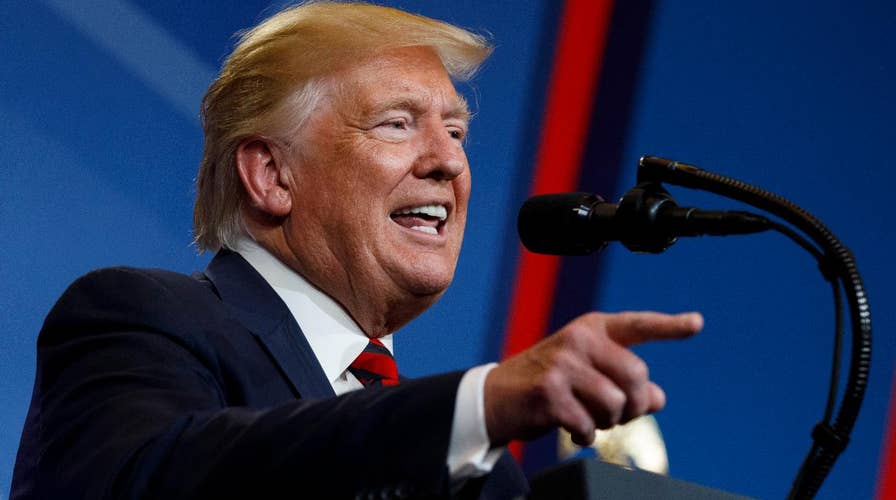
PRESIDENT DONALD TRUMP: Soleimani was plotting imminent and sinister attacks on American diplomats and military personnel, but we caught him in the act and terminated him. Soleimani made the death of innocent people his sick passion.
(END VIDEO CLIP)
KURTZ: Joining us now to analyze the coverage Guy Benson, political editor at TownHall.com and host of a Fox News radio show, Kristen Soltis Anderson, a "Washington Examiner" columnist and host of the Fox Nation Show -- what are the odds -- and Richard Fowler, a radio host and also a Fox News contributor.
Guy, conservatives in the media, with some exceptions are cheering the killing of Soleimani as a great victory to President Trump. Many liberals in the media are saying, well, Soleimani is a bad guy but Trump has brought our nation closer to war or perhaps we're already at war. That's the dividing line.
GUY BENSON, FOX NEWS CONTRIBUTOR: It is. I think what you often see in the criticism of a move like this is a lack of acknowledgment or serious attention to the provocations and escalations of the enemy i.e. Iran, right.
When we respond to their provocations, when we respond to them killing Americans, the focus is on Trump, the focus on America. It's not necessarily and it should be the actions that are being responded to and I think one of the other dividing lines and the other criticism --
KURTZ:
Does the media make everything about Trump?
BENSON: Yes, absolutely. Like there are some things that should transcend this president. This is a seismic geopolitical event. It is fair to ask about what's going to come next and to have some trepidation about that, but it's not all Trump all of the time and yet it's treated that way in so many corridors.
KURTZ: This, Kristen, is obviously very high stakes debate with real serious real-world consequences especially with the Iranians saying they are going to go after military targets and President Trump saying he's got his own list of 52 Iranian targets if that were to happen.
But do many people of there hear this as they have heard the last three years as part of endless debate between the anti-Trump and the pro-Trump side?
KRISTEN SOLTIS ANDERSON, FOX NEWS CONTRIBUTOR: I don't know that this is necessarily just viewed as pro versus anti-Trump and I think part of that is because you have even many Democrats saying Soleimani was a bad guy but.
The benefits of the actions taken by Trump are much clearer that what the cost are. The benefits are you've taken someone off the battlefield who is a mastermind behind an enormous amount of bloodshed across the Middle East.
But the costs are still unknown, whether this would lead to escalation or as Trump says, he hopes it leads to de-escalation, we are still not quite sure what direction that goes.
KURTZ: The costs are still unknown and that is absolutely true. Richard, many media liberals are essentially making a two-part argument, Soleimani was a horrible monster, we're glad he's dead.
I mean, this guy is one of the world's top terrorists who often inflicted damage and killed hundreds of Americans through proxy army and soldiers and militants.
But the Trump's move was reckless and could have awful consequences. That is -- it's a little harder sometimes to make a two-part argument.
RICHARD FOWLER, FOX NEWS CONTRIBUTOR: It is hard a two-part argument, but I think a two-part argument is necessary here and I thin the American people get that.
If you take a look at what was trending on twitter for this entire week since the attack, it's been #worldwar3. So the American people clearly understand what's at stake and they are not for that, right. The American people are war weary --
KURTZ: So much nuance on twitter, #worldwar3.
FOWLER: Yes. Well, this is the point, I mean, that the real -- and I think what -- and this is the reason why we are here is because I don't think this White House hasn't been very clear on their explanation as to why this happened initially.
If you take Guy's point, which is he killed an American and thus for we killed him, that's a fair argument. But you've heard the White House --
KURTZ: Well, yes.
FOWLER: Well, that's fair, but you've heard the White House say it's an imminent threat, it's a future threat. You even heard Mike Pence come bring up 911 as to the reason why this attack took place.
So the White House needs to have clear story to the American people as to why they are getting into this and they need to calm the fear that the American people have that we are going into a World War III when news articles are showing 3, 4, or 5,000 troops being built up in the Middle East preparing for something.
KURTZ: Is there a rally behind the president in fact, in the immediate aftermath, a sort of period that we are in right now? I mean, nobody wants to defend Soleimani, and could that look different as we cover next week, next month, maybe over several years --
BENSON: Are you seeing a rally around the president among his normal critics? I'm not. You know, I try to call them as I see them and I think this is the right call, tough call by him. Maybe he's getting a little bit of leeway from some people who are otherwise skeptical, but I think almost immediately the criticisms --
KURTZ: I think the president -- yes, and some of it is skepticism and journalists should be skeptical, but in the tone of what I'm seeing from even some of his harshest critics, I'm seeing a reluctance to go too far because they don't want to be seen in position of defending this now dead terrorist.
BENSON: Because he is someone who is just dripping with American blood and who was in the process of plotting additional attacks. They just attacked Americans, they just killed an American. There's a really good story. We do a lot of criticism of the media on this show, at least when I'm on, I do.
There is a really good story from "Reuters" that came out yesterday that walked through what Soleimani was doing, what he was up to and how this whole plan had been debated hotly for a long time inside the White House.
And Trump had turned down the opportunity to go after Soleimani previously despite being given that option. Then he changed his mind after Baghdad embassy siege.
KURTZ: Yes.
BENSON: So, this was not a rush to judgment and there was (inaudible) with a drop of a hat for no reason. This was carefully considered and there's evidence -- and there's evidence.
FOWLER: But it's not necessarily -- but it's not necessarily about the rush to judgment. I think the problem that a lot of Americans have and a lot of members of the media have is that the president is saying we did this so we wouldn't have to get any further entanglements with Iran. That doesn't mean to make any sense.
KURTZ: Go ahead.
ANDERSON: Well, and this what I think is going to lead to one of the more interesting shifts as we talk about the intelligence community over the next few weeks. During the Bush administration, Democrats had a lot of criticism for the intelligence community and how intelligence was used by the Bush administration.
And then fast-forward to the most recent couple of years where suddenly Democrats have embraced the intelligence community and said, look, their conclusions have said that Russia is trying to interfere in our elections while Republicans have been a little more resistant, a little more concerned that the intelligence community was taking sides.
This to me I wonder if we will see a reversal of how people talk about intelligence.
KURTZ: I think the U.S. intelligence community is increasingly going to become the focus of this debate, it's partly because of what happened with George W. Bush's decision to invade Iraq in 2003 based on what turned out to be faulty intelligence in part because President Trump has also been very critical of the intelligence community.
Mike Pompeo was on six Sunday shows today defending the intelligence saying it did show the possibility of imminent attacks. Should the media press -- continue to press not just Pompeo, but the White House and State Department on this question of what exactly is the intelligence, which they understandably say we can't reveal too much without getting into sources and methods?
FOWLER: I think we absolutely have to here because I think they have to reassure American confidence. And the reason why that's important is because many Americans see the war in Iraq and especially the war in Afghanistan, which we are waging for 18 years, folks are fighting when Afghanistan (inaudible) alive when 9/11 happened.
And so Americans are very war weary and I think they are saying to themselves, so if we get into this entanglement with Iran, how long would we be here? What's the intelligence behind this? Are you telling us the truth? And that's a valid question to ask this White House when truth is a problem for them.
BENSON: Yes, but no one is talking about a ground invasion of Iran at this point.
FOWLER: We don't know --
BENSON: This was a strike in Iraq where there was congressional authority for us to operate inside Iraq. He was a terrorist and we took him out.
FOWLER: I hear that. Guy, I hear that, and that argument resonates with me. The problem with that argument is to say that this attack will happen without repercussions or this attack will happen without escalations --
BENSON: No one's making --
FOWLER: -- but if you're going to have escalation here which seems to be likely, then it seems to be we're going to be in some sort of Middle East quagmire for quite some time.
KURTZ: And that's a conclusion. We are a little short on time. Just about how many years ago now? Back in 2011, I'm doing the math because it's 2020. So, it's almost nine years ago, businessman Donald Trump was taunting Barack Obama on the subject of Iran, series of tweets and this video.
(BEGIN VIDEO CLIP)
TRUMP: Our president will start a war with Iran because he has absolutely no ability to negotiate because he thinks that's the only way he can get elected. Isn't it pathetic?
(END VIDEO CLIP)
KURTZ: Kristen, fair for pundits to throw that back at the president now?
ANDERSON: Well, this is one if many things where the president has either changed his position or taken action since he's taken office that are all different than when you're on the sidelines tweeting. When you have intelligence as president, you may make different decisions.
However, in this case, the president has also sort of suggested that he views this move as a fist step in negotiations. I believe he tweeted something to the effect of Iran has never won a war but never lost a negotiation.
But the argument being that by doing this you are actually trying to de- escalate by saying Iran has been trying to operate on this death by a thousand cut strategy, you know, have bomb here or do something bad here. This sort of smacks them down and says you can't do this anymore, let's talk because we are not afraid to fight back with force.
KURTZ: Yes. You talked about taking the big picture. So the timeline is Iranian or pro-Iranian militias kill an American contractor, President Trump responds with an airstrike, and then we had the siege by these Iranian-backed militias at our embassy in Baghdad where, you know, they breached the perimeter, set fires.
And a lot of conservative critics, highly critical, the "New York Times" for tweeting that these were mourners -- some also criticizing the front page of "Washington's" headline calling them protestors. Although many networks shows including on Fox used protestors.
So, isn't the important thing here to explain whatever label you put on these people that they were chanting death to America and conducting violence?
BENSON: Yes, right. This is one of the biggest, you know, we talk about trust problems, this is why the media has a trust problem where they are sort of white-washing who these people were, Iran-backed militias doing violence and laying siege to the U.S. embassy.
Our personnel had been killed and wounded just recently and that kind of gets air brushed away. They are called mourners and then it makes it seem like the decision to take out Soleimani was disproportionate and ouf nowhere, when in fact it was neither.
KURTZ: All right. I got half a minute. Richard, the Iraqi parliament today has voted to expel all foreign troops including the 5,000 American troops in that country. Now, this has to be signed by the prime minister who has indicated he would sign it. It's fluid. It's not clear what would ultimately happen.
But if Iraq wants to expel our troops and probably increase Iranian influence in that country, won't the press say this is an unintended consequence what the president's decision to take out Soleimani?
FOWLER: I think they think they would say that and I think you're seeing reporting coming out that says folks in Iraq feel that this is against their sovereignty that he was taken out on Iraqi soil. I think there's an argument and debate to be had around that.
But the fact that the Iraqis have said, we now want American troops out of their parliament. And so that sort of speaks to the fact that they're saying, wait a minute, we're going to be in the middle of this.
No matter what this quagmire looks like, it's going to be Iraqi citizens that are in danger. And so we have a problem with this and this is where we are today.
KURTZ: And that is a continuing story. When we come back, the media jump on new e-mails on Ukraine even as the impeachment story remains kind of stuck in concrete.
And later, is this selective outrage in the commentary on those despicable attacks on orthodox Jews in New York.
(COMMERCIAL BREAK)
KURTZ: President Trump began the New Year the way he ended the old one, beating up on the media. But he quickly turned his attention to impeachment as newly obtained e-mail showed a White House budget official telling the Pentagon that military aid to Ukraine was being frozen because of "clear direction from POTUS to continue to hold.
Trump says his opponents in government would be jailed for treason if this was a Democratic president. It would be considered the crime of the century, far bigger and more sinister than Watergate.
He also declared on Twitter, "Democrats will do anything to avoid a trial in the Senate in order to protect Sleepy Joe Biden and expose the millions and millions of dollars that "Where's" Hunter, and possibly Joe, were paid by companies and countries for doing nothing." Rudy Giuliani reinforced that metrics with reporters at Mar-a-Lago.
(BEGIN VIDEO CLIP)
RUDY GIULIANI, ATTORNEY TO PRESIDENT DONALD TRUMP: The Bidens took millions of dollars laundered out of Ukraine. And the only reason they are getting away with it is because you in the press protect them.
(END VIDEO CLIP)
KURTZ: Guy, president and his media allies have every right to try to shift the focus to the Bidens and Hunter Biden's profiteering looks awful, but when Trump tweets that possibly Joe was paid millions of dollars in relation to Ukraine and there is no allegation the former V.P. got a dime out of this.
BENSON: Yes. I have no idea where that's coming from. That sounds baseless to me. I do find it interesting that, excuse me, one of Joe Biden's opponents in the race, in the Democratic race, Pete Buttigieg actually raised this issue saying that the optics of it were very bad.
He wouldn't want his child making money the way that Hunter Biden did. Not a ton of coverage of that in the press because it's sort of dem on dem rhetorical violence which the press is less interested in than when Republicans fight amongst themselves.
KURTZ: Well, I think the whole Democratic campaign has been overshadowed by impeachment and obviously we are heading to Iowa. But when the president try to shift the media spotlight on Ukraine to the Bidens, away from what he did that led the Democrats to impeach him, is that breaking through? Does it muddy the waters? How is it sort of playing?
ANDERSON: I have long believed and a lot of data backs this up, that when people look at this entire impeachment story, they see it through the lens of whether they like Donald Trump or they don't like Donald Trump.
If you like Donald Trump, you believe that he's innocent. You believe that this is all of a witch hunt and you believe that those on the other side like Hunter Biden were engaged in things that require further investigation. And if you don't like Trump, then you believe the opposite.
So, I have not seen, I mean, the polls throughout the entire process of impeachment having wall to wall coverage on every network, did not move the needle so I don't think a couple more tweets at this stage of the day, when Nancy Pelosi's not sending the articles over is changing anything.
KURTZ: The story is stopped. Well, Rudy Giuliani keeps giving interviews and when he says the Bidens took millions of dollars, I don't think that was laundered out of Ukraine. I think it's an accident. Is that being challenged by the press or is the press turns rather dismissive toward the president's lawyer?
FOWLER: I think the press is dismissive towards the president's lawyer because the president lawyer has been dismissive towards himself. I mean look -- I mean, I think he's just a very interesting character to sort of watch as we have seen for the past couple of weeks, months, almost years of him sort of this demise of Rudy Giuliani.
And my point is this, I think Kristen is absolutely right, that I think it depends on how you view -- you view the facts differently which is sad depending on how you view the president. But I think what's really important here is if Rudy Giuliani has all these facts and he knows all these things to be true, why not abide by congressional subpoena? Why not come down under oath and explain all your facts to the American people and show them that Joe Biden is "profiteering" off of Ukraine?
KURTZ: In fairness, Giuliani has said he is willing to testify. Possibly his boss does not favor that approach. Kind of a lightning round here, when President Trump -- I've read those tweets -- the crime of the century, bigger than Watergate. Does that rouse the base with this point? Does it seem like more of then same?
BENSON: It's more of the same. I don't think it moves the needle that much. I will say briefly, I think there would be a massive media fire storm right now.
If the parties were reversed and a Republican House of Representatives had impeached a president saying it was urgent, they had to do it by Christmas because our democracy was at stake --
KURTZ: Yes.
BENSON: -- then they put those articles in a drawer somewhere for leverage or something, the media would be all over that as an outrage and a joke about, you know, unconstitutional, et cetera. But everyone is sort of shrugging it off here. It's sort of amazing.
KURTZ: Yes, I think there has been some (inaudible) of Nancy Pelosi because no one can figure out what she's doing, but not arguably into your point. So the president says and if he keeps saying that it's become less and less news worthy.
So in a way, with this Watergate and jail and all of that, isn't he ratcheting up the rhetoric knowing that that will generate more coverage of his assault on the process?
ANDERSON: I still think that this counts as more of the same. To Guy's point, this is a continuation of frustrated tweets from the president, him using that platform as his microphone to speak what he thinks about the process that he views is very unfair. I don't think it changes things.
KURTZ: It's a big platform, 68 million people. It doesn't even matter if the media covered although they often do. And finally, Richard, Trump keeps saying and he said this week, his campaign was spied on.
Now, the I.G. found a lot of problems in the FBI, FISA warrant process for Carter Page, but ultimately it was approved by a court. So, does this spying charge by the president take hold just through sheer repetition?
FOWLER: I don't think it does. I do (inaudible) have questions about FISA courts. I think FISA court has been a problem sinc their creation. Well with that being said, to Guy's point, and I think it's important to bring this up. He is right that yes maybe we can have a debate about how the media will treat this.
But let's have a conversation about where Republicans would be if a Democratic president decided not to abide by congressionally allocated subpoenas. Let's have a question. Let's have a debate about what would happen if you have individuals who have evidence that could "clear up" this perfect call like the president says.
And they were not allowed to testify even though they have been subpoenaed by Congress and Democrats sort to say, oh well, we have to go to court to figure out if we're going to abide by this subpoena. I think Republicans will be pretty upset about it.
KURTZ: Well, we did have certain mirror image of this during the Clinton impeachment, two different situations, but at that time, the Democrats were saying party-line impeachment is terrible and Republicans --
BENSON: And they won't switch sides. You see exact opposites.
KURTZ: That's politics and I know it. Guy Benson, Kristen Soltis anderson, and Richard Fowler, thanks very much for joining us this Sunday.
Ahead, two celebrities with some of the most vile attacks yet on President Trump, one suggesting he's a terrorist. We'll take a look. But up next, the big picture on what the media got very wrong in 2019.
(COMMERCIAL BREAK)
KURTZ: What did the media get wrong in 2019? Well, how much time do you have? I'm not talking here about specific mistakes so there's been no shortage of those, but let's look at the big picture.
We began the year with a government shutdown and most pundits thought would hurt the president, it didn't. We had the run-up to the Mueller report, which most pundits thought would badly ruin Trump.
(BEGIN VIDEO CLIPS)
JEFFREY TOOBIN, CNN CHIEF LEGAL ANALYST: I look at this evidence and sure looks like obstruction of justice to me.
KIRSTEN POWERS, CNN POLITICAL ANALYST: There's no way to look at that and say that the president wasn't trying to obstruct justice.
(END VIDEO CLIPS)
KURTZ: The predictions of more criminal chargers on Russia, well, that never happened. The press largely believed Nancy Pelosi's insistent that any successful impeachment would have to be bipartisan and the House vote over the Ukraine mess was anything but.
Now, that doesn't mean all of these allegations are a hoax as Trump keeps insisting. It doesn't mean the press shouldn't chide in for attacking deceased opponents such as John Dingell and John McCain or dismissing entire media outlets as fake news.
It does mean that we in the press shouldn't overreact to each episode or conclude that Trump is doomed because too many of us know very few of the 63 million who voted for him.
On the Democratic side, many pundits thought Beto O'Rourke would be a hot candidate. He quickly fizzled. Many thought Kamala Harris could march the nomination, but she imploded.
Elizabeth Warren was practically deemed the nominee when she surged in the polls before falling to earth. And Joe Biden, some pundits said he shouldn't run, that he'd quickly self-destruct, just sink like a rock.
(BEGIN VIDEO CLIPS)
UNIDENTIFIED MALE: Biden will loose luster. I think he has a difficult climb.
MIKE HUCKABEE, FOX NEWS CONTRIBUTOR: Joe Biden's 2020 rollout is looking kind of like the crash of the Hindenburg, and he hasn't even officially announced yet.
(END VIDEO CLIPS)
KURTZ: After each controversy, after each middling debate performance, the media and much of Twitter deemed Biden too old, too moderate, too out of touch, but here we are in 2020 and he's still the front runner.
In the coming year, you'll hear all kinds of predictions and prognostications be inundated with all kinds of scandals and pseudo scandals. You should carefully weigh the coverage and commentary and make up your own mind.
Ahead, we'll look at the coverage and the finger pointing in the series of horrible anti-Semitic attacks in the New York area, but first, Mike Pompeo defending the intelligence behind the U.S. air strike on six Sunday morning shows.
(COMMERCIAL BREAK)
KURTZ: Joining us now in our top story, the confrontation between America and Iran after that drone strike killed General Qassem Soleimani is Gillian Turner, a Fox News correspondent who served on the White House National Security Council under President Bush and President Obama.
"New York Times" reporting this morning that Pentagon officials were stunned that President Trump picked the most extreme military option they presented killing Soleimani, some voicing doubt probably about the rationale, one saying the intelligence was thin, showed a normal Monday in the Middle East, business as usual and no sign of imminent attack. What do you make of these leaks coming out to the "Times?"
GILLIAN TURNER, FOX NEWS CORRESPONDENT:
Well, first of all, I think it's sort of business as usual for foreign policy officials and military and defense officials and any administration to disagree about what the best possible course of action is for a president to take.
KURTZ: Sure.
TURNER: In this case, the media is going whole hog on President Trump is wrong, President Trump is at fault and President Trump is being dishonest with the American people. If you recall, President Obama was celebrated for exact same kind of decision-making when it came to Afghanistan in 2009.
Bob Woodward wrote an entire book, "Obama's Wars," about disagreement among the top-tier officials when it came to how many troops President Obama should send for the so-called surge in Afghanistan. I think the media in this instance is being quite unfair.
KURTZ: Okay. Mike Pompeo making the Sunday show rounds says that no one with _- he told ABC that no one with full access to intelligence is skeptical of the decision. As he made those rounds he was pressed on this question about what is the intelligence showing as far as imminent attacks. Here is some of what he said.
(BEGIN VIDEO CLIPS)
CHUCK TODD, MSNBC HOST: Why are you concerned if there is an eminent operational attack getting put together against American interest, why are you convince that taking out Soleimani has done anything to stop it?
MIKE POMPEO, SECRETARY OF STATE: We would have been culpably negligent had we not taken this action.
JAKC TAPPER, CNN HOST: When you say the attacks were imminent, how imminent were they? Are we talking about days? Are we talking about weeks?
POMPEO: If you're an American in the region, days and weeks, this is not something that's relevant. We have to prepare.
(END VIDEO CLIPS)
KURTZ: Is the press being skeptical of the intelligence here because of a distrust of President Trump or is it because of the feelings of guilt frankly about how they covered the run up to the Iraq war in 2003 when George W. Bush sold it based on nonexistent weapons of mass destruction?
TURNER: Probably both because that's a scar that probably is never going to heal, frankly. I think it's fair for the media to question an administration's decision to question the intelligence that's behind it just like Jake Tapper just asked Secretary of State Pompeo.
It's not fair for the media to say we are not going to accept your justification. We're going to accuse you of lying unless you produce the underlying classified intelligence right now. That is not an appropriate standard. It's a dangerous standard to start setting with presidents.
KURTZ: Because it jeopardizes the people who gathered this intelligence for the United States --
TURNER: But they're also not in a position to even really consider that, consider how fluid the situation is on the ground inside Iraq right now.
KURTZ: Right.
TURNER: There is probably a whole string of attacks that are in the planning stages. It's unfair to ask the administration to produce that intelligence right now.
KURTZ: The two presidents you worked for, Bush and Barack Obama, rejected the idea, it has been widely reported, of killing General Soleimani. Can it be argued that Iran's latest provocations change the circumstances and that it's not a sharper contrast as Trump critics might believe?
TURNER: Absolutely. I think that the media in this case is underestimating the situation when it comes to the escalating tensions between the U.S. and Iran by which I mean look, it's not just -- Soleimani wasn't just killed because he is planning future terrorist attacks.
He wasn't just killed because he targeted Americans two weeks ago and, you know, actually killed one American military contractor. The U.S. embassy in Baghdad was attacked. To many people that in itself would constitute act of war.
KURTZ: Right.
TURNER: That is what the part that's being underestimated.
KURTZ: Even as Trump's critics are saying well, he committed an act of war by taking out Soleimani, but you're right. This obviously happened as part of a sequence of events.
Also, brings up, you know, Bill Clinton in 1998 who actually delayed an impeachment vote against him when he launched a missile attack aimed at Osama bin Laden that was called wag the dog after the movie. I don't think it was a fair charge and I certainly don't think it's a fair charge to make against President Trump.
Are the media and foreign policy establishments would you say basically hawkish when it comes to these questions and basically cheering on what Donald Trump did as they did with Iraq in a war that obviously ended up costing so many American lives?
TURNER: Well, it's interesting because all of the media is usually weirdly and perversely very hawkish when it comes to U.S. military moves overseas. Normally, the attack of a terrorist like Soleimani was is something that's heralded and celebrated.
Part of the pushback from the media to be fair to journalists, part of the pushback is that Soleimani is really two things, was two things at once. He was one of the world's most dangerous terrorist. He was also --
KURTZ: A government official.
TURNER: -- number three government official in Iran that in the country is respected. As crazy as it is, respected by millions of people inside that country. So, you know, it's fair to question this move but I think don't discount the reality that he's these two things at once.
KURTZ: It's also easy to be hawkish when your own sons and daughters aren't the ones who are going to serve in the military. Now, it's odd because it was just four months ago that President Trump's received mixed verdict for canceling the air strikes where the missiles already in the air against Iran in retaliation for a drone attack.
And so, this is a president who as we discussed ran against endless wars, has been trying to reduce the American military presence in places like Syria and Afghanistan, and yet felt that he had no choice but to retaliate and going after General Soleimani. And so --
TURNER: Well, just a quick note on that --
KURTZ: Yes.
TURNER: -- because people also aren't talking about this. Now after this Iraq parliamentary vote once the prime minister signs off on this certifying the expulsion of U.S. troops. President Trump might perversely end up having to pull out the troops out of Iraq anyway.
KURTZ: But at the same time, in just a very, very (inaudible) here, could he be even to run back into a Middle East quagmire in spite -- exactly what he had hoped to avoid?
TURNER: But drawing back, when were we ever out of a Middle East quagmire? When was the situation on the ground inside Iraq in the green zone ever safe? Not in the last 13 years. I mean, the idea that we are getting into a new war that doesn't exist already is a bit fallacious I think.
KURTZ: Gillian Turner, great to have your expertise on this subject. Thanks so much. Good to see you.
Coming up, some pundits blaming the president, others blaming a New York Democrat in appalling series of anti-Semitic attacks, come on. Can't the media do better than that?
(COMMERCIAL BREAK)
KURTZ: The media have devoted substantial coverage to a series of violent attacks on orthodox Jews in a New York area including the stabbing assault that wounded five people at a rabbi's Hanukah party. How these horrible episodes produced the usual political finger-pointing?
(BEGIN VIDEO CLIPS)
UNIDENTIFIED MALE: So, what we are witnessing is anti-Semitism driving the white supremacy and the mainstreaming of the conspiracy theories predominantly by the Republican Party specifically Donald Trump.
UNIDENTIFIED FEMALE: President Trump has the authority and the ability to call together a whole of government approach on this issue and he has failed to do so while concurrently, unfortunately, really propagating some anti-Semitic narratives.
UNIDENTIFIED MALE: What the media need to do is be honest about what President Trump has done. He had a Hanukkah party, for God's sake. If you're trying to foment hatred against Jews, you don't throw Hanukkah parties.
(END VIDEO CLIPS)
KURTZ: Joining us now from New York, Buck Sexton, a former CIA analyst who hosts the Buck Sexton Show, and here in Washington Mara Liasson, national political reporter for NPR and a Fox News contributor. Buck, we have seen pundits blame as we just saw Donald Trump and the Republicans. And we've seen Bill de Blasio blaming Washington by which he means Trump. We've seen pundits trash New York mayor de Blasio. Has this all gotten caught up in the usual tribal politics?
BUCK SEXTON, HOST, THE BUCK SEXTON SHOW: Yes, but I think that it shows us that even in a case like this where you really have to stretch to make any of these attacks the fault of Donald Trump, you have to stretch to the point of absolute absurdity that there are people in the media who will just do this anyway, that they will take this approach.
And I think that, you know, the follow-on the conversation that have to happen after events like this, what, 13 horrific anti-Semitic attacks in New York City. We should be talking about some of the things, I mean, the bail reform issue in New York and New York area that is important.
And there's direct correlation -- at least you can try a direct line to one of the attacks where somebody was let out after several assaults and perhaps could have been held. So, that's a real conversation about policy and follow-on. Anyone that tries to make this Trump's fault just falls in the media into the Trump derangement syndrome category, which unfortunately is just reflexive to the point of absurdity.
KURTZ: Mara, there is obviously pain and anguish about these attacks to which Jews are targeted. Hard to believe this is happening in 2020. But it's not at the level where we are seeing daily drum beat. It seems somewhat muted. Why do you think that is?
MARA LIASSON, FOX NEWS CONTRIBUTOR: I don't know how muted it is. There have been enough attacks that people are really concerned about it. I think the problem is when you have a lot of cable networks with 24 hours to fill you get a lot of dumb takes.
But the fact is that there isn't one reason for all of these attacks, some of them were perpetrated by white nationalists or people who subscribe to that view. Some of them in this case sound like a mentally ill African- American guy was the suspect.
So, there are a lot of things to talk about legitimate reasons for the rise of anti-Semitism, policy reforms, but I think it's dumb to paint with this broad brush.
KURTZ: I agree with you, both of you on that. Now, in "The Atlantic," Ben Wittes writes that even within the Jewish community there's selective outrage, Buck, depending on who the attacker is and whether he is on your political side or the other political side raising the question as Wittes now, "whether you're primarily interested in weaponizing the anti-Semitism of your opponents for political gain?
SEXTON: Well, that's what we see now every time there's an incident where one side or the other in the media, and we do have a highly partisan media as we know, I mean, I say it's almost entirely partisan now.
I mean, there's facts that are objective, but beyond that, people are having competing narratives out there and they view major incidents like this that by the way, should be policy discussions.
So when you have a spate of attacks like this, I said, I think the number is 13 recently and people almost being killed in one of the incidents and in other serious violence, there should be conversations about how we stop this.
But instead the media holds back a little bit because a majority of the perpetrators in the last few weeks were African-American that does not fit the Trump is the root of all evil white nationalist view.
And so there's a real public safety issue. I mean, citing just journalism that I think we have to look at and say why can't they get this right and be more objective about it. There's also the issue that the folks that are reporting on this should be informing people so that they can put pressure on Mayor de Blasio who by the way is feeling the heat and rightly so.
KURTZ: Right.
SEXTON: So that's why --
KURTZ: let me get Mara to respond.
LIASSON: Well, I mean, look, in New York, maybe this is about bail reform. In other places, maybe this is about white nationalism and the need for leaders to speak out against that. I mean, this is not all coming from the same root.
KURTZ: Now, kind of a related subject, the "New York Times'" Bret Stephens writes in a column on Jewish brilliance. He quoted the study on the intellectual superiority of Jews that was co-authored by a far-right (inaudible) who pushes discredited ideas about racial superiority.
This led to an editor's note in the "Times" saying Stephens was not endorsing the study or its author's view but it was a mistake to cite it uncritically. The effect was to leave an impression with many readers that Stephens was arguing, that Jews are genetically superior, that was not his intent, but Buck, it sure came off that way?
SEXTON: Yes. I mean, Howard, there is a lot of levels here as to what went on. I mean, first off, the "New York Times" correction or addition to the story makes it seems that, well, he just cited this, but he wasn't trying to argue that there is a differential in I.Q. that favors Ashkenazi Jews over other groups.
It was quite clear that it seem like he was making the case. And now there are people that say that maybe these are areas that should be more open to discussion.
This is where you get into nuance, which is essentially forbidden in the media these days where you can talk about these issues and not have people shutting you down as a racist right away.
He also made a mistake of course, in citing the white nationalist paper. So it's another level of (inaudible) of somebody tied to white nationalists I should say. And then just the final --
KURTZ: Well, I got to jump in because we are running out of time.
SEXTON: I just want to say, he doesn't get any leeway because of who he is, where he is writing for. That's all.
KURTZ: Yes. Well, Stephens is a Pulitzer Prize winner. He has in common with Mara, editorial page editor James Bennet told "Politico" the column was fully edited, which means suggest to me it's an institutional failure as well.
LIASSON: Yes. I think it's an institutional failure. Bret Stephens, if he's trying to make a point about pluralism, and I think the whole first half of the column was all about Jewish superiority, intellectual superiority. It's fine to talk about cultures to produce that, but to talk about it as if it's racial or the length to something that says it's racial is a mistake.
KURTZ: All right. Let me get a break folks. After this break, the press praising the Democratic candidates led by Bernie who just raised the most money, but how much does that matter with two billionaires in the race?
(COMMERCIAL BREAK)
KURTZ: Media treating the new campaign fund raising totals as big major breaking news. Bernie Sanders pulling in an impressive $34.5 million. You see it there, a top story on Drudge. And Pete Buttigieg, who came from obscurity, brought in $24.7 million, that's $2 million more than Joe Biden.
Now, Buck, the media always genuflect that the altar of big fundraising and it's an impressive accomplishment by Bernie Sanders not taking any money from big donors, but does it really make him more likely to be the nominee?
SEXTON: It just shows a continuing viability I think, but no, you're right, Howie. I mean, this is also what happens with a lot of different poll data. You got numbers here. Bernie Sanders could win the first two states, he's a real contender for both of them.
Obviously, New Hampshire he's the favorite right now. But just ask Jeb Bush or Hillary Clinton, they will tell you that money doesn't necessarily buy you the victory.
KURTZ: Those were two of the examples I was going to cite. And Mara, you know, again, credit to Pete Buttigieg raising more money than Joe Biden, but if money was a determining factor then Tom Steyer or Mike Bloomberg would be the nominee.
LIASSON: Look, Bernie Sanders' numbers haven't gone up which suggests the money he's getting is not from new supporters. It's from his 5-year-old carefully fertilized contended e-mail list, which is formidable.
KURTZ: Yes.
LIASSON: On the other hand, the other thing that's interesting to me about these money numbers, Donald Trump raised an eye-popping $46 million. The Democrats combined raised more than twice that. That did not happen in 2012. The republican field did not double Obama's haul. That means Democrats have some enthusiasm.
KURTZ: Trump was also out spending by 10 to 1 in the last general election --
LAISSON: Yes, that's true.
KURTZ: -- and he still won. So, with more focus now on Bernie because of these numbers, do you think he will finally start to get serious media scrutiny, Buck Sexton, because up until now, I think the pundits don't really believe he's going to win this nomination and I think he's scathing on a lot of stuff?
SEXTON: Well, I think there's also a little hesitation because the last time around, the Democrats apparatus in the media was obviously very opposed to Bernie in a lot of ways and there's still a sense that they handed it to Hillary. So, I think they've maybe even pulling their punches a little bit because of that.
I also think they've wanted to see if Elizabeth Warren is really viable because you look at Elizabeth Warren's numbers, if she were to drop out tomorrow, I believe the conventional wisdom, which is often rolling on these things, would be that she would gain a lot and perhaps would be -- that would make Bernie the front runner.
So, I think that they've been kind of in this wait-and-see approach, but yes, filter up the heat a little on Bernie, but they don't want it to seem like they are handing it to Biden like the media, the Democrat media handed it to Hillary the last time around.
KURTZ: Right. Well I think a lot of liberal journalist comments just don't like Joe Biden or don't think he's liberal enough. But to talk about the role of media scrutiny, Mara, Elizabeth Warren now barely talks about Medicare for all, we should abolish all private insurance.
It was when the press made that an issue, when she was surging in the polls and then she started dropping and that is the impact of journalists holding candidates accountable.
LIASSON: Yes. I think you will see more scrutiny of Bernie. In 2016, the Republicans had a failure of imagination about Donald Trump. They thought he couldn't possibly be the nominee. You have a lot of Democrats questioning that assumption this time that Bernie can't possibly be the nominee. Maybe he can, and I think you will see scrutiny of him. You're not going to see it from the DNC. The DNC is bending over backwards to make sure they don't do what they did in 2016, but he'll get some scrutiny.
KURTZ: Buck, 20 seconds, more media scrutiny for Bernie Sanders?
SEXTON: Yes, they're going to turn him up a little bit. They have to. Because I think they're worried that he's not really the guy they want against Trump in the general. I think that they are right to think that.
KURTZ: So, they are thinking ahead who will be the strongest nominee in all of that. All right, good discussion, Mara Liasson, Buck Sexton in New York, thanks very much for joining us.
SEXTON: Anytime Howie.
KURTZ: Good to see you. Happy New Year.
Still to come, more Trump (inaudible). Linda Ronstaedt and Rose McGowan utter absolutely awful words about the president and truly vile stunt by "Hustler" magazine.
(COMMERCIAL BREAK)
KURTZ: I'm a big fan of Linda Ronstaedt's music. I think she is a terrific singer. So, I was really saddened that with CNN's Anderson Cooper she likened Donald Trump to Adolf Hitler.
(BEGIN VIDEO CLIP)
LINDA RONSTAEDT, SINGER: I was sure that Trump was going to get elected the day he announced and I said it is going to be like Hitler and the Mexicans are the new Jews. An sure enough, that is what he delivered, you know.
(END VIDEO CLIP)
KURTZ: Look, I get that most celebrities hate this president, but when you compare him to the 20th century's greatest mass murderer you struck a note that is widely off-key.
More Trump drama, actress Rose McGowan apologized to Iran for the killing of its murderous commander tweeting, "The U.S.A. has disrespected your country, your flag, you people. 52 percent of us humbly apologize. We want peace with your nation. We are being held hostage by a terrorist regime. We do not know how to escape. Please do not kill us."
Held hostage by a terrorist regime? Perhaps she forgot we have elections in this country. McGowan eventually said, "Okay, I freaked out." But no walk back, no apology for the liable of saying our country is run by terrorists.
And "Hustler" magazine sent some lawmakers a Christmas card with a gunman boasting he wasn't arrested for shooting the president on 5th Avenue, and inside, a graphic drawing of Donald Trump lying in a pool of blood.
This is new low for Larry Flynt and it's beyond despicable. Sorry to end on that note. That is it for this edition for "Media Buzz." I'm Howard Kurtz. I think it's important to call these people out.
Check out my new podcast, "Media Buzz Meter" where you can subscribe at Apple iTunes or Google Play or foxnewspodcasts.com or on your Amazon device.
And we hope as always you will check out our Facebook page. We post my daily columns there and continue the conversation on twitter @HowardKurtz. A lot to talk about this week. We try to cram as much as we could into the show. We're back here next Sunday morning. We'll see you then at 11:00 Eastern with the latest buzz.
Content and Programming Copyright 2020 Fox News Network, LLC. ALL RIGHTS RESERVED. All materials herein are protected by United States copyright law and may not be reproduced, distributed, transmitted, displayed, published or broadcast without the prior written permission of Fox News Network, LLC. You may not alter or remove any trademark, copyright or other notice from copies of the content.
