







Kellyanne Conway on Trump's impeachment trial victory
Trump takes victory lap after acquittal; Kellyanne Conway, counselor to the president, shares her take.
This is a rush transcript from "The Story," February 6, 2020. This copy may not be in its final form and may be updated.
(BEGIN VIDEO CLIP)
PRESIDENT DONALD TRUMP: We went through hell, unfairly, did nothing wrong. I did nothing wrong.
This is what the end result is.
(APPLAUSE)
We first went through Russia, Russia, Russia. It was all bull (BEEP).
Adam Schiff is a vicious, horrible person. Nancy Pelosi is a horrible person.
And then you have some that used religion as a crutch. They never used it before. But, you know, it's a failed presidential candidate, so things can happen when you fail so badly, running for President. Think of it.
A phone call, a very good phone call. I know bad phone calls.
But now we have that gorgeous word. I never thought a word would sound so good. It's called "Total Acquittal."
(APPLAUSE)
So, I just want to thank my family for sticking through it. This was not part of the deal. This is sort of a day of celebration because we went through hell.
(END VIDEO CLIP)
MACCALLUM: President Trump taking a victory lap today on the heels of his Senate acquittal. Wasn't exactly a news conference or a speech, he said it was rather a celebration, coming after three years of investigations into his conduct.
Marc Thiessen, who is here in just a moment, writing for The Washington Post today, "Democrats threw everything they had at Trump. He's still standing." But those same Democrats are still fighting tonight showing no signs of giving up.
(BEGIN VIDEO CLIP)
REP. NANCY PELOSI, D-CALIF.: He's impeached forever, no matter what he says or whatever headlines he wants to carry around. You're impeached forever. You're never getting rid of that scar.
(END VIDEO CLIP)
MACCALLUM: So, what comes next? How do we move forward from here? As the impeachment saga winds down, and the election gears up, that is what Americans are left wondering tonight. What happens now?
Christine Pelosi, tonight, on the bitter partisan battles to come, and the escalation of tensions between the President and the Speaker.
And Trey Gowdy is here with his take. Plus, Senator Chris Coons joins me with a powerful message on reconciliation, if it is possible.
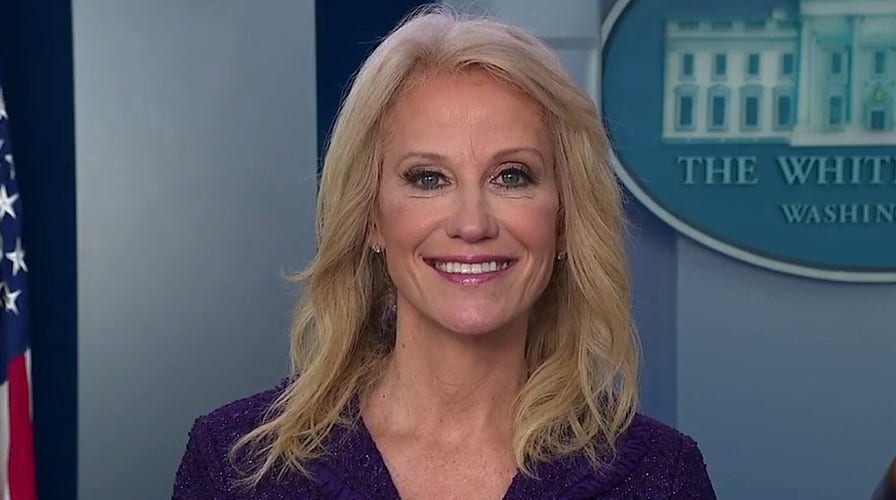
But, first, Kellyanne Conway, Counselor to the President.
Kellyanne, good evening, good to have you with us, as always.
KELLYANNE CONWAY, COUNSELOR TO THE PRESIDENT: Hi, Martha.
MACCALLUM: So, some of the President's critics, right after the speech, said that it was vindictive and vulgar. They - they said that he should never have used that word in - in the White House. What do you say to that?
CONWAY: Well who can blame him? They've tried for over three years now to get the President, instead of getting the story or getting things done on behalf of this country.
First it was "Let's find the 70,000 electors in those three states and change the election results." Then it's the 25th Amendment. It's the emoluments. It's "Russia, Russia, Russia," for three years. Then it's a phone call with Ukrainian President.
And Nancy Pelosi should stop lying. She should stop pretending that there's any kind of victory in the impeachment.
The goal was to remove the President. It's always been to stop Donald Trump from being and continuing to be the President. That's the goal. They failed miserably. And I would ask them, "What do you have left? What do you have left?"
You put everything you had against this. And all you have left is a very dispirited, chaotic Democratic base. You've got Joe Biden running around saying he's electable. The Democratic voters in Iowa are saying you're not even delectable, let alone electable.
And you have a President whose more emboldened than ever, emboldened to do things on behalf of this country. He is working.
MACCALLUM: Well that's what I wanted to ask you about. You know, did - in terms of today's celebration, and in many ways, you know, you can understand him wanting to bring everyone together, who worked on the case with him.
But it sort of felt in some ways like, you know, it was more maybe a private celebration, instead of something, you know, for everybody.
And, you know, given - given that, does it stir up his opposition? Do all - does all of this just continue to sort of poke the fire? And I know, you know, you're going to say what can - it's never going to stop, the attacking.
CONWAY: No.
MACCALLUM: But - but can the President, at some point, you know, take the high road, and say, "You know what? Enough. Let's put this behind us and let's move on."
CONWAY: Martha, we have said that so many times though. I've said it on his behalf. He has said it. And to what end? Go back and look at what happened after the Mueller report came out, about March 24th of last year. That's almost a year ago.
The Mueller report came out. And immediately, the press got nervous and started writing all these stories, "Well when will you move on? When will you move on?" They were very nervous that maybe the tables would be turned, and we'd start saying "What was this about? A 600-page report that says nothing."
And nobody moved on. They didn't move on. They moved on to the Mueller testimony. The sequel was as bad as the original. And then, they moved on to the Ukrainian investigation.
The impeachment got 77 times more coverage than the Trump economy. It certainly has gotten probably million times more coverage than his position on school choice, or his position on life.
You have a President who is trying to bring the country together. Look at that speech the other night, the State of the Union address, where he is honoring the best of America.
We don't have celebrities in the First Lady's box. We have an 100-year-old Tuskegee Airman and his great-grandson. We have Ellie, from Missouri, who was born at 21 weeks and six days, and is now a healthy thriving two-year- old. We have a reunited military family.
We showed the best of American strength, optimism, and fortitude.
MACCALLUM: Well I know that - I understand that that--
CONWAY: And it's important. And today, Nancy Pelosi--
MACCALLUM: --there are numbers that showed that it was very successful with Independents because--
CONWAY: --Nancy Pelosi lied. She lied from the podium today.
MACCALLUM: OK.
CONWAY: And nobody calls her out. And she lied--
MACCALLUM: About what?
CONWAY: --that Obama started the - she lied that Obama started this economic recovery. The fact is he presided over the slowest economic recovery since World War II, and that we now have a 50-year low on unemployment, and the growth rates are through the roof. We've created over 7 million jobs. She lied.
MACCALLUM: Let me ask you about that because we--
CONWAY: She lied about healthcare. And nobody calls her out on her lies.
MACCALLUM: I want to ask you about healthcare, if I may, because Nancy Pelosi said that the White House wants to kill pre-existing coverage--
CONWAY: She's lying.
MACCALLUM: --of medical conditions. So, what are you doing to preserve--
CONWAY: Sure.
MACCALLUM: --pre-existing conditions coverage?
CONWAY: I'm part of the small team here that works on health - healthcare. And we've been doing it. But, you know, when Americans think about healthcare, Martha, they don't want to have another protracted argument about insurance.
They believe that healthcare means preventing and curing disease and improving health outcomes. So, we are working on that. The President already has done a major change on--
MACCALLUM: But does the President want to continue to cover pre-existing conditions--
CONWAY: Yes, dead-set (ph).
MACCALLUM: --with insurance?
CONWAY: The answer - the answer to that is 100 percent absolutely yes. And anybody who says otherwise is lying. This President is covering - he wants to cover pre-existing conditions.
And may I remind everybody, next month will be the 10-year anniversary of Obamacare. Yes, it helped some Americans. But 10 years later, the big lie "You can keep your plan, you can keep your doctor," that was wrong.
And we still have millions and millions of Americans, Martha, with no type of health insurance whatsoever. Obama promised everybody - Obama-Biden promised everybody would be covered. You can keep your plan, keep your doctor. We are protecting pre-existing conditions. And we're--
MACCALLUM: Yes, well I think it's important to get on the record on that because it's clearly going to be a big topic--
CONWAY: Yes, it's true.
MACCALLUM: --as we move forward in the election. I just have--
CONWAY: Yes, but it's very important to make sure Americans have coverage.
MACCALLUM: --one last question for you.
If - if Joe Biden, you know, and who knows what's going to happen in New Hampshire, and South Carolina, but - but his numbers have declined a bit in New Hampshire. And also, they've dropped about 5 percent in South Carolina.
If the Biden candidacy fizzles, will the investigations continue into Biden and Burisma, or will that story go away from your perspective?
CONWAY: Well this President is always going to want to know that countries like Ukraine are fighting corruption, and the new Ukrainian President who ran successfully on an anti-corruption agenda will make good on that promise. That's been the point from the beginning.
I don't think the polls and Joe Biden matter much to his fortunes. I wrote in The Washington Post a few weeks ago that he's - this fiction of electability is not true because Donald Trump disproved that in 2016 electricity (ph) and a focus on Electoral College beats the fiction of electability any day.
But I think corruption is an important thing to investigate. And--
MACCALLUM: So, those investigations would - the White House would encourage those investigations--
CONWAY: Well, no, I don't know. Well, first of all, the White House isn't--
MACCALLUM: --to continue.
CONWAY: --the White House isn't running those investigations. That's up to other agencies and departments.
I think what's most important is that we, at the White House, don't choose who sat on the - on the board of Burisma, a corrupt fail - corrupt energy company in Ukraine, and we certainly don't choose who runs on the Democratic side in 2020.
I think most important question for Joe Biden, who's now known more as Hunter Biden's father, than Barack Obama's Vice President, is where's - where's Vice - where's President Obama?
Why do three candidates now, including Mike Bloomberg, have, and I think Elizabeth Warren, have ads narrated by Barack Obama - former President Obama now? They're trying to - to run on the fact that--
MACCALLUM: All right, well--
CONWAY: --they were close to Obama.
MACCALLUM: I'm - I'm sure he would disagree that he's known--
CONWAY: And his own Vice President cannot get his endorsement.
MACCALLUM: --more as Hunter Biden's father than the former Vice President. But we'll leave it out.
CONWAY: No doubt.
MACCALLUM: Kellyanne, thank you very much.
CONWAY: Thank you, Martha.
MACCALLUM: Good to see you tonight.
All right, so also here tonight, Marc Thiessen, former Chief Speechwriter to President George W. Bush, and Co-Host of the American Enterprise Institute's podcast "What the Hell Is Going On," and Richard Fowler, Senior Fellow at New Leaders Council, both are Fox News Contributors.
Richard, let me go to you first. What do you think of the President's speech today in the White House and Kellyanne Conway's response?
RICHARD FOWLER, FOX NEWS CONTRIBUTOR: Listen, I think this is a moment for the White House to move on and talk about the fact they just passed a big trade deal with - with Canada and Mexico.
And instead, what we saw here was this President take a victory lap, which seemed to be like you said in the interview with Kellyanne Conway, Martha, a private party made public to the American people.
And I'm not really sure why because I think all this does is continue to divide this country. And it's a job of our President to unite the country, even given in a world where he does - he doesn't - the Democrats are willing to work with him.
In his State of the Union, he promised all of these things he was going to get done. But he can't get those done without the House of Representatives. So, maybe, just maybe, it's time for an olive branch, instead of a stick.
MACCALLUM: Marc?
MARC THIESSEN, FOX NEWS CONTRIBUTOR: Uniting the country by impeaching the President. That's that - the Democrats have done a great job of uniting.
Look, I think - I think the President is - is bitter, and he's got reason to be bitter, and - and angry. I think Nancy Pelosi is bitter and - and angry as well because she - the impeachment was an absolute disaster.
Put aside the rhetoric, just the objective measures. The Gallup poll that came out, when in October, before the - when the impeachment inquiry started, 39 percent approval for Donald Trump, today, 49 percent in Gallup, the highest he's ever had, so a 10-point rise in approval as the hearings, as the trial, was taking place.
The people who said he shouldn't be removed from Office were 46 percent at the start, they're now 52 percent. His - the number of people who think--
MACCALLUM: Yes.
THIESSEN: --that he should get a second term has risen from 41 to - to 50 percent. And he, by the way, 94 percent support in the GOP compared to what Obama had around this time, which was--
MACCALLUM: Yes.
THIESSEN: --in the high 70s.
MACCALLUM: No, these numbers are very good.
THIESSEN: You know, he's--
MACCALLUM: There's - there's no - there's no doubt about that.
THIESSEN: It's - it's been an absolute disaster for the Democrats.
MACCALLUM: Let me just play this from the - from President Trump today in the speech as well. Watch this.
(BEGIN VIDEO CLIP)
TRUMP: If they find that I happen to walk across the street, and maybe go against a light or something, "Let's impeach him!"
(AUDIENCE LAUGHTER)
TRUMP: So, we'll probably have to do it again because these people have gone stone-cold crazy. But I've beaten them all my life. And I'll beat them again if I have to.
(END VIDEO CLIP)
MACCALLUM: Richard, is there - is there exhaustion on the side of Democrats for this effort? And is there - is there a feeling that it would be more productive to not keep going with all these investigations?
FOWLER: Listen, that's a very - that argument's very - I sympathize with that argument. I think there's some truth to that.
I think with that being said, for this President, to compare - compare what happened with his call with the Ukrainians, to him crossing the street, is a little bit like comparing apples and oranges here.
There was definitely some wrongdoing in this call. I think even a lot of Republicans will admit that, right? Did it lead - was it impeachable? Did it get it - to get him out of Office?
MACCALLUM: Or should it have ever gotten to that--
FOWLER: No, it did not.
MACCALLUM: --to this whole process--
THIESSEN: Yes.
MACCALLUM: --is a very legitimate question.
FOWLER: Well I think there comes a time--
THIESSEN: That's exactly right.
FOWLER: There comes a time in every Presidential - every President's career, and every President's sort of legacy, where they say "Now is the time for me to focus on civility. Now is the time for me to focus on being a moral leader." The President haven't found any of those things at this point in time even after being impeached.
THIESSEN: Again--
FOWLER: There's no contrition here whatsoever.
THIESSEN: Richard, she just tore up his State of the Union address on national television.
FOWLER: But he's still the President of the United States, Marc.
THIESSEN: Don't - don't lecture us about civility. I mean it--
FOWLER: There's one of those.
THIESSEN: It doesn't matter. That's, you know--
FOWLER: This is part of the problem.
THIESSEN: She - she broke with the protocol.
MACCALLUM: You know what? Something--
THIESSEN: She wouldn't say the word.
FOWLER: And it does matter.
MACCALLUM: In order for that to happen--
THIESSEN: She would not say the word.
MACCALLUM: --the dynamic in some material way has to change. But these two are going to keep going at each other. There's no doubt about it. So, over the next nine months, the focus turns to the election, and we'll see what happens here.
Thanks you guys. Good to see you both tonight.
THIESSEN: Yes.
FOWLER: Good to see you, Martha.
MACCALLUM: So, President Trump today labeling Nancy Pelosi as a horrible person after she doubled down on tearing his speech at the State of the Union address. Speaker Pelosi's daughter, Christine, will respond for the first time coming up next.
(BEGIN VIDEO CLIP)
TRUMP: I had - I had Nancy Pelosi sitting four seats away, and I'm saying things that a lot of people wouldn't have said, but I meant every--
(AUDIENCE LAUGHTER)
TRUMP: --I meant every word of it.
(END VIDEO CLIP)
(COMMERCIAL BREAK)
(BEGIN VIDEO CLIP)
N. PELOSI: I tore up a manifesto of mistruths.
And I don't need any lessons from anybody, especially President of the United States about dignity.
I think it was completely entirely appropriate.
(END VIDEO CLIP)
MACCALLUM: The ongoing feud between President Trump and Nancy Pelosi boiling over today. The two traded war barbs through the media. They have not spoken in months. And there doesn't appear to be any thaw coming.
President Trump blasted Nancy Pelosi during the National Prayer Breakfast, held up a newspaper heralding his acquittal, as Speaker - as the Speaker of the House sat just feet away - feet away.
And later, at a celebratory speech in the East Room of the President - of the White House, I should say, the President took aim once again.
(BEGIN VIDEO CLIP)
TRUMP: Nancy Pelosi is a horrible person. And she wanted to impeach a long time ago. When she said, "I pray for the President. I pray for the President." She doesn't pray. She may pray, but she prays for the opposite.
(AUDIENCE LAUGHTER)
TRUMP: But I doubt she prays at all.
(END VIDEO CLIP)
MACCALLUM: All right, here now exclusively, Christine Pelosi, the daughter of House Speaker Nancy Pelosi, and the Author of "The Nancy Pelosi Way."
Christine, thank you for being here tonight.
CHRISTINE PELOSI, AUTHOR, "THE NANCY PELOSI WAY": Thank you.
MACCALLUM: You know, I think, first of all, I just want to get your reaction. When you saw the Speaker rip up those pages, very intentionally, you know, one, two, three, in front of the cameras, what was your reaction? Did you know she was going to do that?
C. PELOSI: No idea she was going to do that. I think Nancy Pelosi is a wonderful person. I know she prays daily, including for the President, including for the country, as we've talked before.
And in watching that, her reaction to that speech, I thought to myself, "That's an Italian grandma move."
I saw my grandmother do that years ago, in her kitchen, when there was a guest who had been at my grandfather's house, very rude to him, she just simply picked up the person's plate, without comment, went into the kitchen.
We heard a little crashing sound. She threw the plate away, came back, sat down, didn't say another word. So, to me, I thought that's--
MACCALLUM: You thought it was appropriate?
C. PELOSI: --that's an Italian grand - well I thought it was an--
MACCALLUM: Yes.
C. PELOSI: --an Italian grandma move. I think that's--
MACCALLUM: So, she said - she said it was the most courteous thing.
C. PELOSI: --that was her reaction to it. She didn't say anything.
MACCALLUM: She said it was the most - let me ask you--
C. PELOSI: She didn't, you know.
MACCALLUM: --the most courteous thing I could do, she said, given my other exuberances. What did she mean? What were her other exuberances? What would have been worse than that?
C. PELOSI: Well I think plenty of things would have been worse than that.
I mean, for example, he could have put his outstretched hand towards her, and she could have refused to shake it, which surprised me when I first watched the speech, I thought "Well wait, where - her hand's out there. Why isn't he shaking her hand?"
When you hear someone give a speech, in front of you, and say things that you know to be untrue, he says he's protecting people's care, and I know Kellyanne Conway just repeated that, but the fact of the matter is he's in court suing to overturn the Patient Protection and Affordable Care Act.
He is in court trying to uphold rules that will - that will change that - just did that will change the definition of a public charge that will hurt immigrants like his own father who came in--
MACCALLUM: Well they have policy differences. There's no doubt about that.
C. PELOSI: --who needed that. Well but if you lie about--
MACCALLUM: But let me ask you this. But, Christine?
C. PELOSI: --what the--
MACCALLUM: No.
C. PELOSI: --what the - what you're doing, that's not a policy--
MACCALLUM: That - you know what?
C. PELOSI: --difference. That's a lie.
MACCALLUM: I have watched State of the Union addresses my whole life, as I know you have too.
C. PELOSI: I've been there.
MACCALLUM: There are always Presidents who stand up there, and who talk about their policies. There are always people in the audience, including Speakers of the House of op - of the opposite Party, who don't agree that they are saying what they see as the - the more effective policy.
They have different views on the way to fix healthcare in this country. It doesn't mean that you - you rip up the speech. I mean you - generally--
C. PELOSI: It might if you think the person's lying.
MACCALLUM: --my whole life, people have sat there respectfully, and listened to each other. That's part of what happens at the State of the Union address.
And - and, frankly, you know, I just I - I thought it was surprising. I mean I was with a panel of people, Democrats, Republicans, and - and everybody, you know, thought "Wow! That was - that was a surprising move." And - and that was--
C. PELOSI: It was.
MACCALLUM: --one of the nicer words that was used for it.
C. PELOSI: Well that was your panel of people. I was with hundreds of people last night, who loved it, and thought, "Thank God. Somebody"--
MACCALLUM: I'm sure that's true. No, I'm sure.
C. PELOSI: --"with the flick of the wrist had some resistance."
MACCALLUM: I - I know that sentiment is - is out there as well. I'm just - I'm just saying.
C. PELOSI: Oh, it's out there, for sure. Yes, it's has been.
MACCALLUM: So - so how about this comment?
C. PELOSI: Martha, going to your point though--
MACCALLUM: Yes.
C. PELOSI: --it's not a matter of saying you and I can disagree.
MACCALLUM: Right.
C. PELOSI: We're both speaking the truth. It's a different thing if I say there's a lawsuit to overturn the law, and at the same time, I say I'm defending the law, I am lying.
MACCALLUM: Yes, but their lawsuits are--
C. PELOSI: If that - that is - that is a fundamental difference there.
MACCALLUM: But their argument is that the - the lawsuit to overturn the law is to - is to allow a system that - that they think would be better to protect people and would provide better coverage in the end because they think that that law is not effective so far in doing so.
So that, to me, is a policy difference. It's - it's - "Yes, we're trying to do this because we want to overturn that," and that's a policy difference. I don't - I don't see it as - as lies. But maybe we just have a different way of - of, you know, listening to both sides here.
I just want to play this other - this other - this other sound bite here from the Speaker about thinking that the President was sedated. Watch this.
(BEGIN VIDEO CLIP)
N. PELOSI: It was also an act of kindness, because I - he looked to me like he was a little sedated. He looked that way last year too. But he didn't want to shake hands. That was that. That meant nothing to me. It had nothing to do with my tearing up.
(END VIDEO CLIP)
MACCALLUM: So, I mean what - I'm just curious, what your take is on that. When I heard that I thought--
C. PELOSI: Well I think--
(CROSSTALK)
MACCALLUM: --she tell you he was drugged or something?
C. PELOSI: No. I thought - well I think - I actually thought he had a cold this morning. I didn't know what - what - what that remark.
MACCALLUM: Yes.
C. PELOSI: But maybe he was - maybe had a cold last night too. I actually thought he sounded like he had a cold this morning. But, in any event, I think there's two things.
One is I thought you were going to play the part where he said all the things that he said about Mitt Romney's faith, which I thought was bizarre, because I remember in 2012, Mitt Romney talking about his faith quite a lot at the Republican Convention. So, I don't think it was new and I don't think it was a crutch.
MACCALLUM: Yes. Well I think a lot of people thought that--
C. PELOSI: Again, going back to--
MACCALLUM: --a lot of that back-and-forth was over the line.
C. PELOSI: Well - well, again, I think there's a couple of things going on here.
MACCALLUM: On both sides.
C. PELOSI: First of all, the House of Representatives has the power. If they want to get something passed, they have to go through the House of Representatives. So, sooner or later, he's going to have to go back there. That's how the trade deal - deal got done after the House of Representatives--
MACCALLUM: Right.
C. PELOSI: --made it better, working with Labor. You want to get something done on healthcare? You want to get something done on the budget--
MACCALLUM: Yes.
C. PELOSI: --he will eventually have to go have - back to the House of Representatives to make something happen.
MACCALLUM: Absolutely true. Let me ask you one--
C. PELOSI: So, we will - we will want to see what - what--
MACCALLUM: That's--
C. PELOSI: --what those dynamics are then.
MACCALLUM: --very true.
C. PELOSI: But it's important to note that when the budget comes out, the numbers don't lie. And so, the numbers are going to have to re - that's where the stark reality is going to be.
MACCALLUM: OK.
C. PELOSI: That proof will be in the pudding.
MACCALLUM: All right, we'll--
C. PELOSI: If they really want to do something on healthcare and infrastructure, let's look at the budget--
MACCALLUM: I - I think that's--
C. PELOSI: --and see it's our statement of our values.
MACCALLUM: --something that all Americans would like to see happen on both fronts. So, I hope - I hope that's true. One last question for you.
C. PELOSI: Sure.
MACCALLUM: Let's put up this Gallup poll. During the course of impeachment, the President's approval rating went up 10 points.
Does that, you know, I mean I think that would lead to some frustration on the part of those who pursued it, for whatever reasons, they pursued it. Does that - what do you think about that?
C. PELOSI: Well a couple of things. I saw that Gallup poll. It's more heavily weighted now towards Republicans than it was before. So, if you look at the breakdown of the numbers, they're different, and that could be where the numbers are.
But the people who decided to go forward with the impeachment inquiry and with the impeachment were very, very clear. This isn't about the polls. This is about the truth. This is about finding the truth.
And this is about making sure that we say Article Two constrains the President. It doesn't mean he can say he can do whatever he wants. And so, what we're talking about, as we go forward, and listen, our - our voters, they want to hear about healthcare. They want to hear about healthcare. They want to be assured--
MACCALLUM: But - but the Speaker of the House said--
C. PELOSI: --that the President is going to be--
MACCALLUM: --in the beginning of this process--
C. PELOSI: --following the law.
MACCALLUM: --that we shouldn't do impeachment because it will be too divisive.
Now, I have to believe she looks at these numbers, and says, "See," to her - to her Caucus, "I told you this was going to be a mistake. And it is. His numbers have gone up during this process."
C. PELOSI: It's not a mistake to stand up for America. It's not a mistake to stand up for the truth. It's not - and again, you're looking at one poll. RealClearPolitics average has him going up one point, not several. Again, you're looking at a weighted poll that has more Republicans in it now--
MACCALLUM: Well and we aren't choosing (ph)--
C. PELOSI: --than it did two months ago.
MACCALLUM: --just rattle through a whole bunch of numbers that - that are - are positive--
C. PELOSI: He did in - in Gallup, yes.
MACCALLUM: --over the course of those three months.
C. PELOSI: All in that same weighted polls, so.
MACCALLUM: All right, so you don't - OK.
C. PELOSI: But - but point is--
MACCALLUM: We'll see.
C. PELOSI: --whether it is or is - it isn't, the most important poll is going to be on Election Day, November 3rd.
MACCALLUM: Absolutely, absolutely.
C. PELOSI: And the question is going to be are we going to move forward and have a President, you know, of a different Party, who's going to bring us together, and protect our healthcare, or are we going to have four more years of Donald Trump?
MACCALLUM: Well, at this point, one thing that we do know--
C. PELOSI: We shall see.
MACCALLUM: --is that the people will decide.
C. PELOSI: Yes.
MACCALLUM: And that will happen in nine months. Christine Pelosi, thank you. We appreciate you coming in. Good to see you tonight.
C. PELOSI: Thanks, Martha.
MACCALLUM: So, we'll be right back with more. Stay with us.
(COMMERCIAL BREAK)
MACCALLUM: The AP dropping a bombshell tonight, saying that they will not declare a winner in the Iowa Caucus, due to a tight margin between Pete Buttigieg and Bernie Sanders, and other irregularities in this process. What a fiasco that has been!
And 2020 candidate Mike Bloomberg skipped the whole thing altogether. He's also skipping New Hampshire. Instead, he's engineering a nationwide "Weekend of Action" against President Trump with more than 1,200 events, over the course of this weekend, in 30 states.
Joining me now exclusively is Michael Nutter, Co-Chairman of the Bloomberg Campaign.
Michael, thanks for being here tonight. Good to have you with us.
MICHAEL NUTTER, CO-CHAIRMAN, BLOOMBERG CAMPAIGN: Thank you, Martha, thank you.
MACCALLUM: So, I want to play a sound bite from Karl Rove on this show about what he thinks needs to happen for your candidate to do well. Watch this.
(BEGIN VIDEO CLIP)
KARL ROVE, FOX NEWS CONTRIBUTOR: For Bloomberg to win, Biden has to implode in the next two or three weeks. Which means, coming in an embarrassing finish here either, you know, third or fourth and distant from the first place finisher --
MACCALLUM: Yes.
ROVE: -- and then be creamed in New Hampshire like we expect.
(END VIDEO CLIP)
MACCALLUM: Do you agree? How much does that matter for Mike Bloomberg to campaign?
NUTTER: Well, it's always interesting when Republicans want to give us advice and perspective about the election.
Mike Bloomberg is running against Donald Trump. As you mentioned in your opening, we're running a general election-type campaign through the primary and caucus season. There are a lot of things that will happen during the course of February. And as you mentioned again primarily because of when Mike announced, we are not on the ballot in the four states during the course of February. But super Tuesday and forward, we'll be active and competitive. So, you know, we'll see what happens in -- I mean, they're still obviously trying to figure out --
(CROSSTALK)
MACCALLUM: Yes. But, I mean, obviously Karl Rove has run a number of successful campaigns by the way --
NUTTER: Iowa, New Hampshire, and Nevada.
MACCALLUM: -- and he was just being asked, you know --
NUTTER: Yes.
MACCALLUM: -- if you were the strategist what would you say?
NUTTER: Yes. I'm not diminishing --
MACCALLUM: So, no. I just want to ask you.
NUTTER: Yes.
MACCALLUM: So, he's saying, you know, that for Bloomberg to succeed -- do you still feel that way? Because there was a time when the word was that Mayor Bloomberg wasn't going to get in if Biden was in. But then apparently, you know, he sensed that Biden was maybe weak. Because a lot of people including a lot of Obama supporters had no praise for him whatsoever. So how do you play that now at this point? Biden seems to be hanging in there.
NUTTER: Well -- of course, he's hanging in there. And he has, you know, support in a variety of places. Mike looked at a set of data as he's a data-driven guy over an extended period of time, plus, you know, the day it started last summer and decided based on the information he had available that he was concerned as to whether any of the present candidates at that time could beat Donald Trump in the general election. That's the -
(CROSSTALK)
MACCALLUM: Right.
NUTTER: -- obviously, you had to get through primaries and caucuses. But the general election really is the Super Bowl of this particular contest and decided that he owed it to, you know, the country personally to actively get involved, use his resources and put together a campaign unlike anything that anyone has seen, certainly in modern times.
MACCALLUM: Well, he's -- I mean, it's very interesting. Because in the national polls he's in fourth place right now.
NUTTER: Yes.
MACCALLUM: So, he's been moving up to double digits which is impressive for somebody who's not in yet.
(CROSSTALK)
NUTTER: Yes. Third, fourth. Depending on which poll you look at.
MACCALLUM: I'd like to play this from Bernie Sanders on the campaign trail today.
(BEGIN VIDEO CLIP)
SEN. BERNIE SANDERS, I-VT., PRESIDENTIAL CANDIDATE: And now suddenly a guy comes in who does not campaign one bit in Iowa, New Hampshire, he's not on the ballot. I guess in Nevada or South Carolina. But he's worth $55 billion. And I guess if you're worth $55 billion, you can get the rules changed.
(END VIDEO CLIP)
MACCALLUM: So, I imagine that's a sentiment that is going to be thrown at him quite a bit, Michael. What do you say?
NUTTER: Well, the fact of the matter, Martha, and I'm sure you have reported on this, the fact of the matter is that the DNC from the start always indicated to the candidates at that time, last year, that there would be a series of either escalating or changing criteria or thresholds.
The fact of the matter is, I believe there have been at least four, possibly five different rules changes depending on --
(CROSSTALK)
MACCALLUM: Yes, that's true.
NUTTER: -- which debate you're talking about, July, August, September, October, November, December, and even January.
MACCALLUM: Yes.
NUTTER: All along the way, there have been various changes in the rules --
(CROSSTALK)
MACCALLUM: Yes, absolutely.
NUTTER: -- thresholds, money amounts, 20 states, et cetera, et cetera. This is not being done for --
(CROSSTALK)
MACCALLUM: All right. I got to go.
NUTTER: -- or to benefit Mike Bloomberg. That's a nice narrative but it's just not true.
MACCALLUM: All right. Well, we'll be watching. Michael, thanks a lot for being here. We appreciate it.
NUTTER: Sure. Thanks.
MACCALLUM: Trey Gowdy is coming up next. Stay with us.
(COMMERCIAL BREAK)
MACCALLUM: President Trump today had a searing rebuke of former FBI director James Comey.
(BEGIN VIDEO CLIP)
TRUMP: Had I not fired James Comey, who was a disaster, by the way, it's possible I wouldn't even be standing here right now. We caught him in the act. Dirty cops. Bad people.
They were going to try and overthrow the government of the United States. A duly elected president. If I didn't fire James Comey, we would have never found this stuff. Because when I fired that sleazebag, all hell broke out.
(END VIDEO CLIP)
MACCALLUM: Interesting moment from today. Joining me now, Trey Gowdy. He's the former House oversight committee chairman and now a Fox News contributor. Trey, good to have you with us today.
TREY GOWDY, FOX NEWS CONTRIBUTOR: Thanks, ma'am. Thank you.
MACCALLUM: Very strong words. No mincing of words there at all. But when you look at the Mueller report and you look at the FISA process, you can understand where it's coming from.
GOWDY: Yes. I mean, Peter Strzok, who is the lead case agent on this Russia probe, was talking about impeaching Donald Trump before Adam Schiff and Jerry Nadler were.
MACCALLUM: Yes.
GOWDY: I mean, just let that sink in for a second. The lead agent for the FBI mentioned impeaching Trump before Schiff and Nadler did. And so, then the FBI conducts this defensive briefing, which is really just an interview because they suspected Donald Trump of impropriety.
And you got James Comey who thinks impeachment is too good for him. You got John Brennan who thinks he should be in the dust pan of history. You got Andy McCabe who after Comey was fired launched yet another investigation into Trump.
MACCALLUM: Yes.
GOWDY: Martha, if I were Donald Trump, I would think the FBI was out to get me, too.
MACCALLUM: Yes. You know, he also pointed out that when he fired him, it was obviously a huge story. We all covered it. But he felt that it was ultimately the move that saved him. Because he believed that he was eliminating the person at the top who created a culture that was after him, that believed, you know, based on -- essentially on the dossier and some other things around it.
But this dossier that was paid for by Hillary Clinton and the DNC used that to create an environment where they believed that they were above board in investigating the president and his campaign. I mean, it is -- it is pretty stunning when you look back at it.
GOWDY: Yes, I would correct the president's narrative only to this extent. Remember, he replaced Comey with McCabe. I mean, that is hardly --
MACCALLUM: That's true.
GOWDY: -- moving up the draft board. It was only when Chris Wray came in that I think you had in this passionate objective law enforcement centered person. McCabe is -- McCabe was no better than Comey. So, we had to get all the way through --
(CROSSTALK)
MACCALLUM: Well, he got -- he got moved up because it was, you know, I mean, he was sort of the next person available, I guess, at that time.
GOWDY: Well --
MACCALLUM: Do you think the culture has changed at the FBI? Because, you know, there's a lot of discussion about what's next. You know, I mean, which phone call, which -- you know, there's already investigations that are continuing into the president's taxes and everything else. But do you think the culture has changed at the top?
GOWDY: I hope so, Martha. I hope so, and I say that because I don't know. I mean, I haven't talked to Chris Wray since I left Congress.
MACCALLUM: Yes.
GOWDY: But those of us, you know, Ratcliffe and others who are former federal prosecutors, we're not going to make it as a country if people don't have confidence in the FBI. And it's been a really bad four years with Strzok and McCabe and Baker, and Page, and Comey.
I mean, it's been a terrible four years for the world's premier law enforcement agency. I didn't get to watch Chris' testimony this week. I read some articles about it. I think some of my Republican colleagues weren't all that impressed with the changes that Chris has outlined. But we're not going to survive if the American people do not have confidence in the FBI.
MACCALLUM: Yes. All right. Trey Gowdy, thank you very much. Good to see you tonight.
GOWDY: Yes, ma'am. Thank you.
MACCALLUM: Still ahead on the story tonight, Senator Chris Coons with a powerful message about prayer and the president.
(COMMERCIAL BREAK)
MACCALLUM: Quite a story here. The Chinese physician who was sanctioned after sounding the alarm about coronavirus has died. Following a day of conflicting reports about his health.
Chief breaking news correspondent Trace Gallagher has the latest. Hi, Trace.
TRACE GALLAGHER, FOX NEWS CORRESPONDENT: Hi, Martha.
This story goes to the very heart of why human rights groups in foreign countries are so skeptical of the information being given by the Chinese government.
Back last in December, 34-year-old Dr. Li Wenliang who was an ophthalmologist sent a note on social media to his medical school alumni group warning them and telling them to warn their loved ones that seven patients had been quarantined at the Wuhan central hospital with a respiratory illness that seemed like the SARS virus.
Remember, SARS was the outbreak in China that sickened thousands and killed hundreds in 2002, 2003. But the warning Dr. Wenliang sent to his former colleagues was posted online and quickly went viral. That's when the doctor was taken into custody by the Wuhan police where he was reprimanded and required to sign a letter acknowledging that he made false claims.
The Chinese government later issued its own statement saying the disease was, quote, "preventable and controllable with no obvious human-to-human transition." Thirteen days later, Dr. Wenliang was having trouble breathing and checked himself in to Wuhan central hospital. But he either wasn't diagnose or we didn't learn he was diagnosed with coronavirus until February 1st when he posted it on social media.
Earlier this week, Wenliang did interviews with both the New York Times and CNN, criticizing the Chinese government for not disclosing information about the virus sooner.
Then last night, reports began surfacing that Dr. Wenliang had passed away. Hours later, those reports were retracted, saying he was in critical condition. But today, Wuhan central hospital confirmed that Dr. Li Wenliang had passed away. The illness and the death toll from the coronavirus have now surpassed that from SARS. Six hundred thirty-six people have now died. That's according to the Chinese government. Martha?
MACCALLUM: It's a tragedy. He was a brave doctor and spoke out --
GALLAGHER: Yes.
MACCALLUM: -- when other people weren't. Thank you very much, Trace.
GALLAGHER: Yes.
MACCALLUM: Good to have you here.
So, one senator's message about the power of prayer in a --
(COMMERCIAL BREAK)
MACCALLUM: Wounds from the impeachment battle still fresh today, they spilled over today at an event intended to bring all sides together. The National Prayer Breakfast.
My next guest, a former co-chair of that event, offers a sobering message about faith transcending politics. Writing in the Washington Post, quote, "Prayer is as much about having hope that we will be forgiven as it is about forgiving others. Prayer for me is about witnessing to the possibility of repentance and reconciliation even across the hardest and most bitter divides."
Joining me now, Democratic Senator Chris Coons of Delaware. Senator Coons, thank you so much for being here today.
SEN. CHRIS COONS, D-DEL.: Thank you, Martha.
MACCALLUM: I know that obviously it's been a busy and difficult week --
COONS: Yes.
MACCALLUM: -- for a lot of Americans and certainly --
COONS: Yes.
MACCALLUM: -- everybody has been strained and you have a lot of things going on in your own life, I know. So, we wish you well on all of that.
COONS: Thank you.
MACCALLUM: With regard to your parents. So, give me a little sense of -- you know, one of the things that I thought that was interesting that you brought up was Arthur Brooks' message. Arthur Brooks has been a guest on this show. I think our viewers are familiar with him. But what was his message at the beginning of the breakfast today?
COONS: Well, Arthur Brooks was the keynote speaker who shared obviously the podium with President Trump who also addressed the crowd. Arthur Brooks, the title of his remarks was 'love thy enemies.' And he gave a very compelling speech about how Christ calls us not just to civility not just to tolerance but to genuinely open our hearts to and love those who are our opponents, who persecute us, who are our enemies in a very real sense.
And it was a funny speech, it was a challenging speech, it was an uplifting speech. And obviously, both Speaker Pelosi and President Trump were in the room and at the dais with him as were dozens of members of Congress both Houses and the cabinet.
And one of the things I was proud of about his remarks and how the Republican and Democratic member of the House who co-chair the House prayer breakfast about their remarks was that they showed to our guests at the prayer breakfast today who represent more than 100 countries from around the world, the best of how we are at times able to rise above our differences here in Congress and in the United States.
MACCALLUM: Let's listen to the president today. Hot off of his acquittal, which obviously he's very relieved and happy about. And here's what he had to say at the breakfast this morning.
(BEGIN VIDEO CLIP)
TRUMP: I don't like people who use their faith as justification for doing what they know is wrong. Nor do I like people who say I pray for you when they know that that's not so.
(END VIDEO CLIP)
MACCALLUM: So, the bald man, Arthur Brooks at the table there who leaned over to grab a sip of water during that moment may have been reacting in some ways to what the president said. What did you think about that moment? What was it like?
COONS: I was uncomfortable. I think it was an unfortunate focus on rejecting the offers of others. Their prayers for him, for the president. I don't know if that was in any way directed at my article or at my having prayed for and with the president three years ago. I suspect it was more focused on the contest of the moment of today.
Look, Martha, we all have sharp differences in terms of our politics and our views here in Washington.
MACCALLUM: Yes.
COONS: But the point of the prayer breakfast is not to question each other's faith or to challenge each other but to welcome and to accept the prayers of others and to try to seek some encouragement and uplift.
MACCALLUM: Yes.
COONS: The way the prayer breakfast actually started was President Eisenhower communicated to a group of senators, he said, you know, the White House can be the loneliest house in America. It's a very hard place to bear the burdens of the office. And he asked for a chance to come and pray with senators.
And in my editorial in the Post, I reference how three years ago President Trump invited me to travel with him to Dover Air Force Base in Delaware as he welcomed home the remains of Ryan Owens, a navy SEAL who had been killed in Yemen. It was the first combat death of his presidency.
And I reflected on how heavy the office must have felt on his shoulders that night as we stood next to each other and a flag draped coffin came out of the back of an American C-17 and his family received his remains for the first time. I'm mindful of how heavy the burden of the office is on any president.
MACCALLUM: Yes.
COONS: And I have prayed for every president and I've done so for President Trump as well.
MACCALLUM: And he wrote in that, beautifully in that editorial that you also saw that the moment was impactful for the president as well. That you could see that he was feeling the weight of the burden of that moment and of the presidency.
You know, Nancy Pelosi weighed in on this, too, sort of firing back at the president, questioning whether or not he understands prayer. Here's that.
(BEGIN VIDEO CLIP)
PELOSI: I don't know if the president understands about prayer or people who do pray. But we do pray for the United States of America, I pray hard for him because he is so off the track of our Constitution, our values, our country.
(END VIDEO CLIP)
MACCALLUM: I mean, you know, I think you just weight for somebody to sort of take the high road here in some of these situations. You know, I just wonder what your reaction is to that. I think prayer is such a personal thing.
COONS: Yes.
MACCALLUM: Judging anybody's ability to pray or the way they pray or whether or not they understand prayer just seems over the line.
COONS: Well, what I thought was the highlight of the prayer breakfast this morning was when the Republican and Democrat Congressman Suozzi of Long Island and Mueller of Michigan, who are the co-chairs of the House Prayer Breakfast opened in prayer and showed through the dynamic between them just what a warm and genuine relationship they have that they've developed through praying together.
Of course, they have differences. Of course, they have political disputes. And so, do many of us. And in the article that I wrote, I try to be clear that I strongly disagree with some of the president's policy priorities. But we can't let that prevent us from being open to each other and seeking to work together.
Because honestly, what I hear from Delaware week in and week out, is why can't you guys get along? Why can't you solve our country's problems? We're just coming off a very divisive fight over impeachment. I voted to remove the president. And I could understand how he would feel insulted by that vote. I feel strongly about my having come to the right conclusion.
But that still doesn't prevent me from earnestly praying for our country, for my fellow senators and for our leaders, and in particular, our president. And I would hope that out of the spirit of today's breakfast folks who visited us from around the world would get to see some of the positives of how we are able to come together even in the midst of this very difficult and divisive moment.
MACCALLUM: Well, maybe they did. There's a psalm, 'lean not on thy own understanding' which I think is powerful as well because we all just are doing the best we can in these difficult times and trying to get through it all.
Thank you so much, Senator Coons.
COONS: Thank you, Martha.
MACCALLUM: Good to see you tonight as always. Thank you.
COONS: Thank you.
MACCALLUM: So that is The Story of Thursday, February 6th, 2020. A busy day in Washington and all across the country. "The Story" will continue tomorrow and we'll be back here tomorrow for a Friday. We'll see you then at 7 o'clock.
Coming up next, though, Tucker Carlson takes it away from Washington, D.C. Thanks for joining me tonight, everybody. We'll see you back here on The Story tomorrow at 7. Have a great night.
Content and Programming Copyright 2020 Fox News Network, LLC. ALL RIGHTS RESERVED. Copyright 2020 ASC Services II Media, LLC. All materials herein are protected by United States copyright law and may not be reproduced, distributed, transmitted, displayed, published or broadcast without the prior written permission of ASC Services II Media, LLC. You may not alter or remove any trademark, copyright or other notice from copies of the content.
