




Inside the politics of President Trump's border security agenda as impasse over wall funding drags on
President Trump prepares for prime-time Oval Office address to the nation; reaction and analysis from the 'Special Report' All-Stars.
This is a rush transcript from "Special Report," January 7, 2019. This copy may not be in its final form and may be updated.
(BEGIN VIDEO CLIP)
PRESIDENT DONALD TRUMP: I may declare a national emergency dependent on what is going to happen over the next few days.
REP. ADAM SCHIFF, D-CALIF., RANKING MEMBER, HOUSE INTELLIGENCE COMMITTEE: If Harry Truman couldn't nationalize the steel industry during the wartime, this president doesn't have the power to declare an emergency.
SEN. DICK DURBIN, D-ILL., SENATE MINORITY WHIP: He's faced so many lawsuits when he ignores the law and ignores tradition and precedent and just goes forward without any concern.
TRUMP: I will tell you this -- if we don't find a solution, it's going to go on for a long time. There's not going to be any bend right here.
(END VIDEO CLIP)
BRET BAIER, HOST: There is no solution today. We'll see what tomorrow brings. Tomorrow will definitely bring an interesting speech coming from the Oval Office. The president tweeting, "I'm pleased to inform you that I will address the nation on the humanitarian and national security crisis on our southern border Tuesday night at 9:00 p.m. eastern." Again, that is from the Oval Office, and you'll see that right here on Fox.
Meantime, the administration is doing what it can to take away some of the pain from the shutdown. The acting director of the OMB saying "We are doing all we can to make this partial shutdown as painless as possible for federal employees consistent with the law. I know there's been some concern whether or not tax refunds would go out, and I can say unequivocally that tax refunds will go out as planned," from the IRS, so a sigh of relief for some people waiting for that.
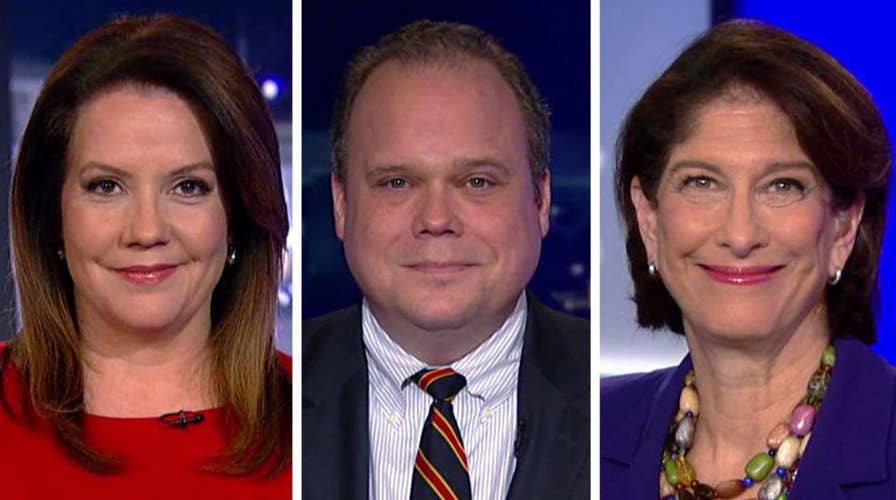
Let's bring in our panel, what comes next, Chris Stirewalt, politics editor here at Fox News, Mara Liasson, national political correspondent for National Public Radio, and Mollie Hemingway, senior editor at The Federalist. OK, Chris, the president will speak from the Oval Office, the first time he will deliver that address from that venue. Whether it is going to be a national emergency call, whether it is going to be another offer to Democrats, we don't know.
CHRIS STIREWALT, FOX NEWS POLITICAL EDITOR: What he has to do -- first of all, this is the best venue that presidents have, and it takes the measure of the man. If you remember the first time Obama did an Oval Office address, he looked miniature behind the giant desk as he was talking about the oil pumping out into the Gulf of Mexico and it was a flop.
But then we also think about moments like Ronald Reagan where he used these -- he did them about five minutes. There were great, used them to wonderful effect. Other presidents have done so.
Trump has an opportunity here to say what he really wants. He can tell the American people he was in a bad position. He was fighting over $3 billion in a government that is running a $1 trillion deficit. It's goofy. You can't do that. But now he has increased the size of the field, and he says it is for the whole thing, it's for comprehensive immigration reform. Let's do it now. So he has got one magic moment now where he can lay out his case, and let's see if anybody wants to talk about it.
BAIER: Mara, they do have to have their stats right, because the president, what he says from the Oval Office obviously will be fact-checked real time. Sarah Sanders was fact-checked real-time on "Fox News Sunday" by Chris Wallace.
(BEGIN VIDEO CLIP)
CHRIS WALLACE, FOX NEWS ANCHOR: Do you know where those 4,000 people are captured? Airports.
SARAH SANDERS, WHITE HOUSE PRESS SECRETARY: Not always. Certainly a large number.
WALLACE: The State Department says there hasn't been any terrorists that they have found coming across the southern border from Mexico.
SANDERS: Certainly, it's by air, it's by land, and it's by sea. It's all of the above. But one thing that you're forgetting is that the most vulnerable point of entry that we have into this country is our southern border, and we have to protect it.
(END VIDEO CLIP)
BAIER: That was about the 4,000 they said were coming, terrorists possible, or suspected terrorists. Kirstjen Nielsen, the secretary of Homeland Security saying at this pen and pad today, "We absolutely have had cases of terrorists crossing the southern border. The number itself is sensitive and difficult to share because some of the figures are classified due to ongoing investigations. We can also say there are literally thousands of known or suspected terrorists traveling throughout the hemisphere, and if we don't have a secure border it makes that much more difficult to tell who is coming in. Also 17,000 people with previous criminal convictions were stopped at the border last year. We have a duty to understand who is coming into our country. We need secure points of entry and security away from them."
The point is, it's a dangerous situation, period. You have a lot to people on both sides of the aisle saying it is a crisis at the border. But this and the layout of those facts has been a problem for the administration.
MARA LIASSON, NATIONAL POLITICAL CORRESPONDENT, NATIONAL PUBLIC RADIO: It has been a problem, and not the president has an opportunity to make his case, hopefully with facts that can be checked and are checked out to be true. And what he needs to do is convince people outside of his hardcore base that shutting down the government to hold out for funding for a wall is the right thing to do, because if he can't do that he is not going to be able to put any political pressure on Democrats. He has got his base wanting this, but he needs more than that. And that is the problem right now.
The other thing that's true is the crisis at the border right now are people seeking asylum. They're not sneaking in. They're going up and turning themselves into Border Patrol agents so that they can apply legally for asylum. So the wall isn't going to solve that problem. But if --
BAIER: That's not up and down. We obviously saw things in San Diego along the border there that caused a real problem on New Year's Eve.
LIASSON: Yes, the rush with the tear gas. But if what Chris is saying is true and the president is really going to go big tomorrow night and say I want the whole enchilada, I am willing to do the big, huge immigration deal, which by the way in the past, that is when Democrats have voted for the law, when it was part of the comprehensive deal, then I think things change.
BAIER: It's $18 billion worth of border security. Mollie?
MOLLIE HEMINGWAY, SENIOR EDITOR, THE FEDERALIST: When we had the shutdown starting a couple of weeks ago when we first learned about it, we have had very different responses from Democrats and Republicans. You had the president and the vice president staying in town. You have them putting forth proposals. They just sent a letter with a very specific proposal, not just dealing with the wall but also dealing with other ways to handle the crisis at the border which yesterday "The Washington Post" had a headline that said, yes, Trump says it, but it's true. There is a crisis at the border.
BAIER: I'm going to put it up while you talk.
HEMINGWAY: And it doesn't just deal with the issue of, again, the wall or national security concerns, but also just the broader humanitarian concern of how we have this epidemic of people traveling with children. You have children dying. You have sex trafficking that happens when people come across the border. There are so many problems. So I think you have the Republicans who have been staying in town, or the president and vice president have stayed in town and they are putting forth these ideas. Democrats have thus far not put in any ideas. So the question is, do you think it is a humanitarian crisis? Do you think it's a national security crisis? Do you think the government being shut down is a serious thing that you need to take seriously or not? And if you do think it's serious, then let's start getting some ideas back and forth and have some arguments.
BAIER: Democrats, including Jerry Nadler, not looking forward to the president's speech.
(BEGIN VIDEO CLIP)
REP. JERROLD NADLER, D-N.Y., HOUSE JUDICIARY COMMITTEE CHAIRMAN: The president has announced that he is going to address the country tomorrow night on the so-called crisis at the border. I expect the president to lie to the American people. Why do I expect this? Because he has been lying to the American people.
(END VIDEO CLIP)
BAIER: Also says that if he goes forward with a national emergency call that there'll be significant pushback from Congress. And on that point I think, Chris, that is accurate across both parties, because Congress takes its responsibility in Article One very seriously.
STIREWALT: We have had a week of feckless Congress in these United States for the past 40 years and it gets weaker and more feckless, fecklesser --
(LAUGHTER)
STIREWALT: -- with each successive cycle. And it's a travesty to the founding. However, they are not going to go for this. When presidents start doing this like I'm going to declare a national emergency so I just can do whatever I want and act out, if you heard John Cornyn talking to our colleague Dana Perino today, you hear other Republicans, that is a no-go.
HEMINGWAY: It gives them an out. They do need to deal with this. And they've been pushing and kicking the can down the road for decades. Declaring a national emergency makes so that they don't have to deal with it.
LIASSON: Right, they don't have to do it. And even if Trump fails in court with that gambit, he has shown his base that he did everything he possibly could.
BAIER: Is the internal deadline this next paycheck, this next Friday, the first paycheck that the federal workers would not get?
HEMINGWAY: I do wonder if Democrats haven't been negotiating much thus far because they haven't felt the pain. Nobody has missed a paycheck yet. The first paychecks will start being missed on Friday. A lot of senators and representatives are in this area where there are a lot of federal employees and they might start hearing from people about, hey, you need to get to the table and you need to start negotiating.
BAIER: What happens if the partial federal shutdown isn't as painful as people think it is?
STIREWALT: Three quarters of the government employees are not in the Washington area. Mostly of the government employees are spread out across the vast interior of this great nation. And the consequences have been mild. We had two holidays over it, we had three federal employee holidays. Things were mitigated.
It's going to get worse. And by the way, in an economy that is acting jittery, you never want to say, hey, you 850,000 people, let's take away your spending power at this exact moment. That's a lot to people when you get right down to it. Consequences are going to add up, and what's going to happen soon is that you will hear Republicans like Pat Toomey and others who come from states like Texas that have a lot of federal employees that are going to say, OK, boys, let's move on. This is not going to work.
BAIER: You already have three Republicans, Thom Tillis, Susan Collins, Cory Gardner, are all up for reelection, we should point out.
LIASSON: John Cornyn, that's why he's been --
BAIER: So we shall see. And we'll have it all covered for you tomorrow here on FOX.
Next up, slowing the U.S. withdrawal from Syria and accelerating trade talks in China.
(COMMERCIAL BREAK)
JOHN BOLTON, NATIONAL SECURITY ADVISER: We're going to be discussing the president's decision to withdraw, but to do so from northeast Syria in a way that makes sure that ISIS is defeated and is not able to revive itself, and to take care of those who have fought with us against ISIS.
BADRAN JIA KURD, KURDISH OFFICIAL (through translator): The stance by the U.S. has not been presented to the Kurds officially or directly. All that we heard regarding John Bolton's statements came from the media. We still don't know the details of his statements after the withdrawal decision, which was announced by Donald Trump a month ago.
(END VIDEO CLIP)
BAIER: National Security adviser John Bolton in Turkey talking about the Syria policy, saying the withdrawal of U.S. troops is actually going to come conditions-based and over some time, a period of time. The president said rightly, as noted in that soundbite, December 19th, here's what he said in a video he tweeted out.
(BEGIN VIDEO CLIP)
TRUMP: Our boys, our young woman, our men, they are all coming back, and they are coming back now. We won.
(END VIDEO CLIP)
BAIER: And tweeting out today, "The failing New York Times has knowingly written a very inaccurate story of my intentions on Syria. No different from my original statements. We will be leaving at a proper pace while at the same continuing to fight ISIS and doing all else that is prudent and necessary."
Back with the panel. Mollie, I guess some people looking at that on up Capitol Hill and elsewhere say somebody got to him. He changed his position, he evolved. He is trying to say that this was a simple position he had at the beginning.
HEMINGWAY: I hope The New York Times story is false. I hope the Washington Post story that said that Bolton is undermining the departure policy is false. I worry that it's not false. I worry that you are seeing the same thing that you've seen throughout this administration. The president makes clear statements as commander in chief of his intentions. He couldn't have been clearer that once we defeated ISIS's military capability, which we did, that we would bring our troops home. As soon as that happened, people on the inside started changing the objectives. Instead of it just being military defeat, we had to defeat them into perpetuity. We might never know. We'd have to stay there until we were sure that they could never come back.
BAIER: You have to realize that there was a significant pushback from Republicans and Democrats.
HEMINGWAY: There was such a significant pushback because there is a broad consensus that you should never leave the theater even if you accomplish the objectives. The American people haven't gotten a say here. I think the American actually do agree, we shouldn't be in every country, we should be in every conflict. And when we achieve our military objectives, that is the time to go home. In Afghanistan we've been there 17 years and we are still being told that we have to stay there, again, in perpetuity.
BAIER: So then why does he buy into it now? Why does he say this is my policy?
HEMINGWAY: I hope that what's happening is his actual statement that we would be leaving is going to be what we see. What we had heard after Mattis left was that Bolton and Mattis were undermining that policy.
BAIER: That is not what Lindsey Graham said Sunday after he talked to the president. Take a listen.
(BEGIN VIDEO CLIP)
SEN. LINDSEY GRAHAM, R-S.C.: Don't let Iran get the oil fields. Don't let the Turks slaughter the Kurds. And don't like ISIS come back. The president is slowing down and he is reevaluating his policies in light of those three objectives.
REP. ADAM SMITH, D-WA., HOUSE ARMED SERVICES COMMITTEE CHAIRMAN: He is changing course like a drunken sailor. There is no thought behind it. What we need is actually rational policy in Syria, on border security. All we have is the emotional rantings of a child.
(END VIDEO CLIP)
BAIER: OK, Mara.
LIASSON: The reason why he got so much pushback from Republicans was not just in the way he dated, which seemed impetuous, was that there was a disagreement about whether or not ISIS had actually been defeated. There were so many Republicans that felt it still hadn't been.
STIREWALT: And then the administration changed its position on the defeat of ISIS within days, within a matter of hours. The administration said, not defeated --
LIASSON: Decimated.
STIREWALT: And then what they said, even richer was that after that they said, actually it's going to be great. They're not defeated, but Russia and Iran are going to defeat them and it will be even better.
HEMINGWAY: First of all, the president had spoken not only during his administration but during the campaign. He did not believe Syria was a proper place for us to be. So to say that this is sudden or rash --
BAIER: No, it's not. He definitely had a plan to get out.
LIASSON: His position has been the same forever --
HEMINGWAY: We learned that he had told General Mattis eight months ago that he had six months to depart, and it didn't take place. And that's what I'm talking about. And 99 percent of ISIS, has been -- of their territory, which is how we define military control, has been lost by them. So yes, maybe that last for percent requires a little bit, but it should not extend months. It should definitely not extend years. And people are changing the metric from defeat of ISIS to perpetual defeat of ISIS. By that standard you could never leave.
BAIER: Let me just be clear. So you don't think that the president agrees with his national security advisor about the policy that is currently being deployed in Syria?
HEMINGWAY: The question is not whether the president agrees with Bolton. The question is whether Bolton will do what he should do for the president who is the commander in chief.
BAIER: Don't you think we're going to hear about that?
HEMINGWAY: I hope that they agree.
STIREWALT: I think that guy standing next to John Bolton, I think Bibi Netanyahu and a lot of other people, when the president tweeted out and announced his policy, said come again? And when the president said, let Iran have Syria, let them just take it. Who wants it, anyway? I think he said, Al buddy, I don't know if you know it. We're not really big on that plan.
BAIER: We will follow it all.
Content and Programming Copyright 2019 Fox News Network, LLC. ALL RIGHTS RESERVED. Copyright 2019 CQ-Roll Call, Inc. All materials herein are protected by United States copyright law and may not be reproduced, distributed, transmitted, displayed, published or broadcast without the prior written permission of CQ-Roll Call. You may not alter or remove any trademark, copyright or other notice from copies of the content.
