


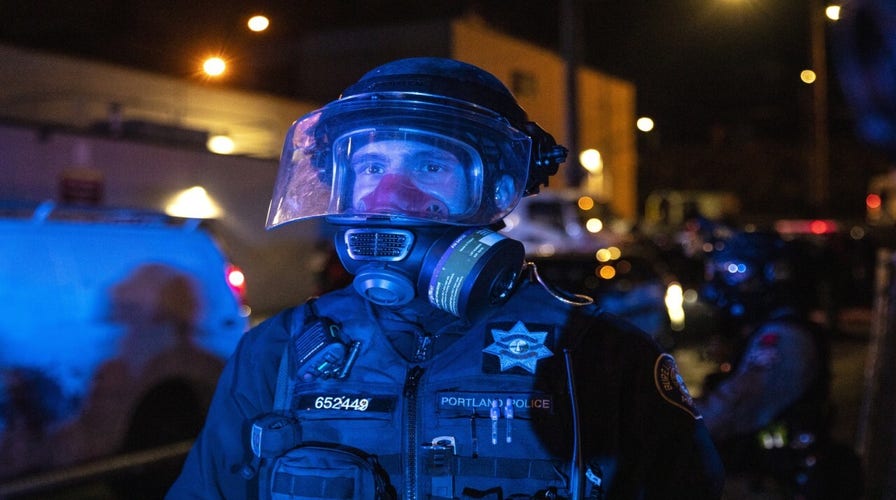
How might authorities enforce COVID-19 restrictions before holidays?
Former Justice Department official John Yoo discusses coronavirus rules for Thanksgiving on 'Your World'
This is a rush transcript from “Your World with Neil Cavuto” November 16, 2020. This copy may not be in its final form and may be updated.
NEIL CAVUTO, FOX NEWS ANCHOR: Welcome, everybody. I'm Neil Cavuto, and this is YOUR WORLD.
And how does it sound now that Moderna says it has a vaccine potential candidate that's almost 95 percent effective? On top of the news out of Pfizer that it has one better than 90 percent effective?
It was good enough to put the Dow into record territory and a host of other market averages. We will get into that in just a second.
But the optimism here is that there might be a cure for this thing and sooner, rather than later. The devil is always in the details, and what's approved for emergency use and what's approved for just, well, everybody's use in the weeks and months ahead, because both companies argue that they are ready to have millions, hundreds of millions, and, by this time next year, over a billion such doses available for anyone and everyone who needs it.
The implications of all of this on a fast-moving day with Dr. Shoshana Ungerleider, internal medicine physician.
Doctor, so good to have you. And thank you for taking the time.
Let me ask about the significance of this and what do we make about, in this case, Moderna's offering?
DR. SHOSHANA UNGERLEIDER, SUTTER HEALTH: Neil, the preliminary findings out today from Moderna are quite promising. Having two potentially viable vaccine candidates is really good news.
Both Moderna and Pfizer's vaccines appear to have very similar safety and efficacy profiles. They're both mRNA vaccines and both two-dose regimens that are going to be given a few weeks apart. Moderna's has a significant practical advantage over Pfizer's, in that it can be kept at a -- at minus-
20 degrees Celsius, which means that it can be kept in a widely used freezer that most doctor's offices and pharmacies already have.
But, in all likelihood, we will need both, given the dosage needs, in order to vaccinate many millions of people. So, right now, Moderna and Pfizer are gathering their safety data. And the next step will be to file that emergency use authorization with the FDA, and then the hard work of distributing the vaccine to millions of people comes.
CAVUTO: What is the protocol for that, Doctor, I mean, who gets it first, how it's rolled out?
UNGERLEIDER: Well, it's yet to be disclosed. It looks as though it's going to be a phased approach. So, potentially, as soon as the end of this calendar year, we will see it rolled out to health care workers, very high- risk populations, and then in -- again, in a phased approach, a second phase, and then a third phase, and a fourth phase probably in early to mid- 2021.
It'll be rolled out in a stepwise fashion, and by hopefully the middle or end of 2021 will be widely available to everyone.
CAVUTO: You know, Doctor, a lot of people look at this, but, at the same time -- and we will get into this a little later in the show -- all these states, cities, towns that have big restrictions because of a big spike in cases.
Are you worried about what's going on?
UNGERLEIDER: I'm quite concerned, Neil.
As we head into holiday time, where we are as a country in terms of COVID is extremely troubling. We're still many months away, as I said, from a widely available vaccine, so things will get much worse before they get better.
The fact is that hospitalizations and deaths lag behind new cases by approximately two and four weeks, respectively. And, right now, we're unfortunately already running out of front-line health care workers. And hospitals are seeing shortages of medications and PPE across the nation, which means that care is going to suffer.
And this isn't just for people with COVID-19, right? People can only get high-quality medical care if we have enough hands and supplies and beds to go around. So, we really need everyone's help right now.
Please stay home for the holidays. Don't congregate indoors. And wear your masks. I know this is like the same thing over and over. We're all tired of this and have sacrificed so much already. But we don't want all of our hard work this year to go undone during the holidays.
We need to get through this hard time. And we can do it together.
CAVUTO: Well put.
Doctor, thank you so much for taking the time. We do appreciate it.
UNGERLEIDER: Thank you.
CAVUTO: Well, to the doctor's point, this is a significant development here, and, at the corner Wall and Broad, a very significant development.
It propelled stocks to records, this on the notion that, the sooner a vaccine comes out, the sooner the economy can come back, or something like that.
To Susan Li of FOX Business Network.
Susan, what happened?
SUSAN LI, FOX NEWS CORRESPONDENT: Getting ever closer to crossing the historic 30000 level for the Dow Jones industrials, the first record close in nine months.
So, the broader S&P 500 also just recorded its 24th of record close of the year, and smaller companies doing well as well. The Russell 2000 saw a second straight record session. And this rotation out of high-flying tech continues, with the Dow outperforming the tech-heavy Nasdaq by the widest gap in 18 years last week.
So, Monday's rally ignited by Moderna's announcement that its COVID vaccine proved 95 percent effective, for the chance of vaccine approval before year's end. And that means the U.S. economy could reopen sooner. Dr. Fauci this morning said that things could get back to normal as early as April.
And that helped lift the banks and Boeing, which have underperformed this year relative to their sales value plays, as we call them. Also, back to normal would mean traveling like we used to, so getting on planes and booking on cruise lines. Now, getting back to normal is dependent on multiple vaccines being made available.
Couple that with more stimulus, divided government, and the main reason is that Wall Street is optimistic heading into next year. So, Morgan Stanley predicting that the S&P 500 will rally 9 percent to end 2021 at 3900, Goldman Sachs also bullish as well, predicting near 20 percent gains to close to 4300. And J.P. Morgan says that their most positive predictions forecast the S&P will jump by nearly a quarter.
And one more bold call from these influential investment banks, no new COVID cases in six months' time, according to UBS. Now, remember, the stock markets try to predict the future in six to nine months out. And according to Wall Street, Neil, there is definite lights at the end of the tunnel.
CAVUTO: Oh, if that is so, that is great news. Susan Li, thank you very, very much.
In the meantime, how much do you like your relatives, your own relations or maybe your in-laws? Because it's going to be tested this Thanksgiving, with more than a few states and cities saying, you know what, keep it small, keep the crowd very small, in some cases, under 10 people.
What various states are considering, as we speak, with Casey Stegall in Arlington, Texas, with more.
Hey, Casey.
CASEY STEGALL, FOX NEWS CORRESPONDENT: Hey, Neil. Good to see you.
While news of this vaccine is certainly causing guarded optimism, the reality is governors across the country are dealing with a surge of cases and also very crowded hospitals. Just today, the governor of New Jersey announced some new restrictions effective tomorrow, indoor gatherings limited to 10 people, no more than 150 people for outdoor events.
The governor says now one in 20 cases across the state recorded in just the last four days. Even president-elect Joe Biden, speaking a short time ago, had this message for Americans about the holiday.
(BEGIN VIDEO CLIP)
GOV. PHIL MURPHY (D-NJ): Our highest case counts are now no longer from when this virus first began rampaging across our communities. They have come now, when we are grappling with pandemic fatigue and when we know people have begun to let their guards down. We have got to get back in front of this virus.
(END VIDEO CLIP)
STEGALL: In places like Oregon and New Mexico, governors going even further, issuing a two-week freeze and stay-at-home order.
Numbers also not looking good out West, with California logging about
11,000 new cases alone on Sunday, Neil. That is a three-month high, more than 20 states record hospitalizations -- back to you.
CAVUTO: Incredible.
All right, thank you very much, my friend, Casey Stegall, in the middle of that in Arlington, Texas.
Well, as you have heard here, a number of states, municipalities are trying to crack down on how many you can have over to your house for Thanksgiving.
But how do they enforce that? Is someone going to snitch on you, a neighbor, if he or she notices too many cars out front?
And if that person does snitch and call the police, what are the police going to do? Legally, what can they do? What will you allow them to do?
What are the legal limitations of cracking down on a virus and your liberties in one fell swoop?
After this.
(COMMERCIAL BREAK)
(BEGIN VIDEO CLIP)
JOE BIDEN (D), PRESIDENT-ELECT: I would strongly urge for the sake -- not just your sake, for the sake of your children, your mother, your father, your sisters, your brothers, whoever you get together with at Thanksgiving, think about this.
There should be no group more than 10 people in one room at one time -- I mean, inside the homes.
(END VIDEO CLIP)
CAVUTO: All right, let me guess. You already bought that extra big turkey for a big family gathering for Thanksgiving.
Well, I hate to break it to you right now, but a lot of states and recommendations across the country, they want to limit you to 10, no more than 10. So you can pick and choose the relatives you like, I guess, but, legally, how do they police that?
Want to go to John Yoo on that, the former deputy assistant A.G., U.C.
Berkeley law professor, much, much more.
John, that's the part that worries me. How are they going to check whether you're adhering to this? Are neighbors snooping how many cars you have in your driveway? Can they knock on your door, that is, the police, and issue you a summons or arrest you? What?
JOHN YOO, FORMER DEPUTY ASSISTANT ATTORNEY GENERAL: Neil, that's an interesting question.
I think it actually is the same way that states and cities and counties enforce their other laws, with a combination of the police, heavy fines.
Unfortunately, I think you're right, you might have neighbors calling in on each other, possibly.
And the police are going to have to use good judgment, because, as we know, even with things like traffic and parking zone, the police can't prosecute every case. They can't give tickets for every case. So they're going to try to focus on the most high-profile, most dangerous gatherings.
And I think, in this area, this is not one where the courts are going to subject a lot of what the police are going to do too much scrutiny. They have been generally throughout this lockdown pretty deferential to the decisions of governors and county executives, public health officials on what measures are necessary, especially as case counts are starting to rise again.
CAVUTO: I always wonder, too.
I mean, it's one thing when states were kind of imposing these quarantines that, if you flew into or out of the state, you had to quarantine yourself for 14 days. I don't know many that meted out a punishment or a fine or worse if you didn't do that.
Here, they're going right to your home in the event they hear a lot of noise or your neighbors hear a lot of noise or they see a lot of cars. Man, that could be a slippery, ugly slope, couldn't it?
YOO: Actually, it's interesting.
In our system, as opposed to other countries, most Americans follow the law voluntarily most of the time. Think about filing taxes. I think Americans hate filing taxes even more than they hate being with their mother-in-law.
And, nonetheless, Americans do file their taxes voluntarily.
I think that's what most sensible states, cities, county executives are going to do. They're going to ask people to voluntarily comply, and they're going to use fines, hopefully not use things like jail time or anything like that, but just use things like traffic tickets, mostly, to try to encourage everybody to voluntarily follow the rules.
Look, police officers, first responders, they have got a lot of other things to do, I hope, this Thanksgiving holiday than to be peering inside our houses to see whether we have got eight people or 12 people there. I don't think those officers want to be handing out tickets to people at gatherings.
CAVUTO: Yes.
YOO: They want to be doing things like saving people's lives, prosecuting and finding criminals.
CAVUTO: It is a -- but, legally, can they do that? Legally, can they, I don't know any other way to say it, ticket you or fine you, because they look at -- in the front door, when you open, and say, well, it seems that you have got a lot more than 10 people here?
You see where this could go, right?
YOO: Yes, actually, I would recommend, if you open the door, give the officer some turkey or cranberry sauce.
(LAUGHTER)
YOO: That will be a better way to handle it than actually...
CAVUTO: Something smells good. Something smells good.
YOO: I mean, there are going to be, of course, people who are going really give the police a hard time. I hope they don't.
But, no, you're right, Neil. Ultimately, the police, under these conditions, have what's called -- the states have something called the police power. And that means a state can regulate all the activity and individuals in their territory.
There are cases where the Supreme Court has upheld people who are using, I guess, coercion of the state to force people to get vaccinations for example or to obey quarantines in this time of emergency.
We -- the civil liberties have to be balanced, I think, against this need for public health and safety.
CAVUTO: So, I have it from you, John, that I can surrender relatives I don't flip over because it's the law, right? '
(LAUGHTER)
CAVUTO: I mean, I just want to be clear.
(LAUGHTER)
CAVUTO: Not quite. All right. I tried. I tried to slip that in.
YOO: Well, I will give you the worst legal advice, which is, it's free.
Don't take free legal advice. That's my advice.
(LAUGHTER)
CAVUTO: Thank you, my friend. Great job. Good luck on your Thanksgiving.
John Yoo, the former deputy assistant A.G., much, much more, good read on things.
I immediately of Kat Timpf on this, because how would she handle a crisis like this? She might be going to a gathering where more than 10 people are there. Of course, Kat goes anywhere, and more than 10 people are there automatically.
But how do you feel about this, Kat?
KATHERINE TIMPF, FOX NEWS CONTRIBUTOR: Look, I understand. Really bad week last week with a million cases. And, over a single week, that's nothing to sneeze at.
But neither is all of the consequences of another lockdown, continuing the lockdown. Prolonged loneliness can lead to not just mental health problems, but physical health problems, up to an including early mortality, not to mention the economic impacts.
In October, we had 2.1 million out-of-work hospitality workers, with more than half of Americans saying they don't plan to travel over the holiday season. That's going to impact airlines. And a lot of these places are just starting to sort of recover from the first lockdowns over the spring and the summer, or barely recovering. And a lot, of course, have closed down.
And to do this again, with sort of no end in sight, that's nothing to completely just sneeze at like it's no big deal, because it is.
CAVUTO: You know what I worry about, though, Kat? With the best of intentions, I understand the motive for this is to cut down on these spikes that seem to be out of control.
But I have seen many times in the past this country, other countries use a crisis to sort of clamp down on individual freedoms. I just hope that's not what's going on here. But I look around, and a lot of that is going around here. I just wonder, it's hard to reverse that once it's in place and once people sort of blithely accept it.
TIMPF: Oh, I certainly worried about that every single day.
It's especially true because, sure, there's certain things you shouldn't be doing. You shouldn't be having hundreds of people all together. But if you think about it, there could be a 10-person gathering, and then a 15-person gathering. And the 15-person gathering, maybe they're all getting COVID- tested.
Maybe they're keeping distanced. Maybe they're all in a pod that's together all the time anyway. And then there could be this 10-person gathering where there's high-risk people there, people who have flown in.
So it's really not quite that simple. And to sort of demonize and penalize people based on some sort of arbitrary rule, it's kind of a scary precedent to set.
CAVUTO: I'm just wondering, too, because there are going to be limitations on outdoor events. And I don't know whether your pending nuptials are going to be indoor or outdoor, but they're even restricting that.
I mean, so that could go on while here. Does it worry you?
TIMPF: Yes. Yes.
Well, I mean, just in terms of my wedding, we thought we were all set. We were going to have like 15 people. And then that's too many people, so can't do that. Don't want to be publicly smeared as a grandma killer. So I'd rather not do that.
(LAUGHTER)
TIMPF: But, yes, also, it's cold outside, and it's going to get worse, and it won't be better until at least the end of May.
So, New York not the greatest.
CAVUTO: Man, oh, man.
(LAUGHTER)
CAVUTO: Well, try to enjoy your Thanksgiving in the meantime, Kat Timpf.
Many of a viewer reminding of things they can do, not just to listen for noise or see cars parked outside, but whether you have one or two or three turkeys in your oven.
I always say I love turkey and just sort of leave it at that, and then they handcuff me, and away I go. All right, we will get through this one way or the other, folks, right?
By the way, big division right now between the president-elect and the guy who is presently president of the United States over not only COVID issues, but the economy and all of that.
Let's just say the ice has not thawed. And judging the way they were both sort of zinging each other one, one maybe online, the other on microphone, I don't think it's getting any better.
(COMMERCIAL BREAK)
CAVUTO: Well, here's how worried House leaders are about any Democratic members who might bolt for the Biden administration. Please don't. Our margins are so thin. Fat chance we're going to let you.
We're on that -- after this.
(COMMERCIAL BREAK)
CAVUTO: His legal chances might be dwindling, but team Trump not giving up on fighting that election and the vote in a number of crucial states as we speak.
John Roberts with the latest now from the White House -- John.
JOHN ROBERTS, FOX NEWS CHIEF WHITE HOUSE CORRESPONDENT: And, Neil, it looks like this is going to go on for some time to come, the president with no intention of conceding.
This morning, the president laying down that marker in a tweet, saying:
"The radical left Democrats working with their partner the fake news media are trying to steal this election. We won't let them."
This after the president sparked some speculation yesterday that he may be about to concede after he tweeted the Joe Biden -- quote -- "won." That's the first time the president ever used those words, sparking Asa Hutchinson, the governor of Arkansas, to say this.
(BEGIN VIDEO CLIP)
GOV. ASA HUTCHINSON (R-AR): I expect Joe Biden to be the next president of the United States. It was good actually to see President Trump tweet out that he won. I think that's a start of an acknowledgement.
And it is very important that Joe Biden have access to the intelligence briefings to make sure that he is prepared during times of transition.
(END VIDEO CLIP)
ROBERTS: Well, as a result of all of that, people like Hutchinson and others saying that the president was acknowledge acknowledging that Joe Biden won, the president tweeting out: "No, I have got no intention of conceding."
Ohio Governor Mike DeWine said much the same thing as Hutchinson about allowing Biden to have a transition, which prompted President Trump to say:
"Who will be running for governor of the great state of Ohio? Will be hotly contested."
We should point out that the president did support Governor DeWine in his run in 2018, though the two of them have clashed somewhat since.
The president's own national security adviser, though, Robert O'Brien, today appearing to indicate that Joe Biden may inevitably become president.
Listen here.
(BEGIN VIDEO CLIP)
ROBERT O'BRIEN, U.S. NATIONAL SECURITY ADVISER: If there is a new administration, look, they deserve some time to come in and implement their policies. We may have policy disagreements, but, look, if the Biden/Harris ticket is determined to be the winner -- and it's -- obviously, things look that way now -- we will have a very professional transition from the National Security Council. There's no question about it.
(END VIDEO CLIP)
ROBERTS: "Obviously, things look that way now," a significant statement, though O'Brien also said that staffers here at the White House would prefer to see it go the other way and President Trump get another four years.
As to how long this is going to go on, Neil, there's two significant deadlines coming up. On December the 8th, that's the deadline to resolve all issues at the state level. And then the electors meet on December the 14th. I talked to the Trump campaign this morning. They seem to think that the latter deadline is the drop-dead date.
So this could go all the way through until December the 14th. We will see.
CAVUTO: Holy Toledo.
John Roberts, thank you very, very much.
All right, the read, meanwhile, from team Biden.
Peter Doocy with us now in Wilmington, Delaware, where there was an economic address of sorts today -- Peter.
PETER DOOCY, FOX NEWS CORRESPONDENT: There was, Neil.
And the president-elect has a lot of plans for combating COVID-19. But because the formal transition is being delayed right now, he still does not know what exactly the Trump administration is putting into motion and what is going to be in motion already when he takes over January 20.
(BEGIN VIDEO CLIP)
BIDEN: More people may die if we don't coordinate. If we have to wait until January 20 to start that planning, it puts us behind over a month, month-and-a-half.
And so it's important that it be done, that there be coordination now, now, or as rapidly as we can get that done.
(END VIDEO CLIP)
DOOCY: As millions of American families make tough decisions about how to celebrate Thanksgiving, or not, amid a pandemic, the Bidens are apparently narrowing down a list of family. He claims he has been advised to keep a socially distanced masked and tested party of Bidens to 10 people maximum.
He also says he still isn't receiving these classified intelligence briefings either, but he says that he doesn't think that is as big of an issue because, in her role as a member of the Senate Intelligence Committee, the vice president-elect is getting all the classified info when she's on the Hill -- Neil.
CAVUTO: Peter Doocy, thank you very, very much.
And if you think the president's legal challenge is sort of losing steam, the tweet we just got from the president indicates otherwise, that the rate of rejected mail-in ballots is 30 times lower in Pennsylvania this year than it was in 2016.
To John Bussey, The Wall Street Journal associate editor, FOX News contributor.
That does not sound like a guy, John, the president, dialing things back on the legal challenge front.
JOHN BUSSEY, FOX NEWS CONTRIBUTOR: Yes, he's not dialing it back, but president-elect Biden is dialing it up.
He's the next president. The current one did not get an extension from the voters on his management contract for another four years. And so president- elect Biden is speaking about the economy today.
And we did not hear, Neil, a lot of new initiatives on -- for his economic plan. We heard essentially an affirmation of what he's been saying on the campaign trail about first trying to tackle the coronavirus, because that's keeping people from getting back to work and their kids getting back to school in a lot of cases.
And it's an acknowledgement that two-thirds of the economy is the consumer.
Unless you get the consumer able to consume, you're just not going to get the vitality that you need to regain the jobs that had been lost over the last year.
CAVUTO: You know, the vice president, president-elect, did mention that he talked to a number of CEOs who were in on this virtual call, if it was all virtual, including the head of GM, Mary Barra, and the head of Microsoft, head of Target, as well as pretty much all the big union heads, that he is going to raise taxes. That hasn't changed.
They understand -- he says they understand its commitment to unions. He thinks everyone benefits -- I'm paraphrasing here, John -- to say they're all on board. Do you think they are?
BUSSEY: Well, they're probably on board with showing unity with the next president-elect.
Whether or not, in their heart of hearts, those corporations -- GM was there, Target was there, Microsoft was there -- really want to see corporate taxes go back up to a 28 percent rate from the current 21, they, of course, don't. But they realize that that's in the offing.
Mind you, it's going to have to get by a split Congress, a Democratic- controlled House, and for the moment, at least, a Republican-controlled Senate.
The important thing, I think, for people to kind of realize is that this was really a way of Biden projecting his support for unions as well. They were -- the head of the AFL-CIO was there. The head of the UAW was there.
He talked about the fact that the taxes he is going to raise will be on corporations and the most wealthy in society. And he's talking about creating a lot of jobs. And he says: I'm a union man.
A lot of these will be union jobs that have been lost over the last several decades.
CAVUTO: Right.
BUSSEY: The unionized portion of our work force has dropped dramatically.
In that recession, it took fully six years. And of the private sector economists that The Wall Street Journal has surveyed, they don't expect to see jobs return -- this is assuming kind of success with vaccines -- jobs that have been lost in this current setback, they don't see those returning until the end of 2023 or perhaps even later.
So, something on the order of 22 million jobs were lost. We have repaired that by regaining about 12 million jobs. There's a long way to go. And those are very stiff headwinds for any new president coming into office.
CAVUTO: Yes. You question the timing of hiking taxes on anyone in that environment.
But, as you indicated, Joe Biden made it very clear, if he had his druthers, he would. He could be dealing with a Republican Senate. That could make it dicey.
We will watch it very closely. John Bussey, thank you, my friend very, very much.
BUSSEY: You bet.
CAVUTO: We have been telling you about the Senate.
By the way, about the House, too, it is Democrat, not nearly as Democrat as it was on Election Day. And that has some Democratic leaders saying, any of you guys who are entertaining positions in the Biden administration, please don't.
(COMMERCIAL BREAK)
CAVUTO: All right, in the House, they have got as close an average as you can get between Democrats and Republicans, a lot closer than people thought. They lost better than a half-a-dozen seats, and still keeping their majority here.
But that could explain why Nancy Pelosi and other Democratic leaders are saying to those Democratic congress men or women who might be entertaining jobs in the Biden administration, please don't. They don't have a lot of wiggle room there.
And you can see from the numbers, well, they're right.
To Chad Pergram on the significance of all of this and how it might alter the landscape as the administration forms anew -- sir.
CHAD PERGRAM, FOX NEWS CONGRESSIONAL CORRESPONDENT: Neil, good afternoon.
Well, usually, you would have a lot of members from the House of Representatives and the Senate going into the administration. That might not be the case, because the turning radius in the House of Representatives is not very big here.
When all is said and done, once they finalize all these races, the Democrats are going to be down to maybe 221, 222 seats. You need 218 to have the majority in the House of Representatives. It's going to be pretty tight. They cannot afford to lose Democrats.
Here's House Speaker Nancy Pelosi.
(BEGIN VIDEO CLIP)
REP. NANCY PELOSI (D-CA): We had a very big win in the last election. It is smaller now, but it is not -- we still have the power of the majority.
(END VIDEO CLIP)
PERGRAM: And in order to maintain that majority, Democrats must be judicious about giving up seats.
Under the Constitution, voters must elect House members. They can't be appointed. That process sometimes takes months. And they must be careful about even appointing senators to the administration.
For instance, Democratic Delaware Senator Chris Coons could become secretary of state. Coons' successor could be Delaware Representative Lisa Blunt Rochester, but then there would be a vacancy in that House seat in Delaware. So, that's the problem.
And this is why, Neil, Nancy Pelosi and the Biden administration, they're going to have to work hand in glove to figure out what members go, what members don't.
And you're going to have these competing interests. Frankly, there are some Democrats in the House of Representatives who say that they have always supported Joe Biden, always supported this ticket, and they might have to have some pressure from Nancy Pelosi not to go. It's going to be very unclear how they would do that.
Keep in mind, it's a lot easier in the United States, especially if you have a Democratic governor who could appoint an immediate successor in the United States Senate -- Neil.
CAVUTO: Which would be, if we move over to the Senate, my friend, one of the reasons against naming Elizabeth Warren, let's say, as a potential Treasury secretary, because the Republican governor of Massachusetts would choose her successor. And there's no wiggle room there.
PERGRAM: That's right.
And keep in mind, that switched back and forth how they did that in Massachusetts several times over the years. When John Kerry ran for president, they switched it in Massachusetts. Then they switched it back.
They have gone back and forth there.
Again, there's a lot more ease if you have a Democratic governor. And, again, let's say the Democrats go to 50/50. Let's say they win both of those Senate seats. Then maybe they don't want to pluck anybody from the Senate side of the Capitol either.
CAVUTO: Yes, why risk it, right?
Thank you, Chad, very, very much, Chad Pergram following all of that.
As we told you a little bit earlier, with all these worries back and forth and a president fighting his successor's move to, well, move in on the White House, how is it that stocks continue to climb, and how is that the Dow is now at almost 30000?
We break it apart -- after this.
(COMMERCIAL BREAK)
CAVUTO: Take a look at that Dow.
You know, we're not that far from 30,000, a huge leap today. Of course, over a week, we have seen not one, but two vaccines, teased and all but promise, of course, one from Pfizer, another from Moderna, the latest entrant here that could put to rest all this concern about a protracted lockdown worldwide, especially if there are cures in the making.
Charlie Gasparino on how long this continues, whether the markets are getting ahead of themselves, or rightfully excited about maybe a cure.
What do you think, Charlie?
CHARLIE GASPARINO, FOX NEWS SENIOR CORRESPONDENT: I mean, listen, Neil, we could see a pullback. There's always that possibility. We're going to have a change in administrations. If the Senate goes Democrat, right, if the Republicans lose those two seats, that's probably not great for stocks, because there's tax increases that Biden will -- President Biden will pursue and other measures that would be bad for shareholders.
That said, when you talk to sophisticated investors, I mean the people that work at major money management firms, the major brokerage houses, what they're telling me is pretty optimistic. Number one, they believe that the Senate is going to stay with the Republicans. They think there's a -- when I asked him to lay odds and percentages, the words -- the number 70 percent comes up a lot.
So, they think it's going to be a big, big haul for the Democrats to win both of those seats. And you know they have to win both of those seats. If they win -- if the Republicans just win one, well, guess what, divided government is here. That puts the brakes on a lot of stuff that Joe Biden wants to do with taxes and regulation and some of the other issues, more taxes and regulation.
Through executive order, he can do stuff with regulations. But, still, it's a big impediment to his broader agenda that hurts business.
On the vaccine front, now, we should point out that these Wall Street firms, what do they know about vaccines? Obviously, they're not epidemiologists at these firms. They are investors. They are investors in these companies. They really believe that, for all the talk you're hearing from Gretchen Whitmer and Governor Cuomo and even President Biden -- by president-elect Biden about a long, dark winter, they think the pandemic is likely in its final innings, because we're going to get a vaccine.
That's what they're getting. That's the word they're getting from the companies that they're investing in. Now, obviously, these companies want to sell their stock. So put it in context here. They're looking to put a better face on this.
But these guys have skin in the game, Neil. They are not -- facts mean a lot to them, because they have a lot of money at stake here. And they really believe that the long, protracted pandemic is not going to happen.
They think these vaccines will work, they will be distributed, they will take at least the edge off the pandemic initially, and then more widely deal it a very tough -- a very definite blow.
That is the betting right now. Again, read up. I never tell people what to do with their money. I use common sense. I can tell you, people with money in the game, the common sense for them is that this pandemic -- that we're that we're probably not going to have the long, dark winter, we're going to come out of this.
Not saying it's an easy time for anybody, because it's not. Cases arising.
But that's what they're projecting going forward -- Neil, back to you.
CAVUTO: All right, thank you, my friend very, very much, Charlie Gasparino following all of those late developments, and some of the beneficiaries of this, including airline, hospitality stocks, the same ones that were taking it on the chin as the pandemic raged.
In the meantime here, I want to let you know, remember that old call that one out of four restaurants in this country could close because of the pandemic, no matter how promising things look now? And, all of a sudden, a couple of states are closing more restaurants and limiting their hours.
I want you to meet one of the biggest restauranteurs in the country, who is now saying, keep this up, and it's going to be a very, very cold winter for those restaurants and beyond -- after this.
(COMMERCIAL BREAK)
CAVUTO: I want to go live this space right now, if you don't mind.
We're getting our first live tour of the Crew Dragon capsule right now. You might recall there was a night launch last night. The three Americans, one Japanese astronaut successfully launched in what was a picture-perfect blastoff right now.
They're sort of giving a tour of the capsule itself. Remember, twice as many astronauts on board this go-round on the first launch a little while back.
Let's give this a quit peek.
SOICHI NOGUCHI, JAPANESE ASTRONAUT: Now I'm going to turn over to Shannon.
SHANNON WALKER, NASA ASTRONAUT: All right, thank you, Soichi.
As you can see, with the four of us in this Dragon capsule, it's quite a bit more crowded than it is -- was with just Doug and Bob.
And so I thought I would show you some of what it's like to actually live on a spacecraft like this. You will see that we actually have bags sewed all over the place. And this is for a number of reasons.
You can pan over here, Soichi. You will see up here we actually have some bags full of our emergency equipment. And we have got bags that hold our supplies, such as the shirts and pants that we are wearing now came up in these bags.
You will also see that we have got things such as food and water stashed around, because every once in a while, we like to have a snack. A little bit later on, I'm going to have some trail mix. These are the water bottles that we have to drink out of.
You can see it can be a little bit challenging, because there is air mixed in. If you drink some of your water, you have got air. So, you may wonder, well, how do you drink the water and not just the air?
Sol, in order to drink water on the Dragon, you have to open it up, and then you have to gently rotate to get the water up near the top. And then you can take a drink. And the rest of the time, you can just play with your air bubbles.
So, that's basically what daily life is like. We sort of dance around each other to try and stay out of each other's way, eat and drink and wait for the next engine burn.
So, at this time, I'm going to hand you back over to Mike.
MICHAEL HOPKINS, NASA ASTRONAUT: OK, thank you, Shannon and Soichi and Victor.
And so, I'll tell you, we're going to -- we're going to close out this little tool of Dragon Resilience here with something very, very special, actually.
This is something that is a tradition within the -- within the Astronaut Office. And just to give you a little history on it, so when you first are selected as an astronaut, and you come in for your basic training, you go through about two years of training to become an astronaut.
And then, once that is complete and you graduate, we give each -- each candidate now becomes an astronaut, but they're an unflown astronaut. Then they get a silver pin.
But once you have passed that 100-kilometer mark, you then get a gold pin.
And we have one member of our crew who does not have the appropriate accouterment for his uniform.
And so it's (AUDIO GAP) to be able to give Victor Glover his gold astronaut pin at the 100 kilometers.
Congratulations.
VICTOR GLOVER, NASA ASTRONAUT: Awesome. Thank you. Thank you.
Crew-1.
HOPKINS: Crew-1.
Again, thanks, everyone, for coming out. This is just an unbelievable experience. The flight has been fantastic so far. And we're looking forward to now -- we're about 21 hours into a six-month mission.
And so we are we are very excited for us. And I think I'm just going to close it with, all for one, Crew-1 for all.
Bye, everyone.
CAVUTO: That is beautiful. Man, oh, man.
I think they're six hours away from hooking up with the International Space Station later tonight. But as soon as I heard the astronauts talk about their food choice and the trail mix, I immediately thought of Zane Tankel, the Apple-Metro chairman, who runs the Applebee's restaurant empire.
Surely, you can help them with better than trail mix, Zane.
How you doing, my friend?
ZANE TANKEL, CHAIRMAN AND CEO, APPLE-METRO: I'm good. I'm (AUDIO GAP) my friend. I couldn't help...
CAVUTO: How about those astronauts? They need some good food. They need good food, not this -- man, oh, man. I guess that's what they have. That's what they have.
(LAUGHTER)
TANKEL: I couldn't help but watch and think they're going to outer space.
We're already here on Mars, trying to make this adjustment.
CAVUTO: It's amazing what's happening now with restaurants, because now they're reimposing restrictions all over again, in the case of some states and cities, shutting them down entirely.
Now, you had argued not too long ago when you were here that a good many of them are going to go out of business. I'm sure you have ratcheted up that number.
TANKEL: Yes, absolutely, Neil.
Every day's a reset day. There's no transparency whatsoever. From Friday, there might be school. Monday, there is school. And we're going to have heaters, propane heaters in Westchester, yes, in New York, no, then New York, yes.
It -- there's no -- there's no planning. And as I drive around New York, and I watch these terrific structures that folks are setting up to extend the season into the winter, I think it's -- they're spending money that might be going right out the window and will exacerbate the closings, because we don't know what tomorrow brings in New York.
We may be shut down. In the country, for that matter, there are certain states that are shut down. And you cannot plan more than 24 hours at a time.
Every morning, I wake up, and I wake up with a reset, and I push the reset button. And I -- everything from emotion and what we expect to expectation and what we might have gets reorganized.
And, yes, I think -- I think we will see -- as we head into this long, dark, cold, cold winter, we're getting an early-on taste of it, Neil. And it's not a good sign.
(CROSSTALK)
CAVUTO: Zane, sir, we're crushed for time.
We're crushed for time, but, obviously, some promise on the vaccine front that could mitigate all this, limit it. Are you hopeful of that?
TANKEL: Yes and no, Neil.
I can tell you, we have about 1,000 people out of 4,000 back at work. And when I go to the restaurants, I ask everyone to raise their hand if they would take it. Now, granted, it's only 1,000 people, but I have not yet found one, not one, person who said they would take that vaccination, not one.
CAVUTO: Why?
TANKEL: Because they, A, don't trust the government, ironically, unfortunately.
And, B, I always say, I'm an innovator. I want to do things like nobody's done. But you go first. And I think that's kind of the attitude...
CAVUTO: All right.
TANKEL: ... that who wants to be first?
CAVUTO: Well, we will soon find out who will be.
Zane, thank you very, very much. Good luck to you and your folks.
TANKEL: Thank you, Neil.
CAVUTO: I'm sure better days are ahead.
But, as he pointed out, with so many states and cities now limiting indoor dining, outdoor dining, and even capacity of dining, if they're so lucky to remain open, a bad situation has just turned worse, ironically, on the same day we got news of a vaccine that will make everything, we're told, better.
They wait. And food for thought. For restaurants, they can't wait much longer.
Here comes "THE FIVE."
Content and Programming Copyright 2020 Fox News Network, LLC. ALL RIGHTS RESERVED. Copyright 2020 ASC Services II Media, LLC. All materials herein are protected by United States copyright law and may not be reproduced, distributed, transmitted, displayed, published or broadcast without the prior written permission of ASC Services II Media, LLC. You may not alter or remove any trademark, copyright or other notice from copies of the content.
