


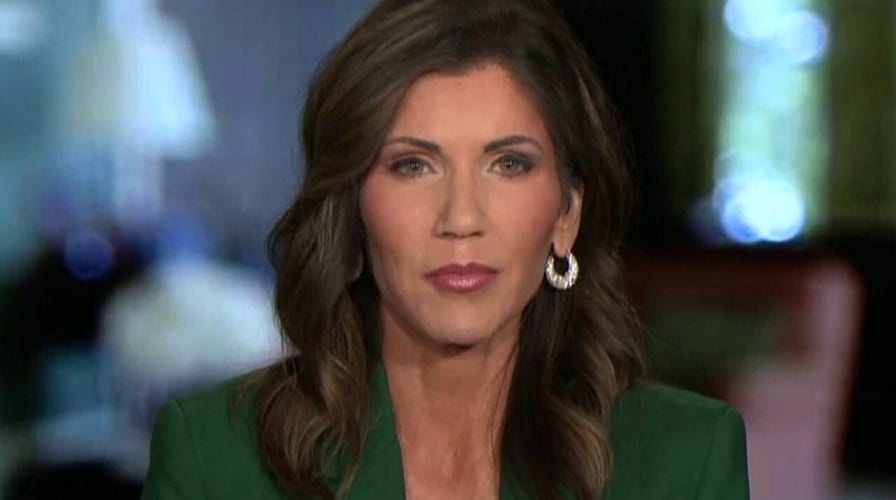
This is a rush transcript from "Your World with Neil Cavuto," July 7, 2020. This copy may not be in its final form and may be updated.
NEIL CAVUTO, FOX NEWS ANCHOR: All right, Bill, thank you very, very much.
We're monitoring the same thing you are, this White House education event, where the president is talking about opening up schools this fall. Some governors might take exception, Republican and Democrat, to the notion it is politically advantageous to keep them closed or to delay their opening right now.
For many of them, it's proven a huge hassle and a controversy with parents, who want to see their kids back in school as well. So we're monitoring that very closely, on the same day that Andrew Cuomo in New York was saying he too would like to see schools reopen in the Empire State. He's just not sure individual school districts across the state are ready for that.
And therein lies the dilemma, my friends, whether to open and everyone is open to your ideas about how you want to open.
Welcome, everybody. I'm Neil Cavuto. And this is YOUR WORLD.
And Kristin Fisher at what's going on in the White House to maybe force home the point -- Kristin.
KRISTIN FISHER, FOX NEWS CORRESPONDENT: Well, Neil, President Trump is urging governors across the country to follow the lead of Florida Governor Ron DeSantis, whose administration has just ordered that all schools reopen this August.
(BEGIN VIDEO CLIP)
DONALD TRUMP, PRESIDENT OF THE UNITED STATES: We don't want people to make political statements or do it for political reasons. They think it's going to be good for them politically, so they keep the schools closed. No way.
So we're very much going to put pressure on governors and everybody else to open the schools.
(END VIDEO CLIP)
FISHER: Now, on the opposite end of the spectrum from what Florida is doing, Harvard has announced that all classes will be online for the entire school year until the spring of 2021.
And there are a bunch of hybrid options in between. So, there is a huge range for educators and parents to consider. But the one thing that the Trump administration has been very clear on today is that the CDC's guidance never recommended that schools close in the middle of the pandemic.
(BEGIN VIDEO CLIP)
ALEX AZAR, U.S. HEALTH AND HUMAN SERVICES SECRETARY: When it comes to reopening our schools, nobody should hide behind CDC's guidance as a way to not reopen.
DR. ROBERT REDFIELD, CDC DIRECTOR: Nothing would cause me greater sadness than see any school district or school use our guidance as a reason not to reopen.
(END VIDEO CLIP)
FISHER: Now, the flip side to this is parents who are worried that their children could contract the coronavirus in school and then come home -- excuse me -- and spread it to their parents and grandparents.
You also have teachers in that at-risk age group who are worried about catching the coronavirus and bringing it back to their homes.
But, literally, all day today, the Trump administration has been making the case that in-person classes, in-person classes for students, that should be the goal. And they say it is good for the students, but also good for the entire U.S. economy, Neil, because it means that their parents can go back to work -- Neil.
CAVUTO: Yes, and it's a tough call to make.
Kristin, thank you very, very much.
You can't blame parents for being a little nervous, especially in states like Florida right now, where they're reimposing a number of restrictions there, in fact, looking at the Miami-Dade area to close gyms back down, no more dining-in restaurant activity, a number of beaches that are closed.
And then think of what's happening at the college level, as schools like Harvard are looking at virtual classes this fall, albeit at the same $50,000 price tag. So, a lot of parents look at that and say, wait a minute, which -- which way should we go?
Jonathan Hunt has been following these developments too and how various states and municipalities are dealing with varying, well, spikes in cases, and the spike in interest in what's going to happen to school this fall -- Jonathan.
JONATHAN HUNT, FOX NEWS CORRESPONDENT: Yes, Neil, let's look at Florida first.
The executive order there says all brick-and-mortar schools, public and private, must reopen this fall for five days each week. But that order then depends on whether the local health department deems the school safe.
And elsewhere in the country, in many cases, the decision to reopen will be up to individual school districts. No governor has yet to definitively state that he or she plans to keep schools closed this fall.
The CDC director says school reopening decisions will be based on location. And at least 39 states have released reopening guidelines for districts to consider.
California, for instance, is encouraging its 10,000 public schools to consider a mix of online and in-person classes. In Beverly Hills, for example, parents will get to choose between a school year entirely online or one that alternates at home and in class each week.
In New York, Governor Andrew Cuomo has ordered the state's 700 districts to first decide for themselves if they should reopen and then, if so, come up with a plan on how they will get that done.
(BEGIN VIDEO CLIP)
GOV. ANDREW CUOMO (D-NY): We want kids back in school for a number of reasons. But we're not going to say children should go back to school until we know it's safe.
(END VIDEO CLIP)
HUNT: Now, taking a look across the globe, France and South Korea have already tried to reopen, but each had to quickly close some or all schools again because cases flared up.
But Denmark actually reopened its schools successfully mid-April by emphasizing social distancing. Class sizes were reduced drastically and times -- and times were staggered. Kids ate lunch alone, and there were zones added to playgrounds, so children would only interact with a small number of their peers.
None of the decisions are easy. The vast majority of parents, obviously, Neil, like the president, support full reopening of schools, but, equally, no parent wants their child getting sick. And then there are the teachers and administrators too to consider, many of whom will obviously be in a much higher risk bracket than the kids.
Bottom line, Neil, this is going to be anything but easy for anyone -- Neil.
CAVUTO: Yes. And to assign political motivations to it is not helping matters any.
Jonathan Hunt, thank you very much, my friend. Great job, as always.
I want to go to Dr. Nicole Saphier, "Make America Healthy Again."
Doctor, now we want to make our kids go back to school again. You're a young mom. You're dealing with that yourself. You're also quite the physician. So, you can balance this out.
There are going to be some areas of the country where they have been seeing spikes in cases, Doctor -- you and I have gotten into this before -- parents in those areas are going to feel a little antsy about sending their kids back.
DR. NICOLE SAPHIER, FOX NEWS CONTRIBUTOR: Well, that...
CAVUTO: So what do they do?
SAPHIER: Well, that's right, Neil.
Well, it's not going to be an easy solution for any one. I mean, you just heard Jonathan talking about that, in Beverly Hills, those living in Beverly Hills, they were going to get the option of online vs. in class.
But I will tell you, for the majority of America who maybe can't afford to live in Beverly Hills, continuing online may not be an option, because it is extremely important to get those children back to school.
But, Neil, we have to do it in a very smart way and safe way. That being said, we know that children are less severely and less often affected by COVID-19. However, the question really does still linger about what role they play in viral transmission.
Those studies that you were talking about that those that were reopening schools, but then they had to close down again because of increased virus transmission, they didn't actually prove that it was in the school and the children that was actually causing that viral transmission, rather that there were just increased local cases, which is what we have been doing here in the United States.
When you have a flu outbreak, we have proven that proactively shutting down schools does actually decrease transmission. Whether or not that's going to be the same for COVID-19, that may be our normal.
But, moving forward, Neil, we heard the first lady earlier saying that the mental health and the development of our children needs to be taken into consideration, just as much as the physical health.
CAVUTO: You know, Doctor, it occurs at the same day we're learning that our formal request as a country went to the United Nations to withdraw from the World Health Organization in July of next year.
So, the president making good on his promise to split from the World Health Organization. What do you think of that?
SAPHIER: Well, Neil, this is a very complicated subject. And I can tell you that a lot of people are feeling very confused and very upset when it comes to the World Health Organization, feeling that they were potentially misled in the beginning and maybe even continues to be so.
I do think that there is a role for the World Health Organization in our fight against public health and global pandemics. So, severing those ties, I'm not actually sure if there are stipulations in place, if this is something that is going to happen if metrics aren't met.
I don't necessarily know the details there. But I can tell you that the World Health Organization does play a vital role when it comes to the public health of our world. So, I really hope that we can come together, as many countries, to fight not only COVID-19, but future pandemics to come.
CAVUTO: Do you worry the timing of it, though, I mean, in the middle of this?
You're quite right. A lot of bad issues have come up with the World Health Organization. But now, in the middle of dealing with this coronavirus and what could be worrisome spikes in some cases and maybe some mutations going on abroad, that now's the time to do something like that?
SAPHIER: Well, timing is everything, isn't it, Neil?
CAVUTO: Right.
SAPHIER: When it comes to the president making decisions as to what he is or is not going to do, I don't necessarily know if it's going to have an immediate -- if we're going to feel any immediate changes.
I mean, we have many bodies working together to overcome this global pandemic. I think that this is putting forth a very strong message from the United States, saying that they want fuller transparency see when it comes to the World Health Organization. They're questioning the ties, potentially, to China, the largest donor to the World Health Organization.
I think it brings forth a lot of questions. I certainly don't think it is necessarily an answer. But I think that more people need to look into this and figure out how we can all come together, work together to make the World Health Organization more transparent, more forthcoming, and make sure that they're equally representing all bodies, not just their highest contributor.
CAVUTO: That's a very classy and balanced answer, by the way, Doctor.
SAPHIER: I try.
CAVUTO: Finally, let me leave you on this ICU issue that's come up and bed use in places like Arizona and parts of Florida, parts of Texas, where the number of available beds is dwindling and dwindling, now, obviously, not all COVID-19 cases, but it is raising some eyebrows.
So what do you think?
SAPHIER: Sure.
I mean, Neil, I'm born and raised Arizona. I have reached out to my friends and colleagues in Arizona and Texas. And I can tell you that, yes, they are running low on beds. It's not necessarily the same dire situation as we saw here in the Northeast. Could they get to that point? It's possible, but I'm hoping not.
The good news is, Neil, that it is a younger population. They have fewer people on ventilators. However, you also have to remember that they started their elective surgeries that were potentially held off for the last few months. So they're doing more cases.
So they're taking up more beds.
CAVUTO: That's true.
SAPHIER: So I don't think it is so surprising to see that there are fewer beds. I think they're still trying to play catchup from the last few months of being shut down.
Perhaps those shutdowns in some of those areas that weren't being hit that hard should not have been done. That's, unfortunately, something that we're going to have to move forward. I think that move -- they're going to have to look at each case on a case-by-case basis and see, is this something that needs to be done right now, while we're having decreasing beds?
As of right now, there's certainly -- no one's without a ventilator that would need one. No one's without a bed that would need one. It's just something to keep a very close eye on.
CAVUTO: And we shall.
Doctor, thank you very much. "Make America Healthy Again," where she lectures people like me about healthy lifestyle and all that. She's right. She's right.
(LAUGHTER)
CAVUTO: Doctor, thank you again. Always good having you.
In the meantime here, you remember the president at Mount Rushmore. The governor of South Dakota will be joining us on how he is making good on his commitment to say, you go after vital U.S. landmarks and statues, well, there's going to be hell to pay -- after this.
(COMMERCIAL BREAK)
CAVUTO: All right, Confederate war hero J.E.B. Stuart, the statue being ripped down today in Richmond, Virginia.
It's something that's been playing out across the country here. The president has had enough of it, and wants to start a movement here to protect such statues of any sorts and to let history decide for itself where best things should stand or not stand.
It's an issue that came up when he was at Mount Rushmore this past weekend in South Dakota.
That state's governor with us right now, Kristi Noem.
Governor, very good to have you.
GOV. KRISTI NOEM (R-SD): Thank you, Neil. Appreciate you having me on the show.
CAVUTO: Same here.
Let me ask you about the whole statue and the whole issue about even including Mount Rushmore and that, where some people wanted to deface it. Others say it's a disgrace.
You were there for that event. The president stands by the monuments of any type, and wants to protect them.
Where are you on this?
NOEM: Oh, absolutely.
I think it's important we protect our history. This isn't about equality anymore. This is a radical rewriting of our history to take away our freedoms and liberties.
It's really trying to rewrite the foundation of this country. And so it's alarming to me. I'm thankful that the president made the statement that he made in his speech about protecting Mount Rushmore and other monuments across the country.
It's incredibly important that we recognize that the founders, those in our past are certainly not perfect individuals, but we can learn something from them. And we need to focus on the virtues they brought us as well.
CAVUTO: Does that apply to the Confederate Flag, though? I mean, even conservative governors in Southern states -- Mississippi comes to mind -- they're removing that feature.
And the president really lashed out at NASCAR for pushing to remove that Confederate Flag. How did you feel about that?
NOEM: You know, that was not a discussion we had at the July 3 celebration at Mount Rushmore.
And most people that attended that celebration were focused on America, celebrating our independence, recognizing the values that we all hold and can agree on in this country. And that's what I loved about that event, is, it was positive, it was unifying. The entire country should have came together after listening to his speech.
And I have been so disappointed to see people criticize it.
CAVUTO: But did he spoil it, Governor, shortly thereafter by pushing this Confederate theme, by pushing an African-American driver who made a big deal, because it happened to him, of a noose that was found in his garage?
I mean, did the president hurt his cause doing that?
NOEM: You know, I haven't spoken to the president about that issue.
I did speak extensively to him about South Dakota while he was here, talked to him about our country, and how we can bring people together, and really what this election is about. It's about results. It's about policies that are good for the American people, and that we can't afford to let a radical agenda, which is a political agenda designed to destroy this country, gain any foothold.
So, we had extensive conversations about that, and I appreciated his time.
CAVUTO: Now, you were able to fly back with him on Air Force One.
Many raised hackles with that, Governor, because you had come in contact with Kimberly Guilfoyle, Donald Trump Jr.'s girlfriend, who had tested positive for the virus. And a lot of people say you were risking other people with whom you would kind of contact, not the least of which was the president of the United States on Air Force One.
How do you feel about the fuss over that?
NOEM: Well, I was tested before I went to the event on Friday. I was negative.
Also, we need to remember that Kimberly was asymptomatic. And the science of the virus tells us that it's very, very difficult to spread the virus when you're asymptomatic. I was tested again today, which came back negative again.
So, I appreciated the opportunity to spend time talking about the issues that were important to South Dakota in my time with Secretary Bernhardt and with the president, and look forward to bringing more solutions to my state.
CAVUTO: Do you worry about this, though, and not specifically in that case, Governor?
But we got news today that Brazil's president, Jair Bolsonaro, tested positive for the coronavirus. And it's happened to more boldface names, people who you wouldn't think would be at risk of getting it who get exposed to it.
Do you think we are risking making too light of it and ignoring precautions as a result, the president included?
NOEM: Well, I reject that, Neil, because I have never made light of the virus. I have taken it very seriously.
What I also believe is that we need to make sure that we're making good decisions, taking personal responsibility. I still talk to South Dakotans about that every single day.
And I think it's incredibly important that we do what we can to mitigate the spread of this virus. But we also know that we can't stop it. And the science that we're learning about it is changing consistently. And it's very mixed in some areas.
So, what I'm telling people is, I will give you as much information as I possibly can, and allow you the opportunity to make decisions that help your family, keep them safe, run your businesses, protect your customers, and also your employees, and put food on the table and a roof over your head.
CAVUTO: So, when the president has talked about -- and, right now, he's conducting this summit on making sure the schools reopen this fall -- he -- one comment he made, Governor, caught my attention, where he said that those who don't want to do so are essentially doing so for political purposes.
And I'm wondering. Since a number of Republican governors and mayors are in that group that says, we're not quite sure yet, do you think that's a valid response, to say that those who are concerned about opening schools in the fall are somehow doing it for some political gain?
NOEM: Well, I have talked to governors all across this nation, Republicans and Democrats. They're all -- they all share concerns.
But we made the decision in South Dakota weeks and weeks ago that our kids were going to come back into their classrooms this fall. And we did that, based on the fact that, when kids went home from school when this virus hit our country, that, overwhelmingly, we didn't have great contact with them.
We had 20 to 30 percent of our kids in South Dakota that didn't check in once with their teacher, with the administrators. We recognize that those school officials are often the first ones to see if something's wrong or not going well at home.
CAVUTO: Right.
NOEM: And so we think it's important that we tell our school districts, figure out how to get your kids in and do it in a way that works for your district.
CAVUTO: But, blessedly for your residents, Governor, you have not seen a big spike in cases. You have been able to keep a handle on that.
Some of these other states, like Florida, Texas, certainly Arizona right now, are dealing with quite another matter, right?
NOEM: Absolutely.
We have seen declining hospitalization rates, which is what we have always focused on here in South Dakota. I have told them that people are going to catch the virus. They will get better. What we're focused on is making sure that we have the capacity in the health care system to take care of those who may need it.
So, we're doing very well in South Dakota. We have got a lot of months where we will still be dealing with this virus. And that's why it's important that we make wise decisions and focus on giving people some flexibility to make it work for them and their families.
CAVUTO: All right, Governor Noem, thank you very much for taking the time. Be well.
NOEM: You bet. Thank you, Neil. You too.
CAVUTO: All right.
All right, a number of states dealing with a number of pressures. In Georgia right now, if virus issues weren't enough, now, all of a sudden, violence that got so out of control, that that state's governor brought in National Guard troops, 1,000 of them.
What's going on and what happens next?
(COMMERCIAL BREAK)
CAVUTO: All right, despite the surge in cases in the state, the Magic Kingdom plans to gradually reopen beginning this Saturday. Disney World will start that partial reopening.
A lot of folks are looking at that warily.
(COMMERCIAL BREAK)
CAVUTO: All right, Georgia Governor Brian Kemp is bringing in the National Guard, 1,000 of them, after declaring a state of emergency and after a violent weekend that was repeated in countless cities and states across the country.
An 8-year-old was killed in those line of fire.
Aishah Hasnie on what is going on with a trend that's moving up and some governors and mayors trying to clamp it down -- Aishah.
AISHAH HASNIE, FOX NEWS CORRESPONDENT: Yes, Neil, you're right.
It is a stunning move by the governor in Georgia, calling in 1,000 National Guard troops now to protect state property there on the ground and basically free up state police officers to patrol the streets -- 31 people shot over the holiday weekend. Five were killed, Neil, including that 8- year-old girl riding in a car with her mom.
The number of people shot in Atlanta was up 104 percent this June, compared to last June, Governor Kemp writing: "Peaceful protests were hijacked by criminals with a dangerous, destructive agenda. And this lawlessness must be stopped and order restored in our capital city."
Now, violence also continues in Chicago. According to local reports there, 19 people were shot, four killed just last night, this after a brutal long weekend in which we saw 87 people shot, including two kids.
Back here in New York City, horrifying video shows a father gunned down Sunday while holding his 6-year-old daughter's hand, 29-year-old Anthony Robinson one of 11 people shot and killed over the holiday weekend.
Gun violence, Neil, up 130 percent in June compared to last June, the mayor here doubling down on getting the courts fully functional again. He says it's a crucial step to dealing with all the gun violence, and he says that progress is being made. More to come on that -- Neil.
CAVUTO: Aishah, thank you very, very much, Aishah Hasnie following all of that in New York.
All of this lawlessness is not just isolated to New York. It's happening Chicago, happening in Atlanta, and the greater state of Georgia, and in more and more locales.
And it worries Judge Andrew Napolitano, who joins us right now.
It's hard to get a legal handle on it, when law enforcement officials have a tough time getting a handle on it themselves. Where's this going, Judge?
ANDREW NAPOLITANO, FOX NEWS SENIOR JUDICIAL ANALYST: Well, under Georgia - - good afternoon, Neil. It's always a pleasure to be with you.
Under Georgia law, and, actually, under the law of just about every state in the union, the governor cans supersede law enforcement and bring in state assets, whether it's state police or, in this case, the National Guard.
I recognize it can be a little fearsome to see people in military garb and military equipment in the street. But the governor has the power to do that, if he believes that local officials are unable to maintain law and order.
Now, in this case, there's a bitter rivalry. Well, we have our own rivalry in New York between Mayor de Blasio and Governor Cuomo. But the rivalry between Governor Kemp and Mayor Bottoms is even more severe. And, of course, there are racial overtones to it as well.
The majority of the city is African-American, as is the governor -- as is the mayor -- excuse me -- and the governor is white. The mayor is saying, we don't want the National Guard here. The governor is saying, well, you can't or won't maintain order, whether it's for political reasons or because you don't have the assets or the competence, and so I'm going to do so.
I don't know how this ends politically, but, legally, the governor is within his authority to do this.
CAVUTO: You know, what's interesting, you talk about bickering among mayors and governors and opposing party members, sometimes their own party members.
NAPOLITANO: Right.
CAVUTO: But when you hear the police chief in a city like New York rail against the guidelines from his boss -- I'm talking about Dermot Shea, the New York City police commissioner, who said that City Hall's actions have made it much worse, and that the recent policy of releasing hundreds of inmates from Rikers Island, a nearby prison, has only added to the mayhem.
I don't know whether he is expecting to get fired, but, so far, he's still in the job. But he's angry at the fallout this has had on his men and women, saying that they feel ostracized. They feel like they're the reason for everything that's going wrong, and that their morale is for you know what.
NAPOLITANO: Neil, I have spoken to so many people about this in the judiciary, in the law enforcement community, and in the legal profession, prosecutors, as well as defense counsel.
The overwhelming consensus is that Commissioner Dermot Shea is correct that the mayor is totally out of line here. But part of this is not the mayor's fault. Part of this is that no bail automatic release law that the mayor pushed and that Governor Cuomo signed into law. This is a state law. It's not a city ordinance.
CAVUTO: Right.
NAPOLITANO: But for the mayor to blame the police or to blame the courts, when the law has handcuffed the police and the law that he supported has made the courts into virtual clerks is absolutely wrong.
That law must be changed. I'm not saying the police should be unleashed. But the police need to know that they have a mayor who recognizes that they are invaluable to the very existence of the city, because, without them, we will see -- you know, the six blocks of anarchy in Seattle? How about all blocks in Manhattan will have anarchy if we don't have the police?
CAVUTO: You're right about that.
Judge, thank you very, very much.
To put what the judge was just saying in perspective here, serious crimes in Manhattan and the greater New York metropolitan area are up 118 percent from what they were a year ago.
We just completed a weekend of six people killed and 50 people shot in the Atlanta area, two -- 20 homicides vs. 106 -- 210 homicides vs. 165 a year ago in the Philadelphia area, 50 homicides in Miami, up from 36 last year, 119 in L.A. from about 100 last year, and on and on and on.
It's a pattern, and it's uninterrupted. And it's got to stop.
Stick around.
(COMMERCIAL BREAK) (BEGIN VIDEO CLIP)
SEN. MITT ROMNEY (R-UT): I accept your nomination for president of the United States!
BARACK OBAMA, FORMER PRESIDENT OF THE UNITED STATES: They are surely blessed to be citizens of the greatest nation on Earth!
HILLARY RODHAM CLINTON (D), FORMER U.S. SECRETARY OF STATE: May God bless you and the United States of America!
TRUMP: I humbly and gratefully accept your nomination for the presidency of the United States.
(CHEERING AND APPLAUSE)
(END VIDEO CLIP)
CAVUTO: All right, that was then. Here's what we could be in store for now.
Take a listen.
(CRICKETS CHIRPING)
CAVUTO: It could happen, my friends. It could happen. It could happen, just saying.
A lot of people are getting very concerned about the Democratic and Republican conventions, whether people will be afraid to show up, whether it's worth showing up. I'm talking delegates. I'm talking convention organizers. Who knows. Maybe the candidates themselves just don't show up.
But it's got some nerves fraying right now.
Eliza Collins, Wall Street Journal, so much more, she'd be there front and center covering all this. I'm not so sure there will be much to cover.
But, Eliza, where is this all going?
ELIZA COLLINS, THE WALL STREET JOURNAL: Well, we really don't know.
And that's -- you brought up that point. People are still talking about it. The convention organizers, particularly on the Democratic side, are trying to figure out what to do. The latest development is that they have said Joe Biden will accept the nomination in Milwaukee, which was where it was set to have the big convention.
And then delegates will meet in other satellite conventions around the country. But now there's talk that those might not even happen. The Democratic Party is really weighing just how much to do in person and how much to do virtually.
Meanwhile, on the Republican side, they are going forward with a convention of sorts. President Trump will be in Florida accepting his nomination. And then the delegates will be meeting, doing party business in Charlotte, North Carolina, which was originally where they were set to have their convention.
But they're trying to figure out how you do something in person. So they're talking about testing every day, or taking temperatures and having PPE, so that people can safely be at the convention. So they're all just trying to figure out what to do.
CAVUTO: You know, the irony was for the Republicans, who moved from North Carolina, where things seem to be stabilizing a little bit, to Florida, where they're doing anything but. The irony of that.
But I'm just wondering, for both parties, anything that they do is going to be scaled down, right? And I'm just wondering how you think that translates for folks watching at home.
COLLINS: Well, they're certainly not going to get that big media blowout attention that they have gotten in the past.
But this is a completely different time. I mean, we are in the middle of a pandemic. People are hit. Their health is hit. They're hit economically.
So it could actually translate poorly to have that convention of years past that you and I have been to. So, the parties have to weigh that on what to scale down, just how it looks. I mean, conventions are really fun for party members, for donors, but the average voter might not care quite as much.
CAVUTO: Yes.
You know, you hit on something interesting. You always do, Eliza. But I would imagine it might invite some anger if a lot of people are saying, hey, they're in a crowded facility. I want -- I want to go to a baseball game, but I can't.
It might actually be counterproductive, right?
COLLINS: Exactly.
As people are dealing with what their local and state governments are restricting or not, to see people of such large gatherings could frustrate people. And so I think that's what you're seeing with convention organizers trying to figure out what to do.
President Trump, in particular, is someone who loves a big crowd. That is something we know about him. So they are plowing forward with a plan to do something, but it is looking different. They're trying to figure out how to make it as safe as possible, but still have people gathering in person, whereas Democrats, who have run sort of -- Joe Biden is running against President Trump's response to the coronavirus pandemic, have to figure out how close they want to go with him, if they're going to try to also hit him on the topic.
CAVUTO: Yes, it's a mess, Eliza. I don't know how it's all going to be sorted out. But we're a great country. We always sort this stuff out.
Eliza Collins, Wall Street Journal, much, much more. Thank you very, very much.
Quick peek at the corner of Wall and Broad today. We had a bit of a sell- off here, after a big run-up, a lot of it based on these virus, coronavirus concerns, and where things are going.
But in the biotech field, in the drug field, in the promising vaccine field, there was a clear winner today, courtesy a $1.6 billion grant from no less than the United States government.
Meet the company and the man behind it that got that, and apparently has got something very close to a cure, or at least a treatment, for the coronavirus.
(COMMERCIAL BREAK) CAVUTO: All right here is how serious attention Novavax gets these days when it gets a $1.6 billion funding commitment from the United States government via Operation Warp Speed on a potential vaccine, the news of which helped propel the stock more than 31 percent today.
Stanley Erck is the Novavax CEO and president, joins us right now.
Doctor, first, congratulations on this news. Obviously, it reflects tremendous faith in what you're coming up with.
The timing of this is interesting, too, that it would cover potentially up to 100 million doses by early next year. So, tell us where you stand with this. STANLEY ERCK, CEO, NOVAVAX: Well, we started -- we started the project in January, and when the -- when the gene sequence was announced, and we started cloning the gene and making the vaccine construct then.
And then we do what we have done for many times over the past seven or eight years, is, we started putting that vaccine into mice. You have to show safety, immunogenicity.
CAVUTO: Right.
ERCK: And then you -- and we were successful in that, then moved up to the next class, which is up to non-human primates.
And, probably, the most important study we have done, the most important data we have is the data that we have from a baboon study, where we dosed the baboons and showed that we got very high levels of neutralizing antibodies and T-cell responses.
And so -- so that almost always translates to what you see in humans. And so, in the comparative -- in comparison of all the different vaccines, I don't see the data from the other companies, but, apparently...
CAVUTO: Right.
ERCK: ... the U.S. government and Gates Foundation and CEPI, the Coalition for Epidemic Preparedness, all saw the data and said that this is -- this is one we should fund.
So, you need to do two or three things. You need to show safety. You need to show that it makes an immune response that you can predict is efficacious. And you also need to be able to scale it and have it be stable. And that's how we designed our vaccine.
And so stability is probably one of the leading features of it is, is that you can scale it up to a very large scale, and it can be stable at room temperature for days, and in a refrigerated state when stored.
So it's got all the features of a vaccine that you would like to have.
We -- I'm sorry -- where are? We're...
CAVUTO: You know, what is interesting, too, about it, Doctor?
Well, on that, I just wanted the timing of it, because there's another company, Regeneron, which is in advanced stages, into later-stage testing that looks also potentially promising.
ERCK: Yes.
CAVUTO: There are a number of companies, like Becton, Dickinson, that has a way, a test, a fast test to identify the drug, different parts, different strategies, and I know they're all moving at the same time.
Is it your sense, then, that by the end of the year, there could indeed be a vaccine, let's say yours, available? And how -- given the success rate of and the efficacy rate -- generally, they look for 50 percent or better -- are you confident you have something like that?
ERCK: Well, we are.
I mean, we have a vaccine that we can scale up. And, in fact, part of our contract, an important part of our contract is, is that, in addition to just showing the safety and efficacy in human clinical trials, we have to scale up the production, which is itself a very large project.
And so -- so, we're trying to -- as a company, we're developing production capacity for the vaccine. It takes two or three different components to manufacture. And we're doing that in the U.S. under this contract. We're doing it in Europe, in Asia and India, so that we are going to have a vaccine that will have availability globally.
And so, with borders closed, we will have vaccine for the world. And so how much are we going to have? Our contract with the U.S. government asks us to try to make 100 million doses by the turn of the year. So, we will start delivering those doses in the fourth quarter.
And so they will be on the shelf awaiting FDA approval of the vaccine, and into the first quarter. So, it's a -- it's a race to get there, but we think we can.
CAVUTO: That's great news. We will see what happens.
And, again, I like the way you sort of laid out, the process and how it goes. You have to make sure you do these things right every step of the way.
But, Dr. Erck, thank you very, very much.
Stanley Erck is the CEO of Novavax, got all this attention today, deservedly so. Some people get their hopes up, but they have been very -- sticklers about getting any -- every detail, every phase right.
There are about a dozen companies right now either working in concert with other big biotech concerns or governments themselves, including in the United States, and in Great Britain and France, where they're also racing to find a cure, a treatment, a vaccine, anything and everything to put this to rest once and for all.
Stay with us.
(COMMERCIAL BREAK)
(BEGIN VIDEO CLIP)
TRUMP: And I see where Harvard announced that they're closing for the season or for the year.
I think it's ridiculous. I think it's an easy way out. And I think they ought to be ashamed of themselves.
(END VIDEO CLIP)
CAVUTO: I don't know if you should be ashamed of yourself if you're leery about going away from virtual classes. Harvard not too keen on that.
What they might be ashamed of is the $50,000 full tuition that goes along with those virtual classes.
Kat Timpf is here right now, FOX Nation "Sincerely Kat" host, much, much more, contributor extraordinaire, good read of social shifts and trends.
Kat, good to see you again.
KATHERINE TIMPF, FOX NEWS CONTRIBUTOR: You too.
CAVUTO: What do you think of this?
So many schools that are juggling whether to open or not, but, in Harvard's case, it's going to be virtual, but we're going to still charge you the same. What do you think?
TIMPF: It makes zero sense when you're talking about anything. Could be school. Could be anything.
This is not the Harvard of the past. It's not the same thing. So they're charging the same price for a completely different product. That's unfair. I can't believe anybody would actually go and pay this amount. I mean, if you're going to be spending $50,000 on anything, it's better -- it's better be something that's going to at least get you off the couch. And this is not that.
So think twice.
CAVUTO: The president was ashamed that they're even doing it virtually, let alone on the tuition thing.
He has said the same about governors and others who are considering postponing an in-person school year. Your thoughts on all of this?
TIMPF: Look, I think that this is a complicated situation. We haven't been in one like this before.
I also think that college, even if it's in person, a school like Harvard, I think it's still too expensive, even when you do have the classroom experience. I got into an Ivy League grad school, didn't go, didn't want to take out the loan, learned skills other ways, worked hard.
There are other options. I think that one good thing to come out of this is, we could move away from that model of learning, where we look at student debt and all these people struggling to pay for something, when, really, it's ultimately about the piece of paper having the prestigious name on there.
And the second thing is getting to rub elbows with the people that might be in an institution like that. Now rubbing elbows is a thing of the past in general. I don't see how anyone could see this as worth it. I would like to see -- change our perspective on these things overall.
CAVUTO: Wow. Strongly spoken, Kat, as only you can.
Kat Timpf, good catching up with you. I'm sorry for the abbreviated time. We were monitoring what the president was saying about all this.
Kat, good seeing you.
In the meantime, we want to bring your attention to some shifts going on in our society, not only about schooling, but where people want to live. It's something we're going to be exploring on FOX Business on Thursday, Barbara Corcoran my special guest, 1:00 p.m., talking about the trend away from big cities.
That's why all of those expensive penthouses in Manhattan are going begging and why the real estate market there is tumbling, because people just want to live in the suburbs.
Let us know your questions, investedinyou@FOXBusiness.com. If you're nice and you say nothing personal, we will share them.
Here's "THE FIVE."
Content and Programming Copyright 2020 Fox News Network, LLC. ALL RIGHTS RESERVED. Copyright 2020 ASC Services II Media, LLC. All materials herein are protected by United States copyright law and may not be reproduced, distributed, transmitted, displayed, published or broadcast without the prior written permission of ASC Services II Media, LLC. You may not alter or remove any trademark, copyright or other notice from copies of the content.
