




Georgia secretary of state rips former Sen. Loeffler as 'fake Trumper'
Brad Raffensperger joins 'Your World' to discuss his feud with the former Georgia senator, future with GOP party
This is a rush transcript from "Your World," April 29, 2021. This copy may not be in its final form and may be updated.
NEIL CAVUTO, FOX NEWS ANCHOR: You are looking live in Atlanta, Georgia.
The president is getting ready to speak at this event. He is in the Peach State right now. He had visited a little earlier today with former President Jimmy Carter and his wife, Rosalynn. This outreach he has had with former presidents continues.
Remember, he had talked on the phone to President George W. Bush ahead of his decision to pull out of Afghanistan by 9/11 that. We're told that call was short and sweet, but that President Bush appreciated the heads-up and the personal call, at that, continuing that right now, earlier, with President Jimmy Carter, and all of this after his joint address to Congress last night.
You have heard a lot about that with Martha.
In the meantime, I do want to try to get the idea of how he is going to explain to supporters and others how he hopes to keep this economic juggernaut that many of his supporters are claiming the U.S. economy and indeed the markets are.
So, we're on top of all of that.
Very happy to have you everybody. I'm Neil Cavuto, and you're watching "Your World."
Peter Doocy right now at the White House with the campaign to sell still more spending, among a lot of doubters, and not just Republicans -- Peter.
PETER DOOCY, FOX NEWS WHITE HOUSE CORRESPONDENT: And, Neil, Republicans say they are skeptical the White House is going to be able to pay for all of this, the way they say they want to pay for it, with increases in taxes only on the top sliver of top earners.
(BEGIN VIDEO CLIP)
REP. STEVE SCALISE (R-LA): Whoever is the rich and who's paying their fair share? Everybody who is paying taxes is going to pay more money. So maybe, if you're not paying taxes, you think you're going to get away with this.
The electricity bill, you're going to pay more. If you have any kind of income tax that you pay, you will be paying more for this plan.
DONALD TRUMP, FORMER PRESIDENT OF THE UNITED STATES: They are now proposing the biggest tax increase.
When you talk capital gains, you're talking about everybody. You're not talking about just for so-called wealthy people. You're talking about everybody.
(END VIDEO CLIP)
DOOCY: The theme of the president's address last night was a look forward, hours after his Justice Department looked backward, executing a search warrant on his predecessor's personal attorney, Rudy Giuliani.
(BEGIN VIDEO CLIP)
QUESTION: Were you aware of that raid before it happened?
JOE BIDEN, PRESIDENT OF THE UNITED STATES: I give you my word I was not.
I made a pledge I would not interfere, in any way order or try to stop any investigation the Justice Department had an away. I learned about that last night when the rest of the world learned about it, my word. I had no idea this was under way.
(END VIDEO CLIP)
DOOCY: The president and the first lady are on an hour-long helicopter ride from their visit with President Carter to a drive-in rally this evening, even as his CDC loosens up guidelines about mask-wearing outside for vaccinated people.
The DNC, which is organizing this event, still wants people in their cars. Again, the White House is targeting Independence Day for when they think things should be much more opened up -- Neil.
CAVUTO: Peter Doocy, thank you very much, my friend.
And now back to the theme for the president today, looking at 100 days in office, and a busy 100 days, at that. There's still a lot more he wants to get done.
Jonathan Serrie in Atlanta, Georgia, where the president will be very, very shortly, on what he hopes to pound to that audience -- Jonathan.
JONATHAN SERRIE, FOX NEWS CORRESPONDENT: Hi there, Neil.
Well, the president returns to a battleground state that very much remains at the center of debate over election law here in the United States.
Prior to today's visit, President Biden had publicly supported Major League Baseball's decision to move this year's All-Star Game out of the Peach State, alleging that changes to Georgia's elections will make it more difficult for minority voters.
Well, today, Republican Governor Brian Kemp accused Democrats of playing politics.
(BEGIN VIDEO CLIP)
GOV. BRIAN KEMP (R-GA): Quite honestly, they're just lying about Georgia's law. Senator Tim Scott's exactly right. It makes it easy to vote and hard to cheat in Georgia.
(END VIDEO CLIP)
SERRIE: Not only to Georgia helped put President Biden in the White House, but this once solidly red state elected two Democrats to the U.S. Senate, Raphael Warnock and Jon Ossoff, who gave their party a slim majority in the chamber.
That has allowed the president to go bold on his agenda, calling for nearly $6 trillion in government spending on programs ranging from COVID relief to infrastructure.
Now, Neil, this afternoon, the president and first lady wrapped up a visit with former President Jimmy Carter and his wife, Rosalynn, down in Plains, Georgia. He's now on his way to this drive-in rally here in Duluth, a suburb just to the north of Atlanta, where the president will talk about what he views as his most significant accomplishments during his first 100 days in office and also set the agenda moving forward -- Neil.
CAVUTO: All right, Jonathan Serrie, thank you very, very much.
Well, by now, you know a lot of the spending plans the president has initiated. If you include the COVID relief measure at the early part of this year, we are now looking at better than $6 trillion worth of spending, with about two-plus-trillion dollars worth of tax hikes largely aimed at the rich.
So, it doesn't even pay for all of that spending. But the point seems to be, at least to the business community, if their wallet -- the wallet could be reverberating, and well beyond just the top one-third of 1 percent we are told that a lot of this is focused at.
Let's go to Suzanne Clark, the U.S. chamber of Commerce. She is the CEO.
Suzanne, we do know that the administration is targeting wealthy individuals, but also corporations by raising their rate from 21 percent to 28 percent. He wants to instill minimal taxation and a global tax of minimum 21 percent to make sure not a one of them dodges the tax man.
You're concerned.
SUZANNE CLARK, CEO, U.S. CHAMBER OF COMMERCE: You know, Neil, it was interesting.
Last night, the president used the word jobs 51 times, and he used the word business four times. Now, I'm not sure who the administration thinks create jobs, but we think it's business. Government can set the conditions for business to succeed or fail. And this feels like a recipe for failure, a massive tax increase that's going to hurt big employers and small employers, just as we're coming out of this pandemic and set to have an economy come roaring back, where they could be creating jobs and having competitive situations with China and other people.
And this is just a recipe to keep all of that from happening.
CAVUTO: A lot of big technology CEOs, though, Suzanne -- Tim Cook at Apple comes to mind, Jeff Bezos at Amazon, there are some others -- who are open to this, open to the higher taxes, if it's going to do some good for the country.
What did you think of that?
CLARK: I think that the problem with one person coming out and saying they're OK with paying more taxes, it would be like your neighbor deciding that for you, right? That's not true for all businesses.
Fully 1.3 million small businesses would have their corporate tax rates go up. This would make us the highest taxed -- it would be the highest corporate tax rate in the industrialized world. Is that the thing that we want to be number one at? I don't think any of these CEOs want to see job creators hurt in that way.
CAVUTO: So, for the Chamber, your relations now with this president vs. the last president?
Your predecessor had some disagreements with Donald Trump. Obviously, you're kicking things off with some pretty substantive policy differences with Joe Biden. How would you describe it?
CLARK: We had our 109th birthday last year. And at the end of the day, we have been sitting at the same table for 109 years.
What does a job mean to a family? What does a job mean to a community? And how can we help job creators get there? And so we work with every administration. Sometimes, we agree. We thought that the Trump administration did really good things on taxes and regulations.
And we're hopeful that the Biden administration can good -- do things -- do good things on infrastructure and immigration potentially, when we have such a big worker shortage in this country, but not if it means these massive job-killing tax hikes.
So, look, we will work with anybody who wants to work with us, and, sometimes, we're working with them, and, sometimes, we're fighting them, but that's our job.
CAVUTO: I'm sure you're familiar, watching the speech last night, Suzanne, the president made a very big point of saying that CEOs, the gap between what they're paid and the average worker is paid has never been wider. It's a chasm, cliff.
Do you agree that, in some cases, that is true, and that is a worry, or should it be a worry?
CLARK: What I believe is that we want to put as much money in the pockets of Americans as possible.
Giving more money to the government does not achieve that, right? What we want is for companies to innovate and to produce R&D and to invest money here in the United States.
Right now, we have 7.4 million unfilled jobs, right? We want to get people in those jobs and getting paid. And it's a really tight labor market right now. And the laws of supply and demand say that means wages have to go up and benefits have to go up if you want to attract those workers.
So, there are ways to get more money in the hands of workers, but they don't start with tax increases.
CAVUTO: All right, Suzanne, I want to thank you very, very much on that front.
Suzanne Clark just taking over the U.S. Chamber of Commerce, the CEO there.
As Suzanne was wrapping up, I want to alert you to, again, another reminder of how well corporate America presently is doing.
Amazon is out with earnings and sales that just blew away all estimates. I will get into the particulars in just a second. Suffice it to say the stock is climbing about 5 percent in after-hours trading.
And with that as the backdrop, I want to go to Larry Glazer, Mayflower Advisors, Frances Newton Stacy.
So, big numbers out of Amazon. Guys, we got big numbers out of Apple, Alphabet, and a host of others, Ford earlier today, then McDonald's and some others.
Do you agree, Frances, with what the Chamber of Commerce CEO was saying? This might all be short-lived if these higher taxes go into effect?
FRANCES NEWTON STACY, OPTIMAL CAPITAL: I don't know that the higher taxes are going to affect the big tech companies quite as much.
I think the higher taxes are really going to kill the small businesses. And I think it's maybe going to kill hiring. But, again, I don't know that it's going to stop the high -- the huge tech companies from hiring. They have plenty of cash on their balance sheets.
It's going to stop the small businesses from hiring. So I do think that the taxes being raised at this point in time could cause some of that permanent sort of, as the Fed refers to it, scarring in the labor markets.
And so I do think it will undermine the recovery. I think Joe Biden is trying to serve two masters, and I don't envy him, in the sense that he's got to try and push this legislation through Congress, and he's got fiscal hawks that are looking at how he's going to pay for this. And they're looking at the debt levels and the deficit levels.
And he's got to sort of appease those people. But, at the same time, if putting all this money into circulation during the pandemic is what caused everything to go gangbusters, you don't really want to put this onus, as you have the fundamentals kind of catch up with all of the stimulus.
Otherwise, you do risk slowing that growth. So that's not an easy position to be in.
CAVUTO: Larry Glazer, I was noticing, looking at these Amazon numbers, that sales surged 44 percent.
Now, it is a giant electronic retailer at its core. And a lot of that is just consumers who buy a lot of stuff in the pandemic, outside the pandemic. And I'm just wondering, since the administration has argued that these tax increases are only going after corporations and rich individuals, that it will not have any impact on average shoppers, Joes and Joannes, and so no need to worry, what do you say?
LARRY GLAZER, MAYFLOWER ADVISORS: Neil, finally, we're turning the corner, right? We're seeing hiring picking up. We're seeing economic growth today picking up. We're seeing good earnings.
Just as all that's happening, we're seeing two-thirds of hiring coming from small business in this country. And those small businesses are now facing a host of new challenges, inflation, labor shortages, material shortages. The last thing you want to do is sock it to Main Street by hitting them with tax increases just as we're coming out of the recovery.
And that's just what the tax increases are going to do. Neil, think about just the estate tax change. That's going to impact small businesses, family businesses, many of which minority-owned. Farms are going to be forced to liquidate. They won't go to the next generation.
Is that what we want to be doing right now? Don't we want to encourage those businesses to go to the next generation? Some of these policies -- ENY this week came out said it's going to cost $100 billion worth of GDP and $800,000 worth of jobs over 10 year if just that one piece of the tax change happens.
And that's the very data that we're celebrating today. So I think we need to think about the unintended consequences of hitting the very Main Street jobs that we're trying to foster and support in this country, because those are the drivers of business. It's not government. It's small businesses. They barely survived the pandemic; 100,000 restaurants aren't going to open.
You don't want to put more of them out of business because of misguided and unfortunate tax policy. Celebrate the economic growth, but support the next generation of economic growth. Don't stifle it with stifling economic policies and higher taxes, because that's what it's going to do.
CAVUTO: All right.
Well, the backdrop, as we're showing here, we got first-quarter GDP numbers out that -- running at a 6.4 percent annualized rate, jobless claims also in this past week the lowest they have been of the whole pandemic.
So, Frances, you could make an argument -- it sounds like a perverted one, but just your thoughts -- that, if you're going to raise taxes, now's the time to do it, right? If you're going to go after the rich, now's the time to do it. If you're going to go up and have the IRS -- give them $80 billion to go after the rich, now's the time to do it.
What do you say?
NEWTON STACY: I understand that argument. I disagree for two reasons.
Number one, the reasons that growth is so strong is because we're coming off of the worst numbers in history. And on the back half of the year, we're going to be coming off of the best numbers in history. So, that's going to flip-flop very quickly.
And then also just, when this labor scarring is now going down, and these jobless claims are going down, we're headed in the right direction. And if we disincentivize hiring, then that's going to maybe cause that trajectory to change a little bit.
And if Jerome Powell is the most worried that he is about labor market scarring, then these taxes -- as the other guest says quite pointedly, it's like these taxes are hitting these restaurants and these small businesses in addition to the input costs, in addition to the labor -- the hiring challenges, in addition to the record amounts of debt on their books, et cetera, et cetera, et cetera.
So, it's -- it is probably too much, too fast, because I agree with Powell that some of these inflationary cues and some of this growth is transitory, because the numbers are screwed up from last year.
CAVUTO: All right, guys, I want to thank you both very, very much.
Just a follow-up on what they were talking about, the backdrop for the economy and the markets. And on Amazon, it was expected to earn a little bit over $9.50 a share in the latest period. It earned actually close to $16 a share, $15.79 a share.
And it had revenue what -- in one quarter, sales of north of $108 billion. It is running at a 44 percent clip year over year in terms of business activity. And its CEO making his final report to shareholders before he steps down from running, day to day, the company, Jeff Bezos, says that there's better and more to come, and that he's optimistic workers and shareholders will benefit.
And he also is getting a lot richer, by my math, with this 5 percent run- up, about $14 billion richer, which would put him with a worth of over $200 billion.
We will have more after this.
(COMMERCIAL BREAK)
(BEGIN VIDEO CLIP)
BIDEN: Congress needs to pass legislation this year to finally secure protection for dreamers, the young people who've only known America as their home...
(CHEERING AND APPLAUSE)
BIDEN: ... and permanent protection for immigrants who are here on temporary protective status who came from countries beset by manmade and natural-made violence and disaster.
(APPLAUSE)
BIDEN: ... as well as the pathway to citizenship for farmworkers who that put food on our tables.
(CHEERING AND APPLAUSE)
(END VIDEO CLIP)
CAVUTO: All right, now much else about something else happening there, the crisis at the border, the administration still not talking much about it, let alone referring to it as a crisis.
Ken Cuccinelli watching the whole thing, the former acting deputy DHS secretary.
Ken, the dreamer stuff, the immigration reform stuff, I mean, well- telegraphed, well-played, consistently said on his part, actually, a number of politicians' part, but nothing about this out-of-control situation at the border or even a reference to it.
What did you make of that?
KEN CUCCINELLI, FORMER ACTING DEPUTY SECRETARY OF HOMELAND SECURITY: Right.
Yes, he used the word crisis, I think, 10 times in his talk last night, but never once with reference to the border. And it's truly backwards to be talking about mass amnesty.
I mean, he's talking about millions of people getting amnesty, while we have a flood at the border, an invasion going on that he has inspired. And they haven't taken a single step to slow that flow.
This is so backwards. I have never seen it this bad. And there's always been, for two decades, an understanding that, for immigration reforms like the DACA question that he raised, those come behind security solutions.
And they have made all the security situations so much worse. And now, essentially, their play politically is, we're going to sweep aside that consensus of discussion of decades of doing security first and move straight to amnesty, which just begets more illegal aliens crossing the border and more amnesty.
That's what the invitation was for.
CAVUTO: Yes, that's what I was just -- well, that's exactly what I was going to ask you.
I mean, if you're looking for a message and to send a direction or a hint out of the White House, he couldn't have been more clear...
CUCCINELLI: Yes.
CAVUTO: ... that those who have been amassing at the border can continue doing so, right?
CUCCINELLI: Oh, absolutely.
I mean, you and I look down there, we see a crisis. They see a voter registration line. I mean, he talked about the two amnesty bills that have gotten out of the House. He was talking about H.R.1, their voting bill, which would register to vote automatically through state databases millions of these folks who are here.
And the bill says individuals, not citizens, get registered to vote. So, this is all part of a bigger plan, but it's causing disasters in communities across the country. But it is a bonanza if you're a Mexican drug cartel member. They're making a killing off it, literally.
CAVUTO: All right, very quickly, Ken, we do know that the president wouldn't put another dollar into completing the border wall, and has shifted and wants to shift a lot of that money into aid...
CUCCINELLI: Right.
CAVUTO: ... to some of these countries to prevent people from getting to the border in the first place.
But I suspect that aid doesn't always make it to the desired individuals.
CUCCINELLI: Well, that's certainly true. That's been a historical challenge.
It's better in some countries than others. Guatemala and El Salvador are better than Honduras, for instance. But the fact of the matter is, their whole discussion about getting at root causes and foreign aid are long-term undertakings that we should try to help these neighbors to our south with, and we did in the Trump administration.
That's been a bipartisan commitment. There's nothing new about that. But, for them, it's a distraction to try to get you to not look at the disaster at the border. And the polls show that the president is underwater even with Democrats on his handling of immigration.
And so it's clear that the message is getting through, despite the censorship of this administration, trying to keep media out of their facilities, not letting Border Patrol members talk to the media and so forth.
CAVUTO: Right.
CUCCINELLI: All of those are still happening. That's still going on at an unbelievable rate.
But America's figuring out the failure at the border. And, unfortunately, it begets more failure. We have more to look forward to in this regard in the months ahead.
CAVUTO: Yes.
Ken Cuccinelli, they come back and say his overall approval numbers are looking pretty good, better than they were under Donald Trump. So, back and forth, they go.
But thank you very much, the former acting deputy DHS secretary, on that.
And then the other drama last evening, not the guy who spoke first, but the guy who spoke after him, Tim Scott. Yes, they were calling him Uncle Tim?
After this.
(COMMERCIAL BREAK)
CAVUTO: So, Twitter allows the term Uncle Tim to sit out there for hours before taking it down. Why is that?
After this.
(COMMERCIAL BREAK)
(BEGIN VIDEO CLIP)
SEN. TIM SCOTT (R-SC): What was trending in social media was Uncle Tim. And they doubled down on this concept of liberal oppression.
It is stunning, in 2021, that those who speak about ending discrimination want to end it by more discrimination.
(END VIDEO CLIP)
CAVUTO: Does he have a point, especially when we learn now that term Uncle Tim was trending for the better part of five hours before Twitter ultimately took it down? Is that fair? Is that balanced? Is that even right?
Alveda King with us right now.
Alveda, what do you think?
DR. ALVEDA KING, NIECE OF MARTIN LUTHER KING JR.: Neil, we know that the liberal community, they're very skilled at race-baiting and stirring up emotions.
When you call an African-American person Uncle Tim, you are referring to Uncle Tom, and that means that person is a sellout to our community. Senator Scott is exactly the opposite of that. He's done so much to serve America as a senator, especially the African-American community.
It's almost as bad -- well, it is as bad to call Senator Scott Uncle Tim just like some people are calling President Biden Joe Crow, now -- in reference to Jim Crow.
When I was a girl, I was raised by my family. My parents did not call names, because name-calling does not solve anything. But in the instance of Senator Scott, it's misleading, not even true. And so Twitter lets it run to stir up the emotions and get people so angry that they can't hear facts and they cannot hear truth.
It works until we -- let's pull -- call their goal. Let's say, no, we're not going to be emotional. Give us some facts. Stop it. Grow up.
CAVUTO: You know, Alveda, I was thinking too, remember, there was an investigation into the life story of Tim Scott, and that it wasn't so dire for his extended family going back generations he said.
And one of the points they quibbled on, well, your great-grandfather actually owned real estate. So, never mind. I couldn't believe the logic of this argument. Never mind he was a slave. He was a slave who owned land. I found it preposterous just to argue the point. But yet that was the narrative, that he had overstated his family slavery narrative.
It was incredible.
KING: Senator Scott is a servant of America, a servant of all the communities that Senator Scott represents. He does it well. And all of the platitudes we (AUDIO GAP) for example, and from the president himself.
And he's going around the real problems that are existing in every community, especially the African-American community. He waves in front of us visiting George Floyd's family. So, I have prayed with George Floyd's family. Senator Scott is going to be meeting with George Floyd's family.
And so just to stir up all of the emotions, and give no solutions, but then try to denigrate a man like Senator Scott and says he doesn't identify with the experience of African-Americans.
He is a beautiful picture of the American dream. And name-calling, we really do -- my uncle said ,Martin Luther King Jr., we need to learn to live together as brothers and sisters, I say as sisters, or perish together as fools.
Well, calling a wonderful American man who serves this nation Uncle Tim is not going to resolve any problems in any community, Neil.
CAVUTO: Alveda, you have dealt with similar language. They have called you an Aunt Tom, I mean, that you're -- you have separated from your family. I mean, everyone gets lost.
(CROSSTALK)
KING: And Aunt Jemima, by the way.
(CROSSTALK)
KING: ... tied a scarf around my head and all that.
Yes, they did.
CAVUTO: Oh, I know. I know.
But you dealt with that. You dealt with that. So, you're now in a unique position to advise and help Senator Scott with this. How do you deal, though, with that, being African-American and saying that Democrats are wrong on this stuff?
KING: I have no doubt that Senator Scott will keep his hand to the plow, continuing to serve America.
He will not get petty and start calling names back or even trying to defend himself. He will continue to good -- do good work. He will continue to overcome evil with good. He is doing a good job. People resent it. African- Americans -- somebody said that he's the Jim Crow whisperer working for the white supremacists.
No, he's not. The people who are whispering and then coming in our faces and calling him bad names, those are the people we need to take a look at and pray for them and ask them to stop being childish and spreading all of this nonsense.
This man, Senator Scott, is a servant to America, to every community, including the African-American community.
CAVUTO: Alveda, thank you very much. We appreciate your perspective on all that.
KING: Thank you for the opportunity. Thank you.
CAVUTO: She can say that so much better than, I think, anyone else right about now.
We will have more after this.
(COMMERCIAL BREAK)
CAVUTO: All right, this event in Atlanta right now, it's not at a drive-in theater, but it is a drive-in event.
The president will address this crowd in Atlanta after visiting with President Jimmy Carter and his wife, Rosalynn, in Plains earlier today to talk up the need for some of the stimulus he's planning for the economy, massive changes in infrastructure spending, as well as trillions more for families and kid relief.
We will get into the details of that.
Suffice it to say, Republicans will not be part of this event, nor this next gentleman, Brad Raffensperger, the Georgia secretary of state.
Secretary, always good to have you. Thank you for joining us.
The president obviously was a winner in Georgia, and he's coming back to sort of remind Georgians: I don't forget this and I won't forget this or you.
Do you think he remains popular in Georgia, or it is still very close, in your eyes?
BRAD RAFFENSPERGER (R), GEORGIA SECRETARY OF STATE: It's still very close, in my eyes.
But just interesting that he came to Georgia, after he helped convince Major League Baseball to move out of Georgia, to move to Denver, which cost us $100 million. If Georgia is so bad, then what's he doing here?
CAVUTO: You know, it's a good point.
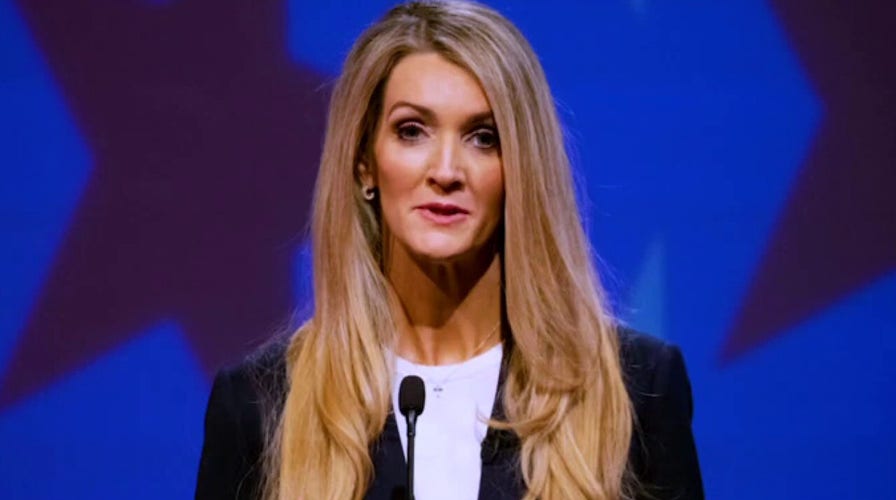
In the meantime, you're encountering trouble within your own party, Republican Senator Kelly Loeffler, of course, who said that you denied her request to an investigation into the 2020 election.
This keeps coming up. You keep swatting it down. Why did you?
Can you hear me, Secretary?
RAFFENSPERGER: Yes, I do. Now you're back.
CAVUTO: OK.
Well, I'm just mentioning what Kelly Loeffler -- who is angry at you because you denied an investigation into the 2020 election. I know you have already investigated it twice. But explain why you didn't take her up on that.
RAFFENSPERGER: Well, we yesterday had the state election board meeting and had probably over 100 cases that we're looking at going back to the 2020 cycle. That's the fourth meeting we have had since January looking at election infractions.
But, at the end of the day, everyone needs to understand that she is a fake Trumper. And because she lost the race, now she is trying to somehow make her sound like she's a Trumper, but she's a fake Trumper.
She went ahead, and she actually supported and gave money to Hillary Clinton in 2007. And then her WNBA team did a fund-raiser for Planned Parenthood.
CAVUTO: So, it was fine when she was running for office and running for reelection -- or, again, she had been appointed, filled the position, and she was running. And at the time, she had the president's support.
There was a great deal of controversy, again, that the president's concerns about ballots in Georgia and whether there were fairly counted and all, and that focused on you. She was possibly hurt by that. I know you raised that, that both Republican candidates were, that it might have affected the turnout.
Do you still feel that way, that the problem in that election and the loss of both those seats owed more to Donald Trump?
RAFFENSPERGER: The problem that she lost is that she was a weak candidate. She had never set forth her vision of where she wanted to move Georgia to.
So, she never really engaged with voters. She said that she supported President Trump, but she's a fake Trumper on that. And then, meanwhile, she's given to liberal causes. And so people realized that she wasn't what she said she was.
So, what she's doing right now is very destructive to the 2024 and 2022 races. We need to unify as Republicans. And when you continue to look backwards, it's not helpful to move forward.
CAVUTO: Do you ever feel like Custer, though, Secretary? She's no fan of yours. The president's no fan of yours. Many in the Republican Party, you're like Kryptonite.
How do you feel about that?
RAFFENSPERGER: Well, I'm a conservative Republican.
And I will do just fine with conservative Republicans. But fake Trumpers, obviously, I don't have her support, and I don't really need it and don't want it.
CAVUTO: What about your future? Where do you see yourself going within a party that might be pushing you to the side, or trying to?
RAFFENSPERGER: Well, I have been asked that I'm running for reelection. And so I will be running a robust campaign, statewide campaign.
Might be a bit more expensive than normal. But we kind of anticipated that. But many people support what I have done when I have talked to people throughout the state. I went up to Bartow County, a rural area. There were still some hard feelings from some of the people, but many of the people understood that we did everything right.
They didn't like the results, but neither did I. But it was what it was, and we have to move on. And we need to look forward and we need to unify the party.
CAVUTO: So, let me ask you this.
If Kelly Loeffler were to get the Republican nomination for senator in the next go-round, would you support her?
RAFFENSPERGER: I don't believe that's going to happen.
I think that what the base wants is someone that's a true blue Trump supporter. And she's a fake Trumper.
CAVUTO: So, let's say she ends up getting it. Would you support her?
RAFFENSPERGER: That's such a wild hypothetical. Let's talk about it if it happens.
CAVUTO: Got it.
All right, Brad Raffensperger, thank you very, very much, the Georgia secretary of state, who is running for reelection.
By the way, we did reach out to Kelly Loeffler. We have not heard back.
We will have more after this.
(COMMERCIAL BREAK)
CAVUTO: All right, well, the great reopening in the United States is going on right now, the biggest news of all that, in our biggest city, in New York City, they're going to be fully reopened, 100 percent, on July 1, this as we're learning from points across the country, including out in California, where Disneyland is supposed to open, albeit to limited capacity, I believe at 25 percent.
So, it's a start.
So, you would think, for a lot of businesses that were impacted by this, that they would welcome this. Well, the good news is that their business has held up. The bad news is that they're having a devil of a time finding workers.
Jack Hartung joins us right now, the Chipotle Mexican Grill CFO.
Jack, very good to have you back.
I'm just wondering. I mean, obviously, the demand for your restaurant's product, Mexican food -- everyone loves it -- is just getting workers, right, because that demand can only be met if you have enough workers.
What's going on?
JACK HARTUNG, CHIEF FINANCIAL OFFICER, CHIPOTLE MEXICAN GRILL: Yes.
Listen, Neil, first of all, we're very excited that things are opening up, and particularly that New York is opening up. We're glad there's now a date, so we can all plan ahead.
And it is going to be a great year for employees. There's going to be a surge in demand throughout the whole country, in New York, of course, but throughout the whole country. And that means all businesses are going to need to hire.
And so I think it's going to be great for employees. They are going to be able to choose which companies they want to go to. Now, in our case, it's going to be a challenge. But we like our chances.
First of all, we kept our open -- our restaurants open, even though we lost significant sales, like everybody did in New York. And that meant we lost money in a lot of our stores in New York. We kept them open. We kept our folks employed.
Our highest priority from the beginning was keep our employees safe, customers safe, and, as much as possible, keep them employed, which is what we did.
So, for us, it's not reopening and rehiring. It's keeping our existing employees and then hiring more employees, because the surge in demand is going to mean we want more people who work in our kitchens and serve the customers as they go down our line.
CAVUTO: All right, so these other stories you hear -- and, by the way, you had a very big takeout business, and that took care of that.
But the fact of the matter is, though, I'm talking to a lot of restaurant operators who are saying that, between federal benefits and others that are extending, your normal pool of workers isn't tempted to come back unless you dramatically lift your hiring rates.
What are you going to do?
HARTUNG: If we need to raise our rates, Neil, we will.
We already pay well above minimum wage. Our average starting wage is in the $12-ish, $12 to $13 range. But, more importantly, if somebody comes to Chipotle, if they're looking for a job, that's great, but what they find out is they actually can have a career.
We're still growing aggressively. Listen, the pandemic affected everybody. And we did have a very strong digital business. But we're going to open up 200 restaurants this year. That means we're going to need 200 general managers, and we're going to need thousands of crew and hourly managers as well.
So, we like our chances, in that, if you come to Chipotle for whatever wage rate -- and we will pay the going rate, and if we need to raise it, we will.
CAVUTO: Right.
HARTUNG: But, more importantly than that, we will teach you how to work in a restaurant. We will teach you to how to lead people. We will teach you how to run a business, so that you can develop with us.
CAVUTO: All right, Jack Hartung, thank you very, very much.
I was going to ask you how you stay thin and fit working in fast food, but that's just anger speaking. So, that's another time.
Jack Hartung, the Chipotle Mexican Grill CFO.
All right, we have a lot more coming up, including the president's remarks on China, now very, very much a threat.
There was a time, though, that he didn't feel that way -- after this.
(COMMERCIAL BREAK)
(BEGIN VIDEO CLIP)
BIDEN: I spent a lot of time with President Xi. He's deadly earnest on becoming the most significant and consequential nation in the world.
He and others, autocrats, think that democracy can't compete in the 21st century with autocracies.
China is going to eat our lunch? Come on, man. I mean, I -- they're not bad folks, folks. But guess what? They're not a -- they're not competition for us.
(END VIDEO CLIP)
CAVUTO: Well, apparently now they are in competition with us.
Rebeccah Heinrichs, the Hudson Institute senior fellow.
Politicians change minds. I get that, Rebeccah, but, of course, now he is pushing infrastructure programs and the like because the Chinese are taking our lunch here. And I'm just wondering whether he's seeing it at the at a time, when he didn't appreciate it little more than two years ago?
What do you think?
REBECCAH HEINRICHS, THE HUDSON INSTITUTE: I think there's two things going on, Neil.
The first one, since he's been in office, he's received some intelligence briefings. And, remember, the Trump administration focused on this competition with China so aggressively that you would imagine a lot of these threat briefings that were ready to go for the Biden administration in the handover, whenever the Trump administration handed over to the Biden administration the work they were doing, was enlightening to the Biden team about the threat that China poses on a variety of fronts.
But the other thing that's going on is President Biden is being a political opportunist, because he knows there is greater bipartisan support on competing with China, that he is now pushing a very radically progressive, liberal agenda and calling everything to compete with China.
And so it's really going to -- we're going to have to see what those specifics are to see if they really helped the United States shore up sovereignty to compete with China, or it's just a liberal agenda.
CAVUTO: I'm just wondering, if the roles have reversed.
Russia is his big worry now -- or not as much as it was before, but China is a concern, right? And the mirror opposite of Donald Trump, where Russia was less of a concern.
I'm just wondering what happened and where is our real threat, or are both threats?
HEINRICHS: Both of them are threats, Neil.
The reason that China poses the bigger threat and is more of a serious concern for the United States is because they pose both the will ideologically and the capability, because of the engine of their economy that they have been pouring into their military and their technology, to be able to directly compete with the United States, and on the hard power side, the military side, push us out of the Pacific.
So that makes them the greater threat. But, of course, Russia is still a very serious threat. And it's the number two threat. And what we don't want to happen is to have those two countries partner with one another.
But, remember, Joe Biden has had decades, decades of experience in policy. He's known the Chinese. And it's only been in the last 100 days that he has decided that China is a threat. Until then, he saw it as a partner, as a -- potentially sometimes as a competitor, but as a trade partner primarily economically, which is a mistake.
It's really been empowering and emboldening to the Chinese, who are competing and seeking to replace the United States as the global superpower.
CAVUTO: Real quickly, Rebeccah, if you will indulge me, China is expected to behave ahead of its Olympics, but, after that, all bets are off. What did you think of that?
HEINRICHS: I'm really worried, Neil, about what China is going to do to Taiwan. Taiwan is a great strategic partner for the United States.
And if China does decide to seize Taiwan, which is what Xi Jinping wants to do, that would effectively push the United States out of the region. And, remember, one-third of all maritime trade passes through that region. And they will have effectively pushed the United States off of our pedestal.
CAVUTO: All right. Yes, to put it mildly. Hopefully not.
Rebeccah Heinrichs, thank you very, very much for that.
That will do it for us here. Thank you very much for joining us.
Now comes "The Five."
Content and Programming Copyright 2021 Fox News Network, LLC. ALL RIGHTS RESERVED. Copyright 2021 VIQ Media Transcription, Inc. All materials herein are protected by United States copyright law and may not be reproduced, distributed, transmitted, displayed, published or broadcast without the prior written permission of VIQ Media Transcription, Inc. You may not alter or remove any trademark, copyright or other notice from copies of the content.
