







DHS secretary: We've seen more targeting of our health care industry throughout pandemic
Acting Dept. of Homeland Security Secretary Chad Wolf claims Iran and China are targeting U.S. COVID-19 vaccine research.
This is a rush transcript from "Your World with Neil Cavuto," May 15, 2020. This copy may not be in its final form and may be updated.
NEIL CAVUTO, ANCHOR: Let the great reopening begin. You're looking live in New Orleans, also
Columbus, Ohio. More and more states are reopening now. Count them at 35.
We're going to detail exactly who is doing what, this as retail sales are
slip-sliding away.
Now, a lot of people expected that. What they did not expect was a record
drop in that activity, close to 16.5 percent, some arguing this could be
the worst of it. We shall see.
Meanwhile, what is the Trump administration doing on that front? You might
be surprised. Talk of stimulus checks that could be coming, as they get
ready at a Rose Garden event to celebrate those who've made a difference
through this crisis.
So much going on here.
Welcome, everybody. I'm Neil Cavuto. And you're watching "Your World."
Happy Friday to all of you.
Let's get the latest on these reopening happening across the country with
Mike Tobin in Chicago.
Hey, Mike.
MIKE TOBIN, FOX NEWS CORRESPONDENT: Hello there, Neil.
And from the East Coast to the West Coast, you're going to see a lot of
efforts at reopening starting today. And they're going to come with
restrictions attached, usually 50 percent capacity in restaurants. You're
going to hear the term social distancing, face masks, terms we have become
very familiar with.
That being said, let's take you to live pictures in Louisiana, big openings
in the Big Easy. Retail is open, if there's an exterior entrance. The bars
are open if they're serving food. So are churches, both of them at 25
percent capacity.
So you can go to the bar and confess what you have done in the same night.
Iowa is pretty assertive, with Governor Kim Reynolds lifting the lockdown
on the final 22 counties in the Hawkeye State. That means salons,
restaurants, fitness centers, libraries, racetracks. What cannot open are
things like bars, casinos and theaters, where the crowds would be larger
than 10.
But Governor Reynolds says there is a risk to staying locked down.
(BEGIN VIDEO CLIP)
GOV. KIM REYNOLDS (R-IA): We're seeing domestic and child abuse cases go
up. There's increases of mental illness. We have more and more Iowans that
are experiencing food insecurity.
So there is a cost, a social cost to also locking down.
(END VIDEO CLIP)
TOBIN: All but five counties in Oregon are lifting restrictions.
The Beaver State is going the extra mile, opening child care, summer school
and summer camp for kids.
Live pictures again, this time in Columbus, Ohio, where Governor Mike
DeWine has been assertive in stating that the Buckeye States is going to
back in business this weekend. In addition to salons, barbershops and
tattoo parlors, restaurants and bars are open, but only for outside dining.
And here's a nice one, a little breath of fresh air. In Delaware, the ice
cream man is coming back up the street -- Neil.
CAVUTO: Mike, that was a brilliant line, the bar and the church thing. You
can drink and then confess your sins afterwards.
That's very good stuff. All right.
(LAUGHTER)
TOBIN: I like to go to church and pre-confess and say, forgive me, Father,
for what I will probably do tonight.
(LAUGHTER)
CAVUTO: Exactly. Yes, get it all combined there. Great reporting, as
always, Mike.
Mike Tobin on that in Chicago, as the great reopening begin here.
Obviously, we're -- the president has planned that -- wants to see a lot
more of this and the pace pick up a lot more from this.
To John Roberts at the White House.
Now, the president has this event scheduled. He's also talking about
efforts to get the economy reopened a little bit more quickly.
John, what's happening there?
JOHN ROBERTS, FOX NEWS CHIEF WHITE HOUSE CORRESPONDENT: Well, Neil, when
you take a look at the retail sales and how they dropped, I mean, it's
really not that much of a surprise.
It is a surprise that they beat expectations, because the estimate for
expectations was 12.3 percent. But the actual number was down around 16.4
percent. But when you consider 36 million people have filed for first-time
employment insurance claims, money doesn't go so far as it used to.
So retail sales are obviously going to suffer, even though a lot of people
continue to shop online with the malls closed. The president continues to
promote a payroll tax cut in terms of a fourth phase stimulus, but the
White House still not ready to sign off on that.
And the president today, when he was touting the positivity of a vaccine
being produced by the end of the year, said, a vaccine is great, but you
can't count on a vaccine. You still have to reopen the country even without
a vaccine.
And Peter Navarro, who you see there, saying on "Hannity" last night that
we need to get this reopening under way, and we need to get it under way
quickly. Listen here.
(BEGIN VIDEO CLIP)
PETER NAVARRO, DIRECTOR, WHITE HOUSE OFFICE OF TRADE AND MANUFACTURING
POLICY: The reality is that, if we don't open this economy back up, we're
not going to have an economy.
And here's the other reality that the medical doctors haven't been telling
you. Yes, the China virus kills directly. But if we keep our economy shut
down, we're not only going to lose trillions of dollars in wealth and
economic activity. That China virus shock to the economy kills as well.
(END VIDEO CLIP)
ROBERTS: Now, in just a few minutes, we're going to hear from the
president again. He's got one of these really kind of feel-good events
about hard work and heroism, people going above and beyond during this
coronavirus crisis.
We're told that the president will have in his company a New York City
police officer. He will have a narrative from West Virginia who has been
offering her services in New York City, which has been so hard-hit by the
coronavirus.
There will also be a landlord there. I couldn't find out the exact reason
why. But I suspect, Neil, it might have something to do with somebody
forgoing rent for a little while. Let's put a bet on that.
And a Girl Scout troop will be there as well. I'm sure that they have been
involved in volunteerism and going out and helping folks in their
community. So a little feel-good event coming here from the White House in
just a little while -- Neil.
CAVUTO: John, where are you and other reporters? Are you behind the seats
that we see, right? I mean, are you behind like a rope line? How does that
work out again?
ROBERTS: Well, right now, I'm out on the North Lawn. So I'm nowhere near
where that event is.
CAVUTO: Right.
ROBERTS: But, typically, I mean, if you look at the geography of it, this
is a pool-only event, so there would be a riser that the camera is on.
Then there would be a rope line right in front of that. The reporters in
this case probably would be behind the riser, but often when we're set up
there in the Rose Garden, we do have seats. Those seats are likely for the
guests.
CAVUTO: Right.
ROBERTS: So we would either be in front of the riser in about a two-foot
section before a rope line or actually behind the riser.
CAVUTO: And I don't want to catch you off-guard, but I was curious.
An event we were uncovering earlier on FOX Business, when the president was
announcing still other developments in the battle of the virus and getting
a -- various drugs to market a lot more quickly, but there was all this
truck honking.
Now, I know a number of Mack truck have been in around Constitution Avenue
for the better part of a couple of weeks. What were they honking about?
ROBERTS: Neil, you can never catch us off-guard here at the White House,
because we are like sponges. We are immersed in this. Everything comes into
us through osmosis.
For the last couple of weeks -- and it's kind of happened sporadically, but
it's happened two or three times today. I can just hear them off in the
distance. A group of truckers and other people supporting truckers get out
there on Constitution Avenue, and they stop trucks, and they honk their
horns.
And what they're doing is, they're protesting continued shutdowns here in
Washington, D.C. It's the same sort of thing that we have seen around the
state capitol in Michigan, Lansing, Michigan. We see it in other -- in
other cities across the country as well.
People are just saying, look, enough is enough. We know that we have --
that the hospitals aren't going to get overwhelmed, so let's continue with
the push to get the country rolling again, because the economic damage that
Peter Navarro was talking about, about lingering closures, could be could
be worse than what we have seen so far in terms of its overall impact on
America.
CAVUTO: Well, there. You did it. You had no idea these questions were
coming, and it was like a pop quiz.
ROBERTS: Got anything else?
(LAUGHTER)
CAVUTO: And you -- overwhelmingly so.
All right, thank you very much, John Roberts. Now I know.
ROBERTS: Let's do the Double Jeopardy round.
(LAUGHTER)
CAVUTO: Exactly. On, we go. Thank you, my friend, very, very much, John
Roberts, at the White House.
Let's go right now to Senator Bob Casey, the Democratic senator of the
beautiful state of Pennsylvania, joins us the phone.
Senator, good to have you.
I know you're looking at the reopening in your state, other states. There
have been some protests around Governor Tom -- Governor Wolf's efforts to
do this very precisely, some say a little too slowly.
What do you think of the pace of how things are going right now? Folks
getting frustrated. How do you feel?
SEN. BOB CASEY (D-PA): Well, Neil, when it comes to the public health
imperatives, I have tried not to second-guess either governors or even the
White House on this, because I think most of these opening plans, depending
on the state, are grounded in the public health imperatives, or at least
they should be.
And, in Pennsylvania, we have kind of a stoplight version of that, which is
red, yellow, and then green. We now have -- and red, of course, means
closed. But we now have 37 counties in yellow, the intermediate phase,
where there's some opening, 12 more next week.
So, we will have basically 49 out of our 67 counties that -- in this yellow
intermediate phase as of a week from now. So, that's moving in the right
direction.
I know there are a lot of people in our state that want to be fully opened
up right now. I think the governor is trying to strike that balance to keep
the public health imperatives on the table, even as we're trying to open
the state.
That's his call. I think the most important thing we can do at the federal
level is get him and get our local communities the resources they need.
CAVUTO: In the meantime, Senator, I don't know where you stand on this
House plan that calls for $3 trillion in more stimulus relief, whatever you
want to say.
Republicans have said it's dead on arrival. But there do seem to be some
common interests in providing some help for the states, but with
Republicans interested in tying it to some liability protection for
businesses that open up, and all of a sudden a worker gets the coronavirus
and sues them.
How do you feel about that?
CASEY: Well, I think the House made a -- or put on the table, I should
say, a bill that should be -- should be embraced by people in both parties.
I don't know -- I think the Senate version of it, or when we get to
consideration, will probably have a different look to it.
But I think in terms of some major priorities, like helping state and local
governments in a substantial way, so you don't -- you're not laying off, at
the local level, firefighters and police officers and, at the state level,
you're not cutting education funding or human services, that's good.
I think the help for Medicaid to stabilize the states, as Republican and
Democratic governors want, is really helpful. I think there's a lot of good
provisions that deal with both the jobs and economic crisis, as well as the
public health crisis.
But, unfortunately, I think Leader McConnell is in the wrong place. He's --
he's saying, we don't need to do anything until June. I think there has to
be much more of a sense of urgency.
In the Senate, we shouldn't be spending three weeks, as we would by the end
of next week, basically only on nominations, instead of working on COVID-
19. We should be voting on -- and even if someone wants to have a lot of
amendment votes -- voting on a COVID-19 bill that deals with the crisis, as
well as helps small businesses some more and helps our -- helps our workers
and our families.
CAVUTO: Well, don't you want to see first what the trillions already
spent, that that is doing the trick?
I mean, are you convinced now that it's not, and that we have to do a lot
more?
CASEY: No, I think that -- look, I think that the investments and I think
that a lot of the programs have been creative in terms of helping the
unemployed.
That's a brand-new program. The Paycheck Protection Program for small
business, that's new. That's gotten now almost $700 billion. And they're --
it may need -- those small businesses may need more.
But I think that what we should try to do is, we ought to be able to do two
things at once, right? We ought to be able to consider and debate and vote
on new legislation and still do the oversight of -- I think the oversight
is going to be very important to make sure that the federal government
administers well and implements well what we have legislated.
CAVUTO: Senator Casey, thank you very much for taking the time. Good
health to you, your staff, your constituents.
Senator Bob Casey of the beautiful state of Pennsylvania.
It ended up being, well, not necessarily a beautiful day at the corner of
Wall and Broad, but a better day than it could have been, considering, as
we have been pointing out, this awful retail sales number we got today and
some awful news on the factory floor, production that's going on, consumer
sentiment surveys that seem to be going nowhere fast.
The fact of the matter, though, is, we still lost about 2 percent on the
week. But this is a market that's looking forward way past all this
economic data, and more to the prospect down the road that now, given this
Marshall Plan effort to find something to treat this, something maybe like
a vaccine to cure this by the end of the year.
It's an ambitious goal, but Wall Street seeing that as the light at the end
of the tunnel and pouncing accordingly.
Stay with us.
(COMMERCIAL BREAK)
CAVUTO: All right, tonight is the night we could see the House vote on
that $3 trillion measure, largely along party lines. They're debating it
right now, not to the most searing of crowds, I should point out, but,
again, they have to practice distancing.
I suspect, though, with or without distancing, it would be sparsely
populated.
Having said that, though, as you heard even Democratic Senator Casey kind
of put it, it would be an uphill battle in the United States Senate. That's
probably putting it mildly.
In the Republican-dominated Senate, this is supposedly dead on arrival,
although there might be ideas in there that even the president likes,
including the idea of handing out more checks, maybe $1,200 checks to
Americans, in a second wave, something the president is open to.
I don't know whether my next guest is, but he's a key player in all of
this, Kevin Brady, of course, the ranking member of the House Ways and
Means Committee.
He made those big tax cuts happen in the early years of the administration.
Without him, they would never have happened.
Kevin Brady, good to see you.
The president's eager for more tax cuts. He's talked about a payroll tax
cut. We hear out of the White House Larry Kudlow talking about a corporate
tax cut, cutting it in half for companies that do business abroad to entice
them to come back.
Where are you on all the tax cut stuff?
REP. KEVIN BRADY (R-TX): Yes, so I think some of those ideas really have
merit, especially lessons learned.
To much of our crucial medicines, medical supplies are in unreliable supply
chains in countries like China. I think tax incentives that are targeted
toward accelerating the return of those production lines is pretty smart to
do.
And we have proposed some package to the White House to do exactly that. I
think, compared to just another round of stimulus checks, I think the
payroll tax holiday completely, 6 percent for workers, or 7 percent, is the
best of those options.
One, it gives you a 7 percent pay raise. With unemployment now so generous,
you really need to make work more competitive against it. It certainly
helps keep the keep the inflation down. And it's just a better option than
many of them out there.
But I still think the focus ought to be, how do we make sure these 36
million unemployed aren't permanently unemployed? I think Congress' whole
economic focus ought to be, how do you help businesses rebuild that work
force quickly?
How do you help them remake their workplace, so it's safe, reconfiguring
the plant, the office, the restaurant? I think those types of confidence-
builders could actually drive a recovery sooner.
CAVUTO: You know, it's interesting then.
You raised something on the payroll tax thing I had never thought about. I
know you're not generally a fan of that in the aggregate. But if you're
looking at generous unemployment provisions that reward workers more than
they would if they just went back to their old jobs, this would be a way of
countering that.
And in this latest Democratic proposal, as you know, Congressman, they want
to keep those generous provisions going through at least January. So, that
-- you might be on to something there.
When you talk about it with your colleagues, what do they say?
BRADY: I think even those like me, who haven't been a big fan of it in the
past, circumstances have changed now.
CAVUTO: Right.
BRADY: And unemployment, really, if you look at this new bill as well,
look, if you get paid as much or more not to work, and your health benefits
are just as good, when would you ever return?
The problem is, not only does that create a prolonged recession and slow
growth, but when they -- when those government benefits run out, and they
will, that business you work for and that job you had may well have
disappeared.
And so, yes, you have got to make work pay off. And that's what we did in
tax reform. And that ought to be, I think, one of our highest priorities
here.
CAVUTO: The president seemed open to, you know, handing out more checks,
like the $1,200 stimulus checks that went out to families, that more with
kids, up to three kids.
How do you feel about revisiting that?
BRADY: Well, I think, you know, that is an option.
Certainly, I know the president wants to continue, as Chairman Powell has
said, to provide more stimulus to the economy.
I -- it is an option. I think I'm fairly lukewarm to that. I think, again,
if we were to really focus on that return to work for our businesses, I
think we would get up and running faster than any other option we have.
And, again, my problem with this bill, it does nothing to get people back
to work. In fact, it really, really delays that from happening. I think
just -- that's just anti-growth.
CAVUTO: All right, Congressman, we will see what happens on that front.
In the meantime, I do want to take you to the White House right now, the
president kicking off this event that is meant to recognize those who
played a special role helping out fellow Americans.
DONALD TRUMP, PRESIDENT OF THE UNITED STATES: Those are friendly truckers.
They're on our side. It's almost a celebration in a way.
Please, sit down. Please.
The first lady and I are thrilled to welcome you this afternoon for our
second event recognizing extraordinary Americans who have responded to the
invisible enemy -- we know what the invisible enemy is -- we've learned a
lot -- with exceptional bravery and commitment and love. And we appreciate
it very much. Great job, fantastic job.
In the midst of this pandemic, our nation has been united in grief and in
prayer for the precious lives that have been lost. We've also come together
in awe and admiration for the heroism and patriotism that we're witnessing
all across our country.
Here with us today is Amy Ford, a nurse of 17 years, from Williamson, West
Virginia, a great state.
Where is Amy? Hi, Amy.
Weeks ago, after telling her children she loved them, Amy got on a plane
for the first time in her life and traveled to New York to help.
For the past 42 days, she's been working 12-hour shifts in the intensive
care units of Kings County Hospital Center in Brooklyn. I know it well; I
know that building well. I passed it many, many times.
And Amy has been serving the coronavirus patients around the clock. She
once held the hand of an elderly patient all night long, just so the woman
would not feel alone.
Boy, that's something. Thank you, Amy. That's incredible.
I want to thank you for what you've done. What a great story. I've heard
about this story. Please come up and say a few words.
Please, Amy. That's great.
AMY FORD, NURSE: Hello.
I want to thank you for having me here today. Being able to serve our
country as a front-line worker during this pandemic has truly been an
honor.
I -- like you said, I've been an R.N. for 20 -- or for 17 years. Under
normal circumstances, as a nurse, I would have an idea of a treatment plan.
And, unfortunately, I was not afforded that comfort in the beginning of
this pandemic. These were not normal circumstances. There were times of
trial and error and a whole lot of prayer.
I had to adapt to a new way of nursing, one where treatment was still
unknown, one where families had to trust my word, and I had to prove that
my word was trustworthy, one where I could only provide comfort by holding
my patient's hand, because I could no longer give comfort with numbers and
statistics of success rates.
Those were unavailable in the beginning. I provided families comfort
through FaceTime calls, holding my phone up to a patient's ear, hoping
that, by hearing their loved one's voice, it would in turn give them
comfort as well.
This experience has been one of the most emotionally challenging things
that I've ever been through, but it has made me a better person in the end.
There is a light at the tunnel. We are beginning to see progress, and we're
starting to see stories of success. This virus may have initially caught
our great nation off-guard, but we will overcome this and we will prevail.
Thank you.
TRUMP: Amy, did you ever catch the virus? Did you ever...
FORD: No.
TRUMP: You never got it. So with all of that long hours and with very,
very sick people, you never caught the virus.
FORD: No, sir.
TRUMP: What do you attribute that to?
FORD: PPE.
TRUMP: Oh, really? Good. Good protection.
FORD: We have had protection.
TRUMP: So you feel -- so you've had great protection?
FORD: I have.
TRUMP: So you feel that if you have the protection, you won't catch it.
You feel that?
FORD: Yes, I feel that's what protected me.
TRUMP: That is fantastic.
FORD: Yes.
TRUMP: Good. Wow.
FORD: And I have not had short -- me, personally, I have not had any
shortage of PPE.
TRUMP: And your co-workers, are they -- do they...
FORD: Not at the hospital that I'm at. No, we haven't.
TRUMP: That's incredible.
FORD: They have provided excellent...
TRUMP: So you all have very good equipment...
FORD: Yes.
TRUMP: ... as the expression goes, right...
FORD: Yes.
TRUMP: ... the gowns and the masks, everything.
Thank you very much, Amy.
FORD: Thank you.
TRUMP: That's great. Amazing.
(APPLAUSE)
TRUMP: It's a great story.
Also with us is Ben Ross, the co-founder of a small custom tie business
called Brackish Bow Ties in Charleston, South Carolina, a great place.
Ben has also -- with his team, has shifted to producing protective masks
for medical workers, and he's done it completely free of charge.
That's fantastic.
As Ben says, "We've pushed the gas pedal down, and we haven't let up."
So, Brackish Bow Ties has donated more than 2,000 masks to 31 medical
facilities in 10 states. And Ben's also been able to keep all 48 of his
employees on the payroll, thanks to the Paycheck Protection Program.
Great, Ben.
Could you come up and say a few words? I can tell it's you by the tie. I
assume that's -- yes, that's the man I'm talking about. Thanks, Ben.
BEN ROSS, CO-FOUNDER, BRACKISH BOW TIES: Thank you so much, Mr. President.
TRUMP: Thank you.
ROSS: It is truly an honor to be here.
TRUMP: Thank you, Ben.
ROSS: It is because of Jeff Plotner's guiding hand, the passion of the
entire Brackish team, and the leadership of this country that we are being
recognized here today.
I am humbled to be in this garden today with such an amazing group of
individuals making such a difference during these unprecedented times.
Congratulations to you all, and thanks so much for all you all are doing.
I have no doubt that the United States of America will soar above this, and
come out stronger and more grateful for family, friends, community, and
this nation, because we all know we're all in this together, and only
together will we be able to curb coronavirus.
Thank you.
TRUMP: Thank you. Great job. Thank you very much.
ROSS: Thank you, sir.
TRUMP: Fantastic.
And I like that tie very much, by the way.
Today, we also honor Sergeant Spencer Garrett, an officer with the New York
P.D. -- that's New York's finest, that's for sure, right? -- who contracted
the coronavirus. After four weeks of fighting a painful battle against the
virus, Spencer recovered and immediately returned to the front lines.
Grateful for all of the support of his family, friends, colleagues, and
time, all of the people and the work he's done, Sergeant Garrett wanted to
provide that same kindness to others.
And I know so many of the people on -- members of New York's finest. And we
love them. And say hello to them, OK?
With the aid of his union, Spencer has made it his mission to support these
fellow New Yorkers.
So, if you would, I'd love to have you come on up and say a few words.
Thank you.
SGT. SPENCER GARRETT, NEW YORK POLICE DEPARTMENT: Good afternoon.
First, I'd like to start by thanking President Trump and the first lady for
their unwavering support of the NYPD.
TRUMP: Thank you.
GARRETT: As one of your hometown cops, I thank you for your leadership
during these uncertain times.
On March 29, I tested positive for COVID-19. Breaking the news to my
parents, Janet (ph) and James, my brothers, Lee (ph) and Sam, and to my 8-
year-old daughter, Liana (ph), was downright scary.
I saw the fear in their eyes. I looked at my daughter, and I assured her,
daddy wasn't going anywhere.
After a vigorous one-month fight, I returned to duty in late April. After
the experience with the virus, I felt compelled to help the residents of
the housing developments that I patrol in, in East Harlem, New York.
We are all in this fight together.
Almost 6,000 uniformed and civilian members of the NYPD contracted COVID-
19. Unfortunately, some of those members didn't make it home to their loved
ones.
Handing out N95 masks and engaging in important dialogue by educating the
residents that not only do not have support and access to PPE hit -- hit
close to home for me. Excuse me.
I'm honored to be here. I'm honored to be an NYPD sergeant. And, most of
all, I'm honored to be an American.
God bless police officers, first responders, and all of the front-line
workers around the country.
Thank you.
(APPLAUSE)
TRUMP: So how was that? You went through that process, and it took quite a
while? It took longer than you would have thought?
GARRETT: It took almost four weeks, sir.
TRUMP: And what was it? Just complications?
GARRETT: Complications.
I'm an asthmatic, so it was a little more difficult for me.
TRUMP: Oh, I see. I see.
GARRETT: And took a little extra care.
But my daughter was there for me. She helped me out a lot. And she's my
hero.
TRUMP: That's fantastic.
GARRETT: Thank you.
TRUMP: You're my hero. OK?
GARRETT: Thank you, sir.
TRUMP: Thank you.
Say hello to everybody.
GARRETT: I will.
TRUMP: Thank you.
(APPLAUSE)
TRUMP: That's great.
We're also joined by three terrific Girl Scouts, Lauren (ph), Sravya (ph),
and Laila (ph) of Girl Scout Troop 744 from Elkridge, Maryland, along with
their troop leader, Megan Langley (ph).
Thank you very much. That's great. That's really great.
These amazing 10-year-olds have donated 100 boxes of Girl Scout cookies to
local firefighters, doctors, and nurses and have sent approximately 200
personalized cards to health care workers all over.
And they're going to do a lot more. Their ambition is to do a lot more.
CAVUTO: All right, we are monitoring the president and this event here.
We're only interrupting this because we have got the president's acting
Department of Homeland Security secretary with us right now, Chad Wolf.
Earlier, you might have seen at this big event on coming up with a vaccine,
a Marshall Plan to come up with a vaccine, where the president indicated
his goal was to have it by the end of the year, very aggressive, because
the administration is being very aggressive on reports that China is trying
to hack into these research efforts and steal all of this.
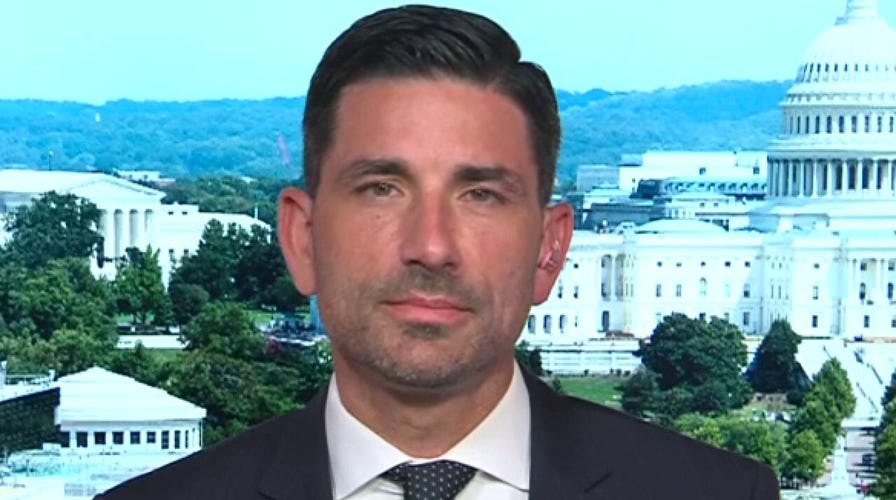
The acting secretary with us now, Chad Wolf,
Secretary, thank you for taking the time.
I know you are looking very closely at trying to get on top of this. What
do we know about what Chinese hackers might be doing to sort of steal this
stuff?
CHAD WOLF, ACTING U.S. SECRETARY OF HOMELAND SECURITY: Well, thanks, Neil,
for having me on.
What our Cybersecurity and Infrastructure Security Agency, along with the
FBI, did this week is to put out an advisory, making sure that individuals,
when it comes to COVID-19 research, understand that we have some bad
actors, China specifically, cyber-actors, also some nontraditional actors,
such as journalists and other researchers, that are targeting our
intellectual property when it comes to that research, targeting individuals
such as our own researchers when it comes to this.
So, we wanted to maintain some awareness on this, so that they have -- so
that our U.S.-community-based researchers could understand what is going
on, our health care industry could understand what's going on.
This is very similar to what we did back in -- a couple of months ago,
again, with DHS. We put out an alert with our U.K. counterparts where we
said, we may have malicious cyber-actors again targeting international
health organizations.
And I think, overall, what we have seen, Neil, is, as this pandemic has
gone on and on, we see more targeting of our health care industry. And
specifically when it comes to China, it's -- this isn't a surprise. We know
that China, for a very long time, have been -- have been very bad actors in
the cyberspace.
So, this isn't news to us. But we need to stay on it. We need to stay
engaged with our other partners in the United States government and make
sure that our private sector partners, the health care industry and others,
are aware of this and have their shields up as well.
CAVUTO: So, I take it, from what you're saying, Secretary, that they are
not only trying to hack and get that information, but take it for
themselves, right, in other words to use this and advance their own
possible remedies, vaccines, anything that might deal with this, and find a
cure for this?
WOLF: Yes, that's exactly right.
I think what they're targeting, again, is not only the intellectual
property that we're creating here, again, when we talk about COVID-19
research, but, again, targeting our personnel to steal that information, so
that they can be at the -- at the cutting edge of that research.
And we need to make sure that that's protected. And that's part of what we
do from a cyber-perspective at the Department of Homeland Security, and,
again, working with our partners at the FBI to investigate that and then
prosecute, when appropriate.
CAVUTO: Now, in the meantime, the administration and you particularly,
sir, have been involved in trying to restrict the foreign immigration.
Has this elevated to the point of targeting Chinese students who want to --
want to study here, be here, even those on two-year plans, where they're
learning beyond just college material stuff?
WOLF: Right.
CAVUTO: I mean, it seems to go a little wider than that.
WOLF: It does.
And, again, from a department perspective, we're looking at -- there's a
number of visas that Chinese students, Chinese researchers, and others
utilize. We're taking a look at how we address the fraud that we all know
is in that system.
And I think that takes on a special importance here as we come out of this
pandemic, as we look to restart the economy, making sure that we have jobs
available to Americans to integrate them back into the work force.
So, we're happy to bring the best and the brightest into the U.S., but we
need to make sure that we reserve those jobs, at least here initially, so
that we can have U.S. workers, again, get back in that work force, regain
their livelihood, and participate.
So, there are some student visas that we are taking a look at. We know that
there's fraud, there's abuse in the program, and it's time that we deal
with that.
CAVUTO: What about Chinese students who just come to study here? Are you
cracking down on that, those already here for studies?
Now, a lot of them stymied, of course, because of the virus and the fact
that classes are virtually virtual everywhere, but that you want to tamp
this down come the fall?
WOLF: Well, we're certainly taking a look at that.
And there are a number of individuals, both here and overseas, looking to
come in as well, and I think from -- again, from a DHS perspective, making
sure that we can ensure that they are coming here to the U.S. for the right
reasons, they're here to study, they're not here to do other nefarious
things.
So we're doing that, again, in partnership with other law enforcement
agencies inside the U.S. government. And I think that's important. I will
also say the department took some other action earlier this week, when we
looked at Chinese journalists that are, again, coming here under a certain
visa was throughout the duration of their stay.
So, in many cases, that was years and years and years, utilizing that visa
for other purposes, perhaps doing things that, again, were not correct.
So, what we did is, we tapped down on that and said, you can stay here for
90 days at a time, you can come back, you can get that reassessed, but
you're going to have to do an interview with DHS, and we're going to --
we're going to ask some hard questions.
So, I think this is part of an overall effort to make sure that, again,
we're looking closely at these individuals, that we're not getting them
blanket visas for years at a time. And, again, that's to make sure that we
protect the American people.
CAVUTO: We will watch it very closely.
Chad Wolf, thank you very much, the acting DHS secretary joining us out of
Washington.
The Chinese have responded to a number of these charges, including this
idea that they're hacking or spying or trying to get some of these various
cures that are being tossed around as bogus, that it's not happening.
That's what they say.
We have a lot of intelligence here to say that that is exactly what they're
doing.
Stay with us.
(COMMERCIAL BREAK)
CAVUTO: All right, start your engines.
NASCAR is back this weekend, this as we're hearing Major League Baseball
contemplating trying to get back in July, and a host of other sports
getting ready for the fall, like, well, yes, the National Football League,
but NASCAR first out the gate.
Here to sort of give us a preview of what we could expect this weekend is
John Bobo, the NASCAR vice president of racing operations.
That's a cool kind of job to have.
John, good to have you.
What do you expect this weekend? What can we as viewers expect?
JOHN BOBO, NASCAR, VICE PRESIDENT OF RACING OPERATIONS: You know, you can
expect some great racing on the racetrack, and it's going to be a
phenomenal broadcast.
But it's going to be event like none other NASCAR has ever put on before.
We're going to travel to the track differently. We're going to enter the
track differently and operate differently and do everything we can to have
an event without fans.
It's important for us that our fans are safe. And it's also important for
us that we are mindful of the communities that we go into the race. And so
this will be NASCAR essential personnel only to put this race on, and we're
looking forward to a great weekend.
And we know we have a responsibility to get it right as we come back, but
we're grateful to be one of the first major sports to come back.
CAVUTO: Now, how long do you suspect -- I guess it depends where you
handle and do the races and all, but how long do you suspect it will be
like this, where we won't have people in the stands, limited capacity on
the track to only the most vital people?
How long do you think that goes on?
BOBO: You know, that's a great question.
And we work closely with the federal, state and local public health
officials. We follow their guidelines. We follow the CDC guidelines. And so
we look for them to let us know when that is safe to occur.
I think nobody can predict the next 30 days or the next 60 days. This has
been a very fluid time for everybody in America right now. And so we feel
grateful that we have put a protocol together through working with state
and local public health officials, through working with infectious disease
specialists and working with many other doctors that we consult with to
help us come up with a good plan where we think we can safely go in and
race.
Neil, we're the company that puts race cars on a track four days a week at
200 miles an hour. And to do that, you have to have a special culture of
discipline in your organization to do it. We think it's that same
discipline that allows us to put cars on a track at 200 miles an hour that
is going to allow us to execute this weekend safely.
We want our friends, our competitors, our -- everyone in our industry to be
safe. But we also want everyone in Darlington, South Carolina, to know that
we have come in, in a thoughtful way, in a responsible way, and everyone's
safe.
CAVUTO: You know, the drivers, it's been a long time since time they have
been racing, right, a few months, so how do they feel?
BOBO: Well, the drivers have been fantastic. They have really worked with
us in every way.
And this is very different for them too. You know, we are unloading the
cars, and we're going racing. There's no qualifying. There's no practice,
and they haven't driven the cars in a few months.
So it is going to be really fun to watch.
CAVUTO: All right, it certainly will be. Look forward to that.
Full disclosure, FOX, of course, is broadcasting this great event, so we
look forward to that.
Be well, be safe yourself, John. Thank you very much.
BOBO: Yes. Thanks, Neil.
CAVUTO: All right, be well.
All right, in the meantime here, a lot of people want to know, when you do
get back to work, we know things are going to be different. We know they're
going to have elevator monitors in skyscrapers and the rest. We know
they're going to be looking and testing us to see if we are -- have a high
temperature or any of that.
There's a company that's very, very intimately involved in that process,
and might give us an idea of what we have to look forward to.
Chris Bainter joins us right now. And he is with a company called FLIR
Systems, the global business development director, coming to us via Skype.
Chris, you make a lot of these measures -- measurements that can test
people, right? So, how do they work? What do you do? Let's say I walk back
into my FOX News headquarters in Manhattan. What are you able to test me
for?
CHRIS BAINTER, FLIR SYSTEMS: Thanks for asking.
Yes, the FLIR thermal cameras are a great front-line screening tool for
detecting elevated skin temperature. And when used properly, it's a good
correlation to core body temperature, which would let you detect those that
appear to be warmer or have an elevated body temperature that's higher than
recently people -- people that have been -- recently been screened.
And so that's a great front-line screening tool that still allows for fast
throughput and effective safety protocol.
CAVUTO: So, what would -- obviously, this is a thermal camera. It would be
able to tell whether you have a body temperature that's a little on the
high side.
And then would they take a separate temperature reading if you are -- if
you flag people outside the building as someone who should be flagged?
BAINTER: Yes, great.
So, as a front-line screening tool, yes, if someone did alarm as having
elevated skin temperature, then best practice is to do a secondary
screening, if possible, from a medical professional using typical medical-
grade temperature measurement devices, like an oral thermometer.
CAVUTO: So, you will be -- you come in, you have done something to get
your camera's attention. Then someone takes you aside when you get in there
and says, wait a minute, wait a minute?
How does that process go?
BAINTER: Yes, there's really three key aspects to using our tools
effectively.
One of them is to have a camera that's stable over time and has the right
performance level, accuracy and resolution to get an accurate reading. We
also know from research that the best point to measure is actually that
inner corner of your eye, the tear duct. And that has the best correlation
to core body temperature.
And we screen one individual at a time. You would think that would take a
while, but in just a recent pilot we did at a manufacturing facility, we
found that screening times can be as short as five seconds per person per
screening station.
CAVUTO: How long you said? I'm sorry. I missed that.
BAINTER: Five seconds, five to 10 seconds per person.
CAVUTO: Wow.
BAINTER: And so it folds really nicely...
(CROSSTALK)
CAVUTO: Can it ever give a false -- can it give a false positive, though?
Can you -- all of a sudden, it looks like you might have a higher elevated
temperature, but it turns out you don't?
BAINTER: Yes, so what we look for is elevated skin temperature, which
could be indicative of a fever, but, to be sure, thermal cameras don't
detect diseases or COVID.
And the reason we recommend looking at the tear duct is, again, research
shows that the best correlation to core body temperature and less impacted
by environmental factors that might give you false readings or false
positives.
For example, if you're just looking at forehead temperatures, that's
problematic. If you're coming from outdoors and it's been a warm day, your
foreheads going to look warmer, which may not mean you have elevated core
body temperature.
So we really focus on measuring at the tear duct, because we find that the
most accurate in detecting actual core elevated body temperature and less
impacted by environment -- environmental factors that you mentioned.
CAVUTO: I take nothing away from your great technology, Chris.
It does kind of freak me out on a privacy level and like a "2001: Space
Odyssey" level, that this is getting a little freaky.
When you get that reaction, I guess you just say these are the times in
which we live.
BAINTER: Well, not necessarily.
So, privacy is a concern for both employees, and we have heard that shared.
To be sure, thermal imaging technology, what we're doing is we're actually
just measuring the heat that naturally emits from objects, including the
body.
It's not an active scanning technology. Also, what we find might is, for
our technique...
CAVUTO: But I might be a marked man, right, Chris?
I might be a marked man. It's like, that's the guy who went threw the
thermal imaging thing yesterday, and he -- watch this guy. He tests high.
BAINTER: Yes, so for FLIR's solutions to work, we actually don't capture
any data, record any data at all.
We're just doing a measurement and comparing that to the average of the
last 10 persons that have been screened. But we can't actually detect who
you are. For example, I wouldn't be able to tell that you were Neil. I just
see that temperature reading.
And then I'm making a decision based on that. But we don't store any data.
CAVUTO: I have an exceptionally large head, Chris. I have an exceptionally
large head. Alarms would go off. They'd say, oh, that guy again.
No, we will see. I'm only joshing you here, but just to point out, this is
the time where we think about this stuff.
Best of luck with this, I think, I think, a fascinating technology.
BAINTER: Thank you.
CAVUTO: Can you imagine my cranium goes through there, and say, I know
that guy?
(LAUGHTER)
CAVUTO: We will have more after this.
(COMMERCIAL BREAK)
CAVUTO: All right, whether they're spying on us, as we learned from the
DHS acting secretary, that is, the Chinese are trying to sort of hack that
cure that might be out there, now we have come to worry that we get so much
out of China, and that our supply chain and a lot of these drugs, key
pharmaceuticals, about 70 percent of them ain't from here.
The Trump administration wants to require that a lot of these essential
drugs get made here, and only here.
Senator Marsha Blackburn of the beautiful state of Tennessee on that.
Senator, always good to have you.
First off, how are things going in your state, Senator? How are -- how's
the progression to life as it, well, kind of was?
SEN. MARSHA BLACKBURN (R-TN): I tell you, it is just going fantastic.
Governor Bill Lee is a great job. Our General Assembly is going to go back
in next week and finish up the budget. And I have been doing Zoom and Skype
calls with groups all day long. And I'm hearing from across the state.
Retail stores, restaurants, office buildings, they are opening up. And I
had one lady even tell me about all the great sales that were going on in
the stores. It sounds like people are ready to get out and get back to
making some money.
CAVUTO: All right, you must have bumped into my wife then, Senator.
Let me ask you a little bit about what the administration's worried about
with China, that so many of our drugs are made over there. There's an
effort afoot right now. I think Larry Kudlow mentioned it, maybe as a trial
balloon, to cut in half tax rates for a lot of companies that do business
abroad.
I assume he was really talking about China to incentivize them to come back
here, make more stuff here. Kevin Brady was open to that idea in the House
Ways and Means Committee. What do you think of it?
BLACKBURN: I think it's a great idea.
As you know, my SAMC bill, which Senator Menendez and I filed back the end
of February, before all of this got really started, is to return our
pharmaceutical manufacturing industry and those active pharmaceutical
ingredients that are so vitally important to all of our medicines and
finished drug products, to return that to the U.S. and to incentivize it.
I have been very pleased with what I have heard out of the White House and
their reception to my legislation that would incentivize it. Tax rates, of
course, that is going to be important. Building these facilities is
terribly expensive. You're talking about hundreds of millions of dollars.
So, some grants or low-interest loans also will figure into that. But the
thing is, Neil, this is a national security issue. We need to bring this
back. We are focused on training the necessary work force.
And we even have $100 million grant pool in our SAMC legislation to help
with educating the necessary work force to handle all of this
pharmaceutical manufacturing and the advanced manufacturing principles that
are necessary for the medical devices.
And it's -- this may be a growth opportunity for us. So, we are quite
focused on returning this supply chain for our critical infrastructure and
our necessary pharmaceuticals to the U.S.
CAVUTO: All right, Senator Blackburn, very good seeing you. Good health to
you and your constituents. Be well, Senator.
BLACKBURN: You too.
All right, we are going to be exploring what the senator mentioned, what
Kevin Brady mentioned, what a host of others are mentioning about maybe
incentivizing more companies that do business abroad, particularly in
China, where we have this disproportionate dependency for all these drugs,
to do it here, we will cut your taxes in half -- this weekend.
We will have more after this.
(COMMERCIAL BREAK)
CAVUTO: All right, the scene right now in New Orleans, open for business,
or trying to get close to it.
Remember when this was getting to be darn near an epicenter for this thing?
Things a lot calmer right now, as Louisiana continues the opening up
process.
We're going to be monitoring very, very closely this weekend, also get an
update on these ideas they're kicking around to do not only less business
with China, but to rely a whole lot less on China.
You even heard what the acting DHS secretary was talking about, maybe
policing the number of Chinese students who come to this country, and much
much more.
Then this talk maybe to cut taxes to get more who do business abroad to
come here. The labor secretary of the United States, Eugene Scalia, on that
tomorrow at 10:00 a.m. We will see you then.
Content and Programming Copyright 2020 Fox News Network, LLC. ALL RIGHTS RESERVED. All materials herein are protected by United States copyright law and may not be reproduced, distributed, transmitted, displayed, published or broadcast without the prior written permission of Fox News Network, LLC. You may not alter or remove any trademark, copyright or other notice from copies of the content.
