


Congressional COVID-19 aid negotiations remain 'stuck' over funding
Fox News congressional correspondent Chad Pergram has the latest from Capitol Hill on 'Your World'
This is a rush transcript from "Your World with Neil Cavuto" December 10, 2020. This copy may not be in its final form and may be updated.
NEIL CAVUTO, FOX NEWS ANCHOR: All right, thank you, Bill, very, very much.
Up front and center is something that's going on live right now, this FDA
advisory board meeting where they're deciding on the fate of that Pfizer
drug with BioNTech. Now, keep in mind, if they go ahead and approve this,
which seems to be a slam dunk here, we would be the fourth country to get
it into people's arms, and soon.
Remember, all the started with the United Kingdom last week, then Bahrain,
and then just yesterday Canada. So, we might get into the idea of what took
so long, but they are dotting the proverbial BioNTech T's and I's and
trying to make sure that everything goes according to plan, this on the
same day that a lot of folks are saying there could be another vaccine
approved next week at this time by the same advisory board.
That's the Moderna's antibody drug. So much is happening so fast, including
that big Wall Street debut for that vacation rental concern Airbnb.
Let us just tell you right now that it is worth a lot more than some of the
biggest hotels in the world. We will get into that.
First, what's at stake with the advisory committee deciding the future,
maybe, for a cure for the COVID-19 virus once and for all.
David Spunt in Silver Spring, Maryland, with the very latest.
Hey, David.
DAVID SPUNT, FOX NEWS CORRESPONDENT: Hey, Neil, big day at the FDA
headquarters, big day for the United States.
The FDA advisory board began meeting about 9:00 this morning, 23 people on
that board, different vaccine experts, also scientists, they're probably
going to vote in the next couple hours. After they vote, it then goes to
the FDA career employees. They're the ones that will give the final thumbs
up or thumbs down to give that vaccine to people across the country for
emergency use.
No question, this would go down in the history books. Neil, if this
happened. As you mentioned, we would be the fourth country, but still
record speed when you think about it. We found out about this pandemic
inside a year, and already we have a vaccine.
Specifically, on the Pfizer vaccine Pfizer and BioNTech, they rate their
vaccine at 95 percent efficacy rate, with two doses required, about a month
apart. The company plans to manufacture 50 million this year, up to 1.3
billion in 2021. That vaccine can be refrigerated for up to five days.
If and when the FDA grants that emergency use authorization, we will begin
to see that vaccine shipped to hospitals and nursing homes. Those are the
first who will get the vaccine.
We may see sleeves rolled up in injections just hours after it's approved,
possibly -- fingers crossed -- as early as tomorrow. This is the same
vaccine the U.K. approved and is already distributing. Officials here in
the United States, they say they are optimistic, and they believe that we
could see vaccinations begin as soon as tomorrow.
Listen here.
(BEGIN VIDEO CLIP)
DR. ANTHONY FAUCI, DIRECTOR, NATIONAL INSTITUTE OF ALLERGY AND INFECTIOUS
DISEASES: If the United States Food and Drug Administration says that a
vaccine is safe and effective, I can promise you that I will take that
vaccine myself, and I will recommend that my family does that.
(END VIDEO CLIP)
SPUNT: An important point, I mentioned it, I want to say it again, two
doses for this vaccine, also Moderna's. So, if you get that first vaccine,
it doesn't mean you're all of a sudden immune. You still have to wear your
mask.
Herd immunity is probably about 75 to 80 percent, according to Dr. Fauci,
Dr. Redfield, also Commissioner Stephen Hahn here at the FDA. But probably
in about two or so hours, we should hear from this advisory committee. Then
it goes to the full FDA, Neil. We could have an announcement from them
early this evening -- Neil.
CAVUTO: And, David, the drill is, when it does make its way out into the
general public, the governors will decide amongst themselves how it's
distributed, using FDA/CDC guidance, that, generally, health care workers
will get it first, vulnerable Americans, like the elderly, those in nursing
homes of the like.
Is that kind of the game plan?
SPUNT: Absolutely. It's a state issue.
I mean, this is the federal government right here under the Department of
Health and Human Services. But it's ultimately up to the governors, up to
the state health directors, the state health officials to make those
decisions. And it also should be noted, for several weeks, millions of
doses of these vaccines have been sitting in the United States ready to go,
ready to be delivered to these places.
Many of them were shipped. We covered the story a few weeks ago. I think I
did on your show, Neil, on Saturday, where you saw dry ice, five times the
normal amount of dry ice on an airplane bringing some of that Pfizer
vaccine over from Brussels, Belgium, on United flights to Chicago.
CAVUTO: Just to understand one thing, and you can help get this through my
thick skull, when they talk about eventually the goal, David, of getting,
let's say, 25 to 30 million doses out to people a month, I mean, since this
is a double dose vaccine, we're talking about 12.5 million to 15 million
Americans who would be getting it, right, I mean, because we're -- each --
it's requiring two doses, right?
SPUNT: Sure.
It requires two doses. And they are about three weeks apart. The Moderna
vaccine has a little bit more leeway in between. But that's the concern, is
that people may be just getting the first vaccine, think they're OK, and
not follow up. You have to really be diligent. You have to really pay
attention to when your first dose is, to make sure you come back for that
second dose.
And scientists and developers also say it's possible, in a few years, you
may have to get a booster just to make sure it's that effective.
CAVUTO: All right, David, thank you very, very much, David Spunt following
all these other developments.
SPUNT: You're welcome.
CAVUTO: I'd be remiss if I didn't follow another market-moving development
today. And that is of the debut on the open market of Airbnb, after the
sizzling success yesterday of DoorDash that became a multibillion-dollar
concern.
Even though the Dow was down today, take a look at how Airbnb was doing.
Now, this was priced at $68 a share today. It quickly rocketed up. For a
while, they were hoping for a valuation at 68 bucks a share and something
in the vicinity of $47 billion in market value. In other words, that would
be the number of shares out there, times that 68 bucks.
But it quickly doubled over that and finishing the day at around $146 a
share, enough to make this $47 billion concern closer to $100 billion. To
put that in perspective, this vacation rental alternative to big hotels and
the like is bigger in market cap than Hilton, than Marriott, than a host of
other players, some of them combined.
And it is possibly a preview of coming attractions in a busy year for
offerings. Many have looked at this as a sign of the strong market appetite
to pay for promising technologies and pandemic calls. Remember, Airbnb was
seen as a post-pandemic play, because people weren't traveling, but now
taking advantage of optimism that a lot of people are going to seek out
vacations and go to all over the world.
That might not happen until well into next year, but people were buying
this today on the optimism that better days are ahead.
A quick footnote to on the IPO season. It's already a record. We have seen
better than $140 billion raised with a number of offerings that go back to
levels we have not seen since dotcom, boom of the late 1990s, particularly
1999.
And a lot of people are looking at this as a sign there's a confidence in
the economy that was a little bit different then, when it got frothy. They
argue that, as eye-popping in some of these sums seem, they're not, they're
not all, all that unrealistic.
And these are category leaders, Airbnb, of course, in the hospitality
industry, and, of course, yesterday with DoorDash, which is now worth more
than the restaurants from which it delivers.
All right, now back to the subject at hand, and a hope that, maybe by the
end of today, sometime tonight, we will see a vaccine approved in the
United States of America made by an American company. Oddly enough, though,
we would be the fourth country to finally write off on it.
As I said, this was officially first given the green light in Great
Britain, the United Kingdom more specifically, then Bahrain and then late
yesterday in Canada, now likely in the United States.
The significance of that cannot be lost upon my next guest, Dr. Andrew von
Eschenbach, the former FDA commissioner, who joins us, I believe, on the
phone.
Commissioner, very good to have you. Thank you.
DR. ANDREW VON ESCHENBACH, FORMER FDA COMMISSIONER: Thank you, Neil. It's a
pleasure to be with you and your viewers.
CAVUTO: Same here.
It can't be overstated, right? I mean, this is a very big deal. But there
are a number of Americans, Commissioner, who are, I don't know whether
vaccine-phobic is the word, but they -- long before the charges of
politicization, which really were unfounded, that they just feel iffy about
vaccines, particularly young people, who argue, hey, I don't need it. Even
if I get the virus, it's not going to harm me.
What do you say to them?
VON ESCHENBACH: Well, first of all, I think if you witness the advisory
committee today, and the presentations by the Food and Drug Administration,
staffed by the CDC, and also the sponsor, I think that the American people
should have enormous confidence and trust that we can deliver to them safe
and effective vaccines, this one and others to come.
And I think Americans should take great pride in that accomplishment,
because, largely, we're responsible for it, based on the investments that
we have made in science and technology over the past few decades
So, though the process has been rapid, it's not reckless. The confidence
and trust in these vaccines comes first and foremost from the science and
technology that we have developed.
And, Neil, you will recall, back in 2005, when we were faced with avian
influenza, at that time, our technologies to make vaccines were based on
eggs. And we only had a couple of vaccine manufacturers that were FDA-
approved.
But we made a substantial investment of billions of dollars. And over the
past 15 years, we now are seeing these amazing technologies that can make
vaccines in cells. It makes them in cell-free media, using mRNA
technologies and DNA technologies, et cetera.
So, the science and technology have made this possible. It's not rapid and
reckless. It's based on a solid foundation.
And then there's a lot to talk about with regard to the competence and
capability of the people who are involved at these federal agencies and in
the industry. And we can speak more about that.
But I would send the message to Americans that we should be confident and
trusting. And, on the other side of the equation, this is an
extraordinarily dangerous virus.
CAVUTO: Now, obviously, we know that. Yesterday, we had a record number of
deaths in this country, more than died on 9/11.
And the fear is that people, hearing about a vaccine, are going to be very
cavalier about it and not take precautions, the kind of things that they
have been doing and should have been doing throughout the pandemic.
Are you worried about that?
VON ESCHENBACH: I am. And I'm worried on a couple of different fronts.
First of all, we thought at the outset that perhaps this was a respiratory
virus that was going to mostly affect elderly patients and those underlying
who had a medical problem. That is not the case.
This is more than a respiratory virus. This virus has the capability of
attacking the lining of your blood vessels in your heart, in your lungs, in
your kidneys, in the brain. It's an extraordinarily serious virus from that
standpoint.
And we're seeing, as time evolves, an emergence of what we call long-hauler
syndrome. These are patients who, after they fully recover from the virus,
are having ongoing serious problems, with constant fatigue, et cetera. And
that can occur in about half of patients, and maybe one out of 10 are even
having sustained organ damage.
And so it's -- and it doesn't just occur in elderly patients. We're seeing
these post-viral consequences occur in younger patients and even patients
who had a very mild form of the disease.
So, if one thinks, I'm young and healthy, I don't need to be vaccinated,
that is not correct.
CAVUTO: All right. No, we needed to hear that, Doctor, so we don't get
ahead of ourselves.
The former FDA Commissioner Dr. Andrew von Eschenbach again on something
that could be coming within just a matter of hours, approval of a vaccine
to deal with COVID-19, not only good for us and our health, but what if I
also told you good for business and our economy?
I will explain after this.
(COMMERCIAL BREAK)
CAVUTO: All right, have vaccine, have a roaring economy coming back because
of it?
I want to explore that with Tom Donohue. He is the guy who runs the U.S.
Chamber of Commerce.
Tom, always good to see you.
I mean, this is welcome news. And we always talk about it for the health of
Americans, but it could really be a big boon to companies, right, to
workers, to their bosses, to everybody who is looking for the economy to
turn around.
What do you think?
TOM DONOHUE, PRESIDENT & CEO, U.S. CHAMBER OF COMMERCE: Well, Neil, if we
can give some security to people through vaccines and therapeutics, and if
we can realize that, after doing that, we're still going to have to be
careful, clearly, it will have a major effect on the economy, more people
able to go back to work, more effort to get more children back to school,
making changes in the schools that you couldn't do until we had the
vaccine.
And I believe that this is a tremendous working agreement and a successful
deal, with the public and the private sector getting together and doing
something that really counts.
CAVUTO: Tom, from your perch at the Chamber of Commerce, this has been one
of the weirdest years, certainly for business, to say nothing of our
country and our world.
And to have a treatment, a cure, a vaccine for this will completely turn
2021 upside-down in terms of expectations.
But what do you think? What would be the first thing you're hearing from
your members that makes them hopeful?
DONOHUE: Well, I think the idea that there is a vaccine, and that there are
other vaccines in development, and, very important, that there are
therapeutics on the way, then, all of a sudden, people begin to think we
can get people back to work, we will be able to put that part of our
economy that has really been nailed down, which is commercial air travel,
hotels, restaurants, venues, and all of that back together.
And even with all our problems, we still only have 6.5, 6.6 unemployment.
(CROSSTALK)
DONOHUE: So, we're really going back, where they (AUDIO GAP) face the
reality that we did before the pandemic, that we're a nation of people
without jobs and unbelievable numbers of jobs without people. But that's a
problem we will welcome if we can get people well.
But, Neil, this is going to take two really important additions to
everything we're doing. And that is, we have to be able to put together --
and we are -- a distribution system more complex than anything we have ever
done in this country.
These vaccines have to be either frozen or refrigerated...
CAVUTO: Right.
DONOHUE: ... depending on which ones we're using, from start to finish.
So, we have private companies, UPS, Federal Express, and the airlines,
different airlines, United Airlines, who are outfitting their planes to
move this material. And we have truckers doing the same thing. And we have
-- we have pharmacies and hospitals doing the same thing.
This is going to be an end-to-end system from the day the pharmaceutical
manufacturers hand it to the supply chain until somebody sticks a needle in
your arm. And then they have to come back and do it again in a month.
CAVUTO: Right.
Tom, in the meantime, they're working on these various measures to provide
stimulus, COVID-19 relief, whatever you want to call it. And part of the
money, about $300 billion, is going to be earmarked to help small
businesses, maybe something for the airline industry.
Do you think, whatever they come up with, if they come up with something in
a lame-duck session, that should be it, that the business community will
have what it needs, that we spent trillions, and that we're on the way out
of this? Or do you think there's going to be need for still more?
DONOHUE: Well, let's say, first, Neil, we need what they're doing right
now.
At the end of December, all sorts of small businesses and individuals on
unemployment and help for companies, all that reduces or goes away. And so
we have to do this. There is a spirit on the Hill now of both parties to
get this done. And I believe that it'll move us further along the world --
the road to recovery.
But I want to make one caution. It's going to take quite a while to get
vaccines all over this country...
CAVUTO: True.
DONOHUE: ... by the way, all over the world, so people can travel back and
forth, and people can come to this country, and we can go elsewhere.
And I believe we're going to have a very productive 2021. But, if you think
it's going to happen in three months, it's only going to begin to happen in
three months. This is going to be a long run. But you will see progress day
after day. The economy will start to grow again.
But it's going to take all of this technology, all of this supply chain,
and an absolute commitment by our fellow citizens to do what the president-
elect is going to ask, wear a mask, keep a distance, wash your hands. That
will fundamentally stop and cut back on the growth we're having of this
virus.
CAVUTO: Yes, you don't want to take any chances, to your point.
Tom Donohue, CEO of the U.S. Chamber of Commerce, great chatting with you,
my friend. Be well, be safe, and be healthy, Tom Donohue.
DONOHUE: Yes, you be well. I look forward to seeing you soon.
CAVUTO: Same here.
In the meantime, Eric Swalwell is saying, whoa, whoa, whoa, don't jump to
conclusions on this alleged friendship with a Chinese spy. But did he
violate what he's saying now when he was judging Donald Trump a little more
than a year ago?
(COMMERCIAL BREAK)
CAVUTO: Forget about waiting for approval for one vaccine. Next week at
this time, there could be another vaccine, in a couple of months, as many
as half-a-dozen vaccines.
The feast of riches that has doctors wondering how to help you with what
first -- after this.
(COMMERCIAL BREAK)
(BEGIN VIDEO CLIP)
REP. ERIC SWALWELL (D-CA): I think it's perfect in its timing.
CAVUTO: If that report says that the president was not a Russian agent,
Congressman, would you say the president is not a Russian agent?
SWALWELL: The president acts on Russia's behalf. I don't need to see the
Mueller report for that.
Also -- also, Neil...
CAVUTO: Then you don't care what the report says. You have drawn your own
conclusions, right?
SWALWELL: There's a difference -- oh, no, no. I...
(END VIDEO CLIP)
CAVUTO: So, Eric Swalwell was saying, right after the Mueller report and
everything else, that guilt by association, appearances are everything,
jumping to the conclusion later proven false, that the president was in bed
with the Russians.
So now he wants the treatment that he was not offering the president, and
that is that we shouldn't be jumping to conclusions based on his alleged
connections to this Chinese spy.
John Yoo on that with us right now, the former deputy assistant attorney
general, University of California, Berkeley, law professor, much, much
more.
What do you think of that, John? I mean, obviously, everyone is entitled to
just hear all the facts. But he wasn't offering that for Donald Trump
almost two years ago.
JOHN YOO, FORMER DEPUTY ASSISTANT ATTORNEY GENERAL: Well, first, he doesn't
seem to -- acknowledging how serious this is. I mean, China is a far more
serious adversary to the United States than Russia. China clearly tried to
insert agents throughout our political system, and one of them succeeded in
penetrating somewhat into Congressmen Swalwell's operations.
He should be very concerned about it. Instead, his first reaction is to
attack Donald Trump. I mean, he's still been -- I guess that's a reflex for
him. It's like you hit his knee and he attacks Donald Trump from two years
ago.
But he should acknowledge this as a very serious problem. It's not
something you can just sort of wave away with your hands and say it's all
Trump's fault.
And then the second point, as you said, his position on this is extremely
hypocritical, I think, compared to the way he acted during the impeachment
and during the Mueller report. He's accusing people of leaking classified
information against him. That's exactly the kind of information he was
using in impeachment, the same things -- about Mueller.
And then the third thing, as you said, go look at his Web site online. He's
still got pages up saying, oh, Donald Trump is either incompetent or he's
duped or he's actually working on behalf of the Russians because he's so
close to them.
I mean, you look at -- I mean, here, you have Chinese agents who are
raising money for his campaigns who are asking him to hire interns and
people for his office. If you were -- as you said, if you were going to say
guilt by association, is he any less guilty of the things that he was
accusing Donald Trump of?
CAVUTO: Normally, when you see charges raised like this, whether they're
proven or not, you take some precautions.
Those around the president, you question as well their access to special
intelligence and the like. Now he sits on the Intelligence Committee, and
it's a unique committee that meets at a separate locale that discusses
things about which there is no sharing with your colleagues.
At a minimum, should they look at suspending him from at least serving on a
committee until all of this is ironed out, if not forever?
YOO: Well, Neil, that's a good question.
That's what worries me about his reaction to this is, if you were -- say,
you were at FOX, someone said Chinese intelligence has tried to penetrate
your studio operations or your team there. The first thing you would say, I
think, is, let's have an investigation. I want to know exactly what's been
going on. I don't want people working for me who might be working for
Chinese intelligence.
You wouldn't say, oh, the FBI is lying, or the FBI is leaking this against
me.
CAVUTO: Right. Right.
YOO: You would want to have an open, transparent investigation.
And then, of course, you would need to step down from the Intelligence
Committee, because you shouldn't be having access to the nation's top
secrets. I mean, the House and Senate Intelligence Committees, they are
privy to almost everything the CIA and the NSA are doing.
They're privy to our nation's most jealously guarded secrets. At least step
down temporarily, while you have an open investigation to figure out
exactly what happened and then to get it out there. That's sort of what he
wanted from the Trump administration. He should hold himself to the same
standard.
CAVUTO: You know, I'm just wondering.
The bigger story here, to me -- forget the political accusations back and
forth there -- the role the Chinese and how sophisticated they were in
potentially interfering with some of our highest-ranking politicians and
those with direct lines to the intelligence community.
I mean, we have been focused on Russia so much, I think a lot of us lost
sight of China right in front of our eyeballs here.
YOO: Well, first, we should recognize, as I think many have, many
strategists have, China is the greatest long-term adversary and competitor
to the United States now and for the foreseeable future, far more, I think,
than Russia.
I mean, Russia is an important country, but they're not the kind of
economic, political and security threat the China is.
CAVUTO: Right.
YOO: And you can see China is -- as they have with other Western
democracies, is trying to infiltrate and influence our system. Our system
is extremely open.
And because of that, it allows people like this agent here to try to get
close to politicians. It may be, in the end, Swalwell did nothing wrong.
CAVUTO: Right.
YOO: But the more we can bring light to it, the more we can have an
investigation, the better.
CAVUTO: Right.
And to your point, while I give him the benefit of the doubt, it's just a
pity that he did not back in March of 2019 give the president the benefit
of the doubt. But, again, there's a lot more to uncover here, a lot more to
see.
John Yoo, thank you very, very much, the former deputy assistant attorney
general, John Yoo.
In the meantime, you want to learn and find out more about this, you can
always go to our -- and we encourage you to use our FOX News app to get
more details on all of this. It covers not only all angles. It goes back in
history to take a look at the kind of things that are happening now that
sound eerily familiar to some of the charges that were hyped up then, but a
number of top Democrats are saying do not apply now.
On the app, you can find out for yourself. Are they right? Are they wrong?
Are they being fair? Are they being remotely balanced?
In the meantime, the hunt for COVID relief, it once seemed impossible, but
they are closing the gap on a couple of key issues, just not fast -- after
this.
(COMMERCIAL BREAK)
CAVUTO: All right, am I glad to see Chad, as in Chad Pergram, on this
incredible confusion over stimulus and paying our bills, not making sure
that the government lights go off. He's keeping track of all of it right
now.
But it does look like this COVID-19 really, Chad, has kind of stalled.
Where are we here?
CHAD PERGRAM, FOX NEWS CONGRESSIONAL CORRESPONDENT: That's right, Neil.
Well, there's no agreement on COVID aid and there probably won't be any
pact until next week at the earliest. The House majority leader, Steny
Hoyer, says the House probably won't vote again until there's a deal. There
are still problems with funding for state and local governments and the
liability shield.
This worries Republican Louisiana Senator John Kennedy.
(BEGIN VIDEO CLIP)
SEN. JOHN KENNEDY (R-LA): We're stuck in the same place we were four months
ago. What I think the leader ought to do is just eliminate the things we
can't agree on, put the things on the floor we can agree on.
(END VIDEO CLIP)
PERGRAM: Many Senate Republicans don't like the bipartisan Senate plan. One
source described that offer as -- quote -- "just talk."
December is always the worst time of the year at the Capitol, as lawmakers
struggle to finish their work. House Speaker Nancy Pelosi is already
heading at the nightmare after Christmas.
(BEGIN VIDEO CLIP)
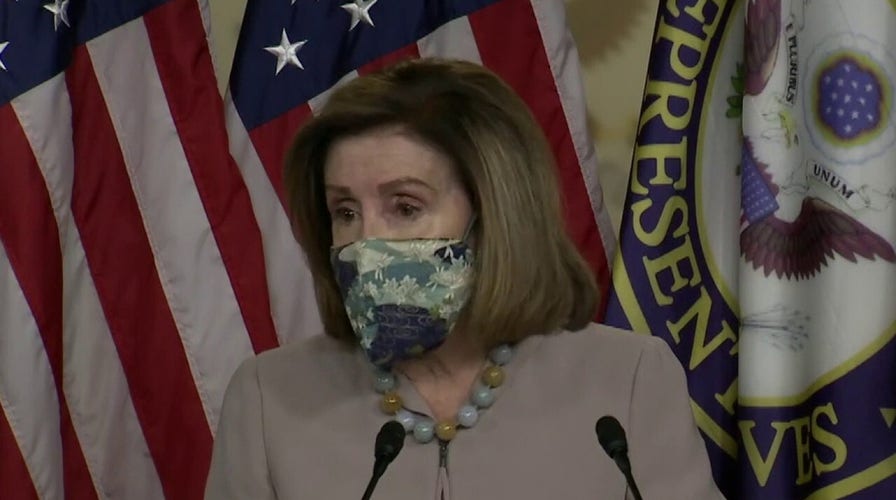
REP. NANCY PELOSI (D-CA): People do want to get home for the holidays, such
as that is. But what's more important is that we get the job done for the
American people before the holidays. But we have been here after Christmas.
(END VIDEO CLIP)
PERGRAM: The hope is to attach a coronavirus package to a big government
funding bill. But the Senate hasn't even approved a stopgap meal -- bill, I
should say, to avoid a shutdown tomorrow night -- Neil.
CAVUTO: All right, Chad Pergram, thank you very, very much.
All right, the fuss over Airbnb and so many other new offerings. I want you
to meet the Wall Streeter who was bullish when no one was, and now is still
that way, Ed Yardeni on where we go from here -- after this.
(COMMERCIAL BREAK)
CAVUTO: All right, Airbnb, the place to be.
The latest big offering in what has been a year of record offerings at the
corner of Wall and Broad.
Jackie DeAngelis keeping track of, well, I guess the records we hit every
day -- Jackie.
JACKIE DEANGELIS, FOX BUSINESS CORRESPONDENT: Hey, Neil.
This was something, Airbnb making its debut earlier on the Nasdaq ticker,
ABNB. Now, the stock skyrocketed 115 percent at the open at $146 a share.
It went higher, and then it closed just under that.
Last night, it priced at $68. So, if you had the shares, you got more than
twice that right out of the gate. Earlier this year, you saw the valuations
climb from $30 billion to $47 billion, where it's trading now roughly $100
billion.
A couple of things here. The market is hot right now. There are investors
looking for diversification and new names. So, that's some of the appetite.
But Airbnb is also a unicorn. It totally disrupted the hotel and travel
industry, like Uber did with taxis.
But unlike Uber, this company saw profitability in 2017 and '18. And it's
back from its pandemic lows, showing a profit in the third quarter too.
There was that pandemic effect early on. But, like Amazon, Airbnb was able
to capitalize on people's desires for these short-term rentals.
And its business did come back, the profitability coming back from this
pent-up demand. According to the company, one day in July saw the company
hit one million bookings, with half of them within 300 miles from home.
And, Neil, you asked me about this earlier, so I will leave you with this.
It was a 51.6-million share offering; 16.8 million shares of the company's
stock was allocated to Airbnb employees and others associated with the
company.
So, many people today, from the CEO down the chain, are feeling this move.
CAVUTO: Well, that's nice. You don't hear that very often.
Jackie, thank you very, very much.
Very happy to have this next gentleman with us. In the decades I have been
covering Wall Street -- and I know I don't look that old, but neither does
he, come to think of it -- Ed Yardeni has been an uncannily prescient read
of developments, not only in the markets and the economy, very good view of
the land.
Ed Yardeni, Yardeni Research president, with us now.
Ed, always good to see you. And thank you so much for coming.
ED YARDENI, YARDENI RESEARCH: My pleasure.
(CROSSTALK)
CAVUTO: You have been bullish. You were bullish even in the downdraft, I
remember, we were experiencing at the height of the pandemic.
Are you still?
YARDENI: I am, not wildly bullish, simply because there's too many bulls
out there.
I'd much prefer being bullish when there's a lot of caution. But, right
now, everybody's bullish. But I think the market is looking past the
pandemic to the second half of next year and perceiving that we will
probably have a boom at that time, not that the economy is performing too
badly right now. We have had a V-shaped recovery.
CAVUTO: You know, Ed, a lot of people have been likening the demand for
these new corporate offerings, these IPOs, back to 1999 and the height of
the Internet boom that, as we know, soon went bust.
YARDENI: Right.
CAVUTO: Do you see any risk of that here, now?
YARDENI: Well, you remember that Prince song "Party Like It's 1999"?
It's starting to feel a little bit like that, I have to say. The Nasdaq's
up, what, about 70, 80 percent. Back then, in 1999 through 2000, we had a
party and the Nasdaq was up 200 percent. So we're about halfway there in
terms of the kind of excesses we had in 1999-2000.
But then, we just had a deluge of dot-coms, and a lot of them were just
concepts, and they came to market, and they had no earnings. A lot of these
companies, as you mentioned before here, are disrupters. They are radically
changing business models.
And I think they're doing it for the better, towards more productivity,
more services for the consumer. Honestly, I think, once we get past this
pandemic, I think we could be looking at the roaring 2020s, just a
tremendous amount of technology boosting productivity and increasing
prosperity on a pretty broad basis.
I know that's a little too optimistic for some people, given how badly
things feel right now. But my experience has been, when things are bad,
start to think about what could go right.
CAVUTO: What do you tell young investors, Ed, who look at this now and say,
well, I have missed the rallies, I have missed the real big gains, I have
missed the Amazons and the Teslas and the eye-popping returns that they
have enjoyed?
YARDENI: Yes.
CAVUTO: If I get in, I'm way late. What do you tell them?
YARDENI: Well, look, it's a huge stock market. There's a lot of stocks.
It's not just the S&P 500. It's the S&P 1,500. And beyond that, there's
even more companies that one can buy in the market.
I think -- I think it's going to be a great decade. The rest of the decades
going to be great for stock pickers. So, I think, if you don't have a day
job that keeps you very busy and you're very excited about, if you're going
to day trade, don't, because I think that's going to be very difficult,
except for very few people.
I think what you should do on a daily basis is do a lot of homework and
research. And I think there are a lot of great companies, some of them
small, some of them large, that are going to be a great opportunity in the
decade ahead.
So, you never really miss a stock market. There's always something.
CAVUTO: Yes. And it's always your time horizon.
Of course, I'm at the age now, Ed, where long term is lunch tomorrow for
me.
(LAUGHTER)
CAVUTO: But I'd like to get your thought real quick on the possibility of
things that Wall Street isn't counting on and that you always have to be
prepared for, the possibility that both these Georgia Senate races go to
the Democrats.
YARDENI: Yes.
CAVUTO: Now, that would give them control of the Senate, may be unlikely to
some, but the market has had its surprises in the past.
If that were to happen, what would your forecast look like?
YARDENI: Well, I'm glad you brought that up, because, when things are this
bullish and when everybody's this bullish, I tend to put a worry list
together.
And I just recently wrote a piece on what could possibly go wrong. It's
like, you look at the market, and the market is basically, saying nothing
can go wrong. But I think you make a good point. There are problems where
you need to anticipate.
If the blue wave kind of rises from the dead here, and the Democrats got
both Georgia seats, that could lead to just an open-ended policy
opportunity for Democrats on the extreme side.
There is a fellow from West Virginia who is a Democrat and a conservative
who claims that he won't let some of the really crazy stuff get through,
but it's something to be concerned about, certainly.
The real contrary scenario here, of course, would be that we get such a
boom next year that inflation comes back and interest rates go up.
CAVUTO: Right.
YARDENI: And it would be just horrible if inflation came back.
CAVUTO: Do you see that happening?
YARDENI: I don't.
CAVUTO: I mean, a lot of people forget inflation, Ed. They do. They don't
remember that.
But do you see that as a legitimate threat?
YARDENI: Well, I don't, but I'm concerned about it because I have to be
concerned about it, because the alternative to my bullishness is a scenario
where inflation does come back, interest rates do go up.
And that could create a whole mess of problems for the economy, for the
stock market, for a lot of people who have borrowed money.
So, it's definitely a very relevant scenario in terms of the alternative to
what could -- what could possibly go wrong? Well, obviously, the biggest
thing that could go wrong, from a fundamental perspective, would be too
much of a good thing.
We come out of the pandemic, everybody feels like they still have some
cabin fever that they have to get over, they go shopping, we go --
Europeans come here, we go over there, and we just have a tremendous boom.
So, it's something to be concerned about, but it's not consistent with my
roaring 2020s with a productivity rebound.
CAVUTO: All right.
Ed Yardeni, thank you very, very much. And very good catching up with you,
my friend. I wish you would start aging. I mean, I have done it, so you
should try it.
(LAUGHTER)
CAVUTO: Ed Yardeni, one of the greatest minds on Wall Street, an uncanny
read of developments, zigs when others zag.
There is something to that, by the way. When everyone is so bullish, those
who started out being one of the few bullish get nervous, because they have
got a lot of company.
When we come back, waiting for that FDA decision. Could be just a matter of
hours, maybe even sooner -- after this.
(COMMERCIAL BREAK)
CAVUTO: All right, that FDA meeting continues right now where they're going
to decide on the fate of that Pfizer vaccine to treat COVID-19.
Dr. Saralyn Mark joins us right now, a Medical Reserve Corps and former
White House senior medical adviser, American Medical Women's Association,
much, much more.
Doctor, thank you very much for taking the time.
Should we read anything in how long it takes on the part of the FDA,
Doctor, or that it -- that other countries have approved this before the
FDA? Some people get nervous, say, well, what do they see that these other
countries did not?
DR. SARALYN MARK, FORMER WHITE HOUSE MEDICAL ADVISER: As a physician, I'm
actually happy to see that they're taking their time and doing a really
robust examination.
They're going through the data very thoroughly. They're asking very, very
good questions. So I think it's extremely important. The FDA uses one of
the gold standards for evaluation. So, I think it should make us actually
feel confident and more comfortable.
CAVUTO: You know, Doctor, depending on how it goes, I guess Moderna would
be next up next week.
MARK: Right.
CAVUTO: I think Bill Gates was quoted as saying he thinks that there are
going to be a half-a-dozen usable vaccines and/or treatments available.
How do doctors then decide which is best for various patients? How does
that get decided?
MARK: Yes.
So, that's a really, really good question. And when we have a coterie of
different vaccines, we might move more towards a precision medicine
approach, where, for a particular patient, one vaccine may do better than
another.
I think, right now, we're not at that point. I wish we were, but we're not.
So, what we have to do is really analyze what is best for our patients,
talk to our patients. So, definitely want our patients to ask questions. I
want them to be very active participants, not just passive followers.
We know right now that there are some populations that have not been
adequately studied, for example, in the Pfizer vaccine, such as pregnant
women, women who are breast-feeding, immunocompromised patients,
individuals who are a bit younger and older, as well as we need a greater
analysis of race and ethnicity.
So -- and, of course, we have been hearing about allergies and those with
extreme allergies.
CAVUTO: Right. Right.
MARK: So, as we get this data, we will begin to tailor our decisions.
CAVUTO: Yes, you mentioned the allergy thing, Doctor.
And I guess they limit it to those with severe allergies, but that the
average folks who have just normal allergies start to worry and say, well,
maybe I just shouldn't take this, that it becomes an excuse not to. What do
you tell them?
MARK: Yes, so we know millions of Americans have allergies. You have
allergies to eggs, to food, to nuts, to drugs, medications.
It's -- generally, what we're seeing here are individuals who've been
having to carry an EpiPen, some medication we use for people who have what
we call anaphylactoid reactions, very, very severe reactions.
I think, as we move forward, we will have more data on it. And then we also
may discuss how we might be able to give a vaccine knowing that some people
might have allergies, whether you need premedicate with an antihistamine,
Tylenol.
So it's an issue right now, because we just don't have the data about
severe allergies. And I want to reassure people, the FDA is asking about
that. In fact, I was listening into the meeting, and that question was
asked.
CAVUTO: Real quickly, Doctor, I mean, for those with preexisting conditions
or battling conditions such as cancer and a host of other ailments...
MARK: Right.
CAVUTO: ... what do you tell them?
MARK: Yes, that's another really good question.
In this study for Pfizer, they looked at patients who had hypertension,
coronary artery disease, diabetes, obesity. And we know that patients who
are immunocompromised are certainly at high risk.
I think, at the moment, we continue -- and this brings up a really, really
important point -- to continue doing the public health measures that we
know work. And what do I mean by that? And I think all of us can use the
mantra. It's social distancing, wearing our mask, washing our hands.
CAVUTO: Right.
MARK: Even when we have a vaccine, we're still going to need to do that,
because we don't know the duration and the durability and the long-term
effects of the vaccine.
CAVUTO: Good words to live by.
Dr. Saralyn Mark, thank you so much. We appreciate your guidance on all of
this.
MARK: Thank you.
CAVUTO: And to the good doctor's point here, that's what's being decided
today, likely approval for this Pfizer vaccine in doses that could go into
the tens of millions a week in very short order.
But, remember, you need two doses, Moderna pretty much the same thing, two
doses.
But we're there. And we're getting closer to maybe light at the end of the
tunnel.
Good night.
END
Content and Programming Copyright 2020 Fox News Network, LLC. ALL
RIGHTS RESERVED. Copyright 2020 ASC Services II Media, LLC. All materials
herein are protected by United States copyright law and may not be
reproduced, distributed, transmitted, displayed, published or broadcast
without the prior written permission of ASC Services II Media, LLC. You may
not alter or remove any trademark, copyright or other notice from copies of
the content.
